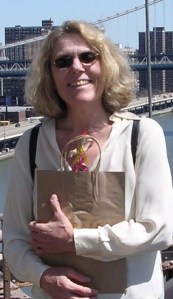
I returned to New York City in 2005, long after my “Sell by” date had expired
In 2005, I left the relative comfort of a tremulous marriage and a tumultuous job (drama director/English Teacher) — the details of which are best left to fiction where they will embarrass no one’s children — to pursue my writing career. I knew the transition would not be easy, but having been raised by a Puritan Calvinist father and a mother who’d escaped Europe in 1939, I felt prepared for whatever difficulty might befall me. It seemed that the year’s pay I had vested in my pension along with the portion of my mother’s inheritance that I didn’t give to my children, would, at the very least, get me to a good job in New York, where I would then begin to write in earnest.

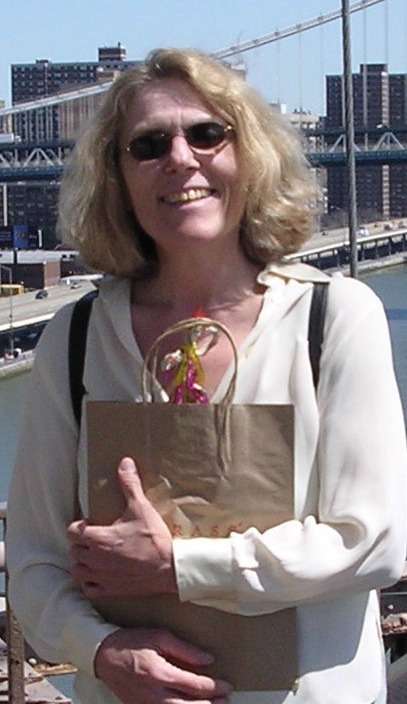
New York today is a cleaner, sparklier version of the city I left in my young adulthood; it’s no longer the nurturing artist’s environment I remember from those days. (Photo by Aaron Newman)
It’s a tale, as I think about it, worthy of Flaubert. Except that I was well past young when I ventured out of the provinces into the promise of new life in the city, and I had no idea what incredible bias I would be up against.
In the early days of my wife-and-motherdom, I had taken on a number of jobs (part-time, so long as we could afford to have me home part-time and then full-time as our financial needs grew), had served on boards and managed schedules and even had acted as interim director of a Day School. I was an inveterate multi-tasker.
As a teacher, in addition to serving as Vice President of the State’s Drama Association and as a member of our NEA (teacher’s union) Negotiations team, et al., I had produced and directed two shows a year for ten years, had run a very successful summer program in one town for 7 then got a grant from the State to operate a Summer Conservatory program in another for two; I had raised and spent hundreds of thousands of dollars and had always brought my programs back to the black. I did my own marketing and publicity, made my own deals with state-wide vendors, hired my own musicians, designers and construction crews. I created dialogue between my students and professional theaters around the country, and I personally arranged at least two annual trips to New York for a performance and a talkback/tour with the cast and crew of the show we saw. For the summer grant program, which required professional theater people to serve in their professional roles as well as to teach, I auditioned, hired and oversaw all manner of talent and crews from New York, provided them with transportation, housing, and meals while I made sure they got paid, and at the same time I produced/directed Sweeney Todd and produced As You Like It in repertory. And in addition to everything else, I had co-authored and produced three short films, two of which had garnered festival prizes
In short, I had taken on many responsibilities — always — and had honed a great many skills. Yet when I began to hunt for jobs in NY, it became quickly apparent that out in the world there are two distinct types for whom professional people have a blanket distrust: older women and teachers. Ooops.
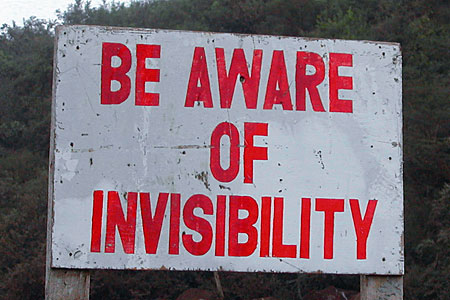
Older women are invisible. They are no longer classifiable. Even though there is a great deal made about the Cougar women men crave, most men don’t even look at most women over 50. Even those who are attractive, fit, vital women get very little attention. And what that means is that women don’t look at them either. Worse, the invisibility somehow makes them less desirable as new hires. Who wants to clutter an office — or, in my case, a theater — with invisible drones? I applied for every possibly suitable job, from education director to personal assistant, posted in America over the course of the two years it took me to realize I was un-hirable. But being over fifty was only part of it.

People in the “real” world believe that teachers go into education because they can’t do. And we all know how easy teaching is! Anyone can do it — so why would you hire someone who “only” knows how to teach? I talked myself hoarse about the various skills I had developed in my various capacities as a “teacher,” but my words fell on deaf ears. One young woman who was interviewing me for a job I could do with my eyes closed effused at me, “Oh, you were a class advisor too? You must love going to proms.”
And the irony was that even for teaching I was now too old to be hired in a new system. When I was shortlisted for a great part-time job in an Alternative High School that would have been perfect for me, the interviewer told me, “I could lose my job for this, but I want to tell you that even though you are my first choice for this position, you won’t get the job.” She went on to tell me that I had “years in”, which required money, and I was no longer “fresh.”
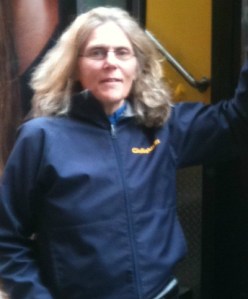
Though guiding is certainly not a dream job, it does pay the cookie bills
So, as my little nest egg began to dwindle — I didn’t fight my husband for what I should have insisted on having after 33 years of marriage, believing I’d find a great job to sustain me very quickly — I took a job in the surreal world of tourism and became a sightseeing guide. Now nearing 65, armed with an arsenal of words, two master’s degrees and a compendium of otherwise useless information collected with my autodidact’s obsession with New York City, wearing my royal blue uniform shirt and a thick coat of sunscreen, I trudge daily down to the place where the tour buses originate. There I endure the abuse by passengers who range from insensitive to moronic, and I allow myself to be ordered around by bosses, many of whom are recently released, convicted felons, and by over-eager ticket sellers, who tend to be newly arrived African immigrants (priceless few of whom have a shred of empathy for women in general or older women in particular), and then I go home to sleep.
I do this because it allows me every morning to get up before the sun and revel in the knowledge that I have a few hours of precious writing time, and someday soon . . . . well who knows! I’ve just finished a book, which will be released this month, and I am writing furiously in a way I haven’t since I was a teenager filling journals with self-absorbed ruminations.
I am not alone out here. There are any number of women who have set out to create new lives for themselves, to forge careers in creative endeavors; and I have discovered, after a lifetime of feeling disconnected from women and intimidated by the judgmental, dogged competition friendship with them engendered, that for the first time in my life, I have a true kinship with some of the most remarkable people on the planet. Amazingly, they are women!
It’s been a rough road, and it’s not getting easier any time soon. I know that. I accept it. But I hope to live long enough and to prosper sufficiently to make it easier for someone else. Some day I would dearly love to open a safe house, a home for women like me who have held in their overflowing creativity for too many years and just need a place where they can live and write or paint or study lines or clean their cameras or do whatever they need to do to fulfill the need to DO without fear of eviction and starvation. A fear I carry in my stomach at the end every single month. It’ll be at least a while before I’m where I can even think about making the dream house real. But I want to start the process of providing support right here and right now. In this, my new blog, I will inaugurate a series about some of my most admired, most loved friends, women who, like me, have risked absolute failure in the pursuit of resounding success. A section of this blog will be dedicated to those women who would like to be featured here. That will debut shortly.
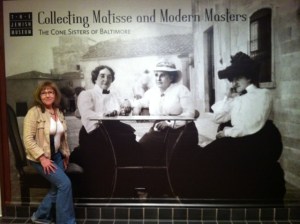
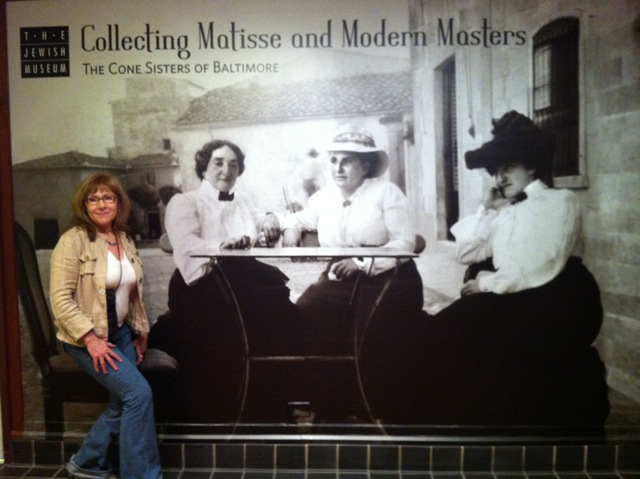
My cousin Anna Thea Bogdanovich, one of the women I admire most, seated in a pantheon of creative women at the Museum of Arts and Design
I dedicate my efforts to my daughters and my granddaughters. May they never be invisible. Or disrespected for having lived.
Share this and follow me; I'll follow you!

 Every year on Mother’s Day I feel let down. Everywhere I look are reminders that it’s Mother’s Day. In the street, when I take my morning walk, I see children carrying flowers to Grandma’s house, and families decked out in their Easter Sunday best coming out of restaurants sated from celebratory Mother’s Day Brunch, and strangers call out, “Happy Mother’s Day!” When I get to work today, the dispatcher who supervises the buses during my shift, whom I have come to like and look forward to seeing, won’t be there. Her husband bought her an I-Phone 4S for this day, and she booked off to enjoy a day with her feet up, learning the in’s and out’s of her new toy. My Mother’s Day is just another Sunday, except that I write anti-war emails and FB posts while I watch a flurry of new ads telling me what I should be receiving as gifts. How can I not succumb to jealousy?





 carlastockton.me