Darkness in the Vienna Woods

Though my mother’s family did not leave Europe until 1939, they knew for years before Nazi jackboots thundered through Vienna that they would have to leave their beloved city, and antisemitism was to blame.  Kristallnacht had not yet clarified the Jews’ position in Austria when my grandfather began to plan the family exodus.

The early warnings were sometimes subtle, sometimes overt but rarely violent.  Until a sunlit, sultry day –  July 15, 1927, when violence disrupted a family idyll and set forces in motion that impelled their emigration.

Papa had been in France on an extended business trip, and he had not been home for his birthday the day before, so the family designated the 15th a holiday, which they set out to enjoy at their favorite park overlooking the city.  Their day would celebrate Vienna as much as their patriarch.  

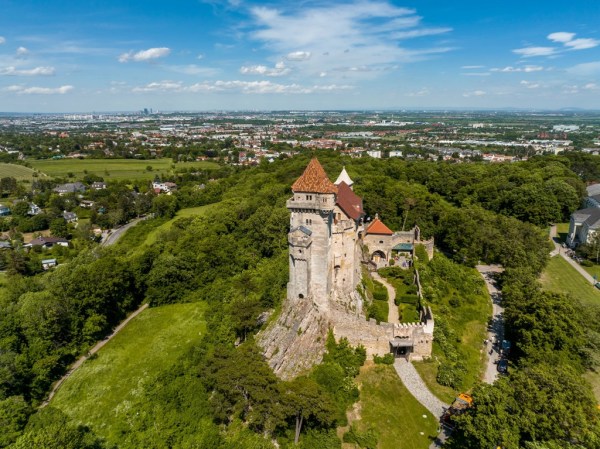
They boarded a tram that took them to the medieval Höhenstrasse, and from there, they transferred to a bus that carried them through the Grinzing, past the charming Heuriger taverns, into the Vienna woods, and to the top of the Kahlenberg. 

When they arrived on the mountain, a procession of mummers, along with boys and girls in costumes singing a Polish hymn, was preparing for a processional in honor of the relief army Poland’s King Jan III Sobieski sent to save Vienna from the Ottoman siege in 1683.

“See?” Said Papa, an emigree from a shtetl in Eastern Poland. “The Austrians love us Poles.”

His family laughed. Being Jewish and being Polish was not the same thing. But neither the Poles nor the Jews were popular in the post-Empire days of sprouting Austrian nationalism. The parade made them giddy.

My mother Charlotte, age three, and her sister Thea, age four,  pretended to be bunny rabbits, hop-dancing to the processional music.  Baby Ruthi cried for a bottle and tugged at the bandages covering the surgery she had had behind her ears several days before.  Herma, maturely nine, crossed her arms and waited for the silliness to subside.

When the parade passed, the family hiked together behind the remnants of the ancient Leopold Schloss and found a spot in the shade to lay out their picnic. 

They spread blankets on the grass and sat down to enjoy the grand repast Mama had prepared the night before. Then, inhaling the exquisite sunshine, Papa and Mama relaxed as the girls performed the play Herma had written to welcome Papa home.  Papa stretched out to watch his daughters and, in an unusual display of affection, laid his head in Mama’s lap.  She, gentler than usual, rubbed the top of his balding head.  When the play was over, the girls insinuated themselves into the mellow moment by resting their heads close to their parents. Sated and spent, they all sprawled on the blanket and slept.   

Mama woke first and was in such a mellow mood, she spontaneously began to hum a tune from “Die Schöne Müllerin,” which had been running through her head.  Her music woke the others, and it was Charlotte who first noticed lights bursting from the city stretched out beneath their mountain perch.

“Look, Mama, how beautiful! Is that fire?  Papa, it looks like the sun is exploding!”

Her parents didn’t share her enthusiasm. 

“That could be our house going up in flames,” Papa snapped.  His burst of anger silenced the children, who stood transfixed, watching Vienna burn. 

Mama feared that they had overstayed their time on the mountain.  It would soon be dark, and in the dark, the woods could become treacherous. “Let’s go,” she instructed. 

“Mama,” Herma cried, “Is it safe to go home when there is fire all around?”

Mama shrugged.

“Walk carefully,” she instructed.  “But quickly. “

Mechanically, they obeyed, racing the descending summer night. 

At the bottom of the park, they waited for a bus until a passer-by yelled to them, “Haven’t you heard there’s a revolution in town? No more buses today!” 

A revolution!

It had begun as a protest strike. In January of that year, in a remote border village, a group of socialists clashed with fascists over the Kaiser’s militarization policy.  In the melee that ensued, a barman and his two sons shot and killed a worker and an eight-year-old child.  At his trial on July 14, the barman pled guilty but he was acquitted. On July 15, the socialists rioted in front of the Parliament House in the Ringstrasse Plaza.  Mounted police, the nationalist Heimwehr Militia, and coworkers brandished weapons of all kinds. Long after the police were ordered to cease firing, the shooting continued.  Miraculously, though the fire brigade was unable to get through the barricaded streets, the fire remained contained in the one building, and by morning, the revolt was over. Six hundred people were severely injured, 89 were killed, and the Palace of Justice was demolished.
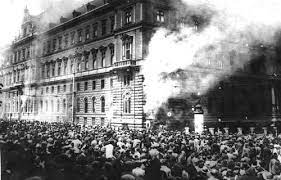
In the ensuing days, reports in various publications blamed the uprising on the Jews, who, because of their Eastern European roots, were said to be Communist agitators.

As the conflagration raged, the Robinsons knew only that they needed to be home.  No public transport was running, but they found a taxi with a driver who thought they looked like refugees. He drove cautiously through the fire zone as the family huddled close to the floor of the cab, seeking cover from the gunfire that echoed through the normally hushed streets now teeming with confusion and terror. 

At the Ringstrasse, soldiers stopped them with hoisted bayonets but altered their stance at seeing Ruth’s bandages.  One of the soldiers said, ‘That little girl’s been hit.  Let ‘em pass.  She’ll need medical attention.”  No one contradicted the soldier’s surmise.

The family’s home was unaffected by the fray.  No fires, no guns, no screaming citizens.  Henri drew the shutters, barricaded the doors, turned off the lights, and took the children into the master bedroom, where they all spent the night.

 The frightening events stayed far from their inner sanctum, where the sisters were protected and loved.  For them, the day was a glorious adventure marked by an outpouring of parental affection.  By their own recounting, all three were too excited to sleep yet too afraid of their parents to get up, so they lay awake holding hands and listening to the night.  In the distance, they could make out sounds – the toy-like popping of guns, wailing of racing water trucks, clomping of running boots – like background sounds in a radio play.  Eventually, they must have slept because suddenly it was over, and their little corner of the morning sun-drenched city glistened as though nothing had happened. 

The city had gone quiet.  A general workers’ strike persisted for a few days, but there was no more violence. Except for the charred carcass of the Palace of Justice, all evidence of Friday’s melée seemed to have faded. 

Later in the week, returning from a piano lesson, Herma brandished a leaflet being handed out on the street. “This is about the riot,” she reported. “They’re saying it was just a demonstration. A blowup by the Communist workers. The Heimwehr militia was doing its job, protecting the city.”

 “Fascists,” Papa muttered.

“They’re saying the Communists are taking over the country. They plan to make puppets of us all.”

Papa scowled.  “If they’re saying Communists,” he said, “We better start packing our bags.  ‘Communists’ is just another word for Jews.”
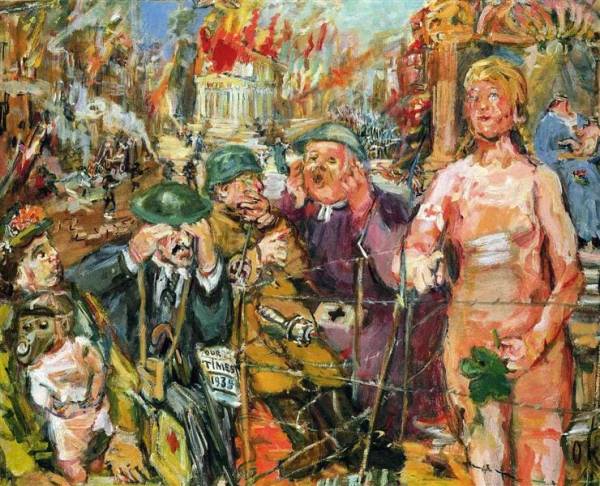
Oskaar Kokoshka, Anschluss 1942

Summertime Daddy

Summer is my season of Daddy.

Most of the time, he was a restless man, my father, with a permanent expression of perplexity on his face. Relaxation was beyond his ken.  He was in constant motion every waking minute of every day.  Stress seeped from his pores and put us all on edge. A milk spill could create a firestorm of screamed recriminations.  He never used bad language, and yet his anger was obscene.  

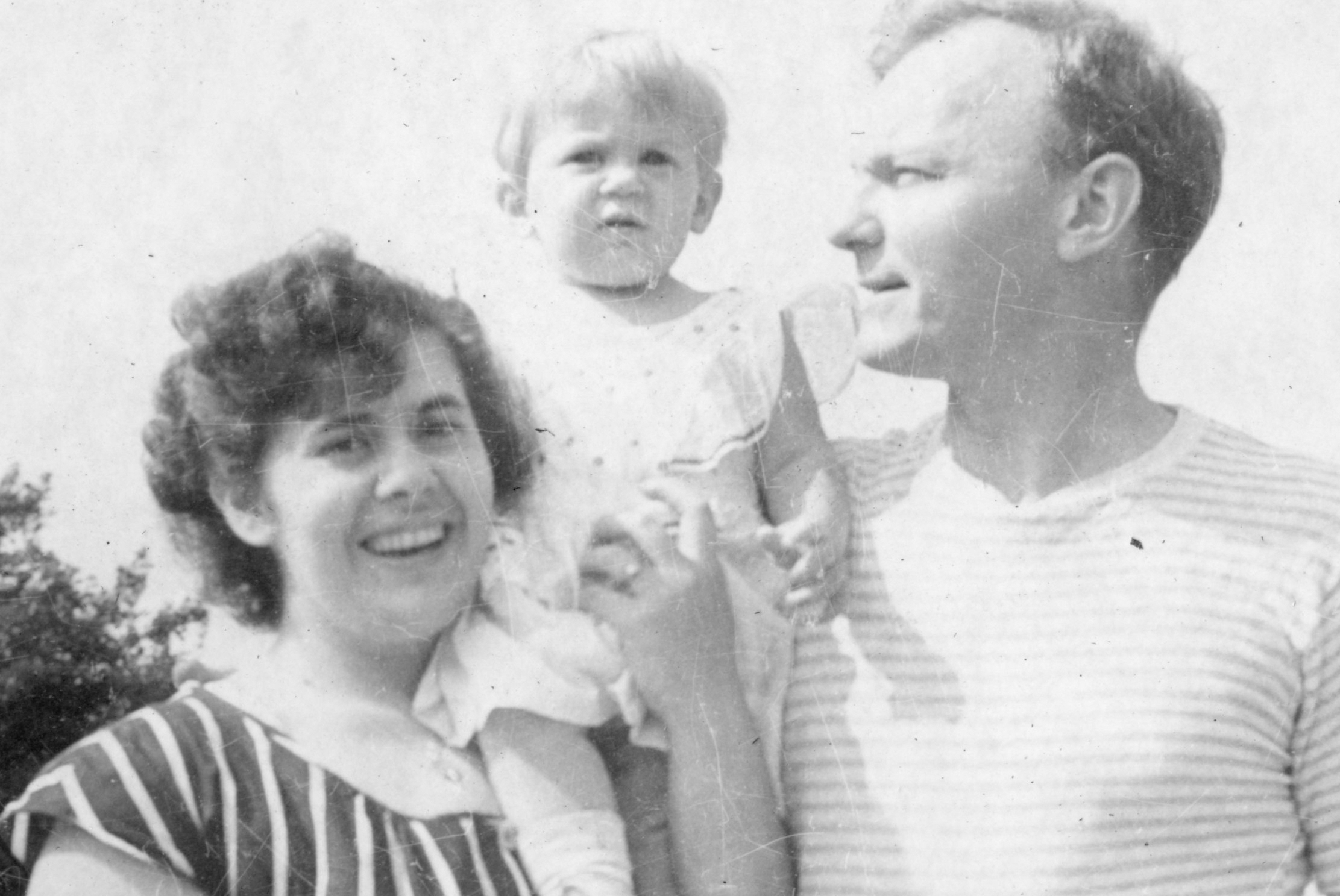
However, on rarified sun-gilded summer days, he was transformed, and I in turn was freed to be myself.  At the beach, we could love each other unconditionally.

I attributed his passion for sun and surf to his having been a summer baby. Born the end of July in 1911, in Cedar Rapids, Iowa, Father grew up as far from the ocean as an American boy could be. The year he was twelve, right after his father died, he stole the family car and drove it to New York, where his Uncle Milton owned a shipping company.  “Let me go to sea,” he pleaded. Uncle Milton summarily sent him home, which only fueled his desire.  

Whenever he could sate his thirst for proximity to the ocean, Daddy was a happy man.

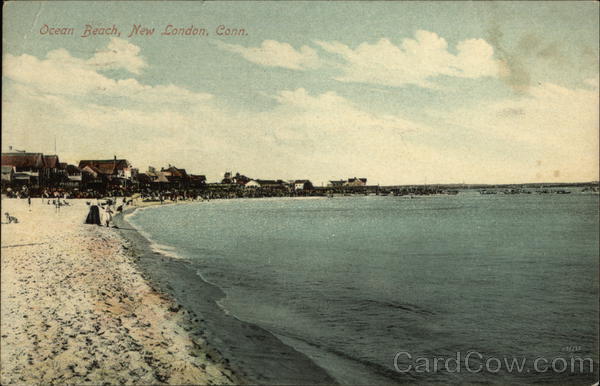
Every summer until I was four, we vacationed with my mother’s family in New London, CT.  Mom’s older sister Herma was married to Borislav, a Serbian painter of some renown, and he had a patron who loaned him a cottage on the beach, a glorious venue for a family holiday.

My memory of the house – undoubtedly flawed by time and distance —  is of a single-story expanse with multiple tall windows standing upright in every room. Their diaphanous, white curtains fluttered and danced in the omnipresent breezes.  No matter how hot the air was wherever we had been, the briny, vanilla-scented cool of the beach enveloped us when we entered. Daddy, however, had no interest in the house.

As soon as we arrived and parked our car, my staid, reticent, subdued father would emerge from behind the wheel of the car, shed his grumpy silence, and turn giddy. Suddenly he was playful, happy. He reminded me of those sea creatures we used to order from the bubble gum cards.  As soon as we added the salt sea air of the tantalizing water, Daddy would animate. He’d bound into the house, embrace each of the assembled relatives, and rush to any corner that afforded him enough privacy to change into his swim trunks. He could not wait to get into the ocean.

We children – the first three of eleven cousins-to-be – knew what was coming next. “I’m off to the water,” he’d announce. “Who’s with me?”

Cousin Peter, eight years older than I, remained aloof. He was too mature for such childish exuberance. Johnny, eight months younger than I, only went where his mother took him. He would stay behind.  I got to have Daddy all to myself.

Stripped down to my crisp white drawers, I would ask my mother to secure my towhead mop into tight braids, and I’d follow him into the gently undulating water. He walked slowly, watching my every move, coaching me to tiptoe carefully over rocks and shells, beckoning me to stop and marvel at the jelly fish and crabs that tickled my shins and scraped my toes.  Once, a crab mistook part of my foot for a tasty morsel and chomped down hard.  I screamed, more afraid than injured, and my father laughed.  “Too bad for that little guy. You’re way too big a prey for him.” 

In the afternoons, Daddy, who never rested at home, took a blanket down to the edge of the Sound. He would wrap himself up, put a hat on his head, and coo, “Nothing like the sound of the ocean to sing me to sleep.”

He would nap for what seemed like hours, while Peter, dressed in his cowboy chaps and holster,  pointed his toy pistol and chased Johnny and me all about the beach.  Our mothers would watch us, laughing and applauding, as though we were brilliant actors in a spellbinding film.

Nowhere else, at no other time were we as insouciant as we were then. Uncle Borislav would join us on our beach blanket when he took a break from his easel, and if there were no Yankee game on the radio, Uncle Fred would be there as well. Borislav performed magic tricks, and Fred told silly jokes. My father, cocooned nearby, smiled in his sleep.  We ate dinner on the patio and told silly jokes,  then slept with the windows open so the sea could sing us its lullaby.

 Daddy would wake me before dawn to watch the tide come in.  We would stroll along the waterline, giggling at the horseshoe crabs scuttling away, peering strenuously into the half-light for a glimpse of a ship or a dolphin. We would wade in and let the deepening water lap at our legs. 

Whenever the tide was lowest, he would invite me to a grand adventure.

“Come on,” he’d chortle. “Let’s walk to China.”

“No, not China,” I’d laugh. “Paris!”

“Sure!  But you have to hold my hand.  It’s a very long walk.”

We would splash in, the water level unchanged for what seemed like miles. When we were finally far enough out that I became buoyant, he’d hold me while I half walked, half swam among the sailboats lazing in the summer sunshine.

“Maybe we won’t get all the way to Paris today,” Daddy would sigh at last.  “Let’s come back tomorrow.”

Shoe Fever

It was 2003, and my sweet baby cousin Adriana was getting married in San Francisco.

The wedding was a big deal. Though a small destination wedding, it was a momentous occasion. Our entire extended family – including our celebrity cousin – would converge, and friends of Adriana’s from all over the world would join us. I had to look good.

Which is why, in preparation for the upcoming nuptials, I was not thinking about Adriana.  I was thinking about my clothes.  I was consumed actually.  And contemplating shoplifting. 

I envisioned the kind of escapade one imagines as a teenager, not as the nearly senior citizen of 56 that I was at the time, possessed by a midlife crisis: I needed new shoes.

I had found the perfect pair. They were elegant: low-heeled, round-toed, and comfortable for dancing yet black velvet and impractical for winter walking in New Haven, where I lived and worked. They were exactly the kind of shoes my money-obsessed husband would never let me buy.  

I must interject that while we were never poor – he was a well-remunerated engineer, and I was a classroom teacher, who took on multiple extra-curricular activities that paid me nicely – he regarded money much as an anorexic regards food.  So long as he had complete control, so long as he treated our finances as though we were destitute, he could breathe.  The minute we began allowing ourselves luxury items like more than one pair of shoes or a color television – anything beyond the necessities – his anxiety flared, and he became angry, verbally abusive, impossible to be around.  These shoes were unthinkable.

Yet I saw them as my emancipation proclamation.  I had spent thirty-three years believing, like the naïf Nora in A Doll’s House, that if I acquiesced perfectly enough and long enough, eventually the “most wonderful thing” would happen, and I’d be rewarded by his performing an act of magnificent self-sacrifice. Then he, my benevolent beloved, and I would live happily ever after.  However, by the time of this particular crisis, I knew that my miracle was never going to happen. Stealing those shoes would be a way of saying to my husband, “Hey you get off-‘o’ my cloud,”  a way to affect my liberation from the oppression of hope as much as of him. 

I tried them on.  Pure podiatric bliss.  I furtively surveyed the store.  No one was near.  If I just walked out, who would see me?  I headed toward the exit. A sales clerk stopped rearranging the handbags on the periphery of the shoe department and stared at me.  I turned around, pretending I was merely giving the shoes a trial walk around the store.  She went back to her work, and I took off the shoes. I waited a few moments before opening my backpack and sliding them inside. I hadn’t seen a beeper tag.  Surely, I could pull this off.  Again, I headed toward the exit, but as I rounded the corner near the checkout line, I saw myself standing in handcuffs, an army of my students past and present staring at me in disbelief, looking betrayed but pointing and laughing at the same time.  I couldn’t do it. 

The shoes went back to the shelf, and I left the store dejected but resolved.  If I were going to be held captive in this life for the duration, I should at least maintain my integrity.