
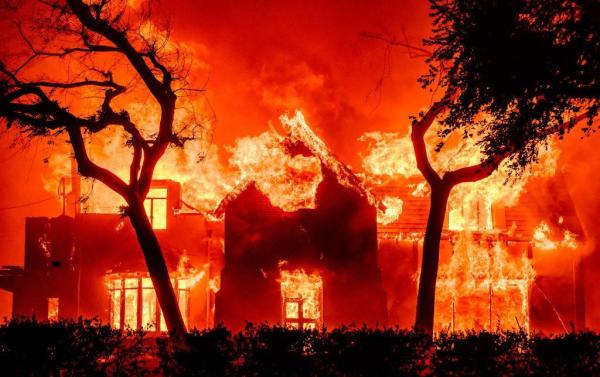
Nation on Fire

City on fire!
Rats in the grass
And the lunatics yelling in the streets!
It’s the end of the world! Yes!
City on fire!

Stephen Sondheim
I don’t think I have ever been as confused, angry, and depressed by current events as I am today. I recognize neither my country nor my compatriots.  Which is why I am compelled to chime in, though I admit that nothing I have to say is new; nor do I say anything that has not been said by better speakers.

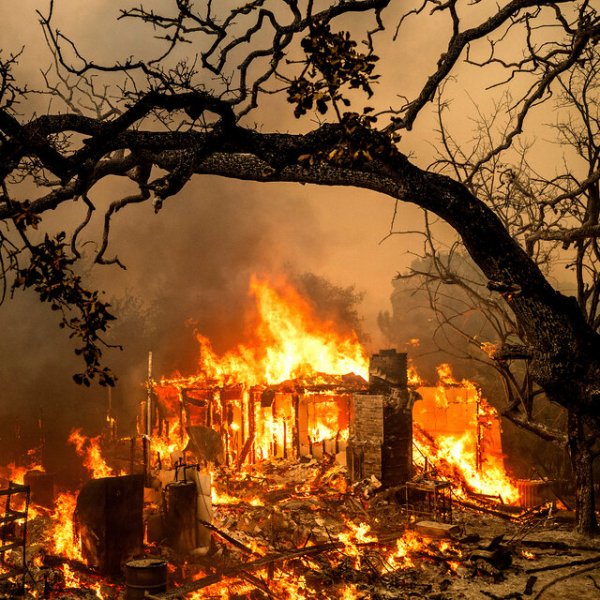
 In the wake of the Charlie Kirk assassination, it has become painfully clear that this nation, which I have always regarded as a refuge, is burning down.  How can it be that a nation so theoretically dedicated to the proposition that all men are created equal, a country wedded to the right of free speech, a commonwealth so purposefully focused on individual rights, has become such a sewer of discontent, maliciousness, and vitriol?

It should be easy to be inured to the violence that surrounds us all.  Every time I activate any device, the newsfeeds report another stabbing, shooting, beating, shoving . . . some action taken against a victim whose only crime was disagreement.  But my skin never becomes thick enough to let it all slide off, and Charlie Kirk has enlivened all the danger signals, has brought all the fire warnings to the fore.

Like many fellow boomers, I had hardly heard of Charlie Kirk before his murder. If I considered him at all, I thought he was a loud millennial signet Trump-eting to his young flock.  But, once his death became the stuff of everyday obsession, I made it my business to find out who and what he actually was. 

I see now that he was a spokesperson for the insecure youth of America, those who are caught in the maelstrom of the overzealous, radical far-left ideologies that dominate their surroundings.  While Kirk’s beliefs represent those I long ago rejected, and though I disdain his politics, I understand how he attracted youngsters who needed his firm, unwavering reassurances that there might be a way to find peace and light through Jesus Christ and Donald Trump.  I agree with none of his words, but having watched multiple videos of his interactions and speeches, I can find no evidence of his being a bully or a mean-spirited man.  I see an overconfident alpha male inviting people to debate with him, people who gladly engage.  He argued vigorously, but he was no Grand Inquisitor dictating conversion.

I have family members who are born-again Christians, and I know that in their hearts, they believe it is their duty to save the world by convincing us all to pronounce commitment to their version of Jesus Christ.  When Erika Kirk spoke in the immediate aftermath of her husband’s death and at the funeral, I was struck by how much she sounded like people I love.  I disagree with them almost entirely, but their intentions are pure.  And intention must count.  Erika Kirk deeply believes it is her Christian duty to forgive her husband’s assassin, and Charlie Kirk deeply believed it was his mission to save America’s youth.

Kirk should not, however, be hailed as a martyr.  The unhinged young man who shot Charlie Kirk represents no cause, is not a faithful follower of any philanthropic group. Tyler Robinson may be confused, and he may be lost in his political beliefs, but he did not kill Charlie Kirk for any reason but his own personal compulsions, whatever they are. 

In both camps, free speech is the true victim, the real martyr.  It is dangerous these days to express beliefs of any kind, and there is a vacillating definition of the word “freedom,” the freedom that is at the core of the national dissonance that keeps getting louder. 

The problem is not whether Charlie Kirk was right or Jimmy Kimmel was wrong.  The problems that rule our daily lives are whether the guy who passes you on the highway gets to take your right of way without being shot at, and whether your friends get to say they don’t want to eat fish for dinner without fear of being stabbed for disagreeing with you or if the woman waiting for the #4 train she deserves to be pushed in front of an oncoming train because she didn’t say “excuse me,” when she bumped into you.

Both sides daily stoke the fires. Neither side seems willing to brandish an extinguisher. And that’s why the fires are consuming us all.
Hometown Revelation

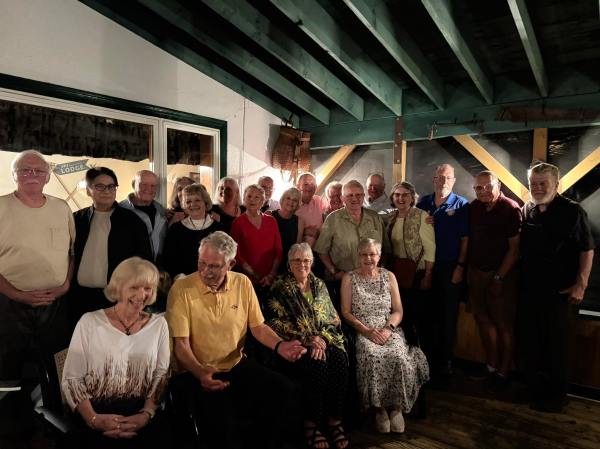
Photo by Richard Amell, SLHS Class of '65

Sixty Years On. . .

Returning to Saranac Lake, the town where I spent my latter childhood years, used to be all about my mother and my brother David. Both were much loved for good reasons; each had a particularly large presence among the locals and made a difference to many.  In the old days, I felt suffocated and extincted by the size of the welcome I always got for them.  Mom’s friends and David’s admirers were legion, and I could not walk down the street without being greeted with, “Hey, I knew your brother,” or “Carla, you’re Charlotte’s daughter.  She was an amazing woman.”

Heck, I didn’t even have to be in our hometown.  Once, my then 20-something-year-old son and I drove through a blinding blizzard to spend a weekend in Lake Placid, the tourist mecca nine miles and a huge cultural ethos away from Saranac Lake.  We checked into the Hilton Hotel and went to the bar to unwind before sleeping.  Within minutes of being seated, three people at the bar realized I was a Swett and sat themselves next to me to  regale me with stories of David when he was the bouncer at a bar over on the lake.  Soon, another three people came over to tell me what a great teacher mom was the year she taught bio at LPHS.

It was something of a relief to be anonymous, to duck into their legacy.  I was content to linger in the long shadows Mom and David had cast years before. 

Over the years, I remained in touch with only one person, the grown-up boy I counted as my best friend from 6th grade on, the boy with whom few in our class knew I had a relationship.  He had gone to college, been engaged, been sent to Viet Nam, and moved down south, but we stayed connected though I had not seen him since he visited me in New York on his way to Viet Nam in 1969.  I would have seen him if he had been in town when I was there, but he was not. 

 I loved taking my family to visit Saranac Lake, and we went as often as we could.  We camped at White Pine Camp before it was renovated.  We hiked up to Copperas Pond.  We canoed or boated out onto the lakes. But since my one true pal was not there, I felt no compulsion to call anyone else.  I didn’t expect that anyone would remember or care.  David and Mom were the ones that counted.  I did not.

Everything changed for me when  the 35th Reunion of the Class of 1965 rolled around.

In 2000, on the verge of leaving my husband and having buried my mother just a few months before, I got the notice that a reunion was in the works.  I wasn’t sure how I felt about facing my classmates, but I was sure I needed to find a way to feel grounded.  I had just begun to flex my creativity and was experimenting with a new career; the idea of being among the people who knew me before I left my chrysalis was comfortingly attractive.

The opening event was a meet-‘n’-greet at the Belvedere Restaurant, a hometown tavern, where many of my classmates had learned to drink as teenagers but to which I had never been.  I parked my car outside the restaurant, and before I got halfway out of my car, a familiar form appeared at the top of the stairs.

“SWETT!!!” He exclaimed, addressing me, as people had when we were young, by my embarrassing last name.  “You’re here!!!”

The surprise greeter was John, the boy who sat behind me in 5th grade. The one who dunked my braids in an inkwell then cut off the ends, who was grateful I didn’t complain to the teacher but simply laughed.  He was the boy who told me to shut up when I argued with a teacher about the legitimacy of a request we were expected to honor. He was never someone I thought of as having any real interest in me, but he had always been there.  And now there he was smothering me in hugs.  He led me in. 

Inside, I was greeted by people, many of whose faces I barely recognized. My oldest, best friend was there, and I buried myself in his affection but felt no reason to hide for long.  There were so many cherished memories assembled.  Gail, who lived down the hill from me when we first arrived in town that winter of 1957.  Her dog Mike nearly scared me to death. Later, when we both moved across town, Gail was once again down the hill from me, always my neighbor and a kindred spirit. Marsha, whose 4th grade birthday party invitation eased my transition from Massachusetts outsider to Saranac Lake resident.  Nancy, my high school bestie, and Maryanne, with who made me laugh as we walked together down the hill from school in the springtime. I rediscovered Karen, whose baby brother was born within weeks of mine. And shy Art, who had seemed so disinterested in anything academic but had evolved into a High School History teacher.  Then there was Penny, whose friendship was a constant aspiration though she seemed to disdain me, enveloping me in a hug. 

Within minutes of arriving, my classmates reminded me that though high school was not my finest hour, it was a time that deserved to be remembered.  The campaign for senior council president, the regional chorus festivals, jazz band, speech contest, the town centennial pageant. . . . 

People still effused about David or Mom. But I realized I, too,  belonged.  My fellow townspeople were, along with David and Mom and all the Swetts, the main characters in the play that was my life in this town.  I felt embraced and accepted, and I understood for the first time that the play wasn’t over yet!

I struck up correspondences, albeit spare, and looked forward with great anticipation to whatever came next.

At the fiftieth reunion, naturally, some of the best people were not there.  Old age, illness, family events, death.  Nancy was no longer with us, and John was clearly ill.  But we had a blast.  Gail and I hosted the culminating ceremony together, and we formalized our belief that we were sisters of the most bonded sort, members of a family of disparate siblings, who’d grown up in a community founded on the idea that a town exists to care for one another. 

The people who fostered the growth of Saranac Lake in the late 19th C arrived there in order to give or find relief from TB; the tradition defined the town and trickled into everyone’s consciousness.  Saranac Lake became a refuge for veterans of WWII and Korea, boys who needed a quiet, caring place to raise their families and set the world aright.  Refugees from places like the Swiss Alps who needed to be in the familiar protection of the granite mountain walls that surrounded us.  We were raised by survivors who nurtured one another’s survival, and we members of the Class of ‘65 bonded to one another as our parents did to our town. 

Returning last month for our 60th Reunion, I had feared that David’s recent death would make it painful to hear his virtues extolled.  I was wrong. This great extended family we’d both been part of shared memories that made mine more vibrant.  I missed him more and at the same time a bit less because he was there with us in more hearts than just my own.

There were far fewer of us this year to revel in the joy of sharing one more party.   So we made a solemn promise to one another: we won’t let ten years pass before we do it again.  Ours is a special joy we must nurture fervently.

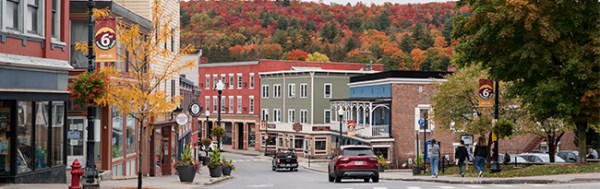
Saranac Lake, NY, began as an outpost for hunters but gained fame and population as a medical center for Tuberculosis sufferers.