
Despite the dark suggestion of her title, Rachel Kadish’s The Weight of Ink (Mariner Books, 2017) is pure illumination.
I turned to Kadish’s book as I began cobbling the details and backdrops for a fiction I am working on about members of a 17th C New Netherlands Jewish community, refugees from the Portuguese Inquisition. Since Kadish’s book, set in the same time period, concerns the life of Portuguese Jewish refugees who have found their way to London by way of Amsterdam, I was drawn in by a hope that her descriptions and depictions would give me a more vibrant, sensory experience of the world I hoped to create. It did not take more than a few pages to know that I had made a wise choice, that I would find what I was looking for. And much more.
The life of Kadish’s characters, defined as much by ink as by history, is a seemly model for the ones I hope to bring to life. Mine too, will be defined by their stories, stories that bear the pressure of ink, which in the case of Kadish’s characters, is considerable . . . both physically and literally.
Kadish’s book presents two heroines, each of whose existence attests to the ink’s sway. One is a Ester Valasquez, a Jewish intellectual born into the wrong century, and the other is Helen Watts, a 21st C baby boomer academic intent on breathing warm life into the legacy of the woman whose work she has discovered in the carapace alcove of a house built in the aftermath of England’s Civil War.
Watts, a sexagenarian historian at a contemporary London university, finds herself wrestling with self-doubt and recrimination after she realizes that documents given to her by a former student are authentically written by a woman in the 1600s. Watts has never hoped for such a find, one that seemed unfathomable. That a female in that time period could have asserted herself strongly enough to have accomplished the work Helen has found seems incredibly miraculous.
The ancient writer Ester Valasquez is a true anomaly: a brilliant Portuguese Jewess, trapped in but not stifled by the male-ordered strictures of 17th C society, both secular and religious. Ester, who speaks and writes fluently in Portuguese, Hebrew, Dutch, and English, is an orphan in the protection of the prestigious Sephardic Rabbi Ha-Mendes. Brutally blinded and disfigured by the Inquisition, Rabbi Mendes has made it his self-appointed mission to bring Judaism to the Jews of London, who have only recently been readmitted to Britain by Oliver Cromwell. It is a community that lacks an educational center, and Rabbi Mendes engages Ester’s brother Isaac to be his scribe, to set his sermons and essays to paper. Isaac dies, however, and Ester eagerly takes over as the rabbi’s scribe. Over time, as the rabbi ages, he writes less and less, leaving Ester to write letters in his name and others’, letters that are both heretical and dangerous. That she gets away with her subterfuge has everything to do with the upheavals of the great Plague and then the Fire of London.
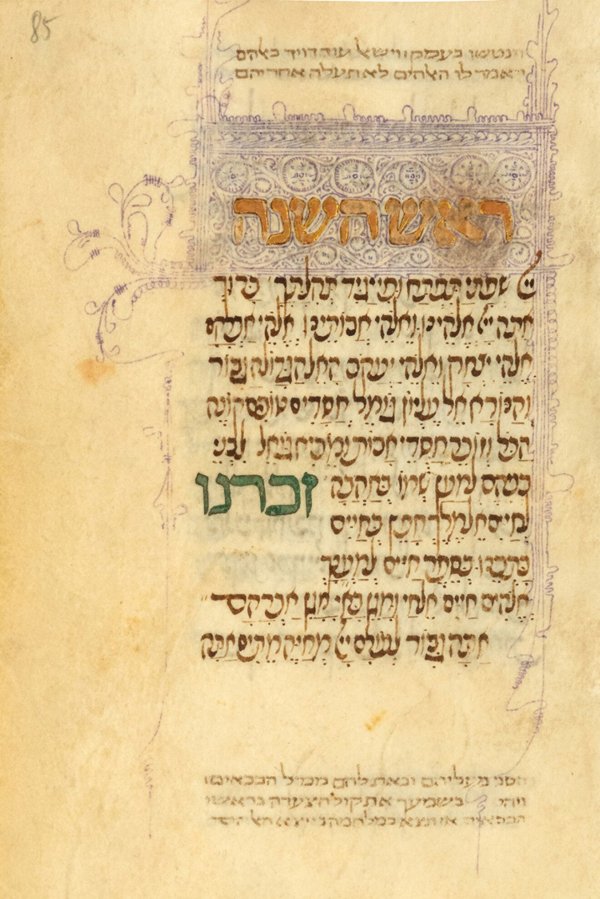
The ink Ester uses is a heavy amalgam of iron salts thickened by tannin harvested from gallnuts, a bluish-black ink that mercilessly stains her fingers. Though the paper Ester uses is undoubtedly made of strong linen, the ink seeps through and leaves holes among her sentences. By the time Helen Watts and her assistant Aaron Levy receive the documents, the ink has turned sepia-brown, and the weighted pages are difficult to read.
The words Ester writes are themselves more leaden than the ink itself. Her letters, signed in names of men she deemed incapable of writing, are sent to the men with the best minds in Europe of her time, but the letters she writes to Baruch Spinoza, excommunicated apostate denounced by Jews and Christians alike, are the most dangerous.
When Watts find proof that Spinoza actually responded to Ester’s letters, Watts realizes that the ink was even more ponderous for Ester and is a discovery she finds nearly intolerably heavy.
Ester has undertaken her intellectual pursuits with a full understanding of the consequences she will face. She refuses the protection of marriage, the comfort of children, real love. She has made a choice, and she is faithful to that choice throughout her life, though she finds an acceptable compromise that ensures she never has to worry about money, and her words will never betray her. Watts faces her discovery of the letters 400 years later with a similar conviction. She, too, has made her work her life. She, too, has prized intellectual pursuit over the pursuit of conventional happiness.
Rachel Kadish has accomplished a miracle. She has given provocative life to a concept that few would deem important. It may seem that the age has passed when a woman was not officially allowed to read and write, no longer are women prohibited from becoming actors, cannot wear men’s apparel. Women, some would argue, are no longer at the mercy of husbands and fathers for support, prohibited from inheriting the wealth of either. In the absence of all such repression, Ester’s life might seem arcane. But the seemingly stark contrast of Helen Watts’ contemporary life points to a truth of most women’s reality, a truth that prevails today.
Like Ester, Watts made her choices. She had all the academic and intellectual freedom she could ask for, but she, too, had to forego the pleasure of deep, committed love. Even in her youth, when she was tempted by a handsome, commanding Israeli man, she could not commit her whole self to him. Like Ester, she understood that belonging to a man, even to a man who offers deep, protective love, meant being swallowed by his life, his pursuits, his dreams. Four hundred years later, Watts came to the same conclusion. Too easily women compromise themselves and disappear into their men.
The Weight of ink is a deep dive into the minds and lives of two women widely separated by time and culture. Both reside in a life colored by equal parts joy, satisfaction, and regret. Both are warrior women.
 carlastockton.me