
Creative Truth and Absolute Fiction: An Online Two-Part Workshop in Nonfiction/Memoir and Fiction Writing
February 12, 2026 @ 6:30 pm – February 19, 2026 @ 8:30 pm
$20 – $40 Pay What You Can
The Adirondack Center for Writing Presents. . . .
Have you ever wanted to journey down the road to find your voice, craft your personal storytelling, or write creative fiction? In this two-part workshop led by Carla Stockton, we will examine the distinctions between truth writing – such as journalism, history, and biography – and creative nonfiction – such as memoir – and explore how creative nonfiction and fiction are inexorably entwined.
We will also consider the fundamentals and craft of nonfiction/memoir writing and fiction writing, including the interplay between lived experience and creative invention. Each session will include instruction, guided exercises, discussion, and optional peer sharing. Participants will leave equipped with practical tools, fresh writing samples, and a clearer understanding of how to use your own voice across genres. Whether you are new to writing or haven’t written in a long time, then this workshop is for you!
Thursdays, 2/12 & 2/19 | 6:30-8:30 PM | Online | $20-$40 Pay what you can
Last day to register is Thursday, Feb 5!

Carla Stockton, a proud and hearty child of the Adirondacks, grew up in Saranac Lake. Now celebrating 51 years of parenthood, Stockton has been teaching writing and literature for nearly as long. Her work has been featured in publications such as Moment Magazine, The Toast, and The Guardian. She also translated Radovan Ivsic’s surrealist drama King Gordogan. Formerly a high school drama director and English teacher, Stockton now serves as an adjunct professor at Lehman College and is currently working on her second nonfiction book and a historical fiction.
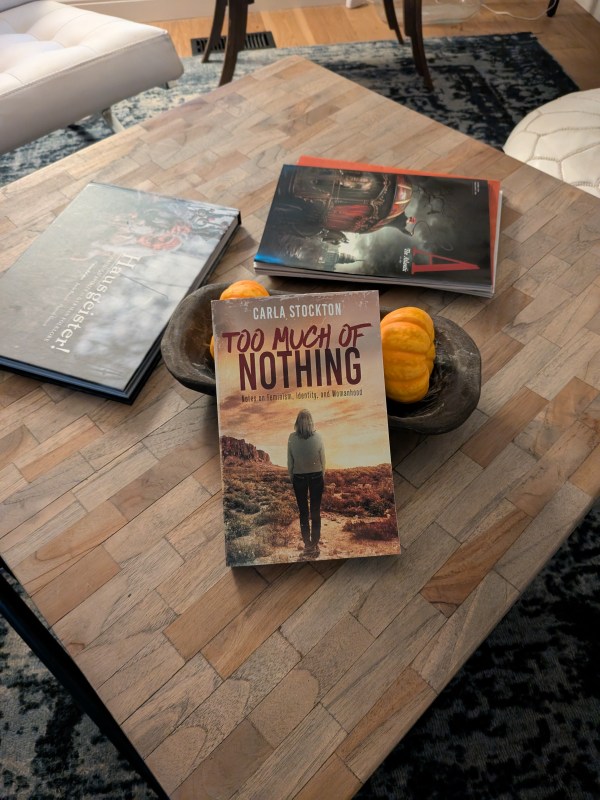
Stockton’s memoir Too Much of Nothing: Notes on Feminism, Identity, and Womanhood, which has some intimate glimpses of moments in Saranac Lake, is available at Mountainash.press, through Saranac Lake’s Book Nook, bookshop.org, or anywhere books are sold, including Barnes and Noble and Amazon. To learn more about Carla Stockton, visit her website at carlastockton.me.

 carlastockton.me