One of Mayor-elect Mamdani’s promises is that he will rout out the evil landlords from NYC, and that worries me. By whose estimation are landlords deemed as such? To what measure do we hold them? And who decides which landlords deserve to be punished?
In my building in Harlem, for example, there is much discussion about how we are neglected. There have been some dire problems, and we are without a full-time superintendent, without a maintenance man, without real support. As frustrating as that is for us tenants, it is too easy to blame the landlords, too facile to call them negligent.
Running a building is an expensive, difficult operation. Especially in a building that tries to accommodate those of us who truly NEED to be paying rents that are realistically affordable. Affordability is a word that has no real meaning in most of the city these days — directly across the street from my building is one that the NYC lottery has offered as “affordable,” a word defined by starting prices of $4400/month for a studio apartment. For whom is such a sum affordable? Not for most of us in my building.
Ours is a rent-stabilized building that houses 130 units, some of whose tenants are living on Section-8 vouchers and some who are unable to meet their monthly obligations, for which the landlords are merciful. We have had our share of sink and tub drainage problems, and it is absolutely clear that the plumbing and disposal systems, built in 1984, might need replacing; but, for the most part, even without the full-time help, things usually right themselves in due time. People complain there is no heat, but the city regulates landlords, and while I would prefer there were NO HEAT at night and a little more heat by day, I am sure our landlord is meeting their obligations. Occasionally, we face other problems endemic to the city, but within a reasonable amount of time, they are usually dispatched. If we are not treated like guests in a 5-star hotel, well, we’re not guests in a 5-star hotel. We are working folk who come home to a stable building protected by a security guard and maintained with enough care that we certainly never suffer the slings and arrows of the sort Mr. Mamdani refers to as evil landlording.
I would never want the responsibility of providing housing to so a disparate group as the group housed in our building comprises. We come from all walks of life, all kinds of culture, and we can be a demanding lot, who, overall, get whatever we need. The landlords have an incessantly huge task. One I do not envy.
On this Thanksgiving, I am grateful for the roof over my head. And for the management that keeps my building functioning.
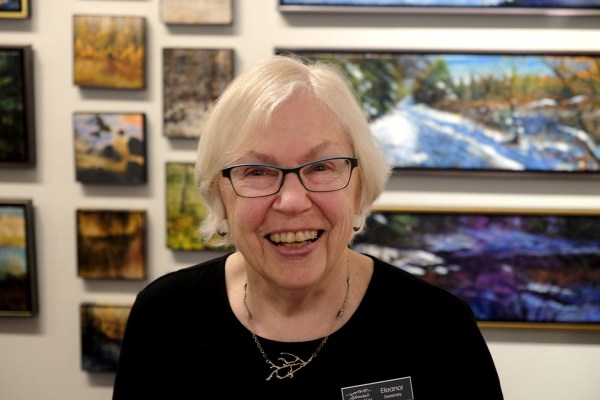
The world has lost a source of light this week. My friend Eleanor Sweeney has left the planet, and with her goes the last non-family link to my mother, a link that gave me permission to see my other as the whole woman she was.
Eleanor and my mother Charlotte became friends the year my baby brother John began Kindergarten, the end of 1966. In those days, it was a rare Kindergartner’s mother who was nearing 50, which my mother was, and she felt out of place.
“I feel like I did when I was working as an RA at UVM,” she told me that October. “I’m the experienced older woman, and they all look to me for wisdom, and I can’t admit that I’m still just flailing like everyone else.”
Eleanor made her feel normal. Their fourteen-year age difference was never uncomfortable for either of them.
They met through their sons. Within weeks of beginning school, John and Eleanor’s oldest boy were best friends, and they began visiting one another’s homes. Mom and Eleanor began to talk. It was easy to talk with Eleanor. She listened intently and answered astutely. They began to share details of their lives as mothers of multiple, active children. Eleanor had three small boys; Mom had three girls and three boys, ranging in age from 6-14, still at home. I had left for college in September.
Before Eleanor entered the picture, I remember mom going to College Club and PTA meetings, but she did not socialize with her cohorts or get close to anyone in particular. With Eleanor, friendship quickly blossomed into a personal attachment. They talked on the phone, commiserated about kids and husbands, shared driving responsibilities, and nurtured a kind of surrogate sisterhood.
Eleanor was the perfect confidante for my mom, whose European upbringing and old-world sensibilities were often misunderstood. She had been an expert cellist and loved music, was a reader of all manner of literature, and grew up in a house where art was the center of everything. Eleanor was a reader, loved books, music, and culture in general; moreover, Eleanor was an artist, a free-thinking photographer, with a keen eye for what made the natural world seem otherworldly. They were both linguists who could converse about art or literature or current events in English or Russian; each was the center of life in her home and could equally prepare meals, do the laundry, analyze great ideas, and, when necessary, fix minor plumbing issues. They were heroic women.
By the time I got to know Eleanor, I was the mother of grown children, and she was divorced and a grandmother. My mother had told me I should get to know her friend, but I had had little opportunity. I liked her on the few occasions I met her, but we were not friends until the 1990s. My mother died in 1999, and friendship with Eleanor became a kind of imperative for me, a force for which I shall be forever grateful.
Soon after mom’s death, another friend from our hometown sighed, “I wish your mother had been mine. She was perfect.” I could not respond. My mother was certainly anything but perfect for me, and it took time for me to learn how to love her appropriately. Before I could articulate any of that, Eleanor spoke up. “Charlotte made me appreciate my mother precisely because she showed me how to love an IMperfect mother.”
What an epiphany, I thought. That is just what Eleanor is doing for me!
Over the next 25 years, we saw each other through a number of life changes. I divorced, her grandchildren grew up, and mine were born; she suffered great losses, and then so did I, though never quite as great. We didn’t talk all the time, but when we did, we connected deeply and spiritually.
Eleanor and my mother taught me what an extraordinary gift an intergenerational friendship can be, and I have learned to nurture the same with younger women as I age. I cherish the time I got to spend with Eleanor. I will miss her, but her presence is unextinguishable in my sense of self, my appreciation for life. Perhaps someday a younger friend of mine will feel the same about me.
I doubt Eleanor knew what a giant print she left on my heart. She was far too humble to have sought it out.
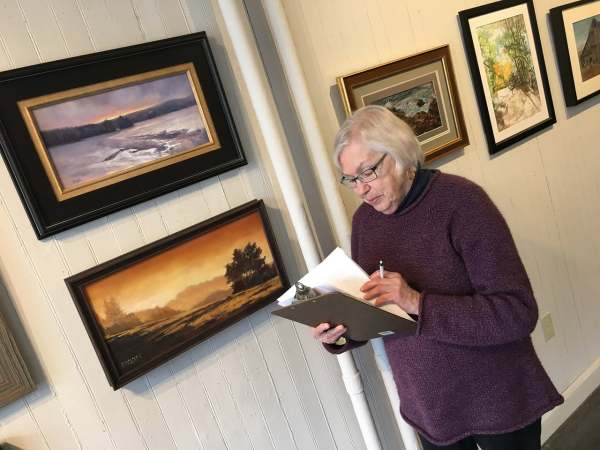
Eleanor was one of the founders of the Adirondack Artists Guild; she is pictured here in the Guild’s Gallery in downtown Saranac Lake, NY. The Guild will host a celebration of Eleanor’s life and work in January
Audio podcasts are a wonderful innovation, especially for those of us with insomnia. Nothing is more soothing for me than a gentle voice talking about interesting worlds. I especially love science, history, and theater talk, film history podcasts, or literary discussions, and David Remnick. It is comforting to feel myself relaxed out of anxiety into someone else’s knowledge and then to drift off to sleep.
I confess that there are many podcasts that irritate me. The ones that make me sit up, desiring to scream into my device– though that is certainly not an option for a considerate apartment dweller in the middle of the night – those that frustrate me with their pontification or false modesty, political rants or misinformation.
The ones that most irritate me are the podcasts that pretend to offer hope and life modeling to women over 50. On podcasts such as unPaused, with Marie Claire Haver, or Wiser than Me with Julia Louis-Dreyfus. These offer advice from the megastars like Isabella Rosselini, Nancy Pelosi, Gloria Steinham, Michele Obama, Jane Fonda, et high-falutin al.
Inevitably, these admittedly wonderful, rightfully revered role models are women who have achieved great fame and fortune. They are most certainly noteworthy, and I deeply admire them and their accomplishments. But they are women who have been receiving attention for a long time already and are rarely in positions to which any of us groundlings can reasonably aspire.
All the while, everyday women who achieve less than phenomenal but still noteworthy successes are overlooked. Despite the fact that we, too, are pundits. We, too, offer stories that could be truly inspirational.
I have many friends who have lived lives worth sharing. Women – mothers and wives — who have written books that may not have been bestsellers but still had audiences and made a difference for their readers. For example, my dear friend, who nursed her husband through harrowing bouts of PTSD, raised her family, took care of her brothers, ran a lovely small business, and managed to paint some lovely watercolors? She knows about survival and rising above adversity and setting goals, and attaining happiness. Another brave woman I know writes songs that aim to forge peace and understanding while curating a huge cache of legacy art, and another creates phonics videos to promote literacy among disadvantaged children. They love their work, and they are proud of what they do, as many everyday women do. Some nurture student artists — those who may not be the Oscar or book award winners spewing gratitude for their mentors — and help them to nurture dreams that lead to meaningful careers that improve the world in multiple ways, Even while schlepping personal children from pillar to post, attending extracurricular activities, keeping husband’s clothes cleaned and pressed, etc., myriad ordinary heroines persevere. Women who work as nurses, physicians’ assistants. dental hygienists, bus drivers, etc., while providing care for elderly parents. Those who act in plays on, off, and way off Broadway, direct educational and community theaters, sing in and direct choirs, play music, and lead small-town orchestras.
You can see my point, I am sure. The accomplishments of women are incalculable.
Surely the multitude of women who have built modest successes are no less interesting than those who have made millions? Is it not exemplary that real people keep plugging away, writing, painting, acting, teaching, serving the sick, and providing goods and services? Aren’t the common variety supermoms/daughters/aunts/sisters/grands apt role models for younger generations?
Come on, social influencers, podcasters, you who want to inspire women, find those of us who fuel the world with its real power. Look for our books, our drawings, our songs, our stories. Ask us what we know. Let us show you how fascinating we can be.
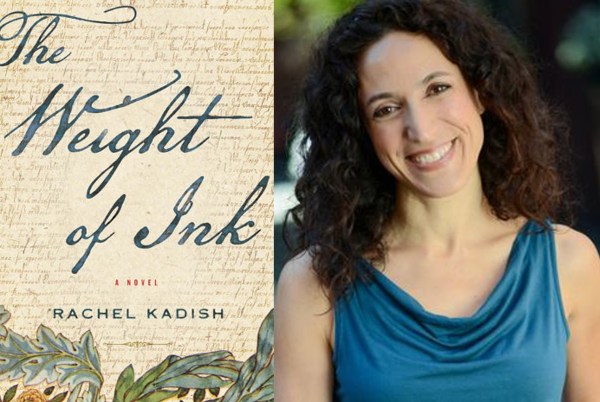
Despite the dark suggestion of her title, Rachel Kadish’s The Weight of Ink (Mariner Books, 2017) is pure illumination.
I turned to Kadish’s book as I began cobbling the details and backdrops for a fiction I am working on about members of a 17th C New Netherlands Jewish community, refugees from the Portuguese Inquisition. Since Kadish’s book, set in the same time period, concerns the life of Portuguese Jewish refugees who have found their way to London by way of Amsterdam, I was drawn in by a hope that her descriptions and depictions would give me a more vibrant, sensory experience of the world I hoped to create. It did not take more than a few pages to know that I had made a wise choice, that I would find what I was looking for. And much more.
The life of Kadish’s characters, defined as much by ink as by history, is a seemly model for the ones I hope to bring to life. Mine too, will be defined by their stories, stories that bear the pressure of ink, which in the case of Kadish’s characters, is considerable . . . both physically and literally.
Kadish’s book presents two heroines, each of whose existence attests to the ink’s sway. One is a Ester Valasquez, a Jewish intellectual born into the wrong century, and the other is Helen Watts, a 21st C baby boomer academic intent on breathing warm life into the legacy of the woman whose work she has discovered in the carapace alcove of a house built in the aftermath of England’s Civil War.
Watts, a sexagenarian historian at a contemporary London university, finds herself wrestling with self-doubt and recrimination after she realizes that documents given to her by a former student are authentically written by a woman in the 1600s. Watts has never hoped for such a find, one that seemed unfathomable. That a female in that time period could have asserted herself strongly enough to have accomplished the work Helen has found seems incredibly miraculous.
The ancient writer Ester Valasquez is a true anomaly: a brilliant Portuguese Jewess, trapped in but not stifled by the male-ordered strictures of 17th C society, both secular and religious. Ester, who speaks and writes fluently in Portuguese, Hebrew, Dutch, and English, is an orphan in the protection of the prestigious Sephardic Rabbi Ha-Mendes. Brutally blinded and disfigured by the Inquisition, Rabbi Mendes has made it his self-appointed mission to bring Judaism to the Jews of London, who have only recently been readmitted to Britain by Oliver Cromwell. It is a community that lacks an educational center, and Rabbi Mendes engages Ester’s brother Isaac to be his scribe, to set his sermons and essays to paper. Isaac dies, however, and Ester eagerly takes over as the rabbi’s scribe. Over time, as the rabbi ages, he writes less and less, leaving Ester to write letters in his name and others’, letters that are both heretical and dangerous. That she gets away with her subterfuge has everything to do with the upheavals of the great Plague and then the Fire of London.
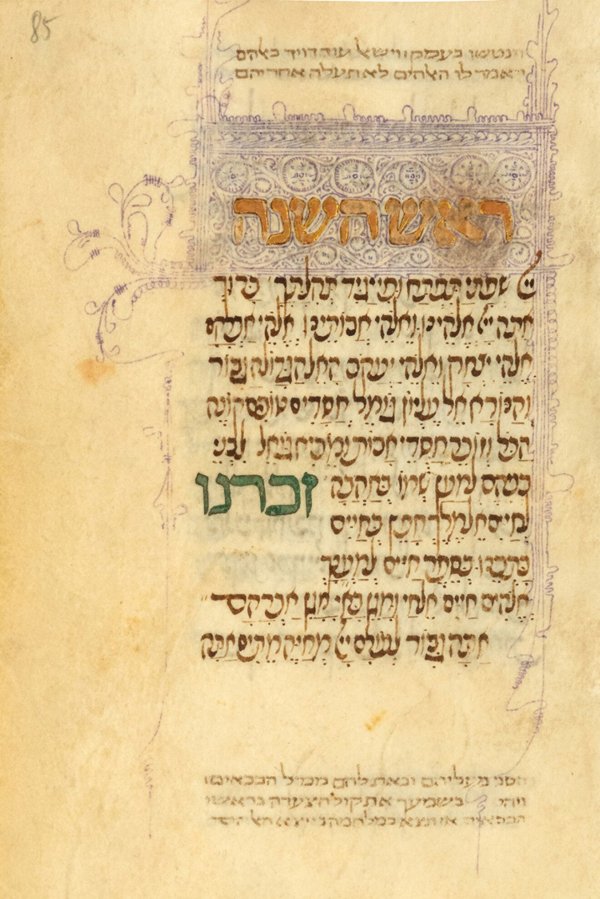
The ink Ester uses is a heavy amalgam of iron salts thickened by tannin harvested from gallnuts, a bluish-black ink that mercilessly stains her fingers. Though the paper Ester uses is undoubtedly made of strong linen, the ink seeps through and leaves holes among her sentences. By the time Helen Watts and her assistant Aaron Levy receive the documents, the ink has turned sepia-brown, and the weighted pages are difficult to read.
The words Ester writes are themselves more leaden than the ink itself. Her letters, signed in names of men she deemed incapable of writing, are sent to the men with the best minds in Europe of her time, but the letters she writes to Baruch Spinoza, excommunicated apostate denounced by Jews and Christians alike, are the most dangerous.
When Watts find proof that Spinoza actually responded to Ester’s letters, Watts realizes that the ink was even more ponderous for Ester and is a discovery she finds nearly intolerably heavy.
Ester has undertaken her intellectual pursuits with a full understanding of the consequences she will face. She refuses the protection of marriage, the comfort of children, real love. She has made a choice, and she is faithful to that choice throughout her life, though she finds an acceptable compromise that ensures she never has to worry about money, and her words will never betray her. Watts faces her discovery of the letters 400 years later with a similar conviction. She, too, has made her work her life. She, too, has prized intellectual pursuit over the pursuit of conventional happiness.
Rachel Kadish has accomplished a miracle. She has given provocative life to a concept that few would deem important. It may seem that the age has passed when a woman was not officially allowed to read and write, no longer are women prohibited from becoming actors, cannot wear men’s apparel. Women, some would argue, are no longer at the mercy of husbands and fathers for support, prohibited from inheriting the wealth of either. In the absence of all such repression, Ester’s life might seem arcane. But the seemingly stark contrast of Helen Watts’ contemporary life points to a truth of most women’s reality, a truth that prevails today.
Like Ester, Watts made her choices. She had all the academic and intellectual freedom she could ask for, but she, too, had to forego the pleasure of deep, committed love. Even in her youth, when she was tempted by a handsome, commanding Israeli man, she could not commit her whole self to him. Like Ester, she understood that belonging to a man, even to a man who offers deep, protective love, meant being swallowed by his life, his pursuits, his dreams. Four hundred years later, Watts came to the same conclusion. Too easily women compromise themselves and disappear into their men.
The Weight of ink is a deep dive into the minds and lives of two women widely separated by time and culture. Both reside in a life colored by equal parts joy, satisfaction, and regret. Both are warrior women.
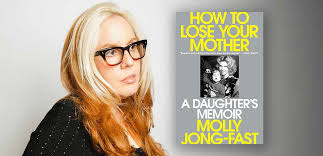
When Molly Jong Fast’s How to Lose Your Mother: A Daughter’s Memoir (Viking 2025), I resolved to avoid it. I mean, Erica Jong, author of my liberation, facilitator of my most humorous self-deprecation. I didn’t want to know the sad, selfish underbelly of my hero. Then, one day, I listened to an interview with the author, and I thought, “Well, if I can listen to this book in her voice, maybe I’ll learn something.” I did. I found the audio book narrated by the Jong-Fast herself, and, wow, am I glad I did.
Once I relented, I found myself feeling enormously grateful to Molly Jong-Fast for sharing her mother’s missteps, blunders, neglect, and abuse. It made me more aware of my own mistakes and offered me a sense of what my own children might have felt at times in their childhood.
Erica Jong was nothing like me. She was glamorous, well-connected, and a star with a severe drinking problem. I was and had nothing of the kind. But I am a writer, and I know now that too often in my children’s lifetime I felt I had relinquished my Self on their behalf, and I am sure I unwittingly hurt them in some of the ways this mother hurt this daughter. Erica Jong’s dementia and her singular life view prevent her from understanding what happened to her daughter, but with any luck, I still have some time. To make some repairs. Or at least to let my kids know I care. I am sorry.
At base, How to Lose Your Mother: A Daughter’s Memoir, is an everywoman story. When I wrote my memoir, I struggled with how to depict my mother, who suffered multiple traumas too few years before I was born to have sorted them out; she grew to be the mother everyone wished were theirs, but there was always a regret between us for what we could not have. I realized, as I wrote and forgave us both, that the complexities of the mother/daughter conundrum are much the same for even the happiest of pairs. Each mother, each daughter is a reflection of the other. As my mother’s face becomes more clearly the one I see in the mirror every day, I understand more deeply how normal we actually were.
I am grateful to Molly Jong-Fast for the mirror she held unto my nature in much the same way I remain grateful to Erica Jong for Isadora Zelda White Stollerman Wing . . . and later for Serenissima and the sensual dive into Jessica Shylock’s world. . . . as well as so many other pages of entertainment and enlightenment.
How to Lose Your Mother: A Daughter’s Memoir is a lovely — if oftentimes harrowing — read, a book any daughter is liable find herself and her mother in. A terrific experience.


 carlastockton.me