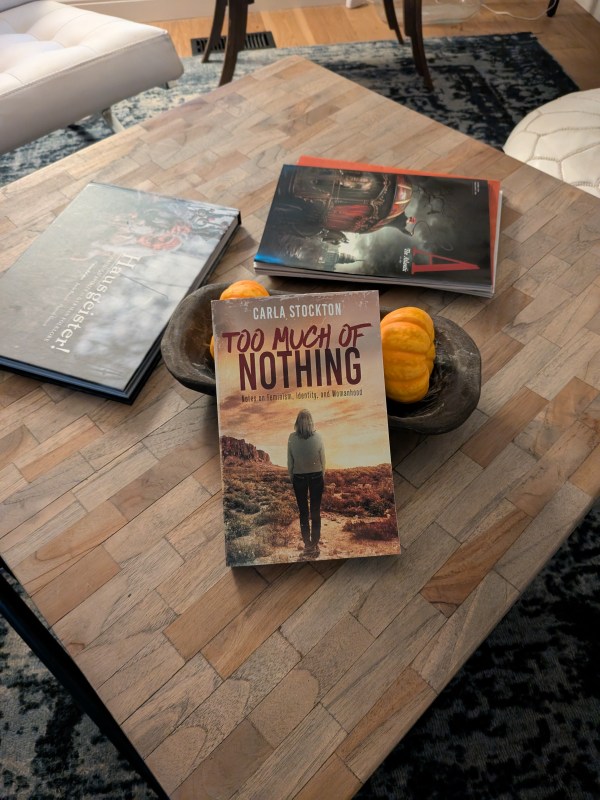
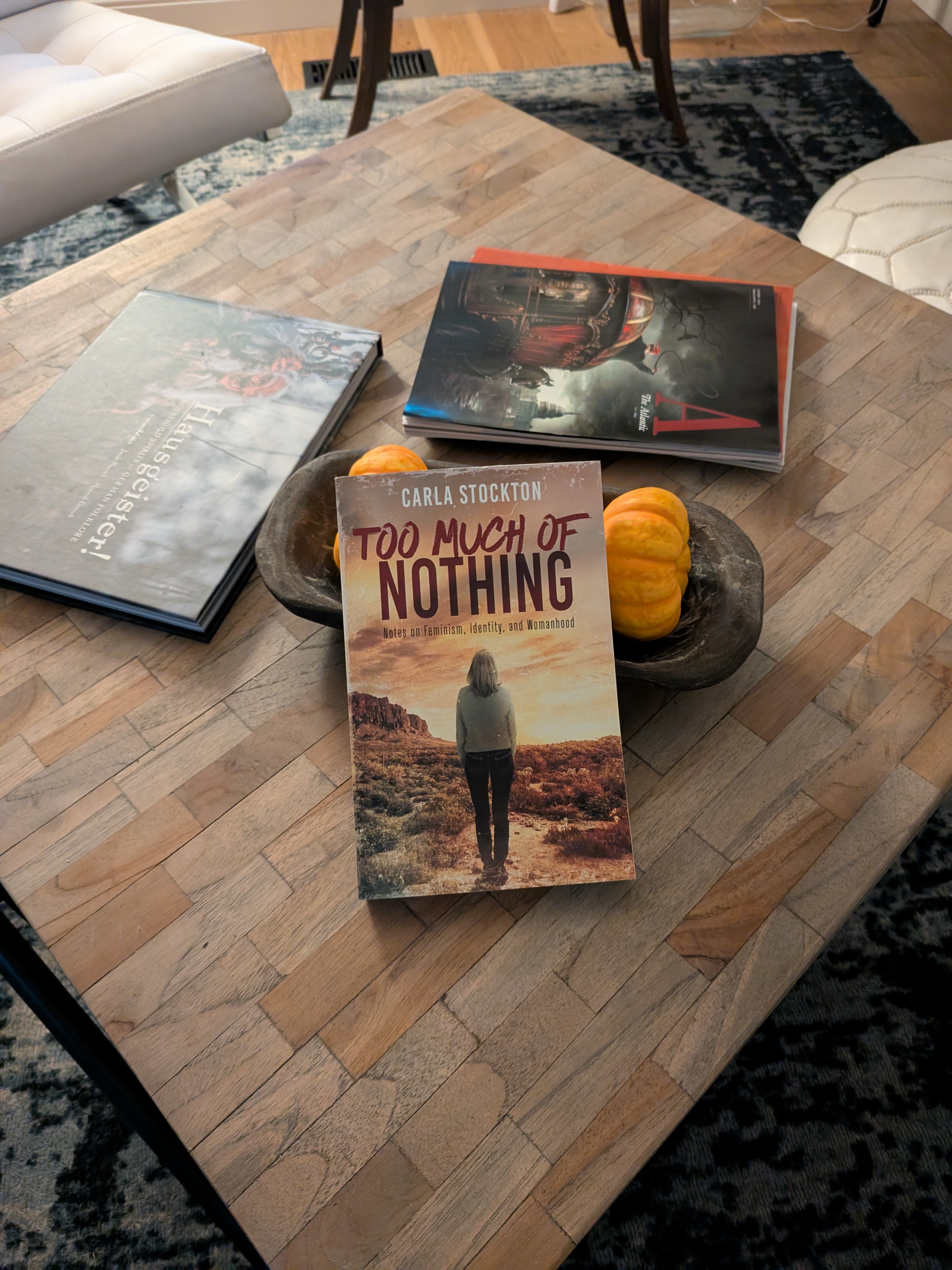
I have lived much of my life in and through books. I wandered into Alice’s Wonderland without a moment’s disbelief. I fell in love with Mercutio and imagined myself his unnamed lover. I signed impatiently when Torvald called Nora his squirrel and cried huge tears of relief when she left him. Books were never just reading material. Books took me to worlds and people, places and adventures that could carry me far from any pain that childhood or adolescence could conjure. Readers who delve into my own book Too Much of Nothing: Notes on Feminism, Identity and Womanhood will find me navigating those venues, meeting those people, and bringing them with me to my reality to enrich my readers’ experiences. Dive into my magical rabbit hole and chortle with Samuel Beckett, tzikatch with Henrik Ibsen, laugh aloud with Lucas Hnath. . . . They — and so many more — have been such great companions. It’s a pleasure to share them now.
Aaron Marbone, a reporter for the Adirondack Daily Enterprise just interviewed me for a story that will run in tomorrow’s paper. A lovely young man, Aaron asked me what it was like living in Saranac Lake all those years ago.
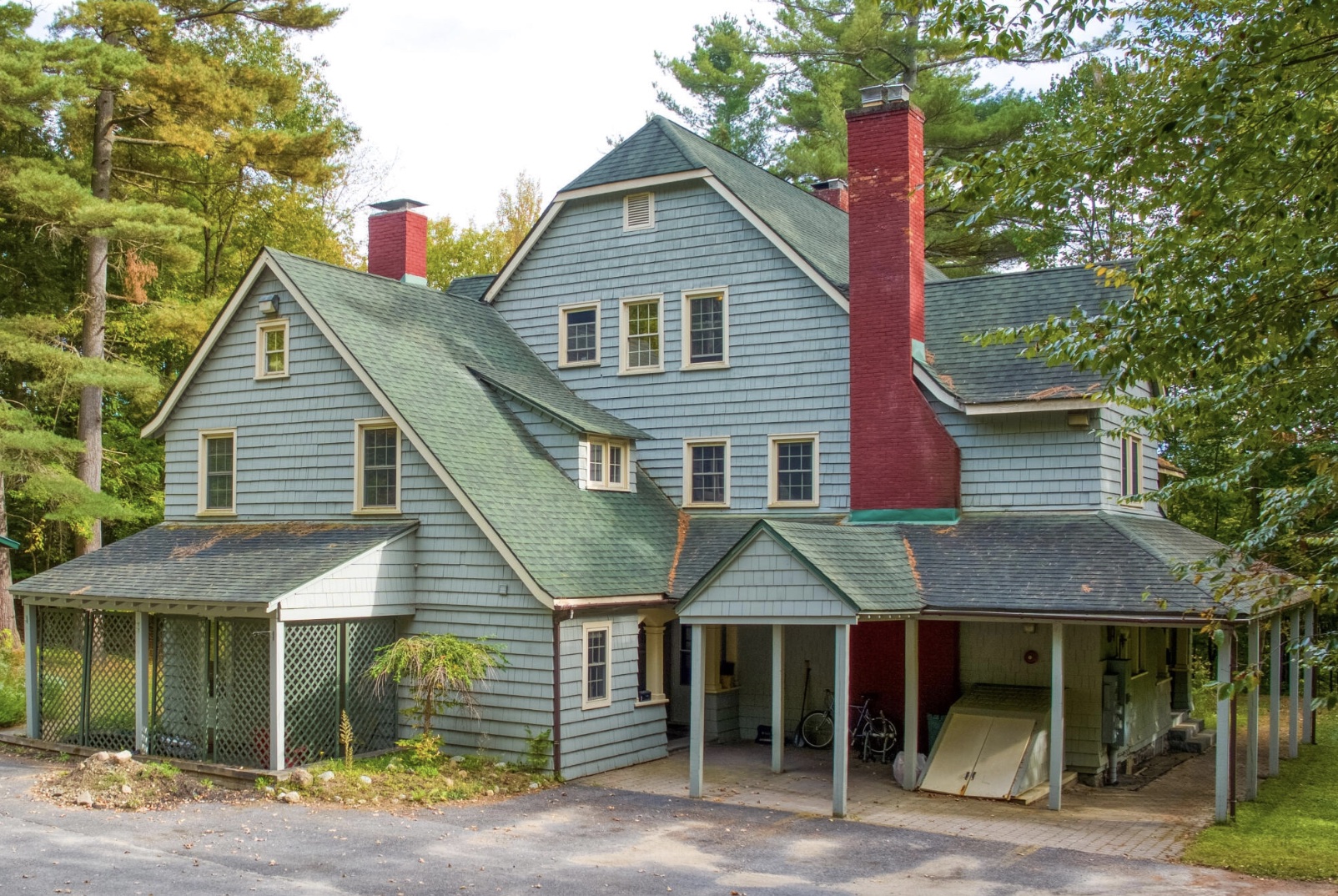
Well, I told him, that trope about walking a mile to school uphill both ways was the truth for us then. I lived on Cliff Road in a house that is today a multi-unit condominium complex at the base of Mount Pisgah.
We walked down from the top of Cliff, by way of Catherine to Bloomingdale and then to Main, up Olive Street Hill and across the overpass to Petrova, which was our school through high school. Then, for much of the school year, we walked home in the dark, down Olive Street, back to Bloomingdale, Margaret to Catherine and back up the big hill home. In the winter we wore layers of clothes that weighted us down and in spring forded through rivers of snow-melted mud cascading down every hill and forming small lakes in every little valley. Glorious.
I never thought of the people of my town as family, but they were certainly part of a clan, a clan that protected me, tolerated my strangenesses, celebrated my talents. I won speech contests, appeared in class plays, played in the band, and sang in the glee club; I wrote a pageant for a Saranac Lake centennial celebration, commissioned by a group of adults who appreciated my writing. After a cataclysmic accident, as my mother lay pinned under her car, freezing in the wind at Donnelly Corner, passers-by stopped to shield her, to provide blankets and coats from their own backs, while the volunteer fire department worked tirelessly for hours to extricate her. Then, for two years, there was seldom a day when food was not delivered to our home.
My classmates never bullied me or made fun of me though I was the kind of kid who anywhere else would have suffered terribly. I was lonely but respected, and whenever I return for reunions, I am reminded of the enormous generosity of spirit they had then and still have today. My most vociferous cheerleaders, my strongest encouragers have been my classmates, people like Gail Gallagher, Peter MacIntyre, Maryanne Aubin, whom I have known since 4th grade when we moved to that little enclave in the Adirondacks.
So of course I will go “home” to have the first celebration of having written my first solo book. At NOON, on November 9, the Saranac Lake Public Library, where one can still find a copy of that pageant I wrote in 1965, will host my book launch. On the 13th I’ll be on a panel at the Adirondack Writing Center with a new friend Laurie Spigel to talk about writing and aging and making it through. . . . and getting by with a little help from our friends. Best of all, The Book Nook, in Saranac Lake is taking orders. I hope people support the independent bookseller and order there: https://www.saranaclake.com/shop/the-book-nook
Hard to believe, I know. But here I am, age 77, and I have FINALLY achieved a solo publication. Writing was my avocation for so much of my life that it is hard to believe I have arrived to a place where it is my vocation!! I am not fond of promoting myself or touting my work, but having written the book, having put it out in the world, I am now in the business of being an author with a book to sell. I will be posting excerpts and insights here on my blog. So stay tuned!!
American adolescence is hard. At times brutal. Especially for girls. So many lessons need to be learned. So many Rubicons need crossing. It’s something most not-yet-women suffer through universally. Adolescence is at the root of Joni Iraci’s swiftly-moving novel Reinventing Jenna Rose.
Iraci’s novel drew me in and sucked me back to my own youth.
I was 18 when I became a self-sustaining New Yorker. I suppose I should have been frightened, but I had a grandmother who gave me a place to live, who trusted me to be on my own. I had all the freedom I could handle to seek myself out. That was a long time ago, and today, in the world of over-protected teens, it is hard to imagine a 15-year-old whose parents have left her to her own devices. Which is the case with Jenna Rose, the intrepid heroine of the circuitous story Iraci weaves.
At open, Jenna Rose’s Dad has disappeared, and Mom, self-consumed and bitter, is AWOL. Jenna Rose has been ordered to stay where she is, alone in her California house, with all the trappings of wealth but no comfort. She is the victim of benign neglect, a prisoner of meaningless abundance. Worst of all, the girl has no idea who she is or what her roots might possibly be. She desperately needs to throw caution to the wind, to take off, to liberate herself and find a life.
Enter a long-lost grandmother in New York City, the ghosted mother of Jenna Rose’s mom. Jenna Rose decides that the only way to liberate herself, to reconcile the many questions that muddy her past, to forge any kind of a future, she must find the old woman. Which is how she lands in New York, fabled source of self-identification, in the early days of the 21st Century.
The vagaries of adolescence are universally resonant, and Reinventing Jenna Rose reverberates with the elements that make Catcher in the Rye, The Goldfinch, and others timeless. Jenna Rose faces obstacles no less haunting than Holden Caulfield’s and no less daunting than Theo Decker’s. Yet her journey is entirely her own, unique picaresque adventure.
The presence of Jenna Rose’s grandmother and a quirkily empathetic neighbor her own age plus a devoted white German Shepherd bolster Jenna Rose’s quest for Self-Actualization. With some help from a friendly therapist and reinforcement from her new-found community, she faces and resolves long-buried personal trauma, travels to obscured corners of her own and her family’s pasts, plumbs the depths of her pain, and eventually emerges as a truly three-dimensional woman.
Groping through the multiple shadows cast in Reinventing Jenna Rose, I found myself once again grateful for my grandmother’s indulgences. Like Jenna Rose’s grandmother, mine never told me what to do or think or feel. She shared wisdom, and I was astute enough to take it. Most of it.
The grandmother’s wisdom gives the book another dimension. This is not just another young adult novel. This is a book is that that can be appreciated by people of all ages. Now that I am older than my grandmother was when I moved to New York, I see myself in the old woman, and I hope that some day my granddaughters will likewise avail themselves of my love and experience. I want them to appreciate the rich layers of pain, sorrow, joy and peace that make a well-crafted life, a life that might fit into a well-crafted novel like Reinventing Jenna Rose.
Until this summer, I believed that Small Business deserved my true allegiance.
I was raised to believe in American small business. My father often declared that America would be nothing without them. “We owe them our allegiance,” he would say.
In the days before my parents had so many children that we began to resemble the shoe-dwelling nursery rhyme family, my dad worked for medical suppliers, big businesses with deep pockets. They supported his travels and provided generous expense accounts. He could, in those days, afford the finer establishments along his various routes, but he chose instead to support the small business owners wherever we went. We stayed in family-operated motels in Maine, a cabin on the Navajo reservation in New Mexico, an aging couple’s dilapidated cottage in Far Rockaway. In those days, he made good money, but he felt stifled.
When he was nearly fifty, seeking to free himself from the shackles of the corporate bosses, Dad bought a small toy distribution company and became the middleman between toy manufacturers and the very small businesses that dotted the landscape of upstate New York. He traveled incessantly then, and he preferred to stay in boarding houses, to tolerate subpar accommodations rather than patronize the area’s successful hotels and motels. It was, he insisted, his responsibility to support his colleagues’ efforts to survive.
“I would rather pay too much for an everyday Joe’s honest efforts than support the corporations that want us all out of the way.”
I believed him. And I believed, too, in supporting small, independent business owners. Dad struggled mightily to maintain an income sufficient to support his family, and he was proud to be in control of his destiny, to own his share in his America.
In his memory, when I travel, I often choose small, local establishments over the mega-corp concerns that dominate the industry. For the most part, I have been happy with that choice. I have found moms and pops to be friendly, accommodating, and eager to meet my needs or to suggest alternatives. I have been proud to contribute to their longevity, to help ensure that America will always be a place where small businesses can thrive among the giants.
Unfortunately, that was then. Now I am disabused of my fervent devotion to the self-sustaining tourism businesses. After a few encounters with properties that were understaffed and badly maintained despite exorbitant prices; after being told that the bad conditions are the result of the fact that “no one wants to work,” which makes me even more skeptical about the high prices, I am done. The final blow happened this past month in a place I expected perfection, where instead I encountered not just disappointment and disenchantment but also fraud and chicanery. I have been cheated by the Sea View Motel in Ogunquit, ME.
I have family visiting from abroad for the summer, and we decided to take a long-overdue vacation in the beautiful northeast. We had a lovely stay in a small hybrid corporate-and-local establishment in the Adirondacks, about which I will write anon, and then we thought to spend two days in Maine, a state where I have endless memories of delightful family time spent in family-owned hotels that my father chose. We found the Sea View online and – much to our own chagrin – booked our room through Hotels.com.
In the photos online, the Seaview looks sumptuous. Large, clean rooms beckon, and the lovely blue water of a large pool sparkle from the electronic page. The comments – which I only later realized were from pre-Covid days – were positive, and the price was reasonable, commensurate with the other properties in the area.
When we arrived, we were immediately disappointed and had a bad feeling about the place. The structure was rundown, and the stairways looked steep. We asked the clerk if we could look at a room before we checked in. He gave us a key to a room on the top floor, and we went up.
The ascent was painful. Steep, rickety stairs are not inviting to a septuagenarian such as I and intimidating to one with hip problems as is my travel companion. But we persevered. As we crossed the deck of the second story, I tripped on one of the many loose floorboards and fell. I was unhurt, but I must admit that I was further frightened.
The minute we opened the door of the room, we knew we could not stay there. The furniture and accessories, including the bed and bedding, looked as though they had not been replaced since the ‘60s, and we were enveloped in a musty smell tinged by urine and bleach. The bathroom was not clean, and it was equipped with no safety elements. The bathtub was slick, and there was not one place for anyone to grab onto to prevent a fall. Around the bed were signs of looming critters. We hightailed it out of there without checking in.
We returned to the clerk, who was entirely without curiosity when we told him we were displeased. He offered us no alternative. I admit that we had just driven a great distance, and I was not in a particularly articulate state, but when I gathered my wits and tried to explain to him why we could not stay there, he was dismissive then downright rude. We left without checking in and went to a chain motel up the street.
In the chain motel, for the same price the Sea View demanded for its abominable accommodations, we got a clean, spacious room with brand-new beds – more comfortable than any I have ever slept in – with clean, new furnishings and a full breakfast.
We appealed to hotels.com for help. We had very naively believed that booking through a monster from overseas would protect us from the kind of treatment the Sea View was giving us. But Hotels.com abrogated responsibility, telling us that the manager had to approve a refund. They have no power over the establishment’s owners. They did, however, contact the manager, who lied to them by saying we had stayed there. Hotels.com, in the person of someone chatting to us from deep in South Asia, that we should reach out to the manager of the motel and instruct them to contact Hotels.com. I made several attempts by email and by phone to reach the motel management. No one ever responded.
For absolutely NOTHING, during high season when they most probably rebooked both nights, the motel charged the full fee of nearly $300 per night. If that is not theft, I don’t know what is.
Sea View has ruined my faith in small business. If I can go to a Hilton property and for less money than a run-down, unsafe, unsanitary room costs in a place like the Sea View, why would I waste my money trying to help a management that clearly has no interest in helping me? I would have gladly accepted their charging me for as much as one night for the trouble of making a reservation and having it canceled. But to charge another $300 for a night that was canceled well in advance is unacceptable.
How can small businesses hope to survive if they are not held to a higher standard of behavior? If they are free do defraud their customers, to ignore their needs, then they will have to endure bad reviews. Like this one.
I can’t help but think that the change in our national attitude toward theft and fraud bears at least part of the blame. In a country where thieves can brazenly walk out of CVS carrying hundreds of dollars without prosecution, in a country that seeks to elect a charlatan and a cheater to the highest office in the land, in a country where all bars of justice and morality have been lowered to the ground, anyone can scam others with impunity.
The Sea View Motel is not alone. They have simply joined a growing army of double-dealing swindlers who will gladly bilk the working stiffs among us out of what they claim as their share of what is rightfully ours.
I wonder if my father would be willing to stay in a Marriott today. He would have hated the owners of the Sea View. He would have called them duplicitous cowards. Which is what they are.






 carlastockton.me