Lia and Izaak in New Amsterdam: A Writer’s Journey Begins

 Too Much of Nothing: Notes on Feminism, Identity, and Womanhood (Mountain Ash Press, October 2024) was not the book I expected my first solo book would be. I had spent two years compiling stories about my mother’s immigrant family, my father’s eccentric past. They comprised the MFA thesis that I planned to publish.  My readers disagreed.

“Make this your second book,” they said.  “What’s most interesting in this work is the story you tell with you as the central character.  Write about you first.  Then write them.”

I revamped, reassuring myself that my next book would be the tribute to my family I felt compelled to write.  Once I got past Book #1, I would return to the compendium of family stories, the histories of my displaced and troubled forebears, to honor their memory with my carefully chosen words.

Once Too Much of Nothing was launched,  I moved into the process of preparing the next book by focusing on my immigrant mother’s trauma and her family’s survival and planning for the research that would delve more deeply into Dad’s ancestry. I began preparing to depict the layered amalgam of culture and sorrow my parents’ union created.

The journey has been fascinating . . . .   Their background is rife with drama. The forces that drove mom’s clan out of Europe in 1939, coupled with the tales of my father’s Dutch family, provide a rich tapestry of escape, survival, and the power of love. Best of all for me as a true New Yorker, their stories converge in the Catskill mountains and coalesce into one truly American chronicle.

When I read Russell Shorto’s Taking Manhattan: The Extraordinary Events that Created New York and Shaped America, I realized again how important the story I plan to tell really is. 

I’ve been a Shorto fan since, as a New York sightseeing guide, I read his Island in the Middle of the World, his history of New York City, which argued that everything we identify as American comes from the cultural stew that simmered in New Amsterdam/New York.  That stew, according to Shorto, contained generous portions of the Dutch, English, and Jewish traditions that bubbled in my identity. Shorto’s newer book re-examines the history even more sharply, and he plumbs the depths of tropes that any child who attended Junior High in New York State was fed as the history of our state. 

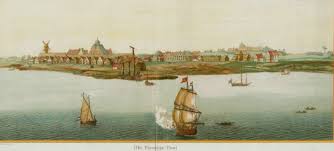
We all knew that the Dutch established a community here and called it New Netherland, that New Amsterdam, their city at the tip of the Manahatta Island, was its capital.  Then, in 1664, the English arrived on the banks of the Hudson River, seized New Netherland, and renamed it New York. Then, the Dutch slinked away to the corners of history. 

Not exactly the truth, Shorto proves.

According to documents that have only recently been translated, there is much more to the story that we did not know.  The Dutch West India Company, acting not as agents of the monarch but as agents of the world’s second international trade union (the first being the Dutch East India Company) stole New York – and what are now Delaware, New Jersey, much of western Massachusetts, and Rhode Island – from the natives and built a society that encouraged diversity.  They were not inherently more tolerant than the English or the Spanish, but they found that a multicultural world was conducive to profitable business. And business was what they were all about. They were willing to accept anyone and everyone from anywhere at all, so long as there was money to be made. What the Dutch West India Company did not do was to protect its people from the reprisals by the understandably angry natives, and they failed to create a workable government.

The British Civil War had just ended, reestablishing the English crown. King Charles II realized that his ravaged country needed to curry influence in the new world in order to replenish his coffers.  He put his brother James in charge of asserting their presence, and James sent emissary Richard Nichols to take possession of land that now constitutes most of the Northeastern United States seaboard.

After spending some time in the Massachusetts Bay Colony negotiating peace between royalists and Puritans, Nichols, well-educated and conversant with Dutch success, sailed down coast and up the Hudson River to negotiate with Peter Stuyvesant for a transfer of power.  No shots were fired; no animosity resulted. As soon as his signature was affixed to the document, Stuyvesant made a brief visit to his European homeland before returning to Manhattan and settling down on his large farm at the south end of the island. He died a very wealthy, satisfied New Yorker.  

Nichols knew that a system that worked needed no reworking, and the Dutch system worked.  He brought in military forces to protect the citizenry, to maintain loyalty to the King, and to uphold the law.  But the Dutch remained in positions of political and social prominence. The array of religions and nationalities that had thrived under the Dutch retained their status as well. 

In the story Shorto tells of my city, I see my mother and my father as central characters. My father’s paternal English roots English planted themselves in Massachusetts, Maine, New Hampshire in the 1620s when they fled the Church of England,  around the same time as his maternal folks were landing in New Netherland. Members of the Dutch Reformed Church, Dad’s second and third great-grandparents likely originated as Walloons, Calvinists who wandered away from the perils of Catholic Belgium and France into New Amsterdam by way of Holland.

 Likewise, my mother’s people had spent generations seeking a safe homeland.  Out of the Russian Pale of Settlement, into Poland/Ukraine, to Zagreb by way of Vienna, and eventually to Kingston, NY, once a Dutch enclave called Wiltwyck.

I will write about my parents.  But I will write about them as fictional characters in a time when unions like theirs were the stuff that fueled the sensibility that built the United States.

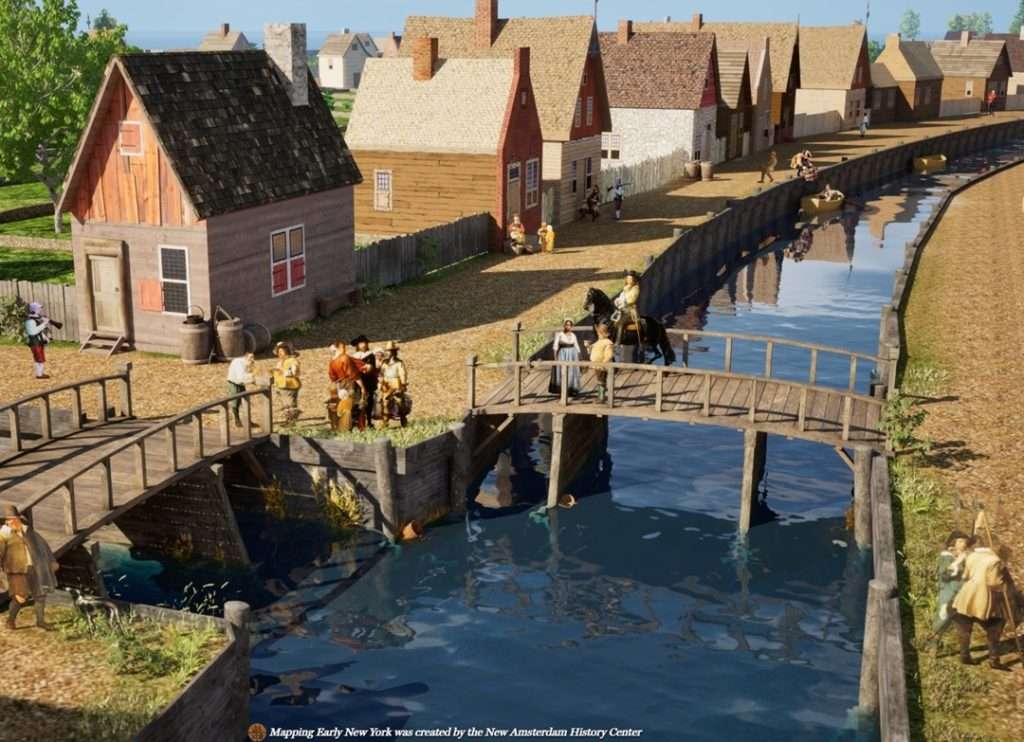
My parents’ fictional personae will inhabit 17th-century New Netherlands.  He as the son of parents who arrived in 1624, for the purpose of establishing a future in nieuwe wereld. She as the child of a Lisbon-born Jew, whose family, dispersed by the Inquisition, had found refuge in Dutch Recife, Brazil, until the same Inquisition sent them scrambling to New Amsterdam.

My protagonists are Lia and Izaak.  Neither’s story is unique, but each has a singular voice and a profoundly individual presence.  Theirs is a timeless story shared by millions, but their details are theirs alone.

Carlafornia Failure

A good friend who lives and writes in Mumbai, posted a substack story about her misadventures in Bollywood. I shared some parallel experiences, and I am here to share my full reply. . . .

Yes, Sukriti, we have lived a kind of parallel existence.  I am here to recount this failure of mine because it gave me strength to move on, to find new paths. . . . Don’t get me wrong.  I wish I might have succeeded.  But, as with so many things in life, it is what it is, and I am where I am. . . .

And so the story.

Once upon a time . . . a loooong time ago . . . . My very young self thought I should be an actor.  I believed that if I worked hard, took whatever roles came my way, and learned the business well, I might evolve and become a director, or, better yet, an auteur. I could make it.  Big.

It did not take long for me to realize that I was not cut out for the profession I so desired.  I did not have the right look, the right attitude, the right anything. As an actor, I realized, I was a really good writer. 

So, no problem,  I thought.  I would work on becoming a Hollywood writer.

At the same time, I was married to a person who had been non-definitive about whether we should reunite.  We had shared the Broadway dream and settled in New York, but he moved home to his mother in San Francisco when Hepatitis made a mess of his liver . . . and his stamina.  I was unclear as to whether our relationship was finished, a fact that proves again and again to me how unplugged I was, but I had the notion that it was up to me to patch us back together.  Three days after I arrived in San Francisco, I was on a bus, bound for LA, too humiliated to go back to NY and admit my abject failure. What the heck, I figured.  There was theater in LA.  And, more importantly, there were movie producers waiting for scripts to be written.

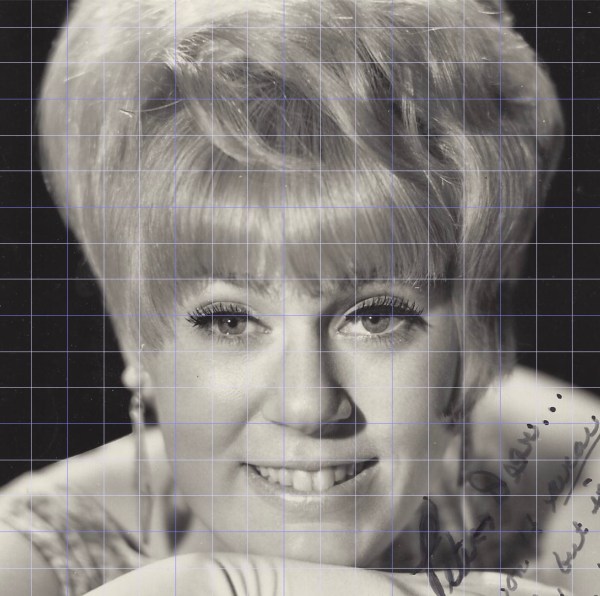
Lucky for me, my first cousin was the Great American Director Peter Bogdanovich.  He had at that time made his first – and to my mind his most profound  –film Targets, and he was gearing up for The Last Picture Show.  Unlucky for me, we were not Coppolas; cousins in my family have not been good at leaning on or propping one another up.  When I arrived in LA and called him, Peter laughed and said I should be a paperback writer.  It was a good goal to have.  That message I got.  Loud and Clear.

Peter’s wife then was the extraordinarily talented, profoundly ambitious Polly Platt.  I did not meet her on that visit.  She was busy putting together the script for which she was uncredited and was carrying the lion’s share of producing tasks, for which she got insufficient recognition at best. 

I stayed in LA for a short time, but I hated it. In the few months I stayed, I managed to dodge a few casting couches that would have been unfruitful anyway, contracted scabies without any sexual contact, interviewed with several prospective employers with no interest in me whatsoever, found a job in a coffee shop, and was fired for feeding a homeless man.   Admitting total defeat was the only choice I had. So I headed back to NY, back to college, back to a more plausible life. 

But I still wanted to be a screenwriter. 

Some years later, having just turned 40 and contemplating what path my life should take, I returned to Hollywood, this time to meet with my esteemed (former)  cousin-in-law.  I liked her, and her invitation to meet gave me hope that perhaps she might be willing to mentor me. 

We had a lovely lunch.  She listened to me as I spoke of my dreams. She read some of my work and asserted that I did indeed have talent.  She did advise me. But she did not encourage me.

Instead, she did me a kinder favor.

“Stay back East,” she said. “Raise your kids.  Write for yourself.  You’re already too old for this place.”

Then she looked at me with a distinctly kind twinkle in her eye and said,  “Besides your age, you’re at least 40 pounds too heavy. No one will even talk to you.  Don’t waste your time.”

It was sound advice.  I was not thin.  I had three kids, a husband, and a satisfying job teaching and directing educational theater.  Without malice or regret, I did as she suggested. 

Eventually, I did collaborate on a very good screenplay, and through connections I managed to make for myself, I got an appointment with people at Paramount Pictures.  Once again, I flew to LA, bypassed any meetings with family, and went directly to Robert Evans’ office. There Evans’ accolytes, assistants, staff, who had theoretically read the script and invited me to meet with them, hosted me three days in a row. We talked about the way the script would go, the possibilities, the legs it had.  Finally, they said they loved it. They would option it, and they could not wait to get it up on the screen. 

“You’ll hear from us tomorrow,” Evans’ right-hand person said to me as I left for the last time.  “We’ll email you the contract agreement first thing in the morning.”

I smiled, thanked them, and was about to leave when the assistant quickly added, “This is a great script. Really.  We are very excited.  We’re gonna walk down the aisle, across the red carpet together. This one’s a prize winner.”

That was on a Friday afternoon in 2005.  I watched for that email through the weekend, through the next week.  Perhaps even through the next month.  But I understood.

I never heard another word from any of them.

A Very Human Condition

When I moved to New York City in 2003, it took me some time before I eventually found work as a New York City Sightseeing Guide.  For the first year, I felt ridiculously fortunate to be able to share NYC with tourists who rode with me on the top of a double-decker bus and to get paid for the pleasure.  That wore off eventually, but in the meantime, I got to know Mandy. 

Mandy, still generally called by what would become her dead name, Stephen, was my favorite coworker. A brilliant guide and former attorney, she was saving up for gender reassignment surgery.

Divorce from a greedy wife, mental illness in a daughter whom Mandy would never abandon, and frequent mandate transgressions had led to her being fired from her high-powered law firm, which left Mandy with no money for the ultra-expensive procedures. In the interim, Mandy made concessions of powerful self-assertion by wearing, in all weather, Bermuda shorts fashioned in bright orange sweatshirt fabric, frowzy blouses and tops that plunged below her prominent and rapidly graying chest hair, and neon-colored sneakers. Her hair and mouth were a whirling forest of bright tangerine curls and a soft, pillowy hot pink glossy triangle.

“I’m a lesbian,” Mandy explained to me the first time she asked me out to dinner.

I was flattered. I had never met anyone smarter or funnier than this person, qualities I have always found irresistible in a man. But I had no interest in being romantically involved with a woman, even a woman who was, anatomically at least, still a man. Of course, I didn’t want to hurt Mandy’s feelings, and though I turned down the invitations to dinner, to movies, to theater, we often sat together as we waited between buses.  

I never tired of listening to the stories she told. The personal stories were harrowing, beginning with a Lower East Side childhood, and the professional stories were infuriating. This person had tolerated more than anyone’s fair share of abuse by the system over the years. If I had been differently wired, if I were capable of loving Mandy as she deserved to be loved, I would have spent all kinds of days and nights with this remarkable human being.

Those first months working on the bus were magical.  What a privilege it seemed to explore New York from an ostensible eagle’s view. As a history and culture buff, I was learning in a way no book or school had ever taught me. Mandy’s wide knowledge of the city enriched each day and broadened my tour repertoire.  Having studied architecture, Mandy was conversant with the eclectic nuances of building styles that comprised our city’s makeup. As an astute political observer, she understood the underpinnings of Tammany, why Robert Moses was more tyrant than savior. She explained to me why the Breslin-Mailer campaign to create the great city-state, a movement I enthusiastically worked for in my youth, was basically moronic.  Having studied labor law, her expertise guided our labor disputes. When the company abused us, Mandy spoke eloquently with great erudition. She knew the score.  She understood what we were entitled to and what was being kept from us with malicious, greedy fury.

Winter descended as I rounded the end of my first year on the bus, and with it came the end of the idyll. Cold weather and heartless employers extinguished the joy.

Eventually, Mandy ended too.

Our company, a startup in every sense of the word, provided no bathroom for our relief.  For a while, we were allowed to use the restrooms in the Hilton Garden Inn, which was less than a block from our launch site, and the management there even encouraged us to buy goods in their gift store and food mart by giving us a generous discount. 

Then one day Mandy farted and sighed loudly in a stall in the women’s room, and a tourist seated next to her, the woman in the next stall, securely separated by a metal wall and a locked door, freaked out at the sound of a male voice sighing on the tail of a roaring fart. She complained to the Hilton management. After that, all guides were banned from the place. No more comfy lounge seats, no more cheap candy bars. No more toilet. I saw no solution to the problem and opted to take a break.

I left the buses to edit a book for the friend of a friend. The book was set in NYC, but the London-based author knew little about our city and wrote locations that were amiss and an Iowa-bred protagonist, who was more accurately an Englishman in New York.  To complete the project, I went to the UK for a few months, and when I returned, Mandy was gone. 

Conditions Mandy had fought to improve had killed her.

Mandy was our advocate, the voice that argued for improvement in conditions atop the buses that were unfit for guides.  We had no place to sit.  We were required at times to perform chores – like helping the elderly up the stairs or carrying baby paraphernalia or lugging luggage up the stairs – that put undue strain on all our muscle groups.  We stood for long periods of time, jostled mercilessly about. We had no place to go to get warm, no relief from the harsh winter exacerbated by the harsh wind generated by the moving bus.

Mandy’s back and health could not take it. She suffered pneumonia and bronchitis and then was injured and re-injured until she finally had no choice but to undergo back surgery.  Like many spinal surgery patients, Mandy did not survive. The company management, who never appreciated what an asset they had in Mandy, was relieved. Tethered by Mandy’s knowledge of the law, they had felt forced to retain her. Her illnesses and back troubles cost them money by way of pay they were impelled to dole out and by insurance rate hikes her claims inflicted. The bloodsuckers were free at last. 

We who loved Mandy, lost a precious friend.  I lost a valuable mentor.

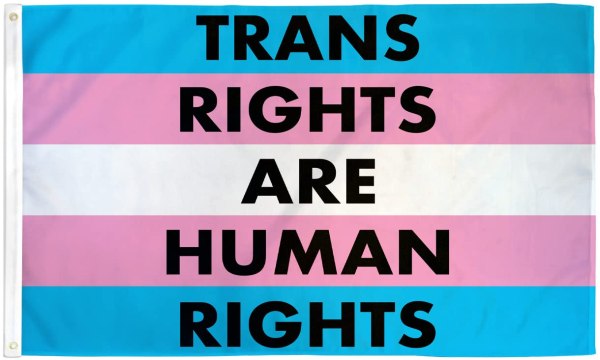
I find myself wishing for her presence lately.  She’d tell me why the current state of affairs for Trans people cannot hold.  She’d tell me to keep the faith.

“Don’t give the bastards any power,’ she’d laugh.  “They’ll turn to dust just like the rest of us.”

No Turkey for me, Thanks

Thanksgiving could have been a sad day for me. I dreaded it.

Alone with my grandson in a place where no holiday exists, I expected I’d miss it all. But I didn’t.

 The day was as unThanksgiving-ly as I expected. People were at work, kids at school, and the rain was relentless.  No decorations adorning the stores, no premature Christmas music wafting on the air. And, to my surprise, no soggy sobbing from morning till night. I was fine. 

Once upon a time, when I was part of the huge, giggling gaggle of disparate personalities we called family, the cozy congeniality of the holiday was indeed beautiful. And bountiful. As the day approached, the smell of baking pies, the sight of the giant turkey defrosting in the fridge filled me with genuine, near-tears rejoicing.  The thought of that convocation and the laughter that would resound from the dining area were what motivated my excitement for Thanksgiving, and I made sure I could participate in the whole ritual year after year, with family or with friends, depending on where I was.

Times, however, change.  The characters in my memory story have morphed into strangers or moved off the planet, and in their absence, rather than nostalgia, I am left with a more realistic picture of the holiday scene.

Instead of laughter and conviviality, my stomach churns at the thought of the after-dinner bloat battle.  Turkey never agreed with me, and because we ate little sugar every other day of the year, along with the indigestible bird, the pecan and pumpkin pies caused turmoil in my digestive tract, from which it took days to recover.

The minute the last crumb of desert was wolfed down, the company split into small cliques.  Some went to watch football on TV while others went out to play or ride horses or visit friends.  We were no longer connected once the food was cleared.

And then the cleanup. The inevitable sorting of leftovers, boiling the carcass to make a soup, washing greasy pans that revived the after-dinner queasiness. 

No, I did not miss any of it. 

This year, my grandson and I went for a long walk, made chocolate chip cookies, talked about people who were not there to share the day with us. We laughed. He got silly, as small boys do, and we ate fried rice.  It was a great day.  A day that filled me with boundless gratitude.

Much better for me than a day of gorging into gassy oblivion.  I spent the day with a precocious child, whose doe eyes shine  with my mother’s dark brown wonder and remind me how lucky I am that she escaped the Holocaust and found her way to my father.  We looked at pictures of cousins who visited us last summer – cousins with my father’s  April blue eyes that teared with joy when his children gathered round him. I told him about the Thanksgiving my brother, whom he will never get to know, took his mother up a mountain and taught her to drive . . . at the tender age of 9. Then I reminisced about a holiday I spent with my long-gone sister and her now-departed sons and how her daughters remind me how very strong and powerful she actually was. We watched a video of a time we spent with my son’s children, each of whom bears the name of one of my parents, one whose eyes are dark and inquisitive like mom’s and the other whose eyes are oceanic, sensitive like dad’s.  The laughter resounded in my memory. The joy of holiday moments, the ones where we joined hands and thanked God for blessing us all by keeping us alive, for sustaining us,  and for bringing us to this season.

It was a perfect Thanksgiving Day.

The Hidden Sucker Punch

This very un-Presidential campaign by a bombastic charlatan has me grateful my parents are not around to witness how far this process has declined in the years since they died. They would not understand what’s been happening. They would disdain the misogyny and the racism of the right, and while they would never condone the extreme judgmentalism on the left, neither of them would consider voting for the nasty, exclusionist, decidedly unChristian Republican agenda. They’d be the first to line up in their districts to vote for Kamala Harris.

I am sure of this. Because in the end, we have become a nation divided by a lack of commitment to the Republic’s ideals, by our society’s inability to embrace a reasonable concept of ethics, justice, community, and morality. Allegiance to a shouting puppet have robbed too many of any clear sense of right and wrong.

My parents would have no problem defining where to draw the line.

In my parents’ home, politics, like religion, was a matter of personal choice. My mother was Jewish; Dad was Protestant. They never argued that one or the other was right or wrong; they made sure we understood the commonalities in their traditions, and they expected us to be honorable people, whichever faith we chose to accept or reject. The same was true of politics.

Dad was a proud, adamant Iowa Republican. Mom, once a Jabotinsky devotee who had to emigrate from Europe to the US, was a staunch, unwavering Democrat. She was a socialist; he was not. During the weeks leading up to the Adlai Stevenson/Dwight Eisenhower race, I remember heated arguments.

But neither ever called the other names or went to bed angry, and each kept their actual vote to themselves. In 1960, I was smitten with JFK, whom Dad clearly disliked. But he never impeded the efforts my mother and I made campaigning door to door, handing out flyers and buttons. Nor did Mom, who detested Nixon, insist that he change his politics to suit hers.

Overall, they shared the same values. Dad insisted he had no socialist leanings, but it was he who brought the homeless to our house for a hearty meal and a night or two of real rest in a comfortable bed. It was Mom who insisted we go to Church with Dad on Sundays. Both believed that human kindness was the hallmark of good citizenship, and they wanted their children to know enough about both religion and politics to make informed choices in every community arena.

My parents’ belief in America, their faith in Democracy, was based on core values. It was easy for them to make the necessary adjustments. If a candidate was in any way antithetical to what mattered to them, they would vote conscience over Party.

In 1976, I was amused to see Dad entirely uninvested in the Presidential race. He was not a fan of Gerald Ford, but he did not know enough about Jimmy Carter to vote Democratic. I am pretty sure he sat that one out. Then, in 1980, as he observed the last campaign he’d be alive for, he was visibly, audibly, openly disgusted by Ronald Reagan. That time he voted for Jimmy Carter, and when Carter lost, Dad swore he’d never vote again. I suspect he would have been ambivalent about Walter Mondale, but he would have been despondent to learn that Reagan had won again.

America needs my parents’ attitude this week. We need liberated men and women to stand up against the authoritarian ideals of this new Republican Party. We need informed voices like those members of the Lincoln Project to be as brave as my father was in 1980. We need people who will stand by rectitude and righteousness, people who can reject the cultish insistence on following their leader, people to go to the polls and vote their conscience rather than their party.

My closest friend, a person I have always known as a Republican, with whom I have had a life-long agreement to disagree, texted me last week to say, “I voted for Kamala today. I do not recall ever voting for a Dem.” I told him I thought it was a huge concession. He replied, “Not huge. I would never vote for a Hitler wanna-be.”

His subsequent text moved me to tears. “I have my hopes that the women of America are the hidden sucker punch,” he wrote. “I want them walking softly carrying the big vote.”

Amen.