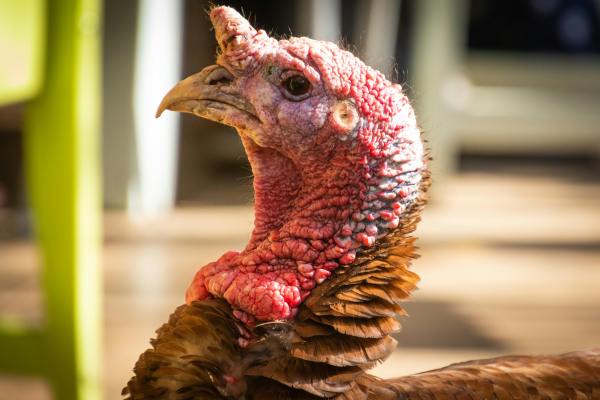
No Turkey for me, Thanks

Thanksgiving could have been a sad day for me. I dreaded it.

Alone with my grandson in a place where no holiday exists, I expected I’d miss it all. But I didn’t.

 The day was as unThanksgiving-ly as I expected. People were at work, kids at school, and the rain was relentless.  No decorations adorning the stores, no premature Christmas music wafting on the air. And, to my surprise, no soggy sobbing from morning till night. I was fine. 

Once upon a time, when I was part of the huge, giggling gaggle of disparate personalities we called family, the cozy congeniality of the holiday was indeed beautiful. And bountiful. As the day approached, the smell of baking pies, the sight of the giant turkey defrosting in the fridge filled me with genuine, near-tears rejoicing.  The thought of that convocation and the laughter that would resound from the dining area were what motivated my excitement for Thanksgiving, and I made sure I could participate in the whole ritual year after year, with family or with friends, depending on where I was.

Times, however, change.  The characters in my memory story have morphed into strangers or moved off the planet, and in their absence, rather than nostalgia, I am left with a more realistic picture of the holiday scene.

Instead of laughter and conviviality, my stomach churns at the thought of the after-dinner bloat battle.  Turkey never agreed with me, and because we ate little sugar every other day of the year, along with the indigestible bird, the pecan and pumpkin pies caused turmoil in my digestive tract, from which it took days to recover.

The minute the last crumb of desert was wolfed down, the company split into small cliques.  Some went to watch football on TV while others went out to play or ride horses or visit friends.  We were no longer connected once the food was cleared.

And then the cleanup. The inevitable sorting of leftovers, boiling the carcass to make a soup, washing greasy pans that revived the after-dinner queasiness. 

No, I did not miss any of it. 

This year, my grandson and I went for a long walk, made chocolate chip cookies, talked about people who were not there to share the day with us. We laughed. He got silly, as small boys do, and we ate fried rice.  It was a great day.  A day that filled me with boundless gratitude.

Much better for me than a day of gorging into gassy oblivion.  I spent the day with a precocious child, whose doe eyes shine  with my mother’s dark brown wonder and remind me how lucky I am that she escaped the Holocaust and found her way to my father.  We looked at pictures of cousins who visited us last summer – cousins with my father’s  April blue eyes that teared with joy when his children gathered round him. I told him about the Thanksgiving my brother, whom he will never get to know, took his mother up a mountain and taught her to drive . . . at the tender age of 9. Then I reminisced about a holiday I spent with my long-gone sister and her now-departed sons and how her daughters remind me how very strong and powerful she actually was. We watched a video of a time we spent with my son’s children, each of whom bears the name of one of my parents, one whose eyes are dark and inquisitive like mom’s and the other whose eyes are oceanic, sensitive like dad’s.  The laughter resounded in my memory. The joy of holiday moments, the ones where we joined hands and thanked God for blessing us all by keeping us alive, for sustaining us,  and for bringing us to this season.

It was a perfect Thanksgiving Day.

The Hidden Sucker Punch

This very un-Presidential campaign by a bombastic charlatan has me grateful my parents are not around to witness how far this process has declined in the years since they died. They would not understand what’s been happening. They would disdain the misogyny and the racism of the right, and while they would never condone the extreme judgmentalism on the left, neither of them would consider voting for the nasty, exclusionist, decidedly unChristian Republican agenda. They’d be the first to line up in their districts to vote for Kamala Harris.

I am sure of this. Because in the end, we have become a nation divided by a lack of commitment to the Republic’s ideals, by our society’s inability to embrace a reasonable concept of ethics, justice, community, and morality. Allegiance to a shouting puppet have robbed too many of any clear sense of right and wrong.

My parents would have no problem defining where to draw the line.

In my parents’ home, politics, like religion, was a matter of personal choice. My mother was Jewish; Dad was Protestant. They never argued that one or the other was right or wrong; they made sure we understood the commonalities in their traditions, and they expected us to be honorable people, whichever faith we chose to accept or reject. The same was true of politics.

Dad was a proud, adamant Iowa Republican. Mom, once a Jabotinsky devotee who had to emigrate from Europe to the US, was a staunch, unwavering Democrat. She was a socialist; he was not. During the weeks leading up to the Adlai Stevenson/Dwight Eisenhower race, I remember heated arguments.

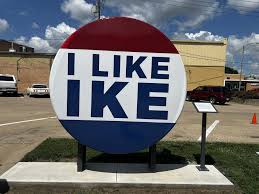
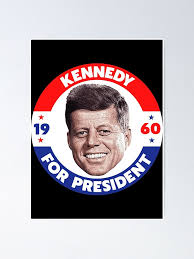
But neither ever called the other names or went to bed angry, and each kept their actual vote to themselves. In 1960, I was smitten with JFK, whom Dad clearly disliked. But he never impeded the efforts my mother and I made campaigning door to door, handing out flyers and buttons. Nor did Mom, who detested Nixon, insist that he change his politics to suit hers.

Overall, they shared the same values. Dad insisted he had no socialist leanings, but it was he who brought the homeless to our house for a hearty meal and a night or two of real rest in a comfortable bed. It was Mom who insisted we go to Church with Dad on Sundays. Both believed that human kindness was the hallmark of good citizenship, and they wanted their children to know enough about both religion and politics to make informed choices in every community arena.

My parents’ belief in America, their faith in Democracy, was based on core values. It was easy for them to make the necessary adjustments. If a candidate was in any way antithetical to what mattered to them, they would vote conscience over Party.

In 1976, I was amused to see Dad entirely uninvested in the Presidential race. He was not a fan of Gerald Ford, but he did not know enough about Jimmy Carter to vote Democratic. I am pretty sure he sat that one out. Then, in 1980, as he observed the last campaign he’d be alive for, he was visibly, audibly, openly disgusted by Ronald Reagan. That time he voted for Jimmy Carter, and when Carter lost, Dad swore he’d never vote again. I suspect he would have been ambivalent about Walter Mondale, but he would have been despondent to learn that Reagan had won again.

America needs my parents’ attitude this week. We need liberated men and women to stand up against the authoritarian ideals of this new Republican Party. We need informed voices like those members of the Lincoln Project to be as brave as my father was in 1980. We need people who will stand by rectitude and righteousness, people who can reject the cultish insistence on following their leader, people to go to the polls and vote their conscience rather than their party.

My closest friend, a person I have always known as a Republican, with whom I have had a life-long agreement to disagree, texted me last week to say, “I voted for Kamala today. I do not recall ever voting for a Dem.” I told him I thought it was a huge concession. He replied, “Not huge. I would never vote for a Hitler wanna-be.”

His subsequent text moved me to tears. “I have my hopes that the women of America are the hidden sucker punch,” he wrote. “I want them walking softly carrying the big vote.”

Amen.

More Nostalgia — Sister Sister

Election Anxiety has me in its grip.  I know I am not alone.  When I lie awake at night fretting my what-ifs, I feel myself embraced by half my countryfolk, who are most likely feeling exactly as I am.  Terrified.  But next week, come what may, I’ll have a bit of comfort.  My little sister Helen is traveling to see me.

Deep in the dog days of August 1953, my father drove my brother David and me to Bayside, Queens, to our grandparents’ home.  For me, it was a familiar second home – my cousin Johnny and I had lived with our grandparents off and on before either of us had siblings.  For David, however, it was unsettling.  “I wanna go home,” he cried.  “Duke (our spike-toothed boxer) needs me.”  He was right about that. 

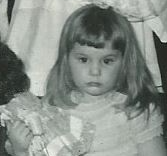
We stayed in Queens for a few days. Mom gave birth and, as was the custom in those days, she “luxuriated” in the hospital long enough to convalesce.  Later, she regaled us with stories about Dad making her walk into the first stages of labor at the Forrest Park Zoo, and how no zoo would ever be tolerable again.  She said it was a good thing that Dad had burned the coffee and ruined breakfast that morning, as there was less for her to heave. But I was oblivious. I had my cousin Johnny, my near-twin, and after Dad called to say we had a new baby sister, I was without anxiety.  A sister was a good thing.  And there was no reason to rush back to Deerfield. She had not yet arrived there.

When we did get home, David was crushed.  Duke had run away. He was in residence now at the Deerfield Boys’ Academy, where he had been gratefully adopted. I didn’t care. I had no interest in Duke.  I had new responsibilities.

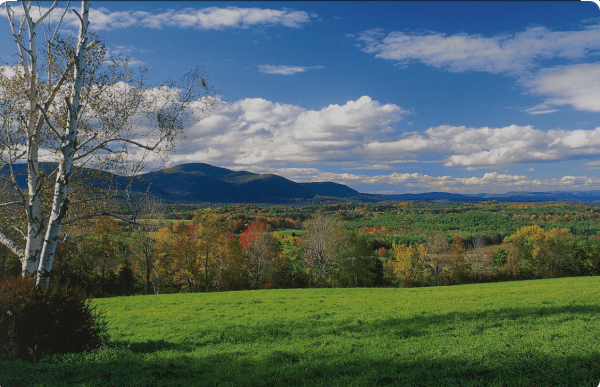
We lived that year in a 17th C farmhouse in the remote Berkshire foothills of western Massachusetts.  Mama was responsible for the henhouse, where foxes routinely wreaked havoc that she had to clean, and where hens laid messy eggs she had to gather. We had no running water, so water had to be pumped and stored, and all water for cleaning and bathing had to be heated on the stove. Chores were endless, and now that we had this new baby, I was expected to help more than ever. At night, when Mama was exhausted by the chores and the work of chasing David and tending her infant, I got to stay up past my bedtime to hold Helen, feed her her bedtime bottle, and rock her to sleep while Mama dozed on the couch beside us. 

I bonded with my little sister.  And she understood from the very beginning that we belonged to each other.  Over the years, we played, we fought, we talked, we yelled; she told my children I taught her guitar, but she was the gifted one.  I sort of introduced her to sex and drugs; she gave me rock’n’roll by way of her beloved Beatles and Monkees, whose music was foreign to me.  I grew because of my sister, and she found new possibilities because of me.

It’s been eight years since I last saw her.  Time, distance, families, and careers have kept us apart.  In the intervening years, much has happened to sever ties among the remaining siblings, but we have sharpened our connection.  I cannot wait to see her.

Gratitude

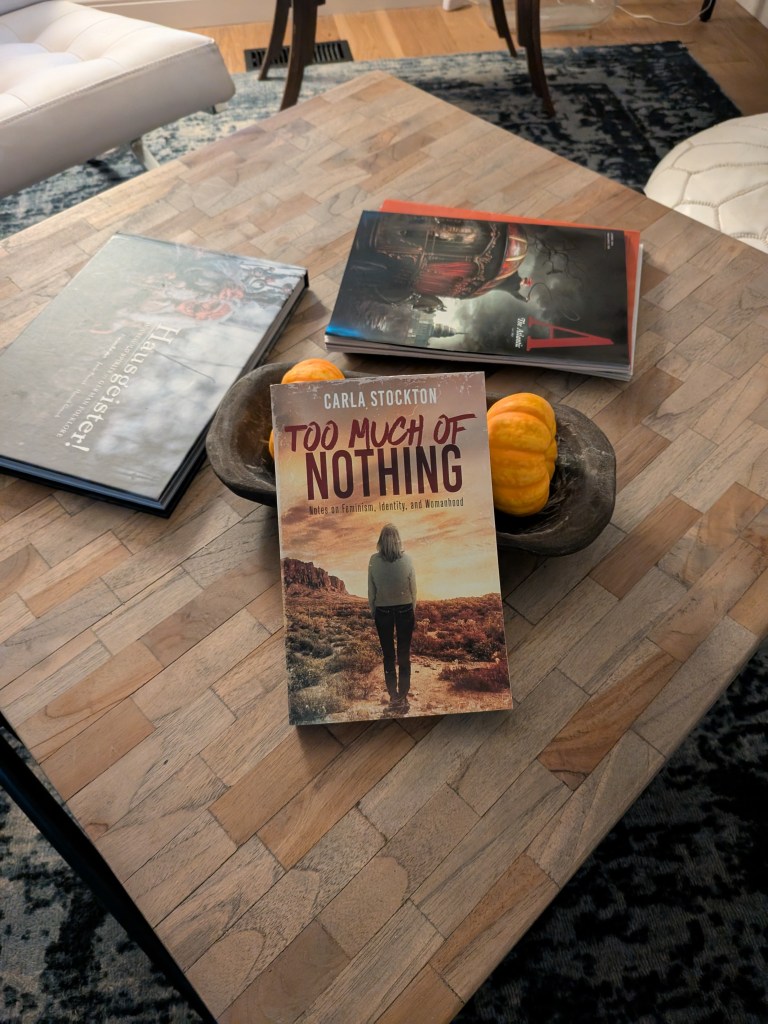
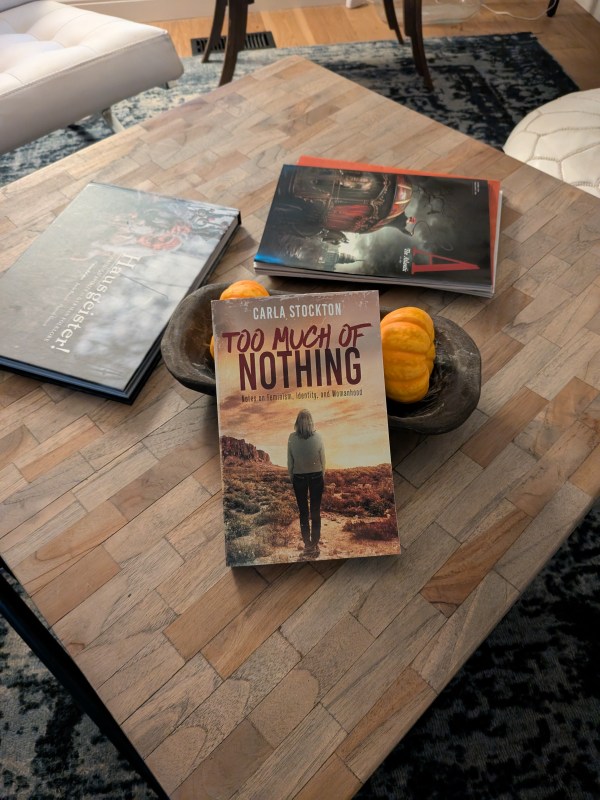
Ah, Too Much of Nothing turns out to be a lot of SOMETHING!!

A brief introduction. . . .

It is exciting to see the response to my book release. I am humbled by the encouragement, the delight, the validation I am receiving from friends and acquaintances. At the same time, it is difficult to feel like I am constantly seeking the limelight. . . . But so much has gone into this book. Like child rearing, book writing takes a village. The people I shared the MFA experience with at Columbia — my cohorts Livia Lakomy, Elizabeth Walters, Sukriti, Lacy Warner, Mahad Zara, Andrew Lewis, Sean Quinn and a few others — took me seriously, convinced me that I had something to say worth reading. My friends Mari Alkus Bonomi, Bea Schwarz, Maryanne Aubin, Gail Gallagher, Peter MacIntyre and a few others stood patiently on the sidelines with streamers and megaphones yelling, “Go girl!” My first editor E.B. Bartles made mammoth suggestions and intelligent edits. Then Caroline Topperman, at Ash Mountain Press, did the next deep and deeply insightful edit, after which Andi Cumbo added her own kind of brilliance. . . . You get the picture. This is my first solo book, but I don’t plan to allow it to be the last, and every moment of this process encourages me to press onward.

Books and Books and Books

I have lived much of my life in and through books. I wandered into Alice’s Wonderland without a moment’s disbelief. I fell in love with Mercutio and imagined myself his unnamed lover. I signed impatiently when Torvald called Nora his squirrel and cried huge tears of relief when she left him. Books were never just reading material. Books took me to worlds and people, places and adventures that could carry me far from any pain that childhood or adolescence could conjure. Readers who delve into my own book Too Much of Nothing: Notes on Feminism, Identity and Womanhood will find me navigating those venues, meeting those people, and bringing them with me to my reality to enrich my readers’ experiences. Dive into my magical rabbit hole and chortle with Samuel Beckett, tzikatch with Henrik Ibsen, laugh aloud with Lucas Hnath. . . . They — and so many more — have been such great companions. It’s a pleasure to share them now.

Books took me to worlds and people, places and adventures that could carry me far from any pain that childhood or adolescence could conjure.
Every book is its own kind of Yellow Brick Road