Walking is Believing in Charles Butler’s Powerful Collection 39 Poems
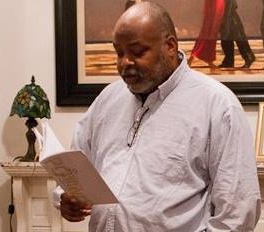
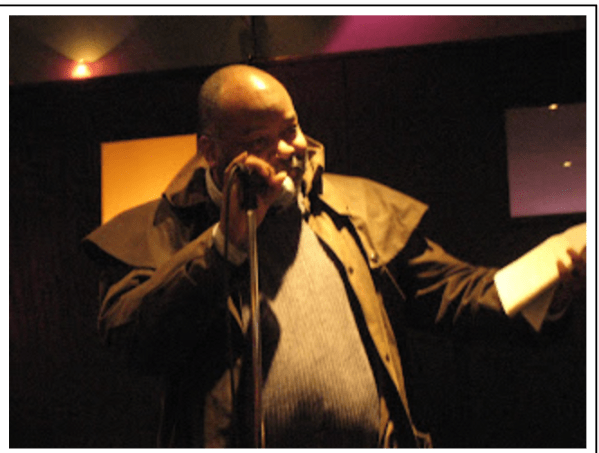
New York is a challenge on the best of days. Summers are blisteringly hot. Winters numb the nose, freeze all digits. Every walk on a city street is an opportunity to engage with the world or let it stream by unnoticed. Homeless folk sleeping on rat dung, playgrounds dotted with dog poop, crowded sidewalks teeming with angry people struggling to get where they need to be, pushing impediments both human and non aside with equal disregard. And if you are paying attention, if you look life in the eye, you see what Charles Butler sees at every turn, the observations he makes in his very accessible collection of poems called simply 30 Poems. Butler sees and describes the dark side as it blends with the light, he feels the life that refuses to be extinguished even as it fades.
“you almost miss it
almost
someone’s life bled out
at your feet
think on it
times you bled”
ii legal pad poetry
Butler’s Brooklyn-twanged voice gives each poem its own resonance, singular presence. Each one is a story and a journey, part of the next story that is a journey that leads to the next all the way to the final stop. All the poems lean on one another, leading us into hearts, minds, souls, beings that celebrate and suffer through to the end, where we see that the sum total is a stories lead to the same journey’s end.
Butler doesn’t pretend to offer answers. His collection is a compendium of observations. Deep as the message is, he’s not trying to be profound.
“I leave
the big poems
t’the
assholes
y’know ‘em
ones who figure
they can change
the world
with a stanza
or a verb”
just poetry. . . man
Hey scatters the collection with human encounters, human experiences, human emotions, none of which will surprise the reader but will evoke a visceral response. The joy and heartbreak of holding a newborn baby, black and female; the gratitude for friendship and the mourning of its loss; the taste of coffee and it likeness to young love; the shudder of knowledge as old age creeps in. And so many more acknowledgements of the joys and sorrows, discoveries and disappointents that are the human condition. All observed in Butler”s “walkabouts at night” when he “was lucky and went this way instead of that way” (“Normal”).
At the end of the 39 Poems, his 39 Steps, walks through and around Brooklyn and America, Butler sums up in CODB:
“only. . .
joy, pain, hope, sadness
just the
cost of doin’ business
‘n livin’
Is bizness”
A powerful commitment to the vagaries that define the fragile confusion that is life. A stimulating read.
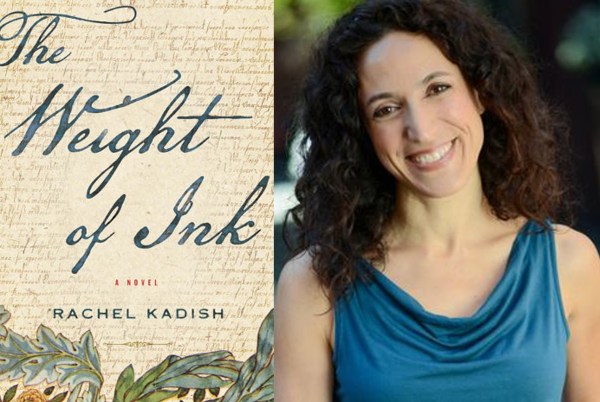
Despite the dark suggestion of her title, Rachel Kadish’s The Weight of Ink (Mariner Books, 2017) is pure illumination.
I turned to Kadish’s book as I began cobbling the details and backdrops for a fiction I am working on about members of a 17th C New Netherlands Jewish community, refugees from the Portuguese Inquisition. Since Kadish’s book, set in the same time period, concerns the life of Portuguese Jewish refugees who have found their way to London by way of Amsterdam, I was drawn in by a hope that her descriptions and depictions would give me a more vibrant, sensory experience of the world I hoped to create. It did not take more than a few pages to know that I had made a wise choice, that I would find what I was looking for. And much more.
The life of Kadish’s characters, defined as much by ink as by history, is a seemly model for the ones I hope to bring to life. Mine too, will be defined by their stories, stories that bear the pressure of ink, which in the case of Kadish’s characters, is considerable . . . both physically and literally.
Kadish’s book presents two heroines, each of whose existence attests to the ink’s sway. One is a Ester Valasquez, a Jewish intellectual born into the wrong century, and the other is Helen Watts, a 21st C baby boomer academic intent on breathing warm life into the legacy of the woman whose work she has discovered in the carapace alcove of a house built in the aftermath of England’s Civil War.
Watts, a sexagenarian historian at a contemporary London university, finds herself wrestling with self-doubt and recrimination after she realizes that documents given to her by a former student are authentically written by a woman in the 1600s. Watts has never hoped for such a find, one that seemed unfathomable. That a female in that time period could have asserted herself strongly enough to have accomplished the work Helen has found seems incredibly miraculous.
The ancient writer Ester Valasquez is a true anomaly: a brilliant Portuguese Jewess, trapped in but not stifled by the male-ordered strictures of 17th C society, both secular and religious. Ester, who speaks and writes fluently in Portuguese, Hebrew, Dutch, and English, is an orphan in the protection of the prestigious Sephardic Rabbi Ha-Mendes. Brutally blinded and disfigured by the Inquisition, Rabbi Mendes has made it his self-appointed mission to bring Judaism to the Jews of London, who have only recently been readmitted to Britain by Oliver Cromwell. It is a community that lacks an educational center, and Rabbi Mendes engages Ester’s brother Isaac to be his scribe, to set his sermons and essays to paper. Isaac dies, however, and Ester eagerly takes over as the rabbi’s scribe. Over time, as the rabbi ages, he writes less and less, leaving Ester to write letters in his name and others’, letters that are both heretical and dangerous. That she gets away with her subterfuge has everything to do with the upheavals of the great Plague and then the Fire of London.
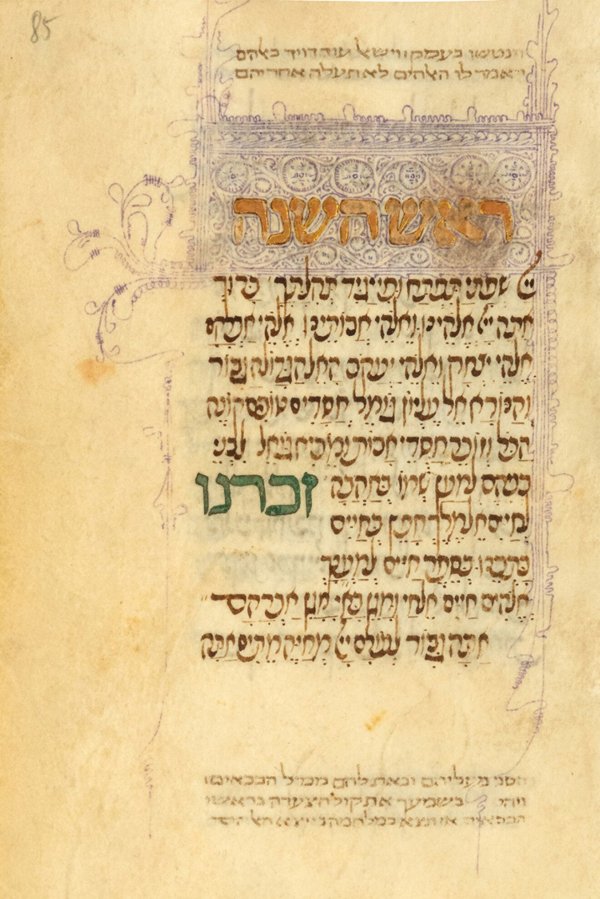
The ink Ester uses is a heavy amalgam of iron salts thickened by tannin harvested from gallnuts, a bluish-black ink that mercilessly stains her fingers. Though the paper Ester uses is undoubtedly made of strong linen, the ink seeps through and leaves holes among her sentences. By the time Helen Watts and her assistant Aaron Levy receive the documents, the ink has turned sepia-brown, and the weighted pages are difficult to read.
The words Ester writes are themselves more leaden than the ink itself. Her letters, signed in names of men she deemed incapable of writing, are sent to the men with the best minds in Europe of her time, but the letters she writes to Baruch Spinoza, excommunicated apostate denounced by Jews and Christians alike, are the most dangerous.
When Watts find proof that Spinoza actually responded to Ester’s letters, Watts realizes that the ink was even more ponderous for Ester and is a discovery she finds nearly intolerably heavy.
Ester has undertaken her intellectual pursuits with a full understanding of the consequences she will face. She refuses the protection of marriage, the comfort of children, real love. She has made a choice, and she is faithful to that choice throughout her life, though she finds an acceptable compromise that ensures she never has to worry about money, and her words will never betray her. Watts faces her discovery of the letters 400 years later with a similar conviction. She, too, has made her work her life. She, too, has prized intellectual pursuit over the pursuit of conventional happiness.
Rachel Kadish has accomplished a miracle. She has given provocative life to a concept that few would deem important. It may seem that the age has passed when a woman was not officially allowed to read and write, no longer are women prohibited from becoming actors, cannot wear men’s apparel. Women, some would argue, are no longer at the mercy of husbands and fathers for support, prohibited from inheriting the wealth of either. In the absence of all such repression, Ester’s life might seem arcane. But the seemingly stark contrast of Helen Watts’ contemporary life points to a truth of most women’s reality, a truth that prevails today.
Like Ester, Watts made her choices. She had all the academic and intellectual freedom she could ask for, but she, too, had to forego the pleasure of deep, committed love. Even in her youth, when she was tempted by a handsome, commanding Israeli man, she could not commit her whole self to him. Like Ester, she understood that belonging to a man, even to a man who offers deep, protective love, meant being swallowed by his life, his pursuits, his dreams. Four hundred years later, Watts came to the same conclusion. Too easily women compromise themselves and disappear into their men.
The Weight of ink is a deep dive into the minds and lives of two women widely separated by time and culture. Both reside in a life colored by equal parts joy, satisfaction, and regret. Both are warrior women.
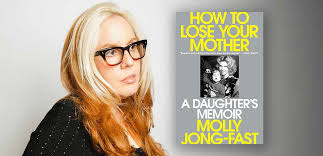
When Molly Jong Fast’s How to Lose Your Mother: A Daughter’s Memoir (Viking 2025), I resolved to avoid it. I mean, Erica Jong, author of my liberation, facilitator of my most humorous self-deprecation. I didn’t want to know the sad, selfish underbelly of my hero. Then, one day, I listened to an interview with the author, and I thought, “Well, if I can listen to this book in her voice, maybe I’ll learn something.” I did. I found the audio book narrated by the Jong-Fast herself, and, wow, am I glad I did.
Once I relented, I found myself feeling enormously grateful to Molly Jong-Fast for sharing her mother’s missteps, blunders, neglect, and abuse. It made me more aware of my own mistakes and offered me a sense of what my own children might have felt at times in their childhood.
Erica Jong was nothing like me. She was glamorous, well-connected, and a star with a severe drinking problem. I was and had nothing of the kind. But I am a writer, and I know now that too often in my children’s lifetime I felt I had relinquished my Self on their behalf, and I am sure I unwittingly hurt them in some of the ways this mother hurt this daughter. Erica Jong’s dementia and her singular life view prevent her from understanding what happened to her daughter, but with any luck, I still have some time. To make some repairs. Or at least to let my kids know I care. I am sorry.
At base, How to Lose Your Mother: A Daughter’s Memoir, is an everywoman story. When I wrote my memoir, I struggled with how to depict my mother, who suffered multiple traumas too few years before I was born to have sorted them out; she grew to be the mother everyone wished were theirs, but there was always a regret between us for what we could not have. I realized, as I wrote and forgave us both, that the complexities of the mother/daughter conundrum are much the same for even the happiest of pairs. Each mother, each daughter is a reflection of the other. As my mother’s face becomes more clearly the one I see in the mirror every day, I understand more deeply how normal we actually were.
I am grateful to Molly Jong-Fast for the mirror she held unto my nature in much the same way I remain grateful to Erica Jong for Isadora Zelda White Stollerman Wing . . . and later for Serenissima and the sensual dive into Jessica Shylock’s world. . . . as well as so many other pages of entertainment and enlightenment.
How to Lose Your Mother: A Daughter’s Memoir is a lovely — if oftentimes harrowing — read, a book any daughter is liable find herself and her mother in. A terrific experience.
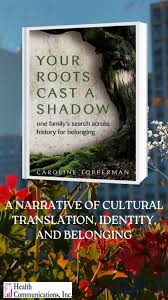
Caroline Topperman’s book Your Roots Cast Your Shadow is a MUST READ.
In Your Roots Cast a Shadow, author Caroline Topperman takes her reader down into the chasms of her family history and proves that finding your roots can be both enlightening and liberating.
So many of us who are descended from damaged, displaced families find ourselves left with mere snippets of our forebears’ memories, carefully curated glimpses of what they deemed acceptable for future generations to know. We wallow in guesswork and strive to build our sense of self from the shadows they cast. So much is left out that we find ourselves veritably blind, searching through a dark forest of innuendo that leads as much to speculation as to revelation.
Caroline Topperman has had considerably more success than some of us. Her remarkable parents and grandparents, who suffered through years of hardship that required travels to the far corners of the world, were less guarded. As they went, they scattered enough carefully chosen, indestructible truths behind them that Topperman was able to build a network of paths to meticulously follow. At the end of the end of her multiple trails, she has found rich morsels of story, kernels of history that have provided the means with which she could build a memoir of one family’s struggle to assert their right to live happily ever and leave behind a meaningful legacy.
Topperman’s examination of her multi-rooted family tree, opens with glimpses of her maternal grandparents’ life in Lwow, Poland, just before WWII. They were young, Jewish, intellectual, and proudly unwilling to put up with Nazi or Communist maltreatment. The odds they were up against are all too familiar, but Topperman spins the tale with ever-expanding dramatic flair that is able to surprise, shock, and comfort even the most knowing among us. Both her grandparents found voices, became activists, and prevail. Of her maternal grandparents, Topperman writes, “So many people are blinded by religion, and communism was my grandparents’ religion. . . . They weren’t part of a conspiracy to overthrow the western world; they were simply looking for a way to make the world a better place.”
Direr circumstances surrounded Topperman’s paternal grandparents, who fled from Warsaw to Kabul, Afghanistan, where her grandfather led the construction of Highway AH1 through the Kyber pass, where her grandmother taught gym in a local school, and where her father was born. Eventually, they returned to Poland by way of Uzbekistan, but their journeys were far from over. By the time Topperman and her sister were born in Ontario, Canada, both her parents’ families had nearly traversed the world.
Topperman’s story has many branches emanating from the roots she discloses here. Without sycophancy or flattery, she honestly presents the stalwart men and pioneering feminists who were her predecessors, and she shares her own quest to find her place among them. “Home,” she concludes in the title of her final chapter, “is where the compass lands.” That may be true. But having read the book, I would add that home is where the compass lands. . . but first we must learn how to turn on the light.
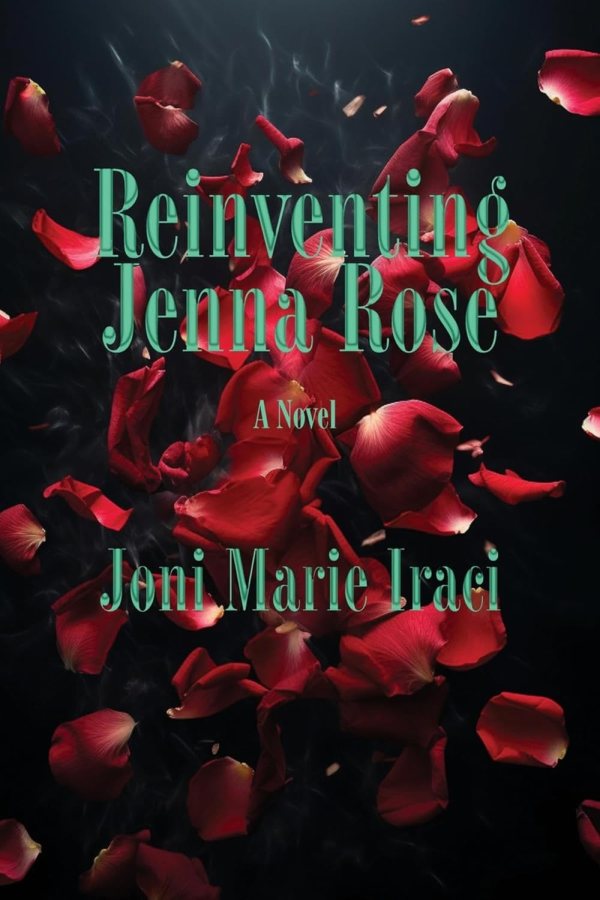
American adolescence is hard. At times brutal. Especially for girls. So many lessons need to be learned. So many Rubicons need crossing. It’s something most not-yet-women suffer through universally. Adolescence is at the root of Joni Iraci’s swiftly-moving novel Reinventing Jenna Rose.
Iraci’s novel drew me in and sucked me back to my own youth.
I was 18 when I became a self-sustaining New Yorker. I suppose I should have been frightened, but I had a grandmother who gave me a place to live, who trusted me to be on my own. I had all the freedom I could handle to seek myself out. That was a long time ago, and today, in the world of over-protected teens, it is hard to imagine a 15-year-old whose parents have left her to her own devices. Which is the case with Jenna Rose, the intrepid heroine of the circuitous story Iraci weaves.
At open, Jenna Rose’s Dad has disappeared, and Mom, self-consumed and bitter, is AWOL. Jenna Rose has been ordered to stay where she is, alone in her California house, with all the trappings of wealth but no comfort. She is the victim of benign neglect, a prisoner of meaningless abundance. Worst of all, the girl has no idea who she is or what her roots might possibly be. She desperately needs to throw caution to the wind, to take off, to liberate herself and find a life.
Enter a long-lost grandmother in New York City, the ghosted mother of Jenna Rose’s mom. Jenna Rose decides that the only way to liberate herself, to reconcile the many questions that muddy her past, to forge any kind of a future, she must find the old woman. Which is how she lands in New York, fabled source of self-identification, in the early days of the 21st Century.
The vagaries of adolescence are universally resonant, and Reinventing Jenna Rose reverberates with the elements that make Catcher in the Rye, The Goldfinch, and others timeless. Jenna Rose faces obstacles no less haunting than Holden Caulfield’s and no less daunting than Theo Decker’s. Yet her journey is entirely her own, unique picaresque adventure.
The presence of Jenna Rose’s grandmother and a quirkily empathetic neighbor her own age plus a devoted white German Shepherd bolster Jenna Rose’s quest for Self-Actualization. With some help from a friendly therapist and reinforcement from her new-found community, she faces and resolves long-buried personal trauma, travels to obscured corners of her own and her family’s pasts, plumbs the depths of her pain, and eventually emerges as a truly three-dimensional woman.
Groping through the multiple shadows cast in Reinventing Jenna Rose, I found myself once again grateful for my grandmother’s indulgences. Like Jenna Rose’s grandmother, mine never told me what to do or think or feel. She shared wisdom, and I was astute enough to take it. Most of it.
The grandmother’s wisdom gives the book another dimension. This is not just another young adult novel. This is a book is that that can be appreciated by people of all ages. Now that I am older than my grandmother was when I moved to New York, I see myself in the old woman, and I hope that some day my granddaughters will likewise avail themselves of my love and experience. I want them to appreciate the rich layers of pain, sorrow, joy and peace that make a well-crafted life, a life that might fit into a well-crafted novel like Reinventing Jenna Rose.


 carlastockton.me