Northern Exposure

What I remember most about being young is how much older I was then than I am now. There was a supercilious seriousness about me then, a clarity I could never recapture.

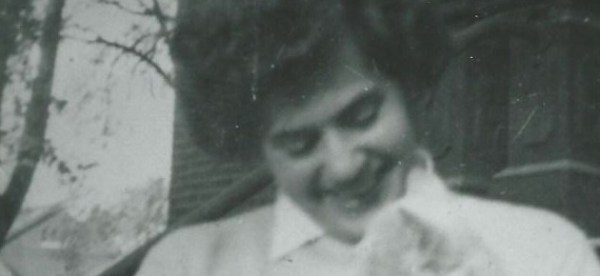
My best friend in the 1960’s was Northern Calloway, who resided with his family in Harlem as I did with mine in Queens, but we spent most of our time with theater friends in the Village, where we felt the safest. Mixed race friendships were less unusual in the Village then than in Harlem or in Queens.young northern

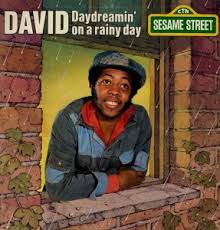
You might recognize Northern. He was in the original Sesame Street cast, as Mr. Hooper’s assistant David, and he understudied Ben Vereen as the Leading Player in Pippin before he took the role to London. Three months younger than I, Northern had absolute certainty that he was right. Always. About everything.
SesameStreetDavid  “You and I might love each other now,” he’d tell me. “But you know some day, we may have to take sides.” We had heard Malcolm X speak just months before the assassination, and he insisted that I regard X with the same reverence he had for the man.

“He’s a beautiful speaker,” I told Northern. “And I admire his courage. But it’s not that black and white. Dr. King –“

Northern was exasperated when I spoke of MLK. “Dr. King’s a delusion,” he’d proclaim with all his youthful self-righteousness. “And you’ve chosen exactly the right words. It’s ALL about black and white. King makes it seem like you and I could wind up on the same side in a race war, but Malcolm tells it like it is. There’s y’all and there’s us, and someday I might have to side against you. I might even have to kill you.”

The notion terrified me. The year before a kid named James Powell had been shot by an off-duty policeman, and all-out riots erupted first in Harlem and then in Bed-Stuy. Before long, the terror spread as far from the city as Rochester, and Governor Rockefeller called out the National Guard. I had seen the ugliness of the mobs, had felt the hatred on both sides, and I did not want to have to choose one or the other. In my estimation, there was right and wrong on both sides, and I envisioned a world in which each side could find ways to appease the other, agree on compromises.

“You be fool,” Northern told me then, lapsing into his very cultured version of street lingo. “But it ain’t your fault. You not Black. I ain’t white. We ain’t never gon’ see things the same. You cannot know what my life is like.”

Of course I disagreed, and I was certain he was wrong. I was an actor, a writer; I had a reputation for being overly empathic. Besides, even though he lived in Harlem, he wasn’t really from that culture either. Raised by his Cambridge-educated Jamaican grandfather and his school teacher mother, Northern’s background seemed closer to my own jumble of immigrant cultures than to those of the people I saw when I visited him. It never occurred to me at age 15 that he meant he was Black, and I was White, and that was that. I had a penchant for overlooking the obvious.

But I couldn’t ignore it forever. In 1966, I needed to move from Queens to Manhattan, and one day I found a listing in the Village Voice for a place I knew I just had to see. “Dig it,” I told Northern. “It’s, like, a studio. On the ground floor. It’s got a garden. A hundred a month.” “Where?” Northern inquired. “Houston Street, just east of Elizabeth.” Northern was audibly indignant. “You kidding me? That’s Little Italy. You wanna live there where all the racists live?” I refused to believe him and convinced him to go with me to look.LittleItaly

The apartment was everything the ad suggested it could be. Sunny, clean, newly renovated. The landlord told me that he paid his dues so no one messed with him. I had no idea what that meant, but I wanted to live there. Again Northern scoffed. “You wanna live with the Mob? You think so? You gon’ be sorry, girl!”

I was devastated when the landlord called me to say that while I seemed like a nice kid to him, he couldn’t be so sure about my friends if they were all like the thug who was with me when I looked.

A thug? Northern? Whose clipped, almost British accent made this landlord sound like a caricature of the dumb wop? I wanted to argue, but I was too flabbergasted to say anything. Instead I hung up the phone and dialed Northern. “I told you you was trippin’,” he laughed. “Niggers are not welcome in Little Italy. You should ’a’ listened to me in the first place.”

I hated when he was right.Pippin

Northern hated cops. I didn’t. I had had two experiences with New York cops that made me love them. The first was when my friend Norma, a single mom, eking out her existence working with me as a proofreader in a management counseling firm, returned home with her 10-yr-old daughter one night to find their apartment had been ransacked. Norma didn’t own anything worth stealing, but her daughter owned a jar of coins –quarters, dimes and nickels she’d been saving for eight of her ten years– which was the only item taken from the apartment. The investigating officer felt terrible for the little girl and asked her how much she had saved. “I dunno,” she replied. “The last time I counted, I had 47 dollars and 27 cents. That was a few weeks ago.” The man reached into his pocket and handed the little girl a wad of bills. “Put these away,” he said, patting her head. “And don’t be spendin’ it till Christmas.”

Northern spat on the ground as I relayed the story while we crossed through Rockefeller Center. “And you think that proves they’re nice guys?” I said all it proved was that all cops were not pigs. “Well,” he scoffed. “If she weren’t white, I bet the outcome would‘ve been very different.” I ignored him.

The second time a cop actually saved me from myself.

In those days there was a popular product called Cupid’s Quiver, a scented, flavored douche that was sold in sets of twelve small plastic vials packed neatly into a rectangular acrylic box, the perfect place to keep a stash. Perfectly rolled doobies nestled comfortably into the spaces intended for the vials.

One fine Saturday night, making a delivery for my dealer cousin to the Village, I fell in the subway station. My purse opened to spew forth its contents, including a Quiver. Twelve charming marijuana joints tumbled onto the concrete floor. In a panic, I scrambled to scoop them back into their little pink box, when suddenly, crouching next to me was a NYC Transit cop. Visions of rock piles and leg chains danced in my head, and I could hear strains of NobodyknowsthetroubleIseen playing behind my eyes, when the cop handed me four joints he’d already collected. “Lemme help you with these, little lady,” he crooned. Ordinarily, I allowed no one to talk to me like that, but under the circumstances I held my tongue.

“Yeah,” snapped Northern when I told him about the incident. “May I remind you that you ain’t no black man?” This time I knew he was right, and I thanked my lucky stars.

In the end, Northern and I parted company over a difference in perception that had nothing to do with race but had everything to do with how driven we were by the politics of our generation.

In 1969, Northern was headlining in an off- Broadway play called Salvation, an anti-war musical, about a Baptist kid who becomes a guru for the under-30’s crowd, delivering a messianic message à la Timothy Leary. That was the same year I went back to school at Columbia, and a very close friend of mine from high school, deployed to Vietnam, stopped in to see me on his way to Saigon.

My friend and I both wanted to see Salvation, and when I asked Northern if he could get comps, he arranged for producers’ seats, the best in the house. There was one hitch: my friend had brought nothing to wear but his uniforms. We were conspicuous in that audience, to say the least.Salvationcover

During the show, whenever the politics got hot on stage, some cast member would point to my friend sitting next to me and make ever-worsening references to the “buzz-head blondie” in the third row. I was ashamed – not of my friend but of the cast.   How dare they judge him and stick him out for his choice when he was there to celebrate their choices?

After the show, Northern sent word that he couldn’t have dinner with us as planned. I got the message loud and clear, and I didn’t see him for a month. He didn’t call me, and I didn’t call him. Then one day I was walking near the fountain in Washington Square Park when I heard my name. The voice was unmistakable.

“Hi, Northern.”salvationcast
“Hi yourself, white girl.” We hugged, kissed, held each other for far longer than a simple hello would warrant. Then we just stood there, looking at each other, holding hands, not having anything to say.

“I’m thinking it’s time to forgive you,” he said finally.

“You? Forgive me?”

“Yeah. For bringing that fascist Clyde to the show.” Fascist Clyde meant stupid storm trooper.

“You don’t know anything about him, and you –“

“ He was wearing a war machine uniform. Where’s your Lysistrata passion?”

“He knows how I feel, I don’t sleep with him, and he has the right to maintain his own point of view. It’s not up to me to legislate beliefs for any of my friends.”

Northern squeezed his eyebrows together, and he nodded ponderously. Then he shrugged and pulled his jacket lapels up around his neck. “Well, I guess that’s where we are different,” he said. “I do.”

He turned and walked away, and that was the last time I ever saw Northern Jesse James Calloway. Years later, as suburban teacher, I was on a bus crossing through Harlem en route from Connecticut to the Asia Society, when a scrap of newspaper hit the bus windshield. The driver got out and brought the offending piece of paper, a page from the Daily News, inside. For some reason, I turned the page over, and there, in black and white, the headline read, “Actor Northern Calloway Dead at 41.”

It was a bizarre moment, like the result of divine intervention, too surreal to have happened. But it did.

I think about Northern a lot lately. I’m the one living in Harlem now. But like the old adage says, “The more things change –“

The other day I was on a bus, headed downtown, and I happened to eavesdrop on a conversation between a young Asian man and a tall, African-American woman. They were arguing about the Eric Garner decision.

“It’s complicated,” he said. “There’s so much we don’t know.”

“Yeah,” she agreed. “And there’s too much we do know. The cops just –“

“I dunno,” the young man argued. “I don’t think it’s so clearly black and white.”

“That’s exactly what it is,” said the girl, laughing a little. “Simply put, there’s y’all and there’s us, and someday I’m gonna have to take a side.”

I could swear I heard her say then, “I may even have to kill you.”



Get Real: Titanic on Wheels (Part 2)

Get Real: Titanic on Wheels (Part 1)

“Everyone’s up in arms about the poor horses, and I don’t mean any disrespect for those horses, but they are treated better than tour guides. The real victims out here are the humans driving this business.” Stefan Stanley.

Border Wars on the Mind

I perceive Gaza these days through a Texas-tempered lens.  Watching the hateful  citizenry of the wealthiest country in the world scream obscenities at indigent waifs displaced by violence and poverty, instructing them to go back to where they come from, I am reminded of stories my mother told about her arrival in Kingston just before WWII.  My mother was no waif, and poverty was not the impetus for her flight to the Land of Opportunity, but her stories inevitably lead me all the way to Gaza.

Mom’s family arrived without their patriarch in April, 1939, toward the end of what proved to be her junior year in high school.   She surprised herself by passing the English regents exam in May and so began the process of applying to college.  Her senior year felt friendless to her; classmates jeered her, mocked her accent.  Girls in the lunch room turned chairs over so she could not sit with them, and in gym class, they threw dirty socks and wet towels at her.  Teachers derided her, telling her they were unable to understand her when she spoke, deliberately refusing to call on her in class. The entire community – especially the entrenched first-and-second generation descendants of immigrants– treated her and her siblings as interlopers, avoiding them all at synagogue and football games alike, attempting to rebuff her brother’s attempts to join the Boy Scouts, even suggesting on numerous occasions that the lot of them return to their “own country.”

Fresh off the boat, Charlotte Robinson, my mother,  was 16 in 1939.

Fresh off the boat, Charlotte Robinson, my mother, turned 16 in 1939.

Of course, they owned no country any more than those homeless children seeking asylum at our Southwest borders do today.  Born in Austria during a time when Jews were highly respected, my mother reached her teens at precisely the time when Jews were successfully relegated to the status of lice.  Her passport, any European’s primary form of identification, was stamped Israelische, marking her as an outsider, a member of the tribe of Israel.  She was not Austrian.

Which was initially why she joined the Jabotinsky youth, planned to leave the vitriolic land of her birth to claim her rightful home in Eretz Isroel.

My grandfather put a stop to that.  “You think I’ll let you leave the Nazis only to throw yourself into the hands of the Arabs who want you dead?  Besides,” he told her, “the Jews cannot own the ‘promised land because the Europeans will never let it go.  You will come with us to America.’”

She was only 15; she acquiesced.  Ironically, she emigrated without her father.  In a move that may have helped to seal the fate of the Middle East, the United States closed its borders to Jews like my grandfather, who were born in countries that seemed somehow un-Caucasian, such as Poland, and were frantically seeking refuge under Lady Liberty’s lamp.  While my mother endured the slurs of her classmates, her father lived in Havana, working to become a Cuban citizen who might then be allowed to enter the United States.

America has never really welcomed the huddled masses.  At the end of WWII, American money –much of it from second and third generation Americans protecting their American territory from newcomers to these shores – veritably gushed in support of the partition of Israel, over the protestations of the local Palestinians.  It was more expedient to force the displacement of the Palestinians, to fuel the hatred of neighboring Arab countries, who wanted nothing to do with either Palestinians or Jews, than to profer better solutions to a problem to which they had been catalysts in the first place.

Over the arc of time, the European imperialists and Americans had imposed arbitrary boundaries across the Middle East, comporting themselves like puppet masters overseeing a bloody marionette show for their own entertainment.  In much the same way the British and the French turned Iroquois against Algonquin in the so-called French and Indian War by arming the natives and rewarding their aggression, the Western world played the locals off against one another, all over the Middle East.  Today the forces seem to have raised the stakes,  and they produce animatronic battles between Palestinian and Israelis (and between Suni And Shiite Muslims elsewhere), doling out money to each side so that the show runners can sit back and watch both sides exchange bombardments.   In the present Gaza conflagration, the U.S. has steadfastly encouraged the warring factions to go at one another, financing a bloodier extension of the age-old Jacob vs Esau, Isaac vs Ishmael rivalries.  They have sent millions of dollars to Hamas for the building of missile tunnels; and they have sent more millions of dollars to Israel for the building of The Dome.  The combatants in Gaza are egged on, like contestants in an obscene reality television show, while the odds are alternately stacked for one side or the other.

Unfortunately, each side is fueled by the deeply religious conviction that that side has a God-given right to the land, was placed there by divine ordinance.  Religion is an immovable feast.

But even were the religious obstinacy absent, neither side has anywhere else to go. The two peoples are caught in a battle for survival, and until one side finally trusts the other enough to make concessions, they’ll be unable to settle things.  So long as Hamas promises to eradicate the Land of Israel by any means possible, Israel cannot trust them to honor boundaries; so long as Israel won’t concede the West Bank, which Israel considers essential to guarding against eradication, Hamas won’t accept compromise.

Which leaves them both unable to stop fighting.  If there were another place to create a homeland; if, for example, the US offered a chunk of Arizona or Utah – where vast open areas of desert beg to be developed – as an alternate place to establish Israel or Palestine, would one group exit and start over?  We’ll never know.  Because both groups are as unwelcome in their diaspora as the children being sent back to South and Central America are in theirs.  So neither side is able to let go of their claim to the land of Abraham, their common ancestor.  They’re orphans, hated universally, shunned by all.

Somewhere I imagine closed circuit television cameras recording the action, playing back the videos in some perverse gambling casino, where bets are flying, emirs and pashas and captains of industry and Wall Street moguls and all kinds of professional gamblers are getting rich placing bets on how many Palestinian children will die in how much time and how many weeks Israeli children can hold out in their giant dome before it’s their turn to be destroyed.

It’s a vicious storm, from which nobody is safe.

La Misérable

Amid the recent fanfare Howard Schultz’s adroit publicists have stirred up around Starbucks’ new “We Pay for College” policy, many former critics of the mega-corporation are now waxing downright sycophantic.  Their mission statement – “To inspire and nurture the human spirit – one person, one cup, one neighborhood at a time” – has become a sign of genuine hope for a downtrodden nation.  Youngsters can hope for a better future by signing on with Starbucks, a life without debt, a life where a college education is as simply acquired as working a few hours each week for the Starbuck benefactors then going home and logging on to Arizona State University’s online classroom.  Raise a cup of Joe to the All Powerful Schultz.

But make no mistake, if you work for Starbucks, and if you don’t want to be ruined in the workplace, you must tread carefully.  And if your manager doesn’t like you, even if your manager is incompetent and vindictive, you may be screwed even if you are careful.  But one thing is clear: there are no mistakes that might not be punishable by banishment from Starbucks, and the Corporation is at liberty to deny you so much as a second chance. My beloved daughter Erin knows firsthand how easily a “partner” can be betrayed.

Erin took a job with the Astor Street Starbucks in 1997, when she was still a student at NYU.  For four years, she worked for the Corporation, enjoying the work which allowed her to balance her efforts to attend auditions, to study her craft, and to feel useful in the workplace.  She was a cheerleader for Starbucks, and her managers universally loved her.

As she moved about, Erin applied for and easily achieved transfers to other locations.  She worked for a long time in the original Times Square store, which did not have bathrooms or seating but did have long lines and a high level of stress.  She excelled as a barista there, and when she moved back to her family home upstate, the company gladly offered her a transfer to her hometown Starbucks.

Still attending auditions in The City, still attending classes at Second City and the like, Erin applied for a shift supervisor position, and the promotion was automatically granted.  For over a year, she worked in that capacity, and she attracted a following of local regulars, who set their Starbucks visits by when she was on duty.  She, her co-workers, her fellow shift supervisors, and her manager got along famously, and they all agreed that they had the best Starbucks team in the country.  Andrew, the Store Manager, averred that they had, to his estimation, the best working team of any kind anywhere.

But Andrew completed his MBA and left Starbucks to take an administrative position in another company.  The regional office rushed into hiring JoEllen, who had recently joined Starbucks from a national clothing chain, and she was vocal from the start about how much she disliked the coffee business.  Her dissatisfaction with her new responsibilities were evident to everyone, but she made Erin her special project.

For reasons Erin was not clear about, JoEllen went out of her way to schedule Erin at exactly the times she requested that she not be put on.  Erin loved to open, but she requested that two days a week, the mornings after her late night classes in New York, she be allowed to work later or to be off.  JoEllen persisted in putting Erin on, and Erin went to work without complaint.  But because Erin was  very critical of everything Erin did, Erin was constantly terrified that she would make a mistake.  Self-fulfilling prophesy.

One morning, after returning from New York in the wee hours, Erin failed to hear her alarm.  When she awoke and realized she was late, she rushed to the store and opened ten minutes late.  She was terrified of JoEllen’s rebuke, as the manager had been increasingly hostile and demeaning in recent days.  She jumped the clock, changed the time, and she signed in on time.

JoEllen did discover the cover-up – a customer had complained that the store had never opened late, and she could not understand why it did so on this one day – and she summarily fired Erin.  “You might have well as dipped your hand into the till and stolen money from the company,” she told Erin.

Erin acknowledged her error.  She tearfully apologized, begged forgiveness, even got down on her knees in wailing supplication.  “I was only trying to stay out of trouble,” she said later.  “I never intended to steal from Starbucks.”  But JoEllen was obdurate.  The firing stood.  She had stolen the equivalent of $.06 from the corporation.

Contrite and miserable for her theft, Erin appealed to her regional manager.  The regional manager apologized to Erin, acknowledged the fact that Erin had had a perfect record for the five years she had worked for Starbucks, congratulated her on her accomplishments as a barista and a shift supervisor, but she told Erin that she was powerless to do anything to reverse the firing.  “The company has a strict policy that Managers have control of their stores, and to that end, the company will uphold any managerial decision, especially a firing for cause.  This is considered a theft.”

Five years of Erin’s work history became unusable.  No one wants to hire a Starbucks reject, but no one will hire a woman with experience-empty years on her resume.    Erin could not find a job.  So she appealed to Corporate Headquarters.

By this time, JoEllen had been fired.  In fact, she was fired just weeks after Erin was leg go.  JoEllen was actually skimming her store’s intake.  So, when Erin turned to the people at Corporate, she included that morsel of information in her letter.

Again, she received a glowing thank you for your service, but you are screwed.  After all, you did steal from Starbucks. We cannot take you back.

The world has not spun evenly for Erin since that day.  She cannot find a job, and she faces enormous, endlessly increasing student debt.  She had to drop out of school entirely because she could no longer afford to be there, and not having the degree has hurt her as well.

“I was stupid,” she says now.  “I never denied that.  But I didn’t do anything malicious, and even an ex-convict can get a job with Starbucks when h/she gets out.  I feel like a Jeanne Valjean! Shouldn’t there be some kind of statue of limitations on how long I have to suffer for this?”

imgres