My mother never converted to Christianity. She dutifully accompanied my dad to the Methodist Church every Sunday, and she sat proudly in the congregation when I sang my choir solos. If she had any major discomfort at being there, we never knew. She was serenely and pleasantly present, and she was beloved of our fellow congregants and every minister of every church we belonged to. Bit at home, she made one thing very clear.
“I am and always will be Jewish,” she often said. “I believe in God, and I support your father’s belief in Jesus, but I shall remain a Jew as long as I live.”
What that meant — among the many things being an ecumenical household portended — was that we celebrated holidays of both religions. As a consequence, not one of my parents’ seven children ever looked down on anyone else’s religion, ever failed to acknowledge each person’s right to individual beliefs. And Chanukah was the celebration of our enlightenment.
Chanuka was never just an extension of our Christmas festivities. We observed the symbolism of each, and Hanukkah was always a celebration of the intellect, a proud acknowledgement of our people’s survival, of the right of the few to have ideas different from the many. And for Hanukkah, our parents gave us no fancy presents, no big-ticket items; we received a coin each night and a book.
“Because,” Mom reminded us. “Books are the windows to the world. You get to go places, meet people, entertain new ideas, learn astonishing truths, uncover facts. . . . You learn to be sensitive to the world and the people who inhabit it. “
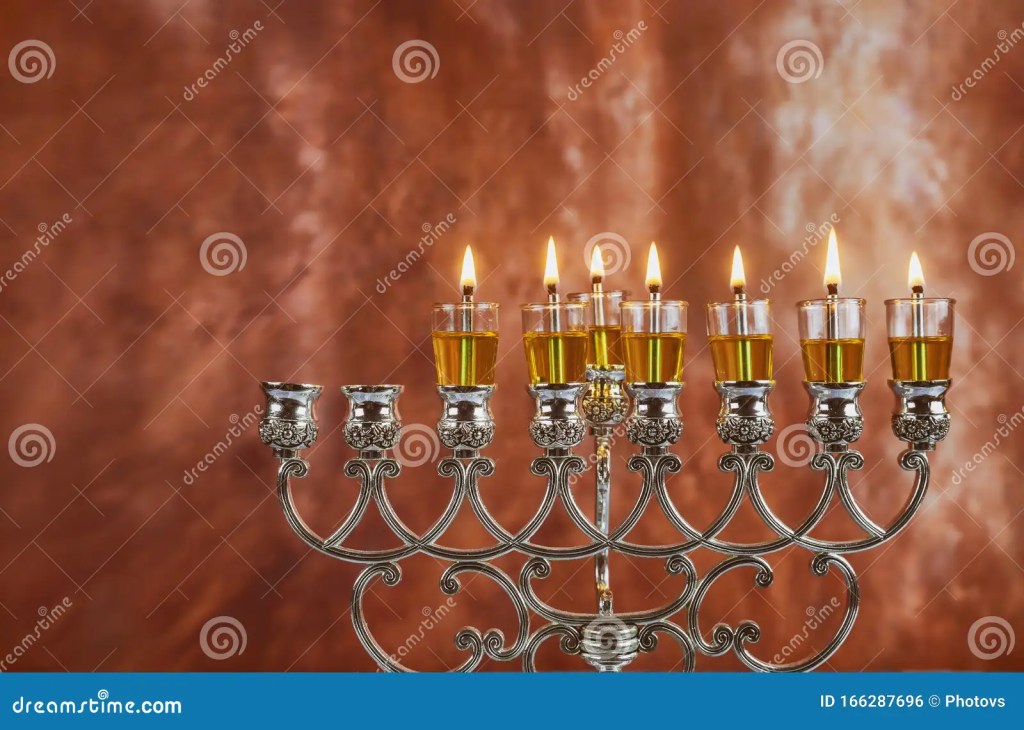
I grew up knowing that books are victories unto themselves. Every book is a miracle, even the books we don’t like, don’t understand, or don’t agree with. Creating a book is a major feat, and it is no less miraculous than a candle that burns for eight days when it only has wick enough for one.
As the end of Chanukah approaches, I suggest a book to give a loved one before the last candle has sputtered out. A book can change a life.
City on fire! Rats in the grass And the lunatics yelling in the streets! It’s the end of the world! Yes! City on fire! Stephen Sondheim
I don’t think I have ever been as confused, angry, and depressed by current events as I am today. I recognize neither my country nor my compatriots. Which is why I am compelled to chime in, though I admit that nothing I have to say is new; nor do I say anything that has not been said by better speakers.
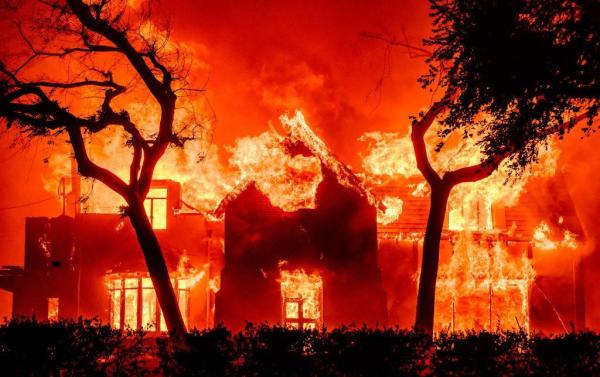
In the wake of the Charlie Kirk assassination, it has become painfully clear that this nation, which I have always regarded as a refuge, is burning down. How can it be that a nation so theoretically dedicated to the proposition that all men are created equal, a country wedded to the right of free speech, a commonwealth so purposefully focused on individual rights, has become such a sewer of discontent, maliciousness, and vitriol?
It should be easy to be inured to the violence that surrounds us all. Every time I activate any device, the newsfeeds report another stabbing, shooting, beating, shoving . . . some action taken against a victim whose only crime was disagreement. But my skin never becomes thick enough to let it all slide off, and Charlie Kirk has enlivened all the danger signals, has brought all the fire warnings to the fore.
Like many fellow boomers, I had hardly heard of Charlie Kirk before his murder. If I considered him at all, I thought he was a loud millennial signet Trump-eting to his young flock. But, once his death became the stuff of everyday obsession, I made it my business to find out who and what he actually was.
I see now that he was a spokesperson for the insecure youth of America, those who are caught in the maelstrom of the overzealous, radical far-left ideologies that dominate their surroundings. While Kirk’s beliefs represent those I long ago rejected, and though I disdain his politics, I understand how he attracted youngsters who needed his firm, unwavering reassurances that there might be a way to find peace and light through Jesus Christ and Donald Trump. I agree with none of his words, but having watched multiple videos of his interactions and speeches, I can find no evidence of his being a bully or a mean-spirited man. I see an overconfident alpha male inviting people to debate with him, people who gladly engage. He argued vigorously, but he was no Grand Inquisitor dictating conversion.
I have family members who are born-again Christians, and I know that in their hearts, they believe it is their duty to save the world by convincing us all to pronounce commitment to their version of Jesus Christ. When Erika Kirk spoke in the immediate aftermath of her husband’s death and at the funeral, I was struck by how much she sounded like people I love. I disagree with them almost entirely, but their intentions are pure. And intention must count. Erika Kirk deeply believes it is her Christian duty to forgive her husband’s assassin, and Charlie Kirk deeply believed it was his mission to save America’s youth.
Kirk should not, however, be hailed as a martyr. The unhinged young man who shot Charlie Kirk represents no cause, is not a faithful follower of any philanthropic group. Tyler Robinson may be confused, and he may be lost in his political beliefs, but he did not kill Charlie Kirk for any reason but his own personal compulsions, whatever they are.
In both camps, free speech is the true victim, the real martyr. It is dangerous these days to express beliefs of any kind, and there is a vacillating definition of the word “freedom,” the freedom that is at the core of the national dissonance that keeps getting louder.
The problem is not whether Charlie Kirk was right or Jimmy Kimmel was wrong. The problems that rule our daily lives are whether the guy who passes you on the highway gets to take your right of way without being shot at, and whether your friends get to say they don’t want to eat fish for dinner without fear of being stabbed for disagreeing with you or if the woman waiting for the #4 train she deserves to be pushed in front of an oncoming train because she didn’t say “excuse me,” when she bumped into you.
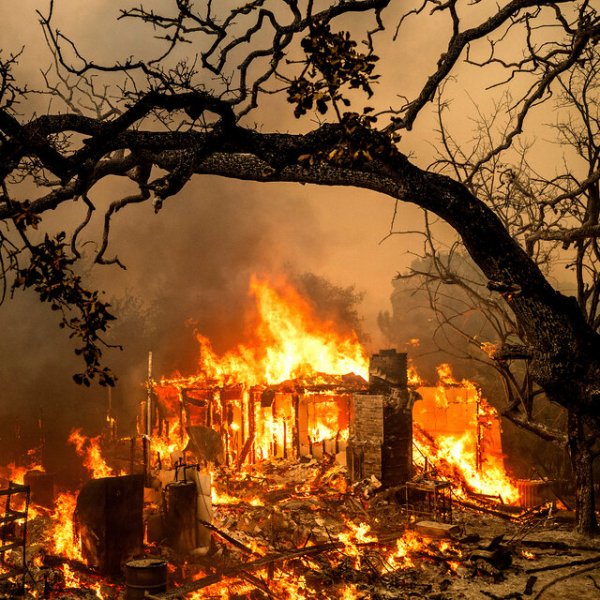
Both sides daily stoke the fires. Neither side seems willing to brandish an extinguisher. And that’s why the fires are consuming us all.
I wanted to love We Were the Lucky Ones, a Hulu original series. After all, the story resonates with me. Like my real-life Jewish family, the family in the show is dispersed by the Nazi invasion, set adrift in the world. It’s a masterful series, well acted, realistically written, and beautifully shot. Yet, after the second or third episode, I found myself feeling sick, resenting the artistry of it. The why eluded me at first.
The drama is certainly harrowing. An embattled family encounters every possible horror that the Holocaust meted. They witness, narrowly escape, suffer aftershocks, and move on. The music is Schindleresque sad, and the scenes of torture and cruelty are horrifying. But that’s not it. Nothing in this show is any worse than what Keneally or Spielberg depicted or what Primo Levi described. No loss is any more heartbreaking than those Daniel Mendelsohn memorialized. There is nothing to see in this series that we haven’t seen in any one of the honorable Holocaust museums across the world. So why does this show so offend me?
Over my head, I hear the whirr of helicopters, and I run to the TV to check the local news. On the screen, hate-spewing, pro-Palestinians rally on my Alma Mater campus, just up the street from my home. An angry child-woman glares into the camera and shouts, “They are weaponizing the holocaust” while hundreds scream, “From the river to the sea.”
At another gathering in midtown Manhattan, youngsters in checkered scarves and green, white, black, and red flags scream “Free Palestine.” A middle-aged man proudly waves a Hamas flag. Online, a headline from the ADL: “Chicago Sees Rise in Antisemitism and Activism Amid Action by Anti-Israel Groups.”
There it is. Now I get it.
Our stories are betraying us. It’s time to revise.
Real life has become scary, and those of us who inherited our parents’ PTSD, who were born with memories we cannot decipher, are reliving the dreams we cannot comprehend of the terror they fled. The specters that used to visit only by night are fully animated by day. Once upon a time, the anticipation of violence was easily quelled by stories that assured us that the world was sufficiently sorry; pogroms were a thing of the past. We believed our parents when they reminded us that this is America, after all, and we could feel safe. No more. Those night fears loom omnipresent over my home, my security, my grandchildren. The stories no longer heal.
The haters are wrong. It is not that we are weaponizing the Holocaust or antisemitism. But we are hiding behind it. We hold up our past like medals won in the Suffering Olympics that proclaim our capable willingness to suffer. There is no more reassurance in the idea that it can’t happen here because clearly it can. And it will if we let it.
Those who wish for our annihilation are fueled by our pain. Many display their own medals and say we have not suffered nearly enough. Others are simply irritated by what they perceive as our whining insistence that enough is enough.
We have to stop thinking that this approach will work. Many in the world deem it passive aggression. We have to stop apologizing for our coreligionists who are fighting for the survival of Israel. We have to stop disclaiming our right to fight back. We have to take control of the rhetoric and paint ourselves as a far more positive, authoritatively powerful people. As Rabbi Diana Fersko recently wrote for Tablet magazine, “We have to stop running defense” (“American Jews Should Become a Little more Israeli” April 1024). Just because millions of us were killed in the holocaust doesn’t mean we must beg for survival by reminding our foes we don’t deserve to be exterminated. Would we be any less deserving if we had not suffered the mass murders?
Art is a wonderful place to find relief and transformation. Which is what so many writers and filmmakers, artists and curators have done by insisting on telling our truth. But at this moment, the profusion of new Holocaust reenactments feels like a Hail Mary play that is doomed to failure. We cannot think that because Hulu shows The Lucky Ones for ten weeks on their streaming app our detractors will suddenly see the folly of their ways and back off. Will one Jewish family’s miraculous survival of that great apocalypse convince the world to watch any less dispassionately while the Ayatollah rattles Iran’s nuclear sword? Not a chance.
We should have more films like Munich or Raid on Entebbe or even Exodus. We need to see heroes like Liev Schreiber’s character in “Defiance,” heroes who defied the stereotypes and showed our refusal to let the world beat us up. There should be more series like Tehran that explore the ways in which Israel and world Jewry are endangered every minute of every day by adversaries who hate us for no reason but that they do. We should have filmmakers creating films like Watching the Moon at Night that expose Hamas leaders’ vitriolic calls for the extermination of all Jews everywhere. We need documentary footage of Jews standing up to the hate, holding their ground. . . winning.
We cannot expect the world to feel sorry for us just because we wear our thorny laurels in public. People are not moved by pictures of dead Jews. They take those images for granted.
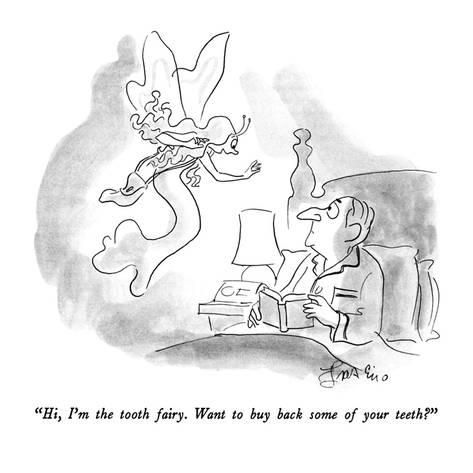
My father was eleven years old when he was summoned to his father’s bedside. “Remember this, my son,” the old man said. “Respect your mouth. Teeth can kill you.”
Grandfather knew whereof he spoke. He promptly died. . . felled by a cluster of abscessed teeth extracted too hastily in the days before Penicillin.
I grew up with that story in my head, reiterated over and over by my ever-grieving dad. By the time I reached old age and the disintegration of my own teeth, I had seen similar results in others. One close friend would have died of myocarditis, a heart infection that resulted from an untended tooth, had she not undergone open-heart surgery.
Our vulnerability is no secret. Even though people talk about dental work as though it were cosmetic frivolity, we all know better. So how is it that dentistry has become a golden calf we must worship from afar?
Last Sunday I woke up with what I was sure was a broken tooth. I had suspected that I might be grinding my teeth at night. Here was proof.
Knowing better than to seek help on a Sunday, I began first thing Monday morning to call the various oral surgeons around New York City in and out of my insurance network. In each case, I explained that I had a broken tooth. In each case, I emphasized the fact that it was increasingly painful. In each case, I said I can come in anytime. Alas, there was no room at the inn. No appointments whatsoever anywhere in town.
Then, miraculously, I found an oral surgeon with an appointment . . . ten days later.
“Can you wait that long?” The receptionist asked cheerily.
“I hope so, “I said doubtfully. I had already called fifteen doctors’ offices. “I guess I’ll have to take my chances.”
“Okay, then,” she chortled chipperly. “Next Thursday it is, at 11 AM.”
“You don’t have anything earlier?”
“I’m sorry. The doctor only comes in on Thursdays, and he does not begin his day till 11.”
Okay. At least I had an appointment.
By Wednesday, the tooth hurt whenever anything as invasive as my tongue got near it. I began to talk like Daffy Duck, spitting words with a sibilance that wet my clothing. By Friday, I was in real pain. Ibuprofen, acetaminophen, aspirin individually and collectively offered little relief.
I called every “Emergency Dental” number I could find.
“Sorry,” said one typical respondent, when I asked for an appointment. “Dr. only comes in on Saturdays, and he is booked up through July.”
I called the emergency rooms at every hospital in town. In the olden days, before Covid, Beth Israel, now Mt Sinai Union Square, had an oral surgeon on duty in their emergency room, of whose services I gratefully availed myself a few years ago. Nowadays, that ER, like every other ER in Manhattan, tells me the same thing: “There is no dental specialist on staff here. You can come in, and a doctor will treat your pain, so that hopefully (yes I am hopeful) you can wait till you can see your dentist.”
I finally found a clinic in Washington Heights, open Monday-Saturday, first come first served. I called to be sure they would take me and my insurance. Since they don’t answer the phone till 9, I was out of luck for that day. “We open at 7,” said the kind voice on the other end. “Be here by quarter of seven, when we open the doors. We stop treating patients when we reach capacity, and that usually happens by 7:30.
“Do you take my insurance?” I queried. She checked.
“We do,” she said with great delight. “No problem.”
I arrived as instructed at 6:45. There were five people ahead of me, which meant, I figured, that I had a reasonable chance of being seen. I stood behind them, waiting in the cold, windy morning, as more and more prospective patients arrived. It was 7:45 when they finally opened and began letting us in one at a time. My turn came just as the sun was beginning to warm my back. The receptionist looked at my insurance card and shook her head.
“We can’t take this one,” she sniffed. “Their office isn’t open on Saturday, so we cannot verify your eligibility or what to charge you.”
“It’s okay,” I said after ascertaining the exorbitant cost. “I’ll pay out of pocket. My insurance will reimburse me for what they do cover.”
Now she shook her head vigorously.
“We won’t be able to verify that you were our patient. We do not have the personnel to fill out the paperwork.”
It wasn’t absurd enough that they claimed my insurance company is not open on weekends — I mean it’s Medicare, and it serves old folks! — but to tell me they won’t sign off on the work so that I might be reimbursed? Now I was furious
This woman was either lying or she was part of the laziest workforce in America. Either way, I was not about to stay and let them excavate my mouth. Wordlessly but with a sniff of disgust, I left.
On the bus headed back to Harlem, I decided to go to the Web MD near my house. At this point, I figured if I at least got a prescription for antibiotics, I had a better chance of surviving till I saw an oral surgeon. The people there had no trouble accessing my insurance information, and I was seen right away.
Doctor checked my ears. “Ears look good,” she said.
“That’s a relief,” I snorted, trying to keep the sarcasm out of my voice. “I wasn’t sure if the tooth had pierced my eardrum.”
She laughed and wrote me a prescription for penicillin. By Monday the pain had subsided. It’s Tuesday now, and I am confident I’ll make it to Thursday. So long as I refrain from eating and talking, I’ll be okay.
My situation is far from unique. According to the website EmergencyDental.com, over 800,000 Americans showed up in Emergency Rooms in 2019 seeking dental care and were turned away. The number is likely to quadruple this year. That’s a problem for all of us, not just in terms of tooth trauma. Emergency Room care creates costs for taxpayers, and the resulting illnesses compound the shared expense.
For some, the cause of this scramble for the emergency room is the high cost of dental care. When I was young, my husband and I both worked, and between us, we were adequately covered for cleanings once a year, regular check-ups, and a filling or two as needed. Such coverage was not unusual. Nowadays, my annual cleaning and requisite fillings are on the Medicare House, but all Medicare plans are not so generous, and fewer and fewer employers offer dental benefits with healthcare coverage. Of course, the working poor, who are neither covered by employer benefits nor eligible for Medicaid, are entirely disabled. Private dental insurance, which is typically provided by Dentistry associations, is almost as prohibitively expensive as the services theoretically covered.
Regular cleanings and exams by reputable doctors can run patients upwards of $800 before any major work is done. A single extraction is likely to cost nearly $2000. There are clinics that offer less expensive care to people in poor neighborhoods, and most of them accept Medicaid though not Medicare. There the wait for any kind of care there is absurdly long, and, in the time of Covid, sitting in a crowded unventilated space with people coughing and sneezing and children running around for hours is, at very least, terrifying.
Chain store dentistry, such as Tend, et al., claim to be offer transparent, affordable cost, but their advertising is largely false. The reviews on the Tend website, for example, tell the tale. Patients regularly complain that the cosmetics of the space are great, but once in the company’s clutches, patients are treated unprofessionally. Personnel, they say, use the tactics of used car salespeople, and bully “clients” into buying services they did not plan for.
A typical complainant wrote that, in need of emergency care, she called and was relieved to get an appointment. “That turned out to be the first disappointment. . . . The emergency dental services they advertise are not true. The dentist comes up with a treatment plan and you have to pay for all of it upfront, even services you don’t receive that day. Horrible horrible experience. Left there with a few less hundred dollars with zero work done, in pain, and lost a day of work.”
Several reviewers complain of ill-prepared dentists, who are unable to numb their patients, who order prosthetics that do not fit, and leave their patients with gaping holes for days after scheduled appointments to place a crown or fill a tooth. They say that the company charges for services unrendered. One disgruntled customer told me, ”I am obsessive about brushing and flossing and using mouthwash, but I had a slightly chipped tooth I needed to have examined. I’m on an unpaid furlough from work, but I didn’t want my tooth to go untreated. Tend promised to do a cleaning, x-rays, and exam for $350. That seemed reasonable, and, based on how lovely the people were on the phone, I went in expecting to love Tend. What a mind-blower when they told me I needed a deep cleaning that would require two visits and would cost me $1200. In addition to my $350. The dentist kind of laughed at me. ‘Oh, no,’ She said. ‘We won’t clean your teeth unless you agree to accept our recommendation.’”
A few years ago, I complained to a young dentist, who was working on my teeth, about how hard it is to get good dental care. “Teeth can be as harmful to our health as any vital organ,” I asserted. “And yet when we do find a reputable practioner, we have to pay ridiculous prices for services rendered.”
“Yeah,” he agreed. “I don’t get it.”
He sighed and commiserated, “I’m from Canada, and it’s just as bad there. As good as our national health care is, we have no coverage for dental work.”
“What do you think is the problem?” I asked.
“I’m not sure,” he bemoaned. “Dentistry gets no respect. People don’t realize that teeth can kill you.”Carla Stockton
Carla Stockton is aging as gracefully as possible in Harlem, NYCARLA STOCKTON FOLLOWS
Covid-19 has been kind to me so far. I suffered a bit from the usual wishing to be out in the world with friends, the ordinary desire to be back in the routines, to return to exploring the city I love. Still, no one close to me died, was displaced by unemployment or afflicted with hunger. I managed to teach online, and my income, while diminished by falling enrollment, has been sufficient. I can pay my rent. I can buy food. I am whole. As are my family and closest friends. I am grateful for my great good fortune.
There have been, however, some collateral damages.
Such as the reliable soundness of sleep.
An alarm in the abode above me sounds at 2 AM. My overhead neighbor has made his presence more audible of late. He bounces balls and hammers nails at the oddest hours. A personal trainer, he seems to have clients who suffer from pandemic time dissociation. His doorbell rings. Dumbbells crash to his floor and shake my ceiling. A torrent of new-age violins accompanies the scuffling of feet and then the singsong squeak of sneakers running in place.
By 2:30 AM, the outside world comes screaming through my open window. The pandemic has turned deep night, when police are less likely to be vigilant, into a time for blatant socializing. It’s too early in the morning or too late at night to be woke about the disturbances from the street.
My open window admits the uninhibited voices of day laborers out in the predawn cold hoping against hope for some kind of work to fall off a truck. Rapped repetitions and heavy bass runs blast from angry speakers. Salsa and reggaeton bleed from whining car radios. Scurrying feet of squealing kids, who should be tucked in at home, scrape the streets.
Once awake, I lie in bed fighting fears I was can no longer keep at bay, the ones I used to control with ease. I stuff my ears with earbuds, listen to podcasts, novels, short stories that distract me. And then I drift into a semi-sleep from which I wake feeling tired all over again.
There’s also the loss of hugging.
We all hug less than we ever did. Even post-vaccination, I find it hard to trust that touching, holding onto human flesh is safe for those around me. My closest and dearest friends, once demonstrative to a fault, now withhold their affection.
I wear a mask in the presence of my grandchildren, and though I long to return to cuddly sleepovers, to lying in bed telling stories and listening to theirs, they remain a threat to the unvaccinated around me. So I curtail my contact. It’s a painful abstinence that seems a small price to pay.
At times the absence of love’s simplest physical ministration has led to more permanent deprivation. By losing physical contact, I lost touch altogether. I truly believed what I said whenever I promised, “When this is over, we’ll catch up.” Then I went about my business and made do with what was in my reach, and I began to repel intimacy with anyone outside my purview.
In the earliest days of the virus, I would call to invite an old friend, who lives just beyond a two-mile walk from me, to meet for a *socially distanced visit in the park. She inevitably responded, “I don’t want to interrupt your work,” or “I know you’re busy, and I won’t distract you.” At first, I protested, but then I heard her implication: “I have closer people to see today. I won’t extend beyond my pale.” I understood. I accepted the rejection and honored the choice that she’d made. We spoke regularly by phone, sharing our individual experiences with the quarantine. Then we spoke less often, and finally came a day when we said we’d catch up the next week but did not. I failed to make that call.
Though either of us could have been the one to follow through, I embraced her recrimination for not having stepped up. “Your apology sounds insincere,” she scolded when I did call.”I must consider whether I want to be your friend.” Honestly, I understood her rebuff. I was remiss. In fact, I was thinking what I clearly heard in the substance of her subtext.
“It’s too hard now. It’s been too long, and I’ve filled all the gaps where our friendship used to be. I’ll be moving on.”
The losses are incalculable, but they are losses I will live with. Like everyone else, I make adjustments to a life that will never be normal again. Each of us shapes and reshapes a new way of being that won’t necessarily embrace what was. Those relationships that can be born anew will prevail, but some will scatter.
We’ll never be the same, but we must count our lucky stars.



 carlastockton.me