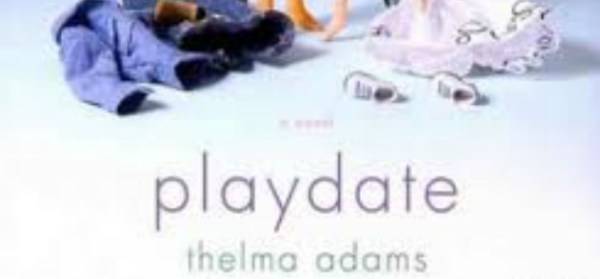

Schedule Yourself a Playdate

Until I read Thelma Adams’ Playdate, I thought it was a woman thing. . . .

When I was staying home with my kids — there are a few of them, and they are very closely spaced — people used to ask me pointedly and with no small modicum of condescension, “So, what do you DO all day?”  As though caring for small children, running a home, even just keeping the toilet paper stocked were not taxing enough.  I worked outside on a variety of projects that generated some extra cash, but I didn’t have a “steady job.”  Consequently, I was a nonperson.  Ask Social Security.  They’ll show you just how little I am worth as a result of those years outside the FICA pale.

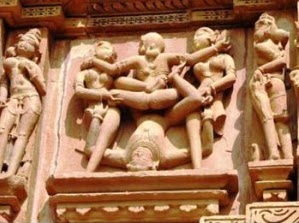
Adams’ Playdate features a stay-at-home parent, a handsome young beefcake  and former weatherman from Barstow named Lance.  His life is spiced by the honest satisfaction he derives from watching his daughter blossoming into womanhood and healing his belly chakra through the variety of tantric sex positions he studies with yoga instructor, who happens to be the wife of his wife’s business partner.  The book is funny and entertaining, and the characters range from Barbie -and-Ken shallow or slightly loopy to downright and absurdly insane; based on my year of living reluctantly in California and my frequent visits to the La Jolla area where the book is set, they rang true.

But besides being a quick, fun read, the book scratches at a dark veil that shrouds two issues and renders them rarely talked about: human beings are threatened by choices others make, and child rearing is regarded as a part-time endeavor that demeans those who choose to devote their lives to it.

Lance is a “househusband.”  His wife Darlene is a wheeler and dealer, so Lance manages the cookie sales for his daughter Belle’s girl scout troop, drives her to and from her various activities; he spends his days washing, drying and folding the laundry, shopping for, cooking, and baking the food or scrubbing, scouring and polishing the house before he finally manages to catch a break over coffee and some community gossip at the nearby Starbucks before he jumps into his car to retrieve the child.  The men in his circle consider him a loser, and they call his wife a sucker for having married him.  “At my house,” brags the next-door neighbor, “I earn the dough. I’ve never met a woman who makes as much as I do. Never.  Nunca.  If a man earns less than his wife, he must be really low paid.  What kind of freeloader would let this happen?”
The observation is shared at the requisite revelatory party scene, the one where all characters’ secrets are discovered, set as a rather slapstick dinner honoring Robin, the sister of Lance’s playmate, who has written a sociological study called Househusbands and the Women Who Love Them, which has become a runaway best seller.  Darlene and Lance find themselves defending their choice to live as they do, but they also find themselves seriously questioning whether their critics might actually have a point.  Have they chosen wisely?

It’s a funny moment, made funnier by its poignancy, augmented for me by the resonance.  I lived through parties like that one, and my life was then and ever after of questionable esteem.

After thirty-three years of tending my marriage and that crop of delightful children, I left my husband to pursue the writing life I had postponed.  In one of our divorce mediation sessions, my spouse asserted, with absolute conviction, “You really don’t deserve to have half of everything, you know.  Because even when you worked fulltime — and you only did that for the last twenty years — you made less than a third of my salary.”  No one batted an eyelid in consternation, and I was blind-sided, but I should not have been.

In those years, the world had concluded that since women were liberated, they should not be allowed to sit at home and eat bonbons anymore.  In society’s eyes, I had not accomplished anything measurable — except, until I finally got to the gym to work it off, a substantial amount of baby weight.   If I had had, in those days, a good offer to engage in an independent yoga/tantric sex project with a willing man, I might have accepted gratefully.  Truth is, however, where women might find househusbands sexy — “oooh, they have such a prominent feminine side!” — men are not so enticed by housewives whose clothes smell of baby farts and whose bodies lumber from the strain of spending the day as a jungle gym.  Even when men appear to be bottom feeders, they are higher in status than the women toiling next to them.

No kidding.  We should talk about this.  Women and men should have options, and society should reward them for making bold choices.  Instead of criticism, both men and women who stray from the accepted norms should be applauded for having identified what they want, decided what they are willing to do to get what they want and then for going after it. Whatever it is.  It’s what we love about good acting; it’s what we should relish about good living.

And frankly, someone should be minding the kids!
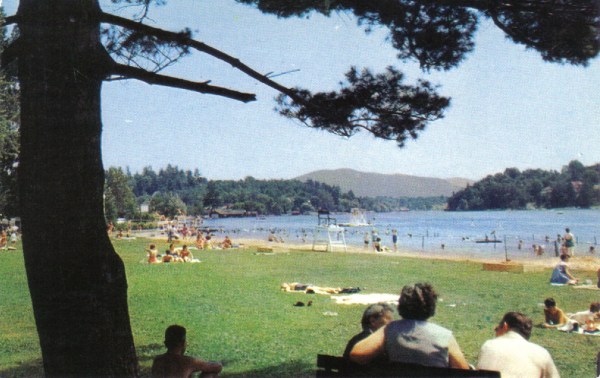
Lake Flower High Dive

Lots of children,

parents calling to them, encouraging,

or begging them to come back.

They laugh and swing out

off the high dive into the

dark water, where

they disappear, then emerge

sputtering, choking on their giggles,

delighted.

I stand at the top of the ladder

Hesitant to walk out onto the board

I am afraid of heights.

Lots of children,

my own siblings and others,

laugh at me and call out

“Dive!  C’mon,” beckoning me into the

dark water, where

I’ll disappear.  Will I emerge,

sputtering, choking on giggles,

delighted?

I venture out onto the plank

to look down, wondering what lies below

and if it matters.

Lots of voices now

“Do it!  Do it!”

I jump, and for the moment

I stop thinking . . .

just enjoy the

F

A

L

L

Times Square Apassionata

The other day, I heard a tour guide telling a walking tour, “Back in the days before Disney came to New York, Times Square was not so family friendly, but nowadays it’s been cleaned up, more like an urban amusement park.”  I sighed.  Remembering.

When I was 18, I had a job on 44th Street and 12th Avenue.  I lived in Queens, so to get to work, I took a bus to Main Street Flushing and then jumped on a still new-looking 7 Train, which took me to 42nd Street and 7th Avenue, from whence I walked west to the river.   My report time was 7:30; so, even in the summer, darkness lingered over most of my journey, and when I emerged from the tunnel into Times Square, the gray steam of early morning still dripped from the building overhangs.

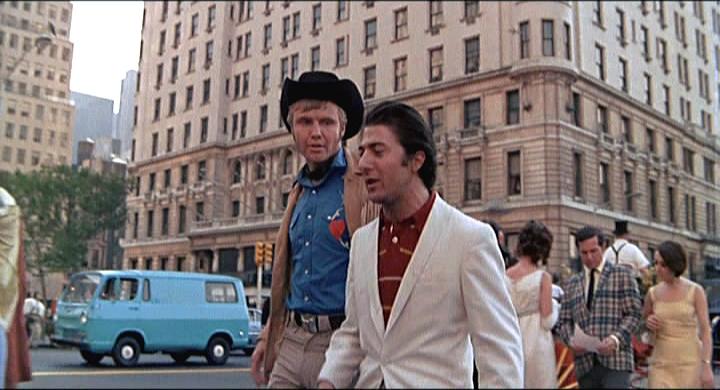
The first time I made that journey, I entered the world hesitantly.  Times Square in the crepuscular minutes just before the sun rose was peopled by potentially terrifying characters.  I grew up in the granite-guarded isolation of the Adirondack Mountains, after all, and the only place I had encountered people like these was in the books and comics I read, the movies I went to see.  City of Night, Manchild in the Promised Land, Batman, Midnight Cowboy. Luckily, they were characters with whom I had an intimacy that promoted a modicum of understanding I did not have for myself. I didn’t know what they might think of me.

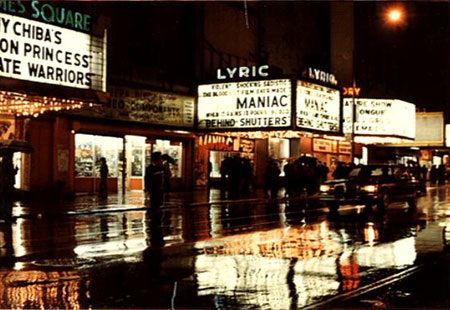
There was a small group of prostitutes who congregated together in front of the Lyric Theater, where the Hilton Theater is today, having coffee from a nearby greasy spoon, smoking and talking and giggling, perhaps too wired to go home to sleep or maybe waiting for someone to pick them up; I never knew.  I felt like I was in Junior High, having to pass the cool girls, hoping they wouldn’t make fun of me.

They didn’t. “Good morning, Sweetie,” a very large, older woman called to me; the others chimed in, warning me to be alert, to watch out for vagrants hiding in the shadows.  By the third or fourth day, they had coffee for me — I couldn’t drink it because I hated the “white Coffee” (extra cream) they drank, but I didn’t want to insult them, so I fake-sipped it as I headed west, thanking them profusely.  I lasted in the job (a story unto itself) for eight months, and every day in every kind of weather, the bevy was always there, expecting me when I emerged from the subway.

I finished work at 4, and the streets could be already pretty dark when I made my return trip.  I walked briskly East on 42nd Street from the river, one of many, mostly other members of the work force wrapping up their day.  I moved in sync with gal Fridays, clerks and typists in too much make-up, too-high spiked heels, too-tight mini-skirts, with office managers in dowdy, cheap suits, sensible flats, hats and gloves.  Construction workers stopped packing up their wares to shout their version of compliments at us as we walked or to jeer at the drag queens slinking along the edges of the buildings.  Well-dressed family men pulled their hats down over their eyes as they were sucked in by the blaring, undulating light of one of the many peepshow or porn  flick theaters that staved off the deepening darkness.

Cleaned up?  Times Square may be overrun with families now, but it’s far more tawdry, far less wholesome than the Times Square of my youth.

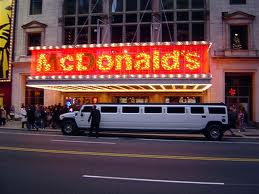
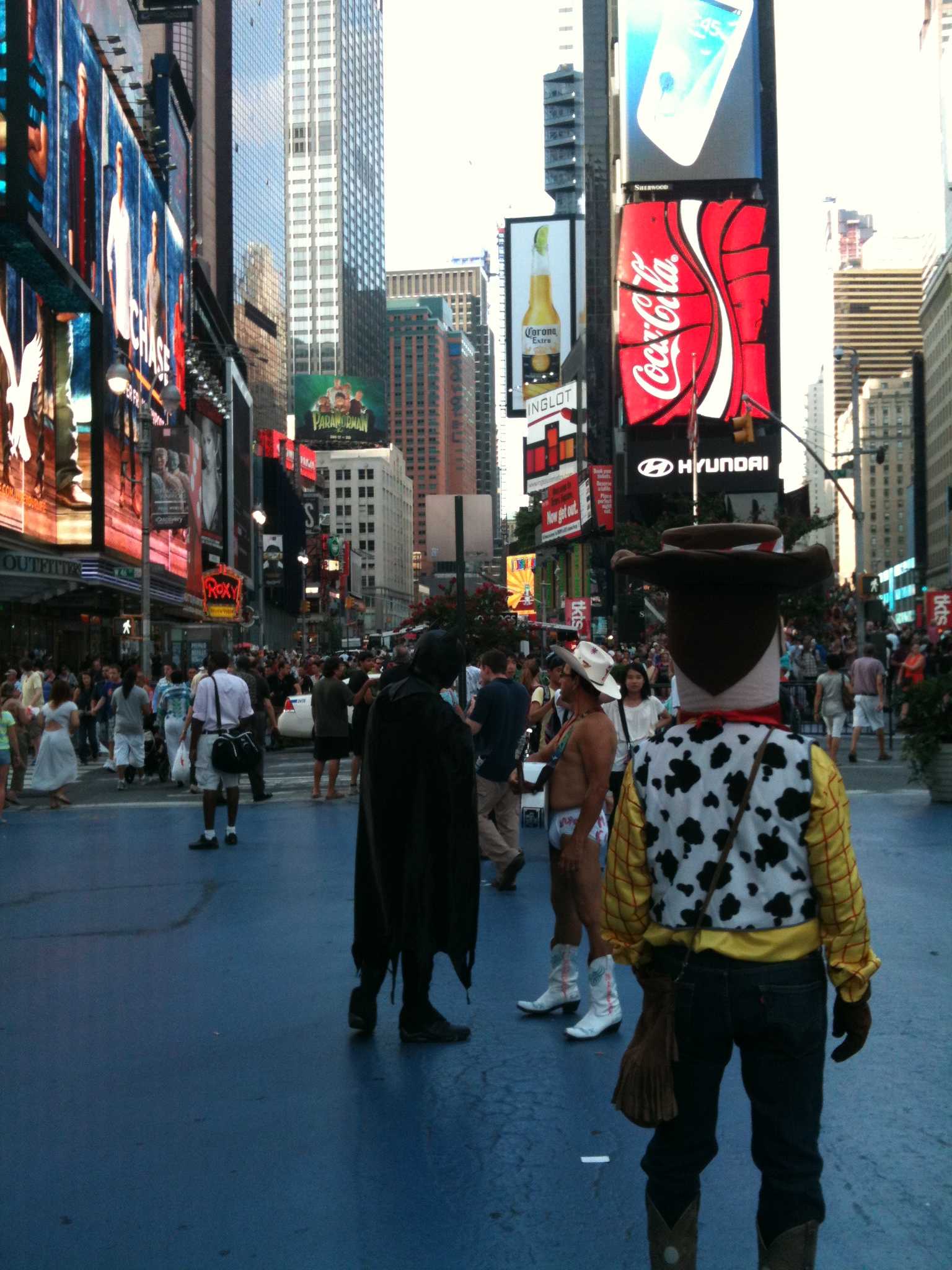
The Naked Cowboy and his imitators strut around in tightie whities, miming molestation of people’s adolescent daughters while parents laugh and snap photos.  A ridiculous-looking middle-aged man, wearing a headdress right out of a ’50’s western, parades his insignificant jewels in a skinny pair of black or white briefs as he drums a come-hither on a child’s tom-tom.  A massively wrinkled drag queen in a green bikini, her face and torso too red from an overdose of tanning rays, adjusts the Ms. Liberty crown perched on her head and collects tips in the sagging bottom of the over-packed bathing suit.  A vanful of migrant workers, bussed in from Queens and handed costumes in a lobby near the Discovery Museum, walk about as the dramatis personnae from best-known Disney films and television series, encouraging the kids to hug and fondle them.   In the center of it all, every Friday, a group of hate-spouting Black men spew ill-disguised racism and anti-semitism while tourists from around the world grab photos to send home on their iphones.

Who would call this wholesome?

I saw Batman talking to the Naked Cowboy the other day, and for a moment, it looked like Batman might ensnare the offending creep and carry him off in the Batmobile.  Wishful thinking.

Oh, well, even if he did, there’d be another to take his place.  It’s simple economics.  Just like they did in the late 60’s of my youth, people gotta make a living.  Come to think of it, the tour guide was right.  Times Square really is just an amusement park, and the revenues are where it’s at.

Munich Matters

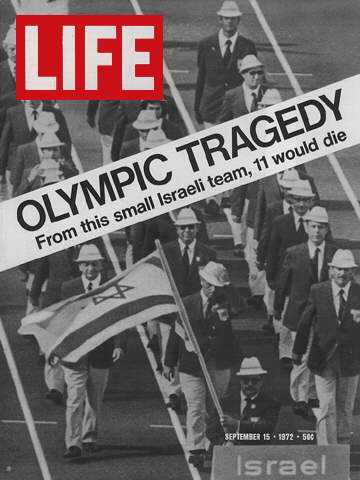
When Dan Alon approached me to write the harrowing tale of his freakishly miraculous escape from the Munich Massacre, I was drawn to the tale for its depiction of the process of survival.  I had grown up in a family of traumatized escapees from disaster and holocaust, and none of them ever found the vehicle that could deliver them from their ghosts.  I was honored to offer my services to help build the transport for Dan’s journey.

At the time, I thought that my agenda would include an expression of compassion for the Palestinians.  I was emotionally conflicted about Israel.  While I understood the extreme importance of a Jewish homeland, I agreed with a close friend of mine, who used to joke that “They could ‘a’ just given us Miami.”

Frankly, Israel embarrassed me.  My grandfather had coerced my mother into abandoning her dream of making Aliyah (moving to Palestine) in 1939, and he often compared Zionists to all the other Europeans who had grabbed land from indigenous peoples around the world.  I believed that Israel should be forced to give back lands confiscated in the 1967 War, that Israel should take a more conciliatory stance.

 My point of view clouded my perception of the Munich Massacre.  Of course I never would have blamed the athletes for what happened, but I believed, like most Americans, that by disenfranchising the Palestinians and by discriminating against them, Israel was to blame by putting the athletes in harm’s way.

I was committed to sharing Dan’s as a cautionary tale — watch out, world because this could happen again, and watch out, individuals, you could survive, and then you will realize that living through the ordeal was the easy part of it all.  But I hadn’t considered the event’s other, more layered, implications.

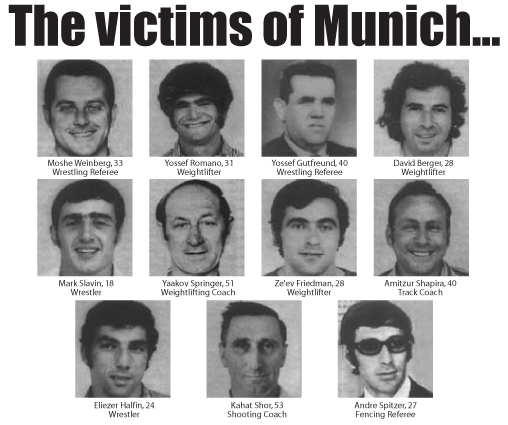
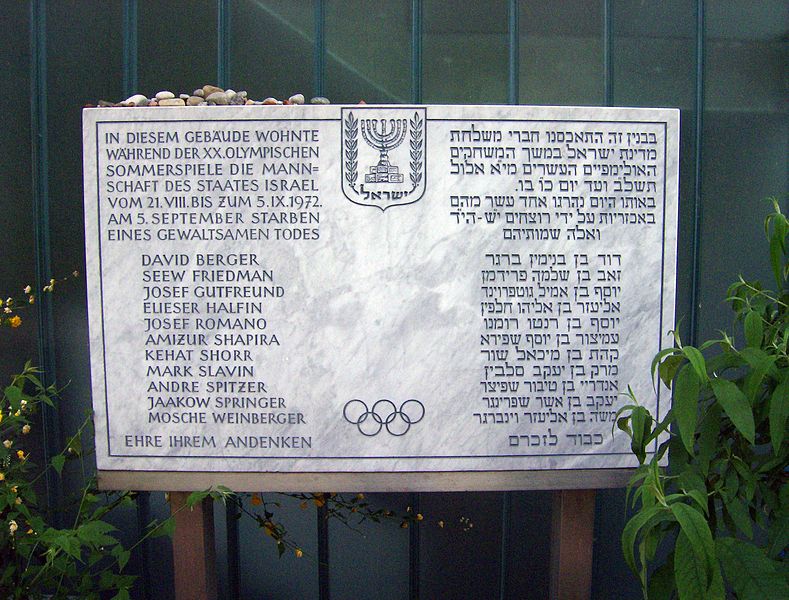
That there is no excuse for what happened in Munich is self-evident.  A vile act of terrorism that usurped the sanctity of the Olympic arena and took eleven fathers, brothers, husbands, sons, nephews, cousins, friends from their loved ones cannot be justified or excused.  The athletes were non-combatants, and their deaths were pointless wastes of fine lives.

Eleven athletes killed at Furstenfeldbruck Airport on September 5,1972

The world clambered to give the terrorists the attention they sought.  The masked murderers of Black September became fixtures on nearly every television set in the world, and when all was said and done, they were hardly so much as chastised.  Until Mossad unleashed Operation Wrath of God, no real action was taken to so much as censure the perpetrators of the heinous violence; the Olympic Games themselves refused to skip a beat, carrying on as though nothing were amiss while half the hostages were strapped into helicopter seats and strafed with machine gun fire and the other half obliterated with an exploding grenade.

 The message was clear.  We may say the Olympics are on sacred ground.  We may pay lip service to the precept that the Games are separate from the world of politics, but Israeli journalist Yarin Kimor was right when he pointed out that “The minute you raise a flag, it’s all about politics.”  It was politically safer, more expedient for the IOC and world law enforcement agencies to just let this one go.  It was too highly charged an issue.  Take sides, and you rock the boat.  Instead, eleven athletes were sacrificed.  Nothing was really gained by the terrorists; the following year, perhaps spurred on by the Munich tragedy, the world — including the US, who had promised to defend its ally Israel — watched in silent complicity as Egypt and Syria attacked Israel on the highest, holiest day of their year. . . just as they had stood silently by in the 1930’s, when everyone knew what the Nazis were perpetrating against the Jewish people.  Once again, the nations of the world stood by in hushed complacency and did nothing to lend a hand.  In the peace negotiations that followed, however, the US took the role of “peacemaker” and threatened sanctions should the Israelis prove less than propitiatory.

The world seems to believe that Israel is expendable.  Few seem to remember that less than 3/4 of a century ago, six million Jews died because they were unwelcome in the diaspora.  There was no safe haven then.  Even France, the country that first afforded citizenship to the wandering Jew, turned them out or fed them to the ruthless Nazi killing machinery; the US, my own beloved country where so many believe Jews to be firmly ensconced, denied entry to millions, despite the absolute knowledge that such denial meant certain torture and death to the shunned minions.

And there was no safe haven for the others who fell, like domino pieces, when no force prevented forfeiture of the Jews.  Hatred swallowed up great numbers of Poles, gypsies, unmarried professional women, gays, physically and mentally challenged citizens, Catholic priests, et cetera ad infinitum.

Where will they all go the next time they are so endangered?
 Forty years after Munich, the IOC continues to give tacit approval to the terror they allowed to happen.  Yet another Olympic Games will begin without the simple Moment of Silence the victims’ families have consistently sought.  The Arab nations call for the expulsion of Israel from the Games, and the IOC gives the same attention to that demand as they do to the request for the single minute of remembrance, a minute that says without words, “We are truly sorry.  What happened here was despicable, and we will never let another athlete on any team be treated this way under our watch again.”

Worse, the world looks on bemusedly when Australian swimmers post photos of themselves going to the Olympics carrying, of all things, machine guns.  Perhaps they are harmless idiots, these Aussies, but the message of the photo’s reception is that it’s okay to treat the massacre’s remaining family and friends as well as the athlete survivors with abject insensitivity.  The world shook its head and tsikatched at the boys, but there was no statement from the IOC that what they had done was intolerable, that no such behavior would be conscienced.

Munich Memoir: Dan Alon’s Untold Story of Survival is a first hand account of what it was like to be at the games when his friends, teammates, countrymen were taken and slain.  It reminds us how easily a tragedy can happen in a garden of peace and love.  It reminds us that we are all vulnerable, all candidates to stand one day as Dan did, in shoeless, shocked disbelief while people we care about are simply erased by others with a savage agenda.

It reminds us that we cannot ignore history.  It will not go away.  Let it be our teacher!

Skeptical Idealism

I once was a union maid. Singing along with my soul father Pete Seeger, I turned 13 in a world where the unions, which had little to do with my life, existed to make workers feel appreciated, keep their bellies full and protect their rights. I would have followed “Dad”  and Uncle Woody to the ends of the earth carrying placards, recruiting for the unions.

Practical experience, however, has taught me skepticism.

In 1988, I went to work as a teacher in the state of CT, rejoicing that unlike AZ, where I had earned my certification and where no unions represented teachers, CT offered membership in a local chapter of the National Education Association.  I served on the bargaining committee and was part of a team that won my district some important concessions.  Then, after twelve years of fighting the politics of bureaucracy vs the arts, after feeling castigated for my perceived iconoclasm, I decided it was time to leave the profession.

Had I been a true devotee of my union, I would have stayed on indefinitely.  I had tenure.  I didn’t have to fight, didn’t even have to work very hard anymore.  My contract, buoyed by my Union membership, would have allowed me to get away with almost anything short of criminal behavior without being fired.  I could have followed in the footsteps of so many teachers who had gone before me, sleeping through classes, disengaging further and further from education, sitting for hours in the teachers’ lounge complaining about my lot but doing nothing to change things,  safely and securely ensconced in my job.

Instead, I saw that I was becoming ineffective.  I was distracted by personal traumas and exhausted from the constant round of fundraising and fighting for auditorium time that constituted much of my life.  I couldn’t focus on the student writing I was supposed to be coaching, and I feared allowing my negativity to rub off on the kids.  Nothing is worse for education that an ineffectual teacher, so I left.

And that’s when I found out just what the union had really done for me.

Long before my time, in the 1950’s, the Connecticut Teachers Retirement System voted to opt out of Social Security, and in 1959, at the request of the Connecticut Education Association, the General Assembly of the State of Connecticut prohibited members of the Retirement System from holding any further referenda on the matter.  To this day, the ban on Social Security for teachers in the state of Connecticut remains in place.

Which works out great for those teachers who stay  – even those who stay too long — from youth to age.  Had I been able to max out with 37 years in the system, I could have had a pension that exceeded my working income, and I would have had lifelong healthcare benefits.  But I began teaching at 50; I was hardly going to make it to the end any way I sliced it.  Today, at 65, my social security looks like I didn’t work for twelve years, and I have no pension.  The union did a great job for the one group and totally screwed the others.

Basically, the union made it possible for me to keep my job forever.  But it failed to protect any alternatives to the ties that bound me to the system, as it failed to allow the system to realistically assess my worth.

No union can make a perfect system.  None should promise to do so.  The union I am affiliated with now made promises, got commitments from management but the enforcement of all the concessions is a huge task, and in our case, implementation forced whole segments of the work force to compromise their well-being and/or to sacrifice their jobs altogether.  For the most part, the union shakes a hefty stick and makes noise but falls short real advocacy.  Yesterday the union actually gave credence to a management censure of a colleague who is dressed too well.  He breaks no rules, he comports himself professionally, and he even wears the required uniform.  Yet the union allowed his time and theirs to be wasted over nonsense.

There is no panacea.  No union can promise universal satisfaction any more than any politician can.  I don’t blame the unions.  I blame myself.  I expect too much.  Employers will exploit workers every chance they get, and workers will take advantage of any opportunity to bilk the employer.  It’s the way of the world.  Why do I keep hoping there is any protection from it?

Oh well.  It don’t scare me.  I’m sticking to the union . . . but I’m also lookin’ out for numbah one.  Know w’ad I mean?