A Mother’s Day Gift to My Children – Part VII

Charlotte never went back to med school, though I imagined she would have liked to.  Being mother of seven children had supplanted any career goals, but she was clearly restless.  When I was in high school, our long, dark waits were enlivened by discussion of whatever books I was reading, whatever books she was reading, whatever cultural event we had managed to take in.  We looked at collections of Impressionists and Expressionists, listened to classical music, and we argued about what was better, what was strong, what stank.  From her I learned to dissect literature and analyze characters; from her I stole a profound love for words and music.  I never got her facility with science and math, and she never really understood what drove me, but we both looked forward to those discourses.  We were two lonely women encaved in our New York State tundra (we lived in a small town in the Adirondacks by then), finding commonalities through the arts.
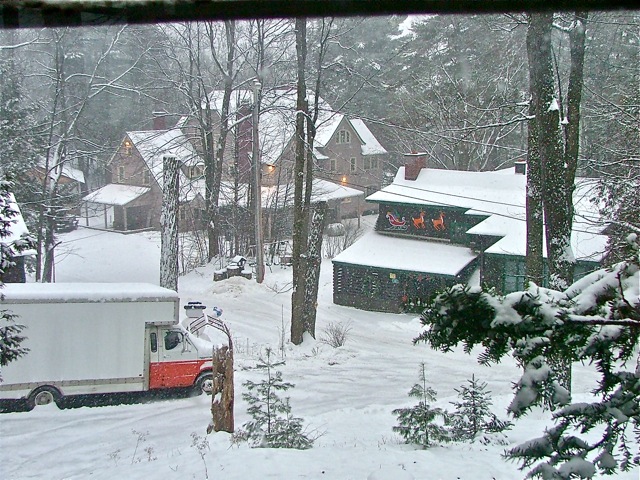
Nested against Mt. Pisgah, deep in the woods over the Village of Saranac Lake, NY, our former home (the larger one, furthest left) is now an apartment complex, listed as “the historic Larom-Wells Cottage in Adirondack guideboooks. (Photo by Barbara Maat)

Our ties deepened over the years as we battled new storms.  Some required what seemed at the time like simple adjustments. My oldest brother was diagnosed with diabetes; another brother had multiple learning disorders.  But others caused major upheavals. Dad fell from a third story roof while installing storm windows one Thanksgiving, and he was unable to work for months; Mom went out on the truck for him, and I held down the fort at home.  Two years after Dad recovered, an unlicensed, drunk driver rammed into Mom’s car, and she was hospitalized just inches short of death’s door, remaining in bed and incapacitated for the better part of the next three years.

Mama had to rely on me in ways no mother wants to be dependent on a child, and she never resented me or ridiculed my mistakes as she had when I was less responsible for her; it was a time of great bonding.  I began to find a way of being released from some of the omnipresent family duties, and she began to realize she wanted more from her life.
A Mother’s Day Gift to My Children – Part VI

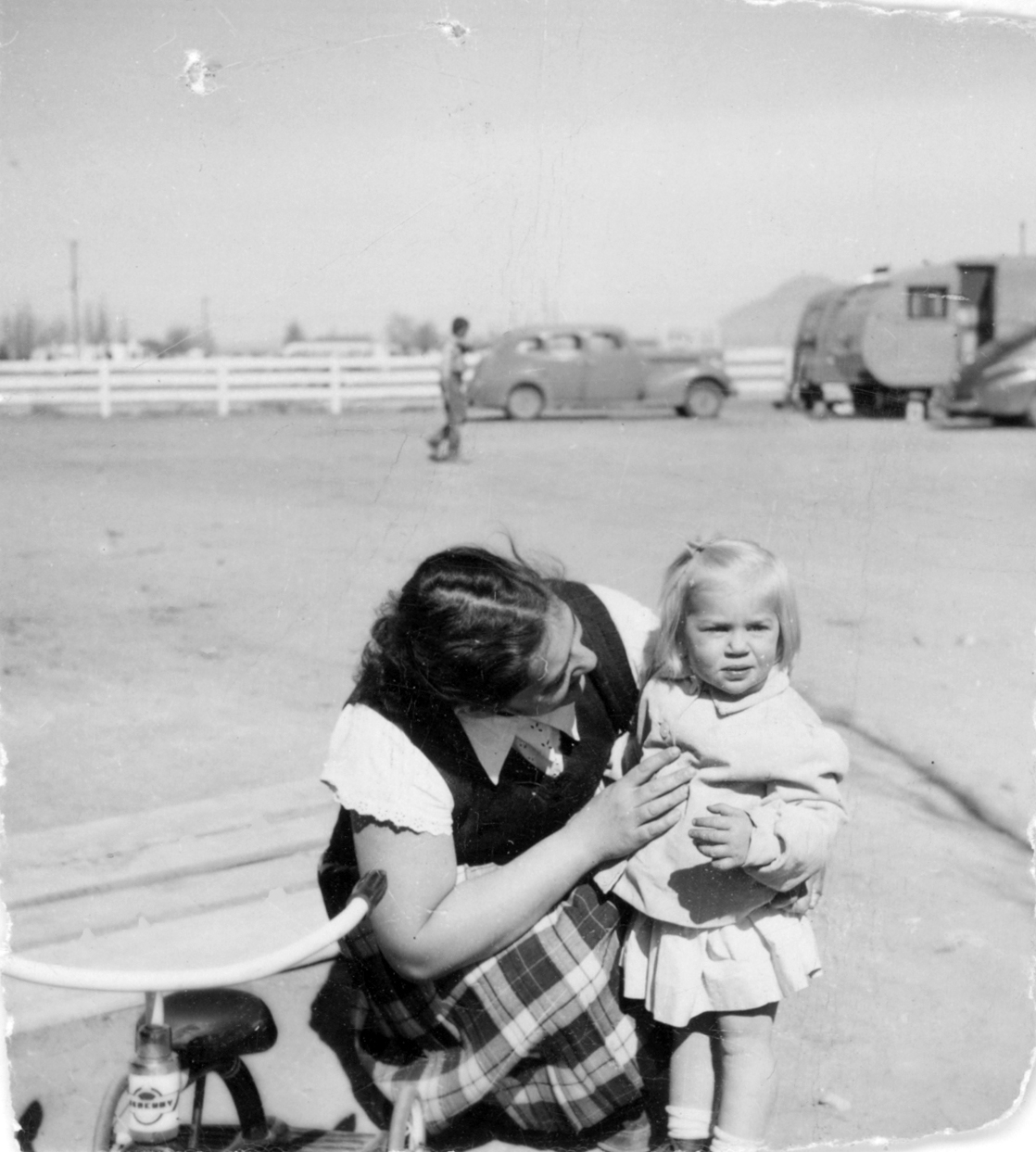
Mama was not yet 26 when I was 18 months, in Albuquerque, NM

Many of the places Alfred took Charlotte and us children were grossly unacceptable.  We lived in a miniscule trailer, a single space with an awning-ed ledge for cooking designed to be used from the outside, and a sleeping loft designed for a single short person or a pair of slight dwarfs, that they kept in a claustrophobic dustbin of a park outside Albuquerque, NM.  The sounds of coyotes yipping at the moon terrified the young mother left alone with a toddler while her husband traveled for business.  Our apartment in Flushing, where my first brother was born, was a basement flat where water puddled every morning beneath pipes leaking from the owner’s home above us.  Our walk-up in Springfield, MA, was infested with rodents so thickly we had them in the bathtub every morning; I had a special abhorrence for that old Farmer Gray cartoon where he turns on the faucet, and out tumbles a band of skinny mice.  In Deerfield, our 17th Century farmhouse had a hand pump for water and a wood stove for cooking and heat; we were surrounded by acres open fields with the Berkshires behind them, but we had a landlady who chased my two-year-old brother down a hill with her jeep.

Mom was miserable, though she never said so.  I knew because wherever we were I was her companion during those lonely wee-hour watches, but she never talked about it.

She talked about very little; we often just read in tandem or she read to me or I slept while she read.  We didn’t have a television until I was nearly through high school.

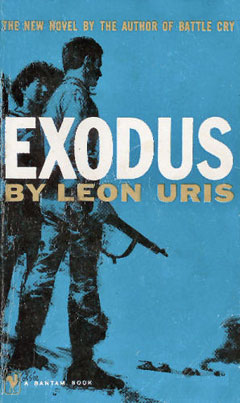
In my head, our story was fragmented because everything I knew came from tidbits dropped when she thought I wasn’t paying attention.  I read Exodus when I was 12, and suddenly — I’m not sure how — it became clear to me where my family had been and some of the pain they’d endured.  Mom wouldn’t confirm my suspicions until I had picked a terrible fight with her, and only then would she give me shreds of information about the death of Aunt Sala, her father’s sister, a doctor in Warsaw whom she adored, shot at her clinic when the Nazis seized her clinic and took her patients to Auschwitz; I didn’t learn only about her beloved uncles the hunchback and the opera singer or about Thea Matzner’s family or the other relatives’ fate until the ’70’s, long after I’d grown up.  Specific details of her siblings’ deaths, her nephew’s horrific demise, the loss of her home and music and the many other tragedies she had endured she kept to herself, bottled up, behind the nearly impenetrable wall she’d built around herself.

When I was 8, I had the mumps that led to an earache, the worst pain I can remember before or since. I awoke screaming out of nightmare images of knives piercing my head, of flying monkeys shooting poison arrows into my ears.  Mama brought me a hot water bottle and drew me into her arms.  I don’t know if the heat helped or not, but I do know that it was so unusual for her to hold me at all that I hoped the pain would last a week at least.  She was not one to dispense her love openly; that, too, she guarded against the many fatal forces that lurked about her.

A Mother’s Day Gift to My Children – Part V

Charlotte was a survivor.  Accepted to two — two!! — medical schools in a time when women and especially Jewish women were subjected to severe quotas, she eschewed the career path and chose instead to marry my father Alfred, himself the survivor of a tragic life and already the widowed father of a troubled daughter.

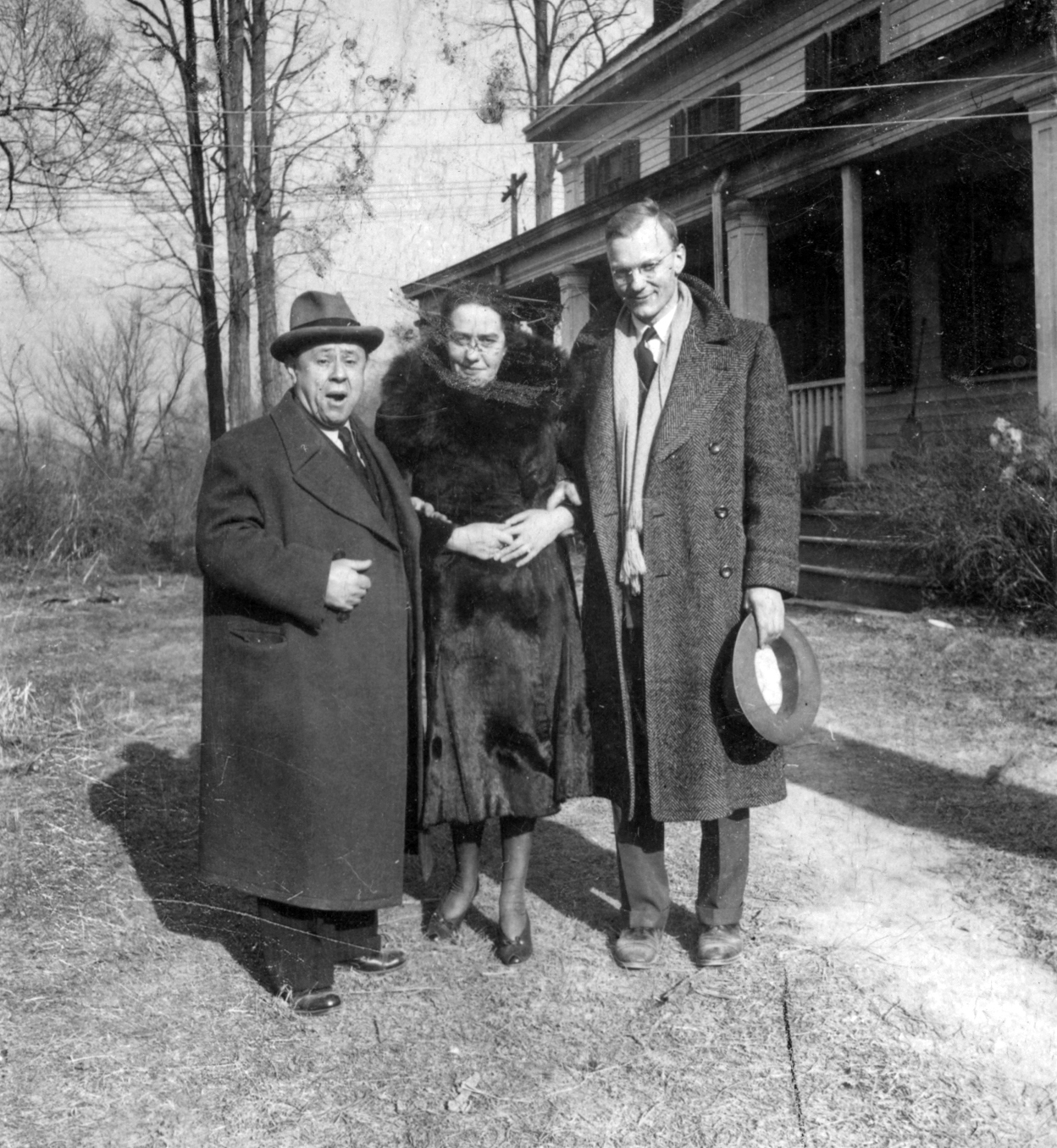
Rudolfine and Henri Robinson with my father Alfred Burhans Swett (R), in 1946

Marrying Alfred has always seemed to me a way my mother chose to hide from the sources of her suffering — Europe and Judaism.  He was so foreign to her — descended from 17th Century Puritan and Dutch settlers in New England and New York; his sister was a flag-waving member of the DAR.  Mom could wrap herself in his overbearingly blonde musculature and protect herself and all her offspring from the horrors she’d come to know so well.  Taking on his 13-year-old daughter seemed like a calling, and she plunged into it with obsessive resolve, leaving her sisters and parents on the outskirts of the new village she and Alfred were creating.

Dad’s daughter Dorothy had difficulty living with them, and she went back and forth between their home and his sister’s. Alfred was in flight from his own tragic history, and he went from job to job and place to place with the ease of a wandering Jew.  We lived in eleven homes before I was halfway through fourth grade, and though my grandparents’ home in Queens was anything but stable, it seemed to me to be grounded in a granite that I was for some reason being kept from.

A Mother’s Day Gift to My Children – Part IV

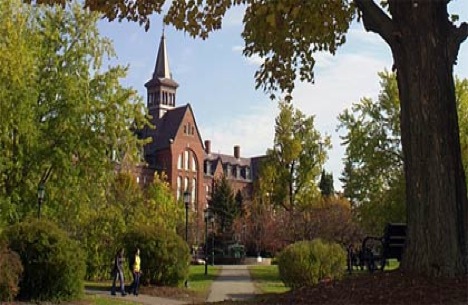
American life was strained from the beginning.  Americans in general and Jews in particular were not as welcoming and protective as the family expected them to be; adjusting to life in Accord, NY, and then in Kingston, was a perpetual challenge.  The business Papa’s brother promised to set up took far too long and cut far too deeply into their reserves, and Charlotte couldn’t find a cello teacher who could stay even a step ahead of her.  News began to come from Europe about those who had not survived: slowly, the family learned that three of their mother’s siblings and their father’s favorite sister had perished, and so had Thea Matzner and her entire family.  They slogged on, and Mom even managed to prevail against all odds; she was accepted into a premed program at the University of Vermont, a miraculous achievement considering she had been enrolled in three different high schools in the mere two years she had been in America, and she had had to take SATs a full year earlier!

UVM offered unexpected solace and belonging at a critical moment in Mama’s life

Then, in 1943, the long-awaited son, the light that had brought life back to his parents’ eyes, Hannes Edward died in yet another freak accident at the age of 15.  Charlotte once again took on the mantle of blame — she had been away at college and had not been there to do . . . what? . . . anything.

A Mother’s Day Gift to My Children – Part III

As Charlotte, my mother, entered her teens, the person she most admired kept aloof of her.  Eldest sister Herma, five years her senior, was consumed with her social life.  Her best friend, a girl named Thea, daughter of my grandparents’ closest friends the Matzners, would arrange trysts for Herma, standing lookout when she would meet a boy. Herma’s attentions turned to her piano teacher, a Serbian painter named Borislav Bogdanovich, and it was certain her parents would disapprove, so she relied on Thea to provide cover.  But Thea’s own love life intervened, forcing Herma to confide in her younger sister. There began a life-long conspiratorial relationship, a bond neither Charlotte nor Herma ever grew out of, fortified by tragedy.

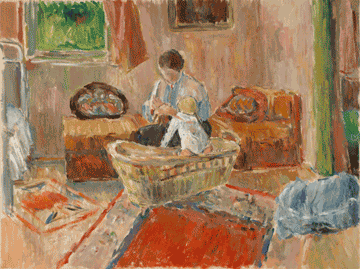
Herma and Tonka, by Borislav Bogdanovich
The Bogdanovich Collection
http://www.bogdanovichcollection.com
annatheab@aol.com

Herma and Borislav were married and had a gorgeous child Anthony (Tonka), in whom the sun rose and set for both of them.  Before he was two, the child died in a freak accident.  In later years, whenever Herma told the story, she told it with Charlotte in the room at the time witnessing her horror; when Charlotte told it, she was nowhere near.  In either case, Herma very nearly succumbed to her loss, and her marriage suffered as well.  But history intervened, and there was no time for self-absorption or meandering through the stages of grief; Hitler necessitated yet another move.

Pregnant with her second child, Herma helped Borislav assist her father in making arrangements to get the family out.  Thanks to a network that depended on Borislav’s Serbian ties and aided by Papa’s French connections and multiple relatives already in America, the family was able to emigrate fairly swiftly, and, in 1939 all but Papa arrived in New York; he went to Cuba, where he stayed until he had transferred his Polish citizenship and could gain entry to the U.S.