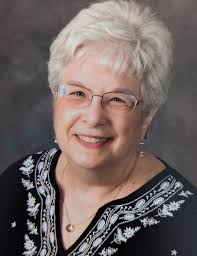
In Memoriam: Marilyn Joan Alkus Bonomi (1943-2025)

Walking in the almost cool, late August air today, I felt a premonition of Fall. Crisp air,  cornflower sky.  Finally. . .  October’s on its way. 

October has always been a special month.  My birthday, my youngest child’s birthday, the year’s first cold snap, darkening afternoons.  This time, however, the October snippet hit me with an image of Marilyn Joan Alkus Bonomi.

Mari and I met on an October Saturday in 1987 at my youngest’s birthday party, a party I hoped would help us get acquainted with our new neighbors.  We had just moved from Arizona to Connecticut, and none of us had been prepared for the culture shock we would encounter.  Fitting in was challenging, and a party seemed like an opportunity to make some friends, to show our new cohorts that while we might not have mastered the eastern way of dressing and speaking, we were just plain folks like everyone else.  Personally, too, I hoped that an adult or two would come to the party and stay, be a welcoming presence . . . or at least a fellow parent with familiar sensibilities.

Mari was the one.  She swept in, deposited her daughter in the midst of the other children, then sat down next to me and opened a conversation that drew me in, made me feel instantly connected.  It was a stream of consciousness into which we were able to immerse ourselves every time we were together for the next nearly forty years of our enduring friendship.

We had lots in common.  Her daughter and my youngest were the same age and had already begun to bond,  which meant that Mari and I were destined to see one another often. We were both English teachers with a deep connection to the theater; she was well established in Connecticut, and I was looking for a job.  We shared a nearly obsessive love of rhetoric and a penchant for lost souls. Though humanist Jews, we had both chosen husbands who were Jesuit-trained Catholic schoolboys.

 Over the course of that first year, her daughter and mine became besties and formed a union that included my older daughter; Mari and I were fused.

Because of Mari, I quickly found a job.  At the birthday party, she had been delighted to learn that I planned to substitute teach while I sought permanent employment.   “That is wonderful news,” she said.  “I teach at Amity, in Woodbridge, one of the best schools in the country. Can you tell I’m proud? Anyway, we never have enough good subs.  I’ll put your name in.”  

She did.  I spent much of that year subbing at Amity and loving it. 

One day, when we were lucky enough to have lunch together, she pointed to a lanky man leaning in among a group of students, listening intently and chatting with them.  “See that guy?” She asked.  “That’s Stu Elliot.  He’s one of our Assistant Principals.  A good man.  A great administrator. See how he interacts with the kids?  He is special, which just means we won’t have him for long.  He’ll have his own school any day now. Which is why I want you to meet him.  He will want to hire teachers of his own choice, and you would be a perfect addition to any team he takes on.”

We spent ten minutes talking to Stu, and I agreed.  He was remarkable.  A year later, he became my principal at the high school next door to my house.  I could not have been more fortunate, and my gratitude to Mari never diminished.

Our friendship ran deep.  Her child was at my house almost as often as mine was at hers. We celebrated holidays together and commiserated when we were both unhappy.  Our contact lapsed a bit as each of us traversed the hard road of divorce and redefinition, but we found one another again in time to have a few great years as senior citizen sisters. Though never enough time to fully share our appreciation for years of a deeper-than-blood kinship.

Since 1987, my life has been fuller in dozens of ways because of Marilyn Joan Alkus Bonomi.  Though she will live on in her daughter’s eyes, in her grandson’s laugh, in my heart, in my soul, in my very vivid memory, I shall miss her voice, her presence, the soft touch of her abiding love.  
A Very Human Condition

When I moved to New York City in 2003, it took me some time before I eventually found work as a New York City Sightseeing Guide.  For the first year, I felt ridiculously fortunate to be able to share NYC with tourists who rode with me on the top of a double-decker bus and to get paid for the pleasure.  That wore off eventually, but in the meantime, I got to know Mandy. 

Mandy, still generally called by what would become her dead name, Stephen, was my favorite coworker. A brilliant guide and former attorney, she was saving up for gender reassignment surgery.

Divorce from a greedy wife, mental illness in a daughter whom Mandy would never abandon, and frequent mandate transgressions had led to her being fired from her high-powered law firm, which left Mandy with no money for the ultra-expensive procedures. In the interim, Mandy made concessions of powerful self-assertion by wearing, in all weather, Bermuda shorts fashioned in bright orange sweatshirt fabric, frowzy blouses and tops that plunged below her prominent and rapidly graying chest hair, and neon-colored sneakers. Her hair and mouth were a whirling forest of bright tangerine curls and a soft, pillowy hot pink glossy triangle.

“I’m a lesbian,” Mandy explained to me the first time she asked me out to dinner.

I was flattered. I had never met anyone smarter or funnier than this person, qualities I have always found irresistible in a man. But I had no interest in being romantically involved with a woman, even a woman who was, anatomically at least, still a man. Of course, I didn’t want to hurt Mandy’s feelings, and though I turned down the invitations to dinner, to movies, to theater, we often sat together as we waited between buses.  

I never tired of listening to the stories she told. The personal stories were harrowing, beginning with a Lower East Side childhood, and the professional stories were infuriating. This person had tolerated more than anyone’s fair share of abuse by the system over the years. If I had been differently wired, if I were capable of loving Mandy as she deserved to be loved, I would have spent all kinds of days and nights with this remarkable human being.

Those first months working on the bus were magical.  What a privilege it seemed to explore New York from an ostensible eagle’s view. As a history and culture buff, I was learning in a way no book or school had ever taught me. Mandy’s wide knowledge of the city enriched each day and broadened my tour repertoire.  Having studied architecture, Mandy was conversant with the eclectic nuances of building styles that comprised our city’s makeup. As an astute political observer, she understood the underpinnings of Tammany, why Robert Moses was more tyrant than savior. She explained to me why the Breslin-Mailer campaign to create the great city-state, a movement I enthusiastically worked for in my youth, was basically moronic.  Having studied labor law, her expertise guided our labor disputes. When the company abused us, Mandy spoke eloquently with great erudition. She knew the score.  She understood what we were entitled to and what was being kept from us with malicious, greedy fury.

Winter descended as I rounded the end of my first year on the bus, and with it came the end of the idyll. Cold weather and heartless employers extinguished the joy.

Eventually, Mandy ended too.

Our company, a startup in every sense of the word, provided no bathroom for our relief.  For a while, we were allowed to use the restrooms in the Hilton Garden Inn, which was less than a block from our launch site, and the management there even encouraged us to buy goods in their gift store and food mart by giving us a generous discount. 

Then one day Mandy farted and sighed loudly in a stall in the women’s room, and a tourist seated next to her, the woman in the next stall, securely separated by a metal wall and a locked door, freaked out at the sound of a male voice sighing on the tail of a roaring fart. She complained to the Hilton management. After that, all guides were banned from the place. No more comfy lounge seats, no more cheap candy bars. No more toilet. I saw no solution to the problem and opted to take a break.

I left the buses to edit a book for the friend of a friend. The book was set in NYC, but the London-based author knew little about our city and wrote locations that were amiss and an Iowa-bred protagonist, who was more accurately an Englishman in New York.  To complete the project, I went to the UK for a few months, and when I returned, Mandy was gone. 

Conditions Mandy had fought to improve had killed her.

Mandy was our advocate, the voice that argued for improvement in conditions atop the buses that were unfit for guides.  We had no place to sit.  We were required at times to perform chores – like helping the elderly up the stairs or carrying baby paraphernalia or lugging luggage up the stairs – that put undue strain on all our muscle groups.  We stood for long periods of time, jostled mercilessly about. We had no place to go to get warm, no relief from the harsh winter exacerbated by the harsh wind generated by the moving bus.

Mandy’s back and health could not take it. She suffered pneumonia and bronchitis and then was injured and re-injured until she finally had no choice but to undergo back surgery.  Like many spinal surgery patients, Mandy did not survive. The company management, who never appreciated what an asset they had in Mandy, was relieved. Tethered by Mandy’s knowledge of the law, they had felt forced to retain her. Her illnesses and back troubles cost them money by way of pay they were impelled to dole out and by insurance rate hikes her claims inflicted. The bloodsuckers were free at last. 

We who loved Mandy, lost a precious friend.  I lost a valuable mentor.

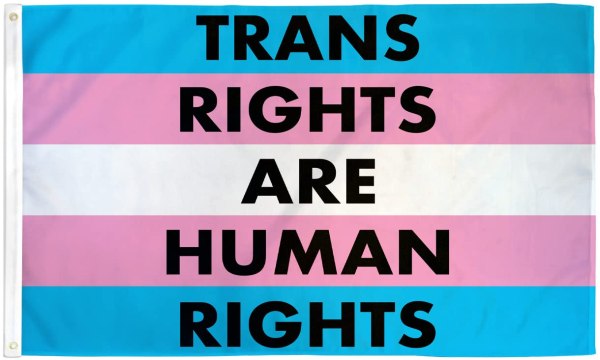
I find myself wishing for her presence lately.  She’d tell me why the current state of affairs for Trans people cannot hold.  She’d tell me to keep the faith.

“Don’t give the bastards any power,’ she’d laugh.  “They’ll turn to dust just like the rest of us.”

More Nostalgia — Sister Sister

Election Anxiety has me in its grip.  I know I am not alone.  When I lie awake at night fretting my what-ifs, I feel myself embraced by half my countryfolk, who are most likely feeling exactly as I am.  Terrified.  But next week, come what may, I’ll have a bit of comfort.  My little sister Helen is traveling to see me.

Deep in the dog days of August 1953, my father drove my brother David and me to Bayside, Queens, to our grandparents’ home.  For me, it was a familiar second home – my cousin Johnny and I had lived with our grandparents off and on before either of us had siblings.  For David, however, it was unsettling.  “I wanna go home,” he cried.  “Duke (our spike-toothed boxer) needs me.”  He was right about that. 

We stayed in Queens for a few days. Mom gave birth and, as was the custom in those days, she “luxuriated” in the hospital long enough to convalesce.  Later, she regaled us with stories about Dad making her walk into the first stages of labor at the Forrest Park Zoo, and how no zoo would ever be tolerable again.  She said it was a good thing that Dad had burned the coffee and ruined breakfast that morning, as there was less for her to heave. But I was oblivious. I had my cousin Johnny, my near-twin, and after Dad called to say we had a new baby sister, I was without anxiety.  A sister was a good thing.  And there was no reason to rush back to Deerfield. She had not yet arrived there.

When we did get home, David was crushed.  Duke had run away. He was in residence now at the Deerfield Boys’ Academy, where he had been gratefully adopted. I didn’t care. I had no interest in Duke.  I had new responsibilities.

We lived that year in a 17th C farmhouse in the remote Berkshire foothills of western Massachusetts.  Mama was responsible for the henhouse, where foxes routinely wreaked havoc that she had to clean, and where hens laid messy eggs she had to gather. We had no running water, so water had to be pumped and stored, and all water for cleaning and bathing had to be heated on the stove. Chores were endless, and now that we had this new baby, I was expected to help more than ever. At night, when Mama was exhausted by the chores and the work of chasing David and tending her infant, I got to stay up past my bedtime to hold Helen, feed her her bedtime bottle, and rock her to sleep while Mama dozed on the couch beside us. 

I bonded with my little sister.  And she understood from the very beginning that we belonged to each other.  Over the years, we played, we fought, we talked, we yelled; she told my children I taught her guitar, but she was the gifted one.  I sort of introduced her to sex and drugs; she gave me rock’n’roll by way of her beloved Beatles and Monkees, whose music was foreign to me.  I grew because of my sister, and she found new possibilities because of me.

It’s been eight years since I last saw her.  Time, distance, families, and careers have kept us apart.  In the intervening years, much has happened to sever ties among the remaining siblings, but we have sharpened our connection.  I cannot wait to see her.

Wishing for the Nightmare to End

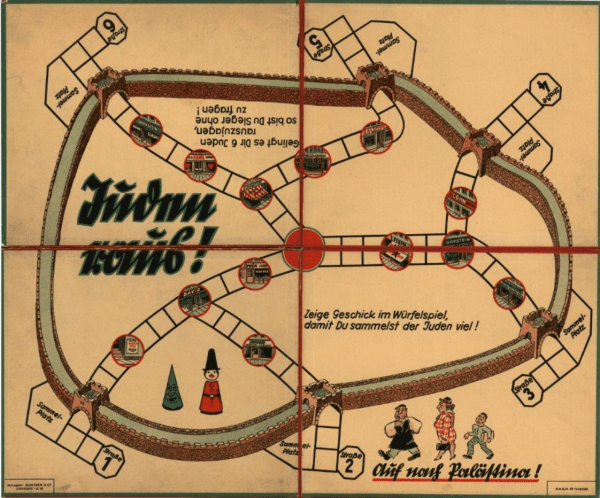
The trauma is passed to us in our DNA. It has been etched by myriad attempts to obliterate us, forged by centuries of Babylonians, Romans, Crusaders, Cossacks, Jihadists, ad infinitum. . . an endless list of haters. Wherever we go, wherever we settle, we are never free of it.

I felt it in the earliest fog of my dawning awareness. In the safety of postwar America, it resonated in sounds and furies I couldn’t understand.   The wailing, the anger, the despair that accompanied the opening of an envelope.  The reluctance to go to the door when a telegram arrived.  The startle and the groan when the telephone rang. I felt the pain, intuited the anguish, but I was a baby, and I didn’t have words.  The frenzy was terrifying. 

As I acquired language, words seeped into my consciousness and insinuated themselves into my vocabulary.  Nazis, camps, exile, death, torture, hiding, hate. . . .

The images swarmed into my nightmares.  Dark images I could not name usurped my dreams.  By the time I was 3, the nightmare was a cinematic horror that repeated itself over and over. My cousins and I hide in my grandmother’s attic, a house in Queens full of shadowy corners, where evil easily lurked.  And always – though I do not know how or where I ever heard them – the soundtrack comes from the whine of European sirens and the thump of jackboots on concrete. 

I inevitably wake just as a helmeted monster finds me and proclaims, “So. . . you thought you could escape us. But there is nowhere to hide, Jew. . . .”

I was eleven before the full impact of my family’s flight became clear.  When I asked my mother why she never talked to me about it, she said, “I lived.  It wasn’t so interesting.”  She had not suffered as the beloved relatives suffered in the camps or as the cousins did when they were ripped from their parents’ arms and sent on Kindertransports or the way others did who watched their parents murdered and had to find their orphaned way to Australia or South America or . . . .Mom had no words and no sympathy for her own trauma –  being cast into exile, leaving everything she valued in a world gone mad.  She could not have explained it to me.

When I was an adult, I recognized some of her coping techniques.  She married my father, an all-American boy, whose family had come to North America by choice in the 1600s, Dutch and English protestants, fleeing nothing. They came in search of a New Life that was richer than the rich one they left behind.  Dad was a towheaded blonde, whose sky-blue eyes glistened with tears when he heard his favorite hymns.  He was Safety.  Mom buried herself in his identity and denied her own so that her children would never have to fear the monsters who robbed her of so much. 

I did not share her assurance.  I grew ever more afraid of the knock on the door, the intrusion of the evil interloper intent on taking our joy, our lives.  But I trusted that thanks to Israel, we would never again be an endangered species.  If the Nazis returned, we would have a place to go. The uncles and aunts and cousins who were denied entrance to alternate countries or who were caught because they knew of no place to go might have been saved had there been an Israel.  We the people without a country had one whose birth was within a year of my own, and we would never be flagless orphans again.

People ask me, “Why do you need Israel? You are American!”  My mother’s older sister, whose wisdom I found nonpareil, loved to say that in America we were safe.  “Don’t worry!” She would laugh. “The US is too diverse a community to hate one people with the kind of vehemence that European hegemony empowered.  We will never be hated like that here.”

I have wanted to believe her.  I have wanted to be grateful for this country that nurtured me, a country I deeply love.  Knowing that the Plot Against America of the 1930s and 40s was thwarted, I wanted to trust the country I have always believed is mine. 

Yet, even now we are reminded that even here we are interlopers.

A synagogue in Pittsburgh is attacked. Neo-nazis march in droves shouting “Jews will not replace us.”  Undereducated youngsters with no sense of history celebrate the murder of Israeli children and blame us for wanting to save Israel. They scream for its extinction.  Modern Judenratners, betray us at every turn.  We are no safer here than we are in any other gentile-dominated country of the world. 

We require the presence of a resolute, strong Israel to safeguard our future.

Israel must survive.   Or we will not.

Am Yisroel Chai!

Shoe Fever

It was 2003, and my sweet baby cousin Adriana was getting married in San Francisco.

The wedding was a big deal. Though a small destination wedding, it was a momentous occasion. Our entire extended family – including our celebrity cousin – would converge, and friends of Adriana’s from all over the world would join us. I had to look good.

Which is why, in preparation for the upcoming nuptials, I was not thinking about Adriana.  I was thinking about my clothes.  I was consumed actually.  And contemplating shoplifting. 

I envisioned the kind of escapade one imagines as a teenager, not as the nearly senior citizen of 56 that I was at the time, possessed by a midlife crisis: I needed new shoes.

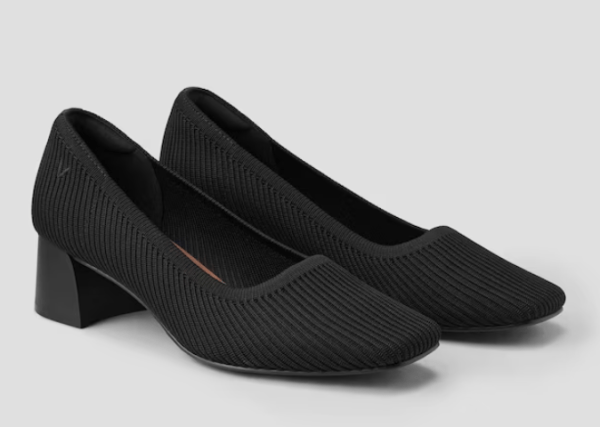
I had found the perfect pair. They were elegant: low-heeled, round-toed, and comfortable for dancing yet black velvet and impractical for winter walking in New Haven, where I lived and worked. They were exactly the kind of shoes my money-obsessed husband would never let me buy.  

I must interject that while we were never poor – he was a well-remunerated engineer, and I was a classroom teacher, who took on multiple extra-curricular activities that paid me nicely – he regarded money much as an anorexic regards food.  So long as he had complete control, so long as he treated our finances as though we were destitute, he could breathe.  The minute we began allowing ourselves luxury items like more than one pair of shoes or a color television – anything beyond the necessities – his anxiety flared, and he became angry, verbally abusive, impossible to be around.  These shoes were unthinkable.

Yet I saw them as my emancipation proclamation.  I had spent thirty-three years believing, like the naïf Nora in A Doll’s House, that if I acquiesced perfectly enough and long enough, eventually the “most wonderful thing” would happen, and I’d be rewarded by his performing an act of magnificent self-sacrifice. Then he, my benevolent beloved, and I would live happily ever after.  However, by the time of this particular crisis, I knew that my miracle was never going to happen. Stealing those shoes would be a way of saying to my husband, “Hey you get off-‘o’ my cloud,”  a way to affect my liberation from the oppression of hope as much as of him. 

I tried them on.  Pure podiatric bliss.  I furtively surveyed the store.  No one was near.  If I just walked out, who would see me?  I headed toward the exit. A sales clerk stopped rearranging the handbags on the periphery of the shoe department and stared at me.  I turned around, pretending I was merely giving the shoes a trial walk around the store.  She went back to her work, and I took off the shoes. I waited a few moments before opening my backpack and sliding them inside. I hadn’t seen a beeper tag.  Surely, I could pull this off.  Again, I headed toward the exit, but as I rounded the corner near the checkout line, I saw myself standing in handcuffs, an army of my students past and present staring at me in disbelief, looking betrayed but pointing and laughing at the same time.  I couldn’t do it. 

The shoes went back to the shelf, and I left the store dejected but resolved.  If I were going to be held captive in this life for the duration, I should at least maintain my integrity.