Fanfare for the Common Woman

Audio podcasts are a wonderful innovation, especially for those of us with insomnia.  Nothing is more soothing for me than a gentle voice talking about interesting worlds.  I especially love science, history, and theater talk, film history podcasts, or literary discussions, and David Remnick.  It is comforting to feel myself relaxed out of anxiety into someone else’s knowledge and then to drift off to sleep.

I confess that there are many podcasts that irritate me.  The ones that make me sit up, desiring to scream into my device– though that is certainly not an option for a considerate apartment dweller in the middle of the night – those that frustrate me with their pontification or false modesty,  political rants or misinformation. 

The ones that most irritate me are the podcasts that pretend to offer hope and life modeling to women over 50. On podcasts such as unPaused, with Marie Claire Haver, or Wiser than Me with Julia Louis-Dreyfus.  These offer advice from the megastars like Isabella Rosselini, Nancy Pelosi, Gloria Steinham, Michele Obama, Jane Fonda, et high-falutin al.

Inevitably, these admittedly wonderful, rightfully revered role models are women who have achieved great fame and fortune. They are most certainly noteworthy, and I deeply admire them and their accomplishments.  But they are women who have been receiving attention for a long time already and are rarely in positions to which any of us groundlings can reasonably aspire. 

All the while, everyday women who achieve less than phenomenal but still noteworthy successes are overlooked. Despite the fact that we, too, are pundits. We, too, offer stories that could be truly inspirational.

I have many friends who have lived lives worth sharing.  Women – mothers and wives — who have written books that may not have been bestsellers but still had audiences and made a difference for their readers.  For example, my dear friend, who nursed her husband through harrowing bouts of PTSD, raised her family, took care of her brothers, ran a lovely small business, and managed to paint some lovely watercolors?  She knows about survival and rising above adversity and setting goals, and attaining happiness. Another brave woman I know writes songs that aim to forge peace and understanding while curating a huge cache of legacy art, and another creates phonics videos to promote literacy among disadvantaged children. They love their work, and they are proud of what they do, as many everyday women do. Some nurture student artists — those who may not be the Oscar or book award winners spewing gratitude for their mentors — and help them to nurture dreams that lead to meaningful careers that improve the world in multiple ways, Even while schlepping personal children from pillar to post, attending extracurricular activities, keeping husband’s clothes cleaned and pressed, etc., myriad ordinary heroines persevere.  Women who work as nurses, physicians’ assistants. dental hygienists, bus drivers, etc., while providing care for elderly parents.  Those who act in plays on, off, and way off Broadway,  direct educational and community theaters, sing in and direct choirs, play music, and lead small-town orchestras.

You can see my point, I am sure.  The accomplishments of women are incalculable. 

Surely the multitude of women who have built modest successes are no less interesting than those who have made millions?  Is it not exemplary that real people keep plugging away, writing, painting, acting, teaching, serving the sick, and providing goods and services?  Aren’t the common variety supermoms/daughters/aunts/sisters/grands apt role models for younger generations?

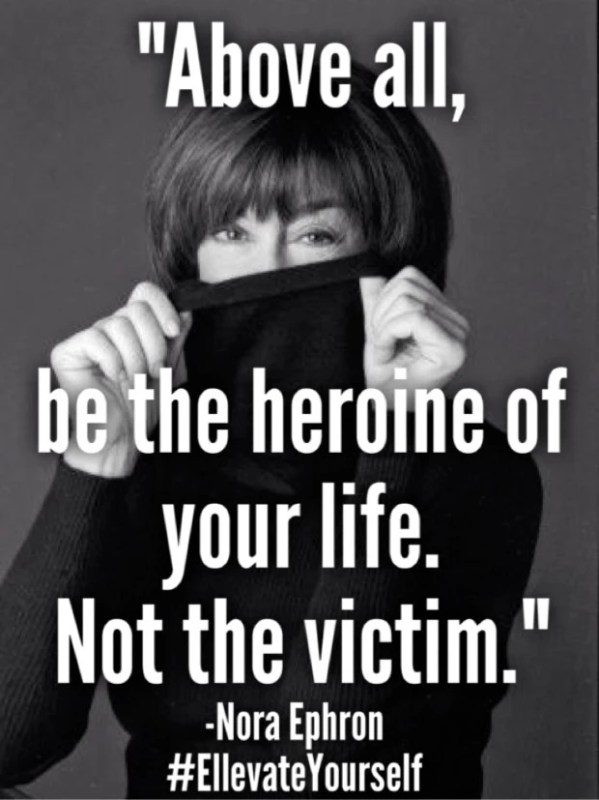
Come on, social influencers, podcasters, you who want to inspire women, find those of us who fuel the world with its real power. Look for our books, our drawings, our songs, our stories. Ask us what we know. Let us show you how fascinating we can be.
A Very Human Condition

When I moved to New York City in 2003, it took me some time before I eventually found work as a New York City Sightseeing Guide.  For the first year, I felt ridiculously fortunate to be able to share NYC with tourists who rode with me on the top of a double-decker bus and to get paid for the pleasure.  That wore off eventually, but in the meantime, I got to know Mandy. 

Mandy, still generally called by what would become her dead name, Stephen, was my favorite coworker. A brilliant guide and former attorney, she was saving up for gender reassignment surgery.

Divorce from a greedy wife, mental illness in a daughter whom Mandy would never abandon, and frequent mandate transgressions had led to her being fired from her high-powered law firm, which left Mandy with no money for the ultra-expensive procedures. In the interim, Mandy made concessions of powerful self-assertion by wearing, in all weather, Bermuda shorts fashioned in bright orange sweatshirt fabric, frowzy blouses and tops that plunged below her prominent and rapidly graying chest hair, and neon-colored sneakers. Her hair and mouth were a whirling forest of bright tangerine curls and a soft, pillowy hot pink glossy triangle.

“I’m a lesbian,” Mandy explained to me the first time she asked me out to dinner.

I was flattered. I had never met anyone smarter or funnier than this person, qualities I have always found irresistible in a man. But I had no interest in being romantically involved with a woman, even a woman who was, anatomically at least, still a man. Of course, I didn’t want to hurt Mandy’s feelings, and though I turned down the invitations to dinner, to movies, to theater, we often sat together as we waited between buses.  

I never tired of listening to the stories she told. The personal stories were harrowing, beginning with a Lower East Side childhood, and the professional stories were infuriating. This person had tolerated more than anyone’s fair share of abuse by the system over the years. If I had been differently wired, if I were capable of loving Mandy as she deserved to be loved, I would have spent all kinds of days and nights with this remarkable human being.

Those first months working on the bus were magical.  What a privilege it seemed to explore New York from an ostensible eagle’s view. As a history and culture buff, I was learning in a way no book or school had ever taught me. Mandy’s wide knowledge of the city enriched each day and broadened my tour repertoire.  Having studied architecture, Mandy was conversant with the eclectic nuances of building styles that comprised our city’s makeup. As an astute political observer, she understood the underpinnings of Tammany, why Robert Moses was more tyrant than savior. She explained to me why the Breslin-Mailer campaign to create the great city-state, a movement I enthusiastically worked for in my youth, was basically moronic.  Having studied labor law, her expertise guided our labor disputes. When the company abused us, Mandy spoke eloquently with great erudition. She knew the score.  She understood what we were entitled to and what was being kept from us with malicious, greedy fury.

Winter descended as I rounded the end of my first year on the bus, and with it came the end of the idyll. Cold weather and heartless employers extinguished the joy.

Eventually, Mandy ended too.

Our company, a startup in every sense of the word, provided no bathroom for our relief.  For a while, we were allowed to use the restrooms in the Hilton Garden Inn, which was less than a block from our launch site, and the management there even encouraged us to buy goods in their gift store and food mart by giving us a generous discount. 

Then one day Mandy farted and sighed loudly in a stall in the women’s room, and a tourist seated next to her, the woman in the next stall, securely separated by a metal wall and a locked door, freaked out at the sound of a male voice sighing on the tail of a roaring fart. She complained to the Hilton management. After that, all guides were banned from the place. No more comfy lounge seats, no more cheap candy bars. No more toilet. I saw no solution to the problem and opted to take a break.

I left the buses to edit a book for the friend of a friend. The book was set in NYC, but the London-based author knew little about our city and wrote locations that were amiss and an Iowa-bred protagonist, who was more accurately an Englishman in New York.  To complete the project, I went to the UK for a few months, and when I returned, Mandy was gone. 

Conditions Mandy had fought to improve had killed her.

Mandy was our advocate, the voice that argued for improvement in conditions atop the buses that were unfit for guides.  We had no place to sit.  We were required at times to perform chores – like helping the elderly up the stairs or carrying baby paraphernalia or lugging luggage up the stairs – that put undue strain on all our muscle groups.  We stood for long periods of time, jostled mercilessly about. We had no place to go to get warm, no relief from the harsh winter exacerbated by the harsh wind generated by the moving bus.

Mandy’s back and health could not take it. She suffered pneumonia and bronchitis and then was injured and re-injured until she finally had no choice but to undergo back surgery.  Like many spinal surgery patients, Mandy did not survive. The company management, who never appreciated what an asset they had in Mandy, was relieved. Tethered by Mandy’s knowledge of the law, they had felt forced to retain her. Her illnesses and back troubles cost them money by way of pay they were impelled to dole out and by insurance rate hikes her claims inflicted. The bloodsuckers were free at last. 

We who loved Mandy, lost a precious friend.  I lost a valuable mentor.

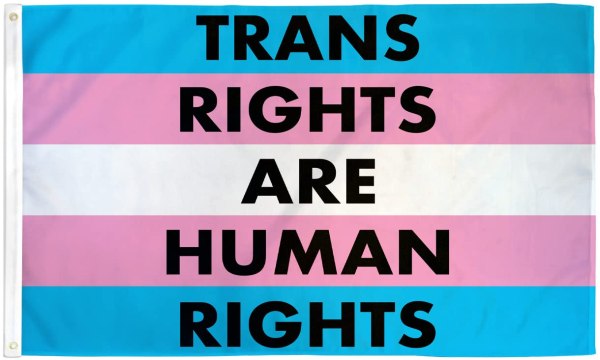
I find myself wishing for her presence lately.  She’d tell me why the current state of affairs for Trans people cannot hold.  She’d tell me to keep the faith.

“Don’t give the bastards any power,’ she’d laugh.  “They’ll turn to dust just like the rest of us.”

The Hidden Sucker Punch

This very un-Presidential campaign by a bombastic charlatan has me grateful my parents are not around to witness how far this process has declined in the years since they died. They would not understand what’s been happening. They would disdain the misogyny and the racism of the right, and while they would never condone the extreme judgmentalism on the left, neither of them would consider voting for the nasty, exclusionist, decidedly unChristian Republican agenda. They’d be the first to line up in their districts to vote for Kamala Harris.

I am sure of this. Because in the end, we have become a nation divided by a lack of commitment to the Republic’s ideals, by our society’s inability to embrace a reasonable concept of ethics, justice, community, and morality. Allegiance to a shouting puppet have robbed too many of any clear sense of right and wrong.

My parents would have no problem defining where to draw the line.

In my parents’ home, politics, like religion, was a matter of personal choice. My mother was Jewish; Dad was Protestant. They never argued that one or the other was right or wrong; they made sure we understood the commonalities in their traditions, and they expected us to be honorable people, whichever faith we chose to accept or reject. The same was true of politics.

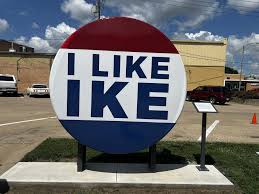
Dad was a proud, adamant Iowa Republican. Mom, once a Jabotinsky devotee who had to emigrate from Europe to the US, was a staunch, unwavering Democrat. She was a socialist; he was not. During the weeks leading up to the Adlai Stevenson/Dwight Eisenhower race, I remember heated arguments.

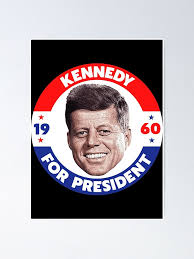
But neither ever called the other names or went to bed angry, and each kept their actual vote to themselves. In 1960, I was smitten with JFK, whom Dad clearly disliked. But he never impeded the efforts my mother and I made campaigning door to door, handing out flyers and buttons. Nor did Mom, who detested Nixon, insist that he change his politics to suit hers.

Overall, they shared the same values. Dad insisted he had no socialist leanings, but it was he who brought the homeless to our house for a hearty meal and a night or two of real rest in a comfortable bed. It was Mom who insisted we go to Church with Dad on Sundays. Both believed that human kindness was the hallmark of good citizenship, and they wanted their children to know enough about both religion and politics to make informed choices in every community arena.

My parents’ belief in America, their faith in Democracy, was based on core values. It was easy for them to make the necessary adjustments. If a candidate was in any way antithetical to what mattered to them, they would vote conscience over Party.

In 1976, I was amused to see Dad entirely uninvested in the Presidential race. He was not a fan of Gerald Ford, but he did not know enough about Jimmy Carter to vote Democratic. I am pretty sure he sat that one out. Then, in 1980, as he observed the last campaign he’d be alive for, he was visibly, audibly, openly disgusted by Ronald Reagan. That time he voted for Jimmy Carter, and when Carter lost, Dad swore he’d never vote again. I suspect he would have been ambivalent about Walter Mondale, but he would have been despondent to learn that Reagan had won again.

America needs my parents’ attitude this week. We need liberated men and women to stand up against the authoritarian ideals of this new Republican Party. We need informed voices like those members of the Lincoln Project to be as brave as my father was in 1980. We need people who will stand by rectitude and righteousness, people who can reject the cultish insistence on following their leader, people to go to the polls and vote their conscience rather than their party.

My closest friend, a person I have always known as a Republican, with whom I have had a life-long agreement to disagree, texted me last week to say, “I voted for Kamala today. I do not recall ever voting for a Dem.” I told him I thought it was a huge concession. He replied, “Not huge. I would never vote for a Hitler wanna-be.”

His subsequent text moved me to tears. “I have my hopes that the women of America are the hidden sucker punch,” he wrote. “I want them walking softly carrying the big vote.”

Amen.

More Nostalgia — Sister Sister

Election Anxiety has me in its grip.  I know I am not alone.  When I lie awake at night fretting my what-ifs, I feel myself embraced by half my countryfolk, who are most likely feeling exactly as I am.  Terrified.  But next week, come what may, I’ll have a bit of comfort.  My little sister Helen is traveling to see me.

Deep in the dog days of August 1953, my father drove my brother David and me to Bayside, Queens, to our grandparents’ home.  For me, it was a familiar second home – my cousin Johnny and I had lived with our grandparents off and on before either of us had siblings.  For David, however, it was unsettling.  “I wanna go home,” he cried.  “Duke (our spike-toothed boxer) needs me.”  He was right about that. 

We stayed in Queens for a few days. Mom gave birth and, as was the custom in those days, she “luxuriated” in the hospital long enough to convalesce.  Later, she regaled us with stories about Dad making her walk into the first stages of labor at the Forrest Park Zoo, and how no zoo would ever be tolerable again.  She said it was a good thing that Dad had burned the coffee and ruined breakfast that morning, as there was less for her to heave. But I was oblivious. I had my cousin Johnny, my near-twin, and after Dad called to say we had a new baby sister, I was without anxiety.  A sister was a good thing.  And there was no reason to rush back to Deerfield. She had not yet arrived there.

When we did get home, David was crushed.  Duke had run away. He was in residence now at the Deerfield Boys’ Academy, where he had been gratefully adopted. I didn’t care. I had no interest in Duke.  I had new responsibilities.

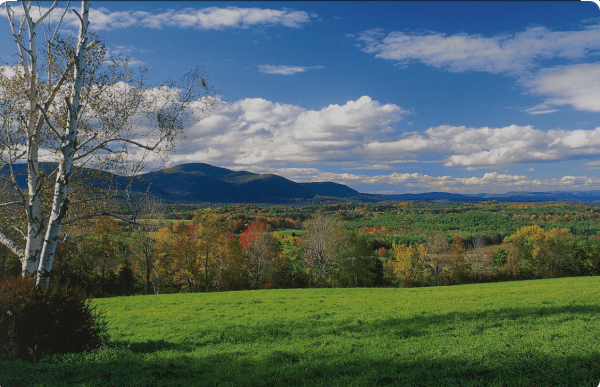
We lived that year in a 17th C farmhouse in the remote Berkshire foothills of western Massachusetts.  Mama was responsible for the henhouse, where foxes routinely wreaked havoc that she had to clean, and where hens laid messy eggs she had to gather. We had no running water, so water had to be pumped and stored, and all water for cleaning and bathing had to be heated on the stove. Chores were endless, and now that we had this new baby, I was expected to help more than ever. At night, when Mama was exhausted by the chores and the work of chasing David and tending her infant, I got to stay up past my bedtime to hold Helen, feed her her bedtime bottle, and rock her to sleep while Mama dozed on the couch beside us. 

I bonded with my little sister.  And she understood from the very beginning that we belonged to each other.  Over the years, we played, we fought, we talked, we yelled; she told my children I taught her guitar, but she was the gifted one.  I sort of introduced her to sex and drugs; she gave me rock’n’roll by way of her beloved Beatles and Monkees, whose music was foreign to me.  I grew because of my sister, and she found new possibilities because of me.

It’s been eight years since I last saw her.  Time, distance, families, and careers have kept us apart.  In the intervening years, much has happened to sever ties among the remaining siblings, but we have sharpened our connection.  I cannot wait to see her.

Gratitude

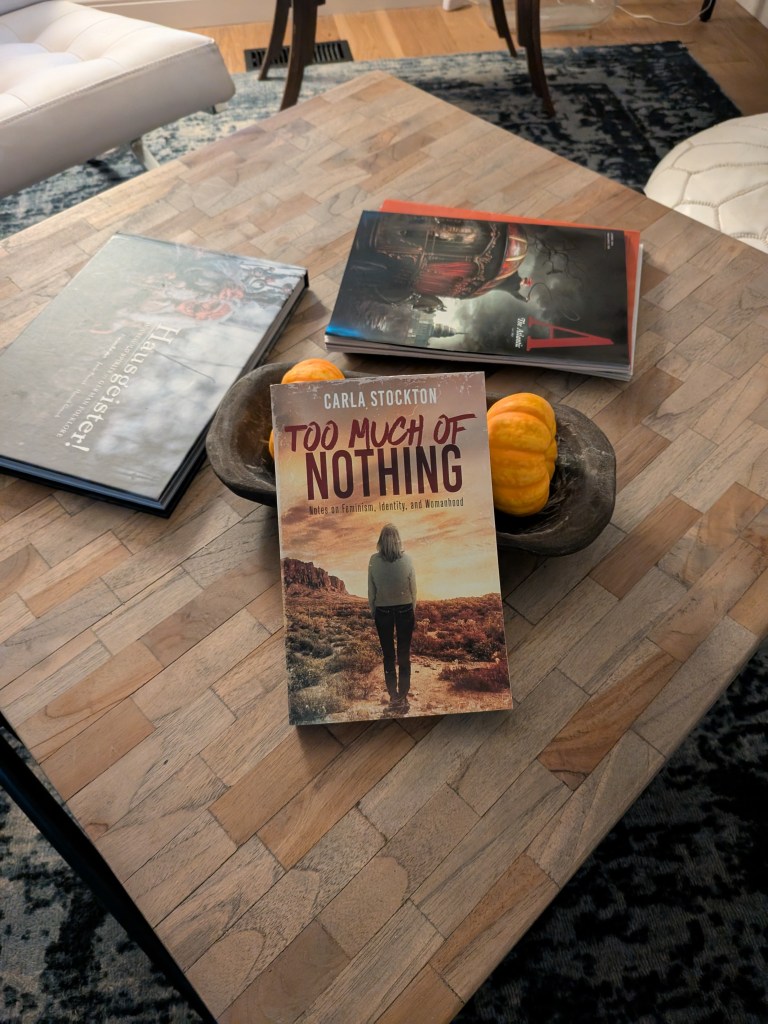
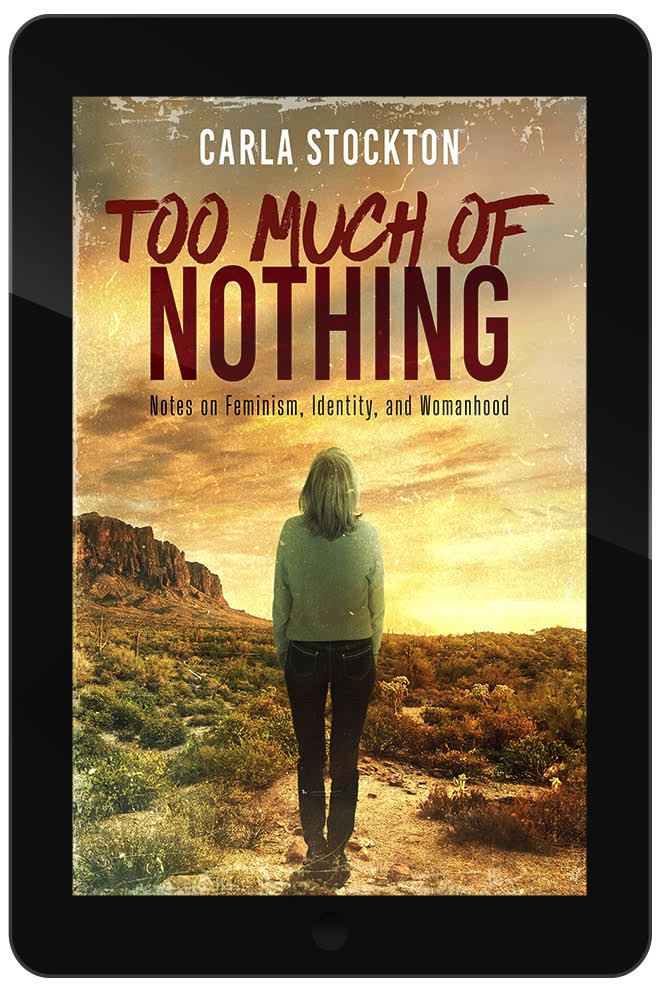
Ah, Too Much of Nothing turns out to be a lot of SOMETHING!!

A brief introduction. . . .

It is exciting to see the response to my book release. I am humbled by the encouragement, the delight, the validation I am receiving from friends and acquaintances. At the same time, it is difficult to feel like I am constantly seeking the limelight. . . . But so much has gone into this book. Like child rearing, book writing takes a village. The people I shared the MFA experience with at Columbia — my cohorts Livia Lakomy, Elizabeth Walters, Sukriti, Lacy Warner, Mahad Zara, Andrew Lewis, Sean Quinn and a few others — took me seriously, convinced me that I had something to say worth reading. My friends Mari Alkus Bonomi, Bea Schwarz, Maryanne Aubin, Gail Gallagher, Peter MacIntyre and a few others stood patiently on the sidelines with streamers and megaphones yelling, “Go girl!” My first editor E.B. Bartles made mammoth suggestions and intelligent edits. Then Caroline Topperman, at Ash Mountain Press, did the next deep and deeply insightful edit, after which Andi Cumbo added her own kind of brilliance. . . . You get the picture. This is my first solo book, but I don’t plan to allow it to be the last, and every moment of this process encourages me to press onward.