Walking is Believing in Charles Butler’s Powerful Collection 39 Poems
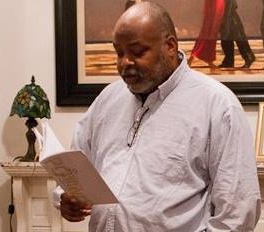
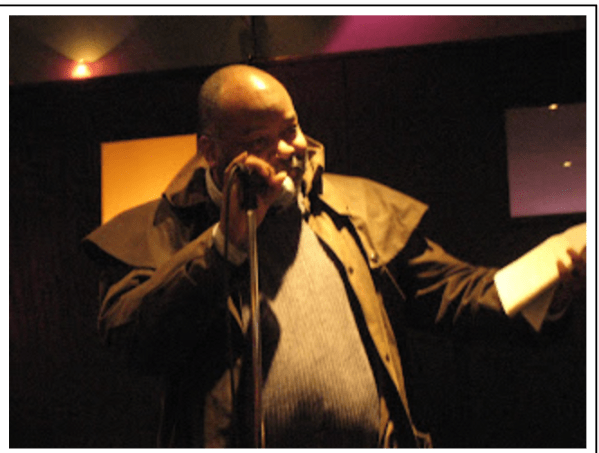
New York is a challenge on the best of days. Summers are blisteringly hot. Winters numb the nose, freeze all digits. Every walk on a city street is an opportunity to engage with the world or let it stream by unnoticed. Homeless folk sleeping on rat dung, playgrounds dotted with dog poop, crowded sidewalks teeming with angry people struggling to get where they need to be, pushing impediments both human and non aside with equal disregard. And if you are paying attention, if you look life in the eye, you see what Charles Butler sees at every turn, the observations he makes in his very accessible collection of poems called simply 30 Poems. Butler sees and describes the dark side as it blends with the light, he feels the life that refuses to be extinguished even as it fades.
“you almost miss it
almost
someone’s life bled out
at your feet
think on it
times you bled”
ii legal pad poetry
Butler’s Brooklyn-twanged voice gives each poem its own resonance, singular presence. Each one is a story and a journey, part of the next story that is a journey that leads to the next all the way to the final stop. All the poems lean on one another, leading us into hearts, minds, souls, beings that celebrate and suffer through to the end, where we see that the sum total is a stories lead to the same journey’s end.
Butler doesn’t pretend to offer answers. His collection is a compendium of observations. Deep as the message is, he’s not trying to be profound.
“I leave
the big poems
t’the
assholes
y’know ‘em
ones who figure
they can change
the world
with a stanza
or a verb”
just poetry. . . man
Hey scatters the collection with human encounters, human experiences, human emotions, none of which will surprise the reader but will evoke a visceral response. The joy and heartbreak of holding a newborn baby, black and female; the gratitude for friendship and the mourning of its loss; the taste of coffee and it likeness to young love; the shudder of knowledge as old age creeps in. And so many more acknowledgements of the joys and sorrows, discoveries and disappointents that are the human condition. All observed in Butler”s “walkabouts at night” when he “was lucky and went this way instead of that way” (“Normal”).
At the end of the 39 Poems, his 39 Steps, walks through and around Brooklyn and America, Butler sums up in CODB:
“only. . .
joy, pain, hope, sadness
just the
cost of doin’ business
‘n livin’
Is bizness”
A powerful commitment to the vagaries that define the fragile confusion that is life. A stimulating read.
My mother never converted to Christianity. She dutifully accompanied my dad to the Methodist Church every Sunday, and she sat proudly in the congregation when I sang my choir solos. If she had any major discomfort at being there, we never knew. She was serenely and pleasantly present, and she was beloved of our fellow congregants and every minister of every church we belonged to. Bit at home, she made one thing very clear.
“I am and always will be Jewish,” she often said. “I believe in God, and I support your father’s belief in Jesus, but I shall remain a Jew as long as I live.”
What that meant — among the many things being an ecumenical household portended — was that we celebrated holidays of both religions. As a consequence, not one of my parents’ seven children ever looked down on anyone else’s religion, ever failed to acknowledge each person’s right to individual beliefs. And Chanukah was the celebration of our enlightenment.
Chanuka was never just an extension of our Christmas festivities. We observed the symbolism of each, and Hanukkah was always a celebration of the intellect, a proud acknowledgement of our people’s survival, of the right of the few to have ideas different from the many. And for Hanukkah, our parents gave us no fancy presents, no big-ticket items; we received a coin each night and a book.
“Because,” Mom reminded us. “Books are the windows to the world. You get to go places, meet people, entertain new ideas, learn astonishing truths, uncover facts. . . . You learn to be sensitive to the world and the people who inhabit it. “
I grew up knowing that books are victories unto themselves. Every book is a miracle, even the books we don’t like, don’t understand, or don’t agree with. Creating a book is a major feat, and it is no less miraculous than a candle that burns for eight days when it only has wick enough for one.
As the end of Chanukah approaches, I suggest a book to give a loved one before the last candle has sputtered out. A book can change a life.
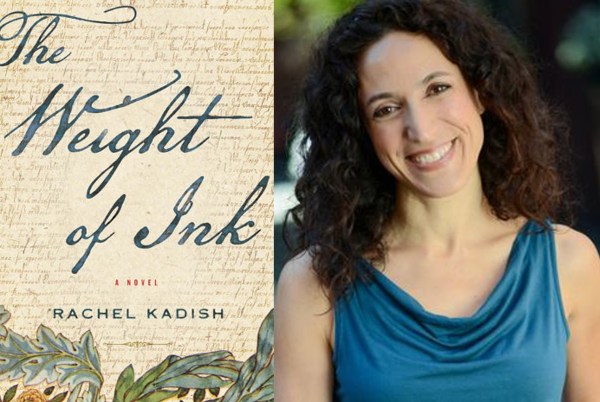
Despite the dark suggestion of her title, Rachel Kadish’s The Weight of Ink (Mariner Books, 2017) is pure illumination.
I turned to Kadish’s book as I began cobbling the details and backdrops for a fiction I am working on about members of a 17th C New Netherlands Jewish community, refugees from the Portuguese Inquisition. Since Kadish’s book, set in the same time period, concerns the life of Portuguese Jewish refugees who have found their way to London by way of Amsterdam, I was drawn in by a hope that her descriptions and depictions would give me a more vibrant, sensory experience of the world I hoped to create. It did not take more than a few pages to know that I had made a wise choice, that I would find what I was looking for. And much more.
The life of Kadish’s characters, defined as much by ink as by history, is a seemly model for the ones I hope to bring to life. Mine too, will be defined by their stories, stories that bear the pressure of ink, which in the case of Kadish’s characters, is considerable . . . both physically and literally.
Kadish’s book presents two heroines, each of whose existence attests to the ink’s sway. One is a Ester Valasquez, a Jewish intellectual born into the wrong century, and the other is Helen Watts, a 21st C baby boomer academic intent on breathing warm life into the legacy of the woman whose work she has discovered in the carapace alcove of a house built in the aftermath of England’s Civil War.
Watts, a sexagenarian historian at a contemporary London university, finds herself wrestling with self-doubt and recrimination after she realizes that documents given to her by a former student are authentically written by a woman in the 1600s. Watts has never hoped for such a find, one that seemed unfathomable. That a female in that time period could have asserted herself strongly enough to have accomplished the work Helen has found seems incredibly miraculous.
The ancient writer Ester Valasquez is a true anomaly: a brilliant Portuguese Jewess, trapped in but not stifled by the male-ordered strictures of 17th C society, both secular and religious. Ester, who speaks and writes fluently in Portuguese, Hebrew, Dutch, and English, is an orphan in the protection of the prestigious Sephardic Rabbi Ha-Mendes. Brutally blinded and disfigured by the Inquisition, Rabbi Mendes has made it his self-appointed mission to bring Judaism to the Jews of London, who have only recently been readmitted to Britain by Oliver Cromwell. It is a community that lacks an educational center, and Rabbi Mendes engages Ester’s brother Isaac to be his scribe, to set his sermons and essays to paper. Isaac dies, however, and Ester eagerly takes over as the rabbi’s scribe. Over time, as the rabbi ages, he writes less and less, leaving Ester to write letters in his name and others’, letters that are both heretical and dangerous. That she gets away with her subterfuge has everything to do with the upheavals of the great Plague and then the Fire of London.
The ink Ester uses is a heavy amalgam of iron salts thickened by tannin harvested from gallnuts, a bluish-black ink that mercilessly stains her fingers. Though the paper Ester uses is undoubtedly made of strong linen, the ink seeps through and leaves holes among her sentences. By the time Helen Watts and her assistant Aaron Levy receive the documents, the ink has turned sepia-brown, and the weighted pages are difficult to read.
The words Ester writes are themselves more leaden than the ink itself. Her letters, signed in names of men she deemed incapable of writing, are sent to the men with the best minds in Europe of her time, but the letters she writes to Baruch Spinoza, excommunicated apostate denounced by Jews and Christians alike, are the most dangerous.
When Watts find proof that Spinoza actually responded to Ester’s letters, Watts realizes that the ink was even more ponderous for Ester and is a discovery she finds nearly intolerably heavy.
Ester has undertaken her intellectual pursuits with a full understanding of the consequences she will face. She refuses the protection of marriage, the comfort of children, real love. She has made a choice, and she is faithful to that choice throughout her life, though she finds an acceptable compromise that ensures she never has to worry about money, and her words will never betray her. Watts faces her discovery of the letters 400 years later with a similar conviction. She, too, has made her work her life. She, too, has prized intellectual pursuit over the pursuit of conventional happiness.
Rachel Kadish has accomplished a miracle. She has given provocative life to a concept that few would deem important. It may seem that the age has passed when a woman was not officially allowed to read and write, no longer are women prohibited from becoming actors, cannot wear men’s apparel. Women, some would argue, are no longer at the mercy of husbands and fathers for support, prohibited from inheriting the wealth of either. In the absence of all such repression, Ester’s life might seem arcane. But the seemingly stark contrast of Helen Watts’ contemporary life points to a truth of most women’s reality, a truth that prevails today.
Like Ester, Watts made her choices. She had all the academic and intellectual freedom she could ask for, but she, too, had to forego the pleasure of deep, committed love. Even in her youth, when she was tempted by a handsome, commanding Israeli man, she could not commit her whole self to him. Like Ester, she understood that belonging to a man, even to a man who offers deep, protective love, meant being swallowed by his life, his pursuits, his dreams. Four hundred years later, Watts came to the same conclusion. Too easily women compromise themselves and disappear into their men.
The Weight of ink is a deep dive into the minds and lives of two women widely separated by time and culture. Both reside in a life colored by equal parts joy, satisfaction, and regret. Both are warrior women.
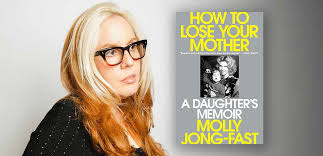
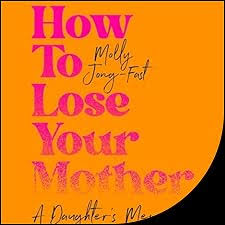
When Molly Jong Fast’s How to Lose Your Mother: A Daughter’s Memoir (Viking 2025), I resolved to avoid it. I mean, Erica Jong, author of my liberation, facilitator of my most humorous self-deprecation. I didn’t want to know the sad, selfish underbelly of my hero. Then, one day, I listened to an interview with the author, and I thought, “Well, if I can listen to this book in her voice, maybe I’ll learn something.” I did. I found the audio book narrated by the Jong-Fast herself, and, wow, am I glad I did.
Once I relented, I found myself feeling enormously grateful to Molly Jong-Fast for sharing her mother’s missteps, blunders, neglect, and abuse. It made me more aware of my own mistakes and offered me a sense of what my own children might have felt at times in their childhood.
Erica Jong was nothing like me. She was glamorous, well-connected, and a star with a severe drinking problem. I was and had nothing of the kind. But I am a writer, and I know now that too often in my children’s lifetime I felt I had relinquished my Self on their behalf, and I am sure I unwittingly hurt them in some of the ways this mother hurt this daughter. Erica Jong’s dementia and her singular life view prevent her from understanding what happened to her daughter, but with any luck, I still have some time. To make some repairs. Or at least to let my kids know I care. I am sorry.
At base, How to Lose Your Mother: A Daughter’s Memoir, is an everywoman story. When I wrote my memoir, I struggled with how to depict my mother, who suffered multiple traumas too few years before I was born to have sorted them out; she grew to be the mother everyone wished were theirs, but there was always a regret between us for what we could not have. I realized, as I wrote and forgave us both, that the complexities of the mother/daughter conundrum are much the same for even the happiest of pairs. Each mother, each daughter is a reflection of the other. As my mother’s face becomes more clearly the one I see in the mirror every day, I understand more deeply how normal we actually were.
I am grateful to Molly Jong-Fast for the mirror she held unto my nature in much the same way I remain grateful to Erica Jong for Isadora Zelda White Stollerman Wing . . . and later for Serenissima and the sensual dive into Jessica Shylock’s world. . . . as well as so many other pages of entertainment and enlightenment.
How to Lose Your Mother: A Daughter’s Memoir is a lovely — if oftentimes harrowing — read, a book any daughter is liable find herself and her mother in. A terrific experience.
Too Much of Nothing: Notes on Feminism, Identity, and Womanhood (Mountain Ash Press, October 2024) was not the book I expected my first solo book would be. I had spent two years compiling stories about my mother’s immigrant family, my father’s eccentric past. They comprised the MFA thesis that I planned to publish. My readers disagreed.
“Make this your second book,” they said. “What’s most interesting in this work is the story you tell with you as the central character. Write about you first. Then write them.”
I revamped, reassuring myself that my next book would be the tribute to my family I felt compelled to write. Once I got past Book #1, I would return to the compendium of family stories, the histories of my displaced and troubled forebears, to honor their memory with my carefully chosen words.
Once Too Much of Nothing was launched, I moved into the process of preparing the next book by focusing on my immigrant mother’s trauma and her family’s survival and planning for the research that would delve more deeply into Dad’s ancestry. I began preparing to depict the layered amalgam of culture and sorrow my parents’ union created.
The journey has been fascinating . . . . Their background is rife with drama. The forces that drove mom’s clan out of Europe in 1939, coupled with the tales of my father’s Dutch family, provide a rich tapestry of escape, survival, and the power of love. Best of all for me as a true New Yorker, their stories converge in the Catskill mountains and coalesce into one truly American chronicle.
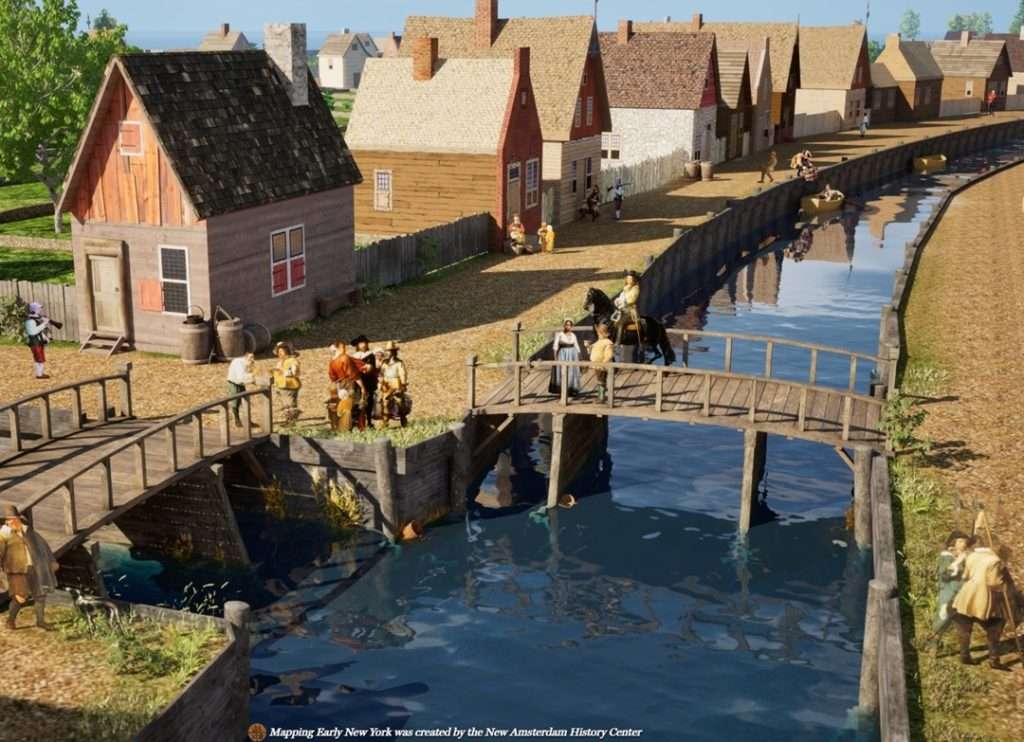
When I read Russell Shorto’s Taking Manhattan: The Extraordinary Events that Created New York and Shaped America, I realized again how important the story I plan to tell really is.
I’ve been a Shorto fan since, as a New York sightseeing guide, I read his Island in the Middle of the World, his history of New York City, which argued that everything we identify as American comes from the cultural stew that simmered in New Amsterdam/New York. That stew, according to Shorto, contained generous portions of the Dutch, English, and Jewish traditions that bubbled in my identity. Shorto’s newer book re-examines the history even more sharply, and he plumbs the depths of tropes that any child who attended Junior High in New York State was fed as the history of our state.
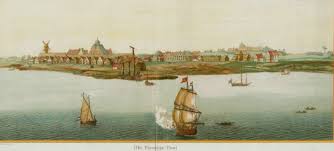
We all knew that the Dutch established a community here and called it New Netherland, that New Amsterdam, their city at the tip of the Manahatta Island, was its capital. Then, in 1664, the English arrived on the banks of the Hudson River, seized New Netherland, and renamed it New York. Then, the Dutch slinked away to the corners of history.
Not exactly the truth, Shorto proves.
According to documents that have only recently been translated, there is much more to the story that we did not know. The Dutch West India Company, acting not as agents of the monarch but as agents of the world’s second international trade union (the first being the Dutch East India Company) stole New York – and what are now Delaware, New Jersey, much of western Massachusetts, and Rhode Island – from the natives and built a society that encouraged diversity. They were not inherently more tolerant than the English or the Spanish, but they found that a multicultural world was conducive to profitable business. And business was what they were all about. They were willing to accept anyone and everyone from anywhere at all, so long as there was money to be made. What the Dutch West India Company did not do was to protect its people from the reprisals by the understandably angry natives, and they failed to create a workable government.
The British Civil War had just ended, reestablishing the English crown. King Charles II realized that his ravaged country needed to curry influence in the new world in order to replenish his coffers. He put his brother James in charge of asserting their presence, and James sent emissary Richard Nichols to take possession of land that now constitutes most of the Northeastern United States seaboard.
After spending some time in the Massachusetts Bay Colony negotiating peace between royalists and Puritans, Nichols, well-educated and conversant with Dutch success, sailed down coast and up the Hudson River to negotiate with Peter Stuyvesant for a transfer of power. No shots were fired; no animosity resulted. As soon as his signature was affixed to the document, Stuyvesant made a brief visit to his European homeland before returning to Manhattan and settling down on his large farm at the south end of the island. He died a very wealthy, satisfied New Yorker.
Nichols knew that a system that worked needed no reworking, and the Dutch system worked. He brought in military forces to protect the citizenry, to maintain loyalty to the King, and to uphold the law. But the Dutch remained in positions of political and social prominence. The array of religions and nationalities that had thrived under the Dutch retained their status as well.
In the story Shorto tells of my city, I see my mother and my father as central characters. My father’s paternal English roots English planted themselves in Massachusetts, Maine, New Hampshire in the 1620s when they fled the Church of England, around the same time as his maternal folks were landing in New Netherland. Members of the Dutch Reformed Church, Dad’s second and third great-grandparents likely originated as Walloons, Calvinists who wandered away from the perils of Catholic Belgium and France into New Amsterdam by way of Holland.
Likewise, my mother’s people had spent generations seeking a safe homeland. Out of the Russian Pale of Settlement, into Poland/Ukraine, to Zagreb by way of Vienna, and eventually to Kingston, NY, once a Dutch enclave called Wiltwyck.
I will write about my parents. But I will write about them as fictional characters in a time when unions like theirs were the stuff that fueled the sensibility that built the United States.
My parents’ fictional personae will inhabit 17th-century New Netherlands. He as the son of parents who arrived in 1624, for the purpose of establishing a future in nieuwe wereld. She as the child of a Lisbon-born Jew, whose family, dispersed by the Inquisition, had found refuge in Dutch Recife, Brazil, until the same Inquisition sent them scrambling to New Amsterdam.
My protagonists are Lia and Izaak. Neither’s story is unique, but each has a singular voice and a profoundly individual presence. Theirs is a timeless story shared by millions, but their details are theirs alone.



 carlastockton.me