
My mother never converted to Christianity. She dutifully accompanied my dad to the Methodist Church every Sunday, and she sat proudly in the congregation when I sang my choir solos. If she had any major discomfort at being there, we never knew. She was serenely and pleasantly present, and she was beloved of our fellow congregants and every minister of every church we belonged to. Bit at home, she made one thing very clear.
“I am and always will be Jewish,” she often said. “I believe in God, and I support your father’s belief in Jesus, but I shall remain a Jew as long as I live.”
What that meant — among the many things being an ecumenical household portended — was that we celebrated holidays of both religions. As a consequence, not one of my parents’ seven children ever looked down on anyone else’s religion, ever failed to acknowledge each person’s right to individual beliefs. And Chanukah was the celebration of our enlightenment.
Chanuka was never just an extension of our Christmas festivities. We observed the symbolism of each, and Hanukkah was always a celebration of the intellect, a proud acknowledgement of our people’s survival, of the right of the few to have ideas different from the many. And for Hanukkah, our parents gave us no fancy presents, no big-ticket items; we received a coin each night and a book.
“Because,” Mom reminded us. “Books are the windows to the world. You get to go places, meet people, entertain new ideas, learn astonishing truths, uncover facts. . . . You learn to be sensitive to the world and the people who inhabit it. “
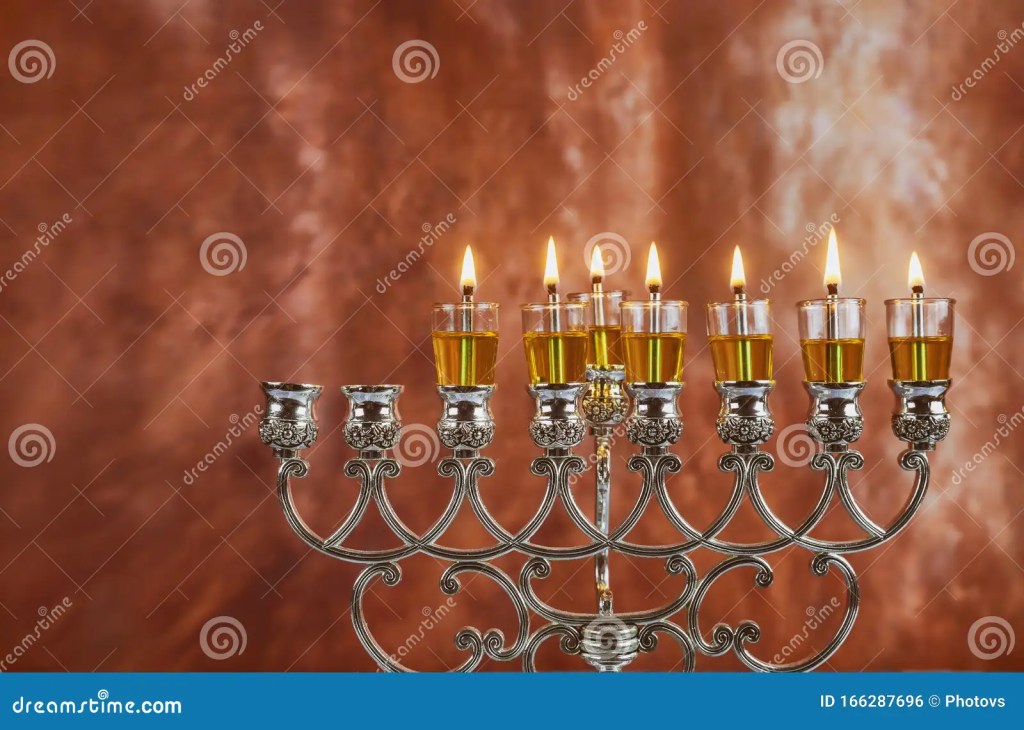
I grew up knowing that books are victories unto themselves. Every book is a miracle, even the books we don’t like, don’t understand, or don’t agree with. Creating a book is a major feat, and it is no less miraculous than a candle that burns for eight days when it only has wick enough for one.
As the end of Chanukah approaches, I suggest a book to give a loved one before the last candle has sputtered out. A book can change a life.
 carlastockton.me