My mother never converted to Christianity. She dutifully accompanied my dad to the Methodist Church every Sunday, and she sat proudly in the congregation when I sang my choir solos. If she had any major discomfort at being there, we never knew. She was serenely and pleasantly present, and she was beloved of our fellow congregants and every minister of every church we belonged to. Bit at home, she made one thing very clear.
“I am and always will be Jewish,” she often said. “I believe in God, and I support your father’s belief in Jesus, but I shall remain a Jew as long as I live.”
What that meant — among the many things being an ecumenical household portended — was that we celebrated holidays of both religions. As a consequence, not one of my parents’ seven children ever looked down on anyone else’s religion, ever failed to acknowledge each person’s right to individual beliefs. And Chanukah was the celebration of our enlightenment.
Chanuka was never just an extension of our Christmas festivities. We observed the symbolism of each, and Hanukkah was always a celebration of the intellect, a proud acknowledgement of our people’s survival, of the right of the few to have ideas different from the many. And for Hanukkah, our parents gave us no fancy presents, no big-ticket items; we received a coin each night and a book.
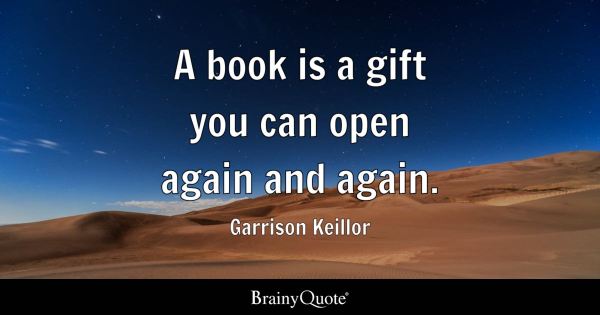
“Because,” Mom reminded us. “Books are the windows to the world. You get to go places, meet people, entertain new ideas, learn astonishing truths, uncover facts. . . . You learn to be sensitive to the world and the people who inhabit it. “
I grew up knowing that books are victories unto themselves. Every book is a miracle, even the books we don’t like, don’t understand, or don’t agree with. Creating a book is a major feat, and it is no less miraculous than a candle that burns for eight days when it only has wick enough for one.
As the end of Chanukah approaches, I suggest a book to give a loved one before the last candle has sputtered out. A book can change a life.
City on fire! Rats in the grass And the lunatics yelling in the streets! It’s the end of the world! Yes! City on fire! Stephen Sondheim
I don’t think I have ever been as confused, angry, and depressed by current events as I am today. I recognize neither my country nor my compatriots. Which is why I am compelled to chime in, though I admit that nothing I have to say is new; nor do I say anything that has not been said by better speakers.
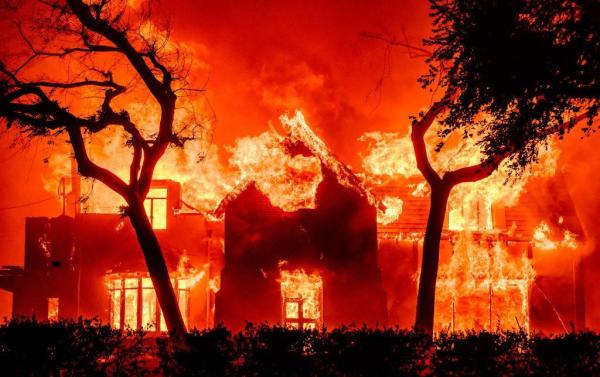
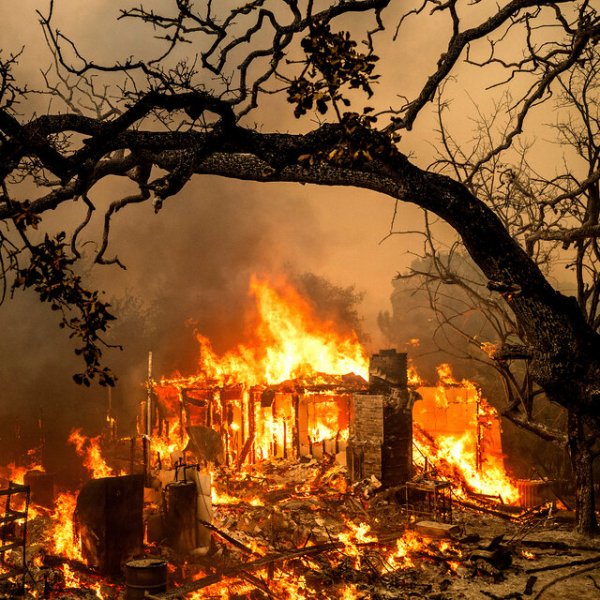
In the wake of the Charlie Kirk assassination, it has become painfully clear that this nation, which I have always regarded as a refuge, is burning down. How can it be that a nation so theoretically dedicated to the proposition that all men are created equal, a country wedded to the right of free speech, a commonwealth so purposefully focused on individual rights, has become such a sewer of discontent, maliciousness, and vitriol?
It should be easy to be inured to the violence that surrounds us all. Every time I activate any device, the newsfeeds report another stabbing, shooting, beating, shoving . . . some action taken against a victim whose only crime was disagreement. But my skin never becomes thick enough to let it all slide off, and Charlie Kirk has enlivened all the danger signals, has brought all the fire warnings to the fore.
Like many fellow boomers, I had hardly heard of Charlie Kirk before his murder. If I considered him at all, I thought he was a loud millennial signet Trump-eting to his young flock. But, once his death became the stuff of everyday obsession, I made it my business to find out who and what he actually was.
I see now that he was a spokesperson for the insecure youth of America, those who are caught in the maelstrom of the overzealous, radical far-left ideologies that dominate their surroundings. While Kirk’s beliefs represent those I long ago rejected, and though I disdain his politics, I understand how he attracted youngsters who needed his firm, unwavering reassurances that there might be a way to find peace and light through Jesus Christ and Donald Trump. I agree with none of his words, but having watched multiple videos of his interactions and speeches, I can find no evidence of his being a bully or a mean-spirited man. I see an overconfident alpha male inviting people to debate with him, people who gladly engage. He argued vigorously, but he was no Grand Inquisitor dictating conversion.
I have family members who are born-again Christians, and I know that in their hearts, they believe it is their duty to save the world by convincing us all to pronounce commitment to their version of Jesus Christ. When Erika Kirk spoke in the immediate aftermath of her husband’s death and at the funeral, I was struck by how much she sounded like people I love. I disagree with them almost entirely, but their intentions are pure. And intention must count. Erika Kirk deeply believes it is her Christian duty to forgive her husband’s assassin, and Charlie Kirk deeply believed it was his mission to save America’s youth.
Kirk should not, however, be hailed as a martyr. The unhinged young man who shot Charlie Kirk represents no cause, is not a faithful follower of any philanthropic group. Tyler Robinson may be confused, and he may be lost in his political beliefs, but he did not kill Charlie Kirk for any reason but his own personal compulsions, whatever they are.
In both camps, free speech is the true victim, the real martyr. It is dangerous these days to express beliefs of any kind, and there is a vacillating definition of the word “freedom,” the freedom that is at the core of the national dissonance that keeps getting louder.
The problem is not whether Charlie Kirk was right or Jimmy Kimmel was wrong. The problems that rule our daily lives are whether the guy who passes you on the highway gets to take your right of way without being shot at, and whether your friends get to say they don’t want to eat fish for dinner without fear of being stabbed for disagreeing with you or if the woman waiting for the #4 train she deserves to be pushed in front of an oncoming train because she didn’t say “excuse me,” when she bumped into you.
Both sides daily stoke the fires. Neither side seems willing to brandish an extinguisher. And that’s why the fires are consuming us all.


 carlastockton.me