Hometown Revelation

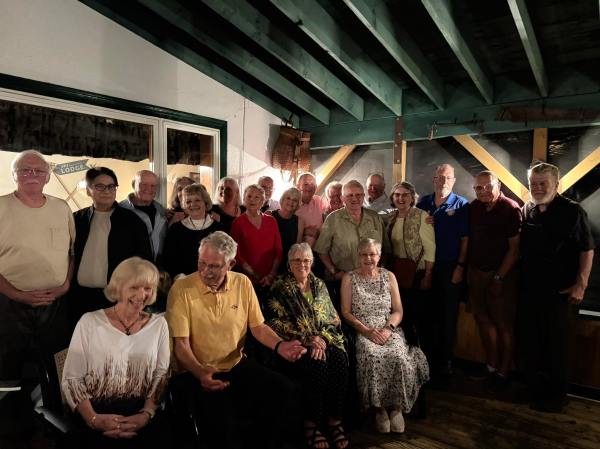
Photo by Richard Amell, SLHS Class of '65

Sixty Years On. . .

Returning to Saranac Lake, the town where I spent my latter childhood years, used to be all about my mother and my brother David. Both were much loved for good reasons; each had a particularly large presence among the locals and made a difference to many.  In the old days, I felt suffocated and extincted by the size of the welcome I always got for them.  Mom’s friends and David’s admirers were legion, and I could not walk down the street without being greeted with, “Hey, I knew your brother,” or “Carla, you’re Charlotte’s daughter.  She was an amazing woman.”

Heck, I didn’t even have to be in our hometown.  Once, my then 20-something-year-old son and I drove through a blinding blizzard to spend a weekend in Lake Placid, the tourist mecca nine miles and a huge cultural ethos away from Saranac Lake.  We checked into the Hilton Hotel and went to the bar to unwind before sleeping.  Within minutes of being seated, three people at the bar realized I was a Swett and sat themselves next to me to  regale me with stories of David when he was the bouncer at a bar over on the lake.  Soon, another three people came over to tell me what a great teacher mom was the year she taught bio at LPHS.

It was something of a relief to be anonymous, to duck into their legacy.  I was content to linger in the long shadows Mom and David had cast years before. 

Over the years, I remained in touch with only one person, the grown-up boy I counted as my best friend from 6th grade on, the boy with whom few in our class knew I had a relationship.  He had gone to college, been engaged, been sent to Viet Nam, and moved down south, but we stayed connected though I had not seen him since he visited me in New York on his way to Viet Nam in 1969.  I would have seen him if he had been in town when I was there, but he was not. 

 I loved taking my family to visit Saranac Lake, and we went as often as we could.  We camped at White Pine Camp before it was renovated.  We hiked up to Copperas Pond.  We canoed or boated out onto the lakes. But since my one true pal was not there, I felt no compulsion to call anyone else.  I didn’t expect that anyone would remember or care.  David and Mom were the ones that counted.  I did not.

Everything changed for me when  the 35th Reunion of the Class of 1965 rolled around.

In 2000, on the verge of leaving my husband and having buried my mother just a few months before, I got the notice that a reunion was in the works.  I wasn’t sure how I felt about facing my classmates, but I was sure I needed to find a way to feel grounded.  I had just begun to flex my creativity and was experimenting with a new career; the idea of being among the people who knew me before I left my chrysalis was comfortingly attractive.

The opening event was a meet-‘n’-greet at the Belvedere Restaurant, a hometown tavern, where many of my classmates had learned to drink as teenagers but to which I had never been.  I parked my car outside the restaurant, and before I got halfway out of my car, a familiar form appeared at the top of the stairs.

“SWETT!!!” He exclaimed, addressing me, as people had when we were young, by my embarrassing last name.  “You’re here!!!”

The surprise greeter was John, the boy who sat behind me in 5th grade. The one who dunked my braids in an inkwell then cut off the ends, who was grateful I didn’t complain to the teacher but simply laughed.  He was the boy who told me to shut up when I argued with a teacher about the legitimacy of a request we were expected to honor. He was never someone I thought of as having any real interest in me, but he had always been there.  And now there he was smothering me in hugs.  He led me in. 

Inside, I was greeted by people, many of whose faces I barely recognized. My oldest, best friend was there, and I buried myself in his affection but felt no reason to hide for long.  There were so many cherished memories assembled.  Gail, who lived down the hill from me when we first arrived in town that winter of 1957.  Her dog Mike nearly scared me to death. Later, when we both moved across town, Gail was once again down the hill from me, always my neighbor and a kindred spirit. Marsha, whose 4th grade birthday party invitation eased my transition from Massachusetts outsider to Saranac Lake resident.  Nancy, my high school bestie, and Maryanne, with who made me laugh as we walked together down the hill from school in the springtime. I rediscovered Karen, whose baby brother was born within weeks of mine. And shy Art, who had seemed so disinterested in anything academic but had evolved into a High School History teacher.  Then there was Penny, whose friendship was a constant aspiration though she seemed to disdain me, enveloping me in a hug. 

Within minutes of arriving, my classmates reminded me that though high school was not my finest hour, it was a time that deserved to be remembered.  The campaign for senior council president, the regional chorus festivals, jazz band, speech contest, the town centennial pageant. . . . 

People still effused about David or Mom. But I realized I, too,  belonged.  My fellow townspeople were, along with David and Mom and all the Swetts, the main characters in the play that was my life in this town.  I felt embraced and accepted, and I understood for the first time that the play wasn’t over yet!

I struck up correspondences, albeit spare, and looked forward with great anticipation to whatever came next.

At the fiftieth reunion, naturally, some of the best people were not there.  Old age, illness, family events, death.  Nancy was no longer with us, and John was clearly ill.  But we had a blast.  Gail and I hosted the culminating ceremony together, and we formalized our belief that we were sisters of the most bonded sort, members of a family of disparate siblings, who’d grown up in a community founded on the idea that a town exists to care for one another. 

The people who fostered the growth of Saranac Lake in the late 19th C arrived there in order to give or find relief from TB; the tradition defined the town and trickled into everyone’s consciousness.  Saranac Lake became a refuge for veterans of WWII and Korea, boys who needed a quiet, caring place to raise their families and set the world aright.  Refugees from places like the Swiss Alps who needed to be in the familiar protection of the granite mountain walls that surrounded us.  We were raised by survivors who nurtured one another’s survival, and we members of the Class of ‘65 bonded to one another as our parents did to our town. 

Returning last month for our 60th Reunion, I had feared that David’s recent death would make it painful to hear his virtues extolled.  I was wrong. This great extended family we’d both been part of shared memories that made mine more vibrant.  I missed him more and at the same time a bit less because he was there with us in more hearts than just my own.

There were far fewer of us this year to revel in the joy of sharing one more party.   So we made a solemn promise to one another: we won’t let ten years pass before we do it again.  Ours is a special joy we must nurture fervently.

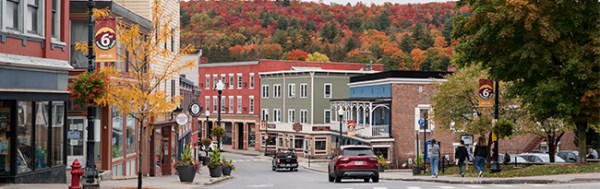
Saranac Lake, NY, began as an outpost for hunters but gained fame and population as a medical center for Tuberculosis sufferers.

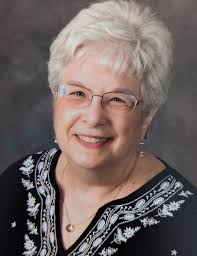
In Memoriam: Marilyn Joan Alkus Bonomi (1943-2025)

Walking in the almost cool, late August air today, I felt a premonition of Fall. Crisp air,  cornflower sky.  Finally. . .  October’s on its way. 

October has always been a special month.  My birthday, my youngest child’s birthday, the year’s first cold snap, darkening afternoons.  This time, however, the October snippet hit me with an image of Marilyn Joan Alkus Bonomi.

Mari and I met on an October Saturday in 1987 at my youngest’s birthday party, a party I hoped would help us get acquainted with our new neighbors.  We had just moved from Arizona to Connecticut, and none of us had been prepared for the culture shock we would encounter.  Fitting in was challenging, and a party seemed like an opportunity to make some friends, to show our new cohorts that while we might not have mastered the eastern way of dressing and speaking, we were just plain folks like everyone else.  Personally, too, I hoped that an adult or two would come to the party and stay, be a welcoming presence . . . or at least a fellow parent with familiar sensibilities.

Mari was the one.  She swept in, deposited her daughter in the midst of the other children, then sat down next to me and opened a conversation that drew me in, made me feel instantly connected.  It was a stream of consciousness into which we were able to immerse ourselves every time we were together for the next nearly forty years of our enduring friendship.

We had lots in common.  Her daughter and my youngest were the same age and had already begun to bond,  which meant that Mari and I were destined to see one another often. We were both English teachers with a deep connection to the theater; she was well established in Connecticut, and I was looking for a job.  We shared a nearly obsessive love of rhetoric and a penchant for lost souls. Though humanist Jews, we had both chosen husbands who were Jesuit-trained Catholic schoolboys.

 Over the course of that first year, her daughter and mine became besties and formed a union that included my older daughter; Mari and I were fused.

Because of Mari, I quickly found a job.  At the birthday party, she had been delighted to learn that I planned to substitute teach while I sought permanent employment.   “That is wonderful news,” she said.  “I teach at Amity, in Woodbridge, one of the best schools in the country. Can you tell I’m proud? Anyway, we never have enough good subs.  I’ll put your name in.”  

She did.  I spent much of that year subbing at Amity and loving it. 

One day, when we were lucky enough to have lunch together, she pointed to a lanky man leaning in among a group of students, listening intently and chatting with them.  “See that guy?” She asked.  “That’s Stu Elliot.  He’s one of our Assistant Principals.  A good man.  A great administrator. See how he interacts with the kids?  He is special, which just means we won’t have him for long.  He’ll have his own school any day now. Which is why I want you to meet him.  He will want to hire teachers of his own choice, and you would be a perfect addition to any team he takes on.”

We spent ten minutes talking to Stu, and I agreed.  He was remarkable.  A year later, he became my principal at the high school next door to my house.  I could not have been more fortunate, and my gratitude to Mari never diminished.

Our friendship ran deep.  Her child was at my house almost as often as mine was at hers. We celebrated holidays together and commiserated when we were both unhappy.  Our contact lapsed a bit as each of us traversed the hard road of divorce and redefinition, but we found one another again in time to have a few great years as senior citizen sisters. Though never enough time to fully share our appreciation for years of a deeper-than-blood kinship.

Since 1987, my life has been fuller in dozens of ways because of Marilyn Joan Alkus Bonomi.  Though she will live on in her daughter’s eyes, in her grandson’s laugh, in my heart, in my soul, in my very vivid memory, I shall miss her voice, her presence, the soft touch of her abiding love.  

Follow Your Roots

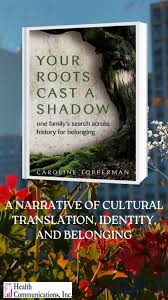
Caroline Topperman’s book Your Roots Cast Your Shadow is a MUST READ.

In Your Roots Cast a Shadow, author Caroline Topperman takes her reader down into the chasms of her family history and proves that finding your roots can be both enlightening and liberating.

So many of us who are descended from damaged, displaced families find ourselves left with mere snippets of our forebears’ memories, carefully curated glimpses of what they deemed acceptable for future generations to know.  We wallow in guesswork and strive to build our sense of self from the shadows they cast. So much is left out that we find ourselves veritably blind, searching through a dark forest of innuendo that leads as much to speculation as to revelation.

Caroline Topperman has had considerably more success than some of us. Her remarkable parents and grandparents, who suffered through years of hardship that required travels to the far corners of the world, were less guarded. As they went, they scattered enough carefully chosen, indestructible truths behind them that Topperman was able to build a network of paths to meticulously follow.  At the end of the end of her multiple trails, she has found rich morsels of story, kernels of history that have provided the means with which she could build a memoir of one family’s struggle to assert their right to live happily ever and leave behind a meaningful legacy.

Topperman’s examination of her multi-rooted family tree, opens with glimpses of her maternal grandparents’  life in Lwow, Poland, just before WWII.  They were young, Jewish, intellectual, and proudly unwilling to put up with Nazi or Communist maltreatment. The odds they were up against are all too familiar, but  Topperman spins the tale with ever-expanding dramatic flair that is able to surprise, shock, and comfort even the most knowing among us. Both her grandparents found voices, became activists, and prevail. Of her maternal grandparents,  Topperman writes, “So many people are blinded by religion, and communism was my grandparents’ religion. . . . They weren’t part of a conspiracy to overthrow the western world; they were simply looking for a way to make the world a better place.”

Direr circumstances surrounded Topperman’s paternal grandparents, who fled from Warsaw to Kabul, Afghanistan, where her grandfather led the construction of Highway AH1 through the Kyber pass, where her grandmother taught gym in a local school, and where her father was born. Eventually, they returned to Poland by way of Uzbekistan, but their journeys were far from over.  By the time Topperman and her sister were born in Ontario, Canada, both her parents’ families had nearly traversed the world. 

Topperman’s story has many branches emanating from the roots she discloses here.  Without sycophancy or flattery, she honestly presents the stalwart men and pioneering feminists who were her predecessors, and she shares her own quest to find her place among them.  “Home,” she concludes in the title of her final chapter, “is where the compass lands.”  That may be true. But having read the book, I would add that home is where the compass lands. . . but first we must learn how to turn on the light.

Of Pasha And Pancakes

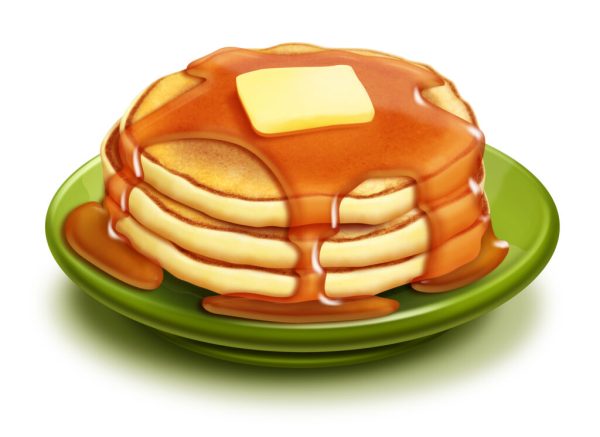
My father loved pancakes.  My mother made them often, but he especially loved the pancakes that the women of the United Methodist Church served every Easter morning after sunrise service. 

Perhaps the pancakes tasted sweeter when filled with the spirit of revelation.  Perhaps he just liked the way the pancakes were uniformly round, thin, and warm, so unlike the ones my mother made.  Hers were always misshapen, and by the time they got to his plate, they were routinely cold.  I suspect that in his mind, my mother had not mastered the gentle American art of making pancakes, as she had most assuredly not mastered the compleat art of Easter.

Oh, she got the gist. She understood that Easter was, like Passover, a celebration of renewal, of rebirth.  I was born in the wake of the Holocaust that drove her to the US, and though she never said as much, I know that the symbolism of Easter and Passover were reminders that she was fortunate to have a life that had transcended the ashes that consumed so many of her loved ones. She abjured the images she admitted to later, images of Easter pogroms in her father’s Polish shtetl. She embraced our celebratory rituals – coloring eggs, making paper flowers, painting murals for the dining room that exploded with the glory of springtime.  We lived in several places in the northeast, where winters then were long and bitterly cold.  The warmth of spring was a welcome reprieve.  But she never made Easter about Christ.

Nor did she make pancakes on Easter Sunday.  Easter Sunday was the one Sunday we broke with the weekly tradition of attending church together. 

On that morning, because I sang in the choir, Dad woke me early, and we went together to Sunrise Service, after which he stood in line, first for pancakes, then for seconds.  He chatted with the parishioners, schmoozed with the minister and the assistant minister, and then he drove back to the house to get the rest of the family. I would watch from the choir loft with a modicum of embarrassment as Dad, Mom, and my six siblings, all dressed in the new Easter finery that Mom herself had sewn, filed in.  They were, as always, about ten minutes late, and the congregation seemed amused as they filled a pew at the front of the nave. 

After the service, Dad was like a little boy.  He could not wait to get us home to our Easter baskets, which he had personally filled with candy and little toys.  Then we’d have brunch, which Mom would serve with pride. The other food varied with the years – when we were flush, we had meat and cheeses, and when we were not, we had whatever we could afford – but three critical items never changed.  At every Easter brunch, we ate the eggs we had colored the day before and the Passover matzahs she had hungrily opened that morning.  We always had chicken soup and matzah balls.  Dad made fun of Mom for the matzah.  She could have chosen toast, he would chide.  Or she could have made pancakes.  She would smile and say, “You already had your pancakes, and you don’t like mine nearly as much.” 

The year I was about 6, the toys in our basket included tiny taxidermized chicks.  My mother was appalled.  She said something I didn’t understand about carrying the imagery of Easter too far.  When I realized what I had in my hand, I shrieked and ran to the backyard, where I buried the weightless thing in Mom’s tomato garden. Years later, Dad remembered the day more vividly than I did, and I believe he blamed it for a cataclysmic change that came over me when I was twelve.

Until then, I never questioned our tradition of attending church together every Sunday. I was deeply committed to my father’s religion and, from the time I was 5, I sang in the choir, often emotion-laden solos with tears running down my face.  Easter was my teariest time –  tears of mourning for  the crucifixion and tears of joy for the resurrection.  My father was intensely proud. 

Then, in the middle of my final tween year, I experienced a reversal of faith.  I told my father that I respected Christianity deeply, that I believed in its tenets regarding love and forgiveness. But the basic mythology had lost its appeal. I could no longer believe in the stories; they did not ring true.  Dad and I fought bitterly over what he considered my blasphemy, but I was obdurate.  I would no longer participate in the rituals of the religion, and I would no longer attend church with him. He acquiesced.

My denunciation hurt him deeply.  I am not sure he ever truly understood what made me an apostate, but he never blamed me.  He never shunned me or made me feel awkward about it.  Our fight on the day I announced it to him was the last time he even addressed it. Until the year my first child was born.

Fifteen years after my lapse of faith, my husband and I moved to be near my parents’ home, where we reinstituted our family celebrations.  When Easter arrived, I was four months pregnant.  We spent the day with my parents, who had prepared Easter baskets for my teenage siblings still at home and another for my unborn child.  Mom was in the kitchen putting the last-minute touches on her Easter brunch, and I was pouring water into each of the glasses on the beautifully set table when my father asked me what religion we had chosen for the baby.

“Will you raise your kids as atheists?”  He asked. 

I laughed.  My husband had left Catholicism for many of the same reasons I abandoned Dad’s religion, and we had several times discussed our plan for our family’s religious education. Atheism had never been a consideration.

We wanted our children to have a solid background so that when they reached the age of renouncing traditions, they would have something to reject with authority.  No dropping out without a foundation for our offspring.  We decided on my mother’s religion, which seemed to us to be both logical and reasonable. 

“Besides,” I said to Dad.  “There’s no way around it.  Mom’s Jewish.  That means I am too.  And my children are as well.”

“Yes,” he said, nodding thoughtfully. “It’s a sound choice.”  Then, with a twinkle in his eye that was tinged with just the slightest hint of accusation, he added,   “You do love those matzahs.  And with Passover, the only dead chickens will be in your soup.”