A Very Human Condition

When I moved to New York City in 2003, it took me some time before I eventually found work as a New York City Sightseeing Guide.  For the first year, I felt ridiculously fortunate to be able to share NYC with tourists who rode with me on the top of a double-decker bus and to get paid for the pleasure.  That wore off eventually, but in the meantime, I got to know Mandy. 

Mandy, still generally called by what would become her dead name, Stephen, was my favorite coworker. A brilliant guide and former attorney, she was saving up for gender reassignment surgery.

Divorce from a greedy wife, mental illness in a daughter whom Mandy would never abandon, and frequent mandate transgressions had led to her being fired from her high-powered law firm, which left Mandy with no money for the ultra-expensive procedures. In the interim, Mandy made concessions of powerful self-assertion by wearing, in all weather, Bermuda shorts fashioned in bright orange sweatshirt fabric, frowzy blouses and tops that plunged below her prominent and rapidly graying chest hair, and neon-colored sneakers. Her hair and mouth were a whirling forest of bright tangerine curls and a soft, pillowy hot pink glossy triangle.

“I’m a lesbian,” Mandy explained to me the first time she asked me out to dinner.

I was flattered. I had never met anyone smarter or funnier than this person, qualities I have always found irresistible in a man. But I had no interest in being romantically involved with a woman, even a woman who was, anatomically at least, still a man. Of course, I didn’t want to hurt Mandy’s feelings, and though I turned down the invitations to dinner, to movies, to theater, we often sat together as we waited between buses.  

I never tired of listening to the stories she told. The personal stories were harrowing, beginning with a Lower East Side childhood, and the professional stories were infuriating. This person had tolerated more than anyone’s fair share of abuse by the system over the years. If I had been differently wired, if I were capable of loving Mandy as she deserved to be loved, I would have spent all kinds of days and nights with this remarkable human being.

Those first months working on the bus were magical.  What a privilege it seemed to explore New York from an ostensible eagle’s view. As a history and culture buff, I was learning in a way no book or school had ever taught me. Mandy’s wide knowledge of the city enriched each day and broadened my tour repertoire.  Having studied architecture, Mandy was conversant with the eclectic nuances of building styles that comprised our city’s makeup. As an astute political observer, she understood the underpinnings of Tammany, why Robert Moses was more tyrant than savior. She explained to me why the Breslin-Mailer campaign to create the great city-state, a movement I enthusiastically worked for in my youth, was basically moronic.  Having studied labor law, her expertise guided our labor disputes. When the company abused us, Mandy spoke eloquently with great erudition. She knew the score.  She understood what we were entitled to and what was being kept from us with malicious, greedy fury.

Winter descended as I rounded the end of my first year on the bus, and with it came the end of the idyll. Cold weather and heartless employers extinguished the joy.

Eventually, Mandy ended too.

Our company, a startup in every sense of the word, provided no bathroom for our relief.  For a while, we were allowed to use the restrooms in the Hilton Garden Inn, which was less than a block from our launch site, and the management there even encouraged us to buy goods in their gift store and food mart by giving us a generous discount. 

Then one day Mandy farted and sighed loudly in a stall in the women’s room, and a tourist seated next to her, the woman in the next stall, securely separated by a metal wall and a locked door, freaked out at the sound of a male voice sighing on the tail of a roaring fart. She complained to the Hilton management. After that, all guides were banned from the place. No more comfy lounge seats, no more cheap candy bars. No more toilet. I saw no solution to the problem and opted to take a break.

I left the buses to edit a book for the friend of a friend. The book was set in NYC, but the London-based author knew little about our city and wrote locations that were amiss and an Iowa-bred protagonist, who was more accurately an Englishman in New York.  To complete the project, I went to the UK for a few months, and when I returned, Mandy was gone. 

Conditions Mandy had fought to improve had killed her.

Mandy was our advocate, the voice that argued for improvement in conditions atop the buses that were unfit for guides.  We had no place to sit.  We were required at times to perform chores – like helping the elderly up the stairs or carrying baby paraphernalia or lugging luggage up the stairs – that put undue strain on all our muscle groups.  We stood for long periods of time, jostled mercilessly about. We had no place to go to get warm, no relief from the harsh winter exacerbated by the harsh wind generated by the moving bus.

Mandy’s back and health could not take it. She suffered pneumonia and bronchitis and then was injured and re-injured until she finally had no choice but to undergo back surgery.  Like many spinal surgery patients, Mandy did not survive. The company management, who never appreciated what an asset they had in Mandy, was relieved. Tethered by Mandy’s knowledge of the law, they had felt forced to retain her. Her illnesses and back troubles cost them money by way of pay they were impelled to dole out and by insurance rate hikes her claims inflicted. The bloodsuckers were free at last. 

We who loved Mandy, lost a precious friend.  I lost a valuable mentor.

I find myself wishing for her presence lately.  She’d tell me why the current state of affairs for Trans people cannot hold.  She’d tell me to keep the faith.

“Don’t give the bastards any power,’ she’d laugh.  “They’ll turn to dust just like the rest of us.”

My Sister From Another Mother

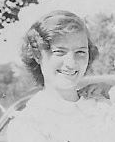
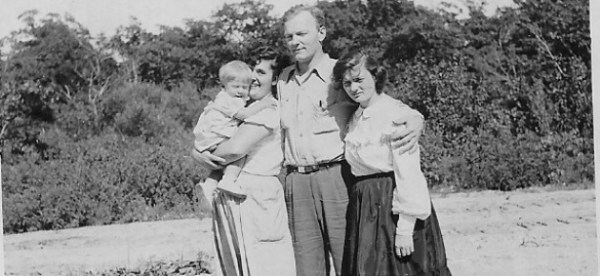
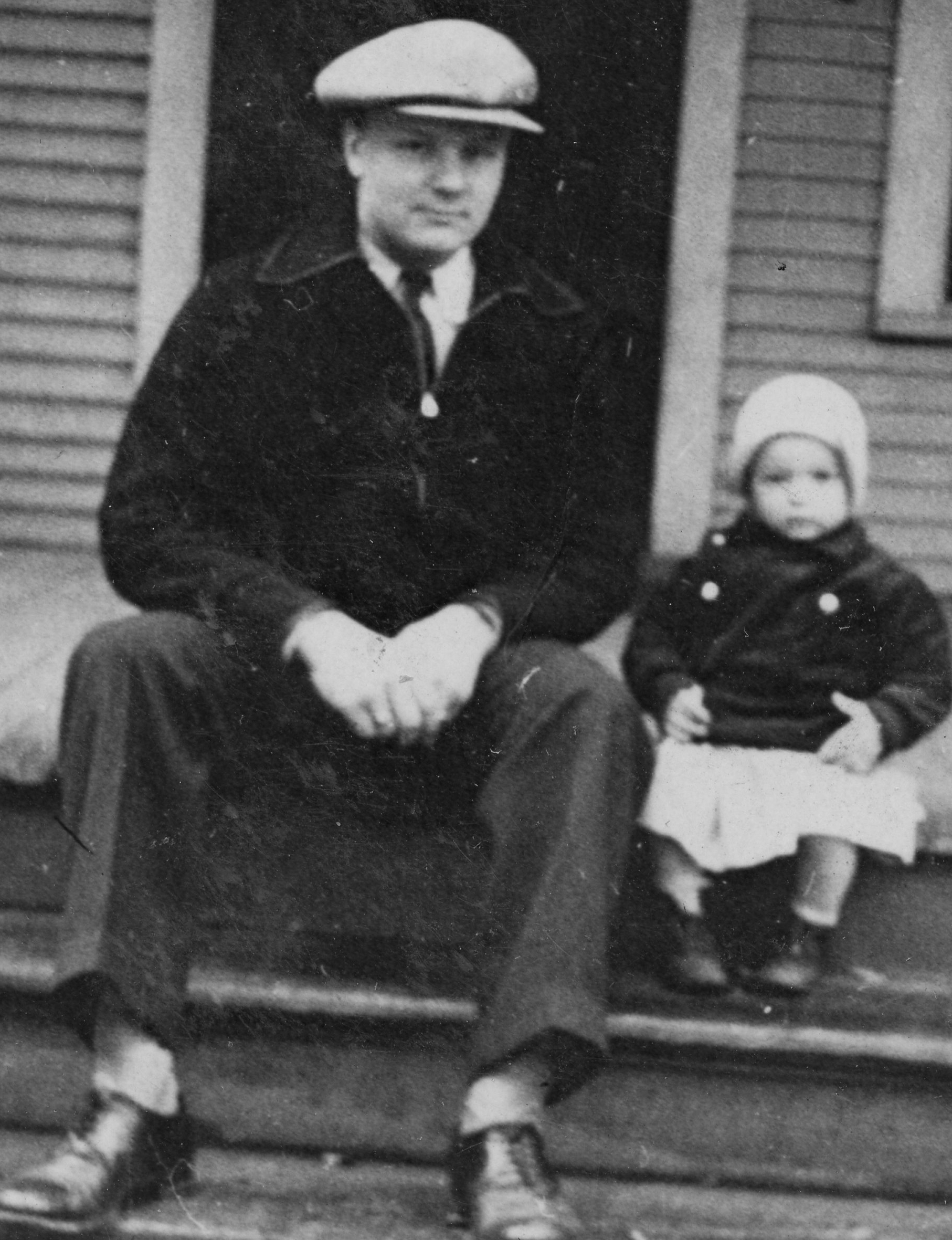
My older sister Dorothy was never really a part of the family. Sixteen years older than I, her mother had been dead for thirteen years before I was born, and my mother could not really mother her; she and Dorothy were only eight years apart in age. Dorothy’s brother, born when she was almost three, who would have shared her history, died before he was a week old, following their mother to her grave. In one fell swoop, Dorothy was rendered a half-orphan, consigned to various relatives who loved her and died, to my father’s second wife, who abused her, and finally to my mother, who was more like a much older sister, albeit a sister from another country, another life. Dorothy was, like so many children in our society, a member of a first family that failed, and she was robbed of a birthright I took for granted.   Dad and Dorothy, age 2.5                                                                                               Dorothy and the Father She Adored

My parents cared. They tried at first to make a home for her. But Dorothy was a tween, nearly a teen, restless and unhappy. It felt unnatural to share the father she adored with the strangely accented, exuberant young woman my father chose to be his third and final wife. My mother, still adjusting to life in the country she had only entered five years before, had no experience with parenting. My mother was Jewish, a refugee from the horrors not yet fully disclosed in Europe, and Dorothy had no way of understanding where Mom came from; our father and his family were American bluebloods, deeply entrenched WASPS. Together Mom and Dad and Dorothy decided that boarding school was a good solution, and thereafter, Dorothy only visited for whichever holidays and summers she did not spend with our father’s only remaining sister in New Mexico. My parents never provided a presence she would be able to call home.

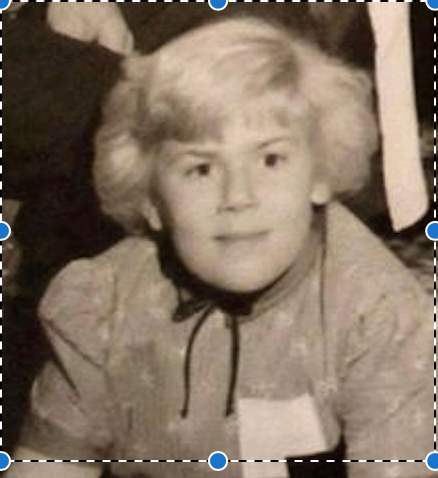
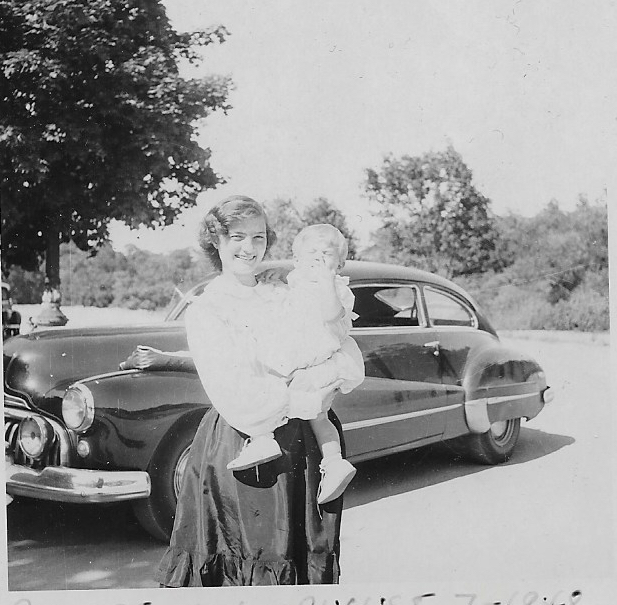
dorothy and carla 1948Dorothy and Her Baby Sister 1948

My birth brought her closer to them. Dorothy doted on this new being, this little sister, young enough to be her own daughter, and she was a great help to her earnest stepmother. But I belonged to my mother, not to Dorothy, and though she visited more often than she had before, she would always feel estranged; my mother would always be something of an interloper, albeit a welcome, loving one.

In New Mexico, my father’s sister introduced Dorothy to a handsome young engineer named Oliver, from Michigan. He had been stationed in Los Alamos during WWII, had participated in the Manhattan Project, and after using his GI Bill to obtain his degree from the University of Pennsylvania, he had signed his life away to the American government he revered and moved permanently to the city in the clouds. Our aunt was not amused that her still teenage niece was falling in love with a man nearly twelve years her senior, and she forbad their seeing one another.

Dorothy, who was perhaps the gentlest, least defiant person I ever knew, stood her ground. She loved this man, and if Aunt Elizabeth would not allow her to date him, she would find another way.

She called my father. At first he agreed with his sister. “You’re too young,” he said definitively.

“I’m 20, Daddy,” she replied. “Older than you were when you married my mother.”

That hit a nerve. My father had fallen in love with his (gasp) Irish Catholic beauty when he was 16. His parents would not allow him to see her – they were WASP,  a “good family,” after all, and their kind did not date people from the other side of the tracks – so he told them the girl was pregnant and demanded to be allowed to marry her. Then he got to work making sure he wasn’t lying, and the two were married.

“That didn’t turn out so well,” he demurred.

“I know, Daddy. But I love him. And I’m old enough to know.”

My mother intervened. “Let them come here,” Mom said. “If they want to be married, we’ll make them a wedding.”

So Dorothy came to Springfield, MA, where we lived at the time, and she had her wedding in Trinity Methodist Church. I was her flower girl, and even the chicken pox, which Dorothy discovered on me the night before the event, did not ruin the festivities. Our aunt did not attend, and though Dorothy told me many times how very hurt she was that the old woman rejected her, she was never sorry she chose her Oliver.

The night before the wedding, she pulled me into her bed, as she often did, from my cot in the room we shared. I remember crying. “I don’t want you to go, Dodo.” I pleaded, “Please don’t move away. Please don’t get married. Please.”

“I love you, little sister, I really, really love you. But I have to do this,” she replied.

“Why?” I moaned.

“Because I want my own family. I don’t want to be a visitor. I want children of my own to love. Children who will love me first.”

Over the years, we hardly saw Dorothy and Oliver. She wrote me letters. Long, detailed missives, the litanies of her burgeoning family. “Derrick had a cold, and I had to call the doctor,” she wrote in 1958, when Darrick, her firstborn was five. “He’s probably not going to school for the rest of the week, but I thing it’s okay for him to miss Kindergarten. Kenneth fell off the swing and hurt his shoulder, but I don’t think anything is broken. Margie won’t stop crying because her ear aches, and Laurel has a terrible diaper rash. Did I tell you I’m pregnant again?” But Los Alamos was a long way away from where we were, and she had her hands full.

Meanwhile, my parents also continued to procreate, to build my father’s second family. From 1953 till 1961, Dorothy and my mother each had six children within months of one another. I kept track of Dorothy’s children’s ages by remembering which of my siblings was born in the same year. Dorothy and Oliver and their kids traveled to Michigan to visit his large, Finnish family, but they only came east to see us twice. My parents traveled often to Queens to visit my mother’s sisters and parents, but we only went to Los Alamos once.

We were the second family, and Dorothy was not one of us; Dad didn’t do anything to encourage her to be. I grew up in my father’s house, and as stern and demanding as he could be, his was a constant presence. My mother was always there to welcome me home at the end of a day, always attendant to all our needs. Dorothy had to become her own mother, and she transferred all her longing for maternal love to her offspring, which made her a consummate Mom.

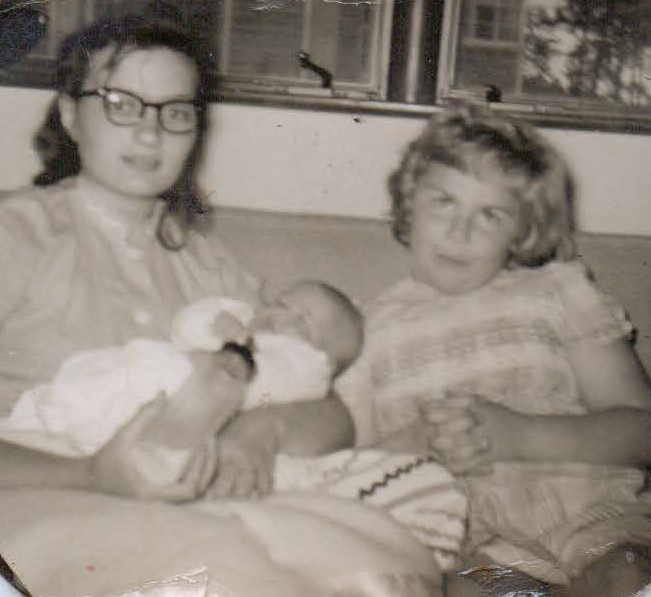
Dorothy 'n' me 'n' DerrickDorothy as a mother with her Entitled, Alpha Female Sister, Age 6

My existence provided a modicum of connective tissue between Dad’s first and second set of offspring, and I lived for those letters she wrote me at least once a week. I spent the summer with her when I was nine, and I went to college in Albuquerque for three semesters, a choice I made in order to be close to my big sister. But I was never really a satisfying little sister; I was too much imbued with the sense of entitlement that comes of being the oldest, the alpha female in a large brood. We made the best of our relationship, but it remained at a distance, and our visits, even when I lived in the Southwest, even after I had children of my own, were never more than intermittent.

My brother once said that my father was a terrible father to Dorothy, and perhaps he was. But he was no different from the myriad men I know, including my own former husband, who focus, perhaps by necessity, on the new family, the second family, the family that demands the most of their time and attention. Men are not, as a rule, very good at multi-tasking, and juggling families requires great skill in that area. Men compartmentalize far better than most women, and to the man who does that well, a first family must reside in a separate cabinet, less emotionally accessible than the one that takes up the space in his living quarters.

Dorothy’s life was not very long, and yet she had more than her share of sadness, which she endured without us. She had learned to fend for herself, to refrain from reaching out, so she never called and asked me to come when things were bad; I heard about all her trials after they were over. Consequently, I wasn’t there when she buried children, suffered through poor health and horrible medical treatments, ferreted through marital problems. She got through them.

Remarkably, Dorothy never lost her gratitude or her joy. Darrick stopped her once in the middle of reading about Cinderella and her evil step mother and asked if Dorothy’s stepmother were like Cinderella’s.

“No, silly,” she laughed.  “She was always kind and generous, just like she is now.  She is a wonderful woman.”

“But she sent you far away, didn’t she?”

“Only because she loved me,” Dorothy answered without thinking.  “She loves me still.”

Dorothy may have been robbed of a family, but she never resented the fates that separated her from the “normal” life her half-siblings always enjoyed. She was never bitter, never remorseful. Now, when I visit her children and grandchildren who idolize her memory, I realize that in many ways she regained everything she needed. She built her own family and dedicated her life to them, and she left them with a deep, unwavering faith in the power of love.

Why I Stand With Planned Parenthood

While I refuse to qualify the bizarre allegations levied by misogynistic fear mongerers against Planned Parenthood, I feel a need to make a small statement of support for an institution that I believe in, an institution our society cannot afford to lose.

First of all, I would like to go on record by saying that there is no reason for apologia where abortion services are concerned.  Abortion is legal in this country, and women have the legal right to choose whether their bodies may be receptacles of new life.  I don’t know anyone who is pro-abortion; I am not.  But I am pro-choice, including the difficult choice to terminate a pregnancy.  Choice deserves and requires protection.

What the critics chronically forget to mention is that Planned Parenthood does so much more than counsel women regarding their unwanted pregnancies.  They saves the lives of mothers and children.    Planned Parenthood is a safe haven the community cannot do without.

I don’t know anyone who loves going to the doctor for gynecological examinations, but all women need to do so in order to protect themselves against illnesses that attack the female organs. And having access to affordable care and to prevention and cure of feminine illnesses also deserves and requires protection.

Planned Parenthood provides choices, care and prevention that no other institution offers, preserving women’s lives in a variety of ways, and we must stand up for the good that they do lest it be lost in a hale of ignorance and misconception.  All pun intended.

IMG_4835-abortion rights

  1. Judy’s Story – Perilous Days Before Roe v. Wade

I was 18 when I met Judy. We were both employed by a large firm in New York whose specialty was writing employment manuals for employers. I was a proofreader; Judy was a typist, and she was 19, mere months away from reaching twenty.

Judy was ever so much more mature than I was in ways I never imagined myself becoming, and she intrigued me. I still lived in my aunt and uncle’s house, where no matter what, I was sheltered, fed, protected from the world. Judy lived on her own in a one-bedroom apartment in Bay Ridge, where she had to cover the rent, heat, food and clothing for herself and her 4-year-old daughter. On my meager salary, I had a hard time keeping up with the minimal contribution I made to household expenses and found it challenging to buy enough clothing often enough to get to work looking respectable. Judy made less than I did, and in addition to all her other expenses, she had to pay for whatever day care her friends were unable to provide.

Hoping always to find a man who would step up where her deadbeat ex-husband had failed her, Judy dated fairly frequently, and I was her go-to evening babysitter. I loved the solitude of being in her house after her daughter went to sleep; I marveled at her house, so clean, so bright and cheerful. She had curtains on the windows, rugs on the floor, pictures on the wall; her daughter’s bed was a frilly pink wonderland. How did she do it?

I loved Judy’s child, who was smart, funny, talented and spirited. We watched Sesame Street together in its first year, and I took her to meet my friend Northern, who played one of her favorite “real people” characters on the show. I was part of the family, intimately tied to them by an interdependence that suited us all.

Judy could not possibly hope to sustain any more of a burden than she was already managing. She often said to me, “Carla, I gotta be real careful, ya know? I mean I got knocked up the first time because I wasn’t payin’ close enough attention. I cannot afford to have another kid.”

But no matter how careful you were in the 60s, pregnancy was never altogether preventable. After seeing a prospective stepfather for several months, she stayed overnight with him, and despite her protestations that she took EVERY precaution, she became pregnant. In those days, many of my friends and relatives were victims of missed pills, defective condoms, miscalculated dates; Judy’s mishap was no surprise.

“I’m a good mother,” she moaned to me the day she got her test results. “I am. But dammit, Carla, what ’m I supposed to do? I got dreams for my kid. I want her to have a good education, do more with her life than I did. I can’t afford another one.”

I had no words of wisdom. There were no alternatives. The would-be stepfather dropped out of sight as soon as he became a prospective dad. Should the fetus in Judy’s belly grow to childhood, it faced a life of poverty that would also drag its older sister into an abyss, an underfed, underserved existence. Judy was despondent.

Then, for a time, we only saw each other at work . I don’t know how many nights she stewed without confiding her thoughts. But one night after midnight, my phone rang, and it was Judy; she was crying and sounded wrung out. “Carla. I need you to get here right away. Please.”

I lived in Bayside, Queens, a long way from Bay Ridge, Brooklyn. I took a bus to Flushing, where I got a subway to a transfer point in Manhattan and then, following Judy’s instructions, emerged somewhere in Brooklyn, where I hailed a cab. She was waiting for me with Norma, a co-worker with whom we often socialized, a slightly older woman who had brought with her her own 8-year-old daughter. I had been summoned to babysit. They left the minute I got there without explanation, but I knew something was terribly wrong.

Judy had no color in her face and could barely move. Norma had to carry Judy down the stairs, and I watched out the window as she lifted my nearly lifeless friend into the cab. I took both little girls with me to Judy’s bed, and we slept through the night. It was after noon before Norma returned. The girls and I were having breakfast.

“She’s going to be okay,” was all Norma told me. When the children moved closer to the television and engrossed themselves in Days of Our Lives, she explained.

“We decided not to tell you last night. If we got arrested, we wanted you to be clean so you could take care of the girls.”

Judy had had her pregnancy terminated by a local “Gypsy” woman. She nearly bled to death, willing to die rather than bring another child into the world. She was prepared to sacrifice her life rather than throw her daughter’s future away.

I was grateful she got away with it. Still am, as I am certain both she and her daughter are as well. That daughter is a prominent physician today.

12109889_10153245686871313_2204017121307965984_o-e1444841226880

  1. Sally’s Tale  – In Need of A Safety Net

Sally works overseas, only gets to come back to the States once a year. In the country where she lives, she gets inexpensive insurance coverage that ensures that she has unlimited access to comprehensive health care. Whenever she visits home, she cites the high cost of health care as one reason she feels compelled to remain abroad.

Sally is nearing forty, and though her latest love affair, which lasted two years, ended in a break-up, she was delighted to learn that she was pregnant. Professionally secure and ensconced in a comfortable community in her adopted land, she was sure she could manage the challenge of single motherhood. After a visit to her local physician, who did an ultra sound, Sally left for her annual visit stateside confident that she was carrying a healthy fetus. She could not wait to share the news with her family.

By the time she left for her trip, Sally was feeling uneasy. There had been movement in her womb, but all movement had stopped. Since there were no other signs of trouble, however, she carried on with her plans and made her yearly pilgrimmage. But the discomfiture persisted, so she decided it would be a good idea to check in with an American doctor at an American hospital to make sure all was well.

A family friend, a physician himself, recommended a colleague who worked in a highly respected medical group, where fees would be less than exorbitant.

The news was devastating: the pregnancy had self-terminated. But before the gynocologist had confirmed that fact, he took blood tests and performed the sonogram, which cost Sally upwards of $1200. The doctor told Sally to come back for a D & C, but the costs were so astronomical that Sally was determined to let the miscarriage expel itself naturally over time, a choice, which, as anyone who has been there will tell you, was less than wise.

Over the next several days, Sally’s pain grew, and a deep despondency settled in. She had wanted to bear a child, and carrying this failed fetus exacerbated her physical pain. Finally, seeking advice online and a possible support group to join, she found Planned Parenthood.

images

Sally conferred with a lifelong friend, who had been without health insurance for many years. The friend confirmed that Planned Parenthood, the only place she could get low-cost or no-cost cancer screenings and overall checkups, was a good choice. Sally made an appointment, and a day later, a kind nurse gently ushered Sally into a comfortable place where a coterie of empathetic women tended to her, prepared her, comforted her as she endured the actual procedure.

The entire experience cost her  less than $300.

No other institution in this country offered Sally so much life-affirming concern or treated her with such respect. And no one offered the service at a cost that was nearly as affordable.


Pictures on Exhibition at a Class Reunion – Fictionalized Nonfiction in Three Parts: Part III

Geriatric Tryst


I had a bad feeling about it all along, and yet I let it happen.

The minute the man flirted with me online, I should have shot it down. He was, after all, in New Mexico, and I in New York.  But I didn’t.

We had corresponded and talked on the telephone for two months before we met for the first time in Washington, DC. That first encounter was lovely though even then there were warning signs, but it was fun to be a tourist by day, holding hands, eating out, escaping the heat. Our downtown suite had adjoining rooms so we were able to give one another a good night kiss and retire to familiar aloneness. Thus the warning signs that were faintly appearing on the walls were easy to ignore.

One salient sign was that the man did not listen. He had been struck deaf by a childhood illness, and he had a well-tuned habit of allowing the batteries in his hearing aid to die, at which point he would just talk on without acknowledging the malfunction, appearing to listen when he was tuned out. It was impossible for me to know what he actually heard and what he chose to ignore. He would often nod in agreement as though we were on the same page, but I would realize later he had no idea what the conversation had been about.

Nevertheless, the Washington sojourn was successful enough that when he requested a second meeting, I suggested that he join me for the fiftieth year reunion of my small town high school in upstate New York. He was thrilled. After all, he had graduated the same year; he could not wait to share whatever he had in common with my classmates. I disregarded the blaring red flags. As the co-emcee at the main event banquet, I thought I needed an escort. Besides, I still believed in happily ever after. Even at 68.

However, knowing I would have a lot of prep work and would be meeting people I had not seen in fifty years, people who saw me every day of my life for the better part of my childhood, I strongly urged him to fly into Albany or Burlington on Saturday so he could arrive just in time to be with me at the banquet. “I’m not very nice when I’m stressed,” I said honestly. “I’m likely to be unaffectionate, downright prickly.”

“Don’t worry,” he laughed.   “I totally understand.

But he didn’t. Not really.

He confided that he felt intimidated by the east and asked me to guide him into the mountains. “I’ll just be a fly on the wall while you take care of business. You won’t even know I am there.” Furthermore, flights were cheapest into Newark, and besides, Newark was closer to Pennsylvania.

He had his own agenda. Based on our time in DC, he had booked a car rental and appointments to look at houses in the Wilkes-Barre, PA, area, halfway, he said, between his daughter and grandchildren in Ohio and me in NYC.

I met him Thursday morning at his motel in Newark, and as we drove north, he told me he was ready to make a purchase. I said, “I really hate PA.” Did he hear me? I couldn’t tell, as he went on telling me what a great house it was with a room that would be a perfect writer’s office.

Finally, I shook my head vigorously. “Listen,” I said. “I have family all over the desert states and California. Grandchildren in Westchester, a daughter in Hong Kong and cousins in Europe I will want to visit. Any meager travel time and money I have is theirs. I won’t be getting to Pennsylvania.”  He nodded, saying he understood.

But he didn’t. Not really.

We arrived in my home town and checked into the only motel that had had a room for us. We should have had separate rooms, but our reunion, a huge canoe race and the sixtieth reunion of the class that graduated a decade ahead of us had caused a shortage of available space. We had to share a bed, and it was not a great bed to begin with.

Though larger than king size, the mattress was lumpy, with springs that poked my sides, and from sitting in the car for over six hours, my arthritis areas were raw, and I hurt. There was no position in which to lie where something didn’t ache. I did not want to be touched.

Which, to be fair, had been part of our agreement. I had said categorically that while we were in this motel, an old one with flimsy sheetrock walls, I would likely be physically distant. Every sound we made – and he is a noisy man, as is the wont of most who are hard of hearing – would be audible to our neighbors on both sides of our room, men with whom I had gone to school from fourth grade through high school graduation, men with whom I would not be inclined to share my private moments. He said he was fine with that, that he understood.

But he didn’t. Not at all.

In truth, he was incapable of real arousal, so what he craved was touch. Holding hands seemed reasonable except that he insisted on kneading mine long after I asked him to stop. I suggested we cuddle, something I usually love to do, but his cpap, whining and wheezing to maintain continuous positive air pressure, blew percussively on the back of my neck and nipped any tendency toward relaxation in the bud. To complicate matters, he insisted on talking at me all night, but I could not reply without screaming because his hearing aids were on a table by the window.

By morning, as my exhaustion exacerbated my foul mood, things worsened.  At every turn, I did something to infuriate him, and he retaliated by promising me a night of more lecturing, less sleep than I had had the night before.

He, too, was tired, and that augmented the pervasive tension about him, the jealousy. Every time I hugged another classmate, every time I got on my computer or telephone to make another arrangement, he sulked or, worse, he paced. My fly on the wall had become the oversized, nasty aggressive kind, biting and buzzing, growing ever needier and more persistent.

On Friday night, instead of going with me to the Moose Club for the opening night dance, where we could at least have had some couples fun, he threw a temper tantrum, and we missed the party. I reminded him that the following night was the banquet, that I would be a far nicer person, that if I could just get some sleep, we could start over. He nodded and said he understood.

But. . . .

“What do you mean, ‘start over?’” He asked as I was crawling into bed. “I don’t get it.”

“Let’s talk about it in the morning.” He sat on the chair next to the bed shaking his head.

“I don’t get it,” he said.

I began a reply, an angry one, asking him to respect my request to get some sleep, but before I could finish my sentence, he stood up, took out his hearing aids and threw them on the floor.

“Yayayayaya,” he sang in a toddler voice. “I’m not listening to you.”

He was quiet, then, till 4 a.m., when he insisted we had to talk, or rather, that I listen to a litany of my transgressions. I was neglecting him, would rather be with these people than with him. I was ruining this vacation.  But for my neighbors, people who had been out drinking the night before, it was still the middle of the night, and we had their peace to consider.

“Let’s go for a drive,” I said. “ Get out of the motel.” I figured he could yell as much as he wanted to in the car on the highway. We found an open Dunkin Donuts with a safe parking lot and settled in for a real talk.

FullSizeRender-1

I listened long and attentively to his plaintive song of Poor Me, and I said when he was finished, “Let’s put this away, okay? Let’s get through the day. I cannot go back and fix any of the things you say I broke, so let’s just get past the banquet tonight, and then we can begin again.”

“What does that mean?”

“What does what mean?”

“Begin again. What are you saying?”

“We can start over.”

“What is that? What are you talking about?”

It seemed obvious to me, but I really wanted peace. Moreover, I really wanted to believe. . . .

“It was how I dealt with transgressions from my own kids or from my students. Whatever they did, would be dealt with and forgotten; to subvert all guilt and embarrassment, I would promise that we would begin the next day right back where we were before the drama. That way we could extinct all transgressions.”

“Oh,” he nodded. “That makes sense.”

“It really does,” I agreed, hoping this meant we were moving forward. “No one gets to say ‘I told you so,’ no one needs to stay angry. We just re-start.” He smiled. I was so sure he understood.

And we had a lovely day, which culminated in a glorious banquet, where he was ebullient, interacting with everyone there, helping with setup, and enjoying the meal I had ordered for him, a “delectable” salmon. The evening was a success, and everyone laughed, sang, frolicked and enjoyed being together. I was euphoric.

After striking our equipment and collecting our belongings, we headed to the Moose Club, where my classmates gathered around me and my co-emcee, congratulating us, telling us what a wonderful night it had been. I wanted to sit for a while, to bask, to smile effortlessly. To rest.

But he wanted to dance. The more I sat my ground, the more I could see anger gathering in his eyes. About a half-hour in, he came to me, looking like a cartoon bull with fury steaming from his ears, and said, “We are leaving. Now. I am tired. It’s time to go back to the room.”

What is it about me that succumbs to guilt even when guilt has less than zero legitimacy? I should have said “Good night; go back to the room by yourself.” But instead I left with him and drove in sullen silence back to the motel. By now it was well after 2 am, and coping skills were dead.

I threw myself into the bed, curled into a tight ball on the far side of our double king and told him to stay all the way over on his side. I ordered him to put the CPAP under the bed where some of the noise could be absorbed. I turned downright cruel when he propped himself up on his elbow and begun a new round of the familiar monologue that began with, “You could have. . . .” I put a pillow over his head and told him to shut up.

Before the sun came up again, he jumped out of bed and began to pack.

“I’m not putting up with this anymore,” he commanded. “Get ready to leave. Now.”

I tried to control the sound of relief in my voice. “Okay,” I said, getting up and beginning to put my own things into my suitcase. “But I’m not missing the farewell breakfast.”

We said our good byes and slinked off into the amber morning. I felt like a criminal, a usurper though I could not figure out why.

Then, on the muted drive back to Newark, I realized how much I had lost by taking this leap into old age romance. Maybe if I were a silly, sex-obsessed Betty White character, this would have worked out splendidly, where we both fulfilled one another’s fantasies; instead it robbed me of the only real vacation I would have had this year. I relinquished to him my one opportunity to visit places that make me feel peaceful, to stomp through my favorite season in my favorite landscape, to be home. I turned the fiftieth year reunion of my high school class into a drama about him.

Is this what late-in-life love affairs are really made of? Will I be willing to try again?

I don’t know the answers, but I do know one thing. Next time there’s a reunion, I’m going alone.


Pictures on Exhibition at a Reunion – Fictionalized Non Fiction in Three Parts: Part II

II. Dueling Hopes

It’s the first week of leaf season, and the color seems to pop before my eyes, every hour a new clump of reds, golds, purples – yes, honestly, in the Adirondacks, purples happen – and browns. The weather is phenomenal, hitting the 80s by day, dipping into the 40s by night; this place should be teeming with tourists, but our town is out of the way for casual weekend travelers from the cities. The Canadians, who keep the place humming in the summer time are gone now; more people might show up over Columbus Day Weekend, but for now, the town is bustling with once familiar faces now older and strange. Two classes from the small local high school are celebrating their fiftieth and sixtieth year reunions, and there aren’t a lot of rooms in town. Besides the returning graduates, there are hearty canoeists in town for a big race on the Saranac River.

nb90miler-98511

It’s a lucky break for the few local hoteliers and a bonus for some in Lake Placid as well. No rooms left at the few standing inns. A few of us got reservations in early and are staying at the little mom/pop place on the Lake in the middle of town. Well, not a lake, strictly speaking, but a dammed portion of the river, the gateway to 43 miles of open water, a system of rivers, lakes, locks and ponds protected by the State of New York, treasured by the locals. Except for July 4th weekend and possibly Labor Day weekend, there is never a crowd here.

Surprising as it seems to those of us who have explored the primeval forests, hiked the ancient switchbacks, swum in the sylvan pools, this is still an undeveloped sanctuary. Only climate change and abject poverty gnaw at the edges of perfection; acid rain used to dissolve the leaves off trees, poison the fish in the streams, melt the needles off the pines, but that’s under control now. The economy is less stable; there aren’t a lot of jobs here, and so it is that fracking proponents and amusements peddlers gain ever more momentum in their quest to invade the preserve.

A few of us have reserved early and have rooms in a long-standing mom/pop establishment. lakeflower It’s an old motel that should have been sold years ago. But since there are no plans to develop the town and entice investors, no buyers offer deliverance to the owners; they keep struggling along, falling behind on mortgage payments in the off-months and barely making it up in the tourist seasons.

Our motel has no staff. Marcy, the owner does her own cleaning, her own housekeeping, her own everything. Lacking an ice machine, she makes daily runs to a local store, where she buys bags of it that she doles out from her office. The beds are old style spring mattresses, worn and uncomfortable, stacked with pillows that are hard, unyielding. A musty odor lingers even when the windows are wide open; this building has weathered enough Adirondack winters and warded off enough Adirondack springtimes to have earned retirement. But still it goes on.

Marcy and her husband bought this place in the 1990’s, when they were young and full of plans to spruce the place up, make it profit. They would sculpt the beach area and bring in white sand, enlarge the pool and install a spa, build larger units, where visitors could stay for longer periods of time. But like any property subjected to the harshest of winters, this one needed constant repair; new construction, even cosmetic additions were given low priority. Survival was all they could sink their finances into. After her husband died, Marcy put the place on the market, but she said it would cost her money to sell it. So she held on.

And, like the town, like the preserve, like the sanctuary we all cherish, she continues to hold on, teetering on the edge of painful termination.