A Simple Thank You, Home Town

Impossible as it seems, it’s now been fifty and a half years since I graduated from Saranac Lake High School,

6f51c8fdd1c0f0966b8bbbab55dd572fin Saranac Lake, NY. . . fifty and a half years dominated by faraway places, varied experiences, multi-hued cultures. Returning for the reunion next weekend, with the prospect of revisiting people I saw nearly every day of my life from the time I turned 9 until shortly after my 17th birthday, I am flooded with nostalgia, and that nostalgia reminds me of something I have never shared with my hometown: My deep, warm gratitude.

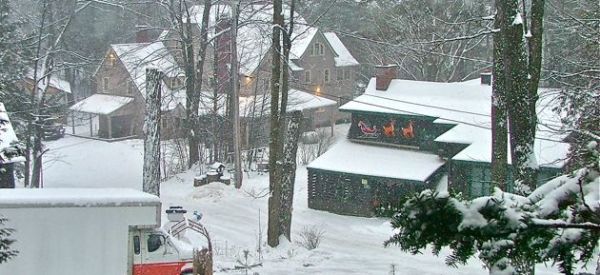
My family – the Swetts – arrived in Saranac Lake, at the end of the third day of the new year in 1957, in a small caravan, in the dead of night, at the height of a blizzard.

My father drove a truck loaded with furniture and appliances, with my brother David and my sister Helen sitting next to him in the cab, while my mother, who was 8 ½ months pregnant, drove the family car, loaded with clothes and household items, leaving barely enough room for me on the passenger side of the front seat, where I was stationed with orders to hold onto my over-excited 15-month-old brother Alfred.

Actually, I hardly held him. I spent most of our eight-hour journey from Longmeadow, Massachusetts, grasping at him as he maintained perpetual motion, climbing me, attempting to sit on mom’s non-existent lap, rolling the windows down and wailing to be allowed out of the car. We drove slowly over the snowy country roads – the interstates were rude forerunners of what they are today – and he did not settle down until after we had stopped to eat at a diner in Rutledge, Vermont, when he fell asleep in my arms. For the last two hours of the trip, I was in increasing pain, terrified to move or to do anything more strenuous than lightly breathe, lest my nightmare be reawakened.

The falling snow became blinding just as we reached the village, and when we got to at the foot of the mile-long hill that would take us to our rented home atop Rockledge Road, we stopped to reconnoiter and emerged from the cars, stiff and sore and, immediately, most horribly cold.   Colder than any of us had ever been before.

Years later, my mother would regularly quip, “Yes, living in Saranac Lake, we have two seasons: winter and the 4th of July.” Which may have been hyperbole, but it rings true as I remember that moment.

Standing there where East Pine and Pine Streets meet, getting our first feel of our new home, all I could think was that we couldn’t live there. It was just too, too cold.

Truth is – and you can look this up – the temperatures officially reached 36o below zero that night, and WNBZ Radio reported the next morning that in our corner of the town, high on our hill overlooking Moody Pond in the shadow of venerable Mount Baker, it was actually as much as ten degrees colder than the official report.90387775

The relief of being outdoors after what seemed like endless hours’ sitting in a cramped, smelly vehicle, wore off in an instant. What lay ahead felt daunting. The hill was icy, and the snow was relentless; in order to assess the best way to navigate his way up the hill, Dad had to walk up the hill a ways to find a route in, and still he wasn’t sure what surrounded him. Both vehicles’ motors cranked noisily, struggling to stay alive, and I could feel my toes and fingers, lips and nose separating themselves from my body.

My father, holding my barefoot 3-year-old sister Helen in his arms, decided to look in the glove compartment for a flashlight and absent-mindedly put the little girl down in the snow. She shrieked, and I picked her up and put her back in the car, all the time fighting back tears of absolute terror.

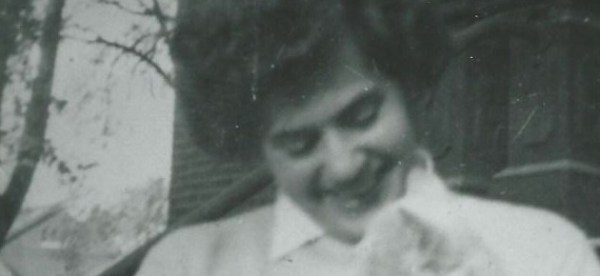
Drained from the trip and weary of crying children, my mother looked at me and shook her head disparagingly. Reading my expression, she said, “It’ll be all right. You’ll learn to ski. You’ll wear winter clothing. We will be fine.” And with that she got back into the driver’s seat and waited for my father to lead the way to the end of our journey at the top of the driveway.

Sure enough, on the second day in our new house, because we were still out of school for winter vacation, we all took a break from the unpacking and returned to that long, steep road, this time with a pair of skis Mom had found in the basement. They were old style wooden skis with leather bindings, which required no special boots. “Today,” she had announced at breakfast. “You will have your first ski lesson.” The other kids were delighted to engage in a new sport, but I was more interested to know where she had learned such a thing. And I couldn’t help noticing that at the moment she made the announcement, she glowed with a youthful exuberance I hardly recognized.

“How do you know how to ski, Mommy?” I asked her.

“I skied a lot in my childhood. A lot.”

“In Vienna?” I asked incredulously.

“Not exactly,” she replied. “But not far away. In the Alps, a place very much like where we are now.

We took turns skiing down the hill, hiking back up, laughing yelling to one another across the white silence. At some point, a woman emerged from a house in the middle of the hill. She walked up to my mother, and they began to talk, and in a few minutes, they embraced and lapsed into German. “Children,” my mother called excitedly. “Come met our neighbor Mrs. Koop.”14-3143.1L

The Koops, who owned Temmings Jewelry, were from Switzerland; they spoke a German dialect I had a very hard time understanding, but my mother was clearly in her element. She had found a home. Which made the town feel homey to us as well. By the end of the day we had met most of the people on Rockledge Road; Bibbe Shapiro and I established a bond: we both loved theater.

The following month, in the building that now houses the administrative offices of North Country Community College, my mother gave birth to Sarah, the first of my three siblings born in Saranac Lake General Hospital. We watched the Winter Carnival fireworks from the hospital parking lot along with fellow townspeople, who were there either to visit hospitalized relatives and friends or to watch the spectacle from a distance. No one treated us as outsiders. We felt like locals.

School was a difficult adjustment, but in spring, I had a fight on the railroad tracks with Irene Walker, and that established me as an appropriate friend. The Whitson brothers let me cut through their path when I walked down to meet her to throw stones into Moody Pond, and through girl scouts, I met Suzy Hanks and Gail Gallagher. As members at the Methodist Church, we became part of the community. When John Pedroni soaked my blonde braids in black India ink, I wasn’t even angry because it was clear that what had transpired was more an act of initiation and welcome than anything else.

Clearly, as cold as the winter might be, the people of this little town were some of the warmest on earth.

We became well known in certain sectors of the community. Indeed, there was no missing us. Every Sunday, for example, with the consistency of a Swiss train, we arrived at the First United Methodist Church; but unlike that Swiss train, we were never on time. It was our habit to arrive ten to fifteen minutes after the minister made his welcoming address, just as the choir was putting away hymnals, the congregation rifling through prayer books looking for the Apostles Creed, and our entrance was grand. Eventually, there were nine of us, and we were never inconspicuous, marching down the aisle behind my parents like Biblical offspring – Carla, David, Helen, Alfred, Elizabeth and John.

Then, one snowy day in 1963, I was waiting for my mother to retrieve me from a singing lesson in Lake Clear when Marion Greibsch drove up instead. “Your mother’s been in a bit of an accident,” she told me kindly, and then she drove me home. That bit of an accident imprisoned my mother in a series of operations and casts for the next year and a half, and it was during that time that we truly understood how entirely we had been adopted as Saranac Lakers.

Marion must have made the first phone calls. Because even before the radio reported the news of the accident, food began to arrive at the door. One by one the people of Saranac Lake came by and left us casseroles, salads, breads, desserts; for the next four months we had more food than we knew what to do with. Every day someone called, every day someone stopped by. “We just want to know how your mom is today,” that someone would say cheerily. “And do you need anything?”

Of course, being 16, I simultaneously recognized the enormity of the charity being proffered and resented the fishbowl it placed me in. But looking back, I can now fully appreciate the care, the affection, even the love that prompted those gifts.

And there were so many gifts over the years. Gifts I have never acknowledged, gifts from so many people that to name any of them would be to insult the few I did not name.   Suffice it to say that I’ve been around a few blocks by now, and I find it absolutely mind boggling how very much I took away from Saranac Lake fifty plus years ago.

I received a high school education that was nonpareil; I learned the art of self reliance while being nurtured in a vibrant example of communal interdependence that taught me the importance of collaboration. I may not have been popular, but I always knew I was respected, and today, all these years later, several of my classmates still number among my most trusted friends. Though it was far from perfect – black clouds hover over even the most idyllic of retreats – mine was a charmed life, and I am only embarrassed that it has taken me this long to proclaim my appreciation.

So please let me take this moment and these columns of space to acknowledge the giving, gracious people of Saranac Lake. The doctors, teachers, classmates, neighbors, librarians, shopkeepers, parents, custodians, police people, administrators, clergy, service providers . . . the caring folk who peopled this village that raised me.

ce3adecc6429cf0c6769a679c30f0d56

And allow me to simply say thank you.

Sincerely,

Carla Swett Stockton

SLHS ‘65


Northern Exposure

What I remember most about being young is how much older I was then than I am now. There was a supercilious seriousness about me then, a clarity I could never recapture.

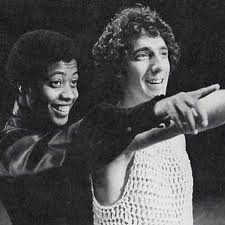
My best friend in the 1960’s was Northern Calloway, who resided with his family in Harlem as I did with mine in Queens, but we spent most of our time with theater friends in the Village, where we felt the safest. Mixed race friendships were less unusual in the Village then than in Harlem or in Queens.young northern

You might recognize Northern. He was in the original Sesame Street cast, as Mr. Hooper’s assistant David, and he understudied Ben Vereen as the Leading Player in Pippin before he took the role to London. Three months younger than I, Northern had absolute certainty that he was right. Always. About everything.
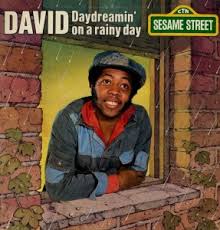
SesameStreetDavid  “You and I might love each other now,” he’d tell me. “But you know some day, we may have to take sides.” We had heard Malcolm X speak just months before the assassination, and he insisted that I regard X with the same reverence he had for the man.

“He’s a beautiful speaker,” I told Northern. “And I admire his courage. But it’s not that black and white. Dr. King –“

Northern was exasperated when I spoke of MLK. “Dr. King’s a delusion,” he’d proclaim with all his youthful self-righteousness. “And you’ve chosen exactly the right words. It’s ALL about black and white. King makes it seem like you and I could wind up on the same side in a race war, but Malcolm tells it like it is. There’s y’all and there’s us, and someday I might have to side against you. I might even have to kill you.”

The notion terrified me. The year before a kid named James Powell had been shot by an off-duty policeman, and all-out riots erupted first in Harlem and then in Bed-Stuy. Before long, the terror spread as far from the city as Rochester, and Governor Rockefeller called out the National Guard. I had seen the ugliness of the mobs, had felt the hatred on both sides, and I did not want to have to choose one or the other. In my estimation, there was right and wrong on both sides, and I envisioned a world in which each side could find ways to appease the other, agree on compromises.

“You be fool,” Northern told me then, lapsing into his very cultured version of street lingo. “But it ain’t your fault. You not Black. I ain’t white. We ain’t never gon’ see things the same. You cannot know what my life is like.”

Of course I disagreed, and I was certain he was wrong. I was an actor, a writer; I had a reputation for being overly empathic. Besides, even though he lived in Harlem, he wasn’t really from that culture either. Raised by his Cambridge-educated Jamaican grandfather and his school teacher mother, Northern’s background seemed closer to my own jumble of immigrant cultures than to those of the people I saw when I visited him. It never occurred to me at age 15 that he meant he was Black, and I was White, and that was that. I had a penchant for overlooking the obvious.

But I couldn’t ignore it forever. In 1966, I needed to move from Queens to Manhattan, and one day I found a listing in the Village Voice for a place I knew I just had to see. “Dig it,” I told Northern. “It’s, like, a studio. On the ground floor. It’s got a garden. A hundred a month.” “Where?” Northern inquired. “Houston Street, just east of Elizabeth.” Northern was audibly indignant. “You kidding me? That’s Little Italy. You wanna live there where all the racists live?” I refused to believe him and convinced him to go with me to look.LittleItaly
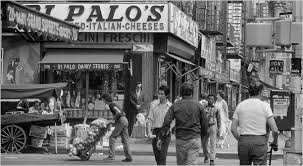
The apartment was everything the ad suggested it could be. Sunny, clean, newly renovated. The landlord told me that he paid his dues so no one messed with him. I had no idea what that meant, but I wanted to live there. Again Northern scoffed. “You wanna live with the Mob? You think so? You gon’ be sorry, girl!”

I was devastated when the landlord called me to say that while I seemed like a nice kid to him, he couldn’t be so sure about my friends if they were all like the thug who was with me when I looked.

A thug? Northern? Whose clipped, almost British accent made this landlord sound like a caricature of the dumb wop? I wanted to argue, but I was too flabbergasted to say anything. Instead I hung up the phone and dialed Northern. “I told you you was trippin’,” he laughed. “Niggers are not welcome in Little Italy. You should ’a’ listened to me in the first place.”

I hated when he was right.Pippin
Northern hated cops. I didn’t. I had had two experiences with New York cops that made me love them. The first was when my friend Norma, a single mom, eking out her existence working with me as a proofreader in a management counseling firm, returned home with her 10-yr-old daughter one night to find their apartment had been ransacked. Norma didn’t own anything worth stealing, but her daughter owned a jar of coins –quarters, dimes and nickels she’d been saving for eight of her ten years– which was the only item taken from the apartment. The investigating officer felt terrible for the little girl and asked her how much she had saved. “I dunno,” she replied. “The last time I counted, I had 47 dollars and 27 cents. That was a few weeks ago.” The man reached into his pocket and handed the little girl a wad of bills. “Put these away,” he said, patting her head. “And don’t be spendin’ it till Christmas.”

Northern spat on the ground as I relayed the story while we crossed through Rockefeller Center. “And you think that proves they’re nice guys?” I said all it proved was that all cops were not pigs. “Well,” he scoffed. “If she weren’t white, I bet the outcome would‘ve been very different.” I ignored him.

The second time a cop actually saved me from myself.

In those days there was a popular product called Cupid’s Quiver, a scented, flavored douche that was sold in sets of twelve small plastic vials packed neatly into a rectangular acrylic box, the perfect place to keep a stash. Perfectly rolled doobies nestled comfortably into the spaces intended for the vials.

One fine Saturday night, making a delivery for my dealer cousin to the Village, I fell in the subway station. My purse opened to spew forth its contents, including a Quiver. Twelve charming marijuana joints tumbled onto the concrete floor. In a panic, I scrambled to scoop them back into their little pink box, when suddenly, crouching next to me was a NYC Transit cop. Visions of rock piles and leg chains danced in my head, and I could hear strains of NobodyknowsthetroubleIseen playing behind my eyes, when the cop handed me four joints he’d already collected. “Lemme help you with these, little lady,” he crooned. Ordinarily, I allowed no one to talk to me like that, but under the circumstances I held my tongue.

“Yeah,” snapped Northern when I told him about the incident. “May I remind you that you ain’t no black man?” This time I knew he was right, and I thanked my lucky stars.

In the end, Northern and I parted company over a difference in perception that had nothing to do with race but had everything to do with how driven we were by the politics of our generation.

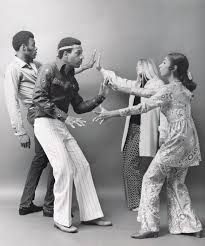
In 1969, Northern was headlining in an off- Broadway play called Salvation, an anti-war musical, about a Baptist kid who becomes a guru for the under-30’s crowd, delivering a messianic message à la Timothy Leary. That was the same year I went back to school at Columbia, and a very close friend of mine from high school, deployed to Vietnam, stopped in to see me on his way to Saigon.

My friend and I both wanted to see Salvation, and when I asked Northern if he could get comps, he arranged for producers’ seats, the best in the house. There was one hitch: my friend had brought nothing to wear but his uniforms. We were conspicuous in that audience, to say the least.Salvationcover

During the show, whenever the politics got hot on stage, some cast member would point to my friend sitting next to me and make ever-worsening references to the “buzz-head blondie” in the third row. I was ashamed – not of my friend but of the cast.   How dare they judge him and stick him out for his choice when he was there to celebrate their choices?

After the show, Northern sent word that he couldn’t have dinner with us as planned. I got the message loud and clear, and I didn’t see him for a month. He didn’t call me, and I didn’t call him. Then one day I was walking near the fountain in Washington Square Park when I heard my name. The voice was unmistakable.

“Hi, Northern.”salvationcast
“Hi yourself, white girl.” We hugged, kissed, held each other for far longer than a simple hello would warrant. Then we just stood there, looking at each other, holding hands, not having anything to say.

“I’m thinking it’s time to forgive you,” he said finally.

“You? Forgive me?”

“Yeah. For bringing that fascist Clyde to the show.” Fascist Clyde meant stupid storm trooper.

“You don’t know anything about him, and you –“

“ He was wearing a war machine uniform. Where’s your Lysistrata passion?”

“He knows how I feel, I don’t sleep with him, and he has the right to maintain his own point of view. It’s not up to me to legislate beliefs for any of my friends.”

Northern squeezed his eyebrows together, and he nodded ponderously. Then he shrugged and pulled his jacket lapels up around his neck. “Well, I guess that’s where we are different,” he said. “I do.”

He turned and walked away, and that was the last time I ever saw Northern Jesse James Calloway. Years later, as suburban teacher, I was on a bus crossing through Harlem en route from Connecticut to the Asia Society, when a scrap of newspaper hit the bus windshield. The driver got out and brought the offending piece of paper, a page from the Daily News, inside. For some reason, I turned the page over, and there, in black and white, the headline read, “Actor Northern Calloway Dead at 41.”

It was a bizarre moment, like the result of divine intervention, too surreal to have happened. But it did.

I think about Northern a lot lately. I’m the one living in Harlem now. But like the old adage says, “The more things change –“

The other day I was on a bus, headed downtown, and I happened to eavesdrop on a conversation between a young Asian man and a tall, African-American woman. They were arguing about the Eric Garner decision.

“It’s complicated,” he said. “There’s so much we don’t know.”

“Yeah,” she agreed. “And there’s too much we do know. The cops just –“

“I dunno,” the young man argued. “I don’t think it’s so clearly black and white.”

“That’s exactly what it is,” said the girl, laughing a little. “Simply put, there’s y’all and there’s us, and someday I’m gonna have to take a side.”

I could swear I heard her say then, “I may even have to kill you.”


Border Wars on the Mind

I perceive Gaza these days through a Texas-tempered lens.  Watching the hateful  citizenry of the wealthiest country in the world scream obscenities at indigent waifs displaced by violence and poverty, instructing them to go back to where they come from, I am reminded of stories my mother told about her arrival in Kingston just before WWII.  My mother was no waif, and poverty was not the impetus for her flight to the Land of Opportunity, but her stories inevitably lead me all the way to Gaza.

Mom’s family arrived without their patriarch in April, 1939, toward the end of what proved to be her junior year in high school.   She surprised herself by passing the English regents exam in May and so began the process of applying to college.  Her senior year felt friendless to her; classmates jeered her, mocked her accent.  Girls in the lunch room turned chairs over so she could not sit with them, and in gym class, they threw dirty socks and wet towels at her.  Teachers derided her, telling her they were unable to understand her when she spoke, deliberately refusing to call on her in class. The entire community – especially the entrenched first-and-second generation descendants of immigrants– treated her and her siblings as interlopers, avoiding them all at synagogue and football games alike, attempting to rebuff her brother’s attempts to join the Boy Scouts, even suggesting on numerous occasions that the lot of them return to their “own country.”

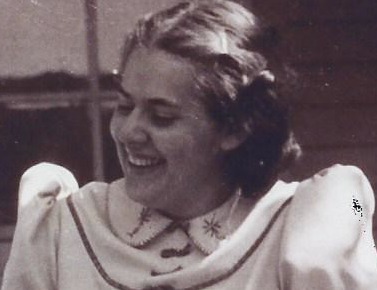
Fresh off the boat, Charlotte Robinson, my mother,  was 16 in 1939.

Fresh off the boat, Charlotte Robinson, my mother, turned 16 in 1939.

Of course, they owned no country any more than those homeless children seeking asylum at our Southwest borders do today.  Born in Austria during a time when Jews were highly respected, my mother reached her teens at precisely the time when Jews were successfully relegated to the status of lice.  Her passport, any European’s primary form of identification, was stamped Israelische, marking her as an outsider, a member of the tribe of Israel.  She was not Austrian.

Which was initially why she joined the Jabotinsky youth, planned to leave the vitriolic land of her birth to claim her rightful home in Eretz Isroel.

My grandfather put a stop to that.  “You think I’ll let you leave the Nazis only to throw yourself into the hands of the Arabs who want you dead?  Besides,” he told her, “the Jews cannot own the ‘promised land because the Europeans will never let it go.  You will come with us to America.’”

She was only 15; she acquiesced.  Ironically, she emigrated without her father.  In a move that may have helped to seal the fate of the Middle East, the United States closed its borders to Jews like my grandfather, who were born in countries that seemed somehow un-Caucasian, such as Poland, and were frantically seeking refuge under Lady Liberty’s lamp.  While my mother endured the slurs of her classmates, her father lived in Havana, working to become a Cuban citizen who might then be allowed to enter the United States.

America has never really welcomed the huddled masses.  At the end of WWII, American money –much of it from second and third generation Americans protecting their American territory from newcomers to these shores – veritably gushed in support of the partition of Israel, over the protestations of the local Palestinians.  It was more expedient to force the displacement of the Palestinians, to fuel the hatred of neighboring Arab countries, who wanted nothing to do with either Palestinians or Jews, than to profer better solutions to a problem to which they had been catalysts in the first place.

Over the arc of time, the European imperialists and Americans had imposed arbitrary boundaries across the Middle East, comporting themselves like puppet masters overseeing a bloody marionette show for their own entertainment.  In much the same way the British and the French turned Iroquois against Algonquin in the so-called French and Indian War by arming the natives and rewarding their aggression, the Western world played the locals off against one another, all over the Middle East.  Today the forces seem to have raised the stakes,  and they produce animatronic battles between Palestinian and Israelis (and between Suni And Shiite Muslims elsewhere), doling out money to each side so that the show runners can sit back and watch both sides exchange bombardments.   In the present Gaza conflagration, the U.S. has steadfastly encouraged the warring factions to go at one another, financing a bloodier extension of the age-old Jacob vs Esau, Isaac vs Ishmael rivalries.  They have sent millions of dollars to Hamas for the building of missile tunnels; and they have sent more millions of dollars to Israel for the building of The Dome.  The combatants in Gaza are egged on, like contestants in an obscene reality television show, while the odds are alternately stacked for one side or the other.

Unfortunately, each side is fueled by the deeply religious conviction that that side has a God-given right to the land, was placed there by divine ordinance.  Religion is an immovable feast.

But even were the religious obstinacy absent, neither side has anywhere else to go. The two peoples are caught in a battle for survival, and until one side finally trusts the other enough to make concessions, they’ll be unable to settle things.  So long as Hamas promises to eradicate the Land of Israel by any means possible, Israel cannot trust them to honor boundaries; so long as Israel won’t concede the West Bank, which Israel considers essential to guarding against eradication, Hamas won’t accept compromise.

Which leaves them both unable to stop fighting.  If there were another place to create a homeland; if, for example, the US offered a chunk of Arizona or Utah – where vast open areas of desert beg to be developed – as an alternate place to establish Israel or Palestine, would one group exit and start over?  We’ll never know.  Because both groups are as unwelcome in their diaspora as the children being sent back to South and Central America are in theirs.  So neither side is able to let go of their claim to the land of Abraham, their common ancestor.  They’re orphans, hated universally, shunned by all.

Somewhere I imagine closed circuit television cameras recording the action, playing back the videos in some perverse gambling casino, where bets are flying, emirs and pashas and captains of industry and Wall Street moguls and all kinds of professional gamblers are getting rich placing bets on how many Palestinian children will die in how much time and how many weeks Israeli children can hold out in their giant dome before it’s their turn to be destroyed.

It’s a vicious storm, from which nobody is safe.

La Misérable

Amid the recent fanfare Howard Schultz’s adroit publicists have stirred up around Starbucks’ new “We Pay for College” policy, many former critics of the mega-corporation are now waxing downright sycophantic.  Their mission statement – “To inspire and nurture the human spirit – one person, one cup, one neighborhood at a time” – has become a sign of genuine hope for a downtrodden nation.  Youngsters can hope for a better future by signing on with Starbucks, a life without debt, a life where a college education is as simply acquired as working a few hours each week for the Starbuck benefactors then going home and logging on to Arizona State University’s online classroom.  Raise a cup of Joe to the All Powerful Schultz.

But make no mistake, if you work for Starbucks, and if you don’t want to be ruined in the workplace, you must tread carefully.  And if your manager doesn’t like you, even if your manager is incompetent and vindictive, you may be screwed even if you are careful.  But one thing is clear: there are no mistakes that might not be punishable by banishment from Starbucks, and the Corporation is at liberty to deny you so much as a second chance. My beloved daughter Erin knows firsthand how easily a “partner” can be betrayed.

Erin took a job with the Astor Street Starbucks in 1997, when she was still a student at NYU.  For four years, she worked for the Corporation, enjoying the work which allowed her to balance her efforts to attend auditions, to study her craft, and to feel useful in the workplace.  She was a cheerleader for Starbucks, and her managers universally loved her.

As she moved about, Erin applied for and easily achieved transfers to other locations.  She worked for a long time in the original Times Square store, which did not have bathrooms or seating but did have long lines and a high level of stress.  She excelled as a barista there, and when she moved back to her family home upstate, the company gladly offered her a transfer to her hometown Starbucks.

Still attending auditions in The City, still attending classes at Second City and the like, Erin applied for a shift supervisor position, and the promotion was automatically granted.  For over a year, she worked in that capacity, and she attracted a following of local regulars, who set their Starbucks visits by when she was on duty.  She, her co-workers, her fellow shift supervisors, and her manager got along famously, and they all agreed that they had the best Starbucks team in the country.  Andrew, the Store Manager, averred that they had, to his estimation, the best working team of any kind anywhere.

But Andrew completed his MBA and left Starbucks to take an administrative position in another company.  The regional office rushed into hiring JoEllen, who had recently joined Starbucks from a national clothing chain, and she was vocal from the start about how much she disliked the coffee business.  Her dissatisfaction with her new responsibilities were evident to everyone, but she made Erin her special project.

For reasons Erin was not clear about, JoEllen went out of her way to schedule Erin at exactly the times she requested that she not be put on.  Erin loved to open, but she requested that two days a week, the mornings after her late night classes in New York, she be allowed to work later or to be off.  JoEllen persisted in putting Erin on, and Erin went to work without complaint.  But because Erin was  very critical of everything Erin did, Erin was constantly terrified that she would make a mistake.  Self-fulfilling prophesy.

One morning, after returning from New York in the wee hours, Erin failed to hear her alarm.  When she awoke and realized she was late, she rushed to the store and opened ten minutes late.  She was terrified of JoEllen’s rebuke, as the manager had been increasingly hostile and demeaning in recent days.  She jumped the clock, changed the time, and she signed in on time.

JoEllen did discover the cover-up – a customer had complained that the store had never opened late, and she could not understand why it did so on this one day – and she summarily fired Erin.  “You might have well as dipped your hand into the till and stolen money from the company,” she told Erin.

Erin acknowledged her error.  She tearfully apologized, begged forgiveness, even got down on her knees in wailing supplication.  “I was only trying to stay out of trouble,” she said later.  “I never intended to steal from Starbucks.”  But JoEllen was obdurate.  The firing stood.  She had stolen the equivalent of $.06 from the corporation.

Contrite and miserable for her theft, Erin appealed to her regional manager.  The regional manager apologized to Erin, acknowledged the fact that Erin had had a perfect record for the five years she had worked for Starbucks, congratulated her on her accomplishments as a barista and a shift supervisor, but she told Erin that she was powerless to do anything to reverse the firing.  “The company has a strict policy that Managers have control of their stores, and to that end, the company will uphold any managerial decision, especially a firing for cause.  This is considered a theft.”

Five years of Erin’s work history became unusable.  No one wants to hire a Starbucks reject, but no one will hire a woman with experience-empty years on her resume.    Erin could not find a job.  So she appealed to Corporate Headquarters.

By this time, JoEllen had been fired.  In fact, she was fired just weeks after Erin was leg go.  JoEllen was actually skimming her store’s intake.  So, when Erin turned to the people at Corporate, she included that morsel of information in her letter.

Again, she received a glowing thank you for your service, but you are screwed.  After all, you did steal from Starbucks. We cannot take you back.

The world has not spun evenly for Erin since that day.  She cannot find a job, and she faces enormous, endlessly increasing student debt.  She had to drop out of school entirely because she could no longer afford to be there, and not having the degree has hurt her as well.

“I was stupid,” she says now.  “I never denied that.  But I didn’t do anything malicious, and even an ex-convict can get a job with Starbucks when h/she gets out.  I feel like a Jeanne Valjean! Shouldn’t there be some kind of statue of limitations on how long I have to suffer for this?”

imgres


Bob Ziering: Portrait of the Artist as an Old(er) Man (republished by permission of Catch & Release, The Columbia Journal Online)

Bob P'town “There aren’t a lot of restaurants like this one left in town,” Bob Ziering says, leaning over his lunch.   A glint appears in his eye as he quips in a spot-on Eastern European/Yiddish accent, “So, you think maybe we gonna eat?”  Of course I laugh.  This is how Bobby dispels his basic disdain for talking about himself, and I have asked him some very personal questions about his life and his art.  Whenever he wants to deflect his reluctance to talk, he slips into one of a hundred accents. He has chosen to meet in the Piccolo Café, an intimate little Italian restaurant on the upper west side, where Bobby has lived since the early ‘60’s.  Like Bobby, who was born in 1932, the Piccolo, established in Italy in 1938, has at once an old school charm and a hip vivacity. Piccolo might look like a little, old café, but there’s a robust energy here, and it’s a good foil for Bobby, who looks like he might be getting on in years until he starts to talk – or sing or paint – and you realize he’s younger than any of the hip upper west siders who frequent the Piccolo. I met Bob not long after he moved to this community.  He was, in those days, as he remains today in a more mature way, remarkably handsome, extraordinarily entertaining, unerringly funny. My Uncle Fred, a loud, opinionated Genovese, introduced us at one of the weekly open houses he and my aunt hosted, where copious amounts of delectable food preceded equal servings of delicious music played live or selected from his extensive record collection.  Fred had met Bob through a gay friend, and he loved to point out to us that while he was definitely not attracted to men, if he were, Bobby would be the only man he could ever love. Even then, I understood why. According to Uncle Fred, Bobby sang like Caruso or Bjørling, painted like Rembrandt or Caravaggio and did imitations like Rich Little.  Well, in those days they were imitations like Rich Little; today he does imitations more like a geriatric Jimmy Fallon. In any case, Uncle Fred knew whereof he spoke. “He’s a true Renaissance Man,” Fred would declare in a rasping voice that no one could mimic as well as Bob Ziering.  “A monster talent.” “I’m 80 years old,” Bobby says now.  “I’ve had a great career as an illustrator, I’ve traveled and sung in some wonderful operas.  But no one knows who I really am.  I am working to re-invent myself, and I want to be noticed. I’m still working, still creating, and you’re never too old be discovered.  I just want to be seen!” In truth, Bob has been noticed.  Is still being noticed.  He had a long and storied career as an illustrator, his works featured in advertisements, on book jackets, on posters at the Metropolitan Opera, in The New York Times, all over the place.  And all the while he was working – freelancing –he took time to represent other artists, to study music and voice and sing in the (now defunct) Amato Opera Company, among others. Along the way, he found time to establish himself as a collector: Bob Ziering owns an impressive array of African tribal art, Enrico Caruso memorabilia, classical opera recordings.  Just as impressive is that as busy as Bobby has been, he has never been too busy for friendship, and he has managed to create lifelong friendships that attest to the depth of the man’s humanness.  Ziering is a man who simply commands attention and is anything but obscure. It is true that he has not been very masterful at self-promotion.   “I want to be reborn, “ he says with a laugh; “but I am easily distracted by my many fascinating projects.” The Kiss This is a man who, above all else, communes with the world through his work, and his work is his first love.  He has, in recent years, produced a major body of work, and the subjects are as diverse as the wonders that stimulate Ziering’s imagination. Nowadays, Bob’s work is colorful, expansive; it succeeds the elegantly drawn illustrations that provided Bob with a comfortable income for many years.  At their best,  the illustrations are tributes to Ziering’s profound observations, his remarkable insights, his ability to capture the essence of an idea or a character in the simple but dynamic assembly of lines drawn with pen and ink, and they are reminders of his salient influencers, the likes of Rembrandt van Rijn, Francis Bacon, J.M.W.Turner.  Ziering’s illustrations caught figures in motion and projected whole stories in single images.  http://www.illustrationsource.com/stock/artist/bob-ziering// Bed But the newer work, the work of the past twenty years since he left illustrating, comprise the body of achievement Bob is proudest of.   In the new art, he is able to explore his emotions – universal human emotions – by telling visual tales, which he finds in his fellow humans, in animals, in burned piers and discarded chairs alike. “This woik you should see, dahling,” he whispers slyly, channeling his inner yenta.  “The woik everyone should see.” Silverback Ziering is a serious artist, interested in very serious subjects.  In the 1990’s, during a time of great personal loss, Bob was drawn to the plight of the Mountain Gorilla.  He became obsessed with the idea that mankind would soon render these magnificent beasts extinct. My Future Is In Your Hands In an interview with Nicholas Polities, of Print Magazine, Ziering explained, “The deep feeling of hurt I experienced seemed to fire my passion for expressing loss in terms of the species. . . . Without losing focus on the plight of the gorillas, I was also using it as a metaphor for universal themes of loss, cruelty, inhumanity, and death.”  He spent fifteen years researching, examining, compiling samples from gorilla life, from the foods they ingested and the environments they inhabited to the layering of their skin and the color of their eyes.  He worked to depict them as the complex organisms they are, to dispel the stereotype of the angry, beastly gorilla loner and to show what gentle, social animals they really are.  But he did not flinch from also honestly illustrating moments of aggression and retaliation. Reaching The series is a remarkable body of work and had exhibitions at the Marywood University Art Gallery in Scranton, PA, at the Lincoln Park Zoo in Chicago, and at the Central Park Zoo in New York City.  As the Marywood catalog described, the “skillfully rendered images of the majestic and imperiled Mountain Gorilla underscore their endangerment. . . . The artwork is descriptive, suggestive and bold. . .showing subjects that have a poignant familiarity.” So Close The waiter in the Piccolo brings us our soy caffe ‘l ‘attes, and Bob cannot resist the urge to slip back into his accented alter ego.  “You gonna write about my sexy stuff?”  I laugh.  Discussion of some of his newer work still make him the slightest bit uncomfortable. As a child of the pre-boomer generation, Bob Ziering has came late to an acceptance of himself as a sexual being, and he had to learn to accept himself as a gay man, a journey he has given beautifully textured life in his artistically erotic chalk drawings of people on the verge of lovemaking, figures in intimate repose, etc., which have been frequently exhibited by the Leslie Lohman Gallery; three pages Ziering’s work are permanently on display on their website (http://www.leslielohman.org/).   The work is deeply affecting, but it never verges on pornography.   Rather, in the tradition of the great masters, Bob conveys a life seething with sensual stimulation that insinuates sexuality and tantalizes without exploitive titillation. Bob draws his face into a kind of exaggerated squint.  “You look too serious.  Vot’s so serious? “  I tell him that I am just concentrating on hearing the details, understanding how he himself perceives his work, and I am probably responding to the expression on his own face.  “Ya,” he quips now in a mock Dutch accent.  “The face tells all.” It was Rembrandt’s face that inspired another recent series.  Fascinated by the variety of countenances, the unabashed aging in Rembrandt’s self-portraits, Ziering created a series called Rembrandt’s Face, his own interpretations of the artist’s interpretations of self.  It’s a startlingly revealing series, one that illuminates both Bob and his subject in surprising ways.  When I spoke earlier to Miki Marcu, an old friend of Ziering’s, about his work, and she chose the Rembrandt series as one she especially adored. “He decided on REMBRANDT?” She exclaimed.  “What a jump.  What a facility he has as an artist.” Rembrandt Not content to express himself through the animate realm, Bob has looked to what other artists would call still life for two other major series: The Burnt Pier, which studies the thrumming vitality of an abandoned pier on the Hudson near Bob’s UWS home, and the Blue Chair, in which a discarded wicker-back chair veritably dances, reverberating with color and motion. Burning Pier Bob lapses into seriousness when he talks about the medium in which he works.  “I think the biggest thing I have done as an artist since I left the illustration racket is that I am working in color.  I deliberately sought to transition into color, but I wasn’t comfortable working with a paintbrush.   Then Alan gave me a set of pastels one year, and I have found that they have freed all my spirits, which gave me the momentum I needed to really immerse myself into the life of my art. “ Pink Mist Alan is Alan Lawson, a fellow artist, who has been with Ziering in a steadfast, ever-evolving friendship for thirty-three years.  “Early on, he showed me a copy of Vermeer’s Lady with the Red Hat he had done in pastels, and it was one of the most beautiful things I had ever seen . . . .  He had done it when he was still a kid of maybe 17 . . . . He had not touched pastels since then.  I thought to myself that this was the medium that could bridge his transition from being a draw-er to becoming a painter.  So for Christmas one year I gave him a box of pastels, and what he can do with those pastels is just beyond description.  He finds layers of color, dynamism of scenes that I’ve rarely seen done in any medium.” Sitting in the restaurant, Bob sighs.  “I expected to do so much with that work.” “You’re still working,” I protest. “But nothing has changed.  The gorilla  — along with so many animals! — grows closer to extinction every day, and . . . .” His voice trails off, and he sighs,  “There is so much more to do.  I may do things a little more slowly than I used to, but I can still do so much!” Bob at Twighlight Everyone who knows Bob says it is, above all, passion that defines the man, and it is passion that drives the artist, keeps him young. Lawson, a painter and scenic charge for both film and theater, came to NY to attend school in 1979 and took a job at the Metropolitan Museum of Art, where he met Ziering in 1981.  He says that it’s always been hard to keep up with the older man.  “When I met him, I was just in my second year at Pratt, and here he was this seasoned native New Yorker, so knowledgeable, so passionate.  He was passionate about everything.   Talk to him about his tribal art collection, his record collection, his own work, and so many things . . . things that I had never heard of.   He introduced me to so much. . . . .And I have to say, his passion today is the same as it was thirty-three years ago.   His passions run very deep, they’re very strong, and he has an amazing vitality.  Boundless.” Ziering credits his happy Brooklyn childhood for his zest for life. Lapsing into Yiddish tones again, he tells me he was an aesthetically astute child, who loved the Friday night family food extravaganzas at his father’s parents’ home, in the company of all his exuberantly musical and artistic relatives, the first generation born in New York City, USA.   He had a great voice, and he loved to sing, but even then he knew he would be a visual artist.  “My mother told me she believed I was already drawing in the womb, that she felt movement that was more akin to the scratching of a pen than the kicking most babies inflict on their mothers.”    She felt compelled from the very start to introduce him to the cornucopia of visual art available to anyone growing up in Brooklyn, and he cherished the time he spent with her visiting museums and galleries, his favorite destinations. “You’d think I’d wanna go to Ebbets Field or play stick ball,” Ziering laughs. “I was a lousy baseball player . . . but wonderful gallery goer, at a very early age!”  His parents and his friends alike admired his talent, and he was fueled by their respect.  Yet his love for the work was always his strongest motivating force.  “I couldn’t wait,” he says; “to get to my studio in the finished basement, back to my drawing and painting.” “I enjoyed being with the other kids, but I loved being with adults, and I loved to show off.  The other kids didn’t seem to mind.  They knew I would play for a finite amount of time, and then I would retreat to my work.” Joyce Hellman, a classmate of Bob’s in the High School of Music and Art, Class of 1950, remembers Bob as a warm, loving, gifted but extraordinarily disciplined teenager.  “I was  music major, so we didn’t become close, “ she says, “Till years and years after graduation, after our 35th reunion, but everyone knew who Bob was.  We knew he could sing – oh, how he could sing – and we knew he could dance, but we also knew he loved to work.  Couldn’t seem to get enough of it.” Lawson concurs.  “Bob’s one true love is his art.  He has the good fortune of having his studio right next to his bedroom, so he can get up in the morning and be right at the heart of where he needs to be to do his work.   But you know, that takes a lot of discipline.  I’ve had it both ways, had a studio in my home and a studio away, and each presents a different scenario.  I mean, to get up every day and to face first thing what you did the day before can be challenging.  You’re with it 24/7.   Then too, it can be too easy.  Sometimes people need the effort of getting to somewhere to make them work.  That’s not Bob.  He’s an incredibly disciplined person.“ I ask Bob if he thinks he has this drive, the kind that sets the artist apart from the dabbler.   “Yes,” he asserts.   “First thing, every day, I go for a little walk, get my coffee and a croissant, and then, after I go to the JCC to swim or lift weights, I return and work till the light dims in my studio.  Then it’s music and friends and books and all the wonderful things there are to experience.  But first there’s the art. ” Face Me Miki Marcu, who met him when she was the director of the Merton D. Simpson Gallery of African Art in Chelsea, where Bob was a client, says that it’s exactly his relationship to his work what makes Bob Ziering different even from the other artists she has known.  “He’s a funny man. . . a very loving friend, has seen me through some truly tough times,  and he loves all kinds of music and art.  But I always know that he is committed entirely to his art.” “Working every day is how Bob stays balanced on the beam,” says Lawson.  “Life can be a narrow path, and you can find yourself losing your footing.  Having that discipline, that drive to stand in front of that board is what keeps him balanced.. . . . “  Lawson tells me that Bob’s favorite work shirt is one he bought at the Dia  Art Foundation, in Beacon, NY, designed by Louise Bourgeois (1911-2010), a sculptor whose work Bob greatly admires.  The t-shirt proclaims, “Art is a guarantee of sanity.”  “I think he wears that,” Lawson goes on, “because  it speaks so profoundly to the truth of his own life.” In A Child's Garden And Sky Bob’s studio was probably the master bedroom of his spacious, rent-controlled apartment, and he is an eager host who never tires of showing off his works in progress that hang on his work board or his past oeuvres, stashed neatly in his art drawers.   On shelves, in albums and books, he keeps more of his work, carefully cataloged, meticulously arranged so he can easily find anything he wants to share.  The newest series is startling.  Youthful exuberance, naiveté, shyness captured in portraits of several models, most notably  “K” the personal trainer at his gym, a kind of surrogate for the young man Ziering was himself at 23. (K) 1 The series is called Aloneness, and through the work, Bob explores the dimensions of being alone.  “Understand, I am not talking about loneliness.” Bob says as he shows me a particularly engaging picture – the young man, alone, covering his face with his hands, posing but not comfortable posing, knowing he is semi-nude and being watched.    “It’s very different.  Sometimes it’s thrust upon us, but more often we choose it.”  This is his most personal series to date. (K) 2 By his own accounting, Bob’s best companion is his art, but he says he craves human relationships.  So his relationship to aloneness is dynamic, morphing as he discovers new dimensions in himself and in his environment.  He spends most of his time away from human contact, rubbing chalk on a paper hung on his board, drawing a story he is compelled to tell.  He works from photographs he takes of his subjects and his models, and he breathes his own life into them, interpreting their skin, their expressions, their breath.   “Listen,” says Lawson, “Bob and I have been together for a very long time, and we have been through every kind of relationship experience two people can have.  I know him well, and I wouldn’t say he’s exactly a loner.  He can have periods of isolation, but I can’t say I have ever known him to be lonely, and he seeks others out.  He lives alone, is self-sufficient . . . It’s very true that he stands alone in his studio when he is working, but his dialogue with his subjects is so strong that one can imagine him having a conversation  with the image, whether it’s of beautiful bodies in bed or a gorilla or a chair or an aging Rembrandt or even a burnt pier being washed over by the incessant sea.  And that’s what makes the work so resonant.  You feel the dialogue between the artist and the subject.” Bob at Twilight II In Ziering’s life, Lawson reminds me, he has had three very deep, very long-term relationships.  His communion with Alan, which began and remained for many years a romantic partnership, has transcended the many ways both their lives have changed. In the new series, relationships are at the core of the vivacity that defines them.  There is distinct dialogue in every piece Ziering creates, and it is clear and ambient.  The work is exuberant, joyful, celebrating the human just being.  The joy the artist clearly derives from the engagement points to a very important difference between aloneness and loneliness.  As Alan Lawson explains, “People who have been alone for a long time and feel lonely reach a certain level of bitterness.  That’s not Bob.  All you have to do is be with Bob, walk out the door with him, see him looking with interest at EVERYthing, and you realize he is not that kind of a person.  His receptors are always up, and he allows the world in.  With open arms.” I can see that here in Piccolo Café, where the waiters treat him like a beloved brother, and where he nestles comfortably into his familiar seat at a booth in the back of the restaurant.  “I want to be known, to be loved, but mostly I want to keep on working!” Which he will undoubtedly do for years to come, descended as he is from a long line of nonagenarians.  Like my Uncle Fred, his fans adore him, and they hope his best work is yet to be “discovered.” “He’s brilliant,” effuses Miki Marcu.  “A truly modern Renaissance man.” Burning Piervisit  www.bobziering.com