Fanfare for the Common Woman

Audio podcasts are a wonderful innovation, especially for those of us with insomnia.  Nothing is more soothing for me than a gentle voice talking about interesting worlds.  I especially love science, history, and theater talk, film history podcasts, or literary discussions, and David Remnick.  It is comforting to feel myself relaxed out of anxiety into someone else’s knowledge and then to drift off to sleep.

I confess that there are many podcasts that irritate me.  The ones that make me sit up, desiring to scream into my device– though that is certainly not an option for a considerate apartment dweller in the middle of the night – those that frustrate me with their pontification or false modesty,  political rants or misinformation. 

The ones that most irritate me are the podcasts that pretend to offer hope and life modeling to women over 50. On podcasts such as unPaused, with Marie Claire Haver, or Wiser than Me with Julia Louis-Dreyfus.  These offer advice from the megastars like Isabella Rosselini, Nancy Pelosi, Gloria Steinham, Michele Obama, Jane Fonda, et high-falutin al.

Inevitably, these admittedly wonderful, rightfully revered role models are women who have achieved great fame and fortune. They are most certainly noteworthy, and I deeply admire them and their accomplishments.  But they are women who have been receiving attention for a long time already and are rarely in positions to which any of us groundlings can reasonably aspire. 

All the while, everyday women who achieve less than phenomenal but still noteworthy successes are overlooked. Despite the fact that we, too, are pundits. We, too, offer stories that could be truly inspirational.

I have many friends who have lived lives worth sharing.  Women – mothers and wives — who have written books that may not have been bestsellers but still had audiences and made a difference for their readers.  For example, my dear friend, who nursed her husband through harrowing bouts of PTSD, raised her family, took care of her brothers, ran a lovely small business, and managed to paint some lovely watercolors?  She knows about survival and rising above adversity and setting goals, and attaining happiness. Another brave woman I know writes songs that aim to forge peace and understanding while curating a huge cache of legacy art, and another creates phonics videos to promote literacy among disadvantaged children. They love their work, and they are proud of what they do, as many everyday women do. Some nurture student artists — those who may not be the Oscar or book award winners spewing gratitude for their mentors — and help them to nurture dreams that lead to meaningful careers that improve the world in multiple ways, Even while schlepping personal children from pillar to post, attending extracurricular activities, keeping husband’s clothes cleaned and pressed, etc., myriad ordinary heroines persevere.  Women who work as nurses, physicians’ assistants. dental hygienists, bus drivers, etc., while providing care for elderly parents.  Those who act in plays on, off, and way off Broadway,  direct educational and community theaters, sing in and direct choirs, play music, and lead small-town orchestras.

You can see my point, I am sure.  The accomplishments of women are incalculable. 

Surely the multitude of women who have built modest successes are no less interesting than those who have made millions?  Is it not exemplary that real people keep plugging away, writing, painting, acting, teaching, serving the sick, and providing goods and services?  Aren’t the common variety supermoms/daughters/aunts/sisters/grands apt role models for younger generations?

Come on, social influencers, podcasters, you who want to inspire women, find those of us who fuel the world with its real power. Look for our books, our drawings, our songs, our stories. Ask us what we know. Let us show you how fascinating we can be.

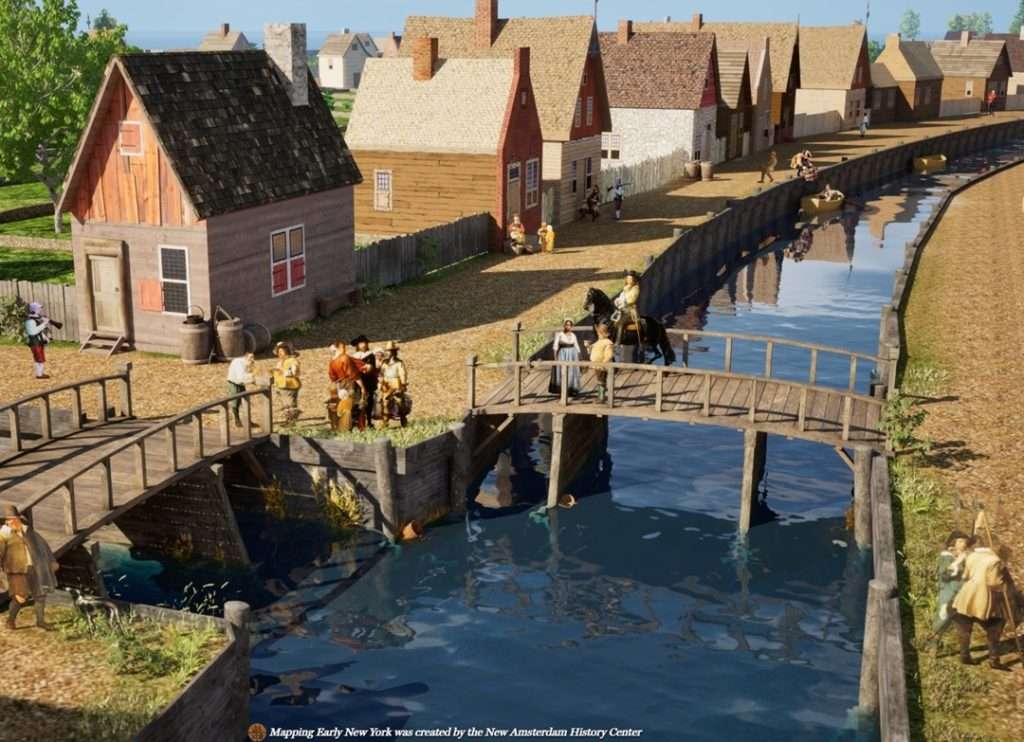
Lia and Izaak in New Amsterdam: A Writer’s Journey Begins

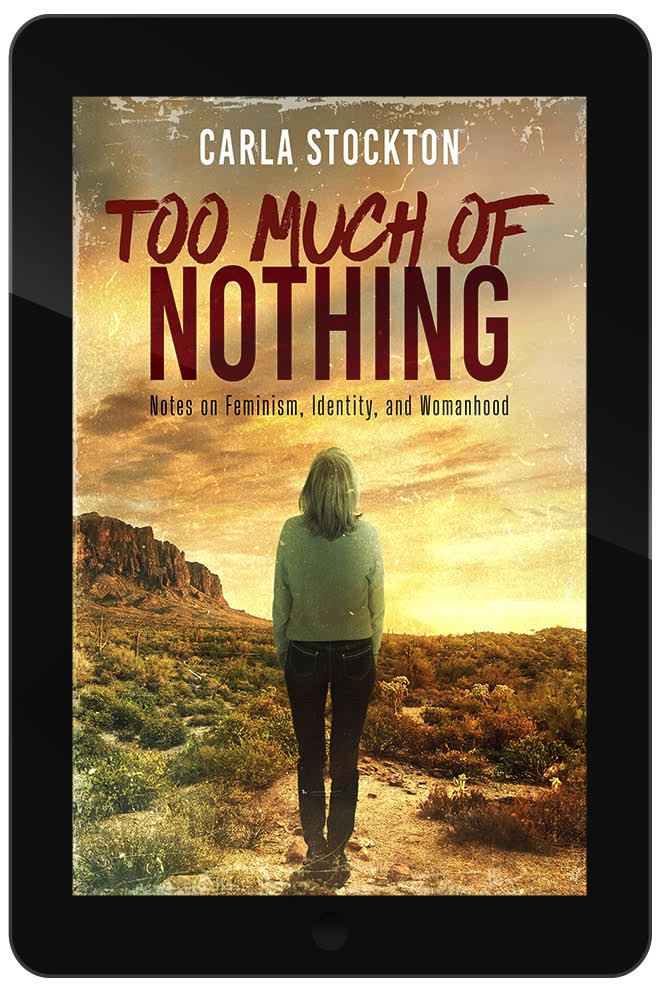
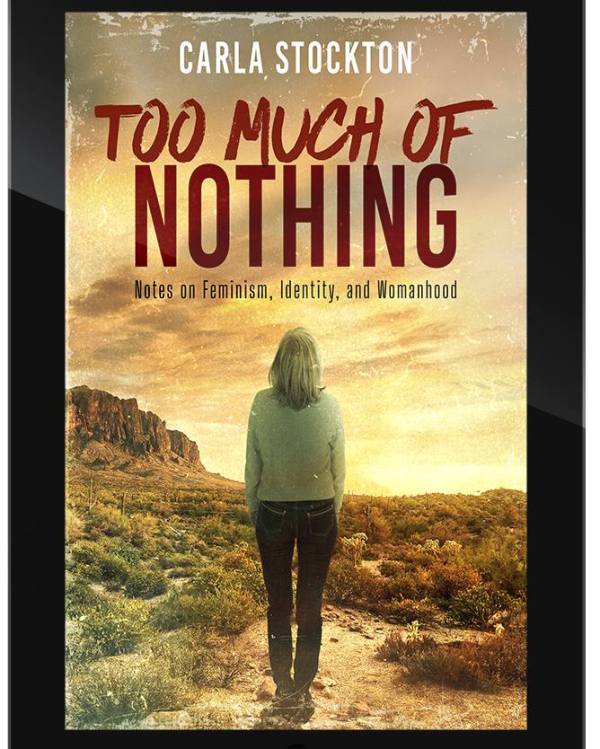
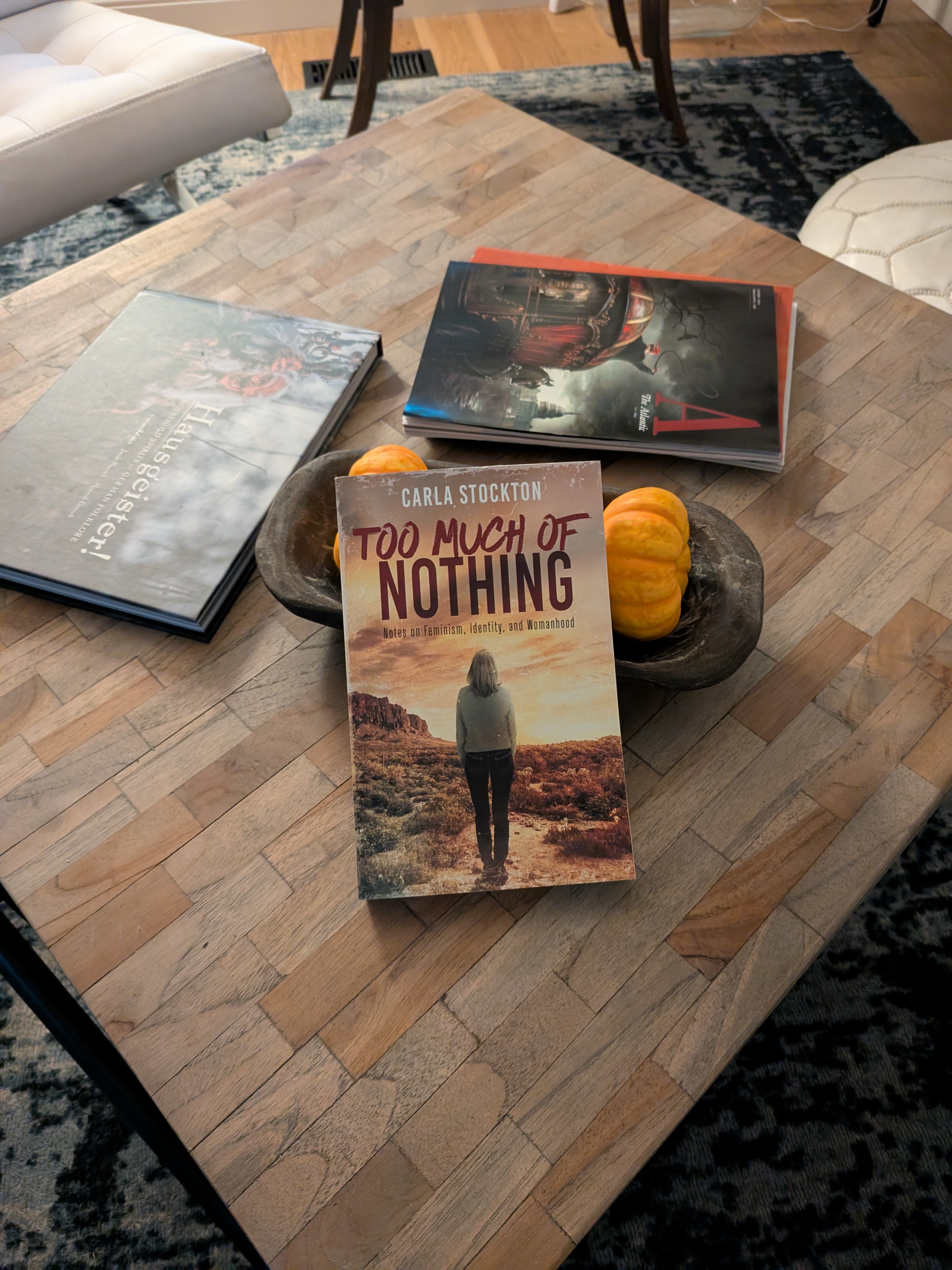
 Too Much of Nothing: Notes on Feminism, Identity, and Womanhood (Mountain Ash Press, October 2024) was not the book I expected my first solo book would be. I had spent two years compiling stories about my mother’s immigrant family, my father’s eccentric past. They comprised the MFA thesis that I planned to publish.  My readers disagreed.

“Make this your second book,” they said.  “What’s most interesting in this work is the story you tell with you as the central character.  Write about you first.  Then write them.”

I revamped, reassuring myself that my next book would be the tribute to my family I felt compelled to write.  Once I got past Book #1, I would return to the compendium of family stories, the histories of my displaced and troubled forebears, to honor their memory with my carefully chosen words.

Once Too Much of Nothing was launched,  I moved into the process of preparing the next book by focusing on my immigrant mother’s trauma and her family’s survival and planning for the research that would delve more deeply into Dad’s ancestry. I began preparing to depict the layered amalgam of culture and sorrow my parents’ union created.

The journey has been fascinating . . . .   Their background is rife with drama. The forces that drove mom’s clan out of Europe in 1939, coupled with the tales of my father’s Dutch family, provide a rich tapestry of escape, survival, and the power of love. Best of all for me as a true New Yorker, their stories converge in the Catskill mountains and coalesce into one truly American chronicle.

When I read Russell Shorto’s Taking Manhattan: The Extraordinary Events that Created New York and Shaped America, I realized again how important the story I plan to tell really is. 

I’ve been a Shorto fan since, as a New York sightseeing guide, I read his Island in the Middle of the World, his history of New York City, which argued that everything we identify as American comes from the cultural stew that simmered in New Amsterdam/New York.  That stew, according to Shorto, contained generous portions of the Dutch, English, and Jewish traditions that bubbled in my identity. Shorto’s newer book re-examines the history even more sharply, and he plumbs the depths of tropes that any child who attended Junior High in New York State was fed as the history of our state. 

We all knew that the Dutch established a community here and called it New Netherland, that New Amsterdam, their city at the tip of the Manahatta Island, was its capital.  Then, in 1664, the English arrived on the banks of the Hudson River, seized New Netherland, and renamed it New York. Then, the Dutch slinked away to the corners of history. 

Not exactly the truth, Shorto proves.

According to documents that have only recently been translated, there is much more to the story that we did not know.  The Dutch West India Company, acting not as agents of the monarch but as agents of the world’s second international trade union (the first being the Dutch East India Company) stole New York – and what are now Delaware, New Jersey, much of western Massachusetts, and Rhode Island – from the natives and built a society that encouraged diversity.  They were not inherently more tolerant than the English or the Spanish, but they found that a multicultural world was conducive to profitable business. And business was what they were all about. They were willing to accept anyone and everyone from anywhere at all, so long as there was money to be made. What the Dutch West India Company did not do was to protect its people from the reprisals by the understandably angry natives, and they failed to create a workable government.

The British Civil War had just ended, reestablishing the English crown. King Charles II realized that his ravaged country needed to curry influence in the new world in order to replenish his coffers.  He put his brother James in charge of asserting their presence, and James sent emissary Richard Nichols to take possession of land that now constitutes most of the Northeastern United States seaboard.

After spending some time in the Massachusetts Bay Colony negotiating peace between royalists and Puritans, Nichols, well-educated and conversant with Dutch success, sailed down coast and up the Hudson River to negotiate with Peter Stuyvesant for a transfer of power.  No shots were fired; no animosity resulted. As soon as his signature was affixed to the document, Stuyvesant made a brief visit to his European homeland before returning to Manhattan and settling down on his large farm at the south end of the island. He died a very wealthy, satisfied New Yorker.  

Nichols knew that a system that worked needed no reworking, and the Dutch system worked.  He brought in military forces to protect the citizenry, to maintain loyalty to the King, and to uphold the law.  But the Dutch remained in positions of political and social prominence. The array of religions and nationalities that had thrived under the Dutch retained their status as well. 

In the story Shorto tells of my city, I see my mother and my father as central characters. My father’s paternal English roots English planted themselves in Massachusetts, Maine, New Hampshire in the 1620s when they fled the Church of England,  around the same time as his maternal folks were landing in New Netherland. Members of the Dutch Reformed Church, Dad’s second and third great-grandparents likely originated as Walloons, Calvinists who wandered away from the perils of Catholic Belgium and France into New Amsterdam by way of Holland.

 Likewise, my mother’s people had spent generations seeking a safe homeland.  Out of the Russian Pale of Settlement, into Poland/Ukraine, to Zagreb by way of Vienna, and eventually to Kingston, NY, once a Dutch enclave called Wiltwyck.

I will write about my parents.  But I will write about them as fictional characters in a time when unions like theirs were the stuff that fueled the sensibility that built the United States.

My parents’ fictional personae will inhabit 17th-century New Netherlands.  He as the son of parents who arrived in 1624, for the purpose of establishing a future in nieuwe wereld. She as the child of a Lisbon-born Jew, whose family, dispersed by the Inquisition, had found refuge in Dutch Recife, Brazil, until the same Inquisition sent them scrambling to New Amsterdam.

My protagonists are Lia and Izaak.  Neither’s story is unique, but each has a singular voice and a profoundly individual presence.  Theirs is a timeless story shared by millions, but their details are theirs alone.

The Hidden Sucker Punch

This very un-Presidential campaign by a bombastic charlatan has me grateful my parents are not around to witness how far this process has declined in the years since they died. They would not understand what’s been happening. They would disdain the misogyny and the racism of the right, and while they would never condone the extreme judgmentalism on the left, neither of them would consider voting for the nasty, exclusionist, decidedly unChristian Republican agenda. They’d be the first to line up in their districts to vote for Kamala Harris.

I am sure of this. Because in the end, we have become a nation divided by a lack of commitment to the Republic’s ideals, by our society’s inability to embrace a reasonable concept of ethics, justice, community, and morality. Allegiance to a shouting puppet have robbed too many of any clear sense of right and wrong.

My parents would have no problem defining where to draw the line.

In my parents’ home, politics, like religion, was a matter of personal choice. My mother was Jewish; Dad was Protestant. They never argued that one or the other was right or wrong; they made sure we understood the commonalities in their traditions, and they expected us to be honorable people, whichever faith we chose to accept or reject. The same was true of politics.

Dad was a proud, adamant Iowa Republican. Mom, once a Jabotinsky devotee who had to emigrate from Europe to the US, was a staunch, unwavering Democrat. She was a socialist; he was not. During the weeks leading up to the Adlai Stevenson/Dwight Eisenhower race, I remember heated arguments.

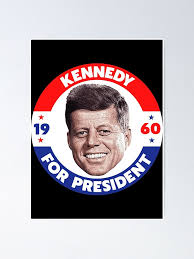
But neither ever called the other names or went to bed angry, and each kept their actual vote to themselves. In 1960, I was smitten with JFK, whom Dad clearly disliked. But he never impeded the efforts my mother and I made campaigning door to door, handing out flyers and buttons. Nor did Mom, who detested Nixon, insist that he change his politics to suit hers.

Overall, they shared the same values. Dad insisted he had no socialist leanings, but it was he who brought the homeless to our house for a hearty meal and a night or two of real rest in a comfortable bed. It was Mom who insisted we go to Church with Dad on Sundays. Both believed that human kindness was the hallmark of good citizenship, and they wanted their children to know enough about both religion and politics to make informed choices in every community arena.

My parents’ belief in America, their faith in Democracy, was based on core values. It was easy for them to make the necessary adjustments. If a candidate was in any way antithetical to what mattered to them, they would vote conscience over Party.

In 1976, I was amused to see Dad entirely uninvested in the Presidential race. He was not a fan of Gerald Ford, but he did not know enough about Jimmy Carter to vote Democratic. I am pretty sure he sat that one out. Then, in 1980, as he observed the last campaign he’d be alive for, he was visibly, audibly, openly disgusted by Ronald Reagan. That time he voted for Jimmy Carter, and when Carter lost, Dad swore he’d never vote again. I suspect he would have been ambivalent about Walter Mondale, but he would have been despondent to learn that Reagan had won again.

America needs my parents’ attitude this week. We need liberated men and women to stand up against the authoritarian ideals of this new Republican Party. We need informed voices like those members of the Lincoln Project to be as brave as my father was in 1980. We need people who will stand by rectitude and righteousness, people who can reject the cultish insistence on following their leader, people to go to the polls and vote their conscience rather than their party.

My closest friend, a person I have always known as a Republican, with whom I have had a life-long agreement to disagree, texted me last week to say, “I voted for Kamala today. I do not recall ever voting for a Dem.” I told him I thought it was a huge concession. He replied, “Not huge. I would never vote for a Hitler wanna-be.”

His subsequent text moved me to tears. “I have my hopes that the women of America are the hidden sucker punch,” he wrote. “I want them walking softly carrying the big vote.”

Amen.

Adirondack Dreamin’

Aaron Marbone, a reporter for the Adirondack Daily Enterprise just interviewed me for a story that will run in tomorrow’s paper. A lovely young man, Aaron asked me what it was like living in Saranac Lake all those years ago.

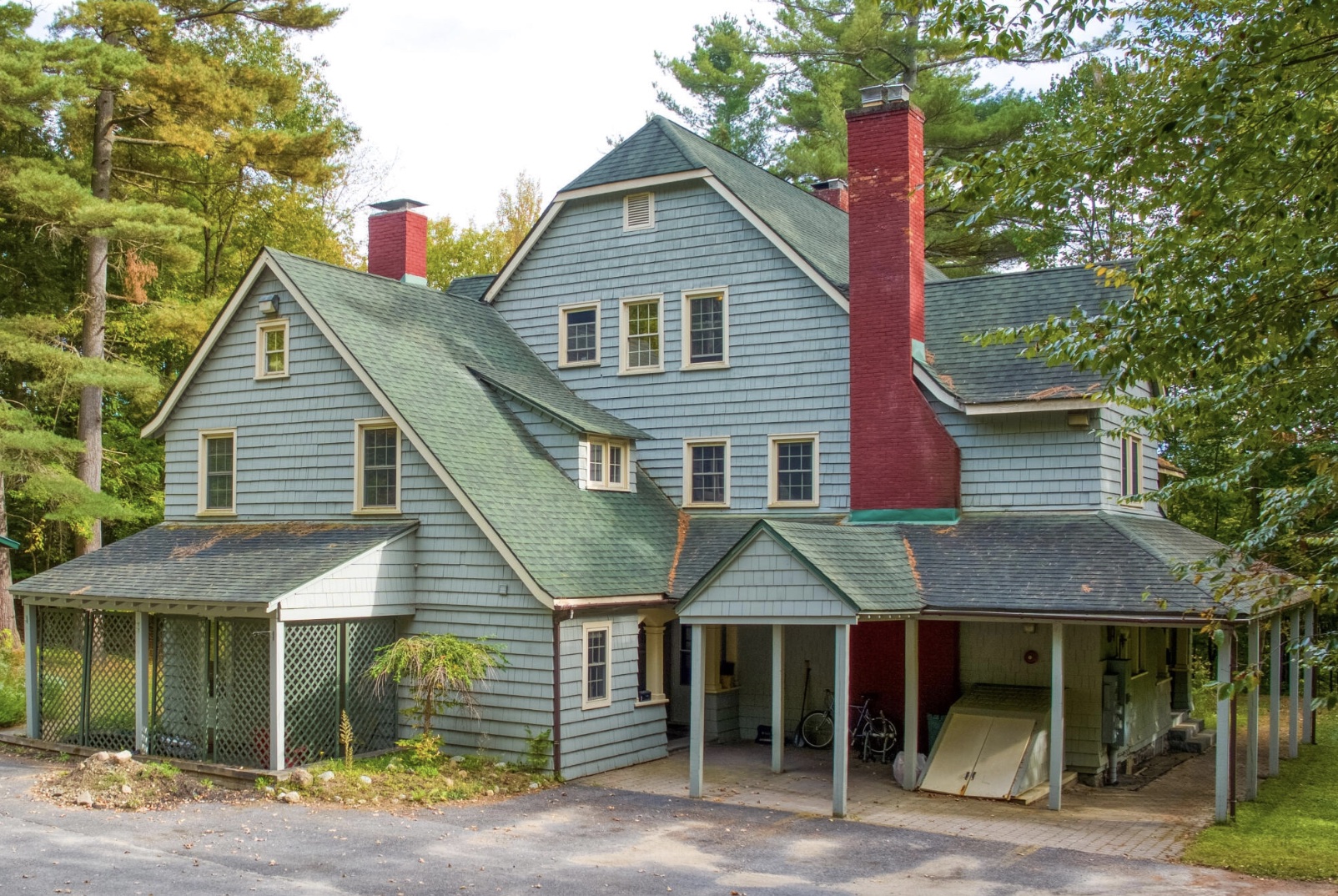
Well, I told him, that trope about walking a mile to school uphill both ways was the truth for us then. I lived on Cliff Road in a house that is today a multi-unit condominium complex at the base of Mount Pisgah.

We walked down from the top of Cliff, by way of Catherine to Bloomingdale and then to Main, up Olive Street Hill and across the overpass to Petrova, which was our school through high school. Then, for much of the school year, we walked home in the dark, down Olive Street, back to Bloomingdale, Margaret to Catherine and back up the big hill home. In the winter we wore layers of clothes that weighted us down and in spring forded through rivers of snow-melted mud cascading down every hill and forming small lakes in every little valley. Glorious.

I never thought of the people of my town as family, but they were certainly part of a clan, a clan that protected me, tolerated my strangenesses, celebrated my talents. I won speech contests, appeared in class plays, played in the band, and sang in the glee club; I wrote a pageant for a Saranac Lake centennial celebration, commissioned by a group of adults who appreciated my writing. After a cataclysmic accident, as my mother lay pinned under her car, freezing in the wind at Donnelly Corner, passers-by stopped to shield her, to provide blankets and coats from their own backs, while the volunteer fire department worked tirelessly for hours to extricate her. Then, for two years, there was seldom a day when food was not delivered to our home.

My classmates never bullied me or made fun of me though I was the kind of kid who anywhere else would have suffered terribly. I was lonely but respected, and whenever I return for reunions, I am reminded of the enormous generosity of spirit they had then and still have today. My most vociferous cheerleaders, my strongest encouragers have been my classmates, people like Gail Gallagher, Peter MacIntyre, Maryanne Aubin, whom I have known since 4th grade when we moved to that little enclave in the Adirondacks.

So of course I will go “home” to have the first celebration of having written my first solo book. At NOON, on November 9, the Saranac Lake Public Library, where one can still find a copy of that pageant I wrote in 1965, will host my book launch. On the 13th I’ll be on a panel at the Adirondack Writing Center with a new friend Laurie Spigel to talk about writing and aging and making it through. . . . and getting by with a little help from our friends. Best of all, The Book Nook, in Saranac Lake is taking orders. I hope people support the independent bookseller and order there: https://www.saranaclake.com/shop/the-book-nook

Pub Date 2024!!

Hard to believe, I know. But here I am, age 77, and I have FINALLY achieved a solo publication. Writing was my avocation for so much of my life that it is hard to believe I have arrived to a place where it is my vocation!! I am not fond of promoting myself or touting my work, but having written the book, having put it out in the world, I am now in the business of being an author with a book to sell. I will be posting excerpts and insights here on my blog. So stay tuned!!