Floating in Paradise

Tom Hanks, arriving in Thailand in as a rather unwilling Peace Corps recruit in the film Volunteers (1985),  looks out into the seering sun, surveys the landscape to which he has just arrived, and says rather desperately, “Jesus *H* Christ, we must be a mile from the sun!”

I was lucky.  When I arrived in Ko (Ko is Thai for island) Samui it was already October, and while it was far warmer than I prefer my autumnal temperatures to be, the cool breezes wafting off the Gulf of Thailand, the autumn rains blowing in from higher ground kept things downright comfortable throughout my sojourn there.  I had been told I was headed to Heaven, and nothing  about my 8-day stay disabused me of that notion.

 When I entered Bangkok, having arrived from New York by way of Detroit and Tokyo, the customs official who stamped my passport grinned largely when he read my local address.  “Oh, you go to Samui!  You very lucky.”  He looked me straight in the eyes to make sure I had got his drift.  “Heaven.  Samui Heaven!”

Thais are proud of this island with its langorous beaches and island calm.  The concierge in my Bangkok hotel told me it was his dream to go to Ko Samui.  He said he has to work too much and can’t get away, but if he could ever get a vacation, he would head straight for Samui.

Who wouldn’t!  In October, Samui is a veritable perfection.  When the rains come, they cool the jungle, refresh the air, descend deliciously.  After they leave, the air is clear, crisp, clean.  Everywhere you go are sandy beaches, and when the fishermen are not dumping their garbage, the beaches are downright pristine.  The water remains warm enough that you never need to acclimate; just jump right in!  And yet they have just enough chill to envigorate.

Lots of expats live on the island, and that makes it very comfortable to be a “foreigner” in Samui, but it also poses a challenge.  If the quiet, serenity of Lamai or Netong, for example, or the solitude of Boku seem commonplace, then the crowding and the noise of Chaweng can be jolting.  Night life in Chaweng — especially along the routes of the Sexpats, foreigners here for a deeper plunge into Thai hospitality.   Dance club owners, fight promoters, even bar girls’ agents roam the streets in vans equipped with loudspeakers and recorded music to accompany a speaker extolling the virtues of the establishments, inviting all who are hungry to come imbibe.

Expats, naturally, bring development to any Paradise, and on Samui, construction is everywhere.  Crews are brought in from cities around Thailand and other countries to work on the sites; they are bused from their communal housing to the workplace in the morning and bused back in the evening, and the signs of their work can be seen in the most unexpected of places.  Unfortunately, where a sense of conservation and preservation is thematic on the island, its rank oposite is equally so.  Impromptu garbage dumps abound in the jungle, along the beaches.
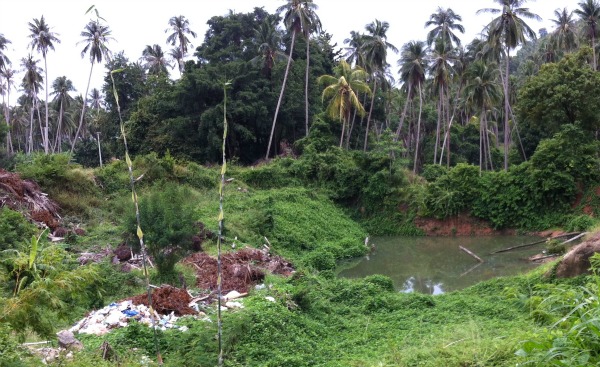
Funny thing about expats is that they pretend to know more about the place than the natives.  Maybe, in some cases, they do.  But, like NY sightseeing guides, they make things up, pass fiction off as truth.  I overheard one guy, who’s lived there, he said, for fifteen years, say that the garbage washes in from Hong Kong and China, that the pollution comes from as far away as Seoul.  “Not our garbage you’ll see out there in the water.  It’s all stuff from far away.”

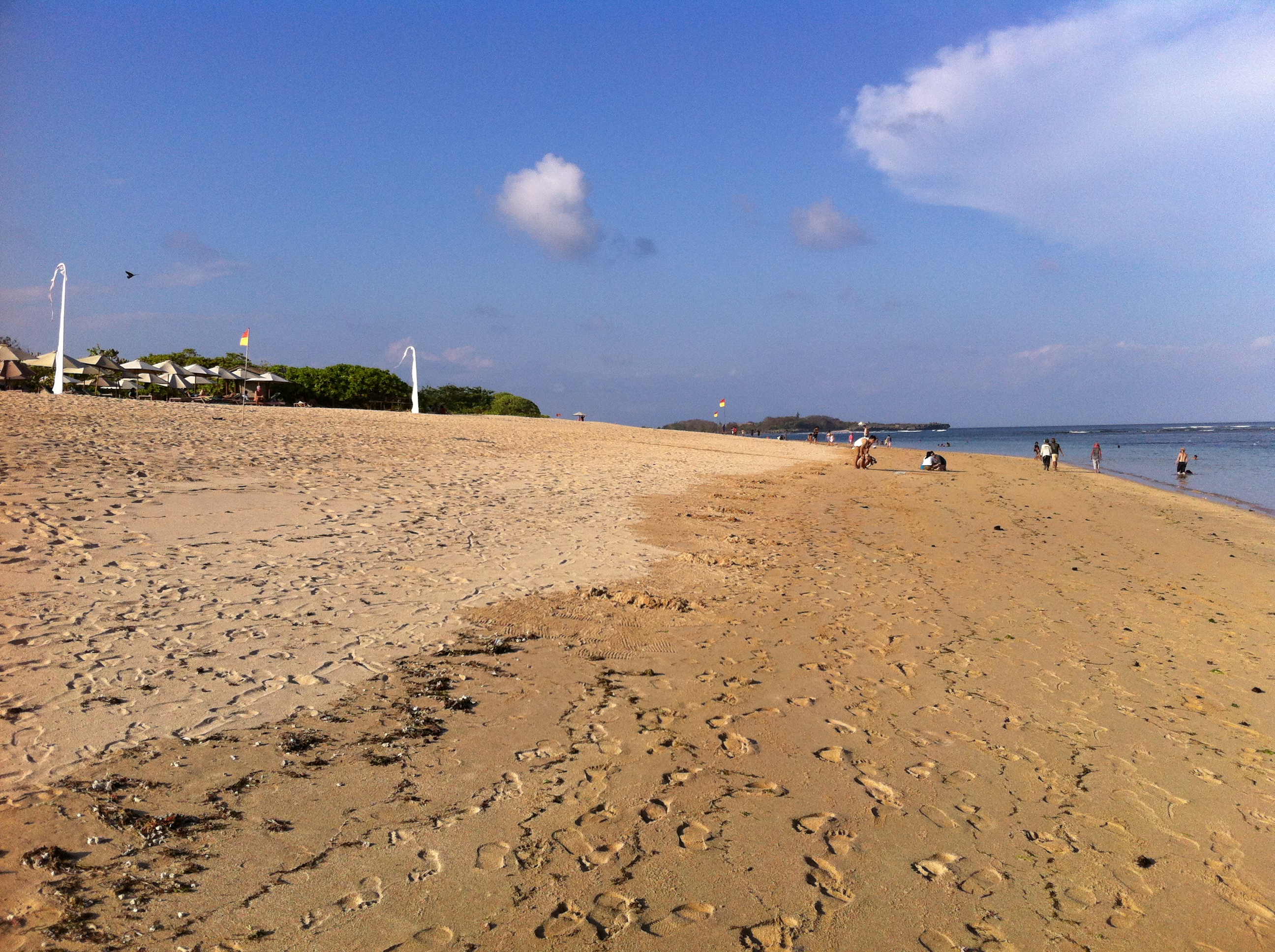
In any case, as I said before, I was lucky. I saw no garbage in the water. But I was told that there are times when the beaches are piled high with discarded nets and food containers, thrown off the fishing boats; algae find their way to some of the coves, and jelly fish, wrenched from elsewhere by storms, will taint the joy of swimming.  But I was never subjected to any of that.  All I saw were lovely white beaches and clear, inviting water. Because you’re on the Gulf of Thailand, you don’t even have the interference of waves.  I told you, just enough gentle undulation and the weight of salt to remind you you’re in an ocean.  Paradise.

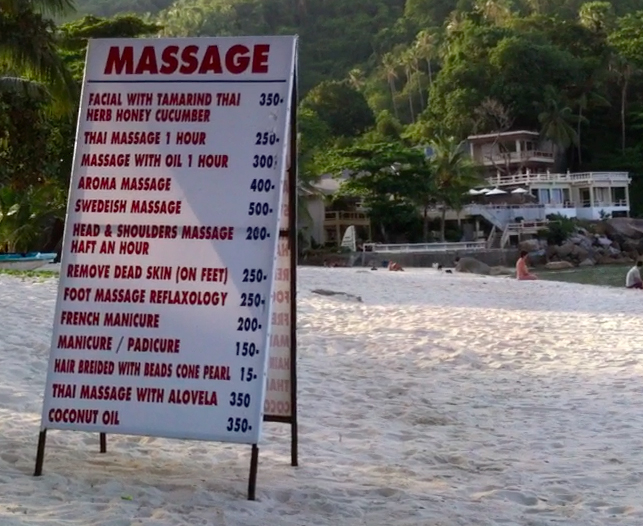
Massage enthusiasts must love these beaches.  Everywhere you go, there are impromptu massage tables set up to enable a client to can lie down, listen to the sound of the gentle surf, bask in the sun, and indulge him/herself in relaxation.  And on top of that, it’s Thai Massage — very hot these days!
All along the shorelines, food mongers gather, offering every kind of seafood and fresh fruit and vegetable one’s imagination can conjure.  Like coconut water?  You needn’t walk fifty steps between sellers offering to open a freshly fallen coconut and make available to you its succulent and refreshing juice.
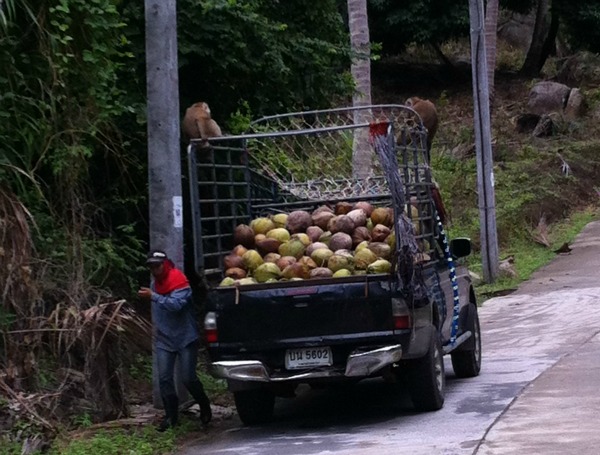
There are lots of coconuts on the island, and the natives are very good at gathering them.  They’ve got cheap help too — local monkeys are trained to climb the trees, twist the giant nuts from their limbs and throw them to the ground for harvest.  Of course, this can create something of a hazard to beware of — a coconut thrown from a height of 60 feet (frankly, even a coconut pulled by its own gravity from a height of 60 feet) can do real damage to your head and other bodily parts.  Even Paradise has its dangers.

More exist than meet the eye, actually. Like serpents and such also live here.  As I was about to go for a walk down the jungle path that led from my home base to the beach, I was warned, “Just in case. . . if you see a snake, let it pass.  People get hurt because they don’t see the snakes and step on them or something try to catch them.  Just let them pass.”  What kind of snakes, I wonder aloud.  “Cobras — especially King Cobras — and vipers mostly.
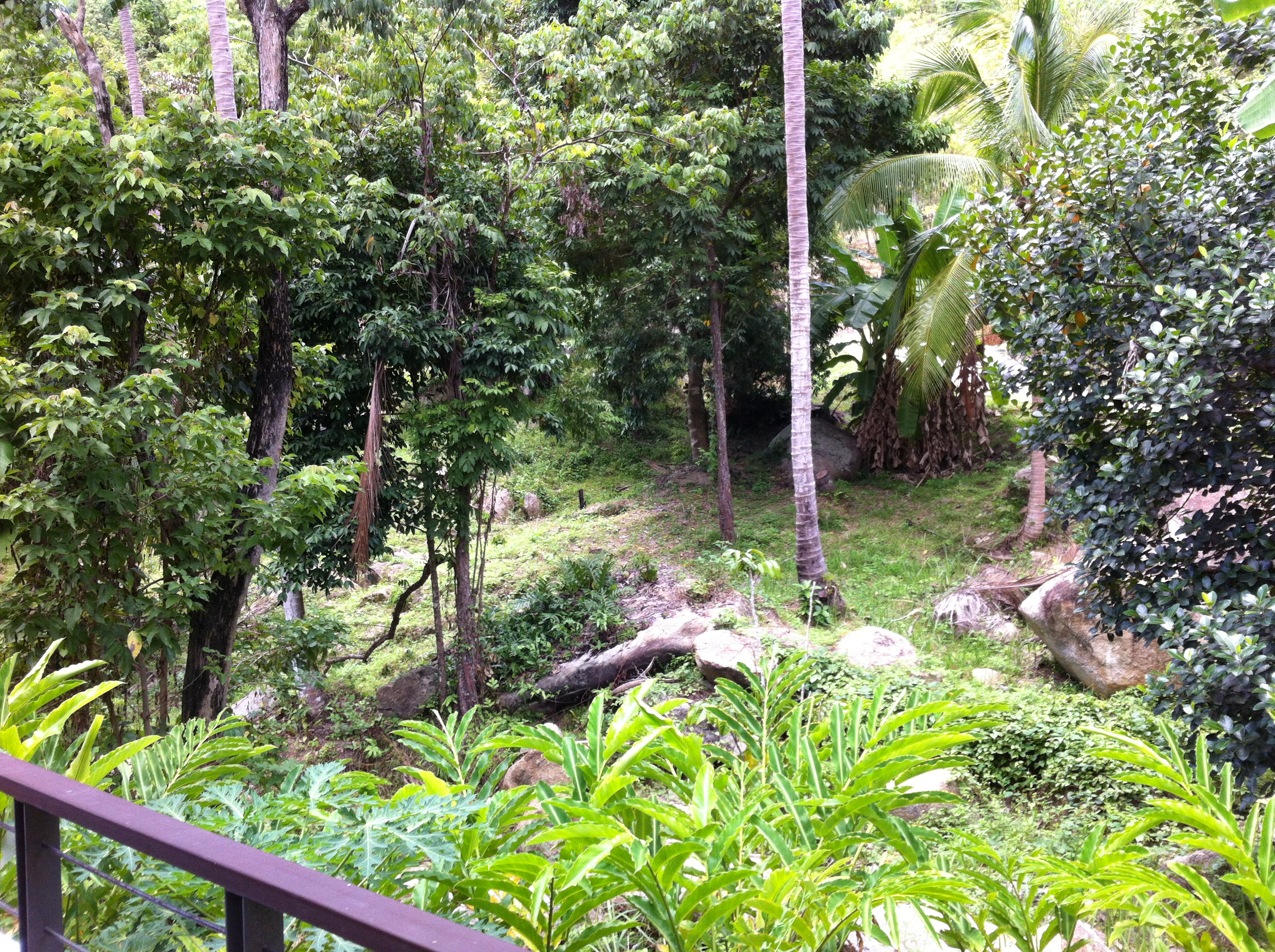
At the CDC office where I got my travel shots, I was warned to avoid bats and mosquitoes.  “Sleep in clothing,” the doctor told me.  “Bats will bite you while you sleep, and you won’t even know it. And wear Deet so the mosquitoes leave you alone.”  I saw a couple bats flying by in the evening when were were out, but I remained unmolested.  Though there are mosquitos on Samui, malaria is rare, but dengue fever, another mosquito-bourne disease, is less rare.  Still, it’s not considered threatening enough to cause alarm, and few among those living here would even consider using Deet.  We did carry a naturopathic bug spray around with us, and that seemed to suffice; one night, when we went for dinner at a beautiful beachfront restaurant, the waiter brought us bug spray with our menues; we did apply the substance, and we were left alone.  Didn’t I tell you this is paradise?

Some beautiful places are plagued by rats, but I saw none on Samui.  What Samui does have is a large population of feral dogs. They congregate like rats, menace local runners, threatening small pets;  they also lounge around in the middle of the road, creating a serious hazard for drivers, especially for those on the ubiquitous motor bikes.

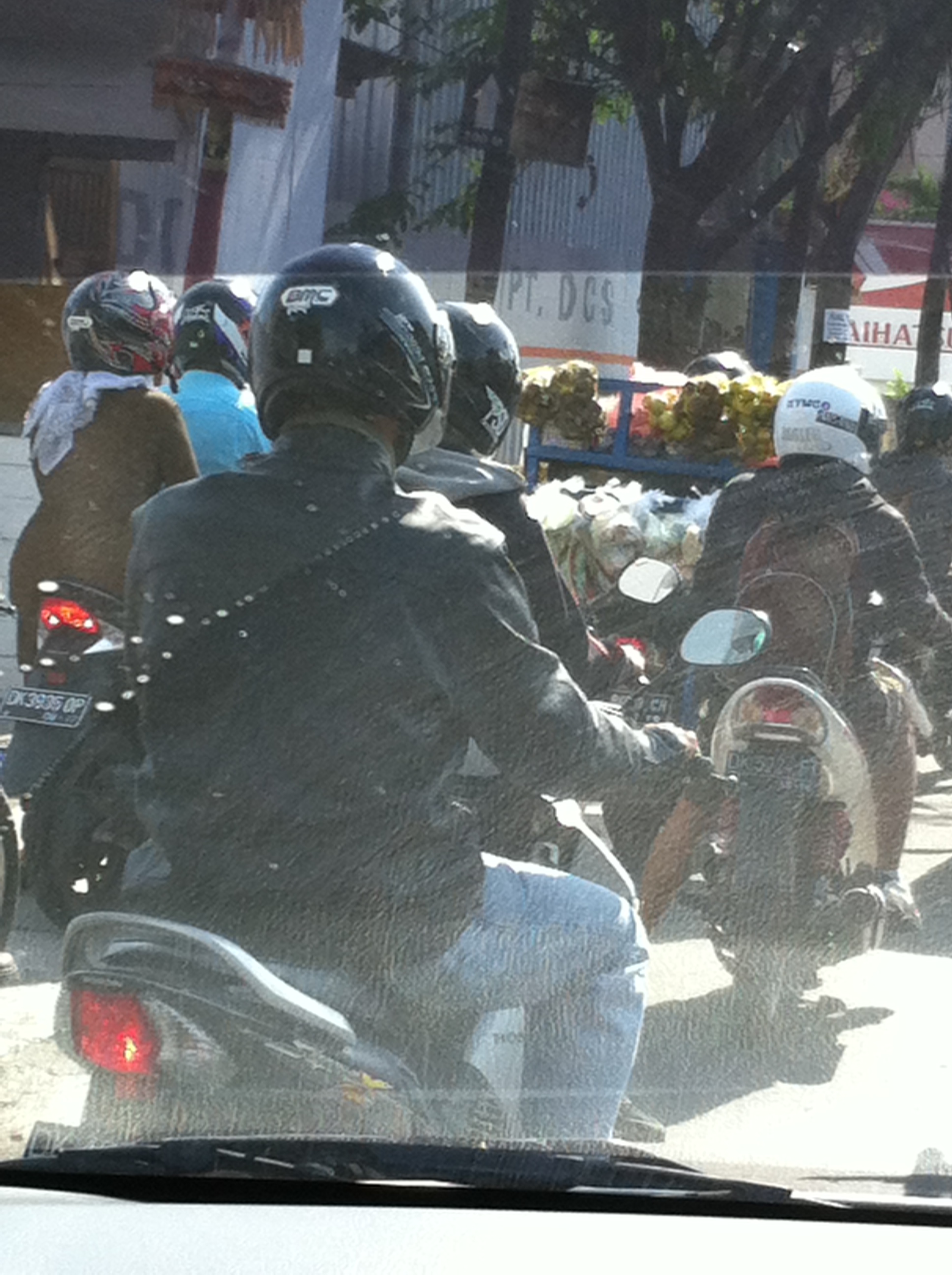
And, speaking of perils, the motorbike riders are their own kind of menace.  There are so many of them that they have developed a kind of entitlement, a stance, at least,  that suggests that they believe they own the road.  Driving a car or walking can be risky because there is little awareness on the part of the swarming bikes’ drivers that there is anyone else on the road, and a little scooter can do great damage to a small car or little person attempting to navigate around it.

But these are minor impediments to an environment that is otherwise without flaw.
Dancing in Lunacy – Bali Part II

When I flew to Bali, I expected a paradise would await me, but the visit was a complete disappointment.

From Ubud, we chose to go to Nusa Dua, just as unknown to us as Ubud had been, but with the advantage, from my irrational, malaria-phobic point of view, of being on the ocean, away from the jungle and the rice paddies.

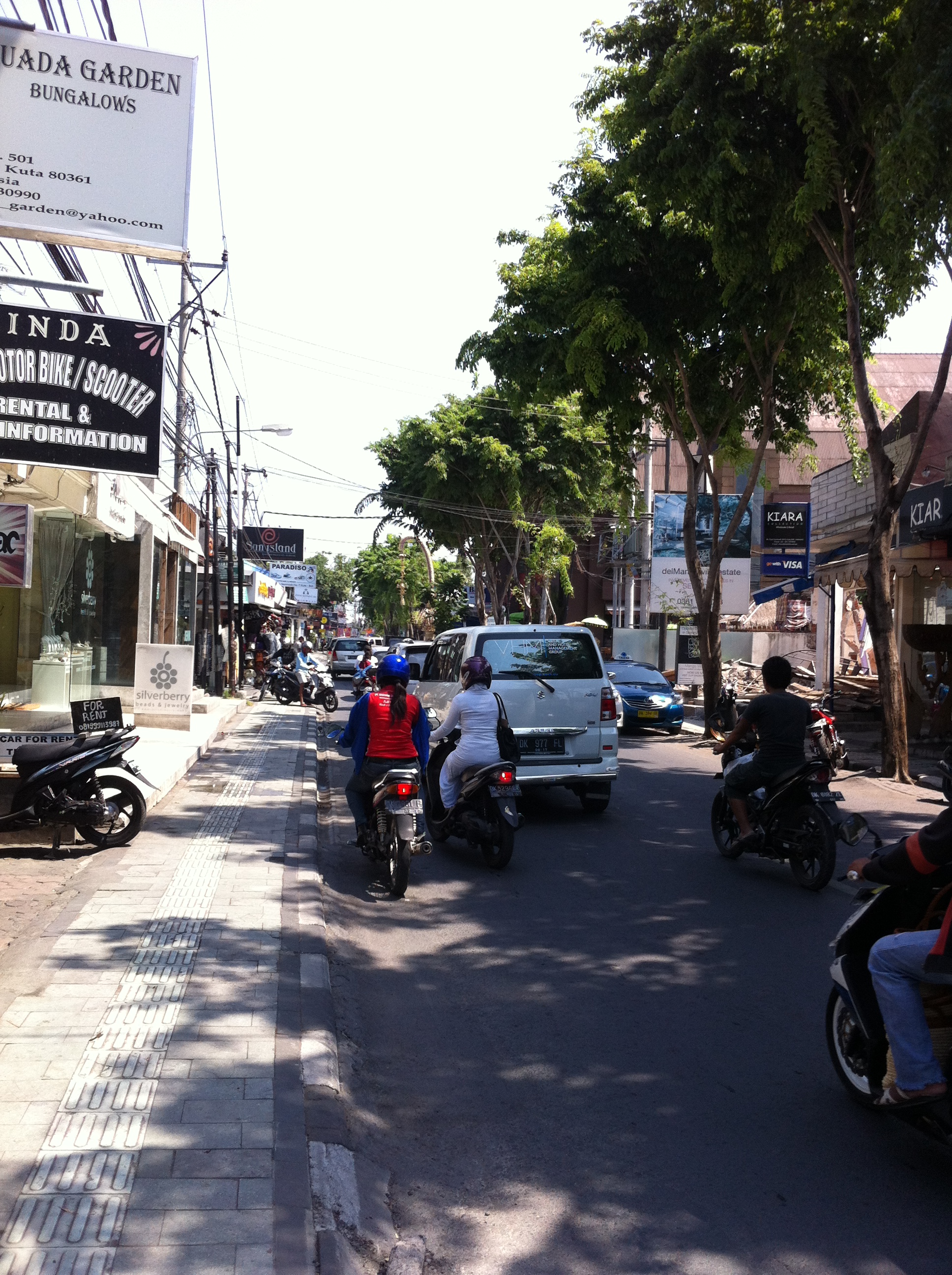
To get to Nusa Dua, as to anywhere else, one must take a taxi or hire a car.  There is little to no accessible public transportation, and distances are deceptively long.  Funny thing, though, whenever we asked someone in Bali how long it takes to get from one place to another, the standard answer was “Maybe 45 minutes.”  We learned quickly that 45 minutes was a rough estimate that could mean anywhere from a hal-hour to a whole day.  From Ubud to Nusa Dua, “45 minutes” meant a two-hour trip, spent mostly in kind of slinking rather than moving slowly behind buzzing armies of motorbikes.

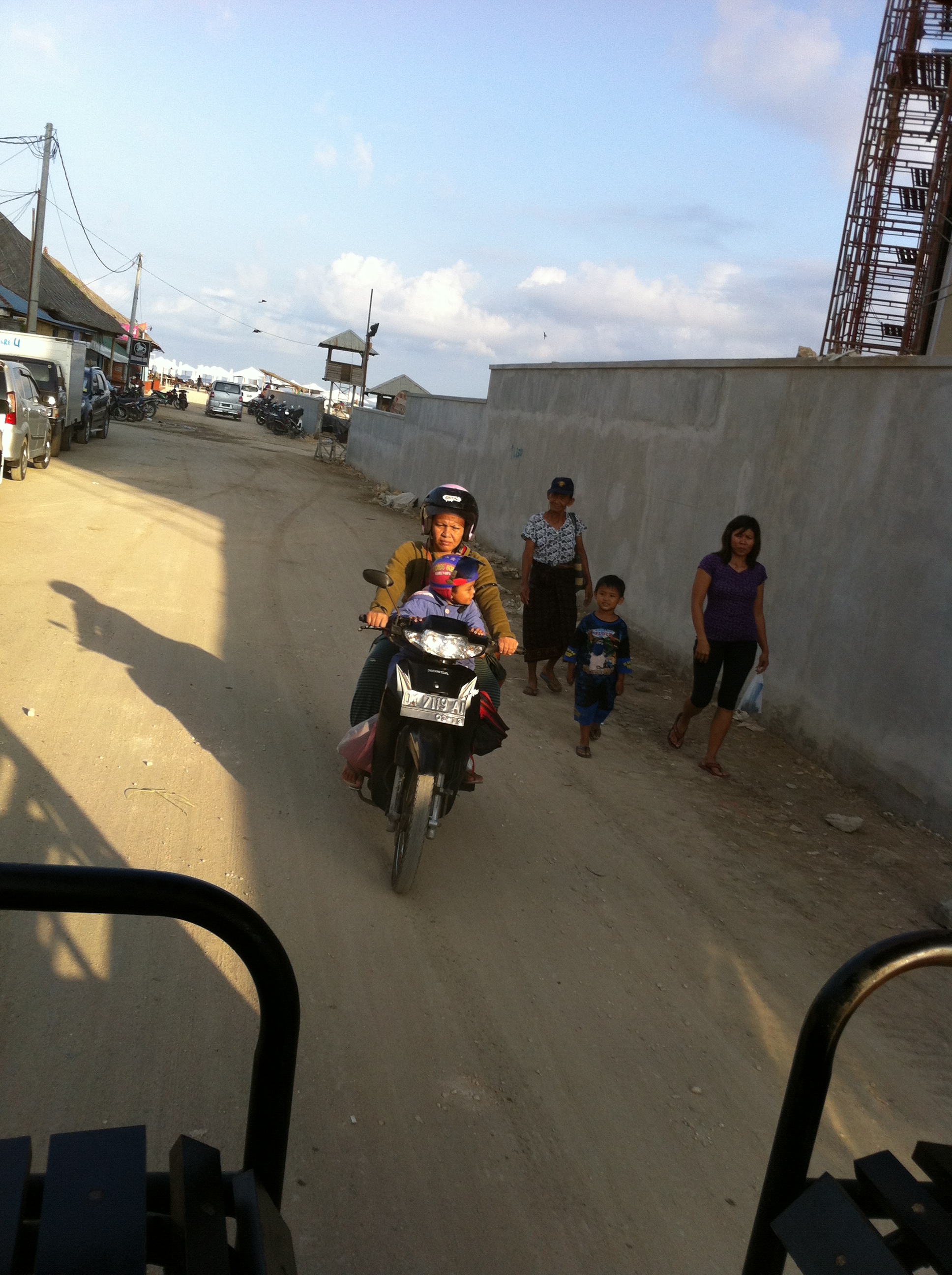
Nusa Dua is a construction site.  There are a few lovely resorts, but there are far more works in progress.  In a few years, the place will be more developed than Miami Beach, but for now, it’s evolving. Hordes of workers on motorbikes murmur in in the morning and out in the afternoon; the hotel we stayed in provides a shuttle to both the beach and the local mall that serves as a town center.  The beach is close enough  to walk to, but the road is not nearly safe enough to try that.

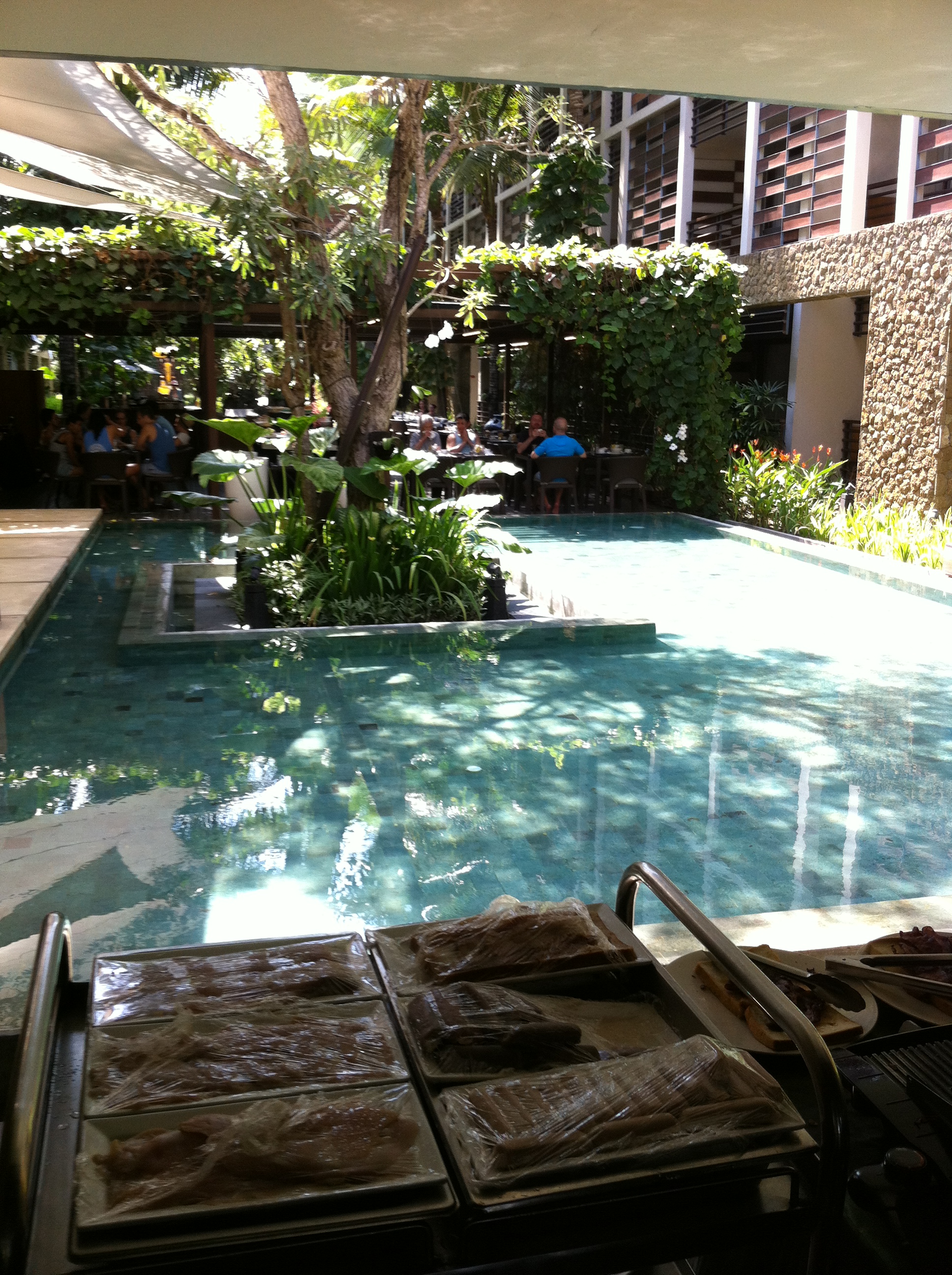
The hotel we chose was the Swiss Belhotel, only open a year and already showing signs of wear in the rooms, which are constructed of inferior quality products.  However, the ambience was delightful, and the food at the breakfast service was wonderful.  The grounds, however, make the place downright regal.

The pool, or rather the two pools, one with a waterfall and vegetation that would have startled Eve with its splendor, were magnificent!  The grounds were so lovingly nurtured that I counted eight distinct colors of the bougainvillea that flaunts its beauty everywhere.   Birds of Paradise, Frangipani, Jasmine and Kasia dance in the breezes, singing lullabys to the myriad orchids that punctuate the space. To complete the idyll, just next door to the hotel is a small farm with the miniature cows that wander the hills here, and roosters strutted even the hotel grounds, promising to wake us first thing in the a.m.

As we had learned to expect, the Swiss Belhotel was staffed by overzealous servers, every one of them falling over themselves to give us what they imagined we might want, forcing on us what we weren’t sure of.  I tried to take a cup of coffee out of the breakfast room, but I was stopped by a young woman, who insisted that she carry it for me; she couldn’t even hand it back to me at the door but had to carry it in to place it upon the desk for me. 

The mall was fascinating.  Called The Bali Collection, the mall is a kind of Carribean-styled area with lots of shopping and dozens of restaurants, each with hawkers out front beckoning visitors in.  We were there during off-season, so many of the restaurants were empty.  That didn’t stop the live music.  At least three restaurants had bands playing ridiculously bad covers of pop ’80’s and ’90’s to empty establishments.  Completely empty.

The truth is that nowhere in Bali did we find an absence of sound.  The most omnipresent noise, aside from motorbike hum, was in the blaring loudspeakers, featuring nonstop technobabble rock, but who inevitably played over and over what seemed to be the favorite number of the moment:  The Black Eyed Peas 2009 hit “It’s Gonna be a Good Good Night.”

One evening we chose a restaurant for dinner thinking we’d get some good fish.  We  didn’t.  But we did get a  “free cocktail,” a thimble-sized cup bearing a sweet, pineapple-y concoction.  When we didn’t raise our glasses fast enough for the waiter to feel he had done his duty, he took my hand and folded it around the cup to help me raise it to my mouth.  It took every ounce of energy to constrain myself here.  I am, after all, a New Yorker.  Enuf sed.

From Nua Dusa we went to Seminyak, a bustling, over-populated tourist throng.  This time we endured a comedy of language error that I will be laughing about for years.

We arrived at The Haven, on the main street, and asked to look at the room we had booked online.  It was unacceptable, overlooking a party-central pool area. Loud, dirty, congested, the ambience was anything but congenial. So we asked to see another room.  That one was not better.  Because we had a language barrier, it was hard to make ourselves understood.  I finally got the clerk to understand that we don’t like the noise.  “Not worry,” she smiled, bowing. “Only loud noise nighttime.”

A manager arrived to assist.  His English was great.  I told him we just wanted to see something that was not facing this infinite revelry.  He said that he had space in the Studio, but it will cost more.  Well, it turns out that more is a mere $10 US added to a rate of $60/night (I booked the room through Agoda.com), and I said that if the place were quiet, it would be well worth it.  So began a comedy of errant room searching.

The manager summoned a bellhop.  He gave the young man the room number he wanted us shown, and he instructed him, further, that he was to take us to the room then to take us to the Studio Lobby, which was on the other side of the hotel grounds.  Our shepherd nodded enthusiastically, smiling, saying, “Yes, yes. Yes, Boss. Okay.”

The first room he took us to was right above the one we had booked.  Not in another part of the hotel.  He couldn’t get the room open — natch; he did not have a key for that room — and no one answered, so we left.  We kept trying to explain that we were in the wrong wing, but he simply kept nodding.

We went to another room in the same wing.  This time a very disgruntled Russian came to the door.  Inside, his girlfriend moaned her displeasure.  Our boy was very embarrassed.

Now he thought to ask someone.  After a deep conversation, he turned to us, bowed and indicated we should follow him.  We did — across the wide expanse of the hotel, up stairs, down stairs, into an elevator, up to the forth floor; and then we were transported to another world.

Quiet, staid, dignified, the Studio is actually another hotel altogether.  There are villas here and duplex one-and two-bedroom units as well as what they call studios, rooms with an alcove for sitting and working.  The room he showed us was a deluxe.  Bigger than the original room, it faced a pristine, quiet, inviting pool, and it even featured, on the balcony, a cushioned couch-style seat.  We said we would take it.

He led us out again and, over our protests that we were supposed to stay in this wing, he led us back to the original desk.  At this point, the clerk explained to me that our bellperson is not only very new, but he comes from an area where they speak a local language, and he is still learning Indonesian.

In any case, we settled into the lovely room, then walked (WALKED) to a beach that for all the world could have been Venice Beach, CA, and then went in search of a place to dine.

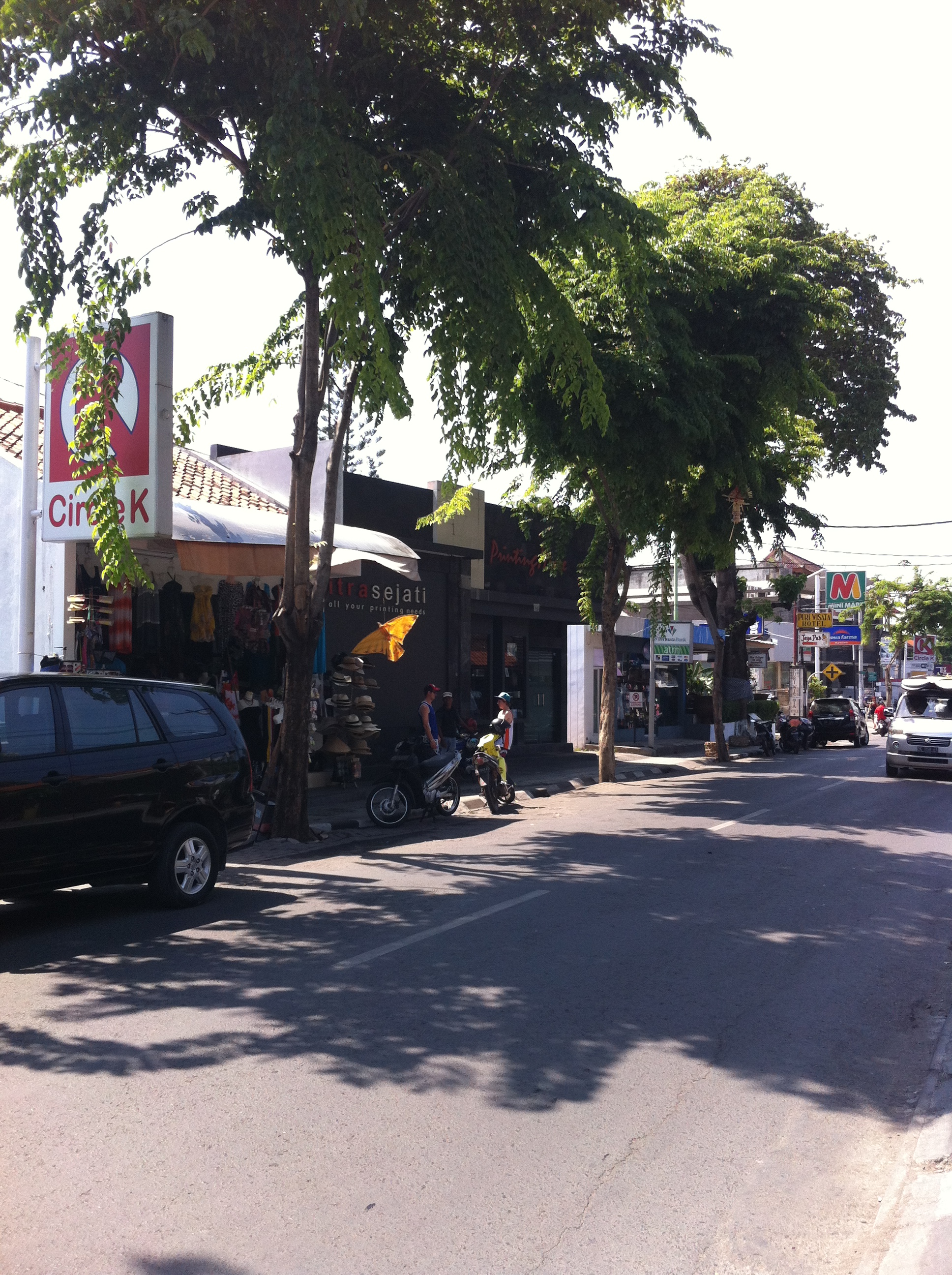
Walking in Seminyak is almost as challenging as it is in Ubud.  Troops of motorbikes, like so many buzzing drones exiting an apiary, congregate everywhere in clumps, maneuvering en masse among the suvs and trucks on the street.  There are narrow sidewalks, in very bad disrepair, that are at least not in the middle of it all. To get across, a pedestrian must raise a hand and wait for the traffic to stop; the motorbikes rarely stop unless they are behind larger traffic that forces them to do so.  We shopped in the delightful but, again, overzealously-manned shops and bought a mediocre dinner at a local take-away before returning to our room.  Next day, more of the same.

Breakfast, which is included as it was at Belhotel, is an elegant affair, and the food is sumptuous, well-presented.  But don’t try to take food out to your room; as with the previous hotel, staff is obliged to do the “work” for you.  The food here was actually the best we had in Bali.  None of the restaurants — and we tried various levels of price — in the five days we were there was better than okay, and in Seminyak, the food we had was overall atrocious.  Tasteless, greasy, without distinction; everything we tried (we were really trying to get to know the local food) was no better than blah. On our last night in Bali, the dinner we had — after much consideration and walking around looking at possibilities, we ordered from the hotel restaurant — was downright awful.

The coup de grace happened at the airport.  Coming into Bali, we had been told that we should have with us $25 US per person to buy our visas.  But no one told us that on our exit from the country we would need to pay an airport tax just to get in to our gate.  The most disheartening aspect of this was that the tax was levied in local Rupiyah and would have been the equivalent of about $15 apiece.  We had already converted our money to Baht for the return to Thailand, which, the official told us, was perfectly acceptable.  Of course, we paid double for our misstep; in Baht, we paid the equivalent of $30 each!

Just another day Paradise!

Carla and the King of Siam


When I stepped off the plane in Bangkok, after 28 hours of transit time, I felt as though I’d stepped back in time. Placing my feet on the tarmac transported me, in a way, back to a simpler era, at least where travel is concerned. As I descended walked into the steamy evening and waked across the tarmac to the bus that would take us passengers to the terminal, I was reminded of arriving in Albuquerque in 1957, after a nearly-as-long flight from NYC. Then something thoroughly unexpected happened; I reverted to my then age.

Travel, especially over long distances through various time zones, can be like a drug. Sights, sounds, the very touchstones of reality can be altered so that the traveler walks in a kind of quasi-hallucinatory state, seeing, smelling, hearing, touching, tasting what may or may not be present. Entering the terminal, in my mind’s ear, a philharmonic orchestration of the Rogers and Hammerstein’s The King and I Overture rolled over me in flowing and ebbing waves emanating from the loudspeakers. Everywhere I looked were the multitudinous children of wise King Mongkut, and just to confirm that I had entered the realm of the play, I was sure that, right in front of me, standing next to the lifesize poster of Mongkut’s descendent, the current King of Siam, stood a prim but visibly amused woman, pursing her terribly British mouth and trying not to laugh at the antics of the children.

I hadn’t thought about the King and I — or even of the lovely pre-musical version Anna and the King of Siam — in many years, although as a youngster, I was moved to desire the life of a musical actress because of it. But I realized, once I had had a bit of sleep and had recovered some of my senses, that there was a logical reason why the images had so starkly assaulted me upon my arrival.

Like so many people in my generation, my first impression of the people of Thailand, formerly Siam, was created in the lush panorama of the movies. I took in the king’s exhortation to Anna that she learn to kowtow, in order to be a proper woman, and I believed that, however toothsome these people — of course, played in 1956 by beautiful but decidedly un-Thai actors — might be, theirs was a sycophantic, toady society, and they lived to serve their betters; women, moreover, were an underclass in a society of repressed people.

Further, like so many girls in the 1950’s, I believed that Lady Thiang’s plea to Anna to give in to the King, to beg for his approval, was exactly as Anna saw it, a paen to a kind of obeisance that a self-respecting Western woman must eschew. Boy was I wrong about the Thai. In its Western bias, the film actually fails to capture the spirit of the people in some extraordinarily insensitive ways.

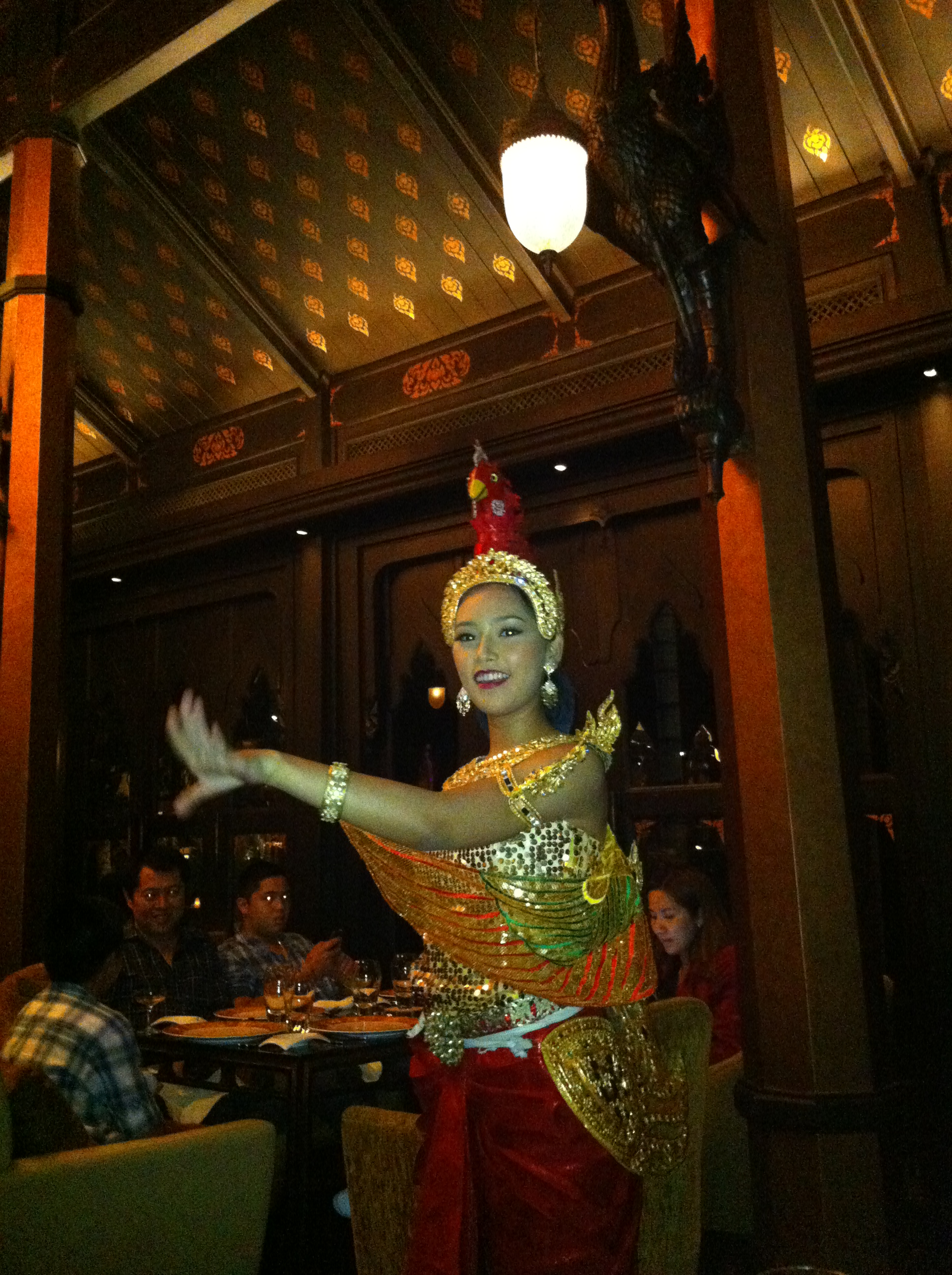
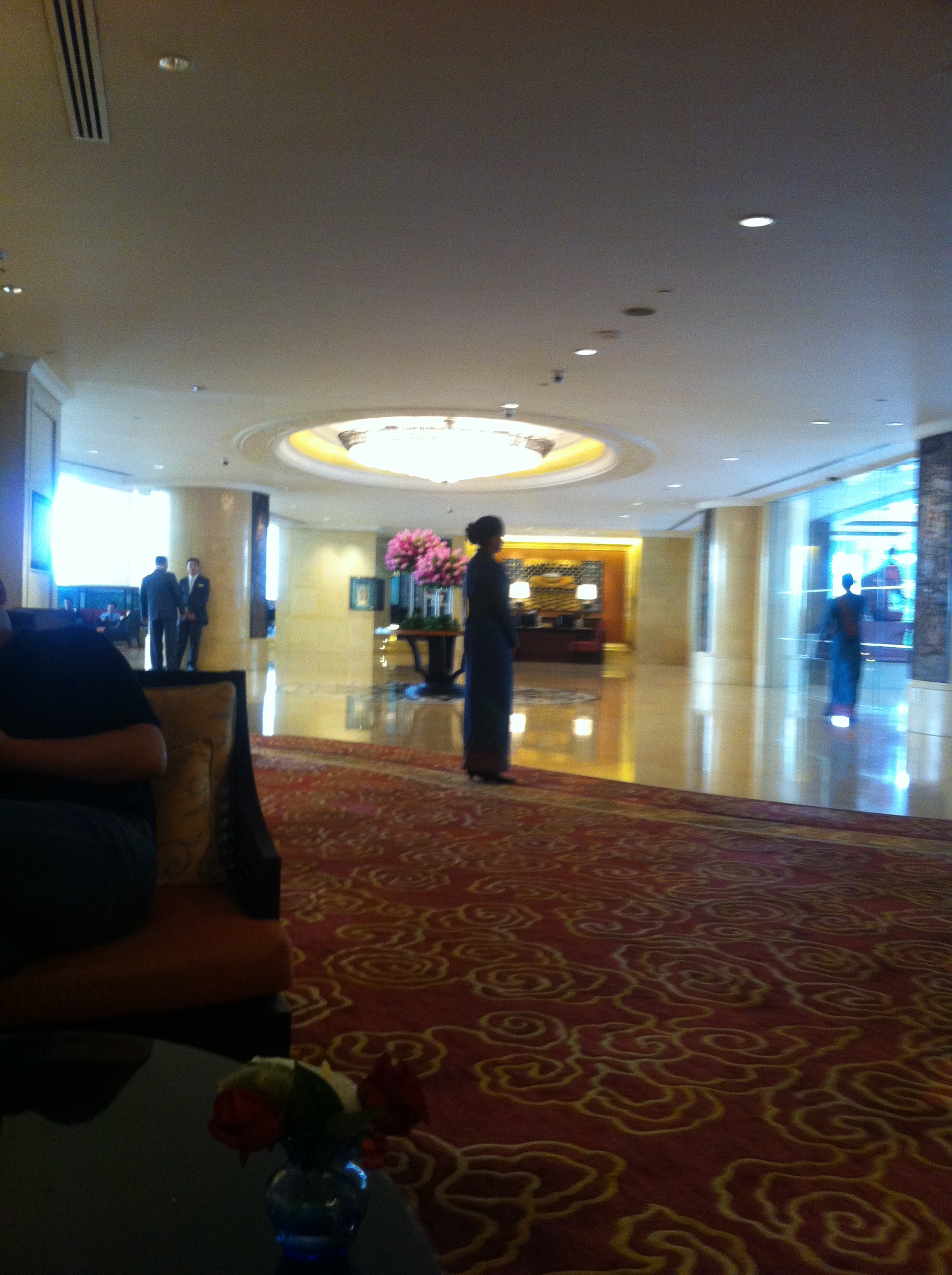
From the moment I entered Bangkok, I was aware aware of the presence of lovely young models, male and female, wearing their prim, closely-tailored, white-gloved suits — costumes that misleadingly evoke a sense of a colonial Siam — posed welcomingly around the city. There is an ambience here that suggests the gentle sweetness of the people that both films were able to capture, and at every opportunity, they display a somehow disarming array of deference that belies the resolutely independent spirit of the Thai people.

Thai deference should never be confused with obsequiousness. Neither its women nor its well-oiled tourism machine and its well-trained personnel are in any way obsequious. I will talk more about the women in a later entry, but for now suffice it to say that whatever preconception I brought with me was shattered very quickly. There is a genuine respect underlying the deep nods that accompany the multi-meaninged prayer-hand greeting (called a wai) and the warm word of welcome, “Sawatdee-ka.”

These are a people who, unlike some of their more agoraphobic neighbors, take pride in sharing their culture with outsiders. They have nurtured and perfected a tourism industry that caters to pampering their visitors. In this endeavor, they know they’re good, and they don’t seem under any pressure to prove it to anyone.  They simply acknowledge that their guests are worthy of respect, as they themselves are. But they are not needy, not cloying, and they are unlikely to compromise their sense of propriety in the pursuit of pleasing their customers.

Surrounded by countries that have desired to dominate them — to greater and lesser degrees of success — and thereby to subvert the local character, Thailand has managed to ward off all conquerors. They alone among their immediate neighbors have never been colonies of European conquerors, have never been subservient to a western master. Except perhaps to the Western ideals of Capitalism. But who in the world is not?

The spirit of the local service staff can be seen in the style of their deference. They do not kowtow, they do not hesitate to look a stranger in the eye. They never hover, seeking to catch whatever crumbs of gratitude might fall from their guest’s wallet; they simply stand at the ready, willing to meet their customers’ needs but finding no necessity to go any further than requested. Among the myriad service industry folk who populate Bangkok, good morning or Sawatdee-ka and the joining of hands is not a display of supplication to the person being addressed; it is the simply a point of view. The hosts genuinely want their guests to know that their presence is appreciated. The visitor will never feel unfulfilled, but nor will the willing servant ever accept any level of deprecation. It’s a fine balance, intricate in its execution.

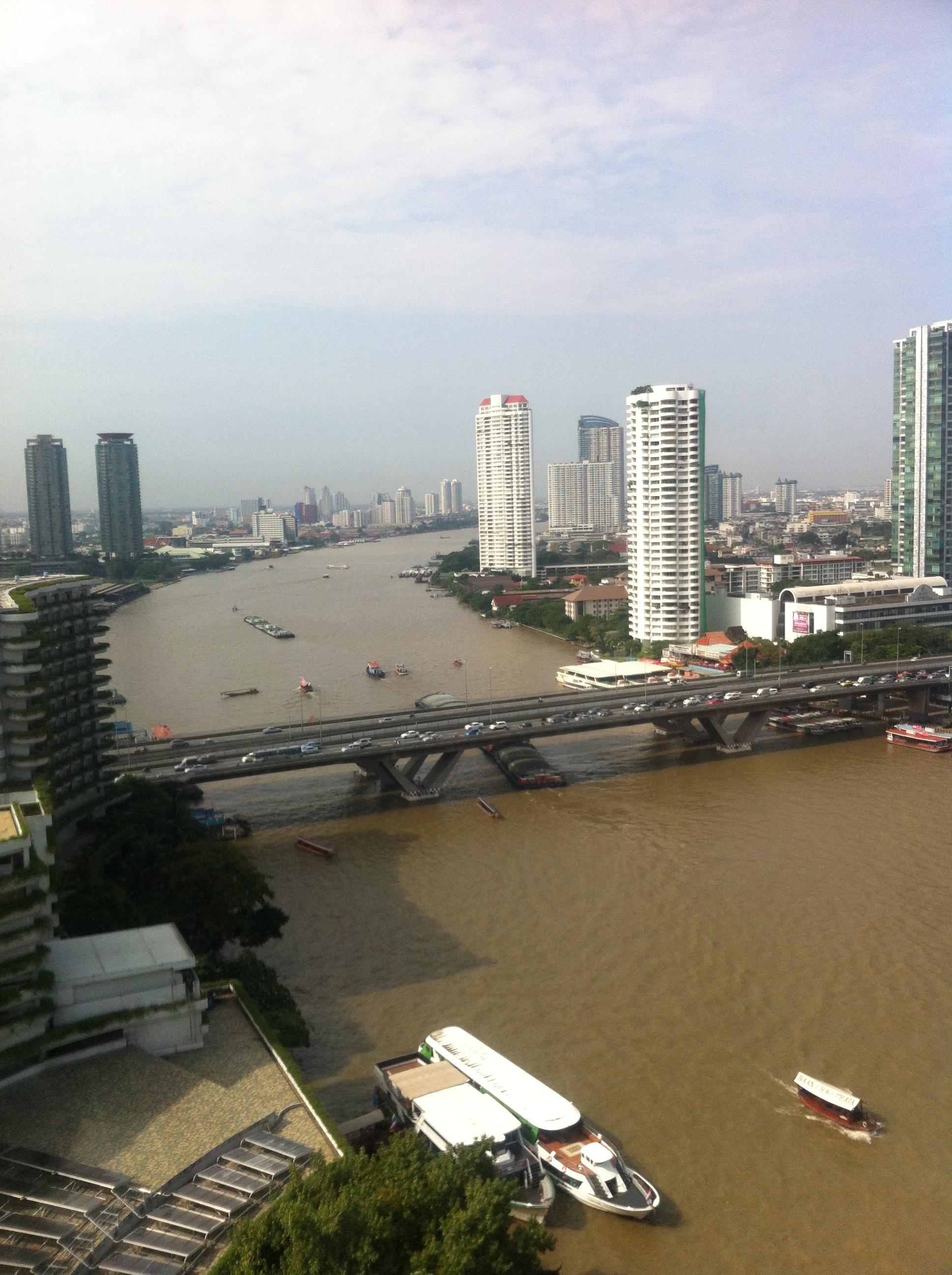
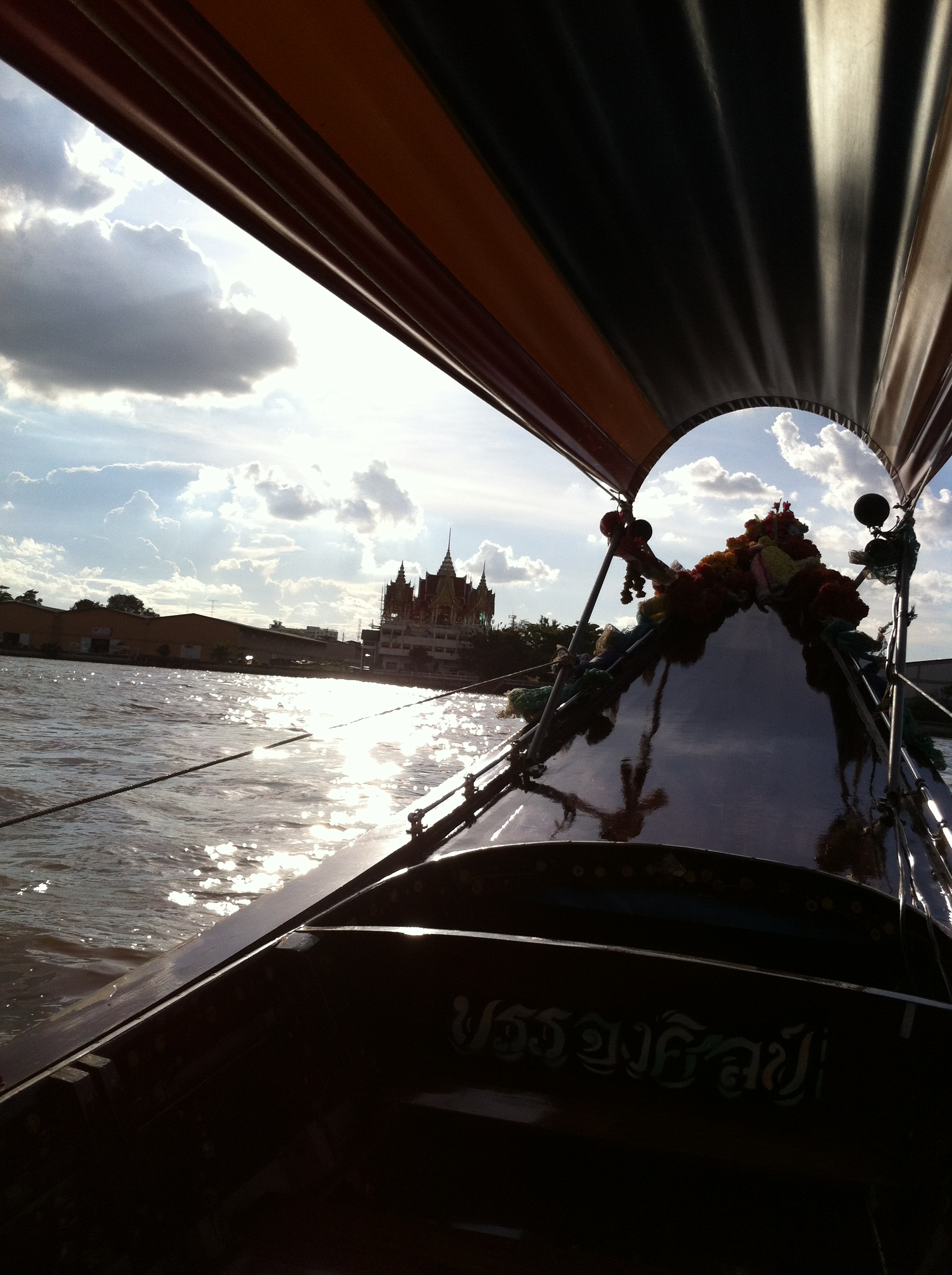
The second day I was in the city, at the Paragon Shopping Mall, was again reminded of King Mongkut and his progeny. Touring the river earlier that day, we had passed the King’s nephew’s palace — the king’s home was closed off for a celebration and procession, so we didn’t get to see it — a domicile that could have been the prototype for both films’ sets. Opulent, colorful, heavily guarded by sunny-dispositioned, smiling soldiers wearing their terribly British-affected uniforms, the palace stands colorfully among a varying population of river-front properties. It would be easy to assume, in the bias of a Western-trained eye , that all of this disparity is yet another example of the 99% being exploited and abused by the 1%. There is, obviously, plenty of that in every country, but along the river, people live in a manner they choose, a manner they have struggled to maintain, a manner they support would never willingly forfeit. And to even consider that every owner of a Riverside shack is too poor and too complacent to replace is an injustice to the people.

Later, when at an IMAX movie theater before a screening of The Dark Knight Rises, I was fortunate enough to witness the people’s devotion to their monarch first hand. Before the previews began, the houselights came up. An introductory strain of music played over the loudspeaker, and everyone stood, proudly, at attention. No one was monitoring the actions of the audience, and no one looked around to see if s/he was being watched. They simply, naturally stood in unison. The National Anthem played, and some of the people there sang. A pair of Russian tourists in the back of the house giggled nervously, not sure what to make of any of it. But the locals simply, gratefully, matter-of-factly sang a pledge of allegiance to their king. As soon as the music stopped, everyone sat down as a single entity and went back to munching on popcorn or twizzlers, but the moment was no less moving than the hats-off-no-kidding-around show of allegiance that precedes the beer drinking extravaganza at a football game.

It was all I could do to sit back down.  I felt like someone had just invited me to dance.

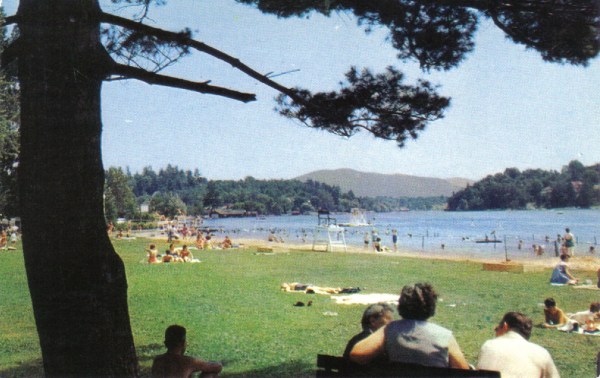
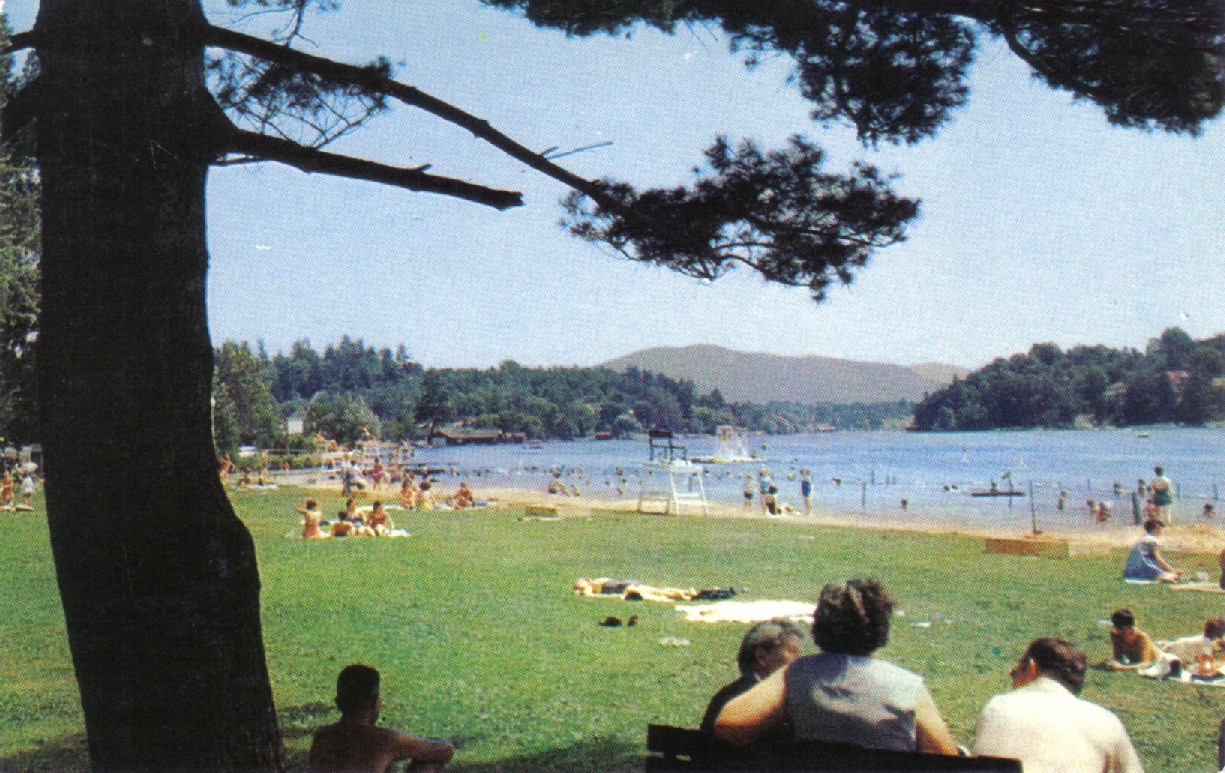
Lake Flower High Dive

Lots of children,

parents calling to them, encouraging,

or begging them to come back.

They laugh and swing out

off the high dive into the

dark water, where

they disappear, then emerge

sputtering, choking on their giggles,

delighted.

I stand at the top of the ladder

Hesitant to walk out onto the board

I am afraid of heights.

Lots of children,

my own siblings and others,

laugh at me and call out

“Dive!  C’mon,” beckoning me into the

dark water, where

I’ll disappear.  Will I emerge,

sputtering, choking on giggles,

delighted?

I venture out onto the plank

to look down, wondering what lies below

and if it matters.

Lots of voices now

“Do it!  Do it!”

I jump, and for the moment

I stop thinking . . .

just enjoy the

F

A

L

L

Times Square Apassionata

The other day, I heard a tour guide telling a walking tour, “Back in the days before Disney came to New York, Times Square was not so family friendly, but nowadays it’s been cleaned up, more like an urban amusement park.”  I sighed.  Remembering.

When I was 18, I had a job on 44th Street and 12th Avenue.  I lived in Queens, so to get to work, I took a bus to Main Street Flushing and then jumped on a still new-looking 7 Train, which took me to 42nd Street and 7th Avenue, from whence I walked west to the river.   My report time was 7:30; so, even in the summer, darkness lingered over most of my journey, and when I emerged from the tunnel into Times Square, the gray steam of early morning still dripped from the building overhangs.

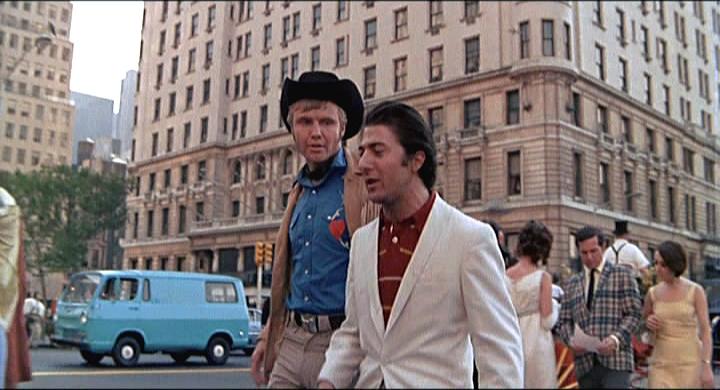
The first time I made that journey, I entered the world hesitantly.  Times Square in the crepuscular minutes just before the sun rose was peopled by potentially terrifying characters.  I grew up in the granite-guarded isolation of the Adirondack Mountains, after all, and the only place I had encountered people like these was in the books and comics I read, the movies I went to see.  City of Night, Manchild in the Promised Land, Batman, Midnight Cowboy. Luckily, they were characters with whom I had an intimacy that promoted a modicum of understanding I did not have for myself. I didn’t know what they might think of me.

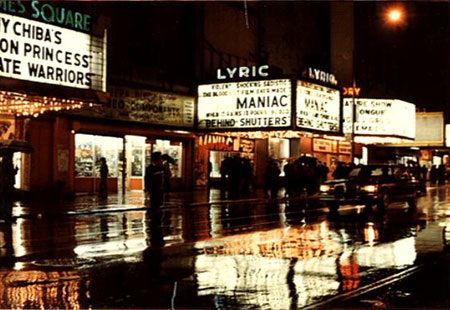
There was a small group of prostitutes who congregated together in front of the Lyric Theater, where the Hilton Theater is today, having coffee from a nearby greasy spoon, smoking and talking and giggling, perhaps too wired to go home to sleep or maybe waiting for someone to pick them up; I never knew.  I felt like I was in Junior High, having to pass the cool girls, hoping they wouldn’t make fun of me.

They didn’t. “Good morning, Sweetie,” a very large, older woman called to me; the others chimed in, warning me to be alert, to watch out for vagrants hiding in the shadows.  By the third or fourth day, they had coffee for me — I couldn’t drink it because I hated the “white Coffee” (extra cream) they drank, but I didn’t want to insult them, so I fake-sipped it as I headed west, thanking them profusely.  I lasted in the job (a story unto itself) for eight months, and every day in every kind of weather, the bevy was always there, expecting me when I emerged from the subway.

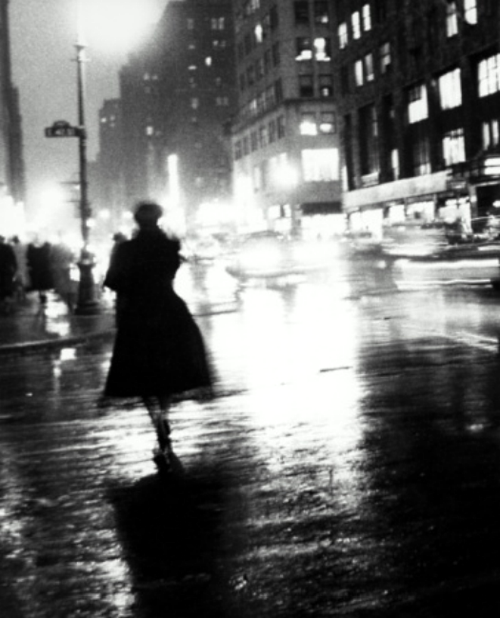
I finished work at 4, and the streets could be already pretty dark when I made my return trip.  I walked briskly East on 42nd Street from the river, one of many, mostly other members of the work force wrapping up their day.  I moved in sync with gal Fridays, clerks and typists in too much make-up, too-high spiked heels, too-tight mini-skirts, with office managers in dowdy, cheap suits, sensible flats, hats and gloves.  Construction workers stopped packing up their wares to shout their version of compliments at us as we walked or to jeer at the drag queens slinking along the edges of the buildings.  Well-dressed family men pulled their hats down over their eyes as they were sucked in by the blaring, undulating light of one of the many peepshow or porn  flick theaters that staved off the deepening darkness.

Cleaned up?  Times Square may be overrun with families now, but it’s far more tawdry, far less wholesome than the Times Square of my youth.

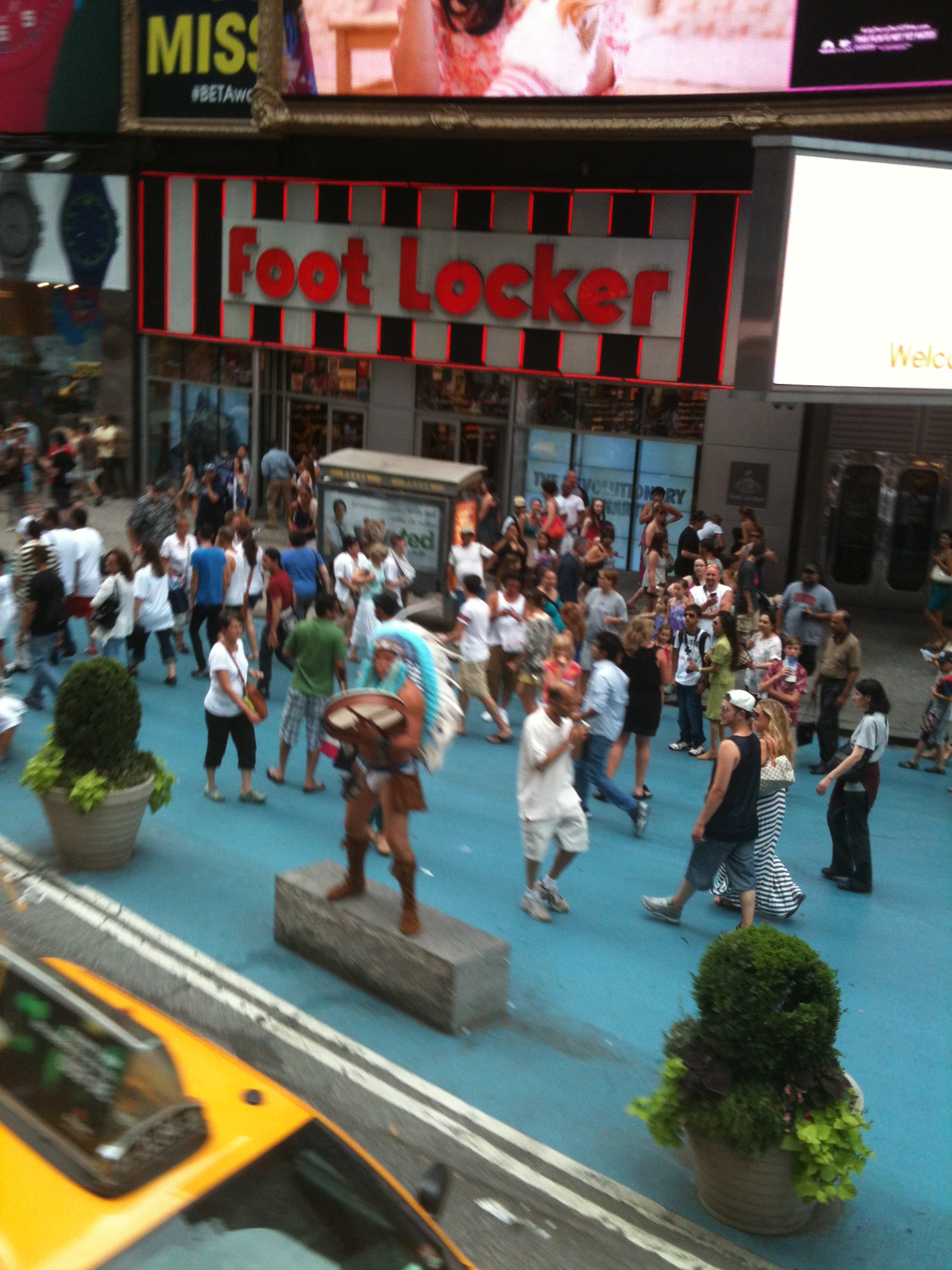
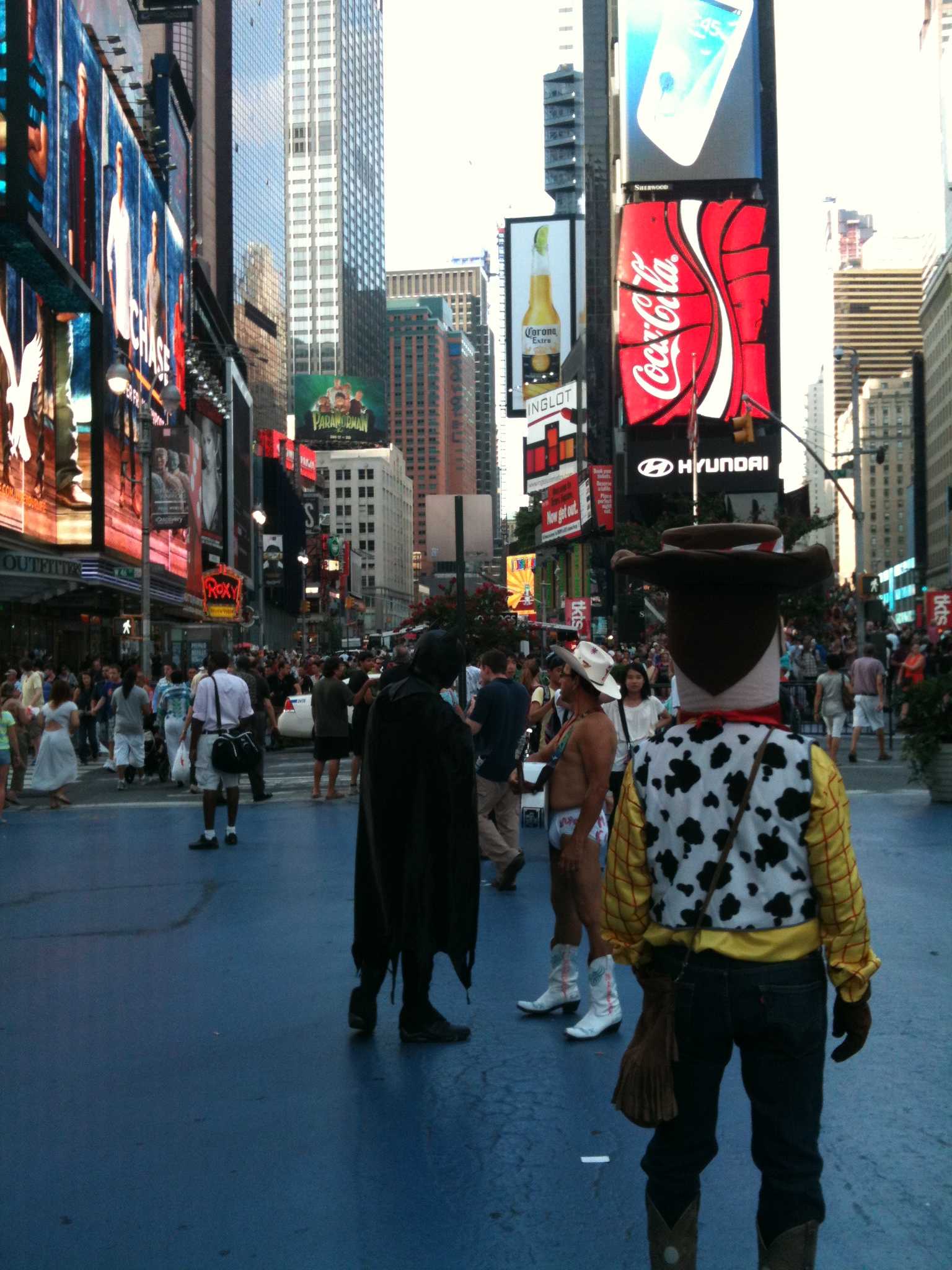
The Naked Cowboy and his imitators strut around in tightie whities, miming molestation of people’s adolescent daughters while parents laugh and snap photos.  A ridiculous-looking middle-aged man, wearing a headdress right out of a ’50’s western, parades his insignificant jewels in a skinny pair of black or white briefs as he drums a come-hither on a child’s tom-tom.  A massively wrinkled drag queen in a green bikini, her face and torso too red from an overdose of tanning rays, adjusts the Ms. Liberty crown perched on her head and collects tips in the sagging bottom of the over-packed bathing suit.  A vanful of migrant workers, bussed in from Queens and handed costumes in a lobby near the Discovery Museum, walk about as the dramatis personnae from best-known Disney films and television series, encouraging the kids to hug and fondle them.   In the center of it all, every Friday, a group of hate-spouting Black men spew ill-disguised racism and anti-semitism while tourists from around the world grab photos to send home on their iphones.

Who would call this wholesome?

I saw Batman talking to the Naked Cowboy the other day, and for a moment, it looked like Batman might ensnare the offending creep and carry him off in the Batmobile.  Wishful thinking.

Oh, well, even if he did, there’d be another to take his place.  It’s simple economics.  Just like they did in the late 60’s of my youth, people gotta make a living.  Come to think of it, the tour guide was right.  Times Square really is just an amusement park, and the revenues are where it’s at.