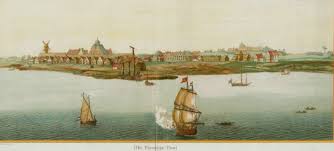
Lia and Izaak in New Amsterdam: A Writer’s Journey Begins

 Too Much of Nothing: Notes on Feminism, Identity, and Womanhood (Mountain Ash Press, October 2024) was not the book I expected my first solo book would be. I had spent two years compiling stories about my mother’s immigrant family, my father’s eccentric past. They comprised the MFA thesis that I planned to publish.  My readers disagreed.

“Make this your second book,” they said.  “What’s most interesting in this work is the story you tell with you as the central character.  Write about you first.  Then write them.”

I revamped, reassuring myself that my next book would be the tribute to my family I felt compelled to write.  Once I got past Book #1, I would return to the compendium of family stories, the histories of my displaced and troubled forebears, to honor their memory with my carefully chosen words.

Once Too Much of Nothing was launched,  I moved into the process of preparing the next book by focusing on my immigrant mother’s trauma and her family’s survival and planning for the research that would delve more deeply into Dad’s ancestry. I began preparing to depict the layered amalgam of culture and sorrow my parents’ union created.

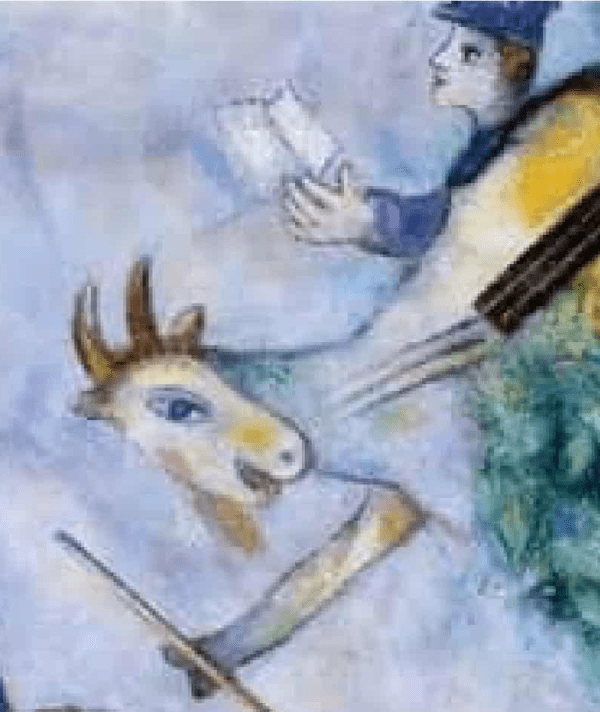
The journey has been fascinating . . . .   Their background is rife with drama. The forces that drove mom’s clan out of Europe in 1939, coupled with the tales of my father’s Dutch family, provide a rich tapestry of escape, survival, and the power of love. Best of all for me as a true New Yorker, their stories converge in the Catskill mountains and coalesce into one truly American chronicle.

When I read Russell Shorto’s Taking Manhattan: The Extraordinary Events that Created New York and Shaped America, I realized again how important the story I plan to tell really is. 

I’ve been a Shorto fan since, as a New York sightseeing guide, I read his Island in the Middle of the World, his history of New York City, which argued that everything we identify as American comes from the cultural stew that simmered in New Amsterdam/New York.  That stew, according to Shorto, contained generous portions of the Dutch, English, and Jewish traditions that bubbled in my identity. Shorto’s newer book re-examines the history even more sharply, and he plumbs the depths of tropes that any child who attended Junior High in New York State was fed as the history of our state. 

We all knew that the Dutch established a community here and called it New Netherland, that New Amsterdam, their city at the tip of the Manahatta Island, was its capital.  Then, in 1664, the English arrived on the banks of the Hudson River, seized New Netherland, and renamed it New York. Then, the Dutch slinked away to the corners of history. 

Not exactly the truth, Shorto proves.

According to documents that have only recently been translated, there is much more to the story that we did not know.  The Dutch West India Company, acting not as agents of the monarch but as agents of the world’s second international trade union (the first being the Dutch East India Company) stole New York – and what are now Delaware, New Jersey, much of western Massachusetts, and Rhode Island – from the natives and built a society that encouraged diversity.  They were not inherently more tolerant than the English or the Spanish, but they found that a multicultural world was conducive to profitable business. And business was what they were all about. They were willing to accept anyone and everyone from anywhere at all, so long as there was money to be made. What the Dutch West India Company did not do was to protect its people from the reprisals by the understandably angry natives, and they failed to create a workable government.

The British Civil War had just ended, reestablishing the English crown. King Charles II realized that his ravaged country needed to curry influence in the new world in order to replenish his coffers.  He put his brother James in charge of asserting their presence, and James sent emissary Richard Nichols to take possession of land that now constitutes most of the Northeastern United States seaboard.

After spending some time in the Massachusetts Bay Colony negotiating peace between royalists and Puritans, Nichols, well-educated and conversant with Dutch success, sailed down coast and up the Hudson River to negotiate with Peter Stuyvesant for a transfer of power.  No shots were fired; no animosity resulted. As soon as his signature was affixed to the document, Stuyvesant made a brief visit to his European homeland before returning to Manhattan and settling down on his large farm at the south end of the island. He died a very wealthy, satisfied New Yorker.  

Nichols knew that a system that worked needed no reworking, and the Dutch system worked.  He brought in military forces to protect the citizenry, to maintain loyalty to the King, and to uphold the law.  But the Dutch remained in positions of political and social prominence. The array of religions and nationalities that had thrived under the Dutch retained their status as well. 

In the story Shorto tells of my city, I see my mother and my father as central characters. My father’s paternal English roots English planted themselves in Massachusetts, Maine, New Hampshire in the 1620s when they fled the Church of England,  around the same time as his maternal folks were landing in New Netherland. Members of the Dutch Reformed Church, Dad’s second and third great-grandparents likely originated as Walloons, Calvinists who wandered away from the perils of Catholic Belgium and France into New Amsterdam by way of Holland.

 Likewise, my mother’s people had spent generations seeking a safe homeland.  Out of the Russian Pale of Settlement, into Poland/Ukraine, to Zagreb by way of Vienna, and eventually to Kingston, NY, once a Dutch enclave called Wiltwyck.

I will write about my parents.  But I will write about them as fictional characters in a time when unions like theirs were the stuff that fueled the sensibility that built the United States.

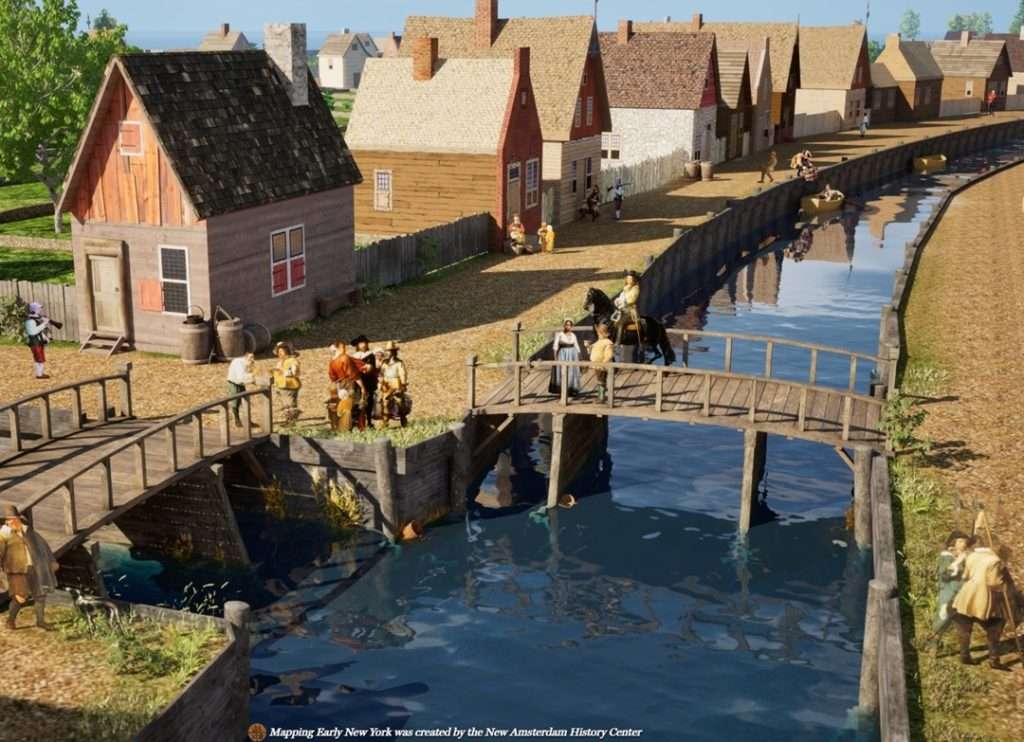
My parents’ fictional personae will inhabit 17th-century New Netherlands.  He as the son of parents who arrived in 1624, for the purpose of establishing a future in nieuwe wereld. She as the child of a Lisbon-born Jew, whose family, dispersed by the Inquisition, had found refuge in Dutch Recife, Brazil, until the same Inquisition sent them scrambling to New Amsterdam.

My protagonists are Lia and Izaak.  Neither’s story is unique, but each has a singular voice and a profoundly individual presence.  Theirs is a timeless story shared by millions, but their details are theirs alone.
Lucky’s Not Good Enough

I wanted to love We Were the Lucky Ones, a Hulu original series.  After all, the story resonates with me.  Like my real-life Jewish family, the family in the show is dispersed by the Nazi invasion, set adrift in the world.  It’s a masterful series, well acted, realistically written, and beautifully shot.  Yet, after the second or third episode, I found myself feeling sick, resenting the artistry of it.  The why eluded me at first.

The drama is certainly harrowing.  An embattled family encounters every possible horror that the Holocaust meted. They witness, narrowly escape, suffer aftershocks, and move on. The music is Schindleresque sad, and the scenes of torture and cruelty are horrifying.  But that’s not it. Nothing in this show is any worse than what Keneally or Spielberg depicted or what Primo Levi described.  No loss is any more heartbreaking than those Daniel Mendelsohn memorialized.  There is nothing to see in this series that we haven’t seen in any one of the honorable Holocaust museums across the world.   So why does this show so offend me? 

Over my head, I hear the whirr of helicopters, and I run to the TV to check the local news. On the screen, hate-spewing,  pro-Palestinians rally on my Alma Mater campus, just up the street from my home.  An angry child-woman glares into the camera and shouts, “They are weaponizing the holocaust” while hundreds scream, “From the river to the sea.” 

At another gathering in midtown Manhattan, youngsters in checkered scarves and green, white, black, and red flags scream “Free Palestine.” A middle-aged man proudly waves a Hamas flag.  Online, a headline from the ADL: “Chicago Sees Rise in Antisemitism and Activism Amid Action by Anti-Israel Groups.”

There it is. Now I get it.

Our stories are betraying us.  It’s time to revise.

Real life has become scary, and those of us who inherited our parents’ PTSD, who were born with memories we cannot decipher, are reliving the dreams we cannot comprehend of the terror they fled.  The specters that used to visit only by night are fully animated by day.  Once upon a time, the anticipation of violence was easily quelled by stories that assured us that the world was sufficiently sorry; pogroms were a thing of the past. We believed our parents when they reminded us that this is America, after all, and we could feel safe.  No more.  Those night fears loom omnipresent over my home, my security, my grandchildren.  The stories no longer heal.

The haters are wrong.  It is not that we are weaponizing the Holocaust or antisemitism.  But we are hiding behind it.  We hold up our past like medals won in the Suffering Olympics that proclaim our capable willingness to suffer.  There is no more reassurance in the idea that it can’t happen here because clearly it can.  And it will if we let it. 

Those who wish for our annihilation are fueled by our pain.  Many display their own medals and say we have not suffered nearly enough.  Others are simply irritated by what they perceive as our whining insistence that enough is enough. 

We have to stop thinking that this approach will work. Many in the world deem it passive aggression.  We have to stop apologizing for our coreligionists who are fighting for the survival of Israel.  We have to stop disclaiming our right to fight back.  We have to take control of the rhetoric and paint ourselves as a far more positive, authoritatively powerful people. As Rabbi Diana Fersko recently wrote for Tablet magazine, “We have to stop running defense” (“American Jews Should Become a Little more Israeli” April 1024).  Just because millions of us were killed in the holocaust doesn’t mean we must beg for survival by reminding our foes we don’t deserve to be exterminated.  Would we be any less deserving if we had not suffered the mass murders? 

Art is a wonderful place to find relief and transformation.  Which is what so many writers and filmmakers, artists and curators have done by insisting on telling our truth.  But at this moment, the profusion of new Holocaust reenactments feels like a Hail Mary play that is doomed to failure.  We cannot think that because Hulu shows The Lucky Ones for ten weeks on their streaming app our detractors will suddenly see the folly of their ways and back off.  Will one Jewish family’s miraculous survival of that great apocalypse convince the world to watch any less dispassionately while the Ayatollah rattles Iran’s nuclear sword?   Not a chance.

We should have more films like Munich or Raid on Entebbe or even Exodus. We need to see heroes like Liev Schreiber’s character in “Defiance,” heroes who defied the stereotypes and showed our refusal to let the world beat us up.  There should be more series like Tehran that explore the ways in which Israel and world Jewry are endangered every minute of every day by adversaries who hate us for no reason but that they do. We should have filmmakers creating films like Watching the Moon at Night that expose Hamas leaders’ vitriolic calls for the extermination of all Jews everywhere. We need documentary footage of Jews standing up to the hate, holding their ground. . . winning.

We cannot expect the world to feel sorry for us just because we wear our thorny laurels in public.  People are not moved by pictures of dead Jews.  They take those images for granted.

It Wasn’t So Very Long Ago. . . .

I wrote this two years ago, and today much of it still rings true. . . . Especially the last paragraph.  I do mourn the lost time in getting to this glorious day on which the Supreme Court of the United States of America finally that the bonds and protections of marriage are legal and binding nationwide, but it should not have taken this long.  And the decision should remind us that there is still a terrible disparateness in human rights in the country; women and minorities, neither of which is  in the minority at all, are still oppressed, and the rights of gun owners are killing our loved ones.  We have a long way to go before we have achieved liberty and justice for all, and while I celebrate this momentous day, I want my granddaughters to live in a society of true equal rights.

_________________

June 3, 2013

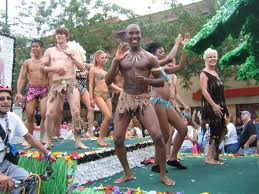
The announcement on Wednesday of the Supreme Court’s ruling that the Defense of Marriage Act, which barred federal recognition of same-sex marriages, is unconstitutional set me to thinking about Gay Pride Day, a day we take for granted in New York, an institution.  This year it will be more raucous than ever, and with good reason.  Yet, as the day approaches,  I await, as I always do,  with awe, elation . . . and with no small amount of sadness.

images

It is easy to forget how recently there were so few who were straight without being narrow, so few gay men and women able to admit who they were in public, so few willing to support the notion that being gay was no less normal than being straight. Back then, we whispered secret messages, talked about “gaydar” and prayed whenever one of our friends went out for the night that he or she would be back unbruised, unbowed from a night of partying.

In that distant past of the 1960’s and ‘70’s, gay men often sought beards to protect them from the prying sensibilities of those who might want to out them, and when I, a naïve innocent from upstate New York, arrived on the dating scene with my tentative self image, I was immediately identified as one who would do very nicely.

My very first boyfriend was Mark, a Native American from outside Santa Fe, and he was the perfect match for me. A fellow theater major at the University of New Mexico, he knew just how to make me happy. Squiring me around in his fancy sports car – we even ran away together over spring break to escape the boredom and would have landed in NY if the car had not thrown a rod – he took me to plays and films, taught me to order alcohol, introduced me to all kinds of excitement and never expected me to “put out.” I was 17 and as grateful for his companionship as he was for mine; we co-shielded until I finally found a way to get to New York.  I adored him, and I thoroughly enjoyed his friends and family.

images-1When I moved to New York, a bit older and slightly more worldly wise, I was comfortable within that niche I had created with Mark. Uncomfortable with women, I chose to room with gay men instead. At Mark’s behest, I had read City of Night, which led me to expect that things should be far more liberated and out in the open in NYC, but to my dismay, people were nearly as closeted and far more anxious about being outed because here the threat of discovery was far more ominous – night life, clandestine and guarded as it was, was always in some Nosey Parker’s purview.

My last roommate before marriage changed me into a less participatory but equally supportive friend was Barry. Barry was gorgeous – a raven-haired Ned Romero type, tall, muscular, with seemingly black eyes that burned a hole in your heart if he caught your gaze, and a cleft in his chin that looked as though it would be a nifty place to go spelunkering.  A brilliant young man who wanted to be a filmmaker if only he could find a camera, Barry drank too heavily, smoked too constantly, and loved too voraciously. He had a lover named Donny, who would today be called his partner.  Donny was the gentlest poet I have yet to meet, a deep thinker who adored being challenged by Barry, and it seemed like the two of them had it all; but Barry was restless. He wanted more than anyone could give him. He wanted to be out in the open, to let everyone know that he was gay and proud, and unashamed to be all that he could be.

Which, I guess, is why Barry attempted suicide in the wee hours of the morning following Mother’s Day, 1969, a brief month before the Stonewall Uprising. I had spent the weekend at home with my mother in the Adirondacks and had gone to sleep late, worried I wouldn’t awake in time to catch the early morning bus back to the city.

Mom came into my room and called my name. I didn’t budge. She called me again. Still no response. Then she said, “Carla, Barry’s on the phone.” It was Barry’s name that woke me. “I think there is something terribly wrong.”

There was. A many-hour struggle ensued. I had to call the State Police who called the local precinct in Chelsea where our apartment was, and they in turn called the fire department, who broke down the door and took him to St. Vincent’s to have his stomach pumped. He had taken enough Secanol and Demerol to kill a wilderness of monkeys, but he survived. When I got to the hospital later that day – an eight-hour bus ride sans the solace of information (how did we survive before cellphones and texting!) — he was in ICU. The nurses allowed me to see him briefly, and he was only quasi-conscious.

When he did wake up, he told me to leave him alone.  “I didn’t want you to save me,” he said, his black eyes dripping with remorse. “I wanted to be free. I just can’t stand the charade anymore.”

We lost touch . I married, had children. AIDS happened.  I lost a nephew who was far too young, far too gentle, just like the friends I watched suffer and die.  Then things changed, albeit too slowly for too many. I am positive that Barry fell to AIDS; he was a prime candidate, and so many of our less vulnerable friends did.

In 1982, when I was living in Phoenix, the phone again rang in the wee hours of the morning, and I answered with trepidation. This time at the other end was the poet, Barry’s lover. “Carla.” The voice was unmistakable; few deliciously true bass voices exist in my world of then or now. “Donny.” There was a long moment of breathing. Nothing else. Then, “I just wanted to know if you were still alive,” he finally said and hung up.

I am guessing, though I cannot be sure, that Barry was already not alive. I never heard from Donny again, and I wish I knew if where he might be, if he yet lives, though I fear he probably does not.

For Barry and for Donny and for so many other friends I made and cherished over those years, I weep whenever I see the Gay Pride Parade pass by, as I wept when the Supreme Court made its positive but still wishy-washy decision the other day.  So many Donnys and Barrys and gave their freedom, their tears, their blood to the fight; those of our generation who managed to stay together through the decades can now at least “enjoy” the benefits of widowhood, can stop being taxed and fined for their inheritances and can claim the social security payments that are rightfully theirs.

But those men and women who cannot partake of the limited bounty, those who did not live to see these days and those who lost their partners far too soon must be remembered.  They earned the right to be celebrated, to be recalled with gratitude for what their lives have wrought.

So I wave, and I cheer, remembering the laughter and the nonsense of it all; and I am glad the gay community finally pulled together, invoked some sanity from the non-gay world and affected all this positivity. I am grateful that except for the –finally! – infrequent backlash to the movement, gays can be who they are with impunity.

But I mourn for the years lost, the lives lost, the dreams lost because up till now the world was blinded to an essential reality that has always seemed so crystal clear to me. It is far easier to find happiness by taking pride in one another’s humanity than to invoke stress by worrying about what consenting adults might be doing under the bedcovers in their own privy chambers.images-2