A Very Human Condition

When I moved to New York City in 2003, it took me some time before I eventually found work as a New York City Sightseeing Guide.  For the first year, I felt ridiculously fortunate to be able to share NYC with tourists who rode with me on the top of a double-decker bus and to get paid for the pleasure.  That wore off eventually, but in the meantime, I got to know Mandy. 

Mandy, still generally called by what would become her dead name, Stephen, was my favorite coworker. A brilliant guide and former attorney, she was saving up for gender reassignment surgery.

Divorce from a greedy wife, mental illness in a daughter whom Mandy would never abandon, and frequent mandate transgressions had led to her being fired from her high-powered law firm, which left Mandy with no money for the ultra-expensive procedures. In the interim, Mandy made concessions of powerful self-assertion by wearing, in all weather, Bermuda shorts fashioned in bright orange sweatshirt fabric, frowzy blouses and tops that plunged below her prominent and rapidly graying chest hair, and neon-colored sneakers. Her hair and mouth were a whirling forest of bright tangerine curls and a soft, pillowy hot pink glossy triangle.

“I’m a lesbian,” Mandy explained to me the first time she asked me out to dinner.

I was flattered. I had never met anyone smarter or funnier than this person, qualities I have always found irresistible in a man. But I had no interest in being romantically involved with a woman, even a woman who was, anatomically at least, still a man. Of course, I didn’t want to hurt Mandy’s feelings, and though I turned down the invitations to dinner, to movies, to theater, we often sat together as we waited between buses.  
I never tired of listening to the stories she told. The personal stories were harrowing, beginning with a Lower East Side childhood, and the professional stories were infuriating. This person had tolerated more than anyone’s fair share of abuse by the system over the years. If I had been differently wired, if I were capable of loving Mandy as she deserved to be loved, I would have spent all kinds of days and nights with this remarkable human being.

Those first months working on the bus were magical.  What a privilege it seemed to explore New York from an ostensible eagle’s view. As a history and culture buff, I was learning in a way no book or school had ever taught me. Mandy’s wide knowledge of the city enriched each day and broadened my tour repertoire.  Having studied architecture, Mandy was conversant with the eclectic nuances of building styles that comprised our city’s makeup. As an astute political observer, she understood the underpinnings of Tammany, why Robert Moses was more tyrant than savior. She explained to me why the Breslin-Mailer campaign to create the great city-state, a movement I enthusiastically worked for in my youth, was basically moronic.  Having studied labor law, her expertise guided our labor disputes. When the company abused us, Mandy spoke eloquently with great erudition. She knew the score.  She understood what we were entitled to and what was being kept from us with malicious, greedy fury.

Winter descended as I rounded the end of my first year on the bus, and with it came the end of the idyll. Cold weather and heartless employers extinguished the joy.

Eventually, Mandy ended too.

Our company, a startup in every sense of the word, provided no bathroom for our relief.  For a while, we were allowed to use the restrooms in the Hilton Garden Inn, which was less than a block from our launch site, and the management there even encouraged us to buy goods in their gift store and food mart by giving us a generous discount. 

Then one day Mandy farted and sighed loudly in a stall in the women’s room, and a tourist seated next to her, the woman in the next stall, securely separated by a metal wall and a locked door, freaked out at the sound of a male voice sighing on the tail of a roaring fart. She complained to the Hilton management. After that, all guides were banned from the place. No more comfy lounge seats, no more cheap candy bars. No more toilet. I saw no solution to the problem and opted to take a break.

I left the buses to edit a book for the friend of a friend. The book was set in NYC, but the London-based author knew little about our city and wrote locations that were amiss and an Iowa-bred protagonist, who was more accurately an Englishman in New York.  To complete the project, I went to the UK for a few months, and when I returned, Mandy was gone. 

Conditions Mandy had fought to improve had killed her.

Mandy was our advocate, the voice that argued for improvement in conditions atop the buses that were unfit for guides.  We had no place to sit.  We were required at times to perform chores – like helping the elderly up the stairs or carrying baby paraphernalia or lugging luggage up the stairs – that put undue strain on all our muscle groups.  We stood for long periods of time, jostled mercilessly about. We had no place to go to get warm, no relief from the harsh winter exacerbated by the harsh wind generated by the moving bus.

Mandy’s back and health could not take it. She suffered pneumonia and bronchitis and then was injured and re-injured until she finally had no choice but to undergo back surgery.  Like many spinal surgery patients, Mandy did not survive. The company management, who never appreciated what an asset they had in Mandy, was relieved. Tethered by Mandy’s knowledge of the law, they had felt forced to retain her. Her illnesses and back troubles cost them money by way of pay they were impelled to dole out and by insurance rate hikes her claims inflicted. The bloodsuckers were free at last. 

We who loved Mandy, lost a precious friend.  I lost a valuable mentor.

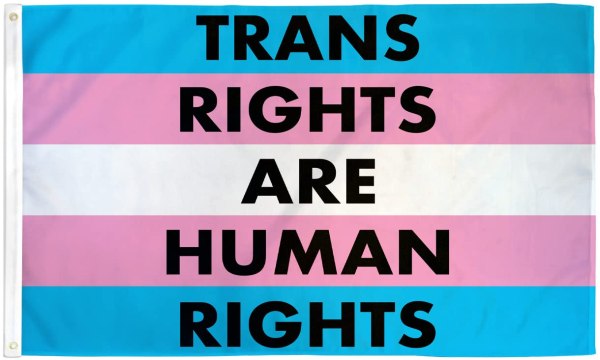
I find myself wishing for her presence lately.  She’d tell me why the current state of affairs for Trans people cannot hold.  She’d tell me to keep the faith.

“Don’t give the bastards any power,’ she’d laugh.  “They’ll turn to dust just like the rest of us.”
It Wasn’t So Very Long Ago. . . .

I wrote this two years ago, and today much of it still rings true. . . . Especially the last paragraph.  I do mourn the lost time in getting to this glorious day on which the Supreme Court of the United States of America finally that the bonds and protections of marriage are legal and binding nationwide, but it should not have taken this long.  And the decision should remind us that there is still a terrible disparateness in human rights in the country; women and minorities, neither of which is  in the minority at all, are still oppressed, and the rights of gun owners are killing our loved ones.  We have a long way to go before we have achieved liberty and justice for all, and while I celebrate this momentous day, I want my granddaughters to live in a society of true equal rights.

_________________

June 3, 2013

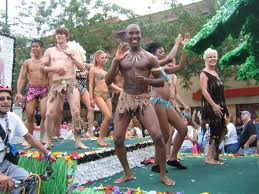
The announcement on Wednesday of the Supreme Court’s ruling that the Defense of Marriage Act, which barred federal recognition of same-sex marriages, is unconstitutional set me to thinking about Gay Pride Day, a day we take for granted in New York, an institution.  This year it will be more raucous than ever, and with good reason.  Yet, as the day approaches,  I await, as I always do,  with awe, elation . . . and with no small amount of sadness.

images

It is easy to forget how recently there were so few who were straight without being narrow, so few gay men and women able to admit who they were in public, so few willing to support the notion that being gay was no less normal than being straight. Back then, we whispered secret messages, talked about “gaydar” and prayed whenever one of our friends went out for the night that he or she would be back unbruised, unbowed from a night of partying.

In that distant past of the 1960’s and ‘70’s, gay men often sought beards to protect them from the prying sensibilities of those who might want to out them, and when I, a naïve innocent from upstate New York, arrived on the dating scene with my tentative self image, I was immediately identified as one who would do very nicely.

My very first boyfriend was Mark, a Native American from outside Santa Fe, and he was the perfect match for me. A fellow theater major at the University of New Mexico, he knew just how to make me happy. Squiring me around in his fancy sports car – we even ran away together over spring break to escape the boredom and would have landed in NY if the car had not thrown a rod – he took me to plays and films, taught me to order alcohol, introduced me to all kinds of excitement and never expected me to “put out.” I was 17 and as grateful for his companionship as he was for mine; we co-shielded until I finally found a way to get to New York.  I adored him, and I thoroughly enjoyed his friends and family.

images-1When I moved to New York, a bit older and slightly more worldly wise, I was comfortable within that niche I had created with Mark. Uncomfortable with women, I chose to room with gay men instead. At Mark’s behest, I had read City of Night, which led me to expect that things should be far more liberated and out in the open in NYC, but to my dismay, people were nearly as closeted and far more anxious about being outed because here the threat of discovery was far more ominous – night life, clandestine and guarded as it was, was always in some Nosey Parker’s purview.

My last roommate before marriage changed me into a less participatory but equally supportive friend was Barry. Barry was gorgeous – a raven-haired Ned Romero type, tall, muscular, with seemingly black eyes that burned a hole in your heart if he caught your gaze, and a cleft in his chin that looked as though it would be a nifty place to go spelunkering.  A brilliant young man who wanted to be a filmmaker if only he could find a camera, Barry drank too heavily, smoked too constantly, and loved too voraciously. He had a lover named Donny, who would today be called his partner.  Donny was the gentlest poet I have yet to meet, a deep thinker who adored being challenged by Barry, and it seemed like the two of them had it all; but Barry was restless. He wanted more than anyone could give him. He wanted to be out in the open, to let everyone know that he was gay and proud, and unashamed to be all that he could be.

Which, I guess, is why Barry attempted suicide in the wee hours of the morning following Mother’s Day, 1969, a brief month before the Stonewall Uprising. I had spent the weekend at home with my mother in the Adirondacks and had gone to sleep late, worried I wouldn’t awake in time to catch the early morning bus back to the city.

Mom came into my room and called my name. I didn’t budge. She called me again. Still no response. Then she said, “Carla, Barry’s on the phone.” It was Barry’s name that woke me. “I think there is something terribly wrong.”

There was. A many-hour struggle ensued. I had to call the State Police who called the local precinct in Chelsea where our apartment was, and they in turn called the fire department, who broke down the door and took him to St. Vincent’s to have his stomach pumped. He had taken enough Secanol and Demerol to kill a wilderness of monkeys, but he survived. When I got to the hospital later that day – an eight-hour bus ride sans the solace of information (how did we survive before cellphones and texting!) — he was in ICU. The nurses allowed me to see him briefly, and he was only quasi-conscious.

When he did wake up, he told me to leave him alone.  “I didn’t want you to save me,” he said, his black eyes dripping with remorse. “I wanted to be free. I just can’t stand the charade anymore.”

We lost touch . I married, had children. AIDS happened.  I lost a nephew who was far too young, far too gentle, just like the friends I watched suffer and die.  Then things changed, albeit too slowly for too many. I am positive that Barry fell to AIDS; he was a prime candidate, and so many of our less vulnerable friends did.

In 1982, when I was living in Phoenix, the phone again rang in the wee hours of the morning, and I answered with trepidation. This time at the other end was the poet, Barry’s lover. “Carla.” The voice was unmistakable; few deliciously true bass voices exist in my world of then or now. “Donny.” There was a long moment of breathing. Nothing else. Then, “I just wanted to know if you were still alive,” he finally said and hung up.

I am guessing, though I cannot be sure, that Barry was already not alive. I never heard from Donny again, and I wish I knew if where he might be, if he yet lives, though I fear he probably does not.

For Barry and for Donny and for so many other friends I made and cherished over those years, I weep whenever I see the Gay Pride Parade pass by, as I wept when the Supreme Court made its positive but still wishy-washy decision the other day.  So many Donnys and Barrys and gave their freedom, their tears, their blood to the fight; those of our generation who managed to stay together through the decades can now at least “enjoy” the benefits of widowhood, can stop being taxed and fined for their inheritances and can claim the social security payments that are rightfully theirs.

But those men and women who cannot partake of the limited bounty, those who did not live to see these days and those who lost their partners far too soon must be remembered.  They earned the right to be celebrated, to be recalled with gratitude for what their lives have wrought.

So I wave, and I cheer, remembering the laughter and the nonsense of it all; and I am glad the gay community finally pulled together, invoked some sanity from the non-gay world and affected all this positivity. I am grateful that except for the –finally! – infrequent backlash to the movement, gays can be who they are with impunity.

But I mourn for the years lost, the lives lost, the dreams lost because up till now the world was blinded to an essential reality that has always seemed so crystal clear to me. It is far easier to find happiness by taking pride in one another’s humanity than to invoke stress by worrying about what consenting adults might be doing under the bedcovers in their own privy chambers.images-2