
Too Much of Nothing: Notes on Feminism, Identity, and Womanhood (Mountain Ash Press, October 2024) was not the book I expected my first solo book would be. I had spent two years compiling stories about my mother’s immigrant family, my father’s eccentric past. They comprised the MFA thesis that I planned to publish. My readers disagreed.
“Make this your second book,” they said. “What’s most interesting in this work is the story you tell with you as the central character. Write about you first. Then write them.”
I revamped, reassuring myself that my next book would be the tribute to my family I felt compelled to write. Once I got past Book #1, I would return to the compendium of family stories, the histories of my displaced and troubled forebears, to honor their memory with my carefully chosen words.
Once Too Much of Nothing was launched, I moved into the process of preparing the next book by focusing on my immigrant mother’s trauma and her family’s survival and planning for the research that would delve more deeply into Dad’s ancestry. I began preparing to depict the layered amalgam of culture and sorrow my parents’ union created.
The journey has been fascinating . . . . Their background is rife with drama. The forces that drove mom’s clan out of Europe in 1939, coupled with the tales of my father’s Dutch family, provide a rich tapestry of escape, survival, and the power of love. Best of all for me as a true New Yorker, their stories converge in the Catskill mountains and coalesce into one truly American chronicle.
When I read Russell Shorto’s Taking Manhattan: The Extraordinary Events that Created New York and Shaped America, I realized again how important the story I plan to tell really is.

I’ve been a Shorto fan since, as a New York sightseeing guide, I read his Island in the Middle of the World, his history of New York City, which argued that everything we identify as American comes from the cultural stew that simmered in New Amsterdam/New York. That stew, according to Shorto, contained generous portions of the Dutch, English, and Jewish traditions that bubbled in my identity. Shorto’s newer book re-examines the history even more sharply, and he plumbs the depths of tropes that any child who attended Junior High in New York State was fed as the history of our state.
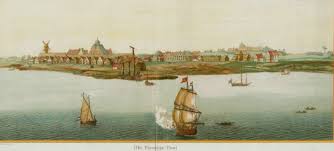
We all knew that the Dutch established a community here and called it New Netherland, that New Amsterdam, their city at the tip of the Manahatta Island, was its capital. Then, in 1664, the English arrived on the banks of the Hudson River, seized New Netherland, and renamed it New York. Then, the Dutch slinked away to the corners of history.
Not exactly the truth, Shorto proves.
According to documents that have only recently been translated, there is much more to the story that we did not know. The Dutch West India Company, acting not as agents of the monarch but as agents of the world’s second international trade union (the first being the Dutch East India Company) stole New York – and what are now Delaware, New Jersey, much of western Massachusetts, and Rhode Island – from the natives and built a society that encouraged diversity. They were not inherently more tolerant than the English or the Spanish, but they found that a multicultural world was conducive to profitable business. And business was what they were all about. They were willing to accept anyone and everyone from anywhere at all, so long as there was money to be made. What the Dutch West India Company did not do was to protect its people from the reprisals by the understandably angry natives, and they failed to create a workable government.
The British Civil War had just ended, reestablishing the English crown. King Charles II realized that his ravaged country needed to curry influence in the new world in order to replenish his coffers. He put his brother James in charge of asserting their presence, and James sent emissary Richard Nichols to take possession of land that now constitutes most of the Northeastern United States seaboard.
After spending some time in the Massachusetts Bay Colony negotiating peace between royalists and Puritans, Nichols, well-educated and conversant with Dutch success, sailed down coast and up the Hudson River to negotiate with Peter Stuyvesant for a transfer of power. No shots were fired; no animosity resulted. As soon as his signature was affixed to the document, Stuyvesant made a brief visit to his European homeland before returning to Manhattan and settling down on his large farm at the south end of the island. He died a very wealthy, satisfied New Yorker.
Nichols knew that a system that worked needed no reworking, and the Dutch system worked. He brought in military forces to protect the citizenry, to maintain loyalty to the King, and to uphold the law. But the Dutch remained in positions of political and social prominence. The array of religions and nationalities that had thrived under the Dutch retained their status as well.
In the story Shorto tells of my city, I see my mother and my father as central characters. My father’s paternal English roots English planted themselves in Massachusetts, Maine, New Hampshire in the 1620s when they fled the Church of England, around the same time as his maternal folks were landing in New Netherland. Members of the Dutch Reformed Church, Dad’s second and third great-grandparents likely originated as Walloons, Calvinists who wandered away from the perils of Catholic Belgium and France into New Amsterdam by way of Holland.
Likewise, my mother’s people had spent generations seeking a safe homeland. Out of the Russian Pale of Settlement, into Poland/Ukraine, to Zagreb by way of Vienna, and eventually to Kingston, NY, once a Dutch enclave called Wiltwyck.
I will write about my parents. But I will write about them as fictional characters in a time when unions like theirs were the stuff that fueled the sensibility that built the United States.
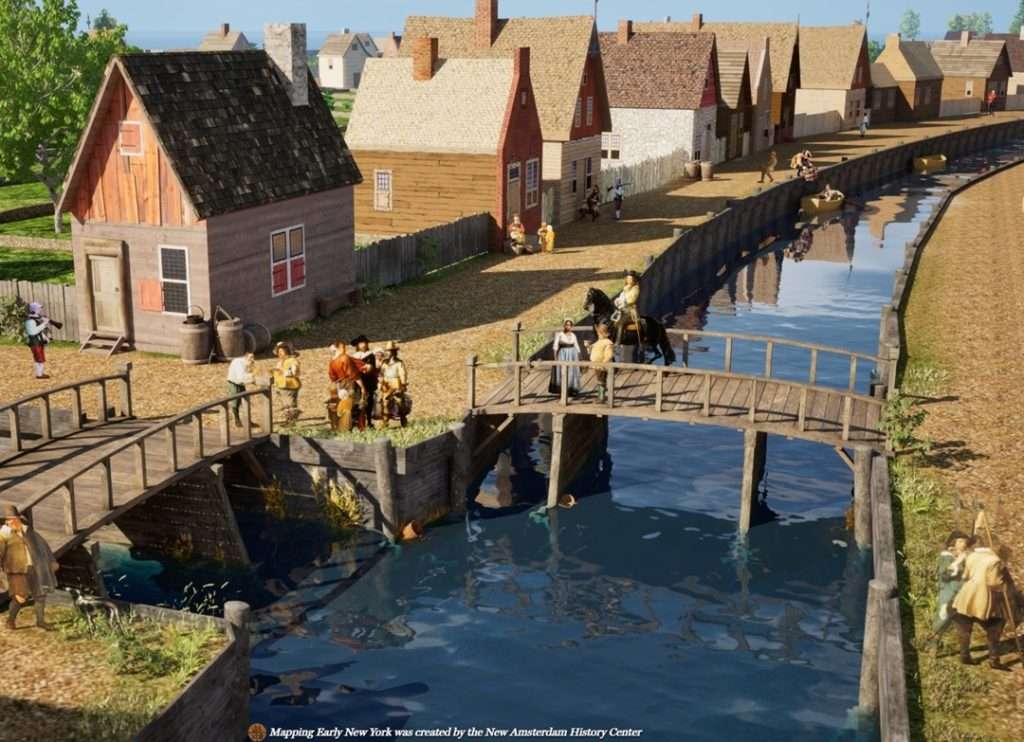
My parents’ fictional personae will inhabit 17th-century New Netherlands. He as the son of parents who arrived in 1624, for the purpose of establishing a future in nieuwe wereld. She as the child of a Lisbon-born Jew, whose family, dispersed by the Inquisition, had found refuge in Dutch Recife, Brazil, until the same Inquisition sent them scrambling to New Amsterdam.
My protagonists are Lia and Izaak. Neither’s story is unique, but each has a singular voice and a profoundly individual presence. Theirs is a timeless story shared by millions, but their details are theirs alone.


 carlastockton.me