Lucky’s Not Good Enough

I wanted to love We Were the Lucky Ones, a Hulu original series.  After all, the story resonates with me.  Like my real-life Jewish family, the family in the show is dispersed by the Nazi invasion, set adrift in the world.  It’s a masterful series, well acted, realistically written, and beautifully shot.  Yet, after the second or third episode, I found myself feeling sick, resenting the artistry of it.  The why eluded me at first.

The drama is certainly harrowing.  An embattled family encounters every possible horror that the Holocaust meted. They witness, narrowly escape, suffer aftershocks, and move on. The music is Schindleresque sad, and the scenes of torture and cruelty are horrifying.  But that’s not it. Nothing in this show is any worse than what Keneally or Spielberg depicted or what Primo Levi described.  No loss is any more heartbreaking than those Daniel Mendelsohn memorialized.  There is nothing to see in this series that we haven’t seen in any one of the honorable Holocaust museums across the world.   So why does this show so offend me? 

Over my head, I hear the whirr of helicopters, and I run to the TV to check the local news. On the screen, hate-spewing,  pro-Palestinians rally on my Alma Mater campus, just up the street from my home.  An angry child-woman glares into the camera and shouts, “They are weaponizing the holocaust” while hundreds scream, “From the river to the sea.” 

At another gathering in midtown Manhattan, youngsters in checkered scarves and green, white, black, and red flags scream “Free Palestine.” A middle-aged man proudly waves a Hamas flag.  Online, a headline from the ADL: “Chicago Sees Rise in Antisemitism and Activism Amid Action by Anti-Israel Groups.”

There it is. Now I get it.

Our stories are betraying us.  It’s time to revise.

Real life has become scary, and those of us who inherited our parents’ PTSD, who were born with memories we cannot decipher, are reliving the dreams we cannot comprehend of the terror they fled.  The specters that used to visit only by night are fully animated by day.  Once upon a time, the anticipation of violence was easily quelled by stories that assured us that the world was sufficiently sorry; pogroms were a thing of the past. We believed our parents when they reminded us that this is America, after all, and we could feel safe.  No more.  Those night fears loom omnipresent over my home, my security, my grandchildren.  The stories no longer heal.

The haters are wrong.  It is not that we are weaponizing the Holocaust or antisemitism.  But we are hiding behind it.  We hold up our past like medals won in the Suffering Olympics that proclaim our capable willingness to suffer.  There is no more reassurance in the idea that it can’t happen here because clearly it can.  And it will if we let it. 

Those who wish for our annihilation are fueled by our pain.  Many display their own medals and say we have not suffered nearly enough.  Others are simply irritated by what they perceive as our whining insistence that enough is enough. 

We have to stop thinking that this approach will work. Many in the world deem it passive aggression.  We have to stop apologizing for our coreligionists who are fighting for the survival of Israel.  We have to stop disclaiming our right to fight back.  We have to take control of the rhetoric and paint ourselves as a far more positive, authoritatively powerful people. As Rabbi Diana Fersko recently wrote for Tablet magazine, “We have to stop running defense” (“American Jews Should Become a Little more Israeli” April 1024).  Just because millions of us were killed in the holocaust doesn’t mean we must beg for survival by reminding our foes we don’t deserve to be exterminated.  Would we be any less deserving if we had not suffered the mass murders? 

Art is a wonderful place to find relief and transformation.  Which is what so many writers and filmmakers, artists and curators have done by insisting on telling our truth.  But at this moment, the profusion of new Holocaust reenactments feels like a Hail Mary play that is doomed to failure.  We cannot think that because Hulu shows The Lucky Ones for ten weeks on their streaming app our detractors will suddenly see the folly of their ways and back off.  Will one Jewish family’s miraculous survival of that great apocalypse convince the world to watch any less dispassionately while the Ayatollah rattles Iran’s nuclear sword?   Not a chance.

We should have more films like Munich or Raid on Entebbe or even Exodus. We need to see heroes like Liev Schreiber’s character in “Defiance,” heroes who defied the stereotypes and showed our refusal to let the world beat us up.  There should be more series like Tehran that explore the ways in which Israel and world Jewry are endangered every minute of every day by adversaries who hate us for no reason but that they do. We should have filmmakers creating films like Watching the Moon at Night that expose Hamas leaders’ vitriolic calls for the extermination of all Jews everywhere. We need documentary footage of Jews standing up to the hate, holding their ground. . . winning.

We cannot expect the world to feel sorry for us just because we wear our thorny laurels in public.  People are not moved by pictures of dead Jews.  They take those images for granted.
A Brother’s Keeper

In 2004, Maurice Cohen, brother of Eliahu Cohen, Israel’s most famous spy, told me a story about love and patriotism    . . . a  story of heroism. About a man who loved his wife but loved his country more. . . so much more that he laid down his life to save it. I wrote the story and sold it to Moment Magazine. They published it in 2005.

Moment Magazine’s promotion of The Spy

In 2019, Netflix launched The Spy, a limited original series that borrows liberally from the Moment article. In the Netflix version, however, Eli Cohen is more anti-hero than hero. Here he is ruthless, inconsiderate, arrogant. Maurice spoke of a man with deep commitments, who would never willingly brutalize another human being. Somewhere between the lines of both lies the truth about the man Eli Cohen actually was.

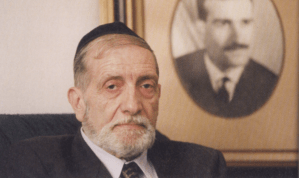
Maurice Cohen, 2004

When I met Maurice, I instantly disliked him. He was cagey, strange. I had to accept him, even learn to like him – he and an old friend were engaged, and she was smitten. Maurice, she explained, was a fascinating man with a compelling past. “He was a spy,” she whispered, “Mossad. Retired.”

He shared his story with me, and I remained skeptical. At first.

“I could have saved Eliahu Cohen,” Maurice told me, shaking his drooped head in exaggerated shame. “My big brother. I could have stopped the hanging.” He inhaled deeply, looked into my eyes for the first time ever, and said. “I decoded his messages. I knew he was our man in Damascus, and I didn’t say a word. If I did, maybe he’d be alive today.”

“You can sell this,” he said. “It’s a story you’ve never heard.”

That was absolutely true. Even if he had embellished the story, it was saleable. And timeless.

Maurice worked for Mossad decoding and encrypting messages. His job was to receive and decode telegraph messages, which he then delivered to headquarters. He was never supposed to know the identity of the senders. He discovered Eli by a freak coincidence and told no one what he knew. Maurice was an old man plagued with guilt by the time I met him. Asking me to write the story was his act of contrition.

I queried Moment Magazine, and they were quick to send me an advance and a publication contract.

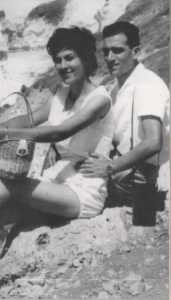
Nadia and Eli Cohen – from Moment Magazine, June 2005

Over the next several months, I became intimate with the details of Eli and Maurice’s story. Their parents’ emigration from Aleppo, Syria to Egypt; Eli’s underground activities in Egypt and their separate immigration to Israel. Eli’s great love affair with Nadia. His gift for languages, his recruitment into the Agaf ha-Modi’in, a branch of the IDF, and his subsequent transfer to the Mossad, where he was assigned, in 1963, by, to travel to Argentina. There he was instructed to establish the persona of Kamel Amin Sa’Abet, a rich Syrian expatriate hungry to return to Damascus.

A reckless risk-taker, Eli seemed fearless. Once relocated to Damascus, tirelessly smuggled valuable information from Syria into Israel. In 1965, he was caught and hanged. His work enabled Israel to prevail in their 1967 War, which they fought against the United Arab Republic, the combined, Soviet-supplied air forces and armies of Egypt, Syria, and Jordan.

Maurice (who died in 2006) carried with him deep remorse. “I should have told my mother. Or Nadia (Eli’s wife). They deserved to know. I didn’t even confront Eli. Maybe he would have come home instead of persisting in such a dangerous game.”

Eli Cohen’s story had been told and re-told. What made my article for Moment unique was Maurice’s perspective. His was an excruciating task. Duty to country required him to keep his brother’s mission secret, but his duty to family . . .. This was a story with what the film industry would call “legs.” It deserved to be turned into a film.

The week before I turned in the final draft of the essay I titled “Am I My Brother’s Keeper?” while attending the Cannes Film Market, I told a producer friend what I was writing for Moment. “Let’s make that movie,” he said. “What a story!” We planned to announce our intent to make the film at an industry party the following night.

When we met for breakfast the following morning, our attorney greeted us with a small notice she’d read in Variety. Director Kimberly Pierce (Boys Don’t Cry) and Sony Pictures Co-Founder/Director Michael Barker were in talks with Nadia Cohen, widow of Eli Cohen, to make a love story. Raising money for a film is a daunting enough task. We could never compete with Sony.

We scrapped our plans, and I rarely thought about Eli and Maurice thereafter. The Moment article was inaccessible online, so I couldn’t use it as a clip, and I began to doubt I ever wrote it at all.

Until my son suggested I check out Netflix’s original series about Eli Cohen. I watched the trailer and smiled. It’s about Nadia and Eli’s love story, the slant Pierce and Barker spoke about at that Cannes party. I binge-watched the show.

For the first four episodes, I really liked it. It had flaws – weak writing, absence of necessary exposition, choppy editing – but I was so close to the story that the holes didn’t bother me. Besides, it was largely the story Maurice told me to write. He was depicted transcribing messages as they beeped in from Eli in Syria. At Episode Five, when the fictional Maurice intercepts a message about the Singer sewing machine, I was sure that Moment Magazine article had to be a screenwriter’s source. I was the first to write about that incident. No one else has yet published another version.

How could I not be flattered? Someone actually paid attention to what I wrote. I Googled the essay at Moment, and there it was, on the web in a blatant pitch for Netflix. Underneath photos of the series star Sacha Baron Cohen and a link to the series’ page, the copy reads, “In honor of this Friday’s premiere, we pulled a Moment exclusive from the archives: Am I My Brother’s Keeper? 

I have my clip now.

I wish I liked the Netflix series more. There are so many omissions, so many ways the production fails to present a whole picture of the given circumstances.

In this telling, nothing explains Eli Cohen’s work. There is no end to justify his means. As the episodes progress, it must seem to the unschooled eye that he was simply an arrogant, evil man, who was used by a ruthless Israeli machine to spy on the unwitting, unsuspecting, innocent Syrians. In this version, Cohen worms his way into the confidence of the upper echelon of the Ba’athists in power and becomes a ruthless agent willing to betray everyone whose confidence he has won. He facilitates murder and mayhem. He enables Israel to take the Golan Heights. By the time he slowly mounts the gallows for his public execution, most of the audience must think he deserves to die in ignominy.

Israel comes off looking greedily aggressive. No backstory details the struggle for survival that threatened Israel from 1948 on. There is no mention of the fact that Israel’s Arab neighbors were (as they remain) sworn to eradicate the Jewish state. War was perpetually imminent. Syrians invested millions in building bunkers to hide their troops and weaponry. They armed Palestinians to wage guerilla warfare against Israelis. Syria, Jordan, and Egypt consolidated efforts to make war against Israel. In June 1967, they attacked. The result was the Six-Day War. 800 Israelis and 20,000 Arabs died in 132 hours of fighting.

Without Cohen’s intelligence, there is no telling how many days the fighting might have continued, how many more lives would have been lost.

Eli Cohen was undoubtedly a complex character. His love of country hardly justifies the hideous nature of the acts he enabled, and no patriotism could validate what his years in Damascus did to his family. I only wish that Netflix had taken the time and the care to explore his multiple dimensions. That it had allowed for more subtlety, more nuance. Then I would feel like I had contributed to a job well done.

Border Wars on the Mind

I perceive Gaza these days through a Texas-tempered lens.  Watching the hateful  citizenry of the wealthiest country in the world scream obscenities at indigent waifs displaced by violence and poverty, instructing them to go back to where they come from, I am reminded of stories my mother told about her arrival in Kingston just before WWII.  My mother was no waif, and poverty was not the impetus for her flight to the Land of Opportunity, but her stories inevitably lead me all the way to Gaza.

Mom’s family arrived without their patriarch in April, 1939, toward the end of what proved to be her junior year in high school.   She surprised herself by passing the English regents exam in May and so began the process of applying to college.  Her senior year felt friendless to her; classmates jeered her, mocked her accent.  Girls in the lunch room turned chairs over so she could not sit with them, and in gym class, they threw dirty socks and wet towels at her.  Teachers derided her, telling her they were unable to understand her when she spoke, deliberately refusing to call on her in class. The entire community – especially the entrenched first-and-second generation descendants of immigrants– treated her and her siblings as interlopers, avoiding them all at synagogue and football games alike, attempting to rebuff her brother’s attempts to join the Boy Scouts, even suggesting on numerous occasions that the lot of them return to their “own country.”

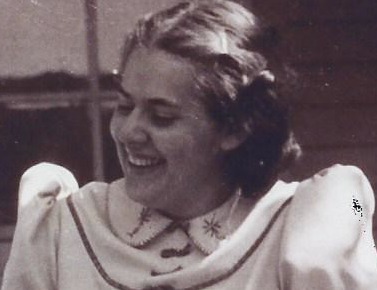
Fresh off the boat, Charlotte Robinson, my mother,  was 16 in 1939.

Fresh off the boat, Charlotte Robinson, my mother, turned 16 in 1939.

Of course, they owned no country any more than those homeless children seeking asylum at our Southwest borders do today.  Born in Austria during a time when Jews were highly respected, my mother reached her teens at precisely the time when Jews were successfully relegated to the status of lice.  Her passport, any European’s primary form of identification, was stamped Israelische, marking her as an outsider, a member of the tribe of Israel.  She was not Austrian.

Which was initially why she joined the Jabotinsky youth, planned to leave the vitriolic land of her birth to claim her rightful home in Eretz Isroel.

My grandfather put a stop to that.  “You think I’ll let you leave the Nazis only to throw yourself into the hands of the Arabs who want you dead?  Besides,” he told her, “the Jews cannot own the ‘promised land because the Europeans will never let it go.  You will come with us to America.’”

She was only 15; she acquiesced.  Ironically, she emigrated without her father.  In a move that may have helped to seal the fate of the Middle East, the United States closed its borders to Jews like my grandfather, who were born in countries that seemed somehow un-Caucasian, such as Poland, and were frantically seeking refuge under Lady Liberty’s lamp.  While my mother endured the slurs of her classmates, her father lived in Havana, working to become a Cuban citizen who might then be allowed to enter the United States.

America has never really welcomed the huddled masses.  At the end of WWII, American money –much of it from second and third generation Americans protecting their American territory from newcomers to these shores – veritably gushed in support of the partition of Israel, over the protestations of the local Palestinians.  It was more expedient to force the displacement of the Palestinians, to fuel the hatred of neighboring Arab countries, who wanted nothing to do with either Palestinians or Jews, than to profer better solutions to a problem to which they had been catalysts in the first place.

Over the arc of time, the European imperialists and Americans had imposed arbitrary boundaries across the Middle East, comporting themselves like puppet masters overseeing a bloody marionette show for their own entertainment.  In much the same way the British and the French turned Iroquois against Algonquin in the so-called French and Indian War by arming the natives and rewarding their aggression, the Western world played the locals off against one another, all over the Middle East.  Today the forces seem to have raised the stakes,  and they produce animatronic battles between Palestinian and Israelis (and between Suni And Shiite Muslims elsewhere), doling out money to each side so that the show runners can sit back and watch both sides exchange bombardments.   In the present Gaza conflagration, the U.S. has steadfastly encouraged the warring factions to go at one another, financing a bloodier extension of the age-old Jacob vs Esau, Isaac vs Ishmael rivalries.  They have sent millions of dollars to Hamas for the building of missile tunnels; and they have sent more millions of dollars to Israel for the building of The Dome.  The combatants in Gaza are egged on, like contestants in an obscene reality television show, while the odds are alternately stacked for one side or the other.

Unfortunately, each side is fueled by the deeply religious conviction that that side has a God-given right to the land, was placed there by divine ordinance.  Religion is an immovable feast.

But even were the religious obstinacy absent, neither side has anywhere else to go. The two peoples are caught in a battle for survival, and until one side finally trusts the other enough to make concessions, they’ll be unable to settle things.  So long as Hamas promises to eradicate the Land of Israel by any means possible, Israel cannot trust them to honor boundaries; so long as Israel won’t concede the West Bank, which Israel considers essential to guarding against eradication, Hamas won’t accept compromise.

Which leaves them both unable to stop fighting.  If there were another place to create a homeland; if, for example, the US offered a chunk of Arizona or Utah – where vast open areas of desert beg to be developed – as an alternate place to establish Israel or Palestine, would one group exit and start over?  We’ll never know.  Because both groups are as unwelcome in their diaspora as the children being sent back to South and Central America are in theirs.  So neither side is able to let go of their claim to the land of Abraham, their common ancestor.  They’re orphans, hated universally, shunned by all.

Somewhere I imagine closed circuit television cameras recording the action, playing back the videos in some perverse gambling casino, where bets are flying, emirs and pashas and captains of industry and Wall Street moguls and all kinds of professional gamblers are getting rich placing bets on how many Palestinian children will die in how much time and how many weeks Israeli children can hold out in their giant dome before it’s their turn to be destroyed.

It’s a vicious storm, from which nobody is safe.

Clash of the Titans

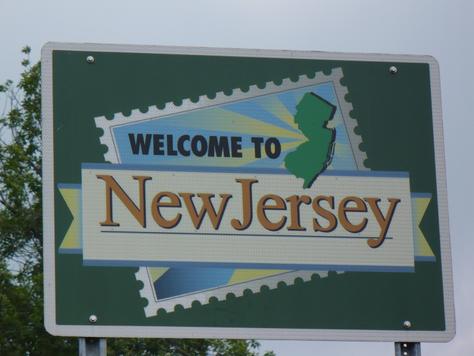
            You know why New Yorkers are so depressed?  (beat, beat) It’s because we have seen the light at the end of the tunnel,
and (sigh) it is New Jersey. Ba-dum bum.

As an undergrad at Columbia, I worked as a receptionist in the School of Engineering.   I loved my job for two reasons: first, because I had a lot of time to do my own work while I kept watch on the front desk and fielded questions; and second, because I could listen bemusedly to the idle gossip of the students and professors who were constantly milling about the offices.

A favorite topics of discussion, and one that kept the entire entourage laughing, was the preponderance of New Jersey residents who commuted to Columbia for work and study.  Considered an inferior lot by the resident New Yorkers, they became the butt of a favorite euphism.  “No, s/he’s not dumb; s/he’s from New Jersey.”

New Yorkers and New Jerseyans have always rankled  one another.  And for good reason: we’re a lot alike.  Despite some historical divergences, we come from a nearly identical background.  The Dutch and the English — followed by at least a smattering from every other nautical country in the world  — settled in both places and created a multicultural community conceived in liberty and dedicated to the proposition that all merchants are created equal to the task of making money.  New York and New Jersey have beaches and farms and cities and quaint small towns, and their people are reputed to be abrasive, loud and insistent.

Since the 19th Century, people have chosen to live in New Jersey in order to work in New York or have chosen to work in New York because that is where the jobs are. New  Jerseyans have been subjugated to service of the big brother state as well as the city, and the citizens of NJ have had to pay two tax masters for their incomes, one in a state that offers no benefits for the money charged.  When I was young, the resentment toward my city was palpable; today it’s more subtle.

New Jersey and New York have a lot in common and a lot to compete over, and the states have had a tradition of rivalry that has, at times, been less than congenial.

I often imagine what it might be like if one day the people of New Jersey felt that New York had dominated them long enough and signed a pact to obliterate the city and its environs, replacing it with Jersey City as the Big Apple.

It wouldn’t be a difficult task to target NYC for ill.  A few well-aimed scuds or rockets, and whole sections of the city would fall before any defensive measure might be taken.  The playgrounds in lower Manhattan would easily be destroyed, and the bodies of small children would make appropriate poster photos for use in the manipulation of public opinion. In no time at all, NY would return fire, and all too soon, the children of Secaucus and Newark would be lost in heaps of flames, and their photos, too, would adorn the banners of the righteously infuriated.

Whose side would the world take?  The people on both sides of the Hudson look alike, smell alike, sound alike — most people outside the area can’t tell the difference between a New Jersey and a New York accent.   To a Californian, residents of New York and New Jersey are roses that pretty much smell the same.

You can see where this is going, and I am sure you get the drift of my parable.  I apologize, but I can’t help it that there is an obvious, albeit overly simplistic, kinship between this scenario and Israeli-Palestinians conflict.

Both New York and New Jersey were populated by people who arrived from somewhere else with nowhere else to go.  They over-ran the locals and set up shop, creating a refuge for others in a land that had once been hostile but now offered succor.

Palestinians and Israelis are in the same place because they are unwanted anywhere else.  They live in a hostile environment that needs considerable adaptation before it provides sustenance, but both peoples have learned a way to get what they want from it.  Both peoples need to live in the land called Israel, and both peoples deserve to stay and call one another equal.

What they need from the worldwide community is assistance in finding a way to make peace, to find a way to live together without killing one another’s children.  Both sides have suffered greatly, both sides need to stop fearing the other. But instead of encouraging peace,  the world seems eager to cheerlead for a war. Television and the web casts encourage us to be spectators, to take our lunches to a hill and root for one side or the other while we watch them gouge one another.  And the attention does little more than to egg the violence on.  Facebook is covered in posts about the evil Jews — why is it still okay to openly hate Jews and women? — and the bloodied Palestinian children and  with retorts reminding the world about the so-called Holocaust (as though there haven’t been numerous holocausts in the past century and its successor) and the horrors wrought against the Jews.  Antisemitic diatribe, answered by indignant defenses, fuel the fires of dissension between the peoples, and the violence simply escalates.

Whenever I pass through the Columbia campus, I am reminded of how similar today’s students are to my classmates and me back in the olden days.  Much as we were during the Viet Nam War, students are out in varying numbers, marching with placards, chanting, demonstrating.  Only there’s a marked change in the sound and feel of the presentation today.  Most of the protesters on College Walk favor the violent overthrow of the Israeli government.
.

“Violence is justified,” chants one large group holding a poster bearing a Magen David (Star of David), an equal sign and a Nazi Swastika; “when the people are occupied.”  “How many babies will you allow Israel to kill?”  “How many babies will you allow Hamas to kill?” Someone answers from a shadow. The chanting gets louder, the peripheral voice is hushed.

I find myself nostalgic for the good old days of anti-war protesting on campus.  Whatever happened to “Give Peace a chance”?  Or “Stop the violence.”  “No war. Peace now.”

Where are the cheerleaders for peace?  Where is the outcry against the jihad to eradicate the Jewish people?  Where is the nonviolent pressure brought to bear toward an independent Palestinian state and the coexistence of two equally liberated, fully empowered peoples to live alongside one another . . . kinda like New Yorkers and their counterparts in New Jersey?

There’s enough vitriole out there.   No one wishes for war.  Ask a Palestinian mother what she wants, and she will reply the same way a Jewish mother will respond:”I want my children to be safe and to live in peace.”Shalom and Salaam are the same word.

Hey, neither New York nor New Jersey ever really needed to be the conqueror.

A Mother’s Day Gift to My Children – Part X

Mom and I had grown apart as I aged.  While she adored my three kids and was thrilled that we had chosen to bring them up Jewish, she was as deeply engrossed in her career as I was in mothering.  My family and I had moved to Arizona in 1972 to be close to her, but when I moved back to my beloved East in 1987, I felt a kind of relief.  I would no longer have to face the daily disappointment, recognizing that the expected connection we had always had no longer seemed to be there.  We spoke on the phone several times a week, and we visited as often as we could, but for better and worse, it was never the same.

Just before she died in 1999, Mom asked me if she had done enough.

Charlotte with her younger sister Ruth (center) and Ruth’s husband Uncle Fred. The three were constant companions, especially after Herma’s death, and when Charlotte died suddenly in 1999, the loss was devastating to the last remaining sister.

She wasn’t ready to go — she shouldn’t have been; she was only 76, was still tutoring and teaching every day, still contributing to the world in her varied ways.  She had volunteered in Israel, the culmination of a childhood dream, and had traveled back to Zagreb among other places in Europe to revisit both halcyon and heinous days of her youth; she was an active participant in a life broadly lived.  All five of her grandchildren and six step-grands adored her, and her still-growing legions of former students continued to call and visit her regularly.  There was so much left to live for.  What else could I do but nod vigorously and reassure her, “You have, mom.  You’ve done plenty.”

No one could have done more.