Hometown Revelation

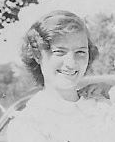
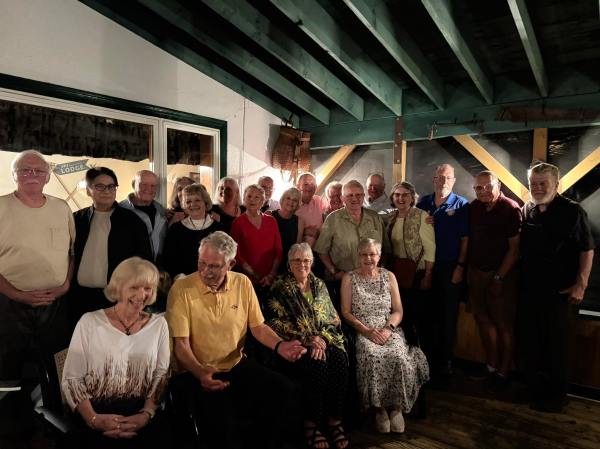
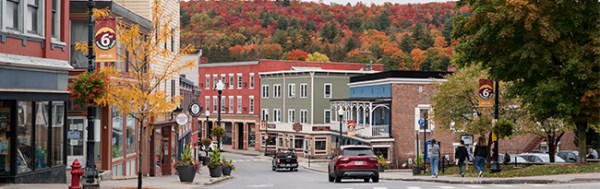
Photo by Richard Amell, SLHS Class of '65

Sixty Years On. . .

Returning to Saranac Lake, the town where I spent my latter childhood years, used to be all about my mother and my brother David. Both were much loved for good reasons; each had a particularly large presence among the locals and made a difference to many.  In the old days, I felt suffocated and extincted by the size of the welcome I always got for them.  Mom’s friends and David’s admirers were legion, and I could not walk down the street without being greeted with, “Hey, I knew your brother,” or “Carla, you’re Charlotte’s daughter.  She was an amazing woman.”

Heck, I didn’t even have to be in our hometown.  Once, my then 20-something-year-old son and I drove through a blinding blizzard to spend a weekend in Lake Placid, the tourist mecca nine miles and a huge cultural ethos away from Saranac Lake.  We checked into the Hilton Hotel and went to the bar to unwind before sleeping.  Within minutes of being seated, three people at the bar realized I was a Swett and sat themselves next to me to  regale me with stories of David when he was the bouncer at a bar over on the lake.  Soon, another three people came over to tell me what a great teacher mom was the year she taught bio at LPHS.

It was something of a relief to be anonymous, to duck into their legacy.  I was content to linger in the long shadows Mom and David had cast years before. 

Over the years, I remained in touch with only one person, the grown-up boy I counted as my best friend from 6th grade on, the boy with whom few in our class knew I had a relationship.  He had gone to college, been engaged, been sent to Viet Nam, and moved down south, but we stayed connected though I had not seen him since he visited me in New York on his way to Viet Nam in 1969.  I would have seen him if he had been in town when I was there, but he was not. 

 I loved taking my family to visit Saranac Lake, and we went as often as we could.  We camped at White Pine Camp before it was renovated.  We hiked up to Copperas Pond.  We canoed or boated out onto the lakes. But since my one true pal was not there, I felt no compulsion to call anyone else.  I didn’t expect that anyone would remember or care.  David and Mom were the ones that counted.  I did not.

Everything changed for me when  the 35th Reunion of the Class of 1965 rolled around.

In 2000, on the verge of leaving my husband and having buried my mother just a few months before, I got the notice that a reunion was in the works.  I wasn’t sure how I felt about facing my classmates, but I was sure I needed to find a way to feel grounded.  I had just begun to flex my creativity and was experimenting with a new career; the idea of being among the people who knew me before I left my chrysalis was comfortingly attractive.

The opening event was a meet-‘n’-greet at the Belvedere Restaurant, a hometown tavern, where many of my classmates had learned to drink as teenagers but to which I had never been.  I parked my car outside the restaurant, and before I got halfway out of my car, a familiar form appeared at the top of the stairs.

“SWETT!!!” He exclaimed, addressing me, as people had when we were young, by my embarrassing last name.  “You’re here!!!”

The surprise greeter was John, the boy who sat behind me in 5th grade. The one who dunked my braids in an inkwell then cut off the ends, who was grateful I didn’t complain to the teacher but simply laughed.  He was the boy who told me to shut up when I argued with a teacher about the legitimacy of a request we were expected to honor. He was never someone I thought of as having any real interest in me, but he had always been there.  And now there he was smothering me in hugs.  He led me in. 

Inside, I was greeted by people, many of whose faces I barely recognized. My oldest, best friend was there, and I buried myself in his affection but felt no reason to hide for long.  There were so many cherished memories assembled.  Gail, who lived down the hill from me when we first arrived in town that winter of 1957.  Her dog Mike nearly scared me to death. Later, when we both moved across town, Gail was once again down the hill from me, always my neighbor and a kindred spirit. Marsha, whose 4th grade birthday party invitation eased my transition from Massachusetts outsider to Saranac Lake resident.  Nancy, my high school bestie, and Maryanne, with who made me laugh as we walked together down the hill from school in the springtime. I rediscovered Karen, whose baby brother was born within weeks of mine. And shy Art, who had seemed so disinterested in anything academic but had evolved into a High School History teacher.  Then there was Penny, whose friendship was a constant aspiration though she seemed to disdain me, enveloping me in a hug. 

Within minutes of arriving, my classmates reminded me that though high school was not my finest hour, it was a time that deserved to be remembered.  The campaign for senior council president, the regional chorus festivals, jazz band, speech contest, the town centennial pageant. . . . 

People still effused about David or Mom. But I realized I, too,  belonged.  My fellow townspeople were, along with David and Mom and all the Swetts, the main characters in the play that was my life in this town.  I felt embraced and accepted, and I understood for the first time that the play wasn’t over yet!

I struck up correspondences, albeit spare, and looked forward with great anticipation to whatever came next.

At the fiftieth reunion, naturally, some of the best people were not there.  Old age, illness, family events, death.  Nancy was no longer with us, and John was clearly ill.  But we had a blast.  Gail and I hosted the culminating ceremony together, and we formalized our belief that we were sisters of the most bonded sort, members of a family of disparate siblings, who’d grown up in a community founded on the idea that a town exists to care for one another. 

The people who fostered the growth of Saranac Lake in the late 19th C arrived there in order to give or find relief from TB; the tradition defined the town and trickled into everyone’s consciousness.  Saranac Lake became a refuge for veterans of WWII and Korea, boys who needed a quiet, caring place to raise their families and set the world aright.  Refugees from places like the Swiss Alps who needed to be in the familiar protection of the granite mountain walls that surrounded us.  We were raised by survivors who nurtured one another’s survival, and we members of the Class of ‘65 bonded to one another as our parents did to our town. 

Returning last month for our 60th Reunion, I had feared that David’s recent death would make it painful to hear his virtues extolled.  I was wrong. This great extended family we’d both been part of shared memories that made mine more vibrant.  I missed him more and at the same time a bit less because he was there with us in more hearts than just my own.

There were far fewer of us this year to revel in the joy of sharing one more party.   So we made a solemn promise to one another: we won’t let ten years pass before we do it again.  Ours is a special joy we must nurture fervently.

Saranac Lake, NY, began as an outpost for hunters but gained fame and population as a medical center for Tuberculosis sufferers.

In Memoriam: Marilyn Joan Alkus Bonomi (1943-2025)

Walking in the almost cool, late August air today, I felt a premonition of Fall. Crisp air,  cornflower sky.  Finally. . .  October’s on its way. 

October has always been a special month.  My birthday, my youngest child’s birthday, the year’s first cold snap, darkening afternoons.  This time, however, the October snippet hit me with an image of Marilyn Joan Alkus Bonomi.

Mari and I met on an October Saturday in 1987 at my youngest’s birthday party, a party I hoped would help us get acquainted with our new neighbors.  We had just moved from Arizona to Connecticut, and none of us had been prepared for the culture shock we would encounter.  Fitting in was challenging, and a party seemed like an opportunity to make some friends, to show our new cohorts that while we might not have mastered the eastern way of dressing and speaking, we were just plain folks like everyone else.  Personally, too, I hoped that an adult or two would come to the party and stay, be a welcoming presence . . . or at least a fellow parent with familiar sensibilities.

Mari was the one.  She swept in, deposited her daughter in the midst of the other children, then sat down next to me and opened a conversation that drew me in, made me feel instantly connected.  It was a stream of consciousness into which we were able to immerse ourselves every time we were together for the next nearly forty years of our enduring friendship.

We had lots in common.  Her daughter and my youngest were the same age and had already begun to bond,  which meant that Mari and I were destined to see one another often. We were both English teachers with a deep connection to the theater; she was well established in Connecticut, and I was looking for a job.  We shared a nearly obsessive love of rhetoric and a penchant for lost souls. Though humanist Jews, we had both chosen husbands who were Jesuit-trained Catholic schoolboys.

 Over the course of that first year, her daughter and mine became besties and formed a union that included my older daughter; Mari and I were fused.

Because of Mari, I quickly found a job.  At the birthday party, she had been delighted to learn that I planned to substitute teach while I sought permanent employment.   “That is wonderful news,” she said.  “I teach at Amity, in Woodbridge, one of the best schools in the country. Can you tell I’m proud? Anyway, we never have enough good subs.  I’ll put your name in.”  

She did.  I spent much of that year subbing at Amity and loving it. 

One day, when we were lucky enough to have lunch together, she pointed to a lanky man leaning in among a group of students, listening intently and chatting with them.  “See that guy?” She asked.  “That’s Stu Elliot.  He’s one of our Assistant Principals.  A good man.  A great administrator. See how he interacts with the kids?  He is special, which just means we won’t have him for long.  He’ll have his own school any day now. Which is why I want you to meet him.  He will want to hire teachers of his own choice, and you would be a perfect addition to any team he takes on.”

We spent ten minutes talking to Stu, and I agreed.  He was remarkable.  A year later, he became my principal at the high school next door to my house.  I could not have been more fortunate, and my gratitude to Mari never diminished.

Our friendship ran deep.  Her child was at my house almost as often as mine was at hers. We celebrated holidays together and commiserated when we were both unhappy.  Our contact lapsed a bit as each of us traversed the hard road of divorce and redefinition, but we found one another again in time to have a few great years as senior citizen sisters. Though never enough time to fully share our appreciation for years of a deeper-than-blood kinship.

Since 1987, my life has been fuller in dozens of ways because of Marilyn Joan Alkus Bonomi.  Though she will live on in her daughter’s eyes, in her grandson’s laugh, in my heart, in my soul, in my very vivid memory, I shall miss her voice, her presence, the soft touch of her abiding love.  

The Haircut   

I have quirky hair. It is thick and blonde, a gift from my father’s Dutch ancestry. But it’s also unruly and willful, often kinky and frizzy, the bequest of my mother’s Ashkenazi forebears. I like my hair. It’s singularly mine and uniquely beautiful. So says every beautician to whom I have entrusted its care. But it has traditionally been a pain to tame, a challenging for those who seek to cut and style it .

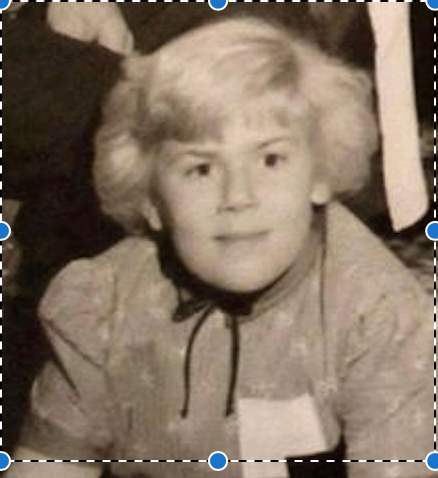
My aunt was a stylist with her own salon. A talented stylist who simply could not be bothered to do battle with my tresses, Aunt Ruth’s approach to cutting my hair was to ignore its idiosyncrasies and clip indiscriminately. I wanted long hair, but until I left home at 17, I had to abide by my mother’s edicts, and she mandated a semi-annual visit to her sister’s shop. Which is why, when I look at photos taken before my liberation, I wonder if Mike Judge saw me somewhere. I could easily have been the model for his Butt-head character.

Over the years, I have invested heavily in what appears to be the right haircut. I live in NYC, where a beauty parlor appointment can be more costly than a hospital visit. Every visit is an exercise in cautious paranoia. Will the operator figure out how to navigate the territory? Will I be a mop-head when they finish?

The stylists share my trepidation. They typically spend the bulk of my time allotment on fussing over where, how, why to layer and then trying to re-assign a part in a head of hair that listens to no one. After the cut, every artiste insists on straightening the hair, forcing it into flat lifelessness. Too often I have emerged from the salon with hair I would not wear to a Halloween party, for which I have paid the equivalent of a year’s salary. I was resigned. This was the way things were.

Until I was in Taiwan two years ago. My hair got long, I shedded profusely, and my hairphobic hostess was frantic. She could not stand the sight of hairs on the couch, the floor, the kitchen counter. I had to get it cut.

Quaking with fear, I chose a place close to the apartment with an American brand name. I had little faith in my choice, but I believed it was my only alternative. Branded or not, could a Taiwanese stylist understand the dangers lurking on my scalp? Would she be able to make my hair presentable?

In the salon, though neither of us spoke the other’s language, she easily grasped what length and shape I was hoping for. She spent no time at all assessing the hair but instead lavished me with a luxurious wash and scalp treatment, a neck and shoulder massage, and a delicious cup of jasmine tea. Then she went to work, studiously snipping a large chunk here, a bit there, another chunk, another bit, and in record time, she was patiently twisting the locks as she assaulted them with the blow-dryer, causing my natural curls to spring gratefully into line. When she was finished, my hair looked better than it has in my adult life. We bowed to one another, and I paid the bill in Chinese NT, an amount which, amazingly enough, amounted to less than a soy caramel macchiato at the local Starbucks. When I offered her a tip; she declined, smiling. Tipping is not the custom, and she was proud of her work.

On two more occasions I found myself in need of a haircut in Taiwan. For various reasons, I wound up in a different salon with a different operator each time. Invariably, I had the same experience: treatment that engendered languid comfort and a respectable haircut for little money.

This past summer, I found myself in Turkey rather than Taiwan. As before, I was there long enough that my hyperactive hair growth and insistent shedding necessitated a cut.

Had I not been schooled in Taiwan, I would have been beset by anxiety. Instead, I confidently walked to a very local spot, a tiny establishment with one chair and one sink. I had a moment of hesitation when I saw that the price of a haircut listed on the board was less than a straight-up cup of black coffee in any NYC diner. I ventured in nonetheless.

This time I was slightly more able to communicate. With roughly 25 words of Turkish at my command, I was able to explain what I was seeking. The receptionist nodded solemnly and motioned me into a chair in front of the single sink on the premises. She simultaneously made a phone call and briskly and brusquely washed my hair. As she threw a towel over my head, a squat, middle-aged man appeared in the entryway. He spat a cigarette from his mouth and smashed it beneath his shoe before walking over to us. He and the woman exchanged a few words – she translated my instructions into proper Turkish. He nodded, took the towel from my head, and went to work. He snipped about, parted and re-parted my locks, brushed the hair forward, cut some more, pushed it back, snipped again, flipped it to one side and then to the other. After about five minutes, he stopped cutting, affixed the diffuser to the blow dryer, puffed air at me for a few more minutes, and grunted that he was done. In the mirror that he held briefly behind my back, I caught a glimpse of the back of my head.

The hair looked great.

This time I paid in Turkish lire, and he accepted a tip. I had to fight the nagging sense that I had stolen the haircut.

Walking back to my apartment, I wondered what it was that I had worried about all these years. What was it that made the process so damned fraught and so incredibly expensive?

American values, of course. Nothing is worthwhile if we don’t pay dearly. No one is worth anything until s/he proves successful in monetary terms. “You get what you pay for, and you pay for what you get.” We measure people by the quality of what they acquire.

The ramifications are myriad.