Fanfare for the Common Woman

Audio podcasts are a wonderful innovation, especially for those of us with insomnia.  Nothing is more soothing for me than a gentle voice talking about interesting worlds.  I especially love science, history, and theater talk, film history podcasts, or literary discussions, and David Remnick.  It is comforting to feel myself relaxed out of anxiety into someone else’s knowledge and then to drift off to sleep.

I confess that there are many podcasts that irritate me.  The ones that make me sit up, desiring to scream into my device– though that is certainly not an option for a considerate apartment dweller in the middle of the night – those that frustrate me with their pontification or false modesty,  political rants or misinformation. 

The ones that most irritate me are the podcasts that pretend to offer hope and life modeling to women over 50. On podcasts such as unPaused, with Marie Claire Haver, or Wiser than Me with Julia Louis-Dreyfus.  These offer advice from the megastars like Isabella Rosselini, Nancy Pelosi, Gloria Steinham, Michele Obama, Jane Fonda, et high-falutin al.

Inevitably, these admittedly wonderful, rightfully revered role models are women who have achieved great fame and fortune. They are most certainly noteworthy, and I deeply admire them and their accomplishments.  But they are women who have been receiving attention for a long time already and are rarely in positions to which any of us groundlings can reasonably aspire. 

All the while, everyday women who achieve less than phenomenal but still noteworthy successes are overlooked. Despite the fact that we, too, are pundits. We, too, offer stories that could be truly inspirational.

I have many friends who have lived lives worth sharing.  Women – mothers and wives — who have written books that may not have been bestsellers but still had audiences and made a difference for their readers.  For example, my dear friend, who nursed her husband through harrowing bouts of PTSD, raised her family, took care of her brothers, ran a lovely small business, and managed to paint some lovely watercolors?  She knows about survival and rising above adversity and setting goals, and attaining happiness. Another brave woman I know writes songs that aim to forge peace and understanding while curating a huge cache of legacy art, and another creates phonics videos to promote literacy among disadvantaged children. They love their work, and they are proud of what they do, as many everyday women do. Some nurture student artists — those who may not be the Oscar or book award winners spewing gratitude for their mentors — and help them to nurture dreams that lead to meaningful careers that improve the world in multiple ways, Even while schlepping personal children from pillar to post, attending extracurricular activities, keeping husband’s clothes cleaned and pressed, etc., myriad ordinary heroines persevere.  Women who work as nurses, physicians’ assistants. dental hygienists, bus drivers, etc., while providing care for elderly parents.  Those who act in plays on, off, and way off Broadway,  direct educational and community theaters, sing in and direct choirs, play music, and lead small-town orchestras.

You can see my point, I am sure.  The accomplishments of women are incalculable. 

Surely the multitude of women who have built modest successes are no less interesting than those who have made millions?  Is it not exemplary that real people keep plugging away, writing, painting, acting, teaching, serving the sick, and providing goods and services?  Aren’t the common variety supermoms/daughters/aunts/sisters/grands apt role models for younger generations?

Come on, social influencers, podcasters, you who want to inspire women, find those of us who fuel the world with its real power. Look for our books, our drawings, our songs, our stories. Ask us what we know. Let us show you how fascinating we can be.

Hometown Revelation

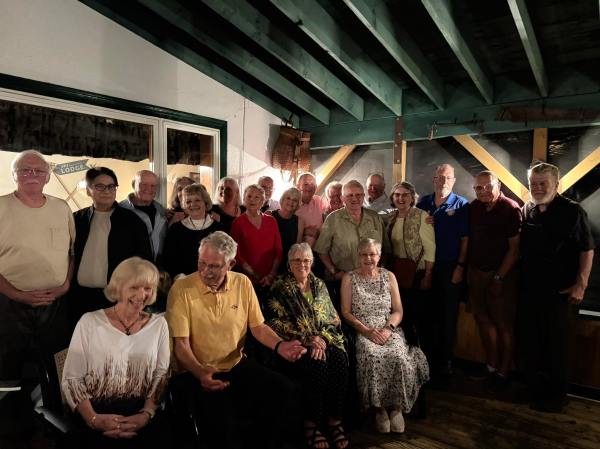
Photo by Richard Amell, SLHS Class of '65

Sixty Years On. . .

Returning to Saranac Lake, the town where I spent my latter childhood years, used to be all about my mother and my brother David. Both were much loved for good reasons; each had a particularly large presence among the locals and made a difference to many.  In the old days, I felt suffocated and extincted by the size of the welcome I always got for them.  Mom’s friends and David’s admirers were legion, and I could not walk down the street without being greeted with, “Hey, I knew your brother,” or “Carla, you’re Charlotte’s daughter.  She was an amazing woman.”

Heck, I didn’t even have to be in our hometown.  Once, my then 20-something-year-old son and I drove through a blinding blizzard to spend a weekend in Lake Placid, the tourist mecca nine miles and a huge cultural ethos away from Saranac Lake.  We checked into the Hilton Hotel and went to the bar to unwind before sleeping.  Within minutes of being seated, three people at the bar realized I was a Swett and sat themselves next to me to  regale me with stories of David when he was the bouncer at a bar over on the lake.  Soon, another three people came over to tell me what a great teacher mom was the year she taught bio at LPHS.

It was something of a relief to be anonymous, to duck into their legacy.  I was content to linger in the long shadows Mom and David had cast years before. 

Over the years, I remained in touch with only one person, the grown-up boy I counted as my best friend from 6th grade on, the boy with whom few in our class knew I had a relationship.  He had gone to college, been engaged, been sent to Viet Nam, and moved down south, but we stayed connected though I had not seen him since he visited me in New York on his way to Viet Nam in 1969.  I would have seen him if he had been in town when I was there, but he was not. 

 I loved taking my family to visit Saranac Lake, and we went as often as we could.  We camped at White Pine Camp before it was renovated.  We hiked up to Copperas Pond.  We canoed or boated out onto the lakes. But since my one true pal was not there, I felt no compulsion to call anyone else.  I didn’t expect that anyone would remember or care.  David and Mom were the ones that counted.  I did not.

Everything changed for me when  the 35th Reunion of the Class of 1965 rolled around.

In 2000, on the verge of leaving my husband and having buried my mother just a few months before, I got the notice that a reunion was in the works.  I wasn’t sure how I felt about facing my classmates, but I was sure I needed to find a way to feel grounded.  I had just begun to flex my creativity and was experimenting with a new career; the idea of being among the people who knew me before I left my chrysalis was comfortingly attractive.

The opening event was a meet-‘n’-greet at the Belvedere Restaurant, a hometown tavern, where many of my classmates had learned to drink as teenagers but to which I had never been.  I parked my car outside the restaurant, and before I got halfway out of my car, a familiar form appeared at the top of the stairs.

“SWETT!!!” He exclaimed, addressing me, as people had when we were young, by my embarrassing last name.  “You’re here!!!”

The surprise greeter was John, the boy who sat behind me in 5th grade. The one who dunked my braids in an inkwell then cut off the ends, who was grateful I didn’t complain to the teacher but simply laughed.  He was the boy who told me to shut up when I argued with a teacher about the legitimacy of a request we were expected to honor. He was never someone I thought of as having any real interest in me, but he had always been there.  And now there he was smothering me in hugs.  He led me in. 

Inside, I was greeted by people, many of whose faces I barely recognized. My oldest, best friend was there, and I buried myself in his affection but felt no reason to hide for long.  There were so many cherished memories assembled.  Gail, who lived down the hill from me when we first arrived in town that winter of 1957.  Her dog Mike nearly scared me to death. Later, when we both moved across town, Gail was once again down the hill from me, always my neighbor and a kindred spirit. Marsha, whose 4th grade birthday party invitation eased my transition from Massachusetts outsider to Saranac Lake resident.  Nancy, my high school bestie, and Maryanne, with who made me laugh as we walked together down the hill from school in the springtime. I rediscovered Karen, whose baby brother was born within weeks of mine. And shy Art, who had seemed so disinterested in anything academic but had evolved into a High School History teacher.  Then there was Penny, whose friendship was a constant aspiration though she seemed to disdain me, enveloping me in a hug. 

Within minutes of arriving, my classmates reminded me that though high school was not my finest hour, it was a time that deserved to be remembered.  The campaign for senior council president, the regional chorus festivals, jazz band, speech contest, the town centennial pageant. . . . 

People still effused about David or Mom. But I realized I, too,  belonged.  My fellow townspeople were, along with David and Mom and all the Swetts, the main characters in the play that was my life in this town.  I felt embraced and accepted, and I understood for the first time that the play wasn’t over yet!

I struck up correspondences, albeit spare, and looked forward with great anticipation to whatever came next.

At the fiftieth reunion, naturally, some of the best people were not there.  Old age, illness, family events, death.  Nancy was no longer with us, and John was clearly ill.  But we had a blast.  Gail and I hosted the culminating ceremony together, and we formalized our belief that we were sisters of the most bonded sort, members of a family of disparate siblings, who’d grown up in a community founded on the idea that a town exists to care for one another. 

The people who fostered the growth of Saranac Lake in the late 19th C arrived there in order to give or find relief from TB; the tradition defined the town and trickled into everyone’s consciousness.  Saranac Lake became a refuge for veterans of WWII and Korea, boys who needed a quiet, caring place to raise their families and set the world aright.  Refugees from places like the Swiss Alps who needed to be in the familiar protection of the granite mountain walls that surrounded us.  We were raised by survivors who nurtured one another’s survival, and we members of the Class of ‘65 bonded to one another as our parents did to our town. 

Returning last month for our 60th Reunion, I had feared that David’s recent death would make it painful to hear his virtues extolled.  I was wrong. This great extended family we’d both been part of shared memories that made mine more vibrant.  I missed him more and at the same time a bit less because he was there with us in more hearts than just my own.

There were far fewer of us this year to revel in the joy of sharing one more party.   So we made a solemn promise to one another: we won’t let ten years pass before we do it again.  Ours is a special joy we must nurture fervently.

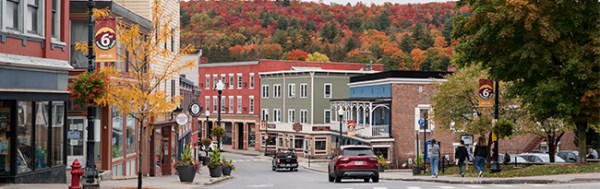
Saranac Lake, NY, began as an outpost for hunters but gained fame and population as a medical center for Tuberculosis sufferers.

In Memoriam: Marilyn Joan Alkus Bonomi (1943-2025)

Walking in the almost cool, late August air today, I felt a premonition of Fall. Crisp air,  cornflower sky.  Finally. . .  October’s on its way. 

October has always been a special month.  My birthday, my youngest child’s birthday, the year’s first cold snap, darkening afternoons.  This time, however, the October snippet hit me with an image of Marilyn Joan Alkus Bonomi.

Mari and I met on an October Saturday in 1987 at my youngest’s birthday party, a party I hoped would help us get acquainted with our new neighbors.  We had just moved from Arizona to Connecticut, and none of us had been prepared for the culture shock we would encounter.  Fitting in was challenging, and a party seemed like an opportunity to make some friends, to show our new cohorts that while we might not have mastered the eastern way of dressing and speaking, we were just plain folks like everyone else.  Personally, too, I hoped that an adult or two would come to the party and stay, be a welcoming presence . . . or at least a fellow parent with familiar sensibilities.

Mari was the one.  She swept in, deposited her daughter in the midst of the other children, then sat down next to me and opened a conversation that drew me in, made me feel instantly connected.  It was a stream of consciousness into which we were able to immerse ourselves every time we were together for the next nearly forty years of our enduring friendship.

We had lots in common.  Her daughter and my youngest were the same age and had already begun to bond,  which meant that Mari and I were destined to see one another often. We were both English teachers with a deep connection to the theater; she was well established in Connecticut, and I was looking for a job.  We shared a nearly obsessive love of rhetoric and a penchant for lost souls. Though humanist Jews, we had both chosen husbands who were Jesuit-trained Catholic schoolboys.

 Over the course of that first year, her daughter and mine became besties and formed a union that included my older daughter; Mari and I were fused.

Because of Mari, I quickly found a job.  At the birthday party, she had been delighted to learn that I planned to substitute teach while I sought permanent employment.   “That is wonderful news,” she said.  “I teach at Amity, in Woodbridge, one of the best schools in the country. Can you tell I’m proud? Anyway, we never have enough good subs.  I’ll put your name in.”  

She did.  I spent much of that year subbing at Amity and loving it. 

One day, when we were lucky enough to have lunch together, she pointed to a lanky man leaning in among a group of students, listening intently and chatting with them.  “See that guy?” She asked.  “That’s Stu Elliot.  He’s one of our Assistant Principals.  A good man.  A great administrator. See how he interacts with the kids?  He is special, which just means we won’t have him for long.  He’ll have his own school any day now. Which is why I want you to meet him.  He will want to hire teachers of his own choice, and you would be a perfect addition to any team he takes on.”

We spent ten minutes talking to Stu, and I agreed.  He was remarkable.  A year later, he became my principal at the high school next door to my house.  I could not have been more fortunate, and my gratitude to Mari never diminished.

Our friendship ran deep.  Her child was at my house almost as often as mine was at hers. We celebrated holidays together and commiserated when we were both unhappy.  Our contact lapsed a bit as each of us traversed the hard road of divorce and redefinition, but we found one another again in time to have a few great years as senior citizen sisters. Though never enough time to fully share our appreciation for years of a deeper-than-blood kinship.

Since 1987, my life has been fuller in dozens of ways because of Marilyn Joan Alkus Bonomi.  Though she will live on in her daughter’s eyes, in her grandson’s laugh, in my heart, in my soul, in my very vivid memory, I shall miss her voice, her presence, the soft touch of her abiding love.  

Maestro Moment

I opened Facebook the day after I watched Maestro and saw that a friend must have watched it the night before as well.  Her response surprised me.

“There is no soul,” she wrote. “No pulse to it. What woman in her right mind would concede her life to a gay man?”

I had to laugh. Besides the music, particularly the Mahler, what I loved most about Maestro was its deeply honest, layered look at a relationship I recognize from my own life. A relationship that saved me from self-loathing and taught me true love.

 Back in the olden days when I was young, misogyny was unguarded, and discrimination against women was prevalent – it was everywhere and out in the open. Straight men and women alike extincted the Ugly Girl, ignored the misfit, discarded the nonconforming woman. If we were not Helen Gurley Brown emaciated and/or Gymnastics Barbie adorable, we had difficulty making friends, attracting lovers, finding jobs.  Our fellow women could not afford to like those of us who were less than perfectly feminine, attractive to men, passive in accepting our rightful place.  Women were motivated by the need to bag their men; to be the friend of the Ugly Girl was to risk the stigma of association.  No woman wanted to be ignored by the men she sought to impress.

In that distant pre-Stonewall 60’s past, gay men, too, found themselves too often alone and friendless. Many sought beards, female partners who would protect them from the prying sensibilities of those who would out them. Being outed could put gay men in the same position as the non-standard issue female: at odds with the ability to find suitable jobs, housing, friends. Relationships with strong women – women who could stand beside them and anchor their respectability. – were a way to buffer the implied slings and arrows of outrageous misfortune. They may not have offered sex to the women they courted, but they often gave more valuable gifts in abundance.  Gifts of attentiveness, admiration, validation, companionship. Many of us who were on the outside of social acceptability in the straight world found comfort and peace among the homosexual or bisexual men who needed us as much as we needed them.

As a naive As a naïve innocent from upstate New York, I arrived on the dating scene with at best a tentative self-image, and I soon saw that I had been identified as one who would do very nicely as a doting beard.  I was clever, nonjudgmental, erudite, and empathetic. I knew I was needy as hell, but I sublimated by giving until I was empty, and I was easily sated.  I got the affection I craved but never demanded, and my needs were met.

Maestro took me back to the year I was 17 and my very first real boyfriend Mark, a lovely gay Native American from outside Santa Fe. A boy who was, in every way that counted then, my perfect match.

We met in the scene shop at the University of New Mexico, where we both majored in drama. 

Stagecraft and scene design were required freshman classes, and on that first day, because I had never ever held any kind of a construction tool in my hands, and because I was without a single acquaintance in the class, I was feeling out of my depth and alone. Then a slightly chubby, deeply tanned young man asked me why I was wearing a key on a chain around my neck.  The nonsequitur startled me a bit but made me smile.

“I lose things,” I answered frankly.  “I’ll get locked out of the dorm if I can’t find my room key.”

The boy laughed and looked through me before he said, “You know, in Mexico, if you wear a key like that, you are letting the world know you are for sale.” He grinned.

I blushed.  “Oh. I guess that would assume anyone would be interested to buy this,” I indicated my bulky body and stifled a self-deprecating giggle.

Mark laughed. Then he aimed his dark brown cow eyes directly into my soul. “You would undoubtedly attract only the best of buyers,” he said.  “No sleazy airheads who are looking for a kewpie doll but anyone looking for a real woman.”

I was instantly smitten.  Remember, it was a different time!

For the next nearly two years, Mark and I were inseparable. Being with him made me infinitely happy.  Partly because of the superficial ways in which he satisfied my fantasies. Squiring me around in his fancy sports car – we even ran away together over spring break to escape the boredom and would have landed in NY if the car had not thrown a rod. Taking me to plays and films. Teaching me how to order alcohol. Introducing me to the kinds of excitement I could not have found in my insular hometown, like state fair rides and huevos ranchero and group peyote trips.  But it also made me happy that I made him just as happy as he made me.

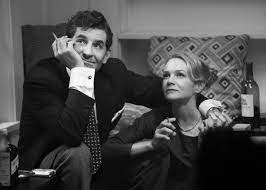
Like the Leonard Bernstein and Felicia Montealegro that Bradley Cooper and Carrie Mulligan portrayed, Mark and I finished one another’s sentences, guessed what each other was thinking, provided a blanket of support, love and acceptance neither of us had experienced before.

Even Mark’s mother adored me, invited me often to visit their large reservation home outside Santa Fe, where she was a tribal elder. She introduced me to Georgia O’Keefe.  Not O’Keefe’s work.  O’Keefe.  She would sit up with us late into the nights I was there, laughing at our stories, entertaining us with her own.  We were family.

Mark and I were melded.  We were the reconstructed humans in Plato’s Symposium, reconstituted as two halves of a single being. The fact that we didn’t have a lot of sexual intimacy was reassuring to both of us then.  I still believed that good girls didn’t, and he was grateful that I had no expectations. At the time, I was naïve enough to be unbothered when he took lovers and disappeared for days at a time.  He always returned to me. To our idyll. 

Knowing what I know now, I am sure I would have been jealous had Mark fallen in love with the men he bedded.  But I also know that I would have learned to live with the pain, would have found a way to sublimate my anxiety about it.  Our relationship was worth it to me.  If Mark had been bisexual, I might have proposed that we marry and start a family just like the idealized Lenny and Felicia.  He was not.  And in the end, his inability to commit for life was what ended our relationship.

In our second year together, Mark fell in love.  With a wonderful man. Our relationship would not fit in with the kind of arrangement they necessarily made with one another.  Mark never said as much, but I knew. I moved on.  We lost touch.

That was fifty+ years ago. . . .

I recently searched for Mark on Ancestry and found his obituary. I was overcome with a sadness I hardly expected.  And I realized that the fact that I searched for him at all was proof he still lives in the deepest corner of my heart, where I hold my parents and others I have lost.  He remains my first and deepest love. 

My Maestro.

Dancing in Lunacy — Bali Part I

“The way it actually was. The endless ocean. The infinite specks of coral we called islands. Coconut palms nodding gracefully toward the ocean. Reefs upon which waves broke into spray, and inner lagoons, lovely beyond description.”

Tales of the South Pacific, by James Michener

How can I possibly be in the South Pacific and not think of James Michener?

I first read his Tales as a freshman in high school, and when Hawaii came out that year, my mother was called into the principal’s office for allowing me to read such racy literature.  Michener remains with me, especially when I travel (he’s written about so many of my favorite places), but here in Bali, an island that is still confused for the island paradise immortalized by Bloody Mary’s nearly eponymous song in the Rogers and Hammerstein adaptation of Michener’s work, he looms.

Obviously, my expectations were high as we flew from Don Muang Airport in Bangkok to Bali’s Ngurah Rai.  Which is to say that there is no way I would not be disappointed.

Even the physical image of my imaginary Bali, reinforced by the film version of Eat, Pray, Love, which featured gentle marketplaces, smiling people with no desire to rush anyone and a pristine, sparsely populated seaside, was immediately tainted.  There was, from day one, nothing Edenic about what I found there.

I won’t claim to be an expert on anything Balinese.  I was there for five days, a prisoner of my own inadequacies.  To begin with, I was impaired my choice of reading companionship.

For some reason I am unable to decipher as yet, I chose, as my airplane entertainment, 1493, by Charles C. Mann.  It’s a great book; don’t get me wrong.  But it’s very affecting.  As I deplaned at the Bali airport, I had only just read about the spread of Malaria, one of the many results of the Columbian Exchange.

Apparently, and this is a truly reduced explanation, because of the voyages of Cristobal Colon, which created a network of trade routes around the globe, all sorts of agriculture and its concomitant insects, germs and diseases, were able to migrate easily worldwide, and one of the most adaptable migrators is the mosquito with its uncanny ability to infuse malaria into the blood of its host.

Mann’s writing is most engaging, and his descriptions leave little to the imagination, including his descriptions of the way the disease infiltrates the body, what it does to the blood, how it spreads from one host to another and how it creates epidemics that make the flu pandemic of 1918 look downright contained.

So there I was, arriving in Bali, armed with just enough knowledge about malaria to know I didn’t want to get it and knowing that I had ignored CDC recommendations.  Anti-malarial shots can be pretty invasive and destructive, so, since there has been no major outbreak in the Bali city areas, the CDC doctor in NY suggested I just plan to “Use Deet; sleep in Deet, cover yourself in Deet.”  I figured that if it were that important, Deet would have to be readily available in Bali, and, not wanting to carry any more liquid than I had to, I planned to buy it there.

Well, I was wrong.  No Deet presented itself in any form in any of the multi-varied stores we found once we got settled.  But far more worrisome was that in the book, Mann had clearly said that malaria outbreaks are worst in areas such as rice paddies, which are notorious for their standing water, especially when the rice paddies are in areas of extreme moisture and even more so in areas where the rice paddies were not native but had been transported to that region in the Columbian Exchange.

You guessed it.  Bali’s rice was introduced by visitors — Bali is situated, after all,  right along the main trade route, whose center was just up the ocean at Manila –after the 16th Century.  And the rice paddies, built into the sides of the sloping jungle, are awash with tourist resorts for every breed of mosquito.  When we’d found our way to our accommodations, I asked our host about malaria, and he said, “No worry.  Only in rainy season.”  When is rainy season, I wondered and looked it up: all year.

So I began with ill ease, and then communication difficulties intensified discomfiture.

We had planned to stay for the entire five days of our visit in a house that, according to the pictures we had seen online, was a clean, quaint, lovely house, perfect for quiet meditation, in the area known as Ubud.  We expected a few days of retreat, time to read and write and cogitate and perhaps explore the charmingly offbeat town and its environs.  The owner of the house had honestly disclaimed, “If you are looking for five-star accommodations, this is not your place, but it is infinitely comfortable and immaculately clean.”  An unfortunate miscommunication.

The house, first of all, is two hours from the airport. I knew I was in trouble about ten minutes into our trip out there, when I saw a billboard that said, “Visit Ubud.  Enjoy the beauty of the rice paddies in the splendor of the jungle.”

That sign preceded two hours of standstill or crawling traffic.  Nothing moves easily in the congestion of trucks and motorbikes, and we were later informed that this is a condition that is Bali-wide.  Nothing controls the traffic here  — like much of Asia, Bali lacks streetlights, street signs, traffic police, speed limits, pedestrian crossings, road regulation of any kind.  When we arrived at our destination, the driver stopped at the top of a hill, and he indicated that we should walk down.

He took one of our bags, and we handled the rest, descending a very steep hill, on an alleyway sidewalk barely wide enough for one average-sized person.  An overweight ten-year-old would be challenged trying to navigate the walkway.  On our way down, we were surprised — more like mortified, shocked, amazed, terrified — by an oncoming motorbike.  It sped up the hill, assuming we would find a way to stand aside, and as the menacing bug whizzed by, I felt his tire slide over my toe (luckily, this was before I became a converted flip-flops wearer, so I was still sporting my Nikes) and his handlebar graze my arm.

The house is cradled in the spectacle of a greenness I could never have imagined.  Numerous waterfalls drop off the sides of the rice terraces, and the giant palms rustle gently, sparkling in the brilliant sunshine.  A choir of floral hues echo from every bush, every clump of glass.  Where the airport area had been unbearably hot, here on our mountain, it was considerably cooler, and, as the sun began to set it got downright comfortable.  I even considered donning a sweater.

So much for the positives.  The house was dirty.  Not in a neglected or abused kind of way, but in a way that figures you won’t find sleeping on others’ sheets, using others’ towels, walking on wet floors objectionable.  I might have found a way to deal with that, despite the high price (yes, the price per night was verging on 5 star cost) of the accommodation, but there were worse aspects.

For one thing, there was no mosquito netting.  And the local store had no Deet.  But worse than that, the bedrooms — more like monks’ cells, actually — were on opposite sides of the house, with no way to navigate one from another without walking thru the darkness of the jungle.  Is my western-ness showing?  I cannot deny it!  In any case, these little rooms were in a state of perpetual air-conditioning, but they were not screened, so doors had to be firmly shut, yet the bathrooms, which are outside the bedrooms, accessed through unscreened doors, are the domain of marauding hordes of ants and spiders. Of course, the sound of mosquito song fills the air, even drowning out the shrill calls of the jungle nightlife.  Going to the bathroom allows the little visitors in and invites them to hitch a ride atop one’s skin.  We had no control of the a/c, and we had no blankets, which made for a cold night, but it didn’t deter our blood-sucking intruders from feasting on us.

While the open, airy kitchen area was esthetically pleasing by day, at night it became nightmarish.  All kinds of creatures shared the space, including, of course, those mosquitos.  There was a kind of sitting room on the second story, very quaint and something I’d probably love in an upstate NY summertime (after black fly season), but kind of formidable in its dirty unprotectedness.

The grounds were pristine, thanks to the next-door neighbor, who tended them.  The pool, however, clearly presented him a challenge, and there were innumerable dead things both botanical and zoological floating in it.  Not inviting.

But the worst part about the house was something we came to realize is implicit in the Bali tourism trade: the ubiquitous, over-fussy, cloyingly attentive staff employed to meet our needs.

I feel terrible sharing this observation because, especially in the case of the team that cared for this house, the people can be really sweet and genuinely concerned.  But you can’t sit without someone grabbing the chair. You can’t get yourself a glass of water or personally open a mangosteen; they will wrest whatever you are holding from your hand and do it for you, whether you like it or not. Our caretaker made himself responsible for everything from carrying our luggage to hiring a car (his relative) to trying to accompany us wherever we might want to go.  And his wife did everything else.  When I awoke at 5 a.m. and stumbled in the half-light to the kitchen, she was standing there, in the eerie jungle crepuscule, (I had to wonder how she knew I was up  – she and her husband live next door, up a hill), armed and ready with her pancake makings, which I had to ask her — and this seemed to offend her — not to employ.

Ubud is congested.  In the evening, dreading the presence of our serving staff, we emphatically declined the escort service and walked to the village.  Well, walked is a misnomer.  We crept along the sides of the road.  There are no pedestrian spaces, so we basically stuck to the gullies, kind of clinging to the vegetation to keep from falling down.  Nonetheless, we did manage to get a feel for the lay and texture of the town: very late ’60’s atmosphere, hippies in abundance from all over the world (those we talked to were mostly from Australia and Europe, but there were plenty of Americans around too) with backpacks and naked children and presumably nothing to do but hang out in the local vegetarian restaurants by day and then in the abundant bars by night.  By the time we had spent one night in Ubud, we knew we HAD to leave.  So we did.

But before we left, we were really interested in seeing the area; it had been raved about in every publication we had perused.  So we asked our grounds man to engage his cousin-the-driver to take us on a tour and then to deliver us to another section of Bali, where we had booked a hotel room. Cousin brought the car around, and we were off.
We stopped in Ubud for lunch in a hippie restaurant — I saw some people I know from New York, which didn’t wholly surprise me, as there are scores of what some might call “yoga tourists” milling about– and walked around the shops for an hour, and then the driver hunted us down to ask imploringly if we were ready to go to the hotel.  He seemed anxious to get us there. “We asked for a day,” I said incredulously.  He didn’t understand me and answered me something I couldn’t make out except that I got the word “far,” so I knew he was speaking a kind of pidgin.  I asked him to show us what he loves in the area.  He didn’t understand.  He asked if we wanted to go to the Monkey preserve?  No, thanks.  The zoo?  Absolutely not.  Finally, he had a stroke of genius and wordlessly took us to a coffee plantation.

The coffee “plantation” was small, just a little farm, really, where the family raises luwaks (weasel-ish animals, civets — and the coffee raised with their assistance is called luwak coffee, or luwak kopi, every expensive) and monkeys and other animals with rich detritus.  They harvest their captives’ feces for fertilizer, and plant their coffee in its warmth. In the case of the luwaks, they feed the beans to the animals; it is defecated and harvested. Then members of the family process the locally refined strain of coffee.
As we toured the farm, the owner/workers seemed to be on a break, congregating wherever we were, under no pressure to perform any pressing tasks.  After they ascertained that we were English-speaking, they summoned a young woman, who later explained that she knows “some little” English because she is in her third year of a course to become an English instructor at the local university.

Her father — that’s who he appeared to be — had lived, he said, in Los Angeles; his English was much better.  And when he joined us, we actually had a lively conversation and got the lowdown on how the beans are sterilized, roasted, peeled, prepared for consumption; and I was convinced to spend $30 on a very small bag of coffee, one of the some thirteen varieties we had been encouraged to sample, and which I found delicious.

There were a few men around, who seemed to be hired help.  Absent any cognates, I could not identify any languages except that the one the father spoke was laced with Dutch sounding words.  I did clearly observe that when he talked to these guys, who appeared to be locals, he had to repeat himself.  Curious about this, I later looked up the language of Bali and learned that there are many.

Bali, it turns out, not unlike NY, was colonized by the Dutch, who encouraged immigration from all over.  Indigenous people from nearby islands, as well as people from the Philippines, China and Malaya, moved in.  There is no island that has a single language because even those people who are native to an island speak a variety of tribal tongues; there are actually 637 known languages spoken in Bali.  Communication is difficult at best.  Bahasa Indonesia, the official language of Indonesia, was chosen rather arbitrarily to represent all the people of Indonesia in the 1960’s, when the myriad islands of the area were incorporated to form the country.  So the majority of Balinese learn one language at home and then have to learn another to communicate with compatriots and still another to navigate the tourism world that dominates their economics.

And to reconnect to James Michener, I also learned that Indonesia, Polynesia, Micronesia — the many little island nations created out of disparate tribal nations — are all related in that their people have been often irrationally nationalized and come from similarly diversified roots.

No wonder we were unable to have a fruitful conversation with anyone except Dad of the Coffee Farm.