Maestro Moment

I opened Facebook the day after I watched Maestro and saw that a friend must have watched it the night before as well.  Her response surprised me.

“There is no soul,” she wrote. “No pulse to it. What woman in her right mind would concede her life to a gay man?”

I had to laugh. Besides the music, particularly the Mahler, what I loved most about Maestro was its deeply honest, layered look at a relationship I recognize from my own life. A relationship that saved me from self-loathing and taught me true love.

 Back in the olden days when I was young, misogyny was unguarded, and discrimination against women was prevalent – it was everywhere and out in the open. Straight men and women alike extincted the Ugly Girl, ignored the misfit, discarded the nonconforming woman. If we were not Helen Gurley Brown emaciated and/or Gymnastics Barbie adorable, we had difficulty making friends, attracting lovers, finding jobs.  Our fellow women could not afford to like those of us who were less than perfectly feminine, attractive to men, passive in accepting our rightful place.  Women were motivated by the need to bag their men; to be the friend of the Ugly Girl was to risk the stigma of association.  No woman wanted to be ignored by the men she sought to impress.

In that distant pre-Stonewall 60’s past, gay men, too, found themselves too often alone and friendless. Many sought beards, female partners who would protect them from the prying sensibilities of those who would out them. Being outed could put gay men in the same position as the non-standard issue female: at odds with the ability to find suitable jobs, housing, friends. Relationships with strong women – women who could stand beside them and anchor their respectability. – were a way to buffer the implied slings and arrows of outrageous misfortune. They may not have offered sex to the women they courted, but they often gave more valuable gifts in abundance.  Gifts of attentiveness, admiration, validation, companionship. Many of us who were on the outside of social acceptability in the straight world found comfort and peace among the homosexual or bisexual men who needed us as much as we needed them.

As a naive As a naïve innocent from upstate New York, I arrived on the dating scene with at best a tentative self-image, and I soon saw that I had been identified as one who would do very nicely as a doting beard.  I was clever, nonjudgmental, erudite, and empathetic. I knew I was needy as hell, but I sublimated by giving until I was empty, and I was easily sated.  I got the affection I craved but never demanded, and my needs were met.

Maestro took me back to the year I was 17 and my very first real boyfriend Mark, a lovely gay Native American from outside Santa Fe. A boy who was, in every way that counted then, my perfect match.

We met in the scene shop at the University of New Mexico, where we both majored in drama. 
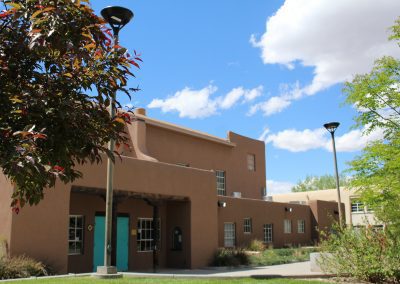
Stagecraft and scene design were required freshman classes, and on that first day, because I had never ever held any kind of a construction tool in my hands, and because I was without a single acquaintance in the class, I was feeling out of my depth and alone. Then a slightly chubby, deeply tanned young man asked me why I was wearing a key on a chain around my neck.  The nonsequitur startled me a bit but made me smile.

“I lose things,” I answered frankly.  “I’ll get locked out of the dorm if I can’t find my room key.”

The boy laughed and looked through me before he said, “You know, in Mexico, if you wear a key like that, you are letting the world know you are for sale.” He grinned.

I blushed.  “Oh. I guess that would assume anyone would be interested to buy this,” I indicated my bulky body and stifled a self-deprecating giggle.

Mark laughed. Then he aimed his dark brown cow eyes directly into my soul. “You would undoubtedly attract only the best of buyers,” he said.  “No sleazy airheads who are looking for a kewpie doll but anyone looking for a real woman.”

I was instantly smitten.  Remember, it was a different time!

For the next nearly two years, Mark and I were inseparable. Being with him made me infinitely happy.  Partly because of the superficial ways in which he satisfied my fantasies. Squiring me around in his fancy sports car – we even ran away together over spring break to escape the boredom and would have landed in NY if the car had not thrown a rod. Taking me to plays and films. Teaching me how to order alcohol. Introducing me to the kinds of excitement I could not have found in my insular hometown, like state fair rides and huevos ranchero and group peyote trips.  But it also made me happy that I made him just as happy as he made me.

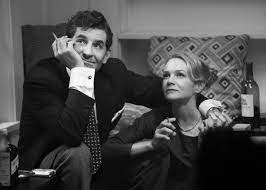
Like the Leonard Bernstein and Felicia Montealegro that Bradley Cooper and Carrie Mulligan portrayed, Mark and I finished one another’s sentences, guessed what each other was thinking, provided a blanket of support, love and acceptance neither of us had experienced before.

Even Mark’s mother adored me, invited me often to visit their large reservation home outside Santa Fe, where she was a tribal elder. She introduced me to Georgia O’Keefe.  Not O’Keefe’s work.  O’Keefe.  She would sit up with us late into the nights I was there, laughing at our stories, entertaining us with her own.  We were family.

Mark and I were melded.  We were the reconstructed humans in Plato’s Symposium, reconstituted as two halves of a single being. The fact that we didn’t have a lot of sexual intimacy was reassuring to both of us then.  I still believed that good girls didn’t, and he was grateful that I had no expectations. At the time, I was naïve enough to be unbothered when he took lovers and disappeared for days at a time.  He always returned to me. To our idyll. 

Knowing what I know now, I am sure I would have been jealous had Mark fallen in love with the men he bedded.  But I also know that I would have learned to live with the pain, would have found a way to sublimate my anxiety about it.  Our relationship was worth it to me.  If Mark had been bisexual, I might have proposed that we marry and start a family just like the idealized Lenny and Felicia.  He was not.  And in the end, his inability to commit for life was what ended our relationship.

In our second year together, Mark fell in love.  With a wonderful man. Our relationship would not fit in with the kind of arrangement they necessarily made with one another.  Mark never said as much, but I knew. I moved on.  We lost touch.

That was fifty+ years ago. . . .

I recently searched for Mark on Ancestry and found his obituary. I was overcome with a sadness I hardly expected.  And I realized that the fact that I searched for him at all was proof he still lives in the deepest corner of my heart, where I hold my parents and others I have lost.  He remains my first and deepest love. 

My Maestro.

Pride

  In the third week of my second year of college, I decided I had to drop out. I told the registrar at the University of New Mexico I was pregnant so I could collect my tuition money and run away to New York with my boyfriend.  We were both gold-green and scared. I was 18, still living in books, and he was 20, just a kid from the rez near Santa Fe.  We’d heard that even in New York there were laws against illegal cohabitation, and we were worried we’d be arrested if we tried to shack up.  Where would we live?

Mid-flight, halfway across the country, I remembered that my grandmother had a cozy little apartment in her Queens home basement that we might rent if we were married.  So, soon after we landed, we wed.

Grandma’s and my relationship was historically fraught.  Her life had tortured her, and even I understood that that gave her license to torture me.  Before her whole family was forced out of Vienna, the city she loved, before the Nazis murdered her two most beloved brothers and a revered sister, before my grandfather’s illness took all that was left of her endurance, she had buried her favorite daughter, her much-adored first grandson, and even her long-awaited, highly prized son to freakish illnesses and accidents. She took solace in the Cutty Sark and beer she kept close to her in ample supply. As she drank, she descended into dark, evil moods that riveted her to her couch in an unlit corner of her living room. 

In those days, Grandma was a big woman, and her presence was terrifying. She would sit on her couch by herself, sullenly knitting or crocheting, a bloated, glowering Mme. Defarge, muttering her complaints mostly about me, her third surviving grandchild and a massive disappointment.  She smoked a pack of unfiltered camels a day, so her litany of my shortcomings – too fat, too lazy, too blonde, too stupid to be 6 or 7 or 8, 9, 10—was punctuated by the rasp of expectorating sputum. My only defense? I called her Grandma, which she hated, instead of Mamma, as my cousins did.

By the time I needed her apartment, however, she and I had forged a truce.  I was, after all, a married lady, and I worked hard to maintain my professional demeanor, never missed work, cared for my new husband with all the deference and respect expected of a proper 60s wife.

But not for long.  Mickey and I said “I do” in October.   He nearly died of hepatitis in December, and I finally understood why we hadn’t yet conjoined.   Turned out he’d been living la gay vida loca all over NYC.  Yes, I had had a clue.  I just didn’t know what I was supposed to do with the information.  Besides, I loved him, loved his company.  His friendship was the most precious relationship I had ever had, and I never wanted to lose it.  The illness forced him to leave.  He was miserable in New York and wanted to be near his mother. He moved to Santa Fe in January, and I remained in Bayside, terrified to share the explanation with my grandmother. I didn’t want her to stop loving him.  But mostly I feared her derision.

One night I got home late from work in Manhattan, and I was lounging in bed, watching the Million Dollar Movie, when I heard a knock at my door.  I opened it to find my grandmother bent over in the cold, holding a batch of cookies she had baked earlier.  I was surprised to see her and just as surprised by the cookies – she rarely baked, and she never allowed me to eat bread in her presence, let alone cookies.  But I smiled and thanked her.

She coughed for a full minute and a half before she collapsed into a chair at my kitchen table.  I brought her a glass of water, and she nodded. 

“My brother was a faygele,” she said apropos of nothing.

“Hunh?” I wasn’t sure I had heard what I thought I heard.

“Like your Mickey.  He liked boys.  That’s why they took him first.  The Nazis.  To the death camp.”

I sat next to her, and she told me about my great Uncle Ferdinand, a gifted musician, a small hump-backed man, who painted and made his living as a bookbinder.  The Nazis relocated him to the popup ghetto along with his professional musicians brother and sister-in-law with whom he boarded. Then, the three were sent to Mali Trosinac. 

“The Nazis hated the homosexuals.  And anyone who tried to protect them. The brightest and the best they took from me.  Ferdinand, Max, and Paula.” She sighed, and her head dropped to her chest.  I thought she would fall asleep.  Then her emphysema cough startled her upright. She lit a cigarette and talked on into the night. The more she talked, in German and in English, the more elegant her prose became. What a facility she had for narration.  I was spellbound.

“Listen,” she said as she neared the end of her story.  “I know what it was like for you with all your brothers and sisters. You the oldest, you in charge of so many personalities. For me, it was not so different. Everywhere we went when I was a child, we, too, stuck out like a seamstress’s thumbs swollen with pinpricks. “

“You, Mamma?”

“Well, you know. I was the youngest.  Of ten.  Whether you’re six or eight or ten, you’re too many.  You’re always special.  Like my Ferdinand. And your Mickey.”

Judgment Call

Once upon a time, I chose to be confirmed in the First United Methodist Church. I was twelve years old and a singular outlier in a closed society. I joined, hoping that membership would foster a kind of belonging I hungered for. I needed to feel embraced and protected by a great, all-encompassing love. The Methodist Church promised me that all were welcome there. I believed.

It is clear now that my iconoclastic half-  Jewish self would not even be invited to join the United Methodist Church today. Having recently announced their decision to allow ministers and administrators to ostracize members of the LGBTQ communities, the church has tacitly granted their congregations a license to shun anyone with traits the church finds offensive. There is no way they would welcome me.

I stopped attending church and identifying as a Methodist some sixty years ago. But until the announcement, however, I harbored a feeling of warmth for what I believed were its precepts. Those I learned from my father, perhaps the noblest Methodist of them all, and they are rooted in a memory I have of a time he acted in a way that demonstrated what I still believe Christianity is basically all about. Long after leaving his church, I attributed his accepting nature to the education it had given him.

In the 1970s, my brother was about to come out to my parents. I worried at first that my father might be less than sympathetic.  

Daddy, a conservative, Iowa-born Republican, belonged to the First United Methodist Church in my small Upstate New York home town. He was known there for the dour parables around which his lay sermons were constructed and by the incongruently kindly manner with which he delivered his fire and brimstone messages to the seventh graders he taught in Sunday School. Though he treated all people with compassion and consideration, his attitude could be harshly judgmental toward people with ethical or moral standards that were not his.

From early childhood, Daddy had been taught that liquor, gambling, card playing, and dancing were sins, as was pre- or extra-marital sex. His sense of humor was corny, old-fashioned, chaste.  He allowed no swearing of any kind in his presence. I was reprimanded when I said, “Oh, gosh,” or “Jesumcrow,” the faux curses that punctuated our Adirondack lingo. In our home, there were no alcoholic beverages, no playing cards, no off-color books or art house nudes. All were banned, I assumed, because my father’s faith required that he disdain them. He seemed to have been indoctrinated by a kind of paradoxical orthodoxy. It was hard to predict how he would react to being the father of a homosexual.

In the first place, the news did not surprise him. And in the second, it did not faze him. “You are my son, and I love you,” he said to my brother. “Nothing could change that.” Not long afterward, my brother, newly mustered out of the Air Force and figuring out what to do next, moved in with my parents. The man who was his first serious partner moved in with him.

I needn’t have worried.

One evening, I arrived at my parents’ house to find my brother and his boyfriend intertwined and making out on the couch in the middle of the family room at the center of the house. More surprising than their unabashed PDAs was the fact that my father sat in the easy chair next to them watching television and eating watermelon. “This doesn’t bother you, Daddy?” I asked pointing to the lovers, who were oblivious to my arrival.

“Should it?” Daddy replied.

“No. Not at all,” I stammered. “But your religion. . . “

“My religion is Jesus Christ,” he said. “Jesus said, ‘Judge not lest ye be judged.’ Shall I be less open than Jesus, whose teachings define my life?”

“But the church, Daddy, won’t the church. . . .”

“The church would never defy our Lord’s teachings.” He stopped. His eyes were distant. He lifted his arms. He was in preacher mode. “The Church welcomes all.”

I accepted him at his word. And I trusted that his beliefs emanated from the doctrine espoused by the religion to which he had unfaltering allegiance. He never missed a Sunday service, never failed to participate in church programs, never refused to teach or to counsel or to take to the pulpit. He was a true believer. So I presumed – hoped – that this church, in which he had raised his seven children, was as accepting as he was.

Hence my shock and confusion when I read the church’s announcement. Traditions I was not aware of had superseded those I had inferred. Traditions of barring homosexuals from ordination, of refusing to sanction same sex marriage, of enforcing strict penalties against clerics who broke the rules and accepted the “gay life style” as a viable human alternative.

Luckily, the declaration is no more than an abstract annoyance for me. And an affirmation of my choice to leave the church all those many years ago. But what of the people – there must be many – like my father. . . the true believers, the ones who honestly see their church as the messenger of their Christ? Does this feel like a betrayal to them? Their church has rejected the notions of inclusion, of loving one’s neighbor as oneself, of refraining from a judgment that Jesus demonstrated by washing Mary Magdalene’s feet, by breaking bread with sinners, by feeding and healing the lepers.

Surely Jesus would be disappointed in this Methodist manifesto. I know Daddy would be.