
It was 2003, and my sweet baby cousin Adriana was getting married in San Francisco.

The wedding was a big deal. Though a small destination wedding, it was a momentous occasion. Our entire extended family – including our celebrity cousin – would converge, and friends of Adriana’s from all over the world would join us. I had to look good.
Which is why, in preparation for the upcoming nuptials, I was not thinking about Adriana. I was thinking about my clothes. I was consumed actually. And contemplating shoplifting.
I envisioned the kind of escapade one imagines as a teenager, not as the nearly senior citizen of 56 that I was at the time, possessed by a midlife crisis: I needed new shoes.
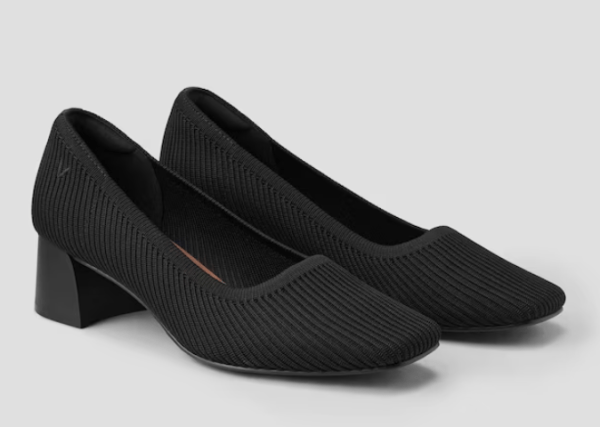
I had found the perfect pair. They were elegant: low-heeled, round-toed, and comfortable for dancing yet black velvet and impractical for winter walking in New Haven, where I lived and worked. They were exactly the kind of shoes my money-obsessed husband would never let me buy.
I must interject that while we were never poor – he was a well-remunerated engineer, and I was a classroom teacher, who took on multiple extra-curricular activities that paid me nicely – he regarded money much as an anorexic regards food. So long as he had complete control, so long as he treated our finances as though we were destitute, he could breathe. The minute we began allowing ourselves luxury items like more than one pair of shoes or a color television – anything beyond the necessities – his anxiety flared, and he became angry, verbally abusive, impossible to be around. These shoes were unthinkable.
Yet I saw them as my emancipation proclamation. I had spent thirty-three years believing, like the naïf Nora in A Doll’s House, that if I acquiesced perfectly enough and long enough, eventually the “most wonderful thing” would happen, and I’d be rewarded by his performing an act of magnificent self-sacrifice. Then he, my benevolent beloved, and I would live happily ever after. However, by the time of this particular crisis, I knew that my miracle was never going to happen. Stealing those shoes would be a way of saying to my husband, “Hey you get off-‘o’ my cloud,” a way to affect my liberation from the oppression of hope as much as of him.
I tried them on. Pure podiatric bliss. I furtively surveyed the store. No one was near. If I just walked out, who would see me? I headed toward the exit. A sales clerk stopped rearranging the handbags on the periphery of the shoe department and stared at me. I turned around, pretending I was merely giving the shoes a trial walk around the store. She went back to her work, and I took off the shoes. I waited a few moments before opening my backpack and sliding them inside. I hadn’t seen a beeper tag. Surely, I could pull this off. Again, I headed toward the exit, but as I rounded the corner near the checkout line, I saw myself standing in handcuffs, an army of my students past and present staring at me in disbelief, looking betrayed but pointing and laughing at the same time. I couldn’t do it.
The shoes went back to the shelf, and I left the store dejected but resolved. If I were going to be held captive in this life for the duration, I should at least maintain my integrity.
 carlastockton.me