

 When I stepped off the plane in Bangkok, after 28 hours of transit time, I felt as though I’d stepped back in time. Placing my feet on the tarmac transported me, in a way, back to a simpler era, at least where travel is concerned. As I descended walked into the steamy evening and waked across the tarmac to the bus that would take us passengers to the terminal, I was reminded of arriving in Albuquerque in 1957, after a nearly-as-long flight from NYC. Then something thoroughly unexpected happened; I reverted to my then age.
Travel, especially over long distances through various time zones, can be like a drug. Sights, sounds, the very touchstones of reality can be altered so that the traveler walks in a kind of quasi-hallucinatory state, seeing, smelling, hearing, touching, tasting what may or may not be present. Entering the terminal, in my mind’s ear, a philharmonic orchestration of the Rogers and Hammerstein’s The King and I Overture rolled over me in flowing and ebbing waves emanating from the loudspeakers. Everywhere I looked were the multitudinous children of wise King Mongkut, and just to confirm that I had entered the realm of the play, I was sure that, right in front of me, standing next to the lifesize poster of Mongkut’s descendent, the current King of Siam, stood a prim but visibly amused woman, pursing her terribly British mouth and trying not to laugh at the antics of the children.
I hadn’t thought about the King and I — or even of the lovely pre-musical version Anna and the King of Siam — in many years, although as a youngster, I was moved to desire the life of a musical actress because of it. But I realized, once I had had a bit of sleep and had recovered some of my senses, that there was a logical reason why the images had so starkly assaulted me upon my arrival.
Like so many people in my generation, my first impression of the people of Thailand, formerly Siam, was created in the lush panorama of the movies. I took in the king’s exhortation to Anna that she learn to kowtow, in order to be a proper woman, and I believed that, however toothsome these people — of course, played in 1956 by beautiful but decidedly un-Thai actors — might be, theirs was a sycophantic, toady society, and they lived to serve their betters; women, moreover, were an underclass in a society of repressed people.
Further, like so many girls in the 1950’s, I believed that Lady Thiang’s plea to Anna to give in to the King, to beg for his approval, was exactly as Anna saw it, a paen to a kind of obeisance that a self-respecting Western woman must eschew. Boy was I wrong about the Thai. In its Western bias, the film actually fails to capture the spirit of the people in some extraordinarily insensitive ways.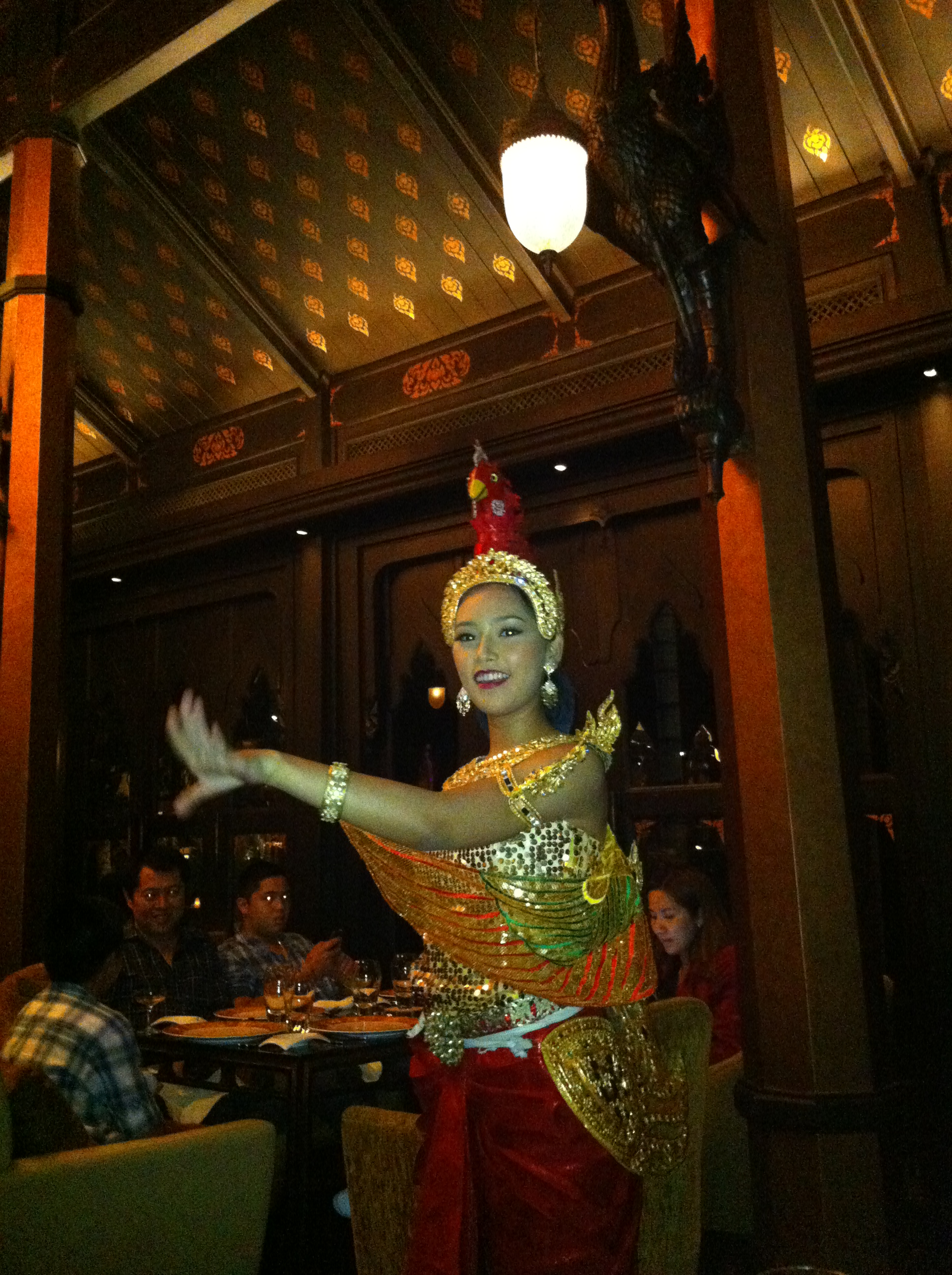
From the moment I entered Bangkok, I was aware aware of the presence of lovely young models, male and female, wearing their prim, closely-tailored, white-gloved suits — costumes that misleadingly evoke a sense of a colonial Siam — posed welcomingly around the city. There is an ambience here that suggests the gentle sweetness of the people that both films were able to capture, and at every opportunity, they display a somehow disarming array of deference that belies the resolutely independent spirit of the Thai people.
Thai deference should never be confused with obsequiousness. Neither its women nor its well-oiled tourism machine and its well-trained personnel are in any way obsequious. I will talk more about the women in a later entry, but for now suffice it to say that whatever preconception I brought with me was shattered very quickly. There is a genuine respect underlying the deep nods that accompany the multi-meaninged prayer-hand greeting (called a wai) and the warm word of welcome, “Sawatdee-ka.”
These are a people who, unlike some of their more agoraphobic neighbors, take pride in sharing their culture with outsiders. They have nurtured and perfected a tourism industry that caters to pampering their visitors. In this endeavor, they know they’re good, and they don’t seem under any pressure to prove it to anyone. They simply acknowledge that their guests are worthy of respect, as they themselves are. But they are not needy, not cloying, and they are unlikely to compromise their sense of propriety in the pursuit of pleasing their customers.
Surrounded by countries that have desired to dominate them — to greater and lesser degrees of success — and thereby to subvert the local character, Thailand has managed to ward off all conquerors. They alone among their immediate neighbors have never been colonies of European conquerors, have never been subservient to a western master. Except perhaps to the Western ideals of Capitalism. But who in the world is not?
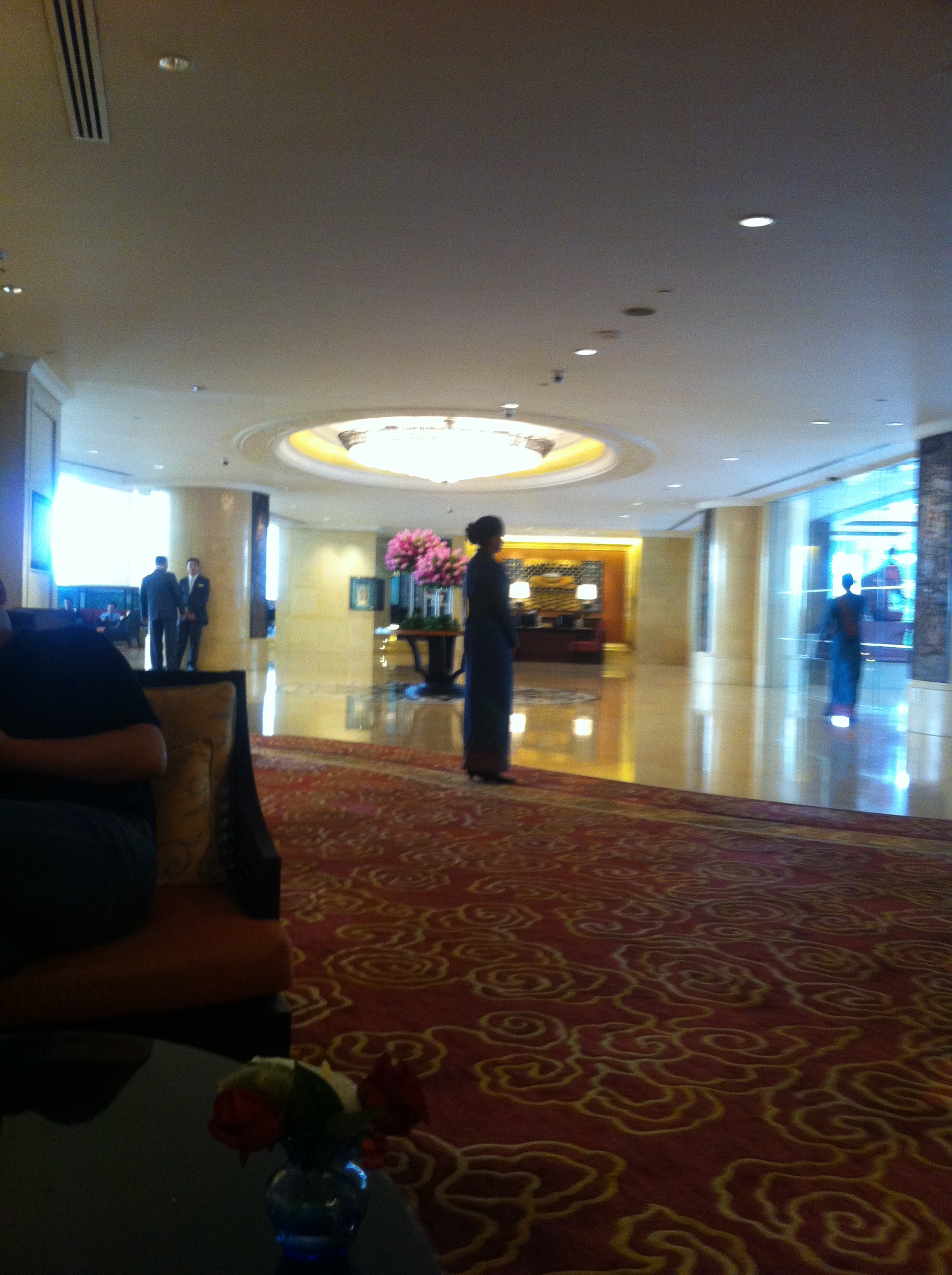 The spirit of the local service staff can be seen in the style of their deference. They do not kowtow, they do not hesitate to look a stranger in the eye. They never hover, seeking to catch whatever crumbs of gratitude might fall from their guest’s wallet; they simply stand at the ready, willing to meet their customers’ needs but finding no necessity to go any further than requested. Among the myriad service industry folk who populate Bangkok, good morning or Sawatdee-ka and the joining of hands is not a display of supplication to the person being addressed; it is the simply a point of view. The hosts genuinely want their guests to know that their presence is appreciated. The visitor will never feel unfulfilled, but nor will the willing servant ever accept any level of deprecation. It’s a fine balance, intricate in its execution.

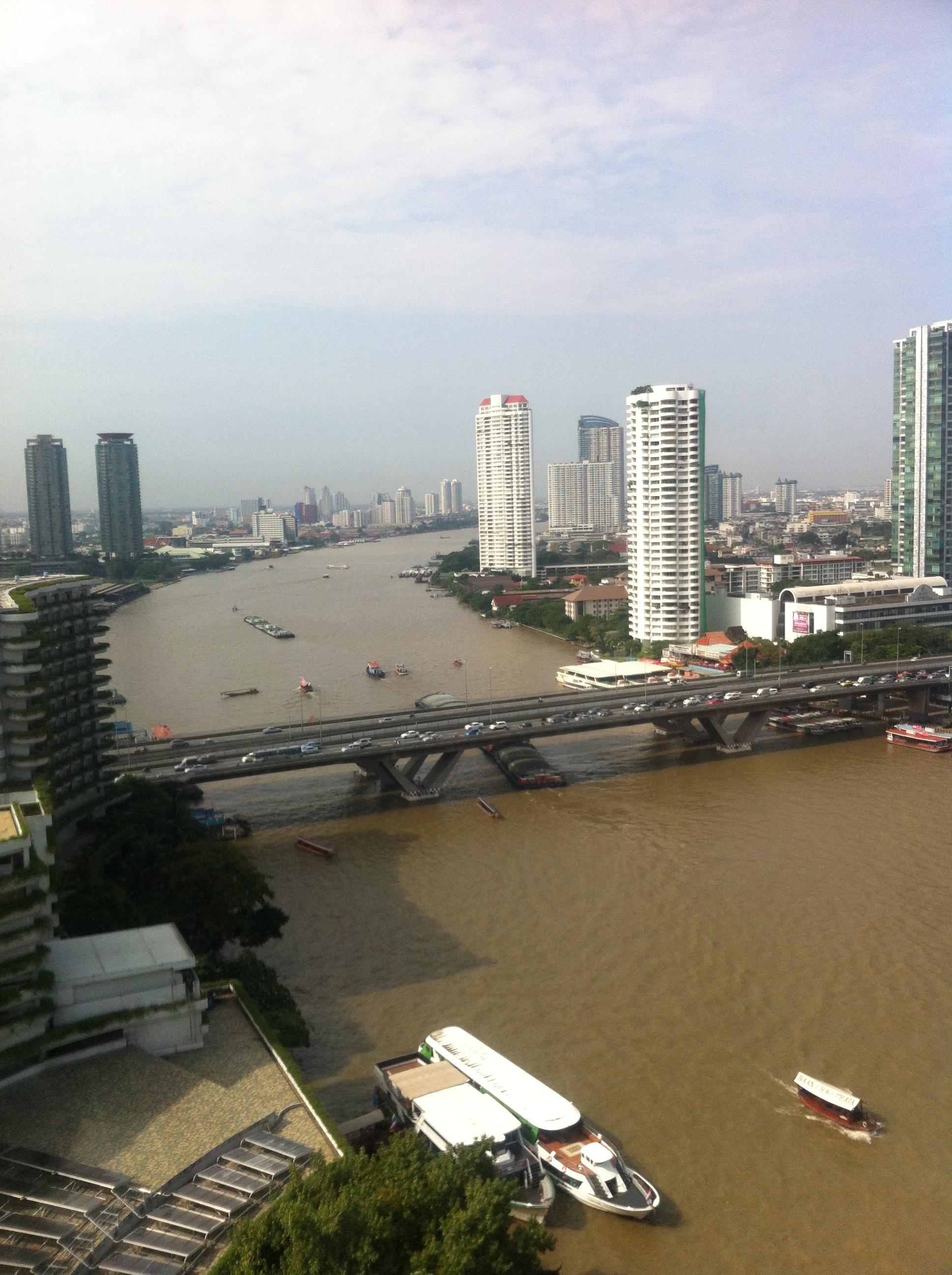
The second day I was in the city, at the Paragon Shopping Mall, was again reminded of King Mongkut and his progeny. Touring the river earlier that day, we had passed the King’s nephew’s palace — the king’s home was closed off for a celebration and procession, so we didn’t get to see it — a domicile that could have been the prototype for both films’ sets. Opulent, colorful, heavily guarded by sunny-dispositioned, smiling soldiers wearing their terribly British-affected uniforms, the palace stands colorfully among a varying population of river-front properties. It would be easy to assume, in the bias of a Western-trained eye , that all of this disparity is yet another example of the 99% being exploited and abused by the 1%. There is, obviously, plenty of that in every country, but along the river, people live in a manner they choose, a manner they have struggled to maintain, a manner they support would never willingly forfeit. And to even consider that every owner of a Riverside shack is too poor and too complacent to replace is an injustice to the people.
Later, when at an IMAX movie theater before a screening of The Dark Knight Rises, I was fortunate enough to witness the people’s devotion to their monarch first hand. Before the previews began, the houselights came up. An introductory strain of music played over the loudspeaker, and everyone stood, proudly, at attention. No one was monitoring the actions of the audience, and no one looked around to see if s/he was being watched. They simply, naturally stood in unison. The National Anthem played, and some of the people there sang. A pair of Russian tourists in the back of the house giggled nervously, not sure what to make of any of it. But the locals simply, gratefully, matter-of-factly sang a pledge of allegiance to their king. As soon as the music stopped, everyone sat down as a single entity and went back to munching on popcorn or twizzlers, but the moment was no less moving than the hats-off-no-kidding-around show of allegiance that precedes the beer drinking extravaganza at a football game.
It was all I could do to sit back down. I felt like someone had just invited me to dance.




 carlastockton.me