Travels with Grandma – Customers Beware

Until this summer, I believed that Small Business deserved my true allegiance. 

I was raised to believe in American small business. My father often declared that America would be nothing without them. “We owe them our allegiance,” he would say.

In the days before my parents had so many children that we began to resemble the shoe-dwelling nursery rhyme family, my dad worked for medical suppliers, big businesses with deep pockets.  They supported his travels and provided generous expense accounts. He could, in those days, afford the finer establishments along his various routes, but he chose instead to support the small business owners wherever we went.  We stayed in family-operated motels in Maine, a cabin on the Navajo reservation in New Mexico, an aging couple’s dilapidated cottage in Far Rockaway.  In those days, he made good money, but he felt stifled.

When he was nearly fifty, seeking to free himself from the shackles of the corporate bosses, Dad bought a small toy distribution company and became the middleman between toy manufacturers and the very small businesses that dotted the landscape of upstate New York. He traveled incessantly then, and he preferred to stay in boarding houses, to tolerate subpar accommodations rather than patronize the area’s successful hotels and motels. It was, he insisted, his responsibility to support his colleagues’ efforts to survive.

“I would rather pay too much for an everyday Joe’s honest efforts than support the corporations that want us all out of the way.”

I believed him.  And I believed, too, in supporting small, independent business owners.  Dad struggled mightily to maintain an income sufficient to support his family, and he was proud to be in control of his destiny, to own his share in his America.

In his memory, when I travel, I often choose small, local establishments over the mega-corp concerns that dominate the industry.  For the most part, I have been happy with that choice. I have found moms and pops to be friendly, accommodating, and eager to meet my needs or to suggest alternatives. I have been proud to contribute to their longevity, to help ensure that America will always be a place where small businesses can thrive among the giants.

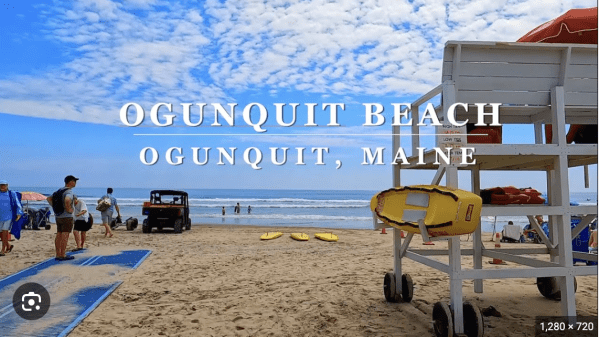
Unfortunately, that was then. Now I am disabused of my fervent devotion to the self-sustaining tourism businesses.  After a few encounters with properties that were understaffed and badly maintained despite exorbitant prices; after being told that the bad conditions are the result of the fact that “no one wants to work,” which makes me even more skeptical about the high prices, I am done.  The final blow happened this past month in a place I expected perfection, where instead I encountered not just disappointment and disenchantment but also fraud and chicanery.  I have been cheated by the Sea View Motel in Ogunquit, ME.

I have family visiting from abroad for the summer, and we decided to take a long-overdue vacation in the beautiful northeast.  We had a lovely stay in a small hybrid corporate-and-local establishment in the Adirondacks, about which I will write anon, and then we thought to spend two days in Maine, a state where I have endless memories of delightful family time spent in family-owned hotels that my father chose.  We found the Sea View online and – much to our own chagrin – booked our room through Hotels.com.

In the photos online, the Seaview looks sumptuous.  Large, clean rooms beckon, and the lovely blue water of a large pool sparkle from the electronic page.  The comments – which I only later realized were from pre-Covid days – were positive, and the price was reasonable, commensurate with the other properties in the area.

When we arrived, we were immediately disappointed and had a bad feeling about the place.  The structure was rundown, and the stairways looked steep.  We asked the clerk if we could look at a room before we checked in.  He gave us a key to a room on the top floor, and we went up.

The ascent was painful.  Steep, rickety stairs are not inviting to a septuagenarian such as I and intimidating to one with hip problems as is my travel companion.  But we persevered. As we crossed the deck of the second story, I tripped on one of the many loose floorboards and fell. I was unhurt, but I must admit that I was further frightened.

The minute we opened the door of the room, we knew we could not stay there.  The furniture and accessories, including the bed and bedding, looked as though they had not been replaced since the ‘60s, and we were enveloped in a musty smell tinged by urine and bleach.  The bathroom was not clean, and it was equipped with no safety elements. The bathtub was slick, and there was not one place for anyone to grab onto to prevent a fall.  Around the bed were signs of looming critters.  We hightailed it out of there without checking in.

We returned to the clerk, who was entirely without curiosity when we told him we were displeased.  He offered us no alternative.  I admit that we had just driven a great distance, and I was not in a particularly articulate state, but when I gathered my wits and tried to explain to him why we could not stay there, he was dismissive then downright rude.  We left without checking in and went to a chain motel up the street.

In the chain motel, for the same price the Sea View demanded for its abominable accommodations, we got a clean, spacious room with brand-new beds – more comfortable than any I have ever slept in – with clean, new furnishings and a full breakfast. 

We appealed to hotels.com for help. We had very naively believed that booking through a monster from overseas would protect us from the kind of treatment the Sea View was giving us.  But Hotels.com abrogated responsibility, telling us that the manager had to approve a refund. They have no power over the establishment’s owners. They did, however,  contact the manager, who lied to them by saying we had stayed there.  Hotels.com, in the person of someone chatting to us from deep in South Asia, that we should reach out to the manager of the motel and instruct them to contact Hotels.com. I made several attempts by email and by phone to reach the motel management.  No one ever responded. 

For absolutely NOTHING, during high season when they most probably rebooked both nights, the motel charged the full fee of nearly $300 per night.  If that is not theft, I don’t know what is.

Sea View has ruined my faith in small business.  If I can go to a Hilton property and for less money than a run-down, unsafe, unsanitary room costs in a place like the Sea View, why would I waste my money trying to help a management that clearly has no interest in helping me?  I would have gladly accepted their charging me for as much as one night for the trouble of making a reservation and having it canceled.  But to charge another $300 for a night that was canceled well in advance is unacceptable.

How can small businesses hope to survive if they are not held to a higher standard of behavior?  If they are free do defraud their customers, to ignore their needs, then they will have to endure bad reviews.  Like this one.

I can’t help but think that the change in our national attitude toward theft and fraud bears at least part of the blame. In a country where thieves can brazenly walk out of CVS carrying hundreds of dollars without prosecution, in a country that seeks to elect a charlatan and a cheater to the highest office in the land, in a country where all bars of justice and morality have been lowered to the ground, anyone can scam others with impunity.

The Sea View Motel is not alone.  They have simply joined a growing army of double-dealing swindlers who will gladly bilk the working stiffs among us out of what they claim as their share of what is rightfully ours.

I wonder if my father would be willing to stay in a Marriott today.  He would have hated the owners of the Sea View.  He would have called them duplicitous cowards. Which is what they are.

A Note from Over Ground

Most New Yorkers never look up. Want proof? Note how, in their groping efforts to create something resembling a news story, reporters overlook an entire class of people, whose lives are ruled by the weather.

The CitySights bus travels through Times Square.  Photo by Hal Wiener, from A View From the Bus, A Tour Guide Takes Manhattan,  by Carla Stockton, Felicia Brings and Hal Wiener.

Next time a double-decker tour bus wends its way into your line of vision, look up at the sightseeing guide, the uniformed person holding a microphone, commenting on what the seated tourists are seeing. Try to envision what it’s like to be doing what she is doing – standing or sitting in the wind, talking over the noise of the city, being tussled about by the movement of the bus. In the summer, there is no relief from the heat, the sun, the exhaust, nothing to protect the skin from burning, the lungs from choking; in the winter, there are no coats warm enough, no gloves thick enough, no boots repellent enough to prevent frostbite or worse.

carla tourguideOnce upon a time not so very long ago, I was a guide on a big blue bus, and my winter initiation happened during my first week, on a late afternoon in early March.

Somewhere between Madison Square and 14th Street, the temperatures had dipped dramatically, but because the day had begun quite temperately, no one – myself included – had dressed for cold. As the air turned frigid, passengers on the bus huddled together, nuzzling for warmth; the young blonde in the very back of the bus took an oversized poncho out of her bag and drew it over her head. Her dark-skinned companion burrowed under the poncho and brought her head up thru the top, so that the two heads bobbed with the motion of the bus, giving the women the look of a souvenir from some cheap carnival side show act.

The bus swayed in the blustering wind, my voice cracked with the cold, and I could see my passengers were far more interested in breathing warmth on one another, on rubbing their hands together for warmth, stomping their feet. I kept talking, of course, it was my job, but my voice was strained, and the stories I customarily told froze uncomfortably on my tongue. Now a light, wintry rain was beginning to fall.

We got to Battery Park, and I sighed my relief. A coach was parked in front of us, and my passengers now had the option to disembark from the open-top bus and cocoon themselves in the closed vehicle’s dry warmth.  Gratefully, all but the conjoined twins clomped down the stairs and hurried to the waiting vehicle. I approached the young women and encouraged them to join their co-travelers.

The looked at each other for a moment, then they looked up at me, standing over them.

“Please,” the blonde one stammered.   “Not to get off.”

“But it’s cold up here, the rain is coming and. . . “

The young woman flustered for a moment, clearly assembling a few words in this foreign language she had fought so hard to learn in time to make this trip.

“I begging pardon. Ehh. I wish be riding. Ehh. No. WE wish to look New York. Is storm city.”

The bus pulled away from the stop, and I wrapped myself in my jackets, drew a plastic raincoat over my head recommencing my talk about the tenaciousness of the immigrants who built this city.

It was my job.


Get Real: Titanic on Wheels (Part 2)

Get Real: Titanic on Wheels (Part 1)

“Everyone’s up in arms about the poor horses, and I don’t mean any disrespect for those horses, but they are treated better than tour guides. The real victims out here are the humans driving this business.” Stefan Stanley.

Floating in Paradise

Tom Hanks, arriving in Thailand in as a rather unwilling Peace Corps recruit in the film Volunteers (1985),  looks out into the seering sun, surveys the landscape to which he has just arrived, and says rather desperately, “Jesus *H* Christ, we must be a mile from the sun!”

I was lucky.  When I arrived in Ko (Ko is Thai for island) Samui it was already October, and while it was far warmer than I prefer my autumnal temperatures to be, the cool breezes wafting off the Gulf of Thailand, the autumn rains blowing in from higher ground kept things downright comfortable throughout my sojourn there.  I had been told I was headed to Heaven, and nothing  about my 8-day stay disabused me of that notion.

 When I entered Bangkok, having arrived from New York by way of Detroit and Tokyo, the customs official who stamped my passport grinned largely when he read my local address.  “Oh, you go to Samui!  You very lucky.”  He looked me straight in the eyes to make sure I had got his drift.  “Heaven.  Samui Heaven!”

Thais are proud of this island with its langorous beaches and island calm.  The concierge in my Bangkok hotel told me it was his dream to go to Ko Samui.  He said he has to work too much and can’t get away, but if he could ever get a vacation, he would head straight for Samui.

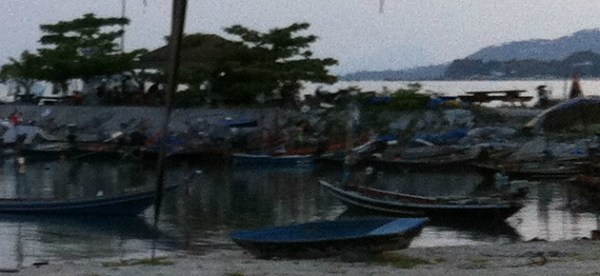
Who wouldn’t!  In October, Samui is a veritable perfection.  When the rains come, they cool the jungle, refresh the air, descend deliciously.  After they leave, the air is clear, crisp, clean.  Everywhere you go are sandy beaches, and when the fishermen are not dumping their garbage, the beaches are downright pristine.  The water remains warm enough that you never need to acclimate; just jump right in!  And yet they have just enough chill to envigorate.

Lots of expats live on the island, and that makes it very comfortable to be a “foreigner” in Samui, but it also poses a challenge.  If the quiet, serenity of Lamai or Netong, for example, or the solitude of Boku seem commonplace, then the crowding and the noise of Chaweng can be jolting.  Night life in Chaweng — especially along the routes of the Sexpats, foreigners here for a deeper plunge into Thai hospitality.   Dance club owners, fight promoters, even bar girls’ agents roam the streets in vans equipped with loudspeakers and recorded music to accompany a speaker extolling the virtues of the establishments, inviting all who are hungry to come imbibe.

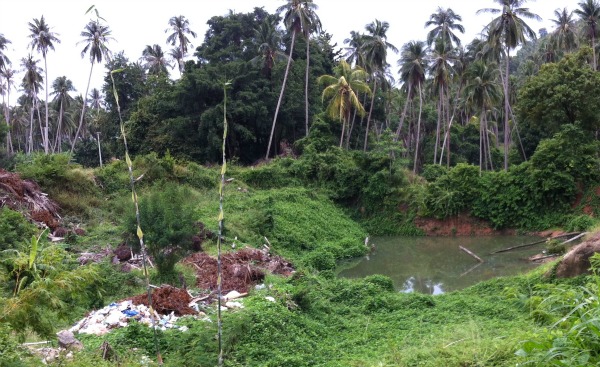
Expats, naturally, bring development to any Paradise, and on Samui, construction is everywhere.  Crews are brought in from cities around Thailand and other countries to work on the sites; they are bused from their communal housing to the workplace in the morning and bused back in the evening, and the signs of their work can be seen in the most unexpected of places.  Unfortunately, where a sense of conservation and preservation is thematic on the island, its rank oposite is equally so.  Impromptu garbage dumps abound in the jungle, along the beaches.

Funny thing about expats is that they pretend to know more about the place than the natives.  Maybe, in some cases, they do.  But, like NY sightseeing guides, they make things up, pass fiction off as truth.  I overheard one guy, who’s lived there, he said, for fifteen years, say that the garbage washes in from Hong Kong and China, that the pollution comes from as far away as Seoul.  “Not our garbage you’ll see out there in the water.  It’s all stuff from far away.”

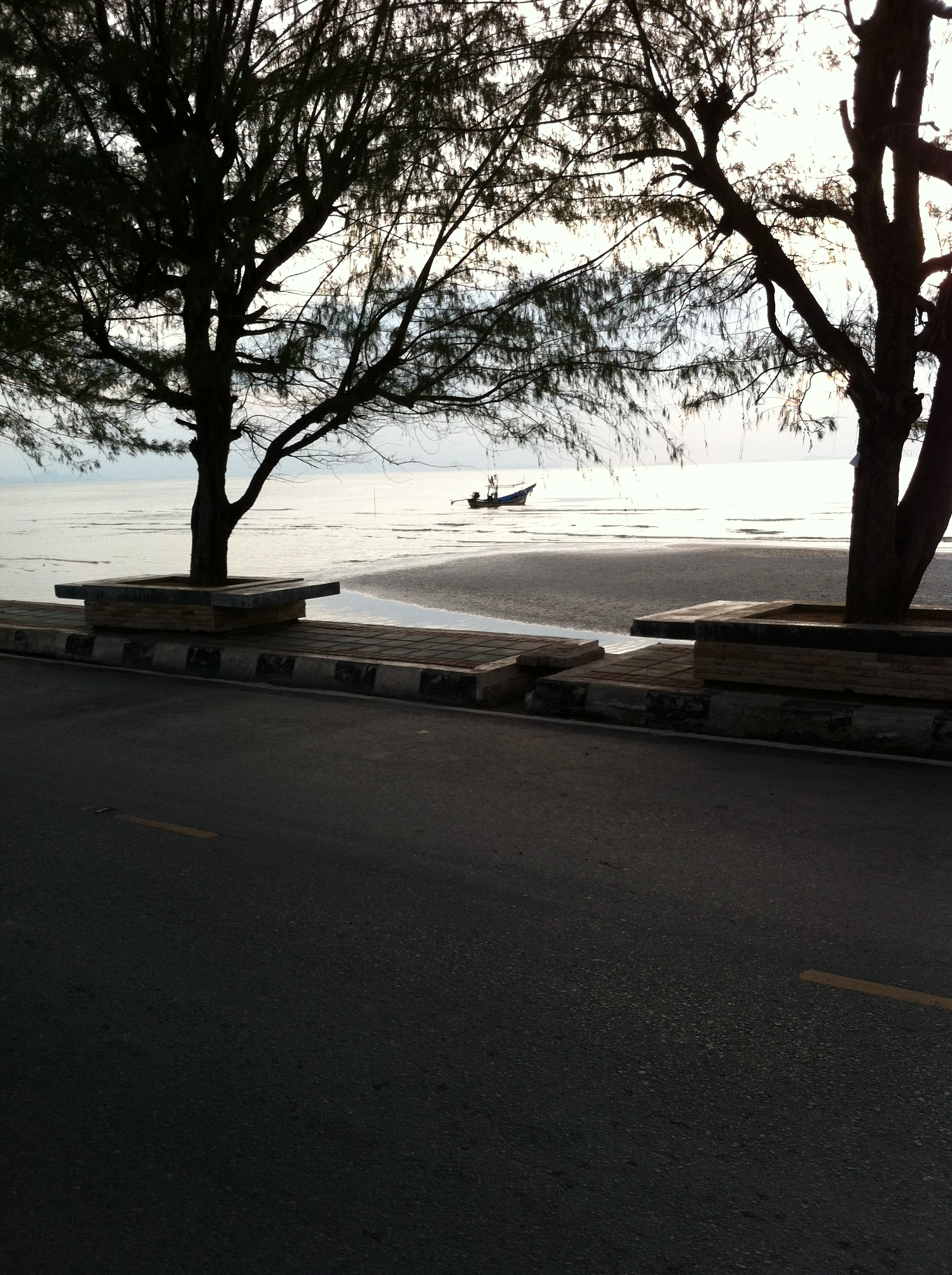
In any case, as I said before, I was lucky. I saw no garbage in the water. But I was told that there are times when the beaches are piled high with discarded nets and food containers, thrown off the fishing boats; algae find their way to some of the coves, and jelly fish, wrenched from elsewhere by storms, will taint the joy of swimming.  But I was never subjected to any of that.  All I saw were lovely white beaches and clear, inviting water. Because you’re on the Gulf of Thailand, you don’t even have the interference of waves.  I told you, just enough gentle undulation and the weight of salt to remind you you’re in an ocean.  Paradise.

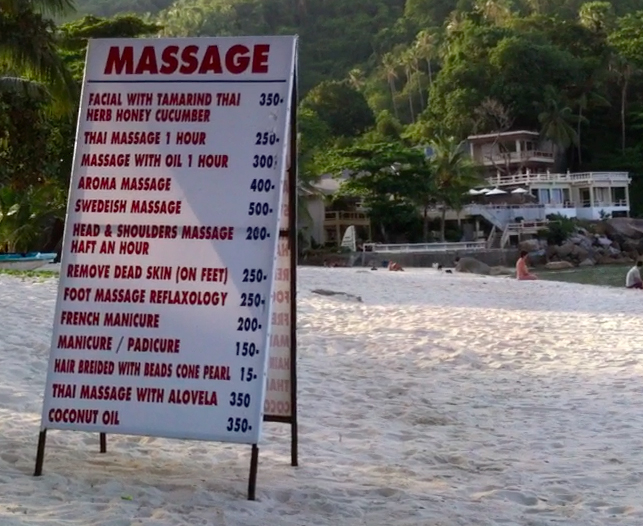
Massage enthusiasts must love these beaches.  Everywhere you go, there are impromptu massage tables set up to enable a client to can lie down, listen to the sound of the gentle surf, bask in the sun, and indulge him/herself in relaxation.  And on top of that, it’s Thai Massage — very hot these days!

All along the shorelines, food mongers gather, offering every kind of seafood and fresh fruit and vegetable one’s imagination can conjure.  Like coconut water?  You needn’t walk fifty steps between sellers offering to open a freshly fallen coconut and make available to you its succulent and refreshing juice.

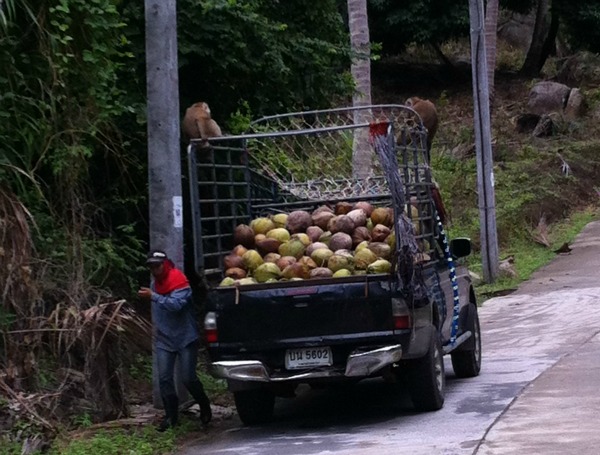
There are lots of coconuts on the island, and the natives are very good at gathering them.  They’ve got cheap help too — local monkeys are trained to climb the trees, twist the giant nuts from their limbs and throw them to the ground for harvest.  Of course, this can create something of a hazard to beware of — a coconut thrown from a height of 60 feet (frankly, even a coconut pulled by its own gravity from a height of 60 feet) can do real damage to your head and other bodily parts.  Even Paradise has its dangers.

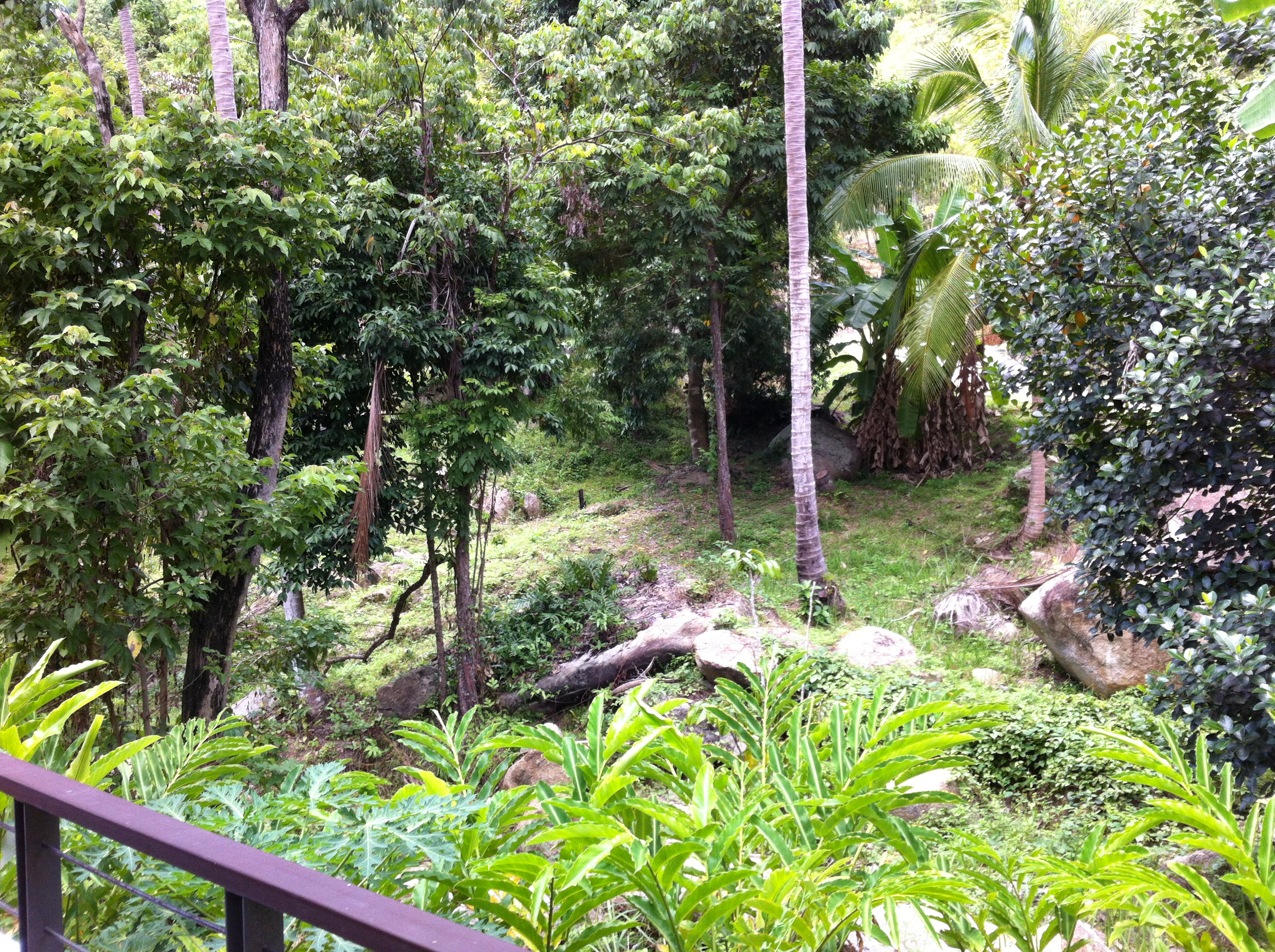
More exist than meet the eye, actually. Like serpents and such also live here.  As I was about to go for a walk down the jungle path that led from my home base to the beach, I was warned, “Just in case. . . if you see a snake, let it pass.  People get hurt because they don’t see the snakes and step on them or something try to catch them.  Just let them pass.”  What kind of snakes, I wonder aloud.  “Cobras — especially King Cobras — and vipers mostly.

At the CDC office where I got my travel shots, I was warned to avoid bats and mosquitoes.  “Sleep in clothing,” the doctor told me.  “Bats will bite you while you sleep, and you won’t even know it. And wear Deet so the mosquitoes leave you alone.”  I saw a couple bats flying by in the evening when were were out, but I remained unmolested.  Though there are mosquitos on Samui, malaria is rare, but dengue fever, another mosquito-bourne disease, is less rare.  Still, it’s not considered threatening enough to cause alarm, and few among those living here would even consider using Deet.  We did carry a naturopathic bug spray around with us, and that seemed to suffice; one night, when we went for dinner at a beautiful beachfront restaurant, the waiter brought us bug spray with our menues; we did apply the substance, and we were left alone.  Didn’t I tell you this is paradise?

Some beautiful places are plagued by rats, but I saw none on Samui.  What Samui does have is a large population of feral dogs. They congregate like rats, menace local runners, threatening small pets;  they also lounge around in the middle of the road, creating a serious hazard for drivers, especially for those on the ubiquitous motor bikes.

And, speaking of perils, the motorbike riders are their own kind of menace.  There are so many of them that they have developed a kind of entitlement, a stance, at least,  that suggests that they believe they own the road.  Driving a car or walking can be risky because there is little awareness on the part of the swarming bikes’ drivers that there is anyone else on the road, and a little scooter can do great damage to a small car or little person attempting to navigate around it.

But these are minor impediments to an environment that is otherwise without flaw.