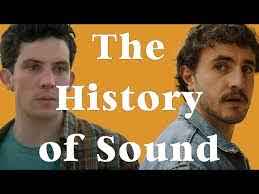
There’s an irony about the way I connected with The History of Sound, the 2025 film by Oliver Hermanus. In other circumstances, regarding other films, I might have avoided watching this one. I am grateful I didn’t. Because the very elements the critics accused of making the film bland are precisely the elements I love.
I heard it said that the film is too sedate, like Brokeback Mountain on Xanax. Brokeback Mountain is among my favorite films, but for me, the critics got it wrong. The History of Sound is tranquil, not sedate. It has a similar, but subtler tone. Both films feature gay male protagonists, and each has an undercurrent of rage and despair, but Jake Twist’s anger and Ennis Del Mar’s longing in Ang Lee’s and Annie Proulx’s story are what Brokeback Mountain is about. The History of Sound is not about its gay men’s love story or the tragedy of being “different” in the 19-aughts, though the men’s love for one another is at the foundation of the tale. The men are connected to one another by their devotion to sound, which in turn connects them to the human race. And the film explores the joy and the sorrow that each derives from both essential bonds.
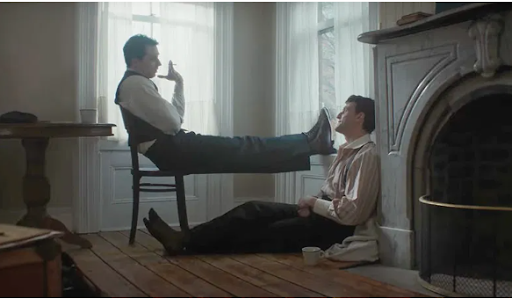
The History of Sound elucidates two men’s common fervor for collecting folk songs, preserving the authentic voice of the American heartland, for chronicling history that would otherwise go unnoticed by future generations. One man is Lionel Worthing (Paul Mescal), a musical prodigy who rises out of his Kentucky poverty by earning a scholarship to a New England music conservatory. The other is David White (Josh O’Connor), born into privilege, orphaned at a young age, a seeker of the truth that is the music. What draws Lionel to David in their initial encounter is David’s extensive knowledge of songs that Lionel thought were merely the sounds of his hillbilly home; their bond forms out of the shared knowledge that folk music is the heartbeat of a culture. That knowledge is a passion that animates their relationship.
Which is a relationship without conventional commitment.
Neither of the men defines himself as a gay man; each expresses interest in marriage, children, and neither pledges forever to the other. In every frame, each of the men exposes his unwillingness to disclose too much of his past or his secret self. David knows that Lionel is a farm boy, and Lionel knows that after David’s parents died, an English uncle took him in; when the uncle died, David self-nurtured in his parents’ Newport estate. When David is drafted and sent into the maws of WWI, he writes letters about the landscapes of Europe, not about his love for Lionel . . . or about what he might be suffering. And when he returns from the war, he controls the inevitable PTSD in such a way that both Lionel and the movie audience feel it vicariously, as a not-quite-palpable volcano in David’s belly.
Such tension in a film is anything but sedate. I was unnerved and riveted to each well-acted, beautifully crafted scene.
Still, I understand others’ complaint that “nothing happens.” Neither man suffers a beating for being a homosexual. In fact, no one so much as casts a negative aspersion their way. No torrid sex scenes take us into their shared bed. When tragedy occurs, it occurs, as it would in the best Greek tragedies, behind the scenes, and there is no over-dramatic display of despair or mourning. This is a movie that invites us to witness the power of both sound and silence to create ties and to dash them to smithereens. The viewer is never expected to be a voyeur.
At the same time, there is plenty happening on the screen. There is not one awkward moment of inept acting; both O’Connor and Mescal are consistently convincing. Director Hermanus has created a very believable world, and Ben Shattuck’s screenplay has some dialogue that is downright poetic. To say that Alexander Dyan’s cinematography is stunning is an understatement. He has captured, with magical lighting, brilliant juxtapositions of forest, sea, sky, fields, nature, the visual glory of American landscapes – the city of Boston, the farmland of Kentucky, the forests of Maine, remarkably recreated in the state of New Jersey. There are also picture window vistas shot in Rome and the glorious UK Lake District.
My personal attachment to the film has another dimension. It took me back to my own youth in a roundabout way.
Until I was 6, I fell asleep every night blanketed by the healing warmth of my mother’s cello. As soon as my brother and I were in bed, she would hasten to its side, caress it for a moment, then begin to play. I lived in a farmhouse not unlike the one in which we first see the child Lionel in this film, and in the smile that transforms his face when his father plays, I recognized the relief I felt the moment Mom’s cello began to hum. I found my mother in that music, and I was drawn to her because of it. I learned to recognize her moods in the sound – joy when she played Bach, despair in Bruch’s Kol Nidrei. I could feel her story long before I knew it. The cello sang for her and to her, and I learned early that music burrows into the soul and fills in the holes wrought by suffering, sorrow, and loneliness.
The folk music in A History of Sound resonates as my mother’s cello did. The film conveys music’s true weight, a weight that cannot be spoken. It must be heard.
Returning to Saranac Lake, the town where I spent my latter childhood years, used to be all about my mother and my brother David. Both were much loved for good reasons; each had a particularly large presence among the locals and made a difference to many. In the old days, I felt suffocated and extincted by the size of the welcome I always got for them. Mom’s friends and David’s admirers were legion, and I could not walk down the street without being greeted with, “Hey, I knew your brother,” or “Carla, you’re Charlotte’s daughter. She was an amazing woman.”
Heck, I didn’t even have to be in our hometown. Once, my then 20-something-year-old son and I drove through a blinding blizzard to spend a weekend in Lake Placid, the tourist mecca nine miles and a huge cultural ethos away from Saranac Lake. We checked into the Hilton Hotel and went to the bar to unwind before sleeping. Within minutes of being seated, three people at the bar realized I was a Swett and sat themselves next to me to regale me with stories of David when he was the bouncer at a bar over on the lake. Soon, another three people came over to tell me what a great teacher mom was the year she taught bio at LPHS.
It was something of a relief to be anonymous, to duck into their legacy. I was content to linger in the long shadows Mom and David had cast years before.
Over the years, I remained in touch with only one person, the grown-up boy I counted as my best friend from 6th grade on, the boy with whom few in our class knew I had a relationship. He had gone to college, been engaged, been sent to Viet Nam, and moved down south, but we stayed connected though I had not seen him since he visited me in New York on his way to Viet Nam in 1969. I would have seen him if he had been in town when I was there, but he was not.
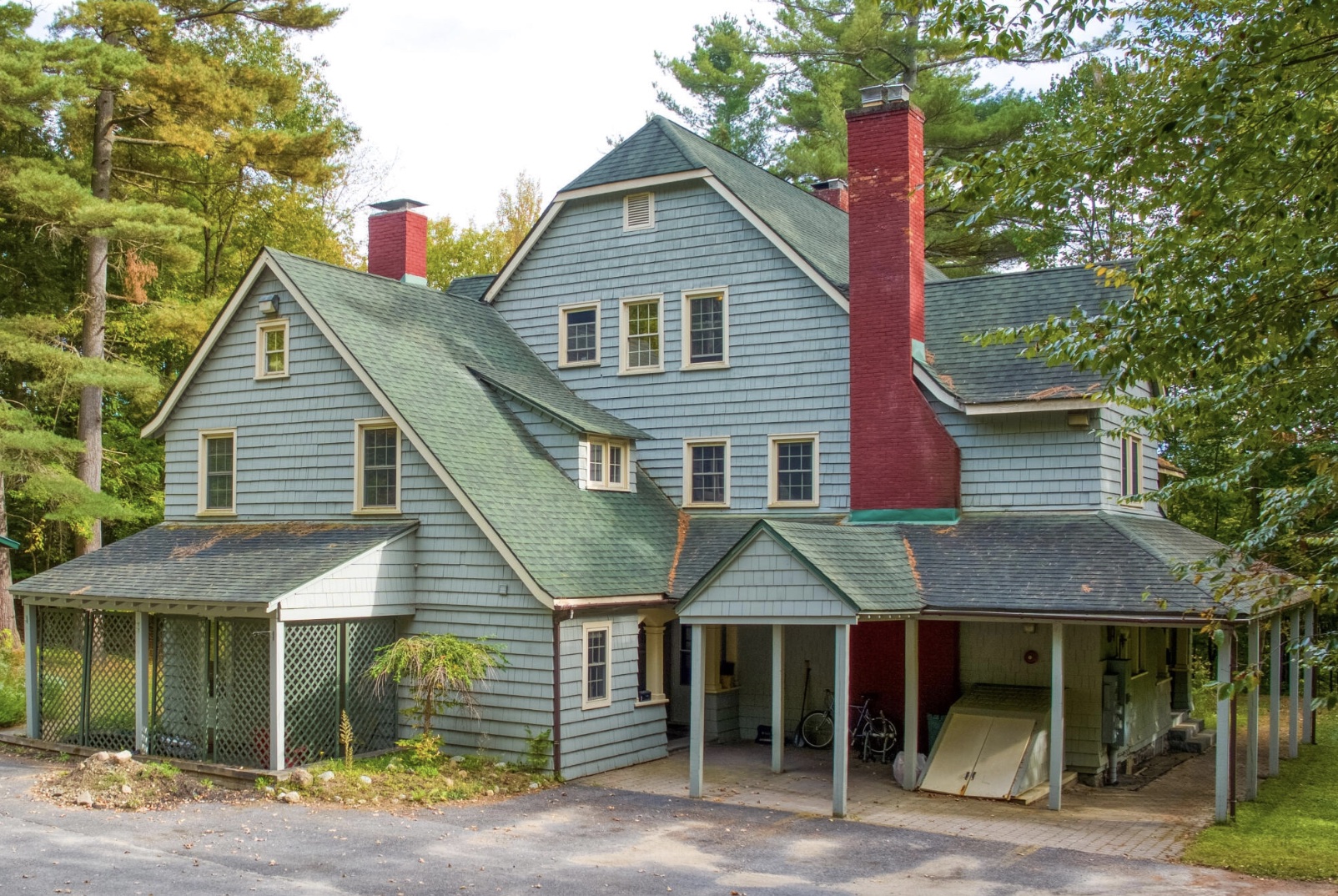
I loved taking my family to visit Saranac Lake, and we went as often as we could. We camped at White Pine Camp before it was renovated. We hiked up to Copperas Pond. We canoed or boated out onto the lakes. But since my one true pal was not there, I felt no compulsion to call anyone else. I didn’t expect that anyone would remember or care. David and Mom were the ones that counted. I did not.
Everything changed for me when the 35th Reunion of the Class of 1965 rolled around.
In 2000, on the verge of leaving my husband and having buried my mother just a few months before, I got the notice that a reunion was in the works. I wasn’t sure how I felt about facing my classmates, but I was sure I needed to find a way to feel grounded. I had just begun to flex my creativity and was experimenting with a new career; the idea of being among the people who knew me before I left my chrysalis was comfortingly attractive.
The opening event was a meet-‘n’-greet at the Belvedere Restaurant, a hometown tavern, where many of my classmates had learned to drink as teenagers but to which I had never been. I parked my car outside the restaurant, and before I got halfway out of my car, a familiar form appeared at the top of the stairs.
“SWETT!!!” He exclaimed, addressing me, as people had when we were young, by my embarrassing last name. “You’re here!!!”
The surprise greeter was John, the boy who sat behind me in 5th grade. The one who dunked my braids in an inkwell then cut off the ends, who was grateful I didn’t complain to the teacher but simply laughed. He was the boy who told me to shut up when I argued with a teacher about the legitimacy of a request we were expected to honor. He was never someone I thought of as having any real interest in me, but he had always been there. And now there he was smothering me in hugs. He led me in.
Inside, I was greeted by people, many of whose faces I barely recognized. My oldest, best friend was there, and I buried myself in his affection but felt no reason to hide for long. There were so many cherished memories assembled. Gail, who lived down the hill from me when we first arrived in town that winter of 1957. Her dog Mike nearly scared me to death. Later, when we both moved across town, Gail was once again down the hill from me, always my neighbor and a kindred spirit. Marsha, whose 4th grade birthday party invitation eased my transition from Massachusetts outsider to Saranac Lake resident. Nancy, my high school bestie, and Maryanne, with who made me laugh as we walked together down the hill from school in the springtime. I rediscovered Karen, whose baby brother was born within weeks of mine. And shy Art, who had seemed so disinterested in anything academic but had evolved into a High School History teacher. Then there was Penny, whose friendship was a constant aspiration though she seemed to disdain me, enveloping me in a hug.
Within minutes of arriving, my classmates reminded me that though high school was not my finest hour, it was a time that deserved to be remembered. The campaign for senior council president, the regional chorus festivals, jazz band, speech contest, the town centennial pageant. . . .
People still effused about David or Mom. But I realized I, too, belonged. My fellow townspeople were, along with David and Mom and all the Swetts, the main characters in the play that was my life in this town. I felt embraced and accepted, and I understood for the first time that the play wasn’t over yet!
I struck up correspondences, albeit spare, and looked forward with great anticipation to whatever came next.
At the fiftieth reunion, naturally, some of the best people were not there. Old age, illness, family events, death. Nancy was no longer with us, and John was clearly ill. But we had a blast. Gail and I hosted the culminating ceremony together, and we formalized our belief that we were sisters of the most bonded sort, members of a family of disparate siblings, who’d grown up in a community founded on the idea that a town exists to care for one another.
The people who fostered the growth of Saranac Lake in the late 19th C arrived there in order to give or find relief from TB; the tradition defined the town and trickled into everyone’s consciousness. Saranac Lake became a refuge for veterans of WWII and Korea, boys who needed a quiet, caring place to raise their families and set the world aright. Refugees from places like the Swiss Alps who needed to be in the familiar protection of the granite mountain walls that surrounded us. We were raised by survivors who nurtured one another’s survival, and we members of the Class of ‘65 bonded to one another as our parents did to our town.
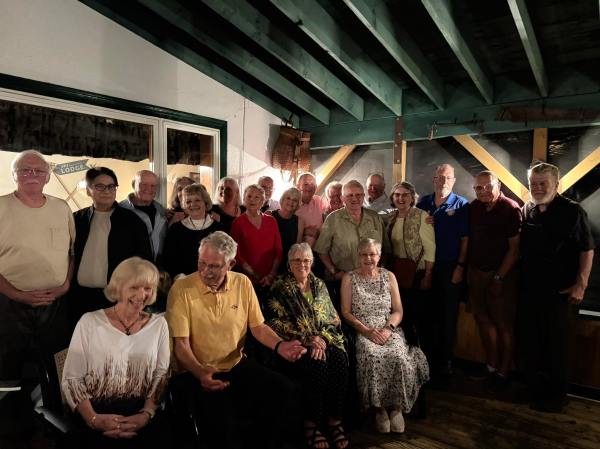
Returning last month for our 60th Reunion, I had feared that David’s recent death would make it painful to hear his virtues extolled. I was wrong. This great extended family we’d both been part of shared memories that made mine more vibrant. I missed him more and at the same time a bit less because he was there with us in more hearts than just my own.
There were far fewer of us this year to revel in the joy of sharing one more party. So we made a solemn promise to one another: we won’t let ten years pass before we do it again. Ours is a special joy we must nurture fervently.
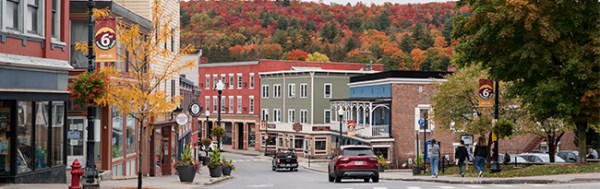
Saranac Lake, NY, began as an outpost for hunters but gained fame and population as a medical center for Tuberculosis sufferers.
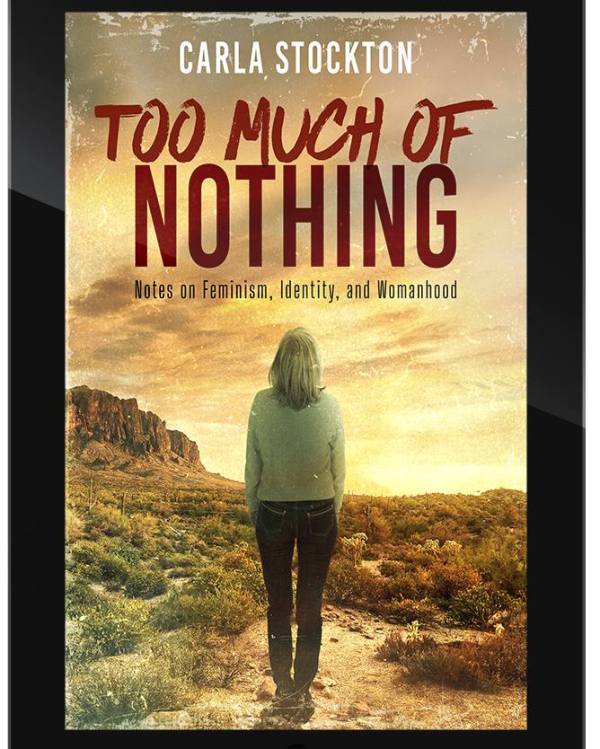
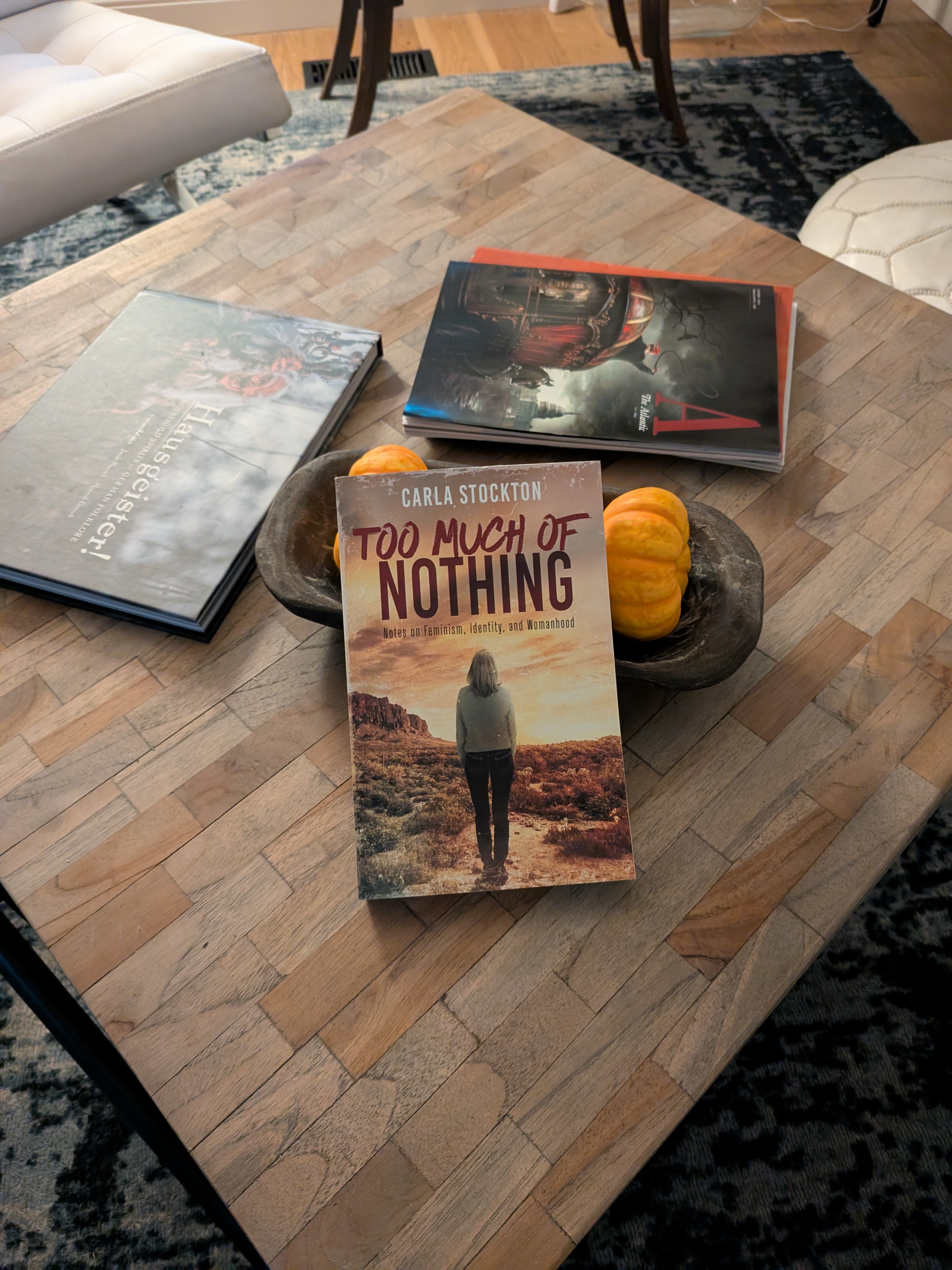
Too Much of Nothing: Notes on Feminism, Identity, and Womanhood (Mountain Ash Press, October 2024) was not the book I expected my first solo book would be. I had spent two years compiling stories about my mother’s immigrant family, my father’s eccentric past. They comprised the MFA thesis that I planned to publish. My readers disagreed.
“Make this your second book,” they said. “What’s most interesting in this work is the story you tell with you as the central character. Write about you first. Then write them.”
I revamped, reassuring myself that my next book would be the tribute to my family I felt compelled to write. Once I got past Book #1, I would return to the compendium of family stories, the histories of my displaced and troubled forebears, to honor their memory with my carefully chosen words.
Once Too Much of Nothing was launched, I moved into the process of preparing the next book by focusing on my immigrant mother’s trauma and her family’s survival and planning for the research that would delve more deeply into Dad’s ancestry. I began preparing to depict the layered amalgam of culture and sorrow my parents’ union created.
The journey has been fascinating . . . . Their background is rife with drama. The forces that drove mom’s clan out of Europe in 1939, coupled with the tales of my father’s Dutch family, provide a rich tapestry of escape, survival, and the power of love. Best of all for me as a true New Yorker, their stories converge in the Catskill mountains and coalesce into one truly American chronicle.
When I read Russell Shorto’s Taking Manhattan: The Extraordinary Events that Created New York and Shaped America, I realized again how important the story I plan to tell really is.
I’ve been a Shorto fan since, as a New York sightseeing guide, I read his Island in the Middle of the World, his history of New York City, which argued that everything we identify as American comes from the cultural stew that simmered in New Amsterdam/New York. That stew, according to Shorto, contained generous portions of the Dutch, English, and Jewish traditions that bubbled in my identity. Shorto’s newer book re-examines the history even more sharply, and he plumbs the depths of tropes that any child who attended Junior High in New York State was fed as the history of our state.
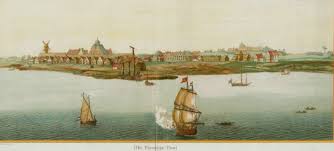
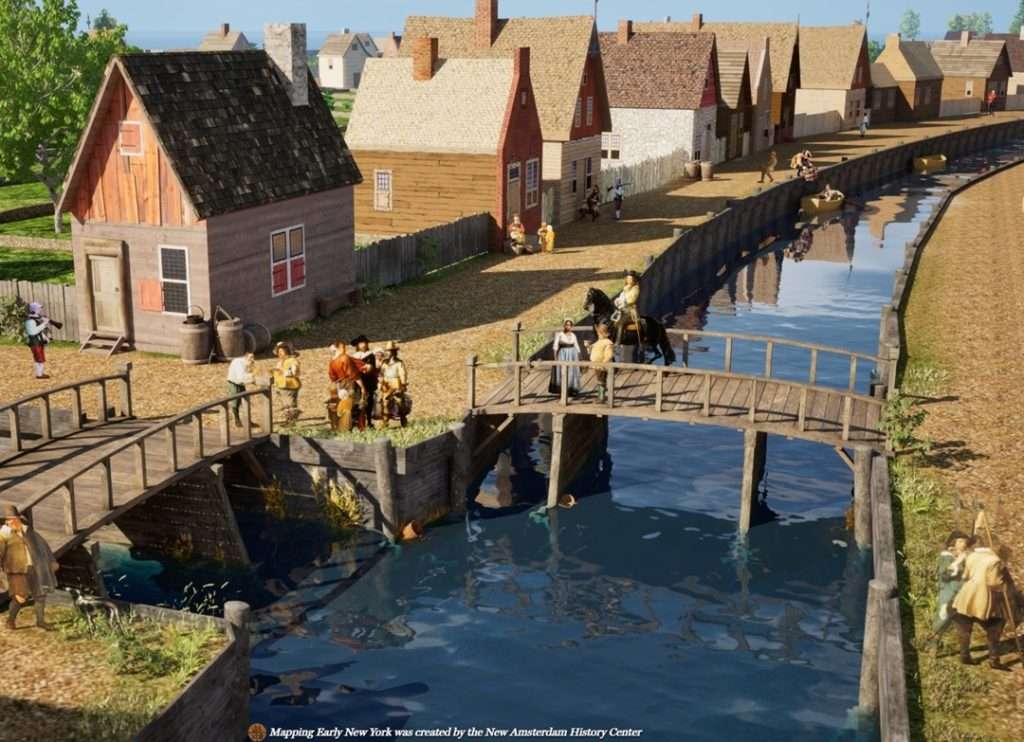
We all knew that the Dutch established a community here and called it New Netherland, that New Amsterdam, their city at the tip of the Manahatta Island, was its capital. Then, in 1664, the English arrived on the banks of the Hudson River, seized New Netherland, and renamed it New York. Then, the Dutch slinked away to the corners of history.
Not exactly the truth, Shorto proves.
According to documents that have only recently been translated, there is much more to the story that we did not know. The Dutch West India Company, acting not as agents of the monarch but as agents of the world’s second international trade union (the first being the Dutch East India Company) stole New York – and what are now Delaware, New Jersey, much of western Massachusetts, and Rhode Island – from the natives and built a society that encouraged diversity. They were not inherently more tolerant than the English or the Spanish, but they found that a multicultural world was conducive to profitable business. And business was what they were all about. They were willing to accept anyone and everyone from anywhere at all, so long as there was money to be made. What the Dutch West India Company did not do was to protect its people from the reprisals by the understandably angry natives, and they failed to create a workable government.
The British Civil War had just ended, reestablishing the English crown. King Charles II realized that his ravaged country needed to curry influence in the new world in order to replenish his coffers. He put his brother James in charge of asserting their presence, and James sent emissary Richard Nichols to take possession of land that now constitutes most of the Northeastern United States seaboard.
After spending some time in the Massachusetts Bay Colony negotiating peace between royalists and Puritans, Nichols, well-educated and conversant with Dutch success, sailed down coast and up the Hudson River to negotiate with Peter Stuyvesant for a transfer of power. No shots were fired; no animosity resulted. As soon as his signature was affixed to the document, Stuyvesant made a brief visit to his European homeland before returning to Manhattan and settling down on his large farm at the south end of the island. He died a very wealthy, satisfied New Yorker.
Nichols knew that a system that worked needed no reworking, and the Dutch system worked. He brought in military forces to protect the citizenry, to maintain loyalty to the King, and to uphold the law. But the Dutch remained in positions of political and social prominence. The array of religions and nationalities that had thrived under the Dutch retained their status as well.
In the story Shorto tells of my city, I see my mother and my father as central characters. My father’s paternal English roots English planted themselves in Massachusetts, Maine, New Hampshire in the 1620s when they fled the Church of England, around the same time as his maternal folks were landing in New Netherland. Members of the Dutch Reformed Church, Dad’s second and third great-grandparents likely originated as Walloons, Calvinists who wandered away from the perils of Catholic Belgium and France into New Amsterdam by way of Holland.
Likewise, my mother’s people had spent generations seeking a safe homeland. Out of the Russian Pale of Settlement, into Poland/Ukraine, to Zagreb by way of Vienna, and eventually to Kingston, NY, once a Dutch enclave called Wiltwyck.
I will write about my parents. But I will write about them as fictional characters in a time when unions like theirs were the stuff that fueled the sensibility that built the United States.
My parents’ fictional personae will inhabit 17th-century New Netherlands. He as the son of parents who arrived in 1624, for the purpose of establishing a future in nieuwe wereld. She as the child of a Lisbon-born Jew, whose family, dispersed by the Inquisition, had found refuge in Dutch Recife, Brazil, until the same Inquisition sent them scrambling to New Amsterdam.
My protagonists are Lia and Izaak. Neither’s story is unique, but each has a singular voice and a profoundly individual presence. Theirs is a timeless story shared by millions, but their details are theirs alone.
In 2016, my friend B treated me to a Southwest adventure. We flew to Phoenix, visited family before we drove to Sedona and on to New Mexico. After seeing friends and family in Albuquerque, we parked ourselves in Santa Fe, where we planned to stay before taking the High Road to Taos winding up with family in Los Alamos. The trip was gorgeous in many ways, but a definite highlight was meeting Rock’n’Rolll legend Lou Christie.
Lou had been on our flight from NY to Albuquerque, and we had noticed him. How could we not? What an icon of pop culture he had been for most of both our lives. Lou Christie wrote and sang the musical score for almost every event of my adolescence. We were impressed, but we didn’t bother him. Until we saw him in Santa Fe.
He walked into the lobby of La Fonda Hotel as we roamed through looking for a public restroom. I could not resist. Neither could B. I don’t remember exactly what we said to him or why he engaged with us, but when we left the hotel, I had his personal phone number and an invitation to call him about an interview for my “get Read” column in the Columbia School of the Arts publication Catch and Release.
Now that Lou is gone, I thought I would re-share that interview. . . .
—————————————————————
If I were a photographer, and the shutter had just closed, I would be confident that I had just grabbed the money shot.
“Lou,” I ask toward the end of our three-hour interview, “what have been the major forks in your life? The professional ones, the places where you could have gone one way, but you chose to go another. . . ?”
“Oh, wow,” he muses. I love that question!”
We’ve been talking long enough for me to truly understand why he likes it so much, why he is so visibly moved. Lou Christie has been doing what he’s doing most of his life, and what he’s been doing is reinventing himself, reconfiguring the formulae that take him and his melodious voice onward and upward.
We were seated among colorful iconography on orange furniture in the cozy, New Mexico-inspired sitting room he has built atop what used to be the roof of a 1940s tenement building in Hell’s Kitchen, in midtown Manhattan, where he has lived since the early 1970s. He bought his apartment when it went coop, and the landlord was selling dirt cheap; knowing exactly what he wanted and being ever in control of his destiny, he simultaneously bought the air rights so that he could add his a second story of his own design, connected to the first by a picturesque spiral staircase, lit by a skylight and a sliding glass door that leads to the patio with a view of lower Manhattan and the Hudson River.
Despite the low price, the decision to purchase the place took some deliberation. Hell’s Kitchen was among the least desirable neighborhoods at the time, a rough area dominated by the Westies, a deadly alliance between the Italian and Irish mobs, and by Puerto Rican and Anglo youth gangs. The ones immortalized in West Side Story. But Lou Christie recognized an opportunity to get in on the first wave of gentrification, and by the 1980s, the Javitz Center was underway, the Westies were disempowered, and the kids were back in school. He had bought himself a haven. Now, he has transformed a perfect example of simple, utilitarian working-class architecture into a Southwestern style country dasha, a brilliant transformation.
And the perfect metaphor for the life and times of Lou Christie.
When Lou moved into Hell’s Kitchen, his star had begun to rise in earnest. Thanks to New York radio stations and American Bandstand, Christie’s had become the voice of its generation. The insistent falsetto, half pleading, half scolding, all simply celebrating the fact that it could get that high, played on all the hit radio stations. WABC’s hitmaker Bruce “Cousin Brucie” Morrow, was a fan, as was WNBC’s gravel-throated Robert Weston “Wolfman Jack” Smith. “If those guys liked you, you were in.”
“I was a fifteen-year-old farm boy from Glenwillard – yes, it’s a real place, less than twenty miles out into the boondocks in the environs of Pittsburgh, PA” – when I realized I wanted to sing, just sing. I wasn’t Lou Christi in those days.”
Lou was born Lugee Giovanni Sacco, a name reconfigured from the longer Sicilian Saccosso at Ellis Island, and he always loved to sing. And to color outside the lines.
“My father, who had been schooled to become a priest or a doctor, was my first role model: he chose a path less traveled and became a steel mill worker. Then he came home every evening to farm our 100-acre property. Both my parents were musicians, and instead of spending evenings watching television together, we usually got together over music-making.
Lou was the second of six children, having trailed his sister Amy into the world by 18 months; when Lou was nearly fourteen, his parents solved a marital crisis by having four more kids: Maree, Marcie, Shauna and Peter. “We all had to chip in then,” he says, smiling slyly.
“We never knew any different; we just took care of one another, helped mom take care of the house and dad take care of the farm. But we were always singing. I don’t remember ever NOT singing.” From the beginning, Lou was the family lead singer, and his sisters and brother naturally provided the backup.
“See? Now, there’s the first fork. I knew I wanted to be a singer. But I had to make some choices. Am I better off going into Classical? My teacher thought I should do that. Or should I find great standards to sing? But wait, should I write my own stuff? I had a great range – I sang the lowest bass in my school choir and the highest tenor with equal ease.”
He also had a counter tenor range, the ability to sing the really high notes.
“SI kept asking myself, what voice should I choose?”
His falsetto won and forged a path to classic rock ‘n’ roll.
“I didn’t want to be a choir boy. My father was a great bread winner, all day long he was a slave in the steel mill, and then he came home and farmed his land. I was a happy kid, but I didn’t want to be like him. Not me. I wanted the levis, the painted jeans, the purple shirts all the way. I just knew this was it, and I knew instinctively how important it was to remain master of my own career.
“I was so focused. You know. I gave up a lot, like my teen years, but I got exactly what I wanted because I went after it. You know that book The Secret? They must have been following my life . . . because that’s what I did. I concentrated my efforts on getting what I wanted, and I made it happen every time.”
Lou got wind that there signed up for lessons with “a guy in Pittsburgh, who recorded local artists.” After a single session, the producer sent Lou home to make a demo tape. “He told me my voice was already good enough.”
“What you really need,” the teacher said, “Is a backup group.”
Lou grins at the memory.
“’Oh,’ I said to him. ‘I got my group.’ We’ve got a sound you’ve probably never heard. Kinda like three mice. Because I sing high, and I have another guy, and he sings up here too, and a girl. . . so then he said, ‘ Okay. Go put something together, make me a demo tape, and let me hear what you got.’ ”
When Lou brought the demo back to the studio, the producer was impressed enough to put Lou’s group on the vocal backgrounds for a song called Ronnie Come Back, by a girl called Marcy Jo, on the Robbie Records label. Everyone loved the sound of the background, and the record was a big hit, climbing the national charts and reaching the top 20. Lou and his mice never got paid.
“Then we did a follow up with Marcy called When Gary Went in the Navy, and four more, and they were all hits though they never paid us. Heck, I was still in school. I couldn’t even drive yet.”
After a few more non-paying hits with Marcy Jo, Lou chose a new path and set his standards by creating Lugee and the Lions. “I was Lugee, and my sisters and the same group of little kids that were always around me sang as the Lions.” Lou’s dad drove the group all over Pittsburgh, where they sang for weddings, mall openings, parades and the like, and eventually the positive attention brought him Twyla Herbert. And thus he reached yet another fork in his road.
“I could see right away. . . that woman was pure genius. When she proposed working together, I still had to question myself. . . .
“There I was at another fork. This woman was special. She was twenty years older than me, had a degree in classical music, was a classical pianist, didn’t know a doo-wop from a dust mop. But she was brilliant. Just brilliant. And I could see we could be good together, really good!”
He chose to give collaboration a go, and together, Christie and Herbert wrote The Gypsy Cried, in the style of Valli’s Sherry – it took them all of fifteen minutes – and, he said the experience was surreal, something like what he imagined it would be like to be on an acid trip though he had no experience with drugs. “There was something about our chord patterns. They were more classical or more international, made the music more interesting instead of the standard 4 chord progressions, the usual wha wha wha. . . “ The song established a musical partnership spanned the next 47 years, until Twyla Herbert’s death in 2009.
“I never wanted to make a record that sounded like anyone else. My voice had this falsetto, these octaves to work with, and I didn’t want to record anything that wasn’t uniquely mine.”
By 1966, when Lou and Twyla wrote Lightning Strikes, which shot almost immediately to #1 on the European and American billboard charts, Lou knew beyond doubting he had made the right choice both in going into the business of creating songs with Twyla Herbert and in sticking to his falsetto. The only choice he didn’t like for a long time, until he got accustomed to it, was the recording company’s choice of his name.
“I just wanted to be Lugee!”
But the bosses dubbed him Lou Christie. And Lou Christie soared to fame and fortune.
He never took his good luck for granted.
Still, the path was never smooth.
“Even good managers can be really dumb. I know because I had one. . . . Bob Marcucci tried to sway me from my path, and I had to fight tooth and nail to stay the course.”
Marcucci told Lou that he would have to grow up, lose the falsetto, sing more standard arrangements of old songs. But Lou tried it Marcucci’s way just once.
“I went to my gig in Framingham, outside Boston, and I sang all the standards, all the classics. ” It was a disaster. Fans hissed and booed, screaming for “Lightening Strikes.”
“It made sense to me. I mean, can you see me doin’ Ol’ Man River? I’m boring myself just thinking about it.”
Lou left the songs in a dumpster and vowed to listen only to his own advice. He toured extensively, singing the hits, getting his audience to its feet in adulation, singing along. He knew what worked. His easy style on stage coupled with his obvious natural delight in being there sold him.
Lou stops and thinks for a moment. When he speaks, he is back in the present.
“Now I’m sayin’ to myself, I’m 72, and I’m sayin’ ‘See? It still works. I’m still here.’”
That was 2016. Lou’s concerts were never less than packed. His life was never perfect. He had married, divorced, raised two children, lost one to a tragic accident, and he had persisted in touring and sharing the joy of his presence with family, friends, and, most of all with fans.
Like his myriad fans, I am left with the memory of a warm, witty man with a singular mission.
“Once upon a time,” Lous said to me just before we ended our interview, “I only wanted to share the good side, the fun side because I don’t believe you can make a career out of talking about all the bad things in life. But maybe it’s time to start mentioning it. Everyone thinks I’ve had a flawless life. Part of the reason is I project that kind of forward thinking, and I’m a peaceful person. I have never wanted to get stuck in my anger or my bitterness.
“But you know, I am still so naïve There are a lot of people out there who live on bitter – more of an addiction than any wine or beer or shot or pill. I don’t want to be one of them.
Aaron Marbone, a reporter for the Adirondack Daily Enterprise just interviewed me for a story that will run in tomorrow’s paper. A lovely young man, Aaron asked me what it was like living in Saranac Lake all those years ago.
Well, I told him, that trope about walking a mile to school uphill both ways was the truth for us then. I lived on Cliff Road in a house that is today a multi-unit condominium complex at the base of Mount Pisgah.
We walked down from the top of Cliff, by way of Catherine to Bloomingdale and then to Main, up Olive Street Hill and across the overpass to Petrova, which was our school through high school. Then, for much of the school year, we walked home in the dark, down Olive Street, back to Bloomingdale, Margaret to Catherine and back up the big hill home. In the winter we wore layers of clothes that weighted us down and in spring forded through rivers of snow-melted mud cascading down every hill and forming small lakes in every little valley. Glorious.
I never thought of the people of my town as family, but they were certainly part of a clan, a clan that protected me, tolerated my strangenesses, celebrated my talents. I won speech contests, appeared in class plays, played in the band, and sang in the glee club; I wrote a pageant for a Saranac Lake centennial celebration, commissioned by a group of adults who appreciated my writing. After a cataclysmic accident, as my mother lay pinned under her car, freezing in the wind at Donnelly Corner, passers-by stopped to shield her, to provide blankets and coats from their own backs, while the volunteer fire department worked tirelessly for hours to extricate her. Then, for two years, there was seldom a day when food was not delivered to our home.
My classmates never bullied me or made fun of me though I was the kind of kid who anywhere else would have suffered terribly. I was lonely but respected, and whenever I return for reunions, I am reminded of the enormous generosity of spirit they had then and still have today. My most vociferous cheerleaders, my strongest encouragers have been my classmates, people like Gail Gallagher, Peter MacIntyre, Maryanne Aubin, whom I have known since 4th grade when we moved to that little enclave in the Adirondacks.
So of course I will go “home” to have the first celebration of having written my first solo book. At NOON, on November 9, the Saranac Lake Public Library, where one can still find a copy of that pageant I wrote in 1965, will host my book launch. On the 13th I’ll be on a panel at the Adirondack Writing Center with a new friend Laurie Spigel to talk about writing and aging and making it through. . . . and getting by with a little help from our friends. Best of all, The Book Nook, in Saranac Lake is taking orders. I hope people support the independent bookseller and order there: https://www.saranaclake.com/shop/the-book-nook






 carlastockton.me