Fanfare for a Most UNcommon Woman

The world has lost a source of light this week. My friend Eleanor Sweeney has left the planet, and with her goes the last non-family link to my mother, a link that gave me permission to see my other as the whole woman she was.

Eleanor and my mother Charlotte became friends the year my baby brother John began Kindergarten, the end of 1966.  In those days, it was a rare Kindergartner’s mother who was nearing 50, which my mother was, and she felt out of place. 

“I feel like I did when I was working as an RA at UVM,” she told me that October.  “I’m the experienced older woman, and they all look to me for wisdom, and I can’t admit that  I’m still just flailing like everyone else.”

Eleanor made her feel normal. Their fourteen-year age difference was never uncomfortable for either of them.

They met through their sons. Within weeks of beginning school, John and Eleanor’s oldest boy were best friends, and they began visiting one another’s homes. Mom and Eleanor began to talk. It was easy to talk with Eleanor. She listened intently and answered astutely.  They began to share details of their lives as mothers of multiple, active children. Eleanor had three small boys; Mom had three girls and three boys, ranging in age from 6-14, still at home.  I had left for college in September.

Before Eleanor entered the picture, I remember mom going to College Club and PTA meetings, but she did not socialize with her cohorts or get close to anyone in particular.  With Eleanor, friendship quickly blossomed into a personal attachment. They talked on the phone, commiserated about kids and husbands, shared driving responsibilities, and nurtured a kind of surrogate sisterhood. 

Eleanor was the perfect confidante for my mom, whose European upbringing and old-world sensibilities were often misunderstood.  She had been an expert cellist and loved music, was a reader of all manner of literature, and grew up in a house where art was the center of everything.  Eleanor was a reader, loved books, music, and culture in general; moreover, Eleanor was an artist, a free-thinking photographer, with a keen eye for what made the natural world seem otherworldly.  They were both linguists who could converse about art or literature or current events in English or Russian; each was the center of life in her home and could equally prepare meals, do the laundry, analyze great ideas, and, when necessary, fix minor plumbing issues.  They were heroic women.

By the time I got to know Eleanor, I was the mother of grown children, and she was divorced and a grandmother.  My mother had told me I should get to know her friend, but I had had little opportunity. I liked her on the few occasions I met her, but we were not friends until the 1990s.  My mother died in 1999, and friendship with Eleanor became a kind of imperative for me, a force for which I shall be forever grateful.

Soon after mom’s death, another friend from our hometown sighed, “I wish your mother had been mine. She was perfect.”  I could not respond.  My mother was certainly anything but perfect for me, and it took time for me to learn how to love her appropriately.  Before I could articulate any of that, Eleanor spoke up.  “Charlotte made me appreciate my mother precisely because she showed me how to love an IMperfect mother.” 

What an epiphany, I thought. That is just what Eleanor is doing for me!

Over the next 25 years, we saw each other through a number of life changes. I divorced, her grandchildren grew up, and mine were born; she suffered great losses, and then so did I, though never quite as great.  We didn’t talk all the time, but when we did, we connected deeply and spiritually.

 Eleanor and my mother taught me what an extraordinary gift an intergenerational friendship can be, and I have learned to nurture the same with younger women as I age.  I cherish the time I got to spend with Eleanor. I will miss her, but her presence is unextinguishable in my sense of self, my appreciation for life.  Perhaps someday a younger friend of mine will feel the same about me.  

I doubt Eleanor knew what a giant print she left on my heart. She was far too humble to have sought it out.
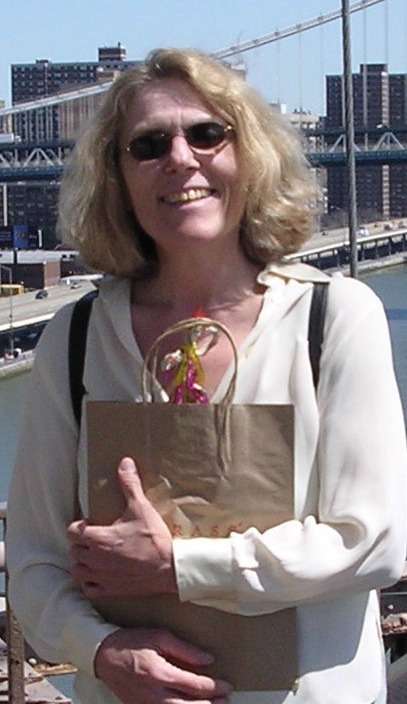
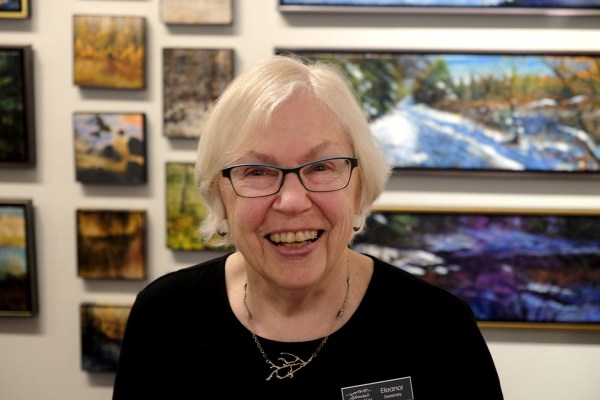
Eleanor was one of the founders of the Adirondack Artists Guild; she is pictured here in the Guild’s Gallery in downtown Saranac Lake, NY. The Guild will host a celebration of Eleanor’s life and work in January
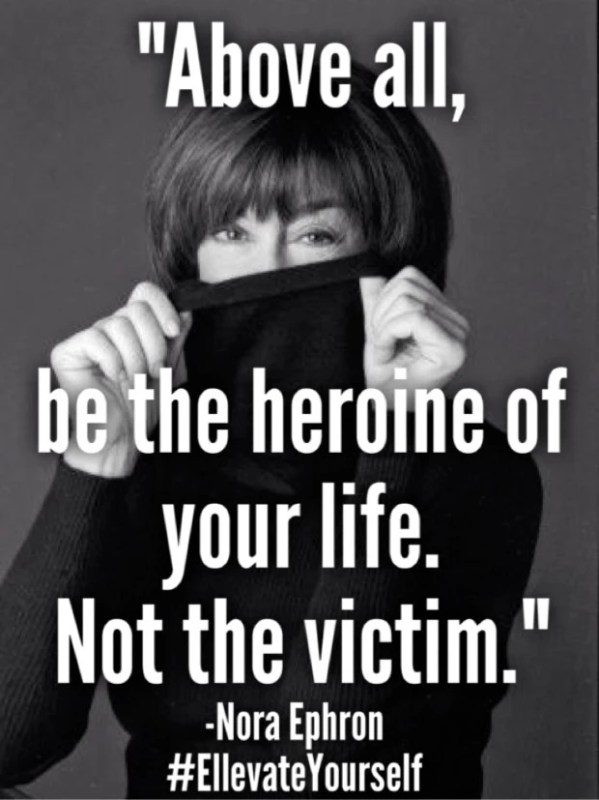
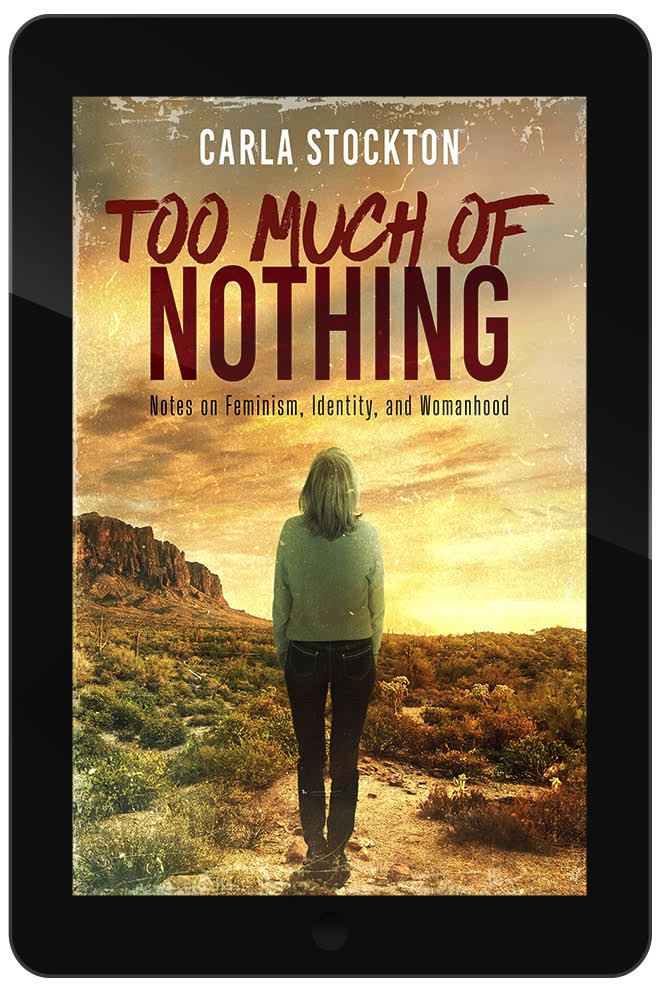
Fanfare for the Common Woman

Audio podcasts are a wonderful innovation, especially for those of us with insomnia.  Nothing is more soothing for me than a gentle voice talking about interesting worlds.  I especially love science, history, and theater talk, film history podcasts, or literary discussions, and David Remnick.  It is comforting to feel myself relaxed out of anxiety into someone else’s knowledge and then to drift off to sleep.

I confess that there are many podcasts that irritate me.  The ones that make me sit up, desiring to scream into my device– though that is certainly not an option for a considerate apartment dweller in the middle of the night – those that frustrate me with their pontification or false modesty,  political rants or misinformation. 

The ones that most irritate me are the podcasts that pretend to offer hope and life modeling to women over 50. On podcasts such as unPaused, with Marie Claire Haver, or Wiser than Me with Julia Louis-Dreyfus.  These offer advice from the megastars like Isabella Rosselini, Nancy Pelosi, Gloria Steinham, Michele Obama, Jane Fonda, et high-falutin al.

Inevitably, these admittedly wonderful, rightfully revered role models are women who have achieved great fame and fortune. They are most certainly noteworthy, and I deeply admire them and their accomplishments.  But they are women who have been receiving attention for a long time already and are rarely in positions to which any of us groundlings can reasonably aspire. 

All the while, everyday women who achieve less than phenomenal but still noteworthy successes are overlooked. Despite the fact that we, too, are pundits. We, too, offer stories that could be truly inspirational.

I have many friends who have lived lives worth sharing.  Women – mothers and wives — who have written books that may not have been bestsellers but still had audiences and made a difference for their readers.  For example, my dear friend, who nursed her husband through harrowing bouts of PTSD, raised her family, took care of her brothers, ran a lovely small business, and managed to paint some lovely watercolors?  She knows about survival and rising above adversity and setting goals, and attaining happiness. Another brave woman I know writes songs that aim to forge peace and understanding while curating a huge cache of legacy art, and another creates phonics videos to promote literacy among disadvantaged children. They love their work, and they are proud of what they do, as many everyday women do. Some nurture student artists — those who may not be the Oscar or book award winners spewing gratitude for their mentors — and help them to nurture dreams that lead to meaningful careers that improve the world in multiple ways, Even while schlepping personal children from pillar to post, attending extracurricular activities, keeping husband’s clothes cleaned and pressed, etc., myriad ordinary heroines persevere.  Women who work as nurses, physicians’ assistants. dental hygienists, bus drivers, etc., while providing care for elderly parents.  Those who act in plays on, off, and way off Broadway,  direct educational and community theaters, sing in and direct choirs, play music, and lead small-town orchestras.

You can see my point, I am sure.  The accomplishments of women are incalculable. 

Surely the multitude of women who have built modest successes are no less interesting than those who have made millions?  Is it not exemplary that real people keep plugging away, writing, painting, acting, teaching, serving the sick, and providing goods and services?  Aren’t the common variety supermoms/daughters/aunts/sisters/grands apt role models for younger generations?

Come on, social influencers, podcasters, you who want to inspire women, find those of us who fuel the world with its real power. Look for our books, our drawings, our songs, our stories. Ask us what we know. Let us show you how fascinating we can be.

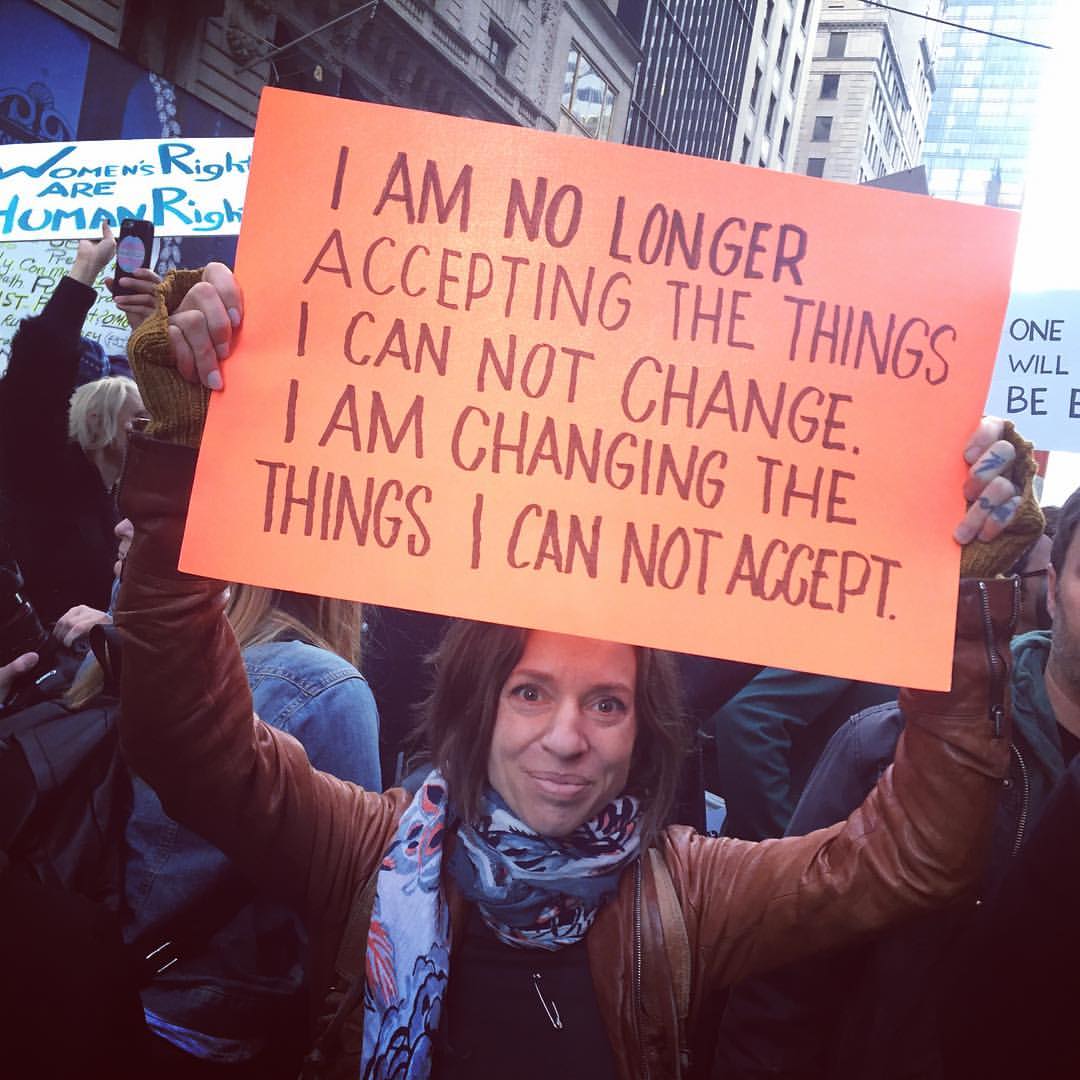
My Pledge of Allegiance We’re Still Here

“The white tape works for roommates but not for patriots.  America needs us now more than ever.  Don’t ever let them forget WE’RE STILL HERE. ” Bill Maher 11 Nov 2011

screen-shot-2016-11-12-at-11-51-36-am

All over Facebook I see people writing things like, “This will help” as introduction to a posting about how the “real” Donald Trump won’t do any of the things he threatened during the campaign. “He was just campaigning,” they say. “The REAL Trump is not that guy. It’s okay. We’ll be fine.”

It doesn’t help. At all.

In fact, it just makes things worse to know that in order to gain power, Trump fed a hunger for hatred and encouraged the ingestion of bigotry that caused the great belly of this country to spew forth a mandate that normalizes misogyny, sexual assault, anti-LGBTQ behavior, racism, and exclusion.

It is NOT okay, and it’s not going to be okay if we accept the soporific that the “real Donald” is a better man than that.

All the disclaimer proves once again is that Trump is a con man, a demagogue, an inveterate opportunist, and he will continue to sell his snake oil, to poison the atmosphere with lies and empty promises until his supporters, his soldiers and slaves, awake and see him for what he is: stark, raving naked. But that will take time because having drunk the Kool-Aid, the minions of deplorables, who voted this man in, are infected with the absolute conviction that they are now in command, that their man will make them great, that they will defeat the insidious factions that seek to destroy them, and it will be a good long while before they realize that they, in fact, are their own worst enemies.

Trump is not a new phenomenon. Nor is he a surprise. Plato warned us of him in The Republic, Book VIII. No fan of the common man – he referred to the populace as a great beast – Plato argued that Democracy instills a lust for absolute freedom, a concept most are not equipped to understand. The people, he suggested, will inevitably assume that the democracy entitles every man to expect to get exactly what he wants, in material goods and individual rights. But the reality is that there will be inequities, and those inequities will increase as the rich get richer , and the poor are disempowered; the democrats will seek to placate the masses by stealing from the rich, and the poor will grow impatient, feeling increasingly disenfranchised as their dreams become ever more elusive. Then, says Pluto, the great beast will elect “a violent and popular leader,” whose power will grow as he fans his people’s fears by making them distrust one another, fueling suspicions of iconoclasts of any kind. He will tax the citizenry to fund his substantial army and his schemes for world domination, and he will trust no one while relying on criminals to do his bidding. Those henchmen will collude with him to enact crimes against the democrats who elected him. It is, then, the responsibility of the thinkers, the compassionate, the artists in a society to hold the mirror up to the nature of the state they are in and engender revolution.

Of course, it doesn’t help to know that Plato predicted this anymore than that Trump may not have meant what he expounded. Naturally, he was playing a character for the purpose of rallying the people, and Plato simply gives us a historical perspective. But it sure isn’t reassuring to realize that Trump has successfully painted himself into a corner where he must make good his campaign promises.

What does help is to know that there are armies of sentient sensate people out there, who will make sure we do not go gently into that dread night of total darkness that history warns is possible. We have a window of opportunity to avert the worst, and I know for a fact that there are more who disdain what has happened than those who rejoice, and in our numbers is the strength to prevail.

So, it’s not okay, but it could be. Eventually.

I have, over the years, kept in touch with scores of my students, many of whom are now approaching or are well into their forties. They are bringing up their children with deeply humanistic values, are setting an example for the millennials to follow. In their multivarious roles, they are provoking thought, are reconstituting our intellectual infrastructures, making differences.

When I returned to earn a second Master’s Degree in Fine Arts, I sat at tables with some of the finest writers and poets and playwrights and actors and visual artists I will ever have the honor to meet, and I heard them speak, read their words, experienced their work. I have faith in these young people, most of them millennials, and I know they will carry on, will pledge their talents to keeping the country awake, to reminding us all that we must not be silent, must eschew complacency, must be unafraid to remain committed to the fight that only began in the awful campaign of 2016.

Now, in fact, the fight has escalated. Truth is, we are again engaged in a great Civil War, testing and being tested. If we are to endure, we must choose to stand up and take a side, must commit to preventing the miasma from enveloping us, from defeating us, from suffocating us.

Like so many others, I have of late been stultified by the cataclysm I awoke to on November 9. But I need to reanimate. As a woman and as a woman who has experienced sexual assault and harassment, as a first generation American, as a Jew, as the sister of a beloved man who loves men, as a teacher in the CUNY system where most of my students are considered “others,” as friend to so many iconoclasts of all shapes and sorts, as the mother and grandmother of powerful, brilliant women, I am appalled.

But it’s not over till the diva sings her last, and I hear no America singing the heroine’s dying declarations. Rather, I hear bells ringing nationwide, and they are tolling for me and for thee.

It’s not okay.

But wall is not yet lost. We can still win by working to make sure that within the next four years the siege of terror comes to a halt. We can still win by acting in a way that proves that MOST Americans welcome others into our midst and value all contributions, by standing up to bullies. We can reject the notion that only losers need help and reach out to bring comfort to the hungry and the sick. We can lobby for better health care and universal insurance, for the environment; we can educate the masses about carbon footprints, about the ethical, responsible treatment of our earth and all its creatures, including our fellow man. Et cetera. There is no end to what we can and must do, what we must do together.

Together, most importantly, we must insulate ourselves from hatred by refusing to abhor the representatives of evil that seek to subjugate us; they must be shown that they cannot own us. By being unafraid, by insisting on turning our other cheek, not in submission but in defiance, we retain our power over ourselves, and we win.

They will go low. That’s a given, but that’s okay.   Because we will go high.


A Woman’s Project

I returned to New York City in 2005, long after my “Sell by” date had expired

In 2005, I left the relative comfort of a tremulous marriage and a tumultuous job (drama director/English Teacher) — the details of which are best left to fiction where they will embarrass no one’s children — to pursue my writing career. I knew the transition would not be easy, but having been raised by a Puritan Calvinist father and a mother who’d escaped Europe in 1939, I felt prepared for whatever difficulty might befall me. It seemed that the year’s pay I had vested in my pension along with the portion of my mother’s inheritance that I didn’t give to my children, would, at the very least, get me to a good job in New York, where I would then begin to write in earnest.

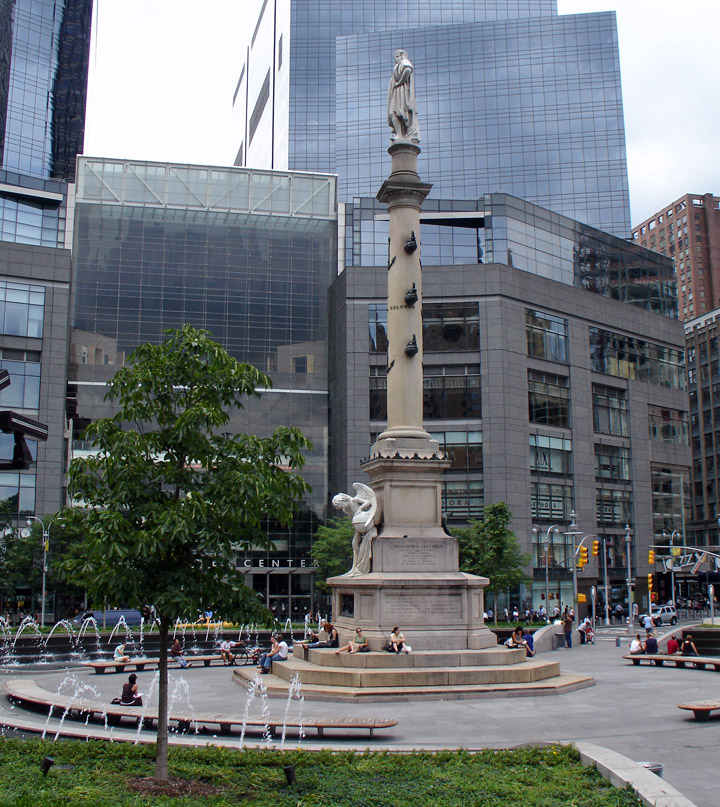
New York today is a cleaner, sparklier version of the city I left in my young adulthood; it’s no longer the nurturing artist’s environment I remember from those days. (Photo by Aaron Newman)

It’s a tale, as I think about it, worthy of Flaubert. Except that I was well past young when I ventured out of the provinces into the promise of new life in the city, and I had no idea what incredible bias I would be up against.

In the early days of my wife-and-motherdom, I had taken on a number of jobs (part-time, so long as we could afford to have me home part-time and then full-time as our financial needs grew), had served on boards and managed schedules and even had acted as interim director of a Day School.  I was an inveterate multi-tasker.

As a teacher, in addition to serving as Vice President of the State’s Drama Association and as a member of our NEA (teacher’s union) Negotiations team, et al., I had produced and directed two shows a year for ten years, had run a very successful summer program in one town for 7 then got a grant from the State to operate a Summer Conservatory program in another for two; I had raised and spent hundreds of thousands of dollars and had always brought my programs back to the black. I did my own marketing and publicity, made my own deals with state-wide vendors, hired my own musicians, designers and construction crews. I created dialogue between my students and professional theaters around the country, and I personally arranged at least two annual trips to New York for a performance and a talkback/tour with the cast and crew of the show we saw. For the summer grant program, which required professional theater people to serve in their professional roles as well as to teach, I auditioned, hired and oversaw all manner of talent and crews from New York, provided them with transportation, housing, and meals while I made sure they got paid, and at the same time I produced/directed Sweeney Todd and produced As You Like It in repertory. And in addition to everything else, I had co-authored and produced three short films, two of which had garnered festival prizes

In short, I had taken on many responsibilities — always — and had honed a great many skills. Yet when I began to hunt for jobs in NY, it became quickly apparent that out in the world there are two distinct types for whom professional people have a blanket distrust: older women and teachers. Ooops.

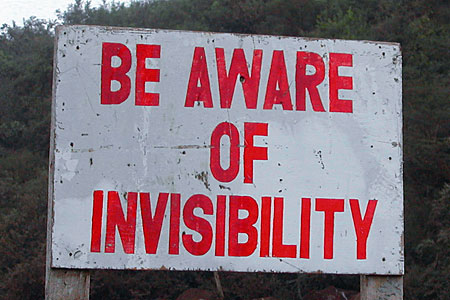
Older women are invisible. They are no longer classifiable. Even though there is a great deal made about the Cougar women men crave, most men don’t even look at most women over 50. Even those who are attractive, fit, vital women get very little attention. And what that means is that women don’t look at them either. Worse, the invisibility somehow makes them less desirable as new hires. Who wants to clutter an office — or, in my case, a theater — with invisible drones? I applied for every possibly suitable job, from education director to personal assistant, posted in America over the course of the two years it took me to realize I was un-hirable. But being over fifty was only part of it.

People in the “real” world believe that teachers go into education because they can’t do. And we all know how easy teaching is! Anyone can do it — so why would you hire someone who “only” knows how to teach? I talked myself hoarse about the various skills I had developed in my various capacities as a “teacher,” but my words fell on deaf ears. One young woman who was interviewing me for a job I could do with my eyes closed effused at me, “Oh, you were a class advisor too? You must love going to proms.”

And the irony was that even for teaching I was now too old to be hired in a new system. When I was shortlisted for a great part-time job in an Alternative High School that would have been perfect for me, the interviewer told me, “I could lose my job for this, but I want to tell you that even though you are my first choice for this position, you won’t get the job.” She went on to tell me that I had “years in”, which required money, and I was no longer “fresh.”

Though guiding is certainly not a dream job, it does pay the cookie bills

So, as my little nest egg began to dwindle — I didn’t fight my husband for what I should have insisted on having after 33 years of marriage, believing I’d find a great job to sustain me very quickly — I took a job in the surreal world of tourism and became a sightseeing guide. Now nearing 65, armed with an arsenal of words, two master’s degrees and a compendium of otherwise useless information collected with my autodidact’s obsession with New York City, wearing my royal blue uniform shirt and a thick coat of sunscreen, I trudge daily down to the place where the tour buses originate. There I endure the abuse by passengers who range from insensitive to moronic, and I allow myself to be ordered around by bosses, many of whom are recently released, convicted felons, and by over-eager ticket sellers, who tend to be newly arrived African immigrants  (priceless few of whom have a shred of empathy for women in general or older women in particular), and then I go home to sleep.

I do this because it allows me every morning to get up before the sun and revel in the knowledge that I have a few hours of precious writing time, and someday soon . . . . well who knows!  I’ve just finished a book, which will be released this month, and I am writing furiously in a way I haven’t since I was a teenager filling journals with self-absorbed ruminations.

I am not alone out here. There are any number of women who have set out to create new lives for themselves, to forge careers in creative endeavors; and I have discovered, after a lifetime of feeling disconnected from women and intimidated by the judgmental, dogged competition friendship with them engendered, that for the first time in my life, I have a true kinship with some of the most remarkable people on the planet. Amazingly, they are women!

It’s been a rough road, and it’s not getting easier any time soon. I know that. I accept it. But I hope to live long enough and to prosper sufficiently to make it easier for someone else. Some day I would dearly love to open a safe house, a home for women like me who have held in their overflowing creativity for too many years and just need a place where they can live and write or paint or study lines or clean their cameras or do whatever they need to do to fulfill the need to DO without fear of eviction and starvation. A fear I carry in my stomach at the end every single month. It’ll be at least a while before I’m where I can even think about making the dream house real. But I want to start the process of providing support right here and right now. In this, my new blog, I will inaugurate a series about some of my most admired, most loved friends, women who, like me, have risked absolute failure in the pursuit of resounding success. A section of this blog will be dedicated to those women who would like to be featured here. That will debut shortly.

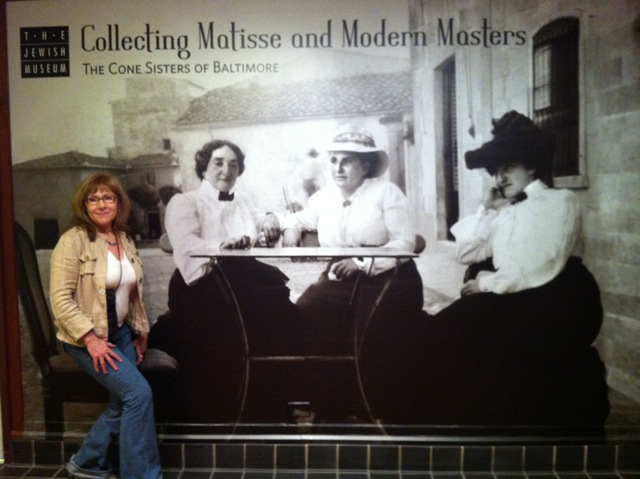
My cousin Anna Thea Bogdanovich, one of the women I admire most, seated in a pantheon of creative women at the Museum of Arts and Design

I dedicate my efforts to my daughters and my granddaughters. May they never be invisible. Or disrespected for having lived.