The Sisters Over Sixty Series – Part I: Anna Thea Bogdanovich

My mother and her sisters, having lived in the shadow of their brother — and then their brother’s death — all their lives should have known better.  Shaped by the attitudes and norms with which they were raised, they doted on their sons; while they loved and even (perhaps secretly) admired their daughters, they did not reveal to their girls the kind of support and encouragement they lavished on their sons.  My female cousins, my sisters and I, especially those of us who followed creative paths, were left to grope our way to self-actualization, which is not a bad thing.  We turned out to be resilient, strong and iconoclastic.  We became, in the aggregate, very like our mothers, only more so.  The kind of women I want my daughters and granddaughters to become at heart.

By the time my cousin Anna Thea Bogdanovich was born, her now-famous brother Peter was thirteen and only a few years short of establishing himself in his career in the dramatic arts, the family’s resources having already been allocated to his professional training. He had himself been born on the heels of tragedy and loss, and he was for his parents and grandparents the beacon that recalled them to life.

Peter is an amazing talent who cast a giant shadow, but Anna Thea has found her own well self-illuminated niche as a singer-songwriter and crafter of screenplays.  She curates The Bogdanovich Collection, her father’s vast legacy of paintings, sketches, drawings — the art that dominated his life — and works as a script consultant at Colleen Camp Productions in Hollywood.

Anna Thea Bogdanovich has had a varied career.  She had a long stint as Development Consultant at TMC Entertainment, and her musical documentary Earth Tribe LA was nominated for an Emmy Award.  But Anna’s proudest achievement is a project she embarked on only recently, one that continues to evolve and to take on a life of its own.  

Anna Thea Bogdanovich conceived, founded and directs World Beat Media to produce “film, music and multimedia projects that inspire good will and understanding across cultures.” She has dedicated her work to the goal of” achieving a global epiphany of our shared humanity and interconnectedness with all life.”

One of Anna’s first productions with World Beat Media was Freedom’s Land, a music video that celebrates, in singer Willie Nelson’s words, “the everyday rituals and practices of peaceful people” and is featured on the singer’s Peace Research website (http://bit.ly/KAfyE4) with words of high praise. 
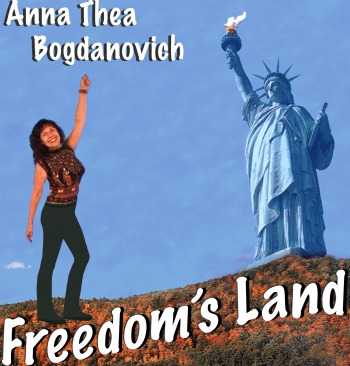
World Beat Media is in preproduction on the new Earth Tribe LA 2012, which will feature multicultural singers and musicians of all ages in a pop/worldbeat song and music video. The World Beat Media website (www.worldbeatmedia.com) is under re-construction, and Anna is in the process of developing a YouTube channel, which she hopes to launch in 2013, and which will be “dedicated to individual and collective peace, healing and transformation through the arts and new media, and will include original cross-collaborative multimedia projects using media technology.” The channel will also be used to generate programs that will raise money for various children’s charities.www.youtube.com/user/WorldBeatMediaCom

Anna Thea Bogdanovich is a woman who has forged her own path.  It’s not been paved, and navigating will take some effort, but she will prevail.  After all, Anna Thea Bogdanovich is her own bright torch!

To preview and buy Freedom’s Land song or music video on iTunes

Sister Artist

Adriana and her brothers Rene (left) and John in 2012

Adriana Gandolfi, my sweet younger cousin, never made it to old age.  She died last July, leaving behind a gap in the universe, where her great heart dwelled, and a book of her poetry Canti del anima.  She wrote in Italian and in English, and her poems, like her life, were all about giving herself to love. . . love of family, love of self, love of the universe, love of life.  We all miss her.  Every day.

I never thought I’d ever feel
the great fragility
of crystal glass and autumn leaves
all dried and filigreed
The color is transparent rust
The smell a little musty
It tastes like wine too old to drink
and sounds quietly shrill

The strength imbuing all with life
Ebbs and flows – stops and goes
Begins to fade, then disappears
We hang still by a thread.

So of all this mortal matter
where is the part that lasts?
May it be within the space
that we cannot see
where the very substance lies
that gives us all our breath?

Oh, fragile mind and fragile will
Abandon all you have
and give yourself up to the space
that lives forever now.

                                  Adriana Gandolfi
1953-2011

Surviving Survival

After the end of the world
After death
I found myself in the midst of life
Creating myself
Building life

      Tadeuz Rozewicz, After the End of the World 

Surviving a tragedy only the beginning of a near-daunting struggle; in fact, the survival itself just may be the easiest part of the ordeal.

My mother, who survived the deaths of two siblings and a nephew, carried her burden to the grave, never really working through the emotions. She subjugated her feelings of inadequacy and guilt to the responsibilities of daughterhood, sisterhood and motherhood but remained ever damaged, always skittish.  The wounded look in her eyes shone brightly in her proudest, happiest moments.  I learned a lot about the process of perseverance and the danger of avoidance from her; I also learned to listen more acutely and to empathize. As a result, I was always attracted to survivors’ stories, compelled to explore and write about them.

 In 2003, my friend Belle married Maurice Cohen, a self-proclaimed Israeli spy and Mossad agent.  Maurice asked me to write his story, about his relationship to his brother Eli Cohen, Israel’s most famous spy, a Syrian Jew who had infiltrated the Syrian government and assumed the powerful position of Chief Advisor to the Minister of Defense, divining critical information and transmitting it to the Israeli government.

Credited with having gathered information that eventually saved Israel and facilitated the country’s victory in the 1967 War, Eli was, of course, caught. In May of 1965, he was hanged in Damascus in an execution that was televised all over the Middle East, leaving a devastated widow and three small children; Maurice was left holding a memory of concealment.  Before his brother was captured, Maurice had discerned the secret of his brother’s undercover identity but had told no one.  Maurice spent the rest of his life (he died in 2004) regretting his supposition that by failing to disclose what he knew he had somehow contributed to Eli’s death. (The article, published in Moment Magazine, is archived here on this blog.)

For years, Maurice carried what he believed to be his dirty little secret, the proof of what he perceived as his own cowardice.  When he and I began to write the story together he began to muster self-forgiveness, and as his burden lightened, he needed to tell more and more people.  When he died, we were about to embark on the writing of his book.

While Maurice and I collaborated long distance, I went to Cannes for Festival du Film, hoping to sell a screenplay.  While I was there, I became friends with Michel Shane, who had among his many credits that he was Executive Producer of the film version of Catch Me If You Can.  He and I talked about Maurice’s story often.  Like me, he came from a family that predisposed him to taking special interest in and a feeling deep empathy for survivors of cataclysmic events.  We could not have known then how his life would turn him into a survivor; he was a powerful cheerleader, a hearty advocate, and when Fencer Dan Alon was looking for a writer to chronicle his harrowing path to victory over despair, it was Michel who recommended me for the job.

Dan Alon was born in Israel in 1943, the son of survivors who had emigrated from Hungary and Austria to settle in Palestine.  His father had been a freedom fighter, and Israel’s partition in 1948 was as much a victory for the family as it was for the nation.  But in order to achieve that triumph, Dan’s father had had to forego his dreams of competing as a fencer in the Olympic Games.  The dream was passed on to Dan, along with the talent for swordplay.

In 1972, after years of preparation and sacrifice on his family’s part to get him there, Dan qualified for the Munich Games.  Alon, his coach and best friend Andrei Spitzer and one other fencer arrived in Munich a week before the games to spar with the German National team, an honor conferred on very few competitors.  When they checked in to the Olympic Village, Dan unwittingly saved his own life while Spitzer equally unwittingly sacrificed his by choosing their separate rooms.  When the Black September terrorists invaded the peace of the athletes’ compound, they overlooked the five men in the apartment Dan chose and went directly to the one Spitzer shared with the other coaches.

For thirty-four years, Dan was unable to talk about his experience.  He could not and would not quantify his pain.  He simply forged ahead, delving into the various activities that replaced fencing in his life.  Then, in 2004, chance and Stephen Spielberg took him to Oxford University, where, at a screening of Munich, Dan’s son had told the rabbi there that his father had survived the Massacre.  Like most people, the rabbi had not realized anyone had lived through it, and he immediately  invited Dan to Oxford to share his tale.  From that moment, Dan was encouraged to find a writer and record the journey for posterity, a process that has finally freed his soul and taught him how to breathe again. (http://munichmemoir.daptd.com/)

After a number of starts and stops, Dan and I finally published our book on May 24, 2012, and in the intervening years, Michel himself has become a survivor of the worst tragedy imaginable: the violent, sudden death of a child.

In April 2010, Michel’s youngest daughter Emily was blissfully returning home from school, when she was struck and killed by a suicidal driver.  The past two years have been hellish for Michel and his family, and some peace was finally affected in May of this year, when the driver was convicted of murder.  All along, Michel and his brave wife and two remaining daughters have carried on with grace.  They established the Emily Shane Foundation, which celebrates Emily’s optimism and commitment to kindness and joy (http://www.emilyshane.org/) by encouraging people, in Emily’s name, to make the world a better place one action at a time.  Emily’s loving, generous nature lives on on that website, dancing to the song that plays a hopefully plaintive tune, asking merely that we “do it with love.”

 Surviving is horrific; carrying on, actively and emphatically participating in life afterward is beyond courageous.  Committing to life even when it begs to be rejected . . . that’s inspirational.

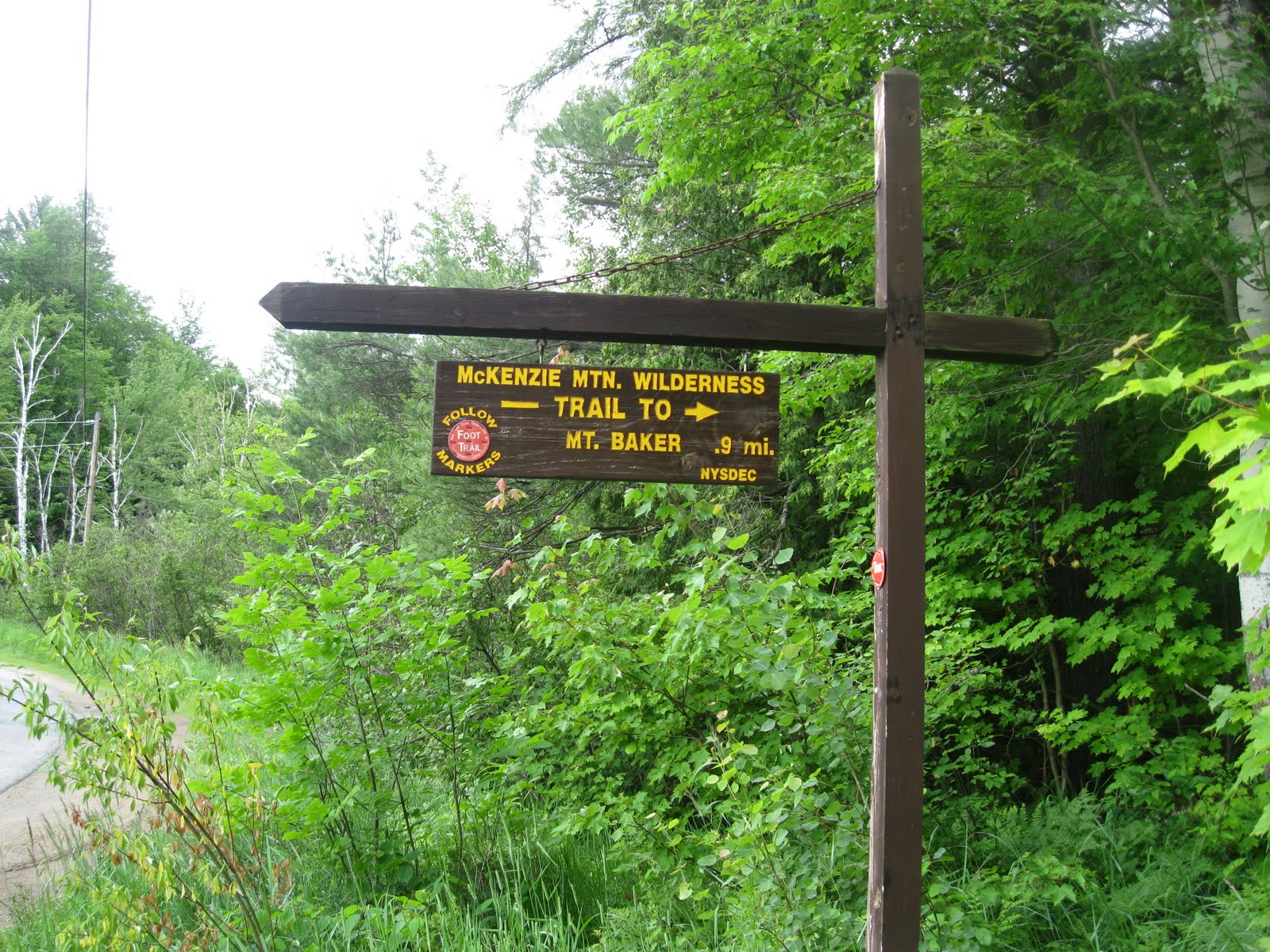
Mt. Baker


My life began here, well there,

on that sylvan floor below where my youth stretched out

in infinite languor, bathed in lingering half-light . . .
I stood here for the first time fifty years ago

and gazed downward, outward to the

layered folds of that Adirondack autumn,

anxiously hearing dreams call out from the peaks and the lakes and the rivers,

watching them open their arms to me, a  transplanted Massachusetts girl,

perched on a rockface fortress steep and mighty.
I see that waning October day so clearly, a day like today,

shimmering in the amber angles of a soon sinking sun.

I hear my uncle’s voice echo from a distant past, “Walk quickly, children.

“The sun’ll be gone soon.  We could be lost.”

He was, after all, from New York City and a bit melodramatic about the woods.

There was plenty light left for us to find our way.
The New Year and my 10th birthday

had slipped together into the widening autumn darkness.

I was poised for womanhood, the new new year’s new fruit,

a wonder, I, and wondrous. thankful that the leaves rotting beneath my feet

were dry, and  that my birthday sneakers were unsmudged.

I felt them yearn with me to move on,

to descend the slopes into the future  that beckoned in glistening

splendor, suspended in the clean crisp air.

Instead, I thrust my head toward the clouds and shouted

“I’m here, world.  Look at me.  I made it to the top.”
Well, I’m back again, and there it is,

The same sparkling valley,

Where dreams still breathe in the anxious

afternoon of yet another Adirondack Autumn.

I leap downward, into the woods; no need now to stop and crow.

I descend willingly.

I’ve only minutes left,

But in a minute there’s still time

And plenty of light.

A Mother’s Day Gift to My Children – Part X

Mom and I had grown apart as I aged.  While she adored my three kids and was thrilled that we had chosen to bring them up Jewish, she was as deeply engrossed in her career as I was in mothering.  My family and I had moved to Arizona in 1972 to be close to her, but when I moved back to my beloved East in 1987, I felt a kind of relief.  I would no longer have to face the daily disappointment, recognizing that the expected connection we had always had no longer seemed to be there.  We spoke on the phone several times a week, and we visited as often as we could, but for better and worse, it was never the same.

Just before she died in 1999, Mom asked me if she had done enough.

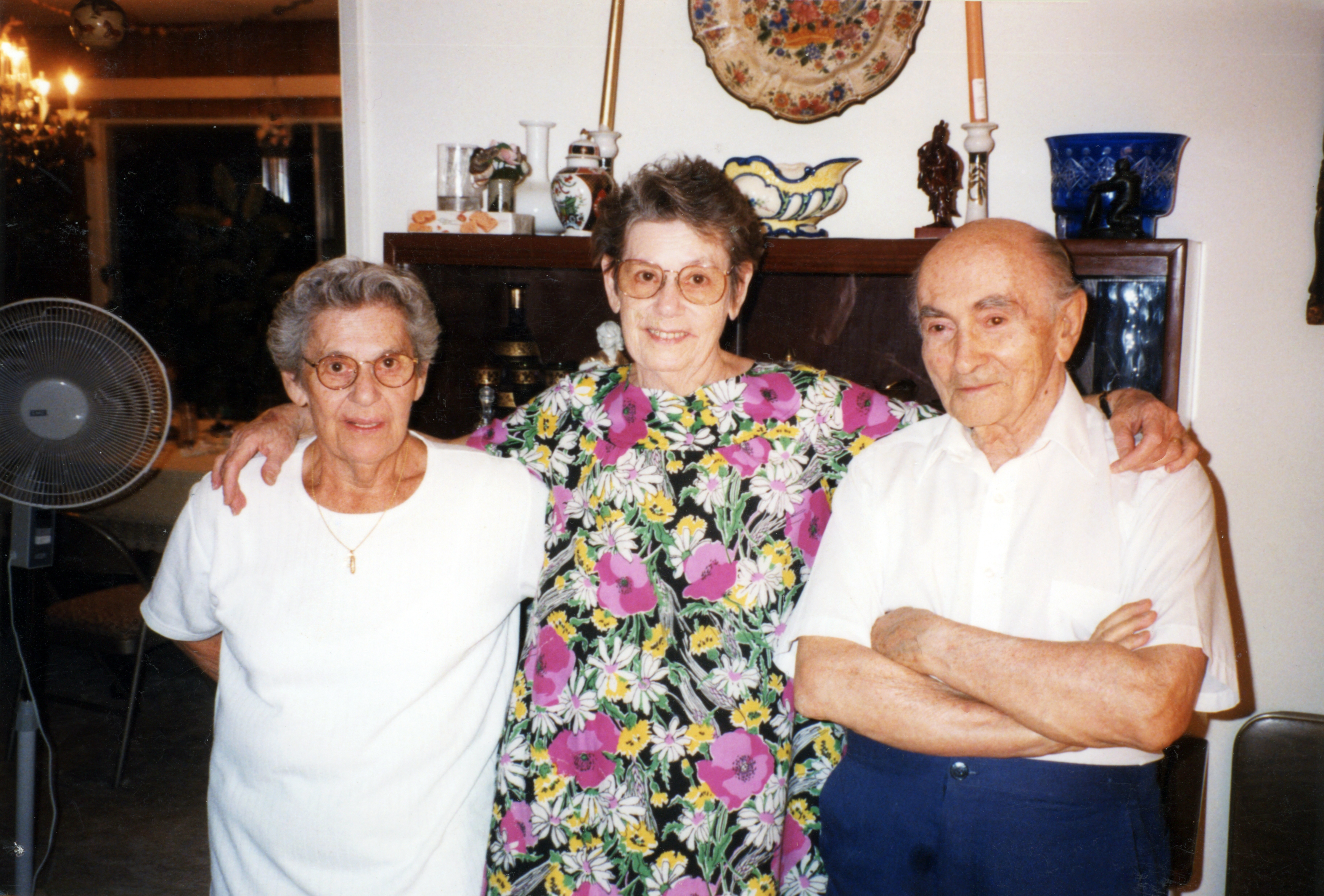
Charlotte with her younger sister Ruth (center) and Ruth’s husband Uncle Fred. The three were constant companions, especially after Herma’s death, and when Charlotte died suddenly in 1999, the loss was devastating to the last remaining sister.

She wasn’t ready to go — she shouldn’t have been; she was only 76, was still tutoring and teaching every day, still contributing to the world in her varied ways.  She had volunteered in Israel, the culmination of a childhood dream, and had traveled back to Zagreb among other places in Europe to revisit both halcyon and heinous days of her youth; she was an active participant in a life broadly lived.  All five of her grandchildren and six step-grands adored her, and her still-growing legions of former students continued to call and visit her regularly.  There was so much left to live for.  What else could I do but nod vigorously and reassure her, “You have, mom.  You’ve done plenty.”

No one could have done more.