Aaron Marbone, a reporter for the Adirondack Daily Enterprise just interviewed me for a story that will run in tomorrow’s paper. A lovely young man, Aaron asked me what it was like living in Saranac Lake all those years ago.
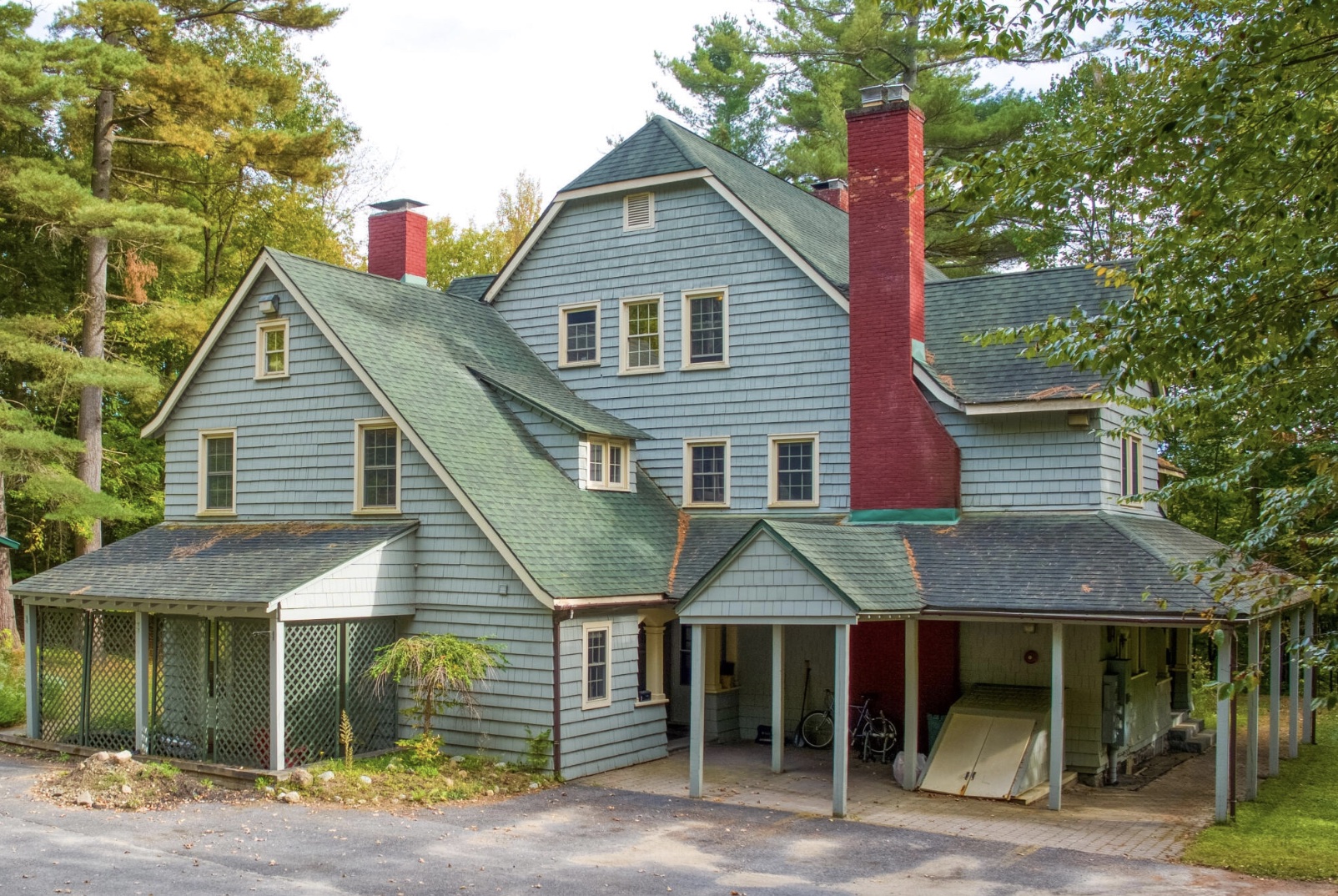
Well, I told him, that trope about walking a mile to school uphill both ways was the truth for us then. I lived on Cliff Road in a house that is today a multi-unit condominium complex at the base of Mount Pisgah.
We walked down from the top of Cliff, by way of Catherine to Bloomingdale and then to Main, up Olive Street Hill and across the overpass to Petrova, which was our school through high school. Then, for much of the school year, we walked home in the dark, down Olive Street, back to Bloomingdale, Margaret to Catherine and back up the big hill home. In the winter we wore layers of clothes that weighted us down and in spring forded through rivers of snow-melted mud cascading down every hill and forming small lakes in every little valley. Glorious.
I never thought of the people of my town as family, but they were certainly part of a clan, a clan that protected me, tolerated my strangenesses, celebrated my talents. I won speech contests, appeared in class plays, played in the band, and sang in the glee club; I wrote a pageant for a Saranac Lake centennial celebration, commissioned by a group of adults who appreciated my writing. After a cataclysmic accident, as my mother lay pinned under her car, freezing in the wind at Donnelly Corner, passers-by stopped to shield her, to provide blankets and coats from their own backs, while the volunteer fire department worked tirelessly for hours to extricate her. Then, for two years, there was seldom a day when food was not delivered to our home.
My classmates never bullied me or made fun of me though I was the kind of kid who anywhere else would have suffered terribly. I was lonely but respected, and whenever I return for reunions, I am reminded of the enormous generosity of spirit they had then and still have today. My most vociferous cheerleaders, my strongest encouragers have been my classmates, people like Gail Gallagher, Peter MacIntyre, Maryanne Aubin, whom I have known since 4th grade when we moved to that little enclave in the Adirondacks.
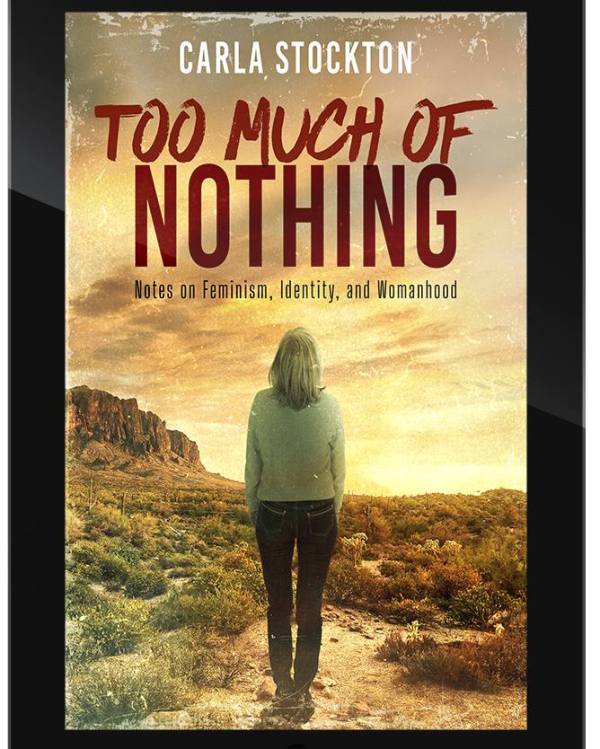
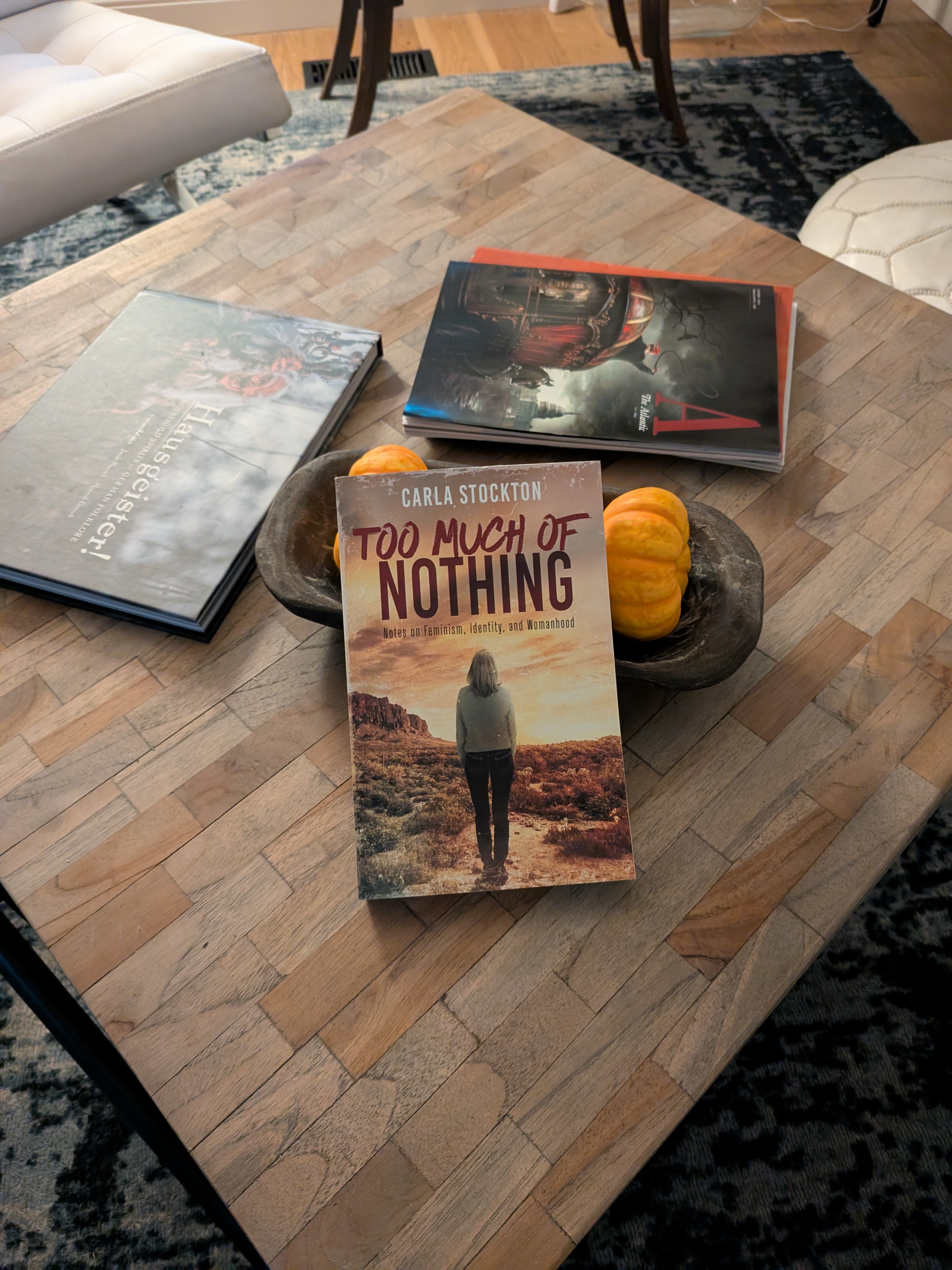
So of course I will go “home” to have the first celebration of having written my first solo book. At NOON, on November 9, the Saranac Lake Public Library, where one can still find a copy of that pageant I wrote in 1965, will host my book launch. On the 13th I’ll be on a panel at the Adirondack Writing Center with a new friend Laurie Spigel to talk about writing and aging and making it through. . . . and getting by with a little help from our friends. Best of all, The Book Nook, in Saranac Lake is taking orders. I hope people support the independent bookseller and order there: https://www.saranaclake.com/shop/the-book-nook
Until this summer, I believed that Small Business deserved my true allegiance.
I was raised to believe in American small business. My father often declared that America would be nothing without them. “We owe them our allegiance,” he would say.
In the days before my parents had so many children that we began to resemble the shoe-dwelling nursery rhyme family, my dad worked for medical suppliers, big businesses with deep pockets. They supported his travels and provided generous expense accounts. He could, in those days, afford the finer establishments along his various routes, but he chose instead to support the small business owners wherever we went. We stayed in family-operated motels in Maine, a cabin on the Navajo reservation in New Mexico, an aging couple’s dilapidated cottage in Far Rockaway. In those days, he made good money, but he felt stifled.
When he was nearly fifty, seeking to free himself from the shackles of the corporate bosses, Dad bought a small toy distribution company and became the middleman between toy manufacturers and the very small businesses that dotted the landscape of upstate New York. He traveled incessantly then, and he preferred to stay in boarding houses, to tolerate subpar accommodations rather than patronize the area’s successful hotels and motels. It was, he insisted, his responsibility to support his colleagues’ efforts to survive.
“I would rather pay too much for an everyday Joe’s honest efforts than support the corporations that want us all out of the way.”
I believed him. And I believed, too, in supporting small, independent business owners. Dad struggled mightily to maintain an income sufficient to support his family, and he was proud to be in control of his destiny, to own his share in his America.
In his memory, when I travel, I often choose small, local establishments over the mega-corp concerns that dominate the industry. For the most part, I have been happy with that choice. I have found moms and pops to be friendly, accommodating, and eager to meet my needs or to suggest alternatives. I have been proud to contribute to their longevity, to help ensure that America will always be a place where small businesses can thrive among the giants.
Unfortunately, that was then. Now I am disabused of my fervent devotion to the self-sustaining tourism businesses. After a few encounters with properties that were understaffed and badly maintained despite exorbitant prices; after being told that the bad conditions are the result of the fact that “no one wants to work,” which makes me even more skeptical about the high prices, I am done. The final blow happened this past month in a place I expected perfection, where instead I encountered not just disappointment and disenchantment but also fraud and chicanery. I have been cheated by the Sea View Motel in Ogunquit, ME.
I have family visiting from abroad for the summer, and we decided to take a long-overdue vacation in the beautiful northeast. We had a lovely stay in a small hybrid corporate-and-local establishment in the Adirondacks, about which I will write anon, and then we thought to spend two days in Maine, a state where I have endless memories of delightful family time spent in family-owned hotels that my father chose. We found the Sea View online and – much to our own chagrin – booked our room through Hotels.com.
In the photos online, the Seaview looks sumptuous. Large, clean rooms beckon, and the lovely blue water of a large pool sparkle from the electronic page. The comments – which I only later realized were from pre-Covid days – were positive, and the price was reasonable, commensurate with the other properties in the area.
When we arrived, we were immediately disappointed and had a bad feeling about the place. The structure was rundown, and the stairways looked steep. We asked the clerk if we could look at a room before we checked in. He gave us a key to a room on the top floor, and we went up.
The ascent was painful. Steep, rickety stairs are not inviting to a septuagenarian such as I and intimidating to one with hip problems as is my travel companion. But we persevered. As we crossed the deck of the second story, I tripped on one of the many loose floorboards and fell. I was unhurt, but I must admit that I was further frightened.
The minute we opened the door of the room, we knew we could not stay there. The furniture and accessories, including the bed and bedding, looked as though they had not been replaced since the ‘60s, and we were enveloped in a musty smell tinged by urine and bleach. The bathroom was not clean, and it was equipped with no safety elements. The bathtub was slick, and there was not one place for anyone to grab onto to prevent a fall. Around the bed were signs of looming critters. We hightailed it out of there without checking in.
We returned to the clerk, who was entirely without curiosity when we told him we were displeased. He offered us no alternative. I admit that we had just driven a great distance, and I was not in a particularly articulate state, but when I gathered my wits and tried to explain to him why we could not stay there, he was dismissive then downright rude. We left without checking in and went to a chain motel up the street.
In the chain motel, for the same price the Sea View demanded for its abominable accommodations, we got a clean, spacious room with brand-new beds – more comfortable than any I have ever slept in – with clean, new furnishings and a full breakfast.
We appealed to hotels.com for help. We had very naively believed that booking through a monster from overseas would protect us from the kind of treatment the Sea View was giving us. But Hotels.com abrogated responsibility, telling us that the manager had to approve a refund. They have no power over the establishment’s owners. They did, however, contact the manager, who lied to them by saying we had stayed there. Hotels.com, in the person of someone chatting to us from deep in South Asia, that we should reach out to the manager of the motel and instruct them to contact Hotels.com. I made several attempts by email and by phone to reach the motel management. No one ever responded.
For absolutely NOTHING, during high season when they most probably rebooked both nights, the motel charged the full fee of nearly $300 per night. If that is not theft, I don’t know what is.
Sea View has ruined my faith in small business. If I can go to a Hilton property and for less money than a run-down, unsafe, unsanitary room costs in a place like the Sea View, why would I waste my money trying to help a management that clearly has no interest in helping me? I would have gladly accepted their charging me for as much as one night for the trouble of making a reservation and having it canceled. But to charge another $300 for a night that was canceled well in advance is unacceptable.
How can small businesses hope to survive if they are not held to a higher standard of behavior? If they are free do defraud their customers, to ignore their needs, then they will have to endure bad reviews. Like this one.
I can’t help but think that the change in our national attitude toward theft and fraud bears at least part of the blame. In a country where thieves can brazenly walk out of CVS carrying hundreds of dollars without prosecution, in a country that seeks to elect a charlatan and a cheater to the highest office in the land, in a country where all bars of justice and morality have been lowered to the ground, anyone can scam others with impunity.
The Sea View Motel is not alone. They have simply joined a growing army of double-dealing swindlers who will gladly bilk the working stiffs among us out of what they claim as their share of what is rightfully ours.
I wonder if my father would be willing to stay in a Marriott today. He would have hated the owners of the Sea View. He would have called them duplicitous cowards. Which is what they are.
From the moment I dived into SwiftRiver, I was swimming through memory, in sync with Essie Thomas’s captivating heroine Diamond Newberry. Like Diamond, my 17-year-old self suffered from a sense of dislocation, and I recognized in her a familiar longing to know an origin story. Like me way back then, she found her hope in stories her family members, the ones willing to talk candidly about the past, could share with her. Like Diamond, I ate my troubles away, wallowed in tuna casseroles and wingdings, but being white, From the moment I dived into SwiftRiver, I was swimming through memory, in sync with Essie Chambers’s captivating heroine Diamond Newberry. Like Diamond, my 17-year-old self suffered from a sense of dislocation, and I recognized in her a familiar longing to know an origin story. Like me way back then, she found her hope in stories her family members, the ones willing to talk candidly about the past, could share with her. Like Diamond, I ate my troubles away, wallowed in tuna casseroles and wingdings, but being white, what young me did not have in common with Diamond was color.
My confusion and disassociation were just as real, but they were invisible, and I therefore did not suffer the same slings and arrows of outrageous racism that Diamond endures. Yet I easily relate to what she feels, and how she responds because as unique as Diamond is, she is a character who represents the distinctly American experience of growing up in an unkind, duplicitous society whose respect for diversity is superficial at best.
Diamond is caught in a perfect family-and-society-fueled storm. Her father has disappeared, is perhaps dead, and her mother has become recklessly unbalanced. Her marriage to Diamond’s father was disastrous, but she does not know how to live without him. So she drinks. She makes Diamond responsible for her but is, at the same time, immobilized by the way her community – the town that has been her family home for generations – treats her daughter. She knew that nothing about their life together would be easy, but she never embraced his brittle fragility.
Already restless and morbidly obese, Diamond finds herself entirely untethered by her fatherlessness. She wants to stop her mother’s hurt, but she is aware that her mother’s love is genuine but also neurotic and toxic. She longs for her father’s return, as he seems to be the only one who might have the knowledge to explain why the town’s Black population inexplicably left town in the dead of night some years before and what their exodus has to do with her. He alone might justify his bitterness and the self-destructive recklessness that causes him to act out his angry bouts of frustration. Diamond has no place to turn for answers until she receives a letter from her father’s cousin-sister, who lives in the Newberry family home in Georgia.
Letters pass between the girl and her unseen auntie, and Diamond begins to assert her true self. She secretly signs up for driving lessons and forges a friendship with a girl from her class, who is equally void of ballast, a girl who has learned to sublimate her pain in promiscuity. Over the course of an illuminating summer, Diamond learns to drive, loses her virginity, and finds her roots.
At the heart of Swift River is the reminder that no matter what ethnicity, what race a teenager is blessed or cursed with, the compulsion to know who we are and where we come from is universal. Diamond’s plight is overwhelming, but she finds a way to cope just as teenagers have always forced themselves to cope with circumstances they would never choose as the basis of their lives.
Like all the great coming-of-age stories, this one is written by an adult with a mature outlook, told through the eyes of a precocious seventeen-year-old who clearly has the benefit of Chambers’s wisdom. For that reason, Swift River is a great read for teens and adults. It is an illuminating journey over the racing rapids of adolescence, a passage that none of us avoids.
Diamond is caught in a perfect family-and-society-fueled storm. Her father has disappeared, is perhaps dead, and her mother has become recklessly unbalanced. Her marriage to Diamond’s father was disastrous, but she does not know how to live without him. So she drinks. She makes Diamond responsible for her but is, at the same time, immobilized by the way her community – the town that has been her family home for generations – treats her daughter. She knew that nothing about their life together would be easy, but she never embraced his brittle fragility
Already restless and morbidly obese, Diamond finds herself entirely untethered by her fatherlessness. She wants to stop her mother’s hurt, but she is aware that her mother’s love is genuine but also neurotic and toxic. She longs for her father’s return, as he seems to be only one who might have the knowledge to explain why the town’s Black population inexplicably left town in the dead of night some years before and what their exodus has to do with her. He alone might justify his bitterness and the self-destructive recklessness that causes him to act out his angry bouts of frustration. Diamond has no place to turn for answers until she receives a letter from her father’s cousin-sister, who lives in the Newberry family home in Georgia.
Letters pass between the girl and her unseen auntie, and Diamond begins to assert her true self. She secretly signs up for driving lessons and forges a friendship with a girl from her class, who is equally void of ballast, a girl who has learned to sublimate her pain in promiscuity. Over the course of an illuminating summer, Diamond learns to drive, loses her virginity, and finds her roots.
At the heart of Swift River is the reminder that no matter what ethnicity, what race a teenager is blessed or cursed with, the compulsion to know who we are and where we come from is universal. Diamond’s plight is overwhelming, but she finds a way to cope just as teenagers have always forced themselves to cope with circumstances they would never choose as the basis of their lives.
Like all the great coming-of-age stories, this one is written by an adult with a mature outlook, told through the eyes of a precocious seventeen-year-old who clearly has the benefit of Essie Chambers’s wisdom. For that reason, Swift River offers an astute journey through the fraught passage from childhood to adulthood that none of us avoids.
I opened Facebook the day after I watched Maestro and saw that a friend must have watched it the night before as well. Her response surprised me.
“There is no soul,” she wrote. “No pulse to it. What woman in her right mind would concede her life to a gay man?”
I had to laugh. Besides the music, particularly the Mahler, what I loved most about Maestro was its deeply honest, layered look at a relationship I recognize from my own life. A relationship that saved me from self-loathing and taught me true love.
Back in the olden days when I was young, misogyny was unguarded, and discrimination against women was prevalent – it was everywhere and out in the open. Straight men and women alike extincted the Ugly Girl, ignored the misfit, discarded the nonconforming woman. If we were not Helen Gurley Brown emaciated and/or Gymnastics Barbie adorable, we had difficulty making friends, attracting lovers, finding jobs. Our fellow women could not afford to like those of us who were less than perfectly feminine, attractive to men, passive in accepting our rightful place. Women were motivated by the need to bag their men; to be the friend of the Ugly Girl was to risk the stigma of association. No woman wanted to be ignored by the men she sought to impress.
In that distant pre-Stonewall 60’s past, gay men, too, found themselves too often alone and friendless. Many sought beards, female partners who would protect them from the prying sensibilities of those who would out them. Being outed could put gay men in the same position as the non-standard issue female: at odds with the ability to find suitable jobs, housing, friends. Relationships with strong women – women who could stand beside them and anchor their respectability. – were a way to buffer the implied slings and arrows of outrageous misfortune. They may not have offered sex to the women they courted, but they often gave more valuable gifts in abundance. Gifts of attentiveness, admiration, validation, companionship. Many of us who were on the outside of social acceptability in the straight world found comfort and peace among the homosexual or bisexual men who needed us as much as we needed them.
As a naive As a naïve innocent from upstate New York, I arrived on the dating scene with at best a tentative self-image, and I soon saw that I had been identified as one who would do very nicely as a doting beard. I was clever, nonjudgmental, erudite, and empathetic. I knew I was needy as hell, but I sublimated by giving until I was empty, and I was easily sated. I got the affection I craved but never demanded, and my needs were met.
Maestro took me back to the year I was 17 and my very first real boyfriend Mark, a lovely gay Native American from outside Santa Fe. A boy who was, in every way that counted then, my perfect match.
We met in the scene shop at the University of New Mexico, where we both majored in drama.
Stagecraft and scene design were required freshman classes, and on that first day, because I had never ever held any kind of a construction tool in my hands, and because I was without a single acquaintance in the class, I was feeling out of my depth and alone. Then a slightly chubby, deeply tanned young man asked me why I was wearing a key on a chain around my neck. The nonsequitur startled me a bit but made me smile.
“I lose things,” I answered frankly. “I’ll get locked out of the dorm if I can’t find my room key.”
The boy laughed and looked through me before he said, “You know, in Mexico, if you wear a key like that, you are letting the world know you are for sale.” He grinned.
I blushed. “Oh. I guess that would assume anyone would be interested to buy this,” I indicated my bulky body and stifled a self-deprecating giggle.
Mark laughed. Then he aimed his dark brown cow eyes directly into my soul. “You would undoubtedly attract only the best of buyers,” he said. “No sleazy airheads who are looking for a kewpie doll but anyone looking for a real woman.”
I was instantly smitten. Remember, it was a different time!
For the next nearly two years, Mark and I were inseparable. Being with him made me infinitely happy. Partly because of the superficial ways in which he satisfied my fantasies. Squiring me around in his fancy sports car – we even ran away together over spring break to escape the boredom and would have landed in NY if the car had not thrown a rod. Taking me to plays and films. Teaching me how to order alcohol. Introducing me to the kinds of excitement I could not have found in my insular hometown, like state fair rides and huevos ranchero and group peyote trips. But it also made me happy that I made him just as happy as he made me.
Like the Leonard Bernstein and Felicia Montealegro that Bradley Cooper and Carrie Mulligan portrayed, Mark and I finished one another’s sentences, guessed what each other was thinking, provided a blanket of support, love and acceptance neither of us had experienced before.
Even Mark’s mother adored me, invited me often to visit their large reservation home outside Santa Fe, where she was a tribal elder. She introduced me to Georgia O’Keefe. Not O’Keefe’s work. O’Keefe. She would sit up with us late into the nights I was there, laughing at our stories, entertaining us with her own. We were family.
Mark and I were melded. We were the reconstructed humans in Plato’s Symposium, reconstituted as two halves of a single being. The fact that we didn’t have a lot of sexual intimacy was reassuring to both of us then. I still believed that good girls didn’t, and he was grateful that I had no expectations. At the time, I was naïve enough to be unbothered when he took lovers and disappeared for days at a time. He always returned to me. To our idyll.
Knowing what I know now, I am sure I would have been jealous had Mark fallen in love with the men he bedded. But I also know that I would have learned to live with the pain, would have found a way to sublimate my anxiety about it. Our relationship was worth it to me. If Mark had been bisexual, I might have proposed that we marry and start a family just like the idealized Lenny and Felicia. He was not. And in the end, his inability to commit for life was what ended our relationship.
In our second year together, Mark fell in love. With a wonderful man. Our relationship would not fit in with the kind of arrangement they necessarily made with one another. Mark never said as much, but I knew. I moved on. We lost touch.
That was fifty+ years ago. . . .
I recently searched for Mark on Ancestry and found his obituary. I was overcome with a sadness I hardly expected. And I realized that the fact that I searched for him at all was proof he still lives in the deepest corner of my heart, where I hold my parents and others I have lost. He remains my first and deepest love.
When I was young, Reader’s Digest, a subscription to which my 9th Grade English teacher included in her yearly syllabus, ran a feature called “My Most Unforgettable Character.” It was the monthly’s most popular feature, and I wrote a few character sketches and thought one day I would submit one to the magazine. I never did. Truth be told, I don’t think I ever really met my MOST unforgettable character until 2005, when I took a job as a guide on a New York City tour bus.
In that job, every day was a new adventure. I was lucky. Everyone I met was reasonably personable. Well, almost everyone. One time a pair of gang kids tried to hijack the bus I was on, but finding a police person was easy back in the days when crime was still against the law. In a trice, the cops took the interlopers into custody, and our tour commenced without further incident. The event stands out in memory because it was unique. I came to hate the working conditions and the attitudes of the owners, my bosses, but the people I worked with, like the people I entertained, were, for the most part, people I enjoyed being around. Some were, of course, more colorful than others, and none was as remarkable as Sarabeth.
Sarahbeth was my favorite person in the bus world. She was saving up for gender reassignment – her birth name was Stanley — but divorce from a greedy wife, mental illness in a daughter whom neither Stanley nor Sarabeth would ever abandon, and frequent gender transgressions that led to Stanley’s being fired, which left Sarabeth with no money for the surgeries.
Instead, Sarahbeth made powerful self-assertions by wearing, in all weather, Bermuda shorts fashioned in bright orange sweatshirt fabric, frowzy blouses and tops that plunged below the prominent and rapidly graying chest hairline, and neon-colored sneakers. Her hair and mouth were a whirling forest of bright tangerine curls and a soft, pillowy hot pink triangle.
“I’m a lesbian,” Sarahbeth explained to me the first time she asked me out to dinner. I was flattered. No one I had ever met was smarter or funnier than this person, both qualities I have always found irresistible in a man. I had no interest in being romantically involved with a woman, even a woman who was, anatomically at least, still a man. I didn’t want to hurt Sarahbeth’s feelings, and though I turned down the invitations to dinner, to movies, to theater, we often sat together as we waited between buses, and I never tired of listening to the stories she told.
The personal stories were harrowing, beginning with a lower East Side childhood, and the professional stories were infuriating. This person had tolerated more than anyone’s fair share of abuse by the system over the years, and if I had had more imagination or a better apartment, I would have invited her over for sleepovers.
My touring repertoire grew astronomically, thanks to Sarabeth’s knowledge of the city. Having studied architecture, she was conversant with the nuances of styles of the eclectic buildings of the city. As an astute political observer, she understood underpinnings of Tammany, why Robert Moses was more tyrant than savior. She explained to me why the Breslin-Mailer campaign to create the great city-state, a movement I enthusiastically worked for, was basically moronic. Having studied labor law, leaned heavily on her when we had labor disputes. When the company abused us, it was Sarabeth who spoke most eloquently and with the most erudition. She knew the score. She understood what we were entitled to and what was being kept from us with malicious, greedy fury.
There was no bathroom for our relief. For a while we were allowed to use the rest rooms in the Hilton Garden Inn, which was less than a block from our post, and the management there even encouraged us to buy goods in their gift store and food mart by giving us a twenty percent discount.
One day Sarabeth farted and sighed loudly in a stall in the women’s room at the Hilton, and a tourist seated next to her, the woman in the next stall, securely separated by a metal wall and a locked door, freaked out at the sound of a male voice sighing on the tail of a roaring fart. She complained to the Hilton management. After that, all guides were banned from the place. No more comfy lounge seats, no more cheap candy bars, no more toilet.
I left the buses to edit a book for the friend of a friend. The book was set in our City, but the author knew little about NY and wrote locations that were amiss, and a protagonist, who was supposed to be from Iowa but was more accurately an Englishman in New York. To do the work, I went to London for a few months, and when I returned, Sarabeth was gone.
Consistently, Sarabeth had argued that the conditions atop the buses were unfit for guides. We had no place to sit. We were required at times to perform chores – like helping the elderly up the stairs or carrying baby paraphernalia or lugging luggage up the stairs – that put undue strain on all our muscle groups. We stood for long periods of time, jostled mercilessly about.
Sarabeth’s back and health could not take it. She suffered pneumonia and bronchitis and then was injured and re-injured until she finally had no choice but to undergo surgery. Like many back surgery patients, Sarabeth did not survive. The company, which never appreciated what an asset Sarabeth was, was relieved. Tethered by Sarabeth’s knowledge of the law, they had felt forced to retain her. Further, her illnesses and back troubles cost them money by way of pay they were impelled to dole out and by insurance rate hikes her claims inflicted. The blood suckers were free at last.
We tour guides, who loved Sarabeth, lost a precious friend. New York City lost a champion.








 carlastockton.me