A good friend who lives and writes in Mumbai, posted a substack story about her misadventures in Bollywood. I shared some parallel experiences, and I am here to share my full reply. . . .
Yes, Sukriti, we have lived a kind of parallel existence. I am here to recount this failure of mine because it gave me strength to move on, to find new paths. . . . Don’t get me wrong. I wish I might have succeeded. But, as with so many things in life, it is what it is, and I am where I am. . . .
And so the story.
Once upon a time . . . a loooong time ago . . . . My very young self thought I should be an actor. I believed that if I worked hard, took whatever roles came my way, and learned the business well, I might evolve and become a director, or, better yet, an auteur. I could make it. Big.
It did not take long for me to realize that I was not cut out for the profession I so desired. I did not have the right look, the right attitude, the right anything. As an actor, I realized, I was a really good writer.
So, no problem, I thought. I would work on becoming a Hollywood writer.
At the same time, I was married to a person who had been non-definitive about whether we should reunite. We had shared the Broadway dream and settled in New York, but he moved home to his mother in San Francisco when Hepatitis made a mess of his liver . . . and his stamina. I was unclear as to whether our relationship was finished, a fact that proves again and again to me how unplugged I was, but I had the notion that it was up to me to patch us back together. Three days after I arrived in San Francisco, I was on a bus, bound for LA, too humiliated to go back to NY and admit my abject failure. What the heck, I figured. There was theater in LA. And, more importantly, there were movie producers waiting for scripts to be written.
Lucky for me, my first cousin was the Great American Director Peter Bogdanovich. He had at that time made his first – and to my mind his most profound –film Targets, and he was gearing up for The Last Picture Show. Unlucky for me, we were not Coppolas; cousins in my family have not been good at leaning on or propping one another up. When I arrived in LA and called him, Peter laughed and said I should be a paperback writer. It was a good goal to have. That message I got. Loud and Clear.
Peter’s wife then was the extraordinarily talented, profoundly ambitious Polly Platt. I did not meet her on that visit. She was busy putting together the script for which she was uncredited and was carrying the lion’s share of producing tasks, for which she got insufficient recognition at best.
I stayed in LA for a short time, but I hated it. In the few months I stayed, I managed to dodge a few casting couches that would have been unfruitful anyway, contracted scabies without any sexual contact, interviewed with several prospective employers with no interest in me whatsoever, found a job in a coffee shop, and was fired for feeding a homeless man. Admitting total defeat was the only choice I had. So I headed back to NY, back to college, back to a more plausible life.
But I still wanted to be a screenwriter.
Some years later, having just turned 40 and contemplating what path my life should take, I returned to Hollywood, this time to meet with my esteemed (former) cousin-in-law. I liked her, and her invitation to meet gave me hope that perhaps she might be willing to mentor me.
We had a lovely lunch. She listened to me as I spoke of my dreams. She read some of my work and asserted that I did indeed have talent. She did advise me. But she did not encourage me.
Instead, she did me a kinder favor.
“Stay back East,” she said. “Raise your kids. Write for yourself. You’re already too old for this place.”
Then she looked at me with a distinctly kind twinkle in her eye and said, “Besides your age, you’re at least 40 pounds too heavy. No one will even talk to you. Don’t waste your time.”
It was sound advice. I was not thin. I had three kids, a husband, and a satisfying job teaching and directing educational theater. Without malice or regret, I did as she suggested.
Eventually, I did collaborate on a very good screenplay, and through connections I managed to make for myself, I got an appointment with people at Paramount Pictures. Once again, I flew to LA, bypassed any meetings with family, and went directly to Robert Evans’ office. There Evans’ accolytes, assistants, staff, who had theoretically read the script and invited me to meet with them, hosted me three days in a row. We talked about the way the script would go, the possibilities, the legs it had. Finally, they said they loved it. They would option it, and they could not wait to get it up on the screen.
“You’ll hear from us tomorrow,” Evans’ right-hand person said to me as I left for the last time. “We’ll email you the contract agreement first thing in the morning.”
I smiled, thanked them, and was about to leave when the assistant quickly added, “This is a great script. Really. We are very excited. We’re gonna walk down the aisle, across the red carpet together. This one’s a prize winner.”
That was on a Friday afternoon in 2005. I watched for that email through the weekend, through the next week. Perhaps even through the next month. But I understood.
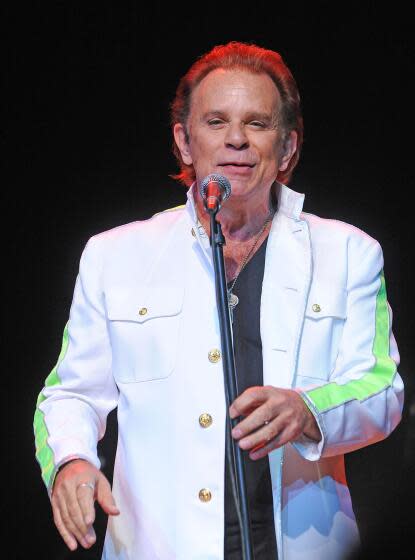
In 2016, my friend B treated me to a Southwest adventure. We flew to Phoenix, visited family before we drove to Sedona and on to New Mexico. After seeing friends and family in Albuquerque, we parked ourselves in Santa Fe, where we planned to stay before taking the High Road to Taos winding up with family in Los Alamos. The trip was gorgeous in many ways, but a definite highlight was meeting Rock’n’Rolll legend Lou Christie.
Lou had been on our flight from NY to Albuquerque, and we had noticed him. How could we not? What an icon of pop culture he had been for most of both our lives. Lou Christie wrote and sang the musical score for almost every event of my adolescence. We were impressed, but we didn’t bother him. Until we saw him in Santa Fe.
He walked into the lobby of La Fonda Hotel as we roamed through looking for a public restroom. I could not resist. Neither could B. I don’t remember exactly what we said to him or why he engaged with us, but when we left the hotel, I had his personal phone number and an invitation to call him about an interview for my “get Read” column in the Columbia School of the Arts publication Catch and Release.
Now that Lou is gone, I thought I would re-share that interview. . . .
—————————————————————
If I were a photographer, and the shutter had just closed, I would be confident that I had just grabbed the money shot.
“Lou,” I ask toward the end of our three-hour interview, “what have been the major forks in your life? The professional ones, the places where you could have gone one way, but you chose to go another. . . ?”
“Oh, wow,” he muses. I love that question!”
We’ve been talking long enough for me to truly understand why he likes it so much, why he is so visibly moved. Lou Christie has been doing what he’s doing most of his life, and what he’s been doing is reinventing himself, reconfiguring the formulae that take him and his melodious voice onward and upward.
We were seated among colorful iconography on orange furniture in the cozy, New Mexico-inspired sitting room he has built atop what used to be the roof of a 1940s tenement building in Hell’s Kitchen, in midtown Manhattan, where he has lived since the early 1970s. He bought his apartment when it went coop, and the landlord was selling dirt cheap; knowing exactly what he wanted and being ever in control of his destiny, he simultaneously bought the air rights so that he could add his a second story of his own design, connected to the first by a picturesque spiral staircase, lit by a skylight and a sliding glass door that leads to the patio with a view of lower Manhattan and the Hudson River.
Despite the low price, the decision to purchase the place took some deliberation. Hell’s Kitchen was among the least desirable neighborhoods at the time, a rough area dominated by the Westies, a deadly alliance between the Italian and Irish mobs, and by Puerto Rican and Anglo youth gangs. The ones immortalized in West Side Story. But Lou Christie recognized an opportunity to get in on the first wave of gentrification, and by the 1980s, the Javitz Center was underway, the Westies were disempowered, and the kids were back in school. He had bought himself a haven. Now, he has transformed a perfect example of simple, utilitarian working-class architecture into a Southwestern style country dasha, a brilliant transformation.
And the perfect metaphor for the life and times of Lou Christie.
When Lou moved into Hell’s Kitchen, his star had begun to rise in earnest. Thanks to New York radio stations and American Bandstand, Christie’s had become the voice of its generation. The insistent falsetto, half pleading, half scolding, all simply celebrating the fact that it could get that high, played on all the hit radio stations. WABC’s hitmaker Bruce “Cousin Brucie” Morrow, was a fan, as was WNBC’s gravel-throated Robert Weston “Wolfman Jack” Smith. “If those guys liked you, you were in.”
“I was a fifteen-year-old farm boy from Glenwillard – yes, it’s a real place, less than twenty miles out into the boondocks in the environs of Pittsburgh, PA” – when I realized I wanted to sing, just sing. I wasn’t Lou Christi in those days.”
Lou was born Lugee Giovanni Sacco, a name reconfigured from the longer Sicilian Saccosso at Ellis Island, and he always loved to sing. And to color outside the lines.
“My father, who had been schooled to become a priest or a doctor, was my first role model: he chose a path less traveled and became a steel mill worker. Then he came home every evening to farm our 100-acre property. Both my parents were musicians, and instead of spending evenings watching television together, we usually got together over music-making.
Lou was the second of six children, having trailed his sister Amy into the world by 18 months; when Lou was nearly fourteen, his parents solved a marital crisis by having four more kids: Maree, Marcie, Shauna and Peter. “We all had to chip in then,” he says, smiling slyly.
“We never knew any different; we just took care of one another, helped mom take care of the house and dad take care of the farm. But we were always singing. I don’t remember ever NOT singing.” From the beginning, Lou was the family lead singer, and his sisters and brother naturally provided the backup.
“See? Now, there’s the first fork. I knew I wanted to be a singer. But I had to make some choices. Am I better off going into Classical? My teacher thought I should do that. Or should I find great standards to sing? But wait, should I write my own stuff? I had a great range – I sang the lowest bass in my school choir and the highest tenor with equal ease.”
He also had a counter tenor range, the ability to sing the really high notes.
“SI kept asking myself, what voice should I choose?”
His falsetto won and forged a path to classic rock ‘n’ roll.
“I didn’t want to be a choir boy. My father was a great bread winner, all day long he was a slave in the steel mill, and then he came home and farmed his land. I was a happy kid, but I didn’t want to be like him. Not me. I wanted the levis, the painted jeans, the purple shirts all the way. I just knew this was it, and I knew instinctively how important it was to remain master of my own career.
“I was so focused. You know. I gave up a lot, like my teen years, but I got exactly what I wanted because I went after it. You know that book The Secret? They must have been following my life . . . because that’s what I did. I concentrated my efforts on getting what I wanted, and I made it happen every time.”
Lou got wind that there signed up for lessons with “a guy in Pittsburgh, who recorded local artists.” After a single session, the producer sent Lou home to make a demo tape. “He told me my voice was already good enough.”
“What you really need,” the teacher said, “Is a backup group.”
Lou grins at the memory.
“’Oh,’ I said to him. ‘I got my group.’ We’ve got a sound you’ve probably never heard. Kinda like three mice. Because I sing high, and I have another guy, and he sings up here too, and a girl. . . so then he said, ‘ Okay. Go put something together, make me a demo tape, and let me hear what you got.’ ”
When Lou brought the demo back to the studio, the producer was impressed enough to put Lou’s group on the vocal backgrounds for a song called Ronnie Come Back, by a girl called Marcy Jo, on the Robbie Records label. Everyone loved the sound of the background, and the record was a big hit, climbing the national charts and reaching the top 20. Lou and his mice never got paid.
“Then we did a follow up with Marcy called When Gary Went in the Navy, and four more, and they were all hits though they never paid us. Heck, I was still in school. I couldn’t even drive yet.”
After a few more non-paying hits with Marcy Jo, Lou chose a new path and set his standards by creating Lugee and the Lions. “I was Lugee, and my sisters and the same group of little kids that were always around me sang as the Lions.” Lou’s dad drove the group all over Pittsburgh, where they sang for weddings, mall openings, parades and the like, and eventually the positive attention brought him Twyla Herbert. And thus he reached yet another fork in his road.
“I could see right away. . . that woman was pure genius. When she proposed working together, I still had to question myself. . . .
“There I was at another fork. This woman was special. She was twenty years older than me, had a degree in classical music, was a classical pianist, didn’t know a doo-wop from a dust mop. But she was brilliant. Just brilliant. And I could see we could be good together, really good!”
He chose to give collaboration a go, and together, Christie and Herbert wrote The Gypsy Cried, in the style of Valli’s Sherry – it took them all of fifteen minutes – and, he said the experience was surreal, something like what he imagined it would be like to be on an acid trip though he had no experience with drugs. “There was something about our chord patterns. They were more classical or more international, made the music more interesting instead of the standard 4 chord progressions, the usual wha wha wha. . . “ The song established a musical partnership spanned the next 47 years, until Twyla Herbert’s death in 2009.
“I never wanted to make a record that sounded like anyone else. My voice had this falsetto, these octaves to work with, and I didn’t want to record anything that wasn’t uniquely mine.”
By 1966, when Lou and Twyla wrote Lightning Strikes, which shot almost immediately to #1 on the European and American billboard charts, Lou knew beyond doubting he had made the right choice both in going into the business of creating songs with Twyla Herbert and in sticking to his falsetto. The only choice he didn’t like for a long time, until he got accustomed to it, was the recording company’s choice of his name.
“I just wanted to be Lugee!”
But the bosses dubbed him Lou Christie. And Lou Christie soared to fame and fortune.
He never took his good luck for granted.
Still, the path was never smooth.
“Even good managers can be really dumb. I know because I had one. . . . Bob Marcucci tried to sway me from my path, and I had to fight tooth and nail to stay the course.”
Marcucci told Lou that he would have to grow up, lose the falsetto, sing more standard arrangements of old songs. But Lou tried it Marcucci’s way just once.
“I went to my gig in Framingham, outside Boston, and I sang all the standards, all the classics. ” It was a disaster. Fans hissed and booed, screaming for “Lightening Strikes.”
“It made sense to me. I mean, can you see me doin’ Ol’ Man River? I’m boring myself just thinking about it.”
Lou left the songs in a dumpster and vowed to listen only to his own advice. He toured extensively, singing the hits, getting his audience to its feet in adulation, singing along. He knew what worked. His easy style on stage coupled with his obvious natural delight in being there sold him.
Lou stops and thinks for a moment. When he speaks, he is back in the present.
“Now I’m sayin’ to myself, I’m 72, and I’m sayin’ ‘See? It still works. I’m still here.’”
That was 2016. Lou’s concerts were never less than packed. His life was never perfect. He had married, divorced, raised two children, lost one to a tragic accident, and he had persisted in touring and sharing the joy of his presence with family, friends, and, most of all with fans.
Like his myriad fans, I am left with the memory of a warm, witty man with a singular mission.
“Once upon a time,” Lous said to me just before we ended our interview, “I only wanted to share the good side, the fun side because I don’t believe you can make a career out of talking about all the bad things in life. But maybe it’s time to start mentioning it. Everyone thinks I’ve had a flawless life. Part of the reason is I project that kind of forward thinking, and I’m a peaceful person. I have never wanted to get stuck in my anger or my bitterness.
“But you know, I am still so naïve There are a lot of people out there who live on bitter – more of an addiction than any wine or beer or shot or pill. I don’t want to be one of them.
I wanted to love We Were the Lucky Ones, a Hulu original series. After all, the story resonates with me. Like my real-life Jewish family, the family in the show is dispersed by the Nazi invasion, set adrift in the world. It’s a masterful series, well acted, realistically written, and beautifully shot. Yet, after the second or third episode, I found myself feeling sick, resenting the artistry of it. The why eluded me at first.
The drama is certainly harrowing. An embattled family encounters every possible horror that the Holocaust meted. They witness, narrowly escape, suffer aftershocks, and move on. The music is Schindleresque sad, and the scenes of torture and cruelty are horrifying. But that’s not it. Nothing in this show is any worse than what Keneally or Spielberg depicted or what Primo Levi described. No loss is any more heartbreaking than those Daniel Mendelsohn memorialized. There is nothing to see in this series that we haven’t seen in any one of the honorable Holocaust museums across the world. So why does this show so offend me?
Over my head, I hear the whirr of helicopters, and I run to the TV to check the local news. On the screen, hate-spewing, pro-Palestinians rally on my Alma Mater campus, just up the street from my home. An angry child-woman glares into the camera and shouts, “They are weaponizing the holocaust” while hundreds scream, “From the river to the sea.”
At another gathering in midtown Manhattan, youngsters in checkered scarves and green, white, black, and red flags scream “Free Palestine.” A middle-aged man proudly waves a Hamas flag. Online, a headline from the ADL: “Chicago Sees Rise in Antisemitism and Activism Amid Action by Anti-Israel Groups.”
There it is. Now I get it.
Our stories are betraying us. It’s time to revise.
Real life has become scary, and those of us who inherited our parents’ PTSD, who were born with memories we cannot decipher, are reliving the dreams we cannot comprehend of the terror they fled. The specters that used to visit only by night are fully animated by day. Once upon a time, the anticipation of violence was easily quelled by stories that assured us that the world was sufficiently sorry; pogroms were a thing of the past. We believed our parents when they reminded us that this is America, after all, and we could feel safe. No more. Those night fears loom omnipresent over my home, my security, my grandchildren. The stories no longer heal.
The haters are wrong. It is not that we are weaponizing the Holocaust or antisemitism. But we are hiding behind it. We hold up our past like medals won in the Suffering Olympics that proclaim our capable willingness to suffer. There is no more reassurance in the idea that it can’t happen here because clearly it can. And it will if we let it.
Those who wish for our annihilation are fueled by our pain. Many display their own medals and say we have not suffered nearly enough. Others are simply irritated by what they perceive as our whining insistence that enough is enough.
We have to stop thinking that this approach will work. Many in the world deem it passive aggression. We have to stop apologizing for our coreligionists who are fighting for the survival of Israel. We have to stop disclaiming our right to fight back. We have to take control of the rhetoric and paint ourselves as a far more positive, authoritatively powerful people. As Rabbi Diana Fersko recently wrote for Tablet magazine, “We have to stop running defense” (“American Jews Should Become a Little more Israeli” April 1024). Just because millions of us were killed in the holocaust doesn’t mean we must beg for survival by reminding our foes we don’t deserve to be exterminated. Would we be any less deserving if we had not suffered the mass murders?
Art is a wonderful place to find relief and transformation. Which is what so many writers and filmmakers, artists and curators have done by insisting on telling our truth. But at this moment, the profusion of new Holocaust reenactments feels like a Hail Mary play that is doomed to failure. We cannot think that because Hulu shows The Lucky Ones for ten weeks on their streaming app our detractors will suddenly see the folly of their ways and back off. Will one Jewish family’s miraculous survival of that great apocalypse convince the world to watch any less dispassionately while the Ayatollah rattles Iran’s nuclear sword? Not a chance.
We should have more films like Munich or Raid on Entebbe or even Exodus. We need to see heroes like Liev Schreiber’s character in “Defiance,” heroes who defied the stereotypes and showed our refusal to let the world beat us up. There should be more series like Tehran that explore the ways in which Israel and world Jewry are endangered every minute of every day by adversaries who hate us for no reason but that they do. We should have filmmakers creating films like Watching the Moon at Night that expose Hamas leaders’ vitriolic calls for the extermination of all Jews everywhere. We need documentary footage of Jews standing up to the hate, holding their ground. . . winning.
We cannot expect the world to feel sorry for us just because we wear our thorny laurels in public. People are not moved by pictures of dead Jews. They take those images for granted.
“What’d you think?” I asked my granddaughters as we made our way out of the theater. We had just seen Mean Girls on Broadway, had stood with the obligatory standing ovations, were still engulfed in the screaming appreciation from the audience. Typical Saturday on Broadway.
I wondered if my companions shared the enthusiasm.
“Well, it was good,” the younger one, who is nearly nine, proclaimed without a trace of self-consciousness. “I mean, the story was great. But what I didn’t like was there was just too much singing. Really loud singing.”
The kid’s got a future in theater criticism. She is the same granddaughter who, at age 4, left Lincoln Center declaring, in her loudest outdoor voice, that the children’s performance of the NYC Ballet we’d just attended was “. . . the worst show I have ever seen.” She was right then, and she’s right now.
The ballet was off the day we went; the choices seemed odd for a program targeting small children. And frankly, Mean Girls does have way too much mediocre music that is more shouted than sung. I kept wishing I could tell the Sound Supervisor that the balance was off, the overall effect totality deafening.
Also the show is preachy. Deliberately so. As the two misfit greeters tell us at open, “It’s a cautionary tale. . . . “ They ask, “How far would you go to be popular and hot? Would you resist temptation? You would not.” Clearly, we are here to be taught a lesson.
Normally, such a messianic tone would irritate me. Especially since I would never have chosen this particular experience had there been affordable tickets available for anything else a pair of preteenagers might like. Yet I found myself softening a bit as it coursed its way through, highlighting the best and worst in teenage girls, illuminating what they all need to know about themselves. In the end, I found myself tearing up.
Everyone in this made-up world learns their lesson. All the girls, every one a mean girl in one way or another, live happily ever after in the bosom of acceptance and empowerment. Why was there no Tina Fey Girl Power script for my generation?
How much different so many of our lives would have been – would be – were we encouraged to love ourselves, to seek success, to nurture one another. The messages we received sought to obliterate our self-esteem, our ingenuity, our independence. Some girls were lucky enough to have mothers who were unafraid to encourage them to defy the system, but for most of us, defiance meant dishonor. Mothers were embarrassed, fathers were angry, and teachers, like later employers, withheld the markers of success. We learned that we needed to play the game by rules the men made, and we needed to have their favor, which meant we were in competition with one another. No one undermined women more thoroughly than women.
Things haven’t changed much since then, which is why Mean Girls is so potent. Too many women still settle for second best, still acquiesce to standards that are beneath them, still seek to be whatever they think men want them to be, still undermine one another.
Thank goodness this vibrant musical is here to remind us (over and over) that 1) “It’s all fine till someone gets hurt,” and 2) “We’re all stars. . . . “
Unfortunately, as my pint-sized reviewer asserted, “They made music out of every little idea, even when there was almost no idea there. And the music wasn’t even that good.”
The songs are unmemorable – not one stuck in my head and had me humming my way out of the theater. Moreover, neither of the grandkids, both veterans of several school musical productions, who know everything on Spotify and the entire score of Hamilton backward and forward, left singing a single ditty.
Nowhere in this play is there a shred of subtlety. The instruments blare. The voices scream, even when they could whisper. The lyrics are simplistic, lacking grace. No poetry. Every message, every image is so emblazoned in neon it feels disingenuous.
Worst of all, it’s rarely funny. Tina Fey’s voice reading the “Turn off your cellphone” address just before curtain is the funniest thing in the show.
And yet, I warmed to the play. A little. And the youngsters in the audience – most of them girls – loved it. At the stage door afterward, 52nd Street throbbed with the excitement of well over a hundred females aged 6-20, waiting in the cold, screaming as each of the actors emerged from the theater, begging for autographs and selfies.
As my granddaughter said. It was pretty good.
——————————————————————
Mean Girls
Story by Tina Fey Music by Jeff Richmond Lyrics by Nell Benjamin
Now playing at the August Wilson Theater, 245 W. 52nd Street, New York, NY 10019
As a fan of the New York Times “Modern Love” feature, I eagerly binged through the eponymous new series on Amazon Prime. I wish I could say my fandom has extended itself. I cannot. Turns out to be just one more proof of how willingly pop culture aggrandizes schmaltz.
Schmaltz , in the colorful, metaphor-laden Yiddish language, means poultry fat and also hyper-emotion. Bathos.
I imagine the proliferation of melodramatic sentimentality is a reaction to the seething anger that surrounds us. Ugly racism on the Alt-Right and pandering on the Alt-Left leave no one safe from vitriolic accusations and slurs, physical jostling, social discomfiture out in the world. Whoever we are, wherever we go, we are assaulted in one way or another. Soppy, mindless nostalgia is a reasonable soporific. I wish it helped me. I guess I’m too cynical.
I’ve never been good at soporifics. They trigger anxiety. For me, hyper-emotional dramas are like post-op pain pills. They briefly soothe the symptoms, but when they wear off, everything hurts more than before the medication. Escapist entertainment reminds me how much work life requires, how much more pain there is when you expect none. Then too, it comes dangerously close to inspiring resentment. Why can’t I find what these phenomenally lucky folks have found? What a colossal loser I must be.
I don’t enjoy being jaded. I am by nature an optimistic pragmatist. When at first I don’t succeed, I plod on. I want to believe I’ll discover gold in one of the veins I’m exploring, but if I don’t, well, the work’s its own reward. That’s a lot harder to pull off when prevailing media offerings constantly suggest that everyone else can easily find what remains for me elusive.
Every episode of Modern Love tantalizes with elements of truth. The actors in the series are wonderful – not a bad one in the bunch – but the writing is shallow. Okay, the stories are based on essays that are 1500 words or less. But a screenwriter should be able to create fleshy characters, who talk like people talk. And am I the only one who notices that there is not one episode that follows someone who lives in a middle- or working-class world? That poverty is nonexistent here? Every one of the lovers here has a fabulous apartment that is fabulously decorated. They all have amazing jobs and work among titans. More reasons I should feel unworthy.
In the episode entitled “When Cupid is a Prying Journalist,” Katherine Keener plays an almost-believable character . . . an older woman giving advice to a thoroughly make-believe young genius (Dev Patel) millionaire (of course) about the pursuit of happiness. The characters in “At the Hospital” are so hopelessly hip their love seems fake and contrived. The heroine of “So He Looked Just Like Dad, etc . . . “ is boringly stupid. Is any young woman working in NYC (and living in such upscale digs) really naïve enough to think a leering, sex-starved older man would moon so unabashedly over a girl for whom he has only paternal affection?
Jane Alexander, an actor I deeply admire, plays a character who serves cheap baloney in “The Race Grows Sweeter Near Its Final Lap.” Up to a point, women might possibly imagine that being over 70 is romantic in some way, but we who have passed that Rubicon know better. And the actual probability of finding the kind of love Alexander’s character discovers is as likely as finding a clean spot on the subway floor.
Or is this just one more way of telling me how inadequate I am?
Older men who seek older women invariably look for someone to mother them, someone to listen to their monologues, someone to call 911. I would love to believe there is a man like James Saito’s character for each of us out there, a gentle man who listens enthusiastically, who shares interests but revels in each of the couple’s individualities. Forgive me if my experience makes me skeptical.
My most recent disappointment happened last month. I met a man who enticed me with what seemed to be a real interest in me and in my work. But the moment I ventured to get to know him – first by electronic messaging, then telephone, and finally on an actual date with him – he became a lecturer. He took to telling me what I like, what I look for, what I am. Assuming I knew nothing, he regaled me endlessly with his erudition. He asked me what I’m writing about, and before I got to sentence number two about the project I am struggling with, he was off on a tale of how he saved a woman writer he had been hired to edit.
On our date, when the monologue turned personal, and he was discussing his marriages or children or something, I made a comment about the complexities of motherhood, how women are easily eclipsed by childbirth and child-rearing. He interrupted with a story about how lucky his first wife was to have had him in the delivery room because he was able to relieve all her pain because he knew the right place to touch. That was immediately followed – without so much as a breath – by the story of how he sailed up the coast of Spain to save a woman who would have bled to death had he not liberated her and applied his EMT skills.
I took the advice of the Madagascar penguin. “Smile and wave, boys. Smile and wave.” I smiled – and nodded – and waved goodbye.
Every day for the following week, I received endless incoherent soliloquies or solipsistic PM messages on Facebook. Each time I replied and asked questions, he rejoined with yet another harangue. None of my questions or comments was acknowledged. I finally asked him point-blank if he had any interest in me. If so, I said, please demonstrate it. Call me, write me a question you allow me to answer, engage with me. Interact. I haven’t heard a word from him since I made that request.
If I were to judge myself by Modern Love standards, I would have to assume I am a ragtag reject.
If only life were so winnable as it is in the series. Would that playing tennis might have volleyed my marriage back to life as it did for Tina Fey and John Slattery’s characters in “Rallying to Keep the Game Alive,” written by Dennis Leary’s real-life wife Ann. Would that any one of the few boyfriends I have had since I divorced twelve years ago had been so quick to acknowledge their role in our absence of communication. At least this episode was honest in its depiction of the separate worlds we build when we are supposedly fused to one another. That was something.
The one episode I really liked was the one I expected to hate. I am not an Ann Hathaway fan, and I was put off at first by the specter of Hollywood glitz. But in “Take Me as I Am, Whoever I am,” I was won over by the sensitive, detailed glimpse into the bi-polar world it provides. Hathaway, with no little assistance from the script, nailed both the manic hyper-high and the paralyzing despondency, the need for a truly accepting ear, the struggle to maintain the most basic of human relationships. Let alone love. Finally, a protagonist who doesn’t miraculously get everything she ever wished for in 50 minutes flat. Finally, an episode that ends realistically. Hathaway’s character vows to stay on her meds and talk often to her physician. That is all. She is content.
And that is the best kind of happily ever after I can imagine.







 As a fan of the New York Times “Modern Love” feature, I eagerly binged through the eponymous new series on Amazon Prime. I wish I could say my fandom has extended itself. I cannot. Turns out to be just one more proof of how willingly pop culture aggrandizes schmaltz.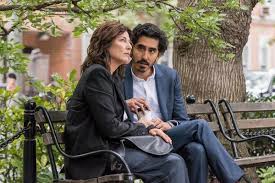


 carlastockton.me