Swift River . . . Paddling the Rapids of Raging Adolescence

Essie Thomas' new novel is a perfect summer read

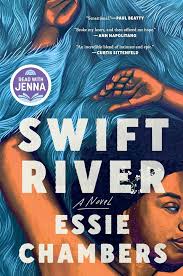
From the moment I dived into Swift River, I was swimming through memory, in sync with Essie Thomas’s captivating heroine Diamond Newberry.  Like Diamond, my 17-year-old self suffered from a sense of dislocation, and I recognized in her a familiar longing to know an origin story. Like me way back then, she found her hope in stories her family members, the ones willing to talk candidly about the past, could share with her.  Like Diamond, I ate my troubles away, wallowed in tuna casseroles and wingdings, but being white,        From the moment I dived into Swift River, I was swimming through memory, in sync with Essie Chambers’s captivating heroine Diamond Newberry.  Like Diamond, my 17-year-old self suffered from a sense of dislocation, and I recognized in her a familiar longing to know an origin story. Like me way back then, she found her hope in stories her family members, the ones willing to talk candidly about the past, could share with her.  Like Diamond, I ate my troubles away, wallowed in tuna casseroles and wingdings, but being white, what young me did not have in common with Diamond was color. 

My confusion and disassociation were just as real, but they were invisible, and I therefore did not suffer the same slings and arrows of outrageous racism that Diamond endures. Yet I easily relate to what she feels, and how she responds because as unique as Diamond is, she is a character who represents the distinctly American experience of growing up in an unkind, duplicitous society whose respect for diversity is superficial at best. 

Diamond is caught in a perfect family-and-society-fueled storm. Her father has disappeared, is perhaps dead, and her mother has become recklessly unbalanced.  Her marriage to Diamond’s father was disastrous, but she does not know how to live without him.  So she drinks.  She makes Diamond responsible for her but is, at the same time, immobilized by the way her community – the town that has been her family home for generations – treats her daughter.  She knew that nothing about their life together would be easy, but she never embraced his brittle fragility.

Already restless and morbidly obese, Diamond finds herself entirely untethered by her fatherlessness.  She wants to stop her mother’s hurt, but she is aware that her mother’s love is genuine but also neurotic and toxic. She longs for her father’s return, as he seems to be the only one who might have the knowledge to explain why the town’s Black population inexplicably left town in the dead of night some years before and what their exodus has to do with her.  He alone might justify his bitterness and the self-destructive recklessness that causes him to act out his angry bouts of frustration.  Diamond has no place to turn for answers until she receives a letter from her father’s cousin-sister, who lives in the Newberry family home in Georgia. 

Letters pass between the girl and her unseen auntie, and Diamond begins to assert her true self.  She secretly signs up for driving lessons and forges a friendship with a girl from her class, who is equally void of ballast, a girl who has learned to sublimate her pain in promiscuity.  Over the course of an illuminating summer, Diamond learns to drive, loses her virginity, and finds her roots.

At the heart of Swift River is the reminder that no matter what ethnicity, what race a teenager is blessed or cursed with, the compulsion to know who we are and where we come from is universal.  Diamond’s plight is overwhelming, but she finds a way to cope just as teenagers have always forced themselves to cope with circumstances they would never choose as the basis of their lives.

Like all the great coming-of-age stories, this one is written by an adult with a mature outlook, told through the eyes of a precocious seventeen-year-old who clearly has the benefit of Chambers’s wisdom.  For that reason, Swift River is a great read for teens and adults.  It is an illuminating journey over the racing rapids of adolescence, a passage that none of us avoids.       

Diamond is caught in a perfect family-and-society-fueled storm. Her father has disappeared, is perhaps dead, and her mother has become recklessly unbalanced.  Her marriage to Diamond’s father was disastrous, but she does not know how to live without him.  So she drinks.  She makes Diamond responsible for her but is, at the same time, immobilized by the way her community – the town that has been her family home for generations – treats her daughter.  She knew that nothing about their life together would be easy, but she never embraced his brittle fragility

Already restless and morbidly obese, Diamond finds herself entirely untethered by her fatherlessness.  She wants to stop her mother’s hurt, but she is aware that her mother’s love is genuine but also neurotic and toxic. She longs for her father’s return, as he seems to be only one who might have the knowledge to explain why the town’s Black population inexplicably left town in the dead of night some years before and what their exodus has to do with her.  He alone might justify his bitterness and the self-destructive recklessness that causes him to act out his angry bouts of frustration.  Diamond has no place to turn for answers until she receives a letter from her father’s cousin-sister, who lives in the Newberry family home in Georgia. 

Letters pass between the girl and her unseen auntie, and Diamond begins to assert her true self.  She secretly signs up for driving lessons and forges a friendship with a girl from her class, who is equally void of ballast, a girl who has learned to sublimate her pain in promiscuity.  Over the course of an illuminating summer, Diamond learns to drive, loses her virginity, and finds her roots.

At the heart of Swift River is the reminder that no matter what ethnicity, what race a teenager is blessed or cursed with, the compulsion to know who we are and where we come from is universal.  Diamond’s plight is overwhelming, but she finds a way to cope just as teenagers have always forced themselves to cope with circumstances they would never choose as the basis of their lives.

Like all the great coming-of-age stories, this one is written by an adult with a mature outlook, told through the eyes of a precocious seventeen-year-old who clearly has the benefit of Essie Chambers’s wisdom.  For that reason, Swift River offers an astute journey through the fraught passage from childhood to adulthood that none of us avoids.                                        

                                                                                                                                                                                                                                                                                                                                                                                                                                                                                                                                                                                                                                                                                                                                                                                                                                                                                                                                                                                                                                                                                                                                                                                                                                                                                                                                                                                                                                                                                                                                                                                                                                                                                                                                                                                                                                                                                                                                                                                                                                                                                                                                                                                                                                                                                                                                                                                                                                                                                                                                                                                                                                                                                                                                                                                                                                                                                                                                                                                                                                                                                                                                                                                                                                                                                                                                                                                                                                                                                                                                                                                                                                                                                                                                                                                

The Enduring Endurance of Charlotte and Her Pig

In November, I shall have been a mother for fifty years.  I never envisioned the possibility that one day my children would be older than I was when both my parents were dead, that I would outlive my younger brother, and that I would be a grandmother older than my own was when this fifty-year-old, her fourth great-grandchild,  was born. . . . The breadth of it all amazes me.

That my children survived my parenting is another source of amazement.  Having grown up the too-often surrogate parent for my many siblings, I thought I would naturally take to it.  I’d have perfect children because I’d be a perfect mom.  Of course, I was wrong.  Dead wrong.  In so many ways.  I was subject to so many ineptitudes.

But one thing I got right was entertainment. 

We did not have a color television until the firstborn reached the age of 11.  It just didn’t seem necessary.  As a result, Saturday morning cartoons were easily abandoned in favor of playing outdoors. At night, no one ever begged to stay up for just one more show or sneaked back into the living room to steal a look at what mommy and daddy were watching. From the time they were tiniest tots, they wanted stories.

Stories were commonplace in our house even before the first of our blessed events.  Stories were a tradition begun during their father‘s and my courtship. In our first conversation, we discussed Mahler’s Kindertotenlieder, based on Friedrich Rückert’s stories of dying and dead children.  We often camped, and we read to one another under the stars . . . works as innocent as Alice in Wonderland as self-conscious as I’m OK You’re OK. One of my motivations to have children was the impetus to continue reading stories aloud, to sharing adventures vicarious and fabulous.

At first I sang the stories.  I’d warble convoluted folksongs with sad or inspirational themes or I’d set the story of our day to some monotonal melody or stitch it into a familiar tune and add the story of a journey we had made.  Then came the infinite rides we took with books.

We traveled with a bear of little brain on honey-seeking safaris, with elephants from the African savannah to Paris, in a car to the Eifel Tower, to a balloon over the ocean, the big, blue ocean, then on to a tropical island and back to Africa.  We laughed at the silliness of an urban monkey whose curiosity continually got him into and out of trouble.  We marveled at the D’Aulaire’s version of Greek mythology, tzikached at Aesop.  The child who is now turning 50 had a penchant for maps and atlases so we read about faraway places and charted journeys they would take as adults.  We soared through those books. 

Even after all were more than competent readers on their own and were devouring books by themselves, we read as a family.  Especially when we traveled. 

Road trips were our vacations of choice, and we drove across the country listening to story cassettes, precursors of Audible recordings.  Heroes travled with us.  Robin Hood and Little John.  A young Fox and a basset hound. Bambi.  Under the stars in our campsites or as we wound down in a small motel room, we read aloud until the reader fell asleep.

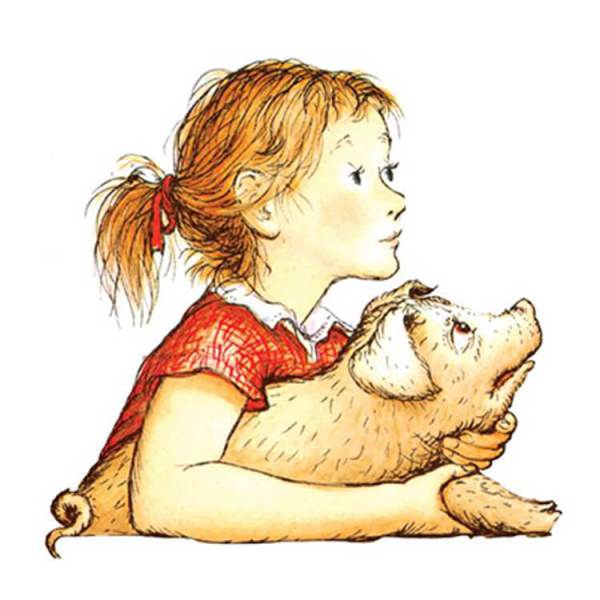
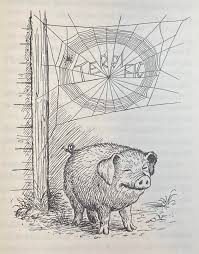
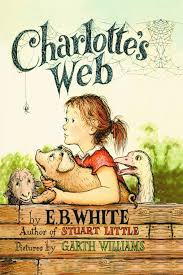
A favorite author in the post-picture-book days was E.B. White.  Charlotte’s Web came first, and we read it more than once.  It became our favorite. When the first film version emerged, we saw it together and critiqued it harshly.  We reread the book and saw the newer version, which we judged with the same rigor. We loved that book.

The other White books and the essays were lovely.  But none ever had the pure cachet we afforded Charlotte’s Web.  I hadn’t thought about that in a very long time. After all, a 50-year-old child has been a grown up far longer than they were a child.  Reading to my babies resides among the cherished memories of a time long gone.

But time has been kind, and new book memories have settled in, thanks to grandchildren who have loved stories as much as their predecessors did.  Two have already passed through our read-aloud nights and are firmly ensconced in teen sensibilities. But I still have one little person left with whom to share the stories.

He lives far away, but we Zoom almost every night.  After a little talking, sometimes a game or two, I read him to sleep.  In past months, we’ve coursed through 26 Junie B. Jones books, and twelve books about dogs and pirates and wizards. Most recently, I have wandered back with him to the pleasant joy of Charlotte’s Web

The sheer beauty of the book moves me to tears every single night.

The narrative voice is soothing, even as White describes the prospect of his hero being reduced to bacon and lard, even as he takes us through a mountain of manure into a rat’s nest.  Somehow, no matter how ugly the world is, this author finds the words to reassure us that there is reason to be calm, reason to hope that on the next page there will be something fun and joyful.

When the human child Fern’s mother asks her pediatrician if he understands the writing in Charlotte the Spider’s web, the doctor admits that he doesn’t.  But, he continues, he doesn’t understand how a spider spins a web in the first place.  “When the words appeared, everyone said it was a miracle.  But nobody pointed out that the web itself is a miracle.”

The humblest of realities, a spider’s web.  A miracle.  What a lesson for children.  And expressed in a prose that is smoothly American English at its best.

“Well, who taught a spider?  A young spider knows how to spin a web without any instructions from anybody.  Don’t you regard that as a miracle?” The doctor asks.  The real miracle is the writing.

My children were young in the Arizona desert, and my grandson lives in a country with a Mediterranean climate. Yet all learned what to expect from a New England winter, what makes fall a season of amazement, why spring springs exuberantly from E.B. White.

“The autumn days grew shorter. . . . The maples and birches turned bright colors and the wind shook them so they dropped their leaves on the ground. Under the wild apple trees in the pasture, red little apples lay thick on the ground.”

No Netflix series, no Nickelodeon animals can bring the world to more vibrant life.  Nothing on Youtube compares with the deep satisfaction even an 8-year-old derives from hearing about Charlotte’s affectionate, abiding friendship for a spring pig.  And nothing – not even the most sensitive Disney films like Bambi or Soul will ever demonstrate more positively to a child that life includes death, that happiness includes grief, that joy bursts forth from the meanest of realities.

Prodigious marvels are all around us. Even in in a “warm delicious cellar, with garrulous geese, the changing of seasons, the heat of the sun, the passage of swallows, the nearness of rats, the sameness of sheep, the love of spiders, the smell of manure, the glory of everything.”

When I celebrate this fiftieth anniversary of parenting, I shall light a candle of gratitude to E.B. White and his Charlotte for teaching my progeny I’ll always be with them, and they never need to look far for the joys I’ll have left behind.

Charlotte's Web
by E.B.White

From Motherless to Motherer

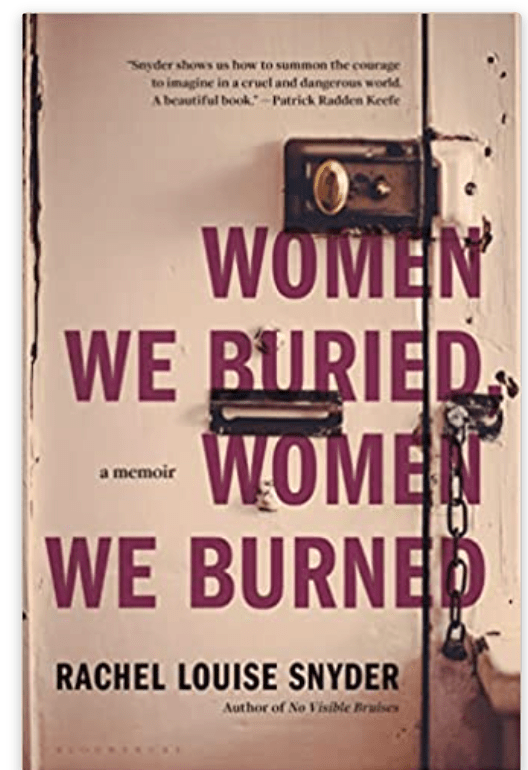
Rachel Louise Snyder’s Women We’ve Buried, Women We’ve Burned

One of my favorite workshops to teach is something I call “Acting for Writers.” It’s a class that investigates how to put ourselves in closer touch with our sense and emotional memory, the way actors do. After all, I explain, actors and writers are artists of the same cloth, who share clear objectives: to tell stories, to entertain, inform, enlighten, even sometimes warn an audience or to unburden themselves of secrets too heavy to hold onto.  In doing so, they seek to be authentic, honest, and believable.

Rachel Louise Snyder could teach my class simply by sharing her work.  What distinguishes that work is the way emotion emerges without being manipulative, the way observations and revelations illustrate how deeply a skilled writer can cut into the very center of human existence and bring it to life on the page.  I never fail to believe Rachel Louise Snyder. I never distrust her.  She is among the most reliable narrators I know. I take in her confidences, and I resolve to keep them in a safe place where they can continue to enlighten me.

So it is with Women We Buried, Women We Burned, Snyder’s soon-to-be-published memoir.  The story of Snyder’s life, beginning with childhood trauma – her mother’s death, her father’s embrace of evangelical fundamentalism – that led to hard-driving self-destructiveness, and then to total self-transformation might seem calculated and farfetched from a less ingenuous writer.  But Snyder’s writing is so stark, so clear, so unfettered by hyperbole of any kind that the saga resonates with irresistible urgency.

Snyder’s narrative journey begins when her mother dies. She hears her mother call out, “I can’t breathe,” and she recognizes even at the tender age of 9 that her mother desperately wants to live but has lost the battle with her disease. Rachel’s father, confused and helpless at the death of his young wife and the responsibility of raising two children nearing their teen years, tells Rachel that her Jewish mother has happily surrendered to death and resides now with Jesus in Heaven. He has almost immediately devolved to a religious self he never was before, and from that moment his young daughter intuits that she cannot trust her father to be the man her mother married, the father she used to know. 

Without warning, Rachel’s father submits himself to unforgiving religion, which he imposes on his family and enforces through the use of corporal punishment.  He loves by force of will and shows affection by exerting dominance. He marries a woman he easily controls, and Rachel’s only defense is willful defiance of everything he stands for. After she is expelled from the Christian school he has forced her into, he turns her out of the family home and refuses to let her back in. 

Endowed of remarkable resilience and empowered by ever-improving survival skills, Rachel wanders through her adolescence and experiences sex, drugs, and rock’n’roll until she finds herself in college, where she gets by, thanks to her superior intelligence and a little help from her friends.  To her surprise, she discovers a love of learning, fascination with history, and, most importantly, commonality with other women – battered and buried women, who have survived or who have been defeated. Then she binds herself to an abiding faith that she can make a difference. 

Ultimately, Rachel Louise Snyder’s story is one of evolving maternalism. The motherless child becomes mother of herself. The self-motherer becomes mother to her stepmother, to her remarkable daughter Jazz, and to the women whose stories without her might never be told.  Her story is a guide for us all.  She models the liberating power of self-acceptance and exemplifies the need for self-love.

I believe her. Every word.

SAILOR AND FIDDLER: REFLECTIONS OF A 100-YEAR-OLD AUTHOR BY HERMAN WOUK

Reprinted from Bookslut, March 2016

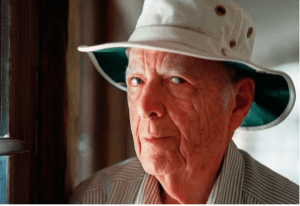
I always thought of Herman Wouk as my own personal Virgil, and as much as I like to think my relationship was special, I suspect there are many of me out there, wayfarers who have depended on Mr. Wouk to show the way. Those of us born to families devastated by the tragedies of the Second World War, whose parents chose not to talk about their experiences, who felt the force of their survivor guilt without knowing from whence it came found succor in Wouk’s work.

He welcomed us with abiding love, guided us down to the darkest circles of the hell they’d escaped, showed us the purgatory of their immigrant experience, and then he illustrated their view of heaven for us. For me, because my mother, like many survivors of the horrors left behind in Europe, hid her Jewishness, which disappeared into my father’s very American blue-blood WASP persona, Wouk was an essential source. He led me to my deepest roots and taught me how to love them.

I learned about the tenets of Judaism and prepared myself to study more formally by reading This is My God, a straightforward, unembellished explanation of the beliefs, rites, holidays, festivals, law, and the many variations of the religion. From Inside, Outside, I learned that many of the idiosyncrasies I thought were unique to our family were, in fact, universal to the experience of first generation Americans. In Winds of War and War and Remembrance, I got close to characters who had suffered the fear, loss, separations and dislocations my mother and her loved ones endured, and I found a way to be more empathetic to and less judgmental of that same mother.

What Herman Wouk’s books also offer is insight into the nearly 101 years he has lived on this planet. His fictional characters, only minimally masked and altered, are the people he has loved, hated, known, observed, dreamed about, and the events he has chosen for set the action of his novels against are mostly events he lived through or had some relationship to. In a way, the body of his work is his autobiography, his memoir in fiction.

Which is essentially what he tells the reader in Sailor and Fiddler: Reflections of a 100-year-Old Author, his rumination on the sixty-four years of his career as a bestselling author. Sailor and Fiddler is not so much a memoir as a remembrance of things past, a paean to the good fortune that has accompanied his professional life and a nod at the tragedy he prefers not to talk about. He identifies himself as a sailor, having spent World War II in the Navy, and a fiddler, a character from the Sholem Alecheim stories his father read to his children in Yiddish, stories that fueled Wouk’s desire to write.

Wouk chooses to minimize the memoir. He says his beloved wife, to whom he refers as “Betty Sarah Wouk, the beautiful love of my life,” discouraged his writing any memoir, saying that a writer’s life is not all that interesting. He agrees, and so instead, he zips his reader past his journey from working class Brooklyn to fame and fortune in mainstream American culture. He sketches out some of the milestones of his life, glosses quickly past the mention — the first, he says, in anything he has written — of his first son’s death by drowning, concentrating on his the frequent reiteration of the amazing charm his life has seemed to have.

From the moment he was accepted to Columbia College’s Class of 1934, every project Wouk took on succeeded beyond his own expectations. He worked as a gag writer for the giant star of radio Fred Allen, went to Hollywood to write screenplays and, by the way, wrote a hit play, published a series of bestselling novels beginning with his first, Aurora Dawn, which he says was actually enabled by his Navy salary. He credits his gag writing with keeping his novels snappy, funny, and easy to read, even when the material was dense and meandering, and he credits his Judaism with keeping him focused, earthbound.

Whether living in Hollywood or sequestered on an island in the Caribbean, Wouk remained tenaciously religious. He refused to eat non-kosher food, and he never missed a Shabbat service. Thanks to his religion, he was able to anchor himself in his family and remain circumspect, diligent, and, most importantly, grateful for his great good fortune.

For readers who haven’t met Wouk in his novels, this minimal volume will perhaps provide an incentive to explore the literature that consistently remains on bestseller lists of all kinds. But it will not enlighten those who seek to learn about the private Wouk, the personal encounters. What it will do is provide a key to how Wouk relates to his work, how he came to write what he wrote, what some of his influences were. It will introduce the reader to the novelist’s relationship with his creations, what he especially likes and what he dismisses, what he is most proud of, and what he discounts. Imbedded in the book is a glimpse into the times and events that shaped Wouk’s sensibilities — his birth into a family of Eastern European Jewish immigrants, the post-WWI years in Brooklyn, the cataclysms of WWII, the McCarthy era, to mention a few. But everything that the book mentions is examined perfunctorily; Wouk writes neither for therapy nor to provide himself and his readers with profound revelations. The book is merely an old man’s musing on a long and prosperous career amid world and life events that the author assumes his reader knows plenty about.

What he hopes is that the “gentle readers” of this little book have already read and/or will soon read his work, and thereby know everything there is to know about him. He has recorded in his books all that seemed important to him, all that shaped his personal and professional life, and he wants to be known through those books.

As he says at the end of his discussion on writing The Hope and The Glory: “I told Ben Bradford I wanted to write two books before I died, one on Israel, one on my life’s story. By God’s grace, I have done both. And in this reminiscent glance, I have sketched how I did them.”

Sailor and Fiddler: Reflections of a 100-Year-Old Author by Herman Wouk
Simon & Schuster
ISBN: 978-1501128547
160 pages

Nigel Bray’s Pride and Joy

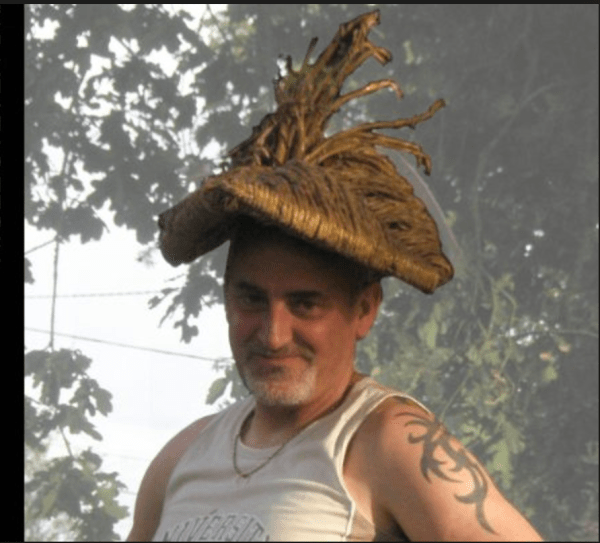
Mr. Lucky’s subject and author Nigel Bray

Recently, a dear friend asked me to review Nigel Bray’s memoir Mr Lucky.  I admire my friend, value her sensibilities, and agreed to do so.  It’s not a book I would ever have chosen to critique.  But writing a book is a huge accomplishment that deserves to be acknowledged.  So here are my thoughts about Mr. Bray’s brave adventure.

The book is not a polished piece of literature.  Nor does it claim to be.  It’s a story.  Often harrowing. It’s the kind of true story we hear all too often.  It’s the story of growing up gay and seeking self-acceptance.  Yet another account of how society demoralizes and how important it is for each of us to become our own saviors.

Bray is a forthright narrator, which makes him immediately reliable.  His voice rings clearly without self-pity.  Bray has assembled the pieces of his life into a meandering memoir that entertains and at turns enlightens.  This is a man who chose apt role models and then evolved.  He is his own hero, a man whose life and book are achievements I applaud.

I will leave the final word to the Amazon tag, which says of the book:

I will leave you with what the Amazon tag says about the book:

This is the story of Mr. Lucky – a misnomer if there ever was one! Follow him from him being a spoilt brat, a nascent homo, a fledgling pooflet and drama queen, on his adventures through school and College, to living in London through the madness and the sadness of the crazy 80s, during which he finds the perfect opportunities to find himself – and discovers he was right all along! G.A.Y.! FANTABULOSA! Disaster follows disaster, japes go wrong, relationships fail (mostly because he’s a fool and doesn’t know his arse from his elbow), friends die and everything’s awful. So he returns home, to Cornwall: new life, new house, new job – but same old heap of trouble. You’d think he’d learn from past mistakes, but….. Skipping through the detritus of broken hearts, a terrible thing happens and his life changes forever and Three Tall Women, each their various ways, get him through. And then, finally, after the most awful thing imaginable, the Man in the Big Red Shoes appears and he finally walks out into the light. Mr. Lucky IS lucky, after all. We do like a happy ending…..