
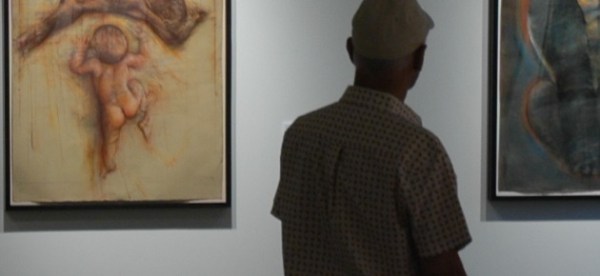
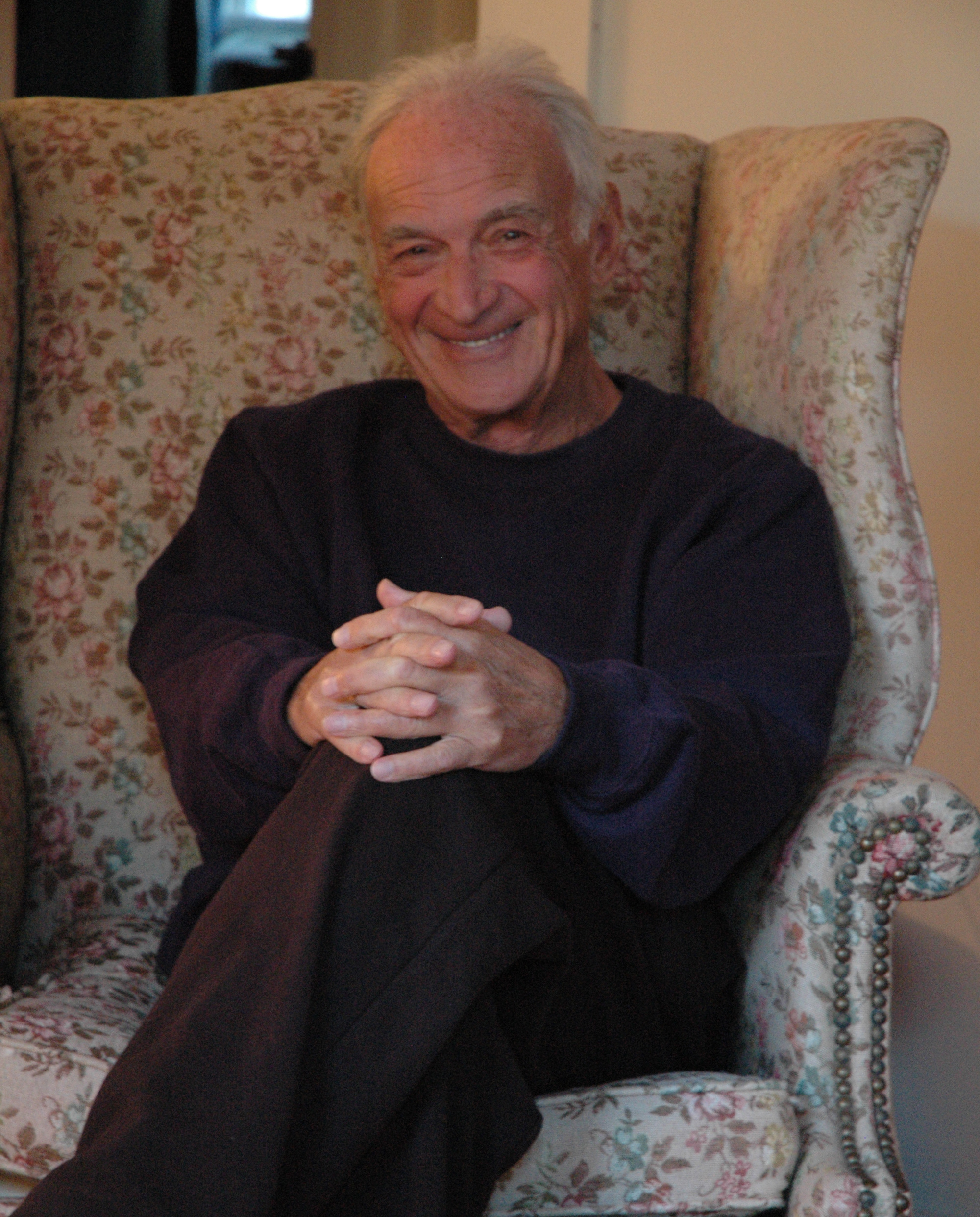
 “There aren’t a lot of restaurants like this one left in town,” Bob Ziering says, leaning over his lunch. A glint appears in his eye as he quips in a spot-on Eastern European/Yiddish accent, “So, you think maybe we gonna eat?” Of course I laugh. This is how Bobby dispels his basic disdain for talking about himself, and I have asked him some very personal questions about his life and his art. Whenever he wants to deflect his reluctance to talk, he slips into one of a hundred accents. He has chosen to meet in the Piccolo Café, an intimate little Italian restaurant on the upper west side, where Bobby has lived since the early ‘60’s. Like Bobby, who was born in 1932, the Piccolo, established in Italy in 1938, has at once an old school charm and a hip vivacity. Piccolo might look like a little, old café, but there’s a robust energy here, and it’s a good foil for Bobby, who looks like he might be getting on in years until he starts to talk – or sing or paint – and you realize he’s younger than any of the hip upper west siders who frequent the Piccolo. I met Bob not long after he moved to this community. He was, in those days, as he remains today in a more mature way, remarkably handsome, extraordinarily entertaining, unerringly funny. My Uncle Fred, a loud, opinionated Genovese, introduced us at one of the weekly open houses he and my aunt hosted, where copious amounts of delectable food preceded equal servings of delicious music played live or selected from his extensive record collection. Fred had met Bob through a gay friend, and he loved to point out to us that while he was definitely not attracted to men, if he were, Bobby would be the only man he could ever love. Even then, I understood why. According to Uncle Fred, Bobby sang like Caruso or Bjørling, painted like Rembrandt or Caravaggio and did imitations like Rich Little. Well, in those days they were imitations like Rich Little; today he does imitations more like a geriatric Jimmy Fallon. In any case, Uncle Fred knew whereof he spoke. “He’s a true Renaissance Man,” Fred would declare in a rasping voice that no one could mimic as well as Bob Ziering. “A monster talent.” “I’m 80 years old,” Bobby says now. “I’ve had a great career as an illustrator, I’ve traveled and sung in some wonderful operas. But no one knows who I really am. I am working to re-invent myself, and I want to be noticed. I’m still working, still creating, and you’re never too old be discovered. I just want to be seen!” In truth, Bob has been noticed. Is still being noticed. He had a long and storied career as an illustrator, his works featured in advertisements, on book jackets, on posters at the Metropolitan Opera, in The New York Times, all over the place. And all the while he was working – freelancing –he took time to represent other artists, to study music and voice and sing in the (now defunct) Amato Opera Company, among others. Along the way, he found time to establish himself as a collector: Bob Ziering owns an impressive array of African tribal art, Enrico Caruso memorabilia, classical opera recordings. Just as impressive is that as busy as Bobby has been, he has never been too busy for friendship, and he has managed to create lifelong friendships that attest to the depth of the man’s humanness. Ziering is a man who simply commands attention and is anything but obscure. It is true that he has not been very masterful at self-promotion. “I want to be reborn, “ he says with a laugh; “but I am easily distracted by my many fascinating projects.”
 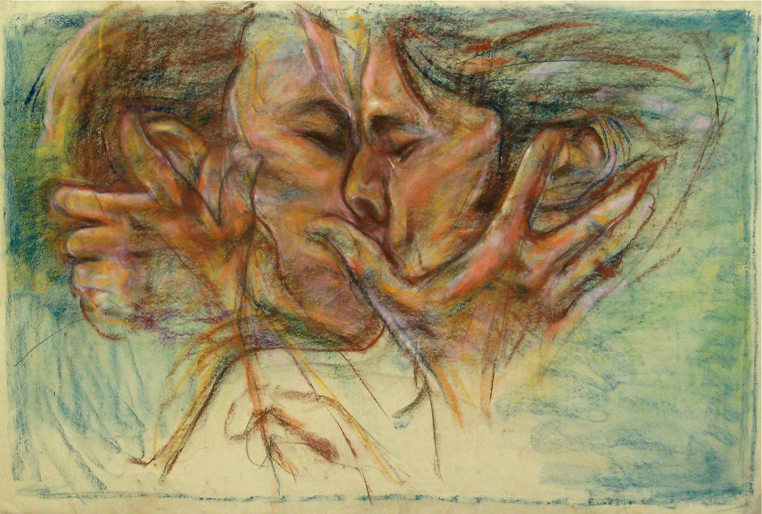 This is a man who, above all else, communes with the world through his work, and his work is his first love. He has, in recent years, produced a major body of work, and the subjects are as diverse as the wonders that stimulate Ziering’s imagination. Nowadays, Bob’s work is colorful, expansive; it succeeds the elegantly drawn illustrations that provided Bob with a comfortable income for many years. At their best, the illustrations are tributes to Ziering’s profound observations, his remarkable insights, his ability to capture the essence of an idea or a character in the simple but dynamic assembly of lines drawn with pen and ink, and they are reminders of his salient influencers, the likes of Rembrandt van Rijn, Francis Bacon, J.M.W.Turner. Ziering’s illustrations caught figures in motion and projected whole stories in single images. http://www.illustrationsource.com/stock/artist/bob-ziering//
 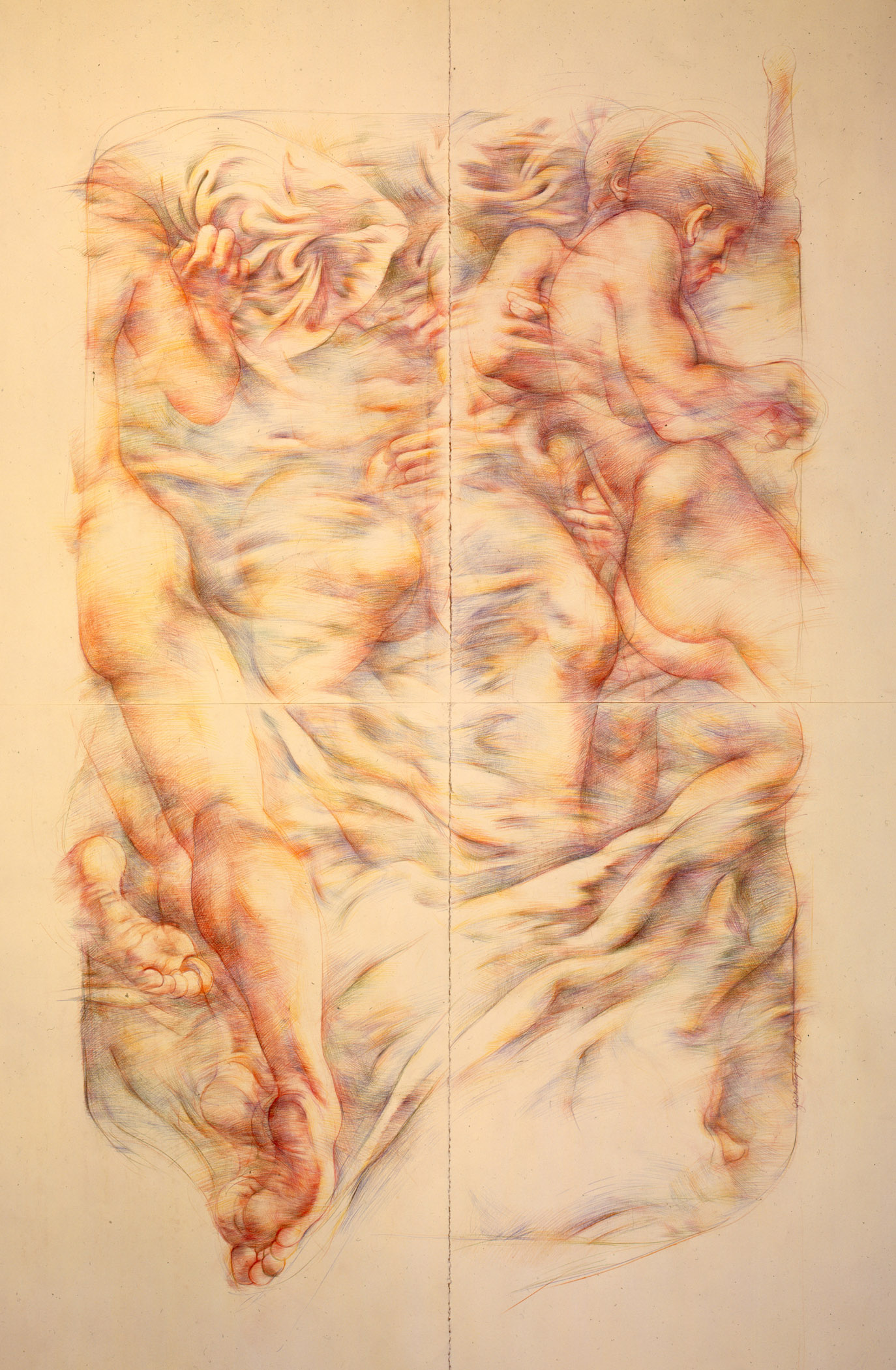 But the newer work, the work of the past twenty years since he left illustrating, comprise the body of achievement Bob is proudest of. In the new art, he is able to explore his emotions – universal human emotions – by telling visual tales, which he finds in his fellow humans, in animals, in burned piers and discarded chairs alike. “This woik you should see, dahling,” he whispers slyly, channeling his inner yenta. “The woik everyone should see.”
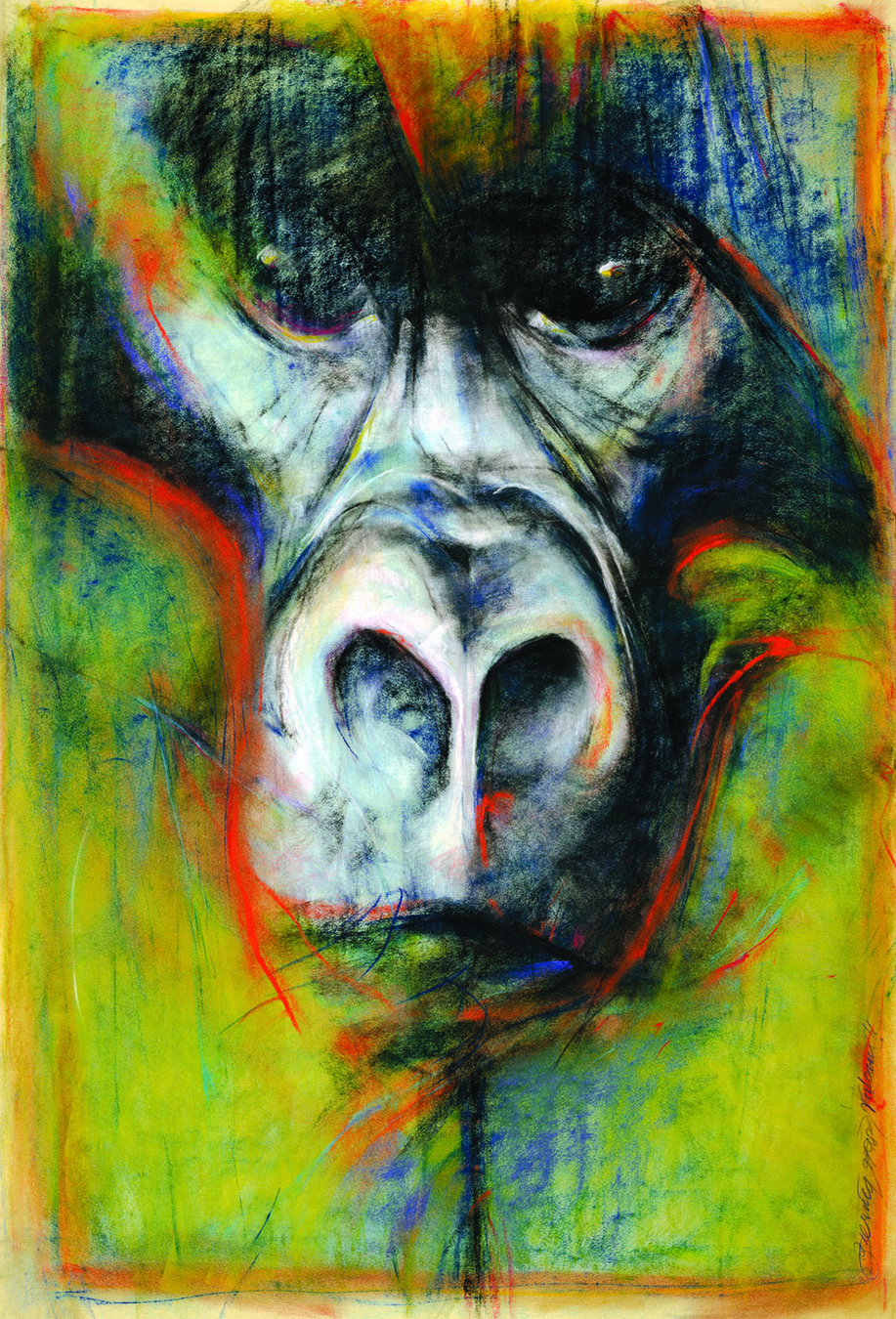
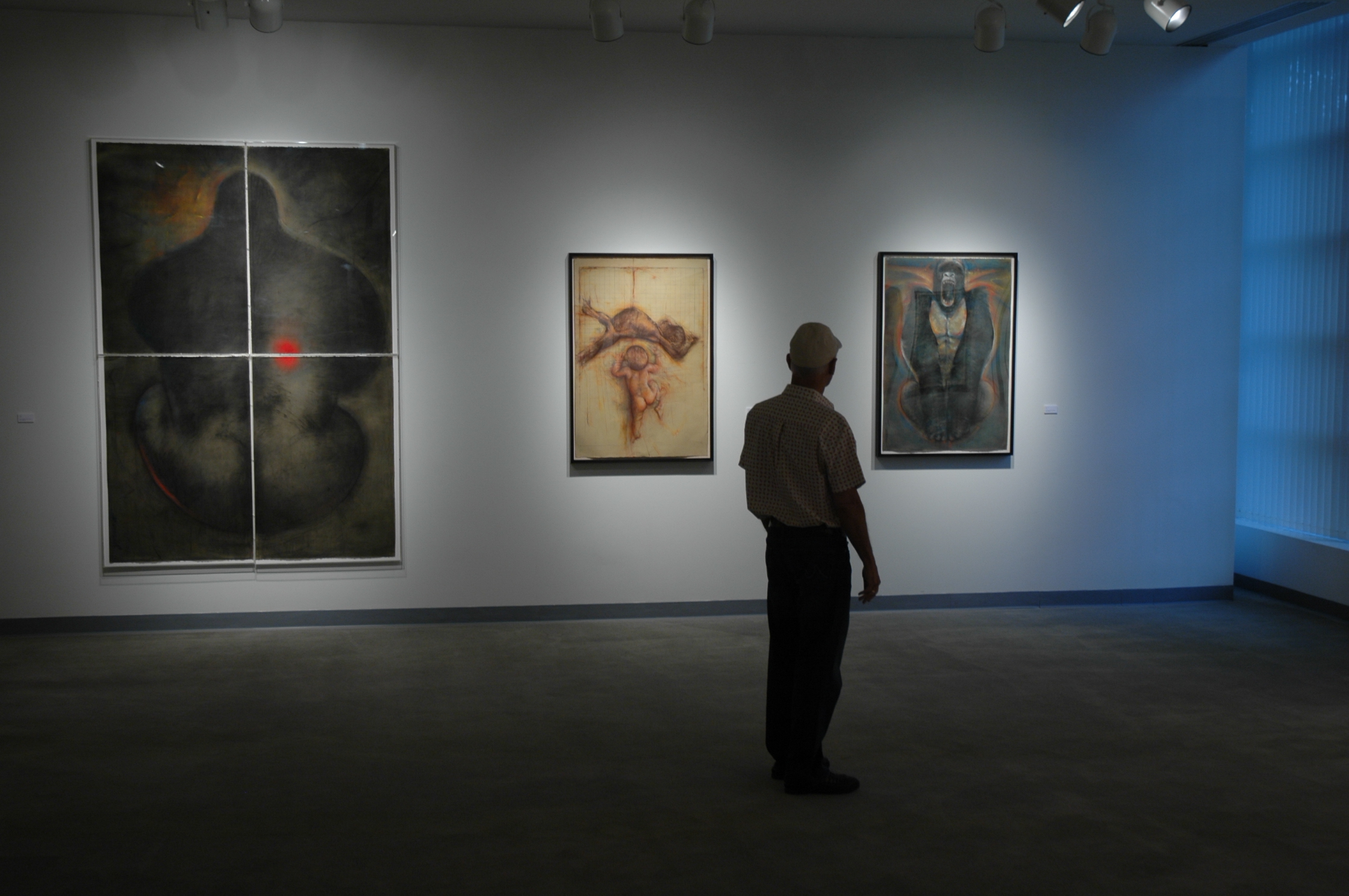
 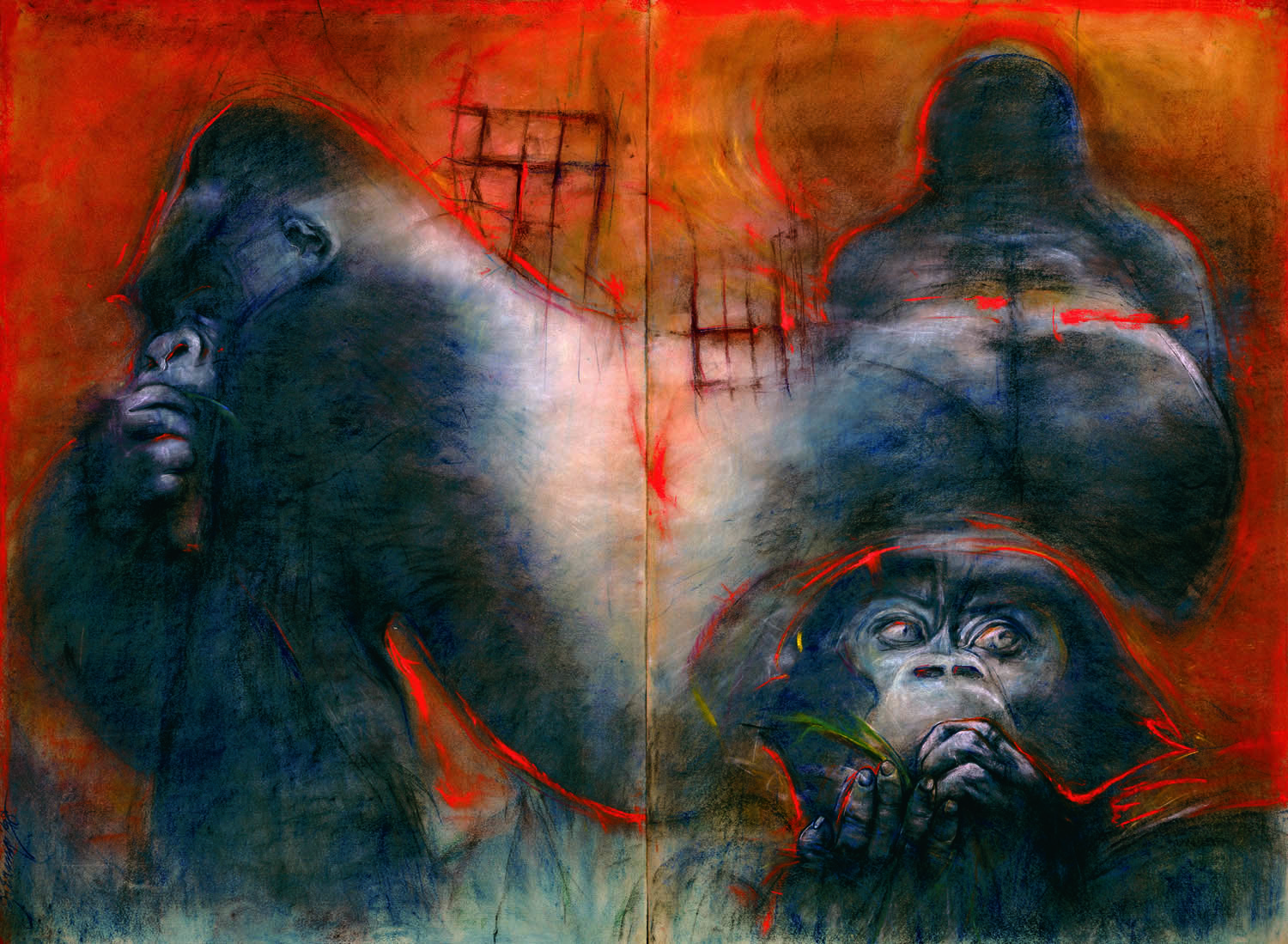 Ziering is a serious artist, interested in very serious subjects. In the 1990’s, during a time of great personal loss, Bob was drawn to the plight of the Mountain Gorilla. He became obsessed with the idea that mankind would soon render these magnificent beasts extinct.
  In an interview with Nicholas Polities, of Print Magazine, Ziering explained, “The deep feeling of hurt I experienced seemed to fire my passion for expressing loss in terms of the species. . . . Without losing focus on the plight of the gorillas, I was also using it as a metaphor for universal themes of loss, cruelty, inhumanity, and death.” He spent fifteen years researching, examining, compiling samples from gorilla life, from the foods they ingested and the environments they inhabited to the layering of their skin and the color of their eyes. He worked to depict them as the complex organisms they are, to dispel the stereotype of the angry, beastly gorilla loner and to show what gentle, social animals they really are. But he did not flinch from also honestly illustrating moments of aggression and retaliation.
  The series is a remarkable body of work and had exhibitions at the Marywood University Art Gallery in Scranton, PA, at the Lincoln Park Zoo in Chicago, and at the Central Park Zoo in New York City. As the Marywood catalog described, the “skillfully rendered images of the majestic and imperiled Mountain Gorilla underscore their endangerment. . . . The artwork is descriptive, suggestive and bold. . .showing subjects that have a poignant familiarity.”
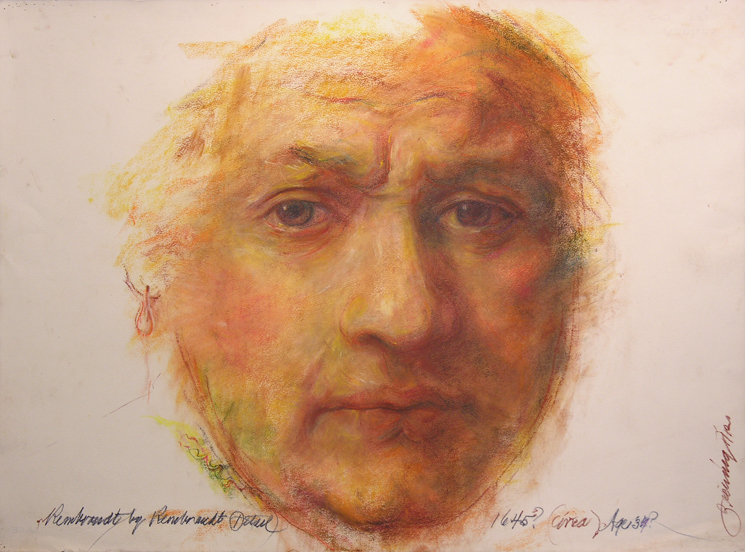
 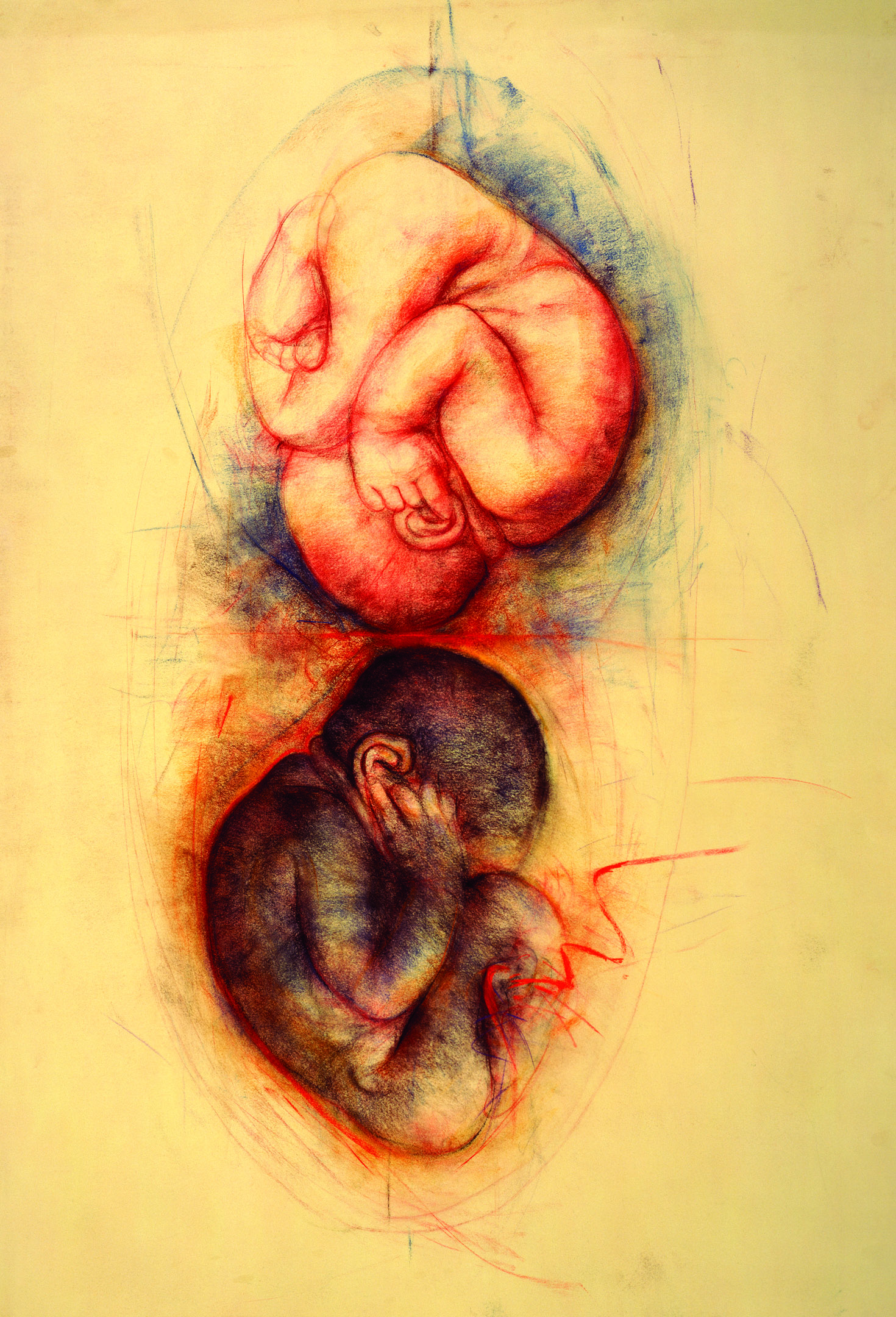 The waiter in the Piccolo brings us our soy caffe ‘l ‘attes, and Bob cannot resist the urge to slip back into his accented alter ego. “You gonna write about my sexy stuff?” I laugh. Discussion of some of his newer work still make him the slightest bit uncomfortable. As a child of the pre-boomer generation, Bob Ziering has came late to an acceptance of himself as a sexual being, and he had to learn to accept himself as a gay man, a journey he has given beautifully textured life in his artistically erotic chalk drawings of people on the verge of lovemaking, figures in intimate repose, etc., which have been frequently exhibited by the Leslie Lohman Gallery; three pages Ziering’s work are permanently on display on their website (http://www.leslielohman.org/). The work is deeply affecting, but it never verges on pornography. Rather, in the tradition of the great masters, Bob conveys a life seething with sensual stimulation that insinuates sexuality and tantalizes without exploitive titillation. Bob draws his face into a kind of exaggerated squint. “You look too serious. Vot’s so serious? “ I tell him that I am just concentrating on hearing the details, understanding how he himself perceives his work, and I am probably responding to the expression on his own face. “Ya,” he quips now in a mock Dutch accent. “The face tells all.” It was Rembrandt’s face that inspired another recent series. Fascinated by the variety of countenances, the unabashed aging in Rembrandt’s self-portraits, Ziering created a series called Rembrandt’s Face, his own interpretations of the artist’s interpretations of self. It’s a startlingly revealing series, one that illuminates both Bob and his subject in surprising ways. When I spoke earlier to Miki Marcu, an old friend of Ziering’s, about his work, and she chose the Rembrandt series as one she especially adored. “He decided on REMBRANDT?” She exclaimed. “What a jump. What a facility he has as an artist.”
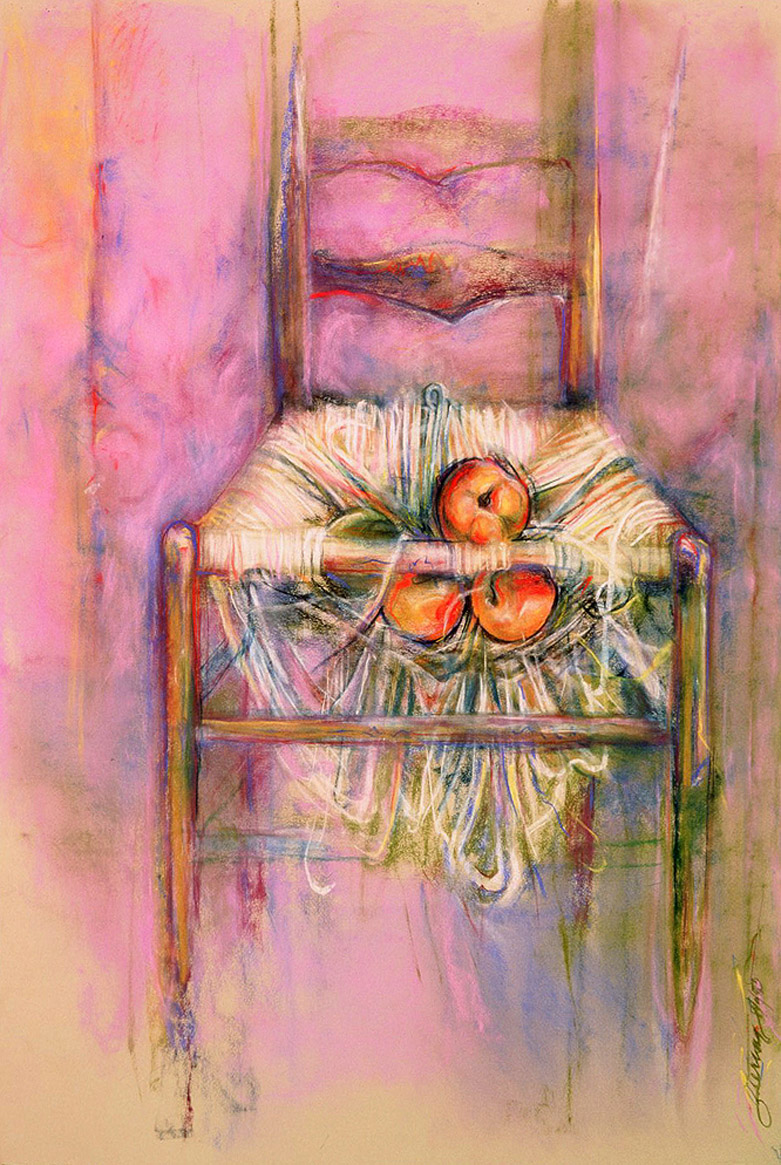
  Not content to express himself through the animate realm, Bob has looked to what other artists would call still life for two other major series: The Burnt Pier, which studies the thrumming vitality of an abandoned pier on the Hudson near Bob’s UWS home, and the Blue Chair, in which a discarded wicker-back chair veritably dances, reverberating with color and motion.
 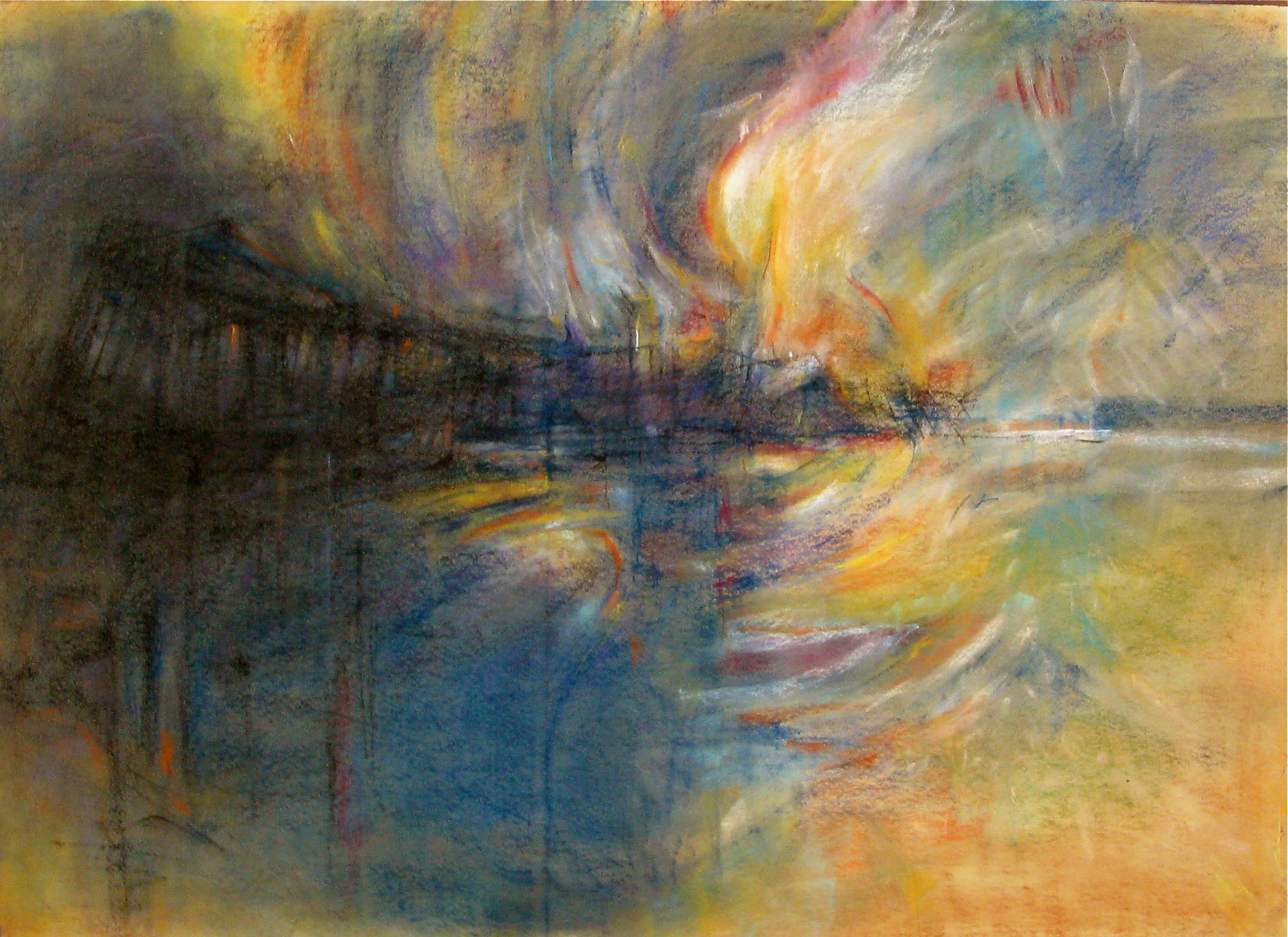 Bob lapses into seriousness when he talks about the medium in which he works. “I think the biggest thing I have done as an artist since I left the illustration racket is that I am working in color. I deliberately sought to transition into color, but I wasn’t comfortable working with a paintbrush. Then Alan gave me a set of pastels one year, and I have found that they have freed all my spirits, which gave me the momentum I needed to really immerse myself into the life of my art. “
  Alan is Alan Lawson, a fellow artist, who has been with Ziering in a steadfast, ever-evolving friendship for thirty-three years. “Early on, he showed me a copy of Vermeer’s Lady with the Red Hat he had done in pastels, and it was one of the most beautiful things I had ever seen . . . . He had done it when he was still a kid of maybe 17 . . . . He had not touched pastels since then. I thought to myself that this was the medium that could bridge his transition from being a draw-er to becoming a painter. So for Christmas one year I gave him a box of pastels, and what he can do with those pastels is just beyond description. He finds layers of color, dynamism of scenes that I’ve rarely seen done in any medium.” Sitting in the restaurant, Bob sighs. “I expected to do so much with that work.” “You’re still working,” I protest. “But nothing has changed. The gorilla — along with so many animals! — grows closer to extinction every day, and . . . .” His voice trails off, and he sighs, “There is so much more to do. I may do things a little more slowly than I used to, but I can still do so much!”
  Everyone who knows Bob says it is, above all, passion that defines the man, and it is passion that drives the artist, keeps him young. Lawson, a painter and scenic charge for both film and theater, came to NY to attend school in 1979 and took a job at the Metropolitan Museum of Art, where he met Ziering in 1981. He says that it’s always been hard to keep up with the older man. “When I met him, I was just in my second year at Pratt, and here he was this seasoned native New Yorker, so knowledgeable, so passionate. He was passionate about everything. Talk to him about his tribal art collection, his record collection, his own work, and so many things . . . things that I had never heard of. He introduced me to so much. . . . .And I have to say, his passion today is the same as it was thirty-three years ago. His passions run very deep, they’re very strong, and he has an amazing vitality. Boundless.” Ziering credits his happy Brooklyn childhood for his zest for life. Lapsing into Yiddish tones again, he tells me he was an aesthetically astute child, who loved the Friday night family food extravaganzas at his father’s parents’ home, in the company of all his exuberantly musical and artistic relatives, the first generation born in New York City, USA. He had a great voice, and he loved to sing, but even then he knew he would be a visual artist. “My mother told me she believed I was already drawing in the womb, that she felt movement that was more akin to the scratching of a pen than the kicking most babies inflict on their mothers.” She felt compelled from the very start to introduce him to the cornucopia of visual art available to anyone growing up in Brooklyn, and he cherished the time he spent with her visiting museums and galleries, his favorite destinations. “You’d think I’d wanna go to Ebbets Field or play stick ball,” Ziering laughs. “I was a lousy baseball player . . . but wonderful gallery goer, at a very early age!” His parents and his friends alike admired his talent, and he was fueled by their respect. Yet his love for the work was always his strongest motivating force. “I couldn’t wait,” he says; “to get to my studio in the finished basement, back to my drawing and painting.” “I enjoyed being with the other kids, but I loved being with adults, and I loved to show off. The other kids didn’t seem to mind. They knew I would play for a finite amount of time, and then I would retreat to my work.” Joyce Hellman, a classmate of Bob’s in the High School of Music and Art, Class of 1950, remembers Bob as a warm, loving, gifted but extraordinarily disciplined teenager. “I was music major, so we didn’t become close, “ she says, “Till years and years after graduation, after our 35th reunion, but everyone knew who Bob was. We knew he could sing – oh, how he could sing – and we knew he could dance, but we also knew he loved to work. Couldn’t seem to get enough of it.” Lawson concurs. “Bob’s one true love is his art. He has the good fortune of having his studio right next to his bedroom, so he can get up in the morning and be right at the heart of where he needs to be to do his work. But you know, that takes a lot of discipline. I’ve had it both ways, had a studio in my home and a studio away, and each presents a different scenario. I mean, to get up every day and to face first thing what you did the day before can be challenging. You’re with it 24/7. Then too, it can be too easy. Sometimes people need the effort of getting to somewhere to make them work. That’s not Bob. He’s an incredibly disciplined person.“ I ask Bob if he thinks he has this drive, the kind that sets the artist apart from the dabbler. “Yes,” he asserts. “First thing, every day, I go for a little walk, get my coffee and a croissant, and then, after I go to the JCC to swim or lift weights, I return and work till the light dims in my studio. Then it’s music and friends and books and all the wonderful things there are to experience. But first there’s the art. ”
  Miki Marcu, who met him when she was the director of the Merton D. Simpson Gallery of African Art in Chelsea, where Bob was a client, says that it’s exactly his relationship to his work what makes Bob Ziering different even from the other artists she has known. “He’s a funny man. . . a very loving friend, has seen me through some truly tough times, and he loves all kinds of music and art. But I always know that he is committed entirely to his art.” “Working every day is how Bob stays balanced on the beam,” says Lawson. “Life can be a narrow path, and you can find yourself losing your footing. Having that discipline, that drive to stand in front of that board is what keeps him balanced.. . . . “ Lawson tells me that Bob’s favorite work shirt is one he bought at the Dia Art Foundation, in Beacon, NY, designed by Louise Bourgeois (1911-2010), a sculptor whose work Bob greatly admires. The t-shirt proclaims, “Art is a guarantee of sanity.” “I think he wears that,” Lawson goes on, “because it speaks so profoundly to the truth of his own life.”
 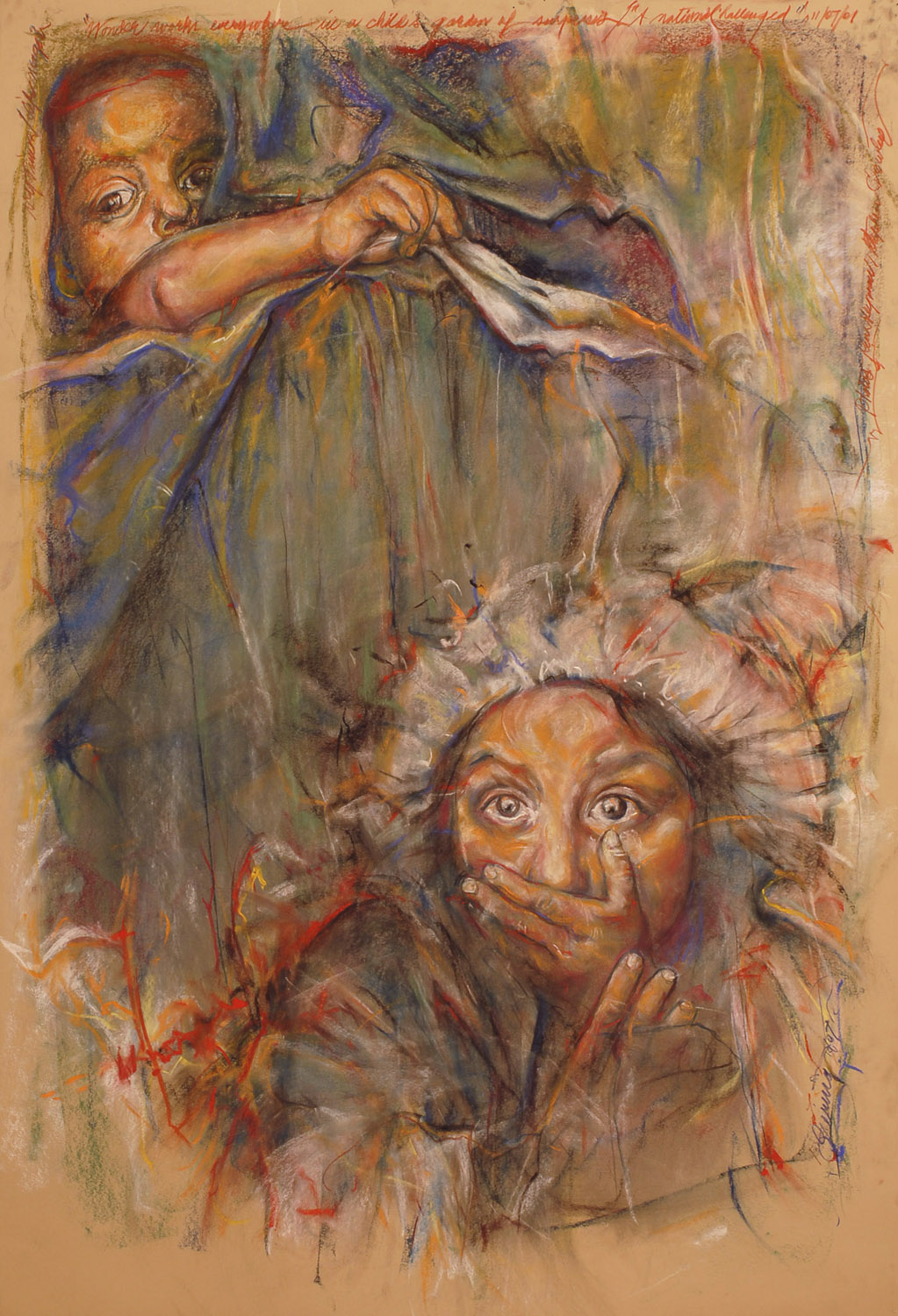 Bob’s studio was probably the master bedroom of his spacious, rent-controlled apartment, and he is an eager host who never tires of showing off his works in progress that hang on his work board or his past oeuvres, stashed neatly in his art drawers. On shelves, in albums and books, he keeps more of his work, carefully cataloged, meticulously arranged so he can easily find anything he wants to share. The newest series is startling. Youthful exuberance, naiveté, shyness captured in portraits of several models, most notably “K” the personal trainer at his gym, a kind of surrogate for the young man Ziering was himself at 23.
 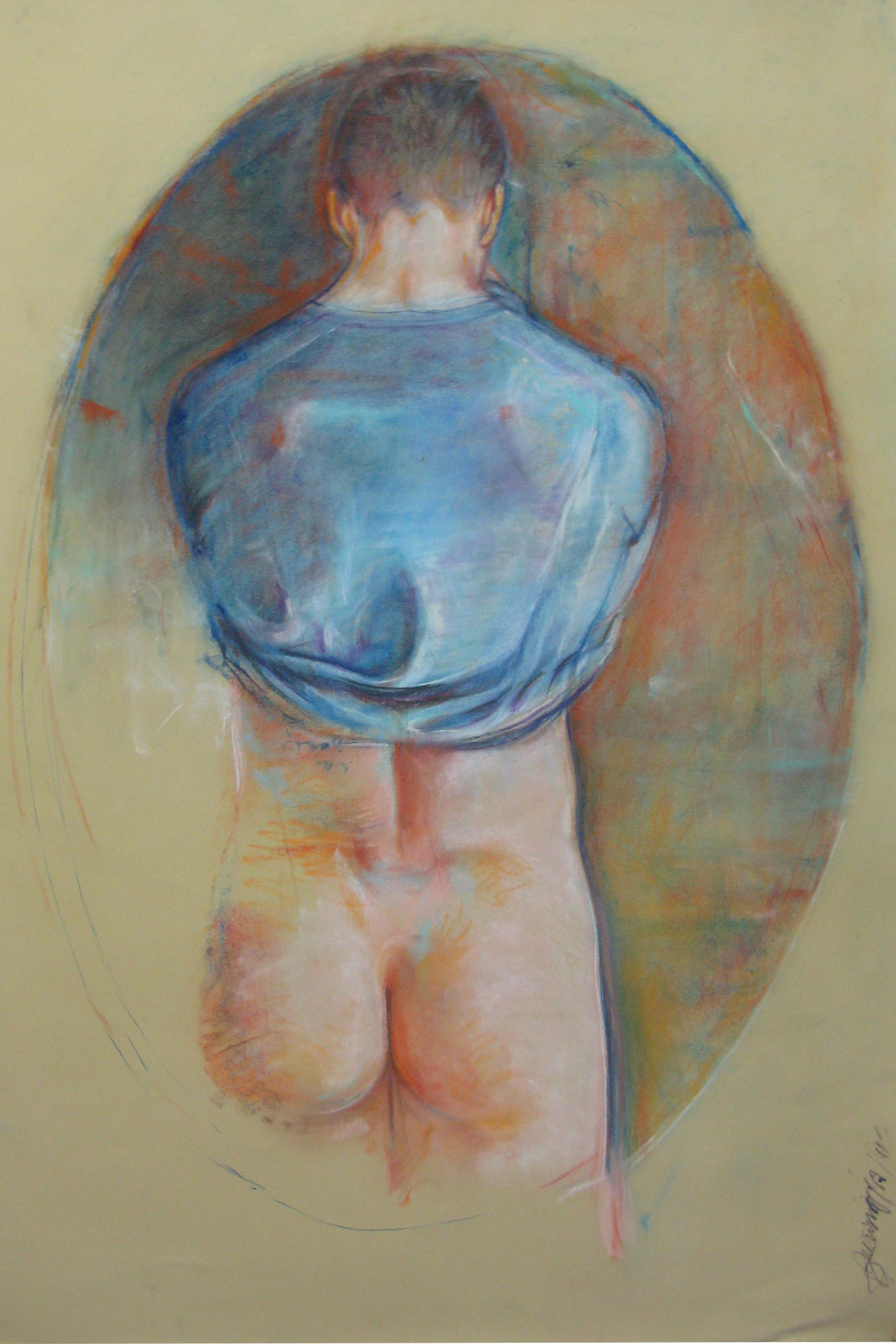 The series is called Aloneness, and through the work, Bob explores the dimensions of being alone. “Understand, I am not talking about loneliness.” Bob says as he shows me a particularly engaging picture – the young man, alone, covering his face with his hands, posing but not comfortable posing, knowing he is semi-nude and being watched. “It’s very different. Sometimes it’s thrust upon us, but more often we choose it.” This is his most personal series to date.
 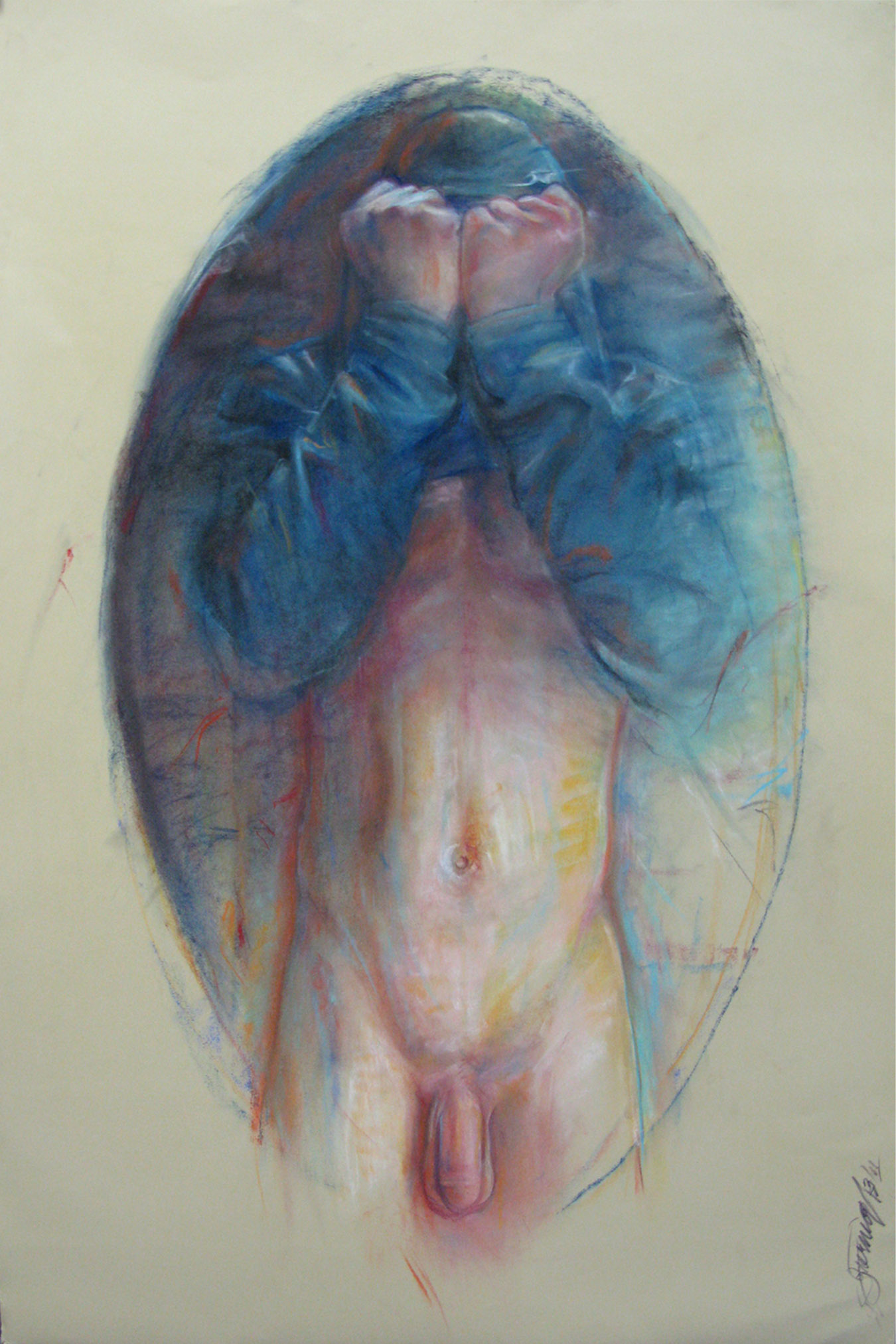 By his own accounting, Bob’s best companion is his art, but he says he craves human relationships. So his relationship to aloneness is dynamic, morphing as he discovers new dimensions in himself and in his environment. He spends most of his time away from human contact, rubbing chalk on a paper hung on his board, drawing a story he is compelled to tell. He works from photographs he takes of his subjects and his models, and he breathes his own life into them, interpreting their skin, their expressions, their breath. “Listen,” says Lawson, “Bob and I have been together for a very long time, and we have been through every kind of relationship experience two people can have. I know him well, and I wouldn’t say he’s exactly a loner. He can have periods of isolation, but I can’t say I have ever known him to be lonely, and he seeks others out. He lives alone, is self-sufficient . . . It’s very true that he stands alone in his studio when he is working, but his dialogue with his subjects is so strong that one can imagine him having a conversation with the image, whether it’s of beautiful bodies in bed or a gorilla or a chair or an aging Rembrandt or even a burnt pier being washed over by the incessant sea. And that’s what makes the work so resonant. You feel the dialogue between the artist and the subject.”
  In Ziering’s life, Lawson reminds me, he has had three very deep, very long-term relationships. His communion with Alan, which began and remained for many years a romantic partnership, has transcended the many ways both their lives have changed. In the new series, relationships are at the core of the vivacity that defines them. There is distinct dialogue in every piece Ziering creates, and it is clear and ambient. The work is exuberant, joyful, celebrating the human just being. The joy the artist clearly derives from the engagement points to a very important difference between aloneness and loneliness. As Alan Lawson explains, “People who have been alone for a long time and feel lonely reach a certain level of bitterness. That’s not Bob. All you have to do is be with Bob, walk out the door with him, see him looking with interest at EVERYthing, and you realize he is not that kind of a person. His receptors are always up, and he allows the world in. With open arms.” I can see that here in Piccolo Café, where the waiters treat him like a beloved brother, and where he nestles comfortably into his familiar seat at a booth in the back of the restaurant. “I want to be known, to be loved, but mostly I want to keep on working!” Which he will undoubtedly do for years to come, descended as he is from a long line of nonagenarians. Like my Uncle Fred, his fans adore him, and they hope his best work is yet to be “discovered.” “He’s brilliant,” effuses Miki Marcu. “A truly modern Renaissance man.” visit www.bobziering.com








 carlastockton.me