Cry the Beloved City

I didn’t sleep last night. For the fifth night in a row.

Since the end of June, my nights have been disrupted by neighbors whose disregard for others’ right to [quiet and to safety rule the streets. They are breaking the law, but no law blankets my neighborhood because the gated community that has become NYC sends its resources to patrol the blocks south of 96th, where the bulk of the tourists, who enable the ridiculous cost of membership, are cavorting. Up here even when you call the police, the eruptions go unchecked, and our nights go unquieted.

Those of us who are unfortunate enough to be captive in the city for the summer suffer this abuse through the month of July, but, for some reason, this Independence Day was more invasive, more intrusive, more unconscionable than ever before in the ten years I’ve lived here. The amateur blasting, the popping, the drunken shouting began before sundown and extended well into morning, waning only after the daylight had returned.

I admit that I’ve never much liked the July 4th rituals My idea of celebrating America is quieter; in an effort to refrain from becoming a statistic, I have typically stayed at home, where I have watched home movies of my family’s extensive cross-country explorations or documentaries about the bounties of natural beauty that define this amazing country.   Bombs bursting in air only fill me with dread, remind me that the country is populated by too many who worship weaponry, who perceive military might as right, who continue to craft an economy held hostage by the culture of war and its machinery.

But okay. I concede that fireworks can be lovely. And Macy’s foots the bill for the greatest show on earth. It’s free, and it’s close by, and I encourage all those who love the displays of color and light to seek them out. I heartily applaud my city for throwing such an elaborate, generous birthday bash.images

But the local ILLEGAL practices are a different story. It’s one thing if a group wants to throw a block party that provides a close-knit portion of the neighborhood to celebrate together. I can put up with noise for a few hours, and I am happy that people have a place to comingle. But to continue to make such noise that car alarms cannot be quieted, that keeps pets quaking and agitated, that robs us all of our right to our own preferred pursuit of happiness is no more than group solipsism, criminal entitlement. And it’s terrifying.

The awful disquiet went on throughout the night; the only sound missing was the sound of police cars or fire engines. The noises swelled, then subsided slightly, but they were never checked.

Sometime around 2 this morning, the sounds outside my window changed. Some of the changes were subtle, but they were apparent. The shouting was angrier, heightened a growing barrage of insults, name-calling, threats. The blasts sounded less like homemade duds and more like television violence. How can those of us who are subjected to the abuse discern the difference?

There will be no reports on the news – the news ignores us in Harlem until there is a great drug bust, and they can point to the confiscation of massive stashes to reassure the public that Harlem is under control. The news this morning reported fourteen shootings around the city, but not one was reported here in Harlem, where they happen all too often, where no one is really watching. I called 311 last night, and they told me I had to report my complaint to 911. The fireworks continued without interruption, the noise persisted unabated all through the night. The dispatcher was clearly amused by my report, but I was sure nothing would be done.

Why should there be? Who cares if some old and sick and very young Harlemites are kept awake by loud noises? Who really cares if some homes north of the tony Upper West Side are in danger of being burned, exploded, invaded in some way?

I have never felt so exposed as I did last night. I was as inconsolable as my daughter’s 6-pound Chihuahua, who seems, during this siege, perpetually on the verge of a stroke or worse. It feels like the demons out there, the ones the media won’t let us ignore or forget, are laughing themselves silly at how easy it must be to blend in up here, how simple it would be to hide their noise within the din that the city refuses to hear.


I Got a Kick . . . At the Opera!

As a rule, I am not a big fan of musical theater. I want my mind engaged when I go to the theater, and the familiar tropes and clichés of most musicals work better than personal ohms to make me drift into mindlessness. There are exceptions to my taste aversion, the stellar standouts, which include anything by Stephen Sondheim, Rent, Roar of the Greasepaint, HAMILTON and a few others. But even as a director of educational theater, who helmed at least two musicals a year, I was hard to please.

Which is why I most often chose very difficult musicals for my students to perform – the very operatic Most Happy Fella and Sondheim’s dark and cynical Sweeney Todd, for example. I am a very tough customer. And I am not likely to trust local regional theater, wherever I might be.

Which is curious, considering that I lived for many years in the New Haven, CT, area, and I had access to some of America’s best regional theaters. I trusted Long Wharf Theatre, Hartford Stage, and Yale Repertory, whose productions I attended religiously. But except for one musical at Long Wharf that I rather liked (about an English teacher), I tended to head to New York when I wanted to check out a play for my kids or to see what was new in the musicals canon.

And that is how I failed to discover the Goodspeed Opera House.

Well, that is not exactly accurate. I knew about the Goodspeed.  I  had even been to the building and had walked the premises. But  I had never gone inside, had never seen a production.

Until last week.

My good friend and colleague Denise Lute was featured as the batty Mrs. Harcourt in Anything Goes, and I decided it was time to take the leap, convincing my best buddy to drive with me from New York to Haddam. Well, blow Gabriel, blow and ain’t it de-lovely! If Anything Goes is an example of what’s been going on out there at the Goodspeed, then I have been a fool. Thank goodness I have lived long enough to get past my prejudices and enjoy this epiphany.

Anything Goes was absolute perfection, from start to finish, a joy to behold and a revelation of phenomenal talent.

Which, as Denise pointed out over dinner, should not be a surprise. After all, everyone in the cast has a host of impressive credits. “My Kingsley (Kingsley Leggs, who plays Eli J. Whitney, Mrs. Harcourt’s boyfriend)”, she averred, “was in Color Purple, Sister Act, etc., David (Harris, who plays the romantic lead) is a hot (and I mean HOT) star in Australia, and Rashidra (Scott), well, she’s here because Beautiful let her take a leave of absence. She’s got a feature role in that one!”  High praise coming from Denise Lute, who works more than most actors I know, a veteran of the Actors’ Studio. Still, I would not have been so easily convinced. Anyone can make a resume sound far more impressive than it is.

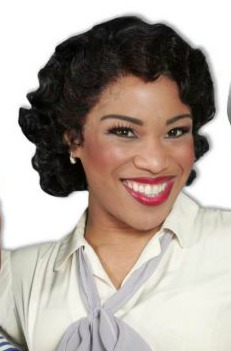
Rashidra

Rashidra Scott as Reno Sweeney in Goodspeed Opera’s Anything Goes (photo courtesy of CT Post).

But the cast gels in ensemble synchronicity from the stimulating opener to the rousing finish. Rashidra Scott is in almost every scene and leads the ensemble in dancing that runs the gambit from tap to jazz to ballet to salsa with her fleet feet dancing in perfect alignment with her megavoice. She really stands out.

Because she practically carries the show. But honestly, there’s not a bad apple in this crate. Every single person in the cast sings, dances, acts. Even Trixie, the dog Denise’s character carries compulsively through most of the play, is remarkable, so mellow she could have convincingly played a stuffed animal.

Denise and Trixie

Cheeky (Trixie the Pomeranian) in the arms of Mrs. Harcourt (Denise Lute). Photo by Tim Cook/The Day

I would have preferred less mugging and ad-libbing by Stephen DeRosa, who plays Moonface Martin, Public Enemy #2, but that’s because I’m a writer (script sacrosanctity!) and a former acting teacher (be generous, babies; don’t steal the light); the crowd there loved him, and so he mugged harder and ad-libbed all the more vigorously.

To tell the truth, if I were to say to one person in the show “You’re the top,” it would be to choreographer Kelli Barclay. I haven’t seen dancing like this anywhere. The dance in this show was more than just a fun interlude. In many cases, the dance captured pieces of story that were not clearly elucidated or they underscored a subtext the audience could easily have missed. The book is simplicity itself, with no intricate story lines, no metaphorical messages to darken or clutter the story, but the characters might come off as stick figures or cartoons were it not for the choreography. Barclay’s choreography endows Reno Sweeny and Billy Crocker, and even Moonface Martin with a humanity that is not in the script, is not clear in the music.

One of the difficulties of a show like Anything Goes is that the vacuity of story and absence of characterization can leave the audience a bit numb. Even while they are having fun, they might be inclined to turn off a bit, to withhold investment in the people the actors are playing. Barclay’s dances ensure that the audience cares about all of them, even about the ensemble characters we hardly know at all.

Director Daniel Goldstein can take credit for opening a world and for making sure that all the elements of the production are of that world. The design of the set by Wilson Chin is simple but elegant, very old-school theatrical, with small revolves, wagons and flies providing a variety of sub-sets. The costumes by Ilona Somogyi are adorable, respectful of the bodies they adorn and time-period-appropriate, in colors that enhance the set design. Lights, by Brian Tovar are unnoticeable and flawless, but sound was slightly lacking, as there were whole chunks of dialogue that were inaudible or indiscernible where I was sitting in the front left orchestra.

Best of all, what Goldstein has achieved, what directors hope for and too often miss, is a cast and crew that loves being together, loves making this show, loves Cole Porter, loves everything about being in Haddam on the stage of the Goodspeed Opera House. That’s remarkable. It’s hard to pull off a show that’s based on the music of a beloved song writer and refrain from making it more than it is or less than it can be. An American in Paris on Broadway very graphically proved that to me. No one had any fun in that show, at least on the day I saw it. And the writers and director, in adding tried dark drama to the simple storyline, muddied the waters and detracted from the beauty of the music. The actors were great ballet dancers but could not act, and the dancing told no story. The play was merely an exhibition, a total disappointment. And the antithesis of Anything Goes.

Which taught me a valuable lesson. I must lose all NYC snobbery. Theater in the boondocks –like it or not, folks, the Goodspeed Opera House is in the idyllic boondocks, on the banks of the CT River – can be well worth the requisite battle to reach it through horrific Connecticut (worst in summertime) traffic.

goodspeed

It’s too late to see this production of Anything Goes, which closed  June 16. But there will be other productions – check them out here. And be sure to watch for work by people like Rashidra Scott, Denise Lute, Daniel Goldstein, and Kelli Barclay.

Himself and Nora, an off-Broadway show about James and Nora Joyce, about which I was skeptical about until I realized it features Barclay’s choreography, sounds like a great prospect. There’s lots of subtext in that marriage to elucidate through dance. My guess is that it can’t miss.


An open letter to the last in a long line of youngsters who have written me rejection letters. . . .


Dear Young Person Who Just Wrote Me (yet) a(nother) Rejection Letter,

Thank you for taking the time to write me and tell me that the competition for this teaching job, a job, which, like the previous twenty for which I have applied, I could do with my eyes closed and my feet chained together, was so fierce that I just didn’t make the cut. I appreciate that you are sensitive enough to want to let me know that I am unqualified to join your ranks, and I know you mean well.  After all, you did refrain from telling me I am cute.  I should be grateful for small favors.

62129495

Still, I would prefer if you would refrain from the obligatory condescension of telling me I am amazing. I know I am amazing, and I also know that, while you may be attempting to compliment me by saying so, you don’t believe that I am anything more than ridiculous.  You want the young, the brilliant, the beautiful kids with whom I cannot – because people like you won’t let me – compete with to work in your school.

Which is sad. I am a good teacher. Ask any of the people who were in my classroom or my theater groups over the years I put in.  Okay, there was the time in 1980, before I got my first Master’s Degree, when I let the students in the class for which I was substituting in Glendale, AZ, eat donuts while taking a T/F test, but I am over that now.  I promise never to do it again.

Did you notice the part on my CV where it tells you I taught creative writing and acting, coached high school seniors through college essays, guided hundreds of youngsters through reams of literature and directed them in plays?  I was elected Teacher of the Year a couple times, my kids got into great schools, my theater group won awards.  More recently, I have been published in a few periodicals, have an agent pedalling my first book, completed an MFA at Columbia University.  How is it that I am not up to your standards?

Ask me a question.  Any question.  I probably have an answer . . . or I can make one up.  I’m pretty smart, and thanks to my successful teaching career, I have a store of accrued wisdom and patience, a reputation for flexibility and a range of pedagogical techniques, and I have a deep capacity for mentoring.  Additionally, I have a peerless resume of expertise and experiences one can only garner over a long and productive life, through which I have learned to be an adept team player, who is wont to foster camaraderie and collaboration.  My presence would benefit your students in untold ways. Do I not fit your picture of what the ideal artist/teacher should be – a young person, with whom your budding high school geniuses can bond, in whom they can see themselves?   Pardon me for tooting my own horn, but  you clearly don’t realize how much you are depriving them of.

And me too.  How much you are depriving me of. I didn’t apply for this job as a lark. I am not looking to play at being a teacher. I support myself and another person, and I need the salary this job would have provided. Ironically, too, because I collect some Social Security and have a minor pension, the meager salary you offer is just about all I need to keep my rent paid. Unlike my younger counterparts, I wouldn’t have to juggle multiple jobs. My attention would be entirely focused on the youngsters in my care. But I’m guessing that looks are far more important than student-centered instruction.

If my credentials are, in your words, impressive, how is it I just don’t measure up?  Don’t you think it’s a bit backward that we older folks are consigned to the kind of  backbreaking service jobs  we really are too old for?  Isn’t it sad that if I want to draw a salary, I must stand for hours in a retail environment, stock heavy boxes on shelves, run errands for young executives or some such waste of all that I have become in the course of my storied careers as a writer, teacher, mother, mentor, wrangler of teenage actors, director of educational theater, and filmmaker? classroom creativity

Stop lying to me. Stop offering idiotic soporifics like, “You are truly uniquely qualified,” and tell me the truth. Tell me you think I’m too old to be trusted to lead your young charges. Tell me you are disgusted that I have reached this juncture in my life without the accolades you will have amassed by the time you are 40. You want me to be retired, to gratefully stay in my pasture counting the gold pieces my hard work has already accrued.  You don’t want to think you could end up like me, an old neophyte trying to reimagine herself as she was meant to be.  Admit it.  My choice to teach high school and to put motherhood ahead of professional development makes me look like a loser to you, and that somehow makes me toxic and dangerous. I can see that. It’s a veritable powder keg I’m offering you.

Believe me, I know you think you are being kind. Your kindness is killing me.

Thank you for your consideration.

Sincerely,
Carla Stockton

My Sister From Another Mother

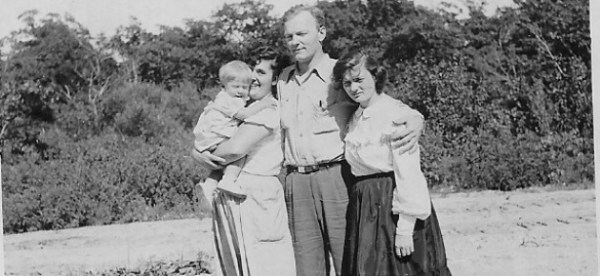
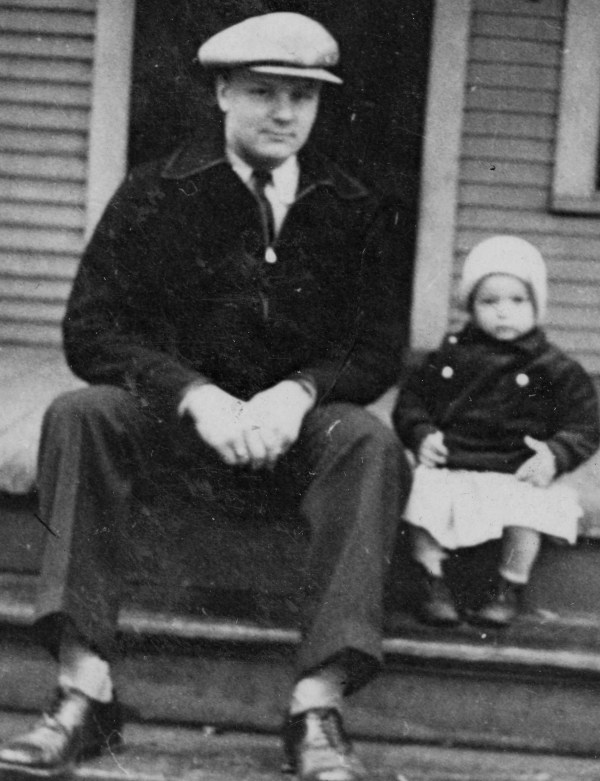
My older sister Dorothy was never really a part of the family. Sixteen years older than I, her mother had been dead for thirteen years before I was born, and my mother could not really mother her; she and Dorothy were only eight years apart in age. Dorothy’s brother, born when she was almost three, who would have shared her history, died before he was a week old, following their mother to her grave. In one fell swoop, Dorothy was rendered a half-orphan, consigned to various relatives who loved her and died, to my father’s second wife, who abused her, and finally to my mother, who was more like a much older sister, albeit a sister from another country, another life. Dorothy was, like so many children in our society, a member of a first family that failed, and she was robbed of a birthright I took for granted.   Dad and Dorothy, age 2.5                                                                                               Dorothy and the Father She Adored
My parents cared. They tried at first to make a home for her. But Dorothy was a tween, nearly a teen, restless and unhappy. It felt unnatural to share the father she adored with the strangely accented, exuberant young woman my father chose to be his third and final wife. My mother, still adjusting to life in the country she had only entered five years before, had no experience with parenting. My mother was Jewish, a refugee from the horrors not yet fully disclosed in Europe, and Dorothy had no way of understanding where Mom came from; our father and his family were American bluebloods, deeply entrenched WASPS. Together Mom and Dad and Dorothy decided that boarding school was a good solution, and thereafter, Dorothy only visited for whichever holidays and summers she did not spend with our father’s only remaining sister in New Mexico. My parents never provided a presence she would be able to call home.
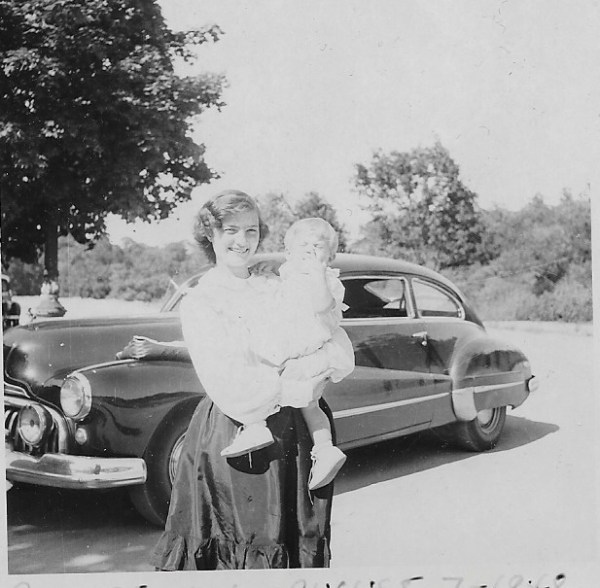
dorothy and carla 1948Dorothy and Her Baby Sister 1948

My birth brought her closer to them. Dorothy doted on this new being, this little sister, young enough to be her own daughter, and she was a great help to her earnest stepmother. But I belonged to my mother, not to Dorothy, and though she visited more often than she had before, she would always feel estranged; my mother would always be something of an interloper, albeit a welcome, loving one.

In New Mexico, my father’s sister introduced Dorothy to a handsome young engineer named Oliver, from Michigan. He had been stationed in Los Alamos during WWII, had participated in the Manhattan Project, and after using his GI Bill to obtain his degree from the University of Pennsylvania, he had signed his life away to the American government he revered and moved permanently to the city in the clouds. Our aunt was not amused that her still teenage niece was falling in love with a man nearly twelve years her senior, and she forbad their seeing one another.

Dorothy, who was perhaps the gentlest, least defiant person I ever knew, stood her ground. She loved this man, and if Aunt Elizabeth would not allow her to date him, she would find another way.

She called my father. At first he agreed with his sister. “You’re too young,” he said definitively.

“I’m 20, Daddy,” she replied. “Older than you were when you married my mother.”

That hit a nerve. My father had fallen in love with his (gasp) Irish Catholic beauty when he was 16. His parents would not allow him to see her – they were WASP,  a “good family,” after all, and their kind did not date people from the other side of the tracks – so he told them the girl was pregnant and demanded to be allowed to marry her. Then he got to work making sure he wasn’t lying, and the two were married.

“That didn’t turn out so well,” he demurred.

“I know, Daddy. But I love him. And I’m old enough to know.”

My mother intervened. “Let them come here,” Mom said. “If they want to be married, we’ll make them a wedding.”

So Dorothy came to Springfield, MA, where we lived at the time, and she had her wedding in Trinity Methodist Church. I was her flower girl, and even the chicken pox, which Dorothy discovered on me the night before the event, did not ruin the festivities. Our aunt did not attend, and though Dorothy told me many times how very hurt she was that the old woman rejected her, she was never sorry she chose her Oliver.

The night before the wedding, she pulled me into her bed, as she often did, from my cot in the room we shared. I remember crying. “I don’t want you to go, Dodo.” I pleaded, “Please don’t move away. Please don’t get married. Please.”

“I love you, little sister, I really, really love you. But I have to do this,” she replied.

“Why?” I moaned.

“Because I want my own family. I don’t want to be a visitor. I want children of my own to love. Children who will love me first.”

Over the years, we hardly saw Dorothy and Oliver. She wrote me letters. Long, detailed missives, the litanies of her burgeoning family. “Derrick had a cold, and I had to call the doctor,” she wrote in 1958, when Darrick, her firstborn was five. “He’s probably not going to school for the rest of the week, but I thing it’s okay for him to miss Kindergarten. Kenneth fell off the swing and hurt his shoulder, but I don’t think anything is broken. Margie won’t stop crying because her ear aches, and Laurel has a terrible diaper rash. Did I tell you I’m pregnant again?” But Los Alamos was a long way away from where we were, and she had her hands full.

Meanwhile, my parents also continued to procreate, to build my father’s second family. From 1953 till 1961, Dorothy and my mother each had six children within months of one another. I kept track of Dorothy’s children’s ages by remembering which of my siblings was born in the same year. Dorothy and Oliver and their kids traveled to Michigan to visit his large, Finnish family, but they only came east to see us twice. My parents traveled often to Queens to visit my mother’s sisters and parents, but we only went to Los Alamos once.

We were the second family, and Dorothy was not one of us; Dad didn’t do anything to encourage her to be. I grew up in my father’s house, and as stern and demanding as he could be, his was a constant presence. My mother was always there to welcome me home at the end of a day, always attendant to all our needs. Dorothy had to become her own mother, and she transferred all her longing for maternal love to her offspring, which made her a consummate Mom.
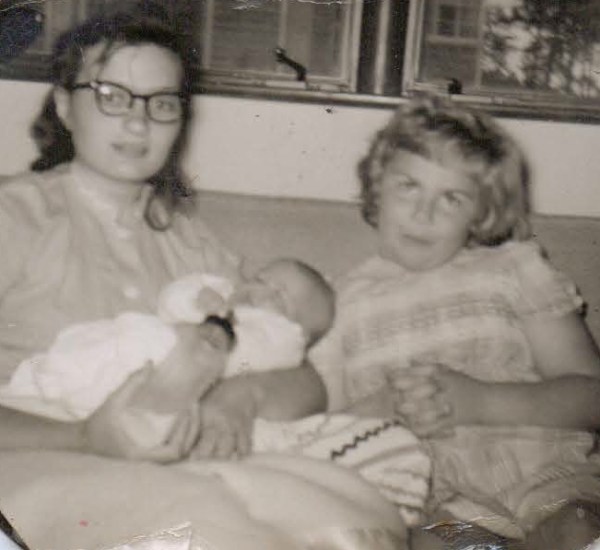
Dorothy 'n' me 'n' DerrickDorothy as a mother with her Entitled, Alpha Female Sister, Age 6

My existence provided a modicum of connective tissue between Dad’s first and second set of offspring, and I lived for those letters she wrote me at least once a week. I spent the summer with her when I was nine, and I went to college in Albuquerque for three semesters, a choice I made in order to be close to my big sister. But I was never really a satisfying little sister; I was too much imbued with the sense of entitlement that comes of being the oldest, the alpha female in a large brood. We made the best of our relationship, but it remained at a distance, and our visits, even when I lived in the Southwest, even after I had children of my own, were never more than intermittent.

My brother once said that my father was a terrible father to Dorothy, and perhaps he was. But he was no different from the myriad men I know, including my own former husband, who focus, perhaps by necessity, on the new family, the second family, the family that demands the most of their time and attention. Men are not, as a rule, very good at multi-tasking, and juggling families requires great skill in that area. Men compartmentalize far better than most women, and to the man who does that well, a first family must reside in a separate cabinet, less emotionally accessible than the one that takes up the space in his living quarters.

Dorothy’s life was not very long, and yet she had more than her share of sadness, which she endured without us. She had learned to fend for herself, to refrain from reaching out, so she never called and asked me to come when things were bad; I heard about all her trials after they were over. Consequently, I wasn’t there when she buried children, suffered through poor health and horrible medical treatments, ferreted through marital problems. She got through them.

Remarkably, Dorothy never lost her gratitude or her joy. Darrick stopped her once in the middle of reading about Cinderella and her evil step mother and asked if Dorothy’s stepmother were like Cinderella’s.

“No, silly,” she laughed.  “She was always kind and generous, just like she is now.  She is a wonderful woman.”

“But she sent you far away, didn’t she?”

“Only because she loved me,” Dorothy answered without thinking.  “She loves me still.”

Dorothy may have been robbed of a family, but she never resented the fates that separated her from the “normal” life her half-siblings always enjoyed. She was never bitter, never remorseful. Now, when I visit her children and grandchildren who idolize her memory, I realize that in many ways she regained everything she needed. She built her own family and dedicated her life to them, and she left them with a deep, unwavering faith in the power of love.

A Note from Over Ground

Most New Yorkers never look up. Want proof? Note how, in their groping efforts to create something resembling a news story, reporters overlook an entire class of people, whose lives are ruled by the weather.

The CitySights bus travels through Times Square.  Photo by Hal Wiener, from A View From the Bus, A Tour Guide Takes Manhattan,  by Carla Stockton, Felicia Brings and Hal Wiener.

Next time a double-decker tour bus wends its way into your line of vision, look up at the sightseeing guide, the uniformed person holding a microphone, commenting on what the seated tourists are seeing. Try to envision what it’s like to be doing what she is doing – standing or sitting in the wind, talking over the noise of the city, being tussled about by the movement of the bus. In the summer, there is no relief from the heat, the sun, the exhaust, nothing to protect the skin from burning, the lungs from choking; in the winter, there are no coats warm enough, no gloves thick enough, no boots repellent enough to prevent frostbite or worse.

carla tourguideOnce upon a time not so very long ago, I was a guide on a big blue bus, and my winter initiation happened during my first week, on a late afternoon in early March.

Somewhere between Madison Square and 14th Street, the temperatures had dipped dramatically, but because the day had begun quite temperately, no one – myself included – had dressed for cold. As the air turned frigid, passengers on the bus huddled together, nuzzling for warmth; the young blonde in the very back of the bus took an oversized poncho out of her bag and drew it over her head. Her dark-skinned companion burrowed under the poncho and brought her head up thru the top, so that the two heads bobbed with the motion of the bus, giving the women the look of a souvenir from some cheap carnival side show act.

The bus swayed in the blustering wind, my voice cracked with the cold, and I could see my passengers were far more interested in breathing warmth on one another, on rubbing their hands together for warmth, stomping their feet. I kept talking, of course, it was my job, but my voice was strained, and the stories I customarily told froze uncomfortably on my tongue. Now a light, wintry rain was beginning to fall.

We got to Battery Park, and I sighed my relief. A coach was parked in front of us, and my passengers now had the option to disembark from the open-top bus and cocoon themselves in the closed vehicle’s dry warmth.  Gratefully, all but the conjoined twins clomped down the stairs and hurried to the waiting vehicle. I approached the young women and encouraged them to join their co-travelers.

The looked at each other for a moment, then they looked up at me, standing over them.

“Please,” the blonde one stammered.   “Not to get off.”

“But it’s cold up here, the rain is coming and. . . “

The young woman flustered for a moment, clearly assembling a few words in this foreign language she had fought so hard to learn in time to make this trip.

“I begging pardon. Ehh. I wish be riding. Ehh. No. WE wish to look New York. Is storm city.”

The bus pulled away from the stop, and I wrapped myself in my jackets, drew a plastic raincoat over my head recommencing my talk about the tenaciousness of the immigrants who built this city.

It was my job.