Why I Stand With Planned Parenthood

While I refuse to qualify the bizarre allegations levied by misogynistic fear mongerers against Planned Parenthood, I feel a need to make a small statement of support for an institution that I believe in, an institution our society cannot afford to lose.

First of all, I would like to go on record by saying that there is no reason for apologia where abortion services are concerned.  Abortion is legal in this country, and women have the legal right to choose whether their bodies may be receptacles of new life.  I don’t know anyone who is pro-abortion; I am not.  But I am pro-choice, including the difficult choice to terminate a pregnancy.  Choice deserves and requires protection.

What the critics chronically forget to mention is that Planned Parenthood does so much more than counsel women regarding their unwanted pregnancies.  They saves the lives of mothers and children.    Planned Parenthood is a safe haven the community cannot do without.

I don’t know anyone who loves going to the doctor for gynecological examinations, but all women need to do so in order to protect themselves against illnesses that attack the female organs. And having access to affordable care and to prevention and cure of feminine illnesses also deserves and requires protection.

Planned Parenthood provides choices, care and prevention that no other institution offers, preserving women’s lives in a variety of ways, and we must stand up for the good that they do lest it be lost in a hale of ignorance and misconception.  All pun intended.

IMG_4835-abortion rights

  1. Judy’s Story – Perilous Days Before Roe v. Wade

I was 18 when I met Judy. We were both employed by a large firm in New York whose specialty was writing employment manuals for employers. I was a proofreader; Judy was a typist, and she was 19, mere months away from reaching twenty.

Judy was ever so much more mature than I was in ways I never imagined myself becoming, and she intrigued me. I still lived in my aunt and uncle’s house, where no matter what, I was sheltered, fed, protected from the world. Judy lived on her own in a one-bedroom apartment in Bay Ridge, where she had to cover the rent, heat, food and clothing for herself and her 4-year-old daughter. On my meager salary, I had a hard time keeping up with the minimal contribution I made to household expenses and found it challenging to buy enough clothing often enough to get to work looking respectable. Judy made less than I did, and in addition to all her other expenses, she had to pay for whatever day care her friends were unable to provide.

Hoping always to find a man who would step up where her deadbeat ex-husband had failed her, Judy dated fairly frequently, and I was her go-to evening babysitter. I loved the solitude of being in her house after her daughter went to sleep; I marveled at her house, so clean, so bright and cheerful. She had curtains on the windows, rugs on the floor, pictures on the wall; her daughter’s bed was a frilly pink wonderland. How did she do it?

I loved Judy’s child, who was smart, funny, talented and spirited. We watched Sesame Street together in its first year, and I took her to meet my friend Northern, who played one of her favorite “real people” characters on the show. I was part of the family, intimately tied to them by an interdependence that suited us all.

Judy could not possibly hope to sustain any more of a burden than she was already managing. She often said to me, “Carla, I gotta be real careful, ya know? I mean I got knocked up the first time because I wasn’t payin’ close enough attention. I cannot afford to have another kid.”

But no matter how careful you were in the 60s, pregnancy was never altogether preventable. After seeing a prospective stepfather for several months, she stayed overnight with him, and despite her protestations that she took EVERY precaution, she became pregnant. In those days, many of my friends and relatives were victims of missed pills, defective condoms, miscalculated dates; Judy’s mishap was no surprise.

“I’m a good mother,” she moaned to me the day she got her test results. “I am. But dammit, Carla, what ’m I supposed to do? I got dreams for my kid. I want her to have a good education, do more with her life than I did. I can’t afford another one.”

I had no words of wisdom. There were no alternatives. The would-be stepfather dropped out of sight as soon as he became a prospective dad. Should the fetus in Judy’s belly grow to childhood, it faced a life of poverty that would also drag its older sister into an abyss, an underfed, underserved existence. Judy was despondent.

Then, for a time, we only saw each other at work . I don’t know how many nights she stewed without confiding her thoughts. But one night after midnight, my phone rang, and it was Judy; she was crying and sounded wrung out. “Carla. I need you to get here right away. Please.”

I lived in Bayside, Queens, a long way from Bay Ridge, Brooklyn. I took a bus to Flushing, where I got a subway to a transfer point in Manhattan and then, following Judy’s instructions, emerged somewhere in Brooklyn, where I hailed a cab. She was waiting for me with Norma, a co-worker with whom we often socialized, a slightly older woman who had brought with her her own 8-year-old daughter. I had been summoned to babysit. They left the minute I got there without explanation, but I knew something was terribly wrong.

Judy had no color in her face and could barely move. Norma had to carry Judy down the stairs, and I watched out the window as she lifted my nearly lifeless friend into the cab. I took both little girls with me to Judy’s bed, and we slept through the night. It was after noon before Norma returned. The girls and I were having breakfast.

“She’s going to be okay,” was all Norma told me. When the children moved closer to the television and engrossed themselves in Days of Our Lives, she explained.

“We decided not to tell you last night. If we got arrested, we wanted you to be clean so you could take care of the girls.”

Judy had had her pregnancy terminated by a local “Gypsy” woman. She nearly bled to death, willing to die rather than bring another child into the world. She was prepared to sacrifice her life rather than throw her daughter’s future away.

I was grateful she got away with it. Still am, as I am certain both she and her daughter are as well. That daughter is a prominent physician today.

12109889_10153245686871313_2204017121307965984_o-e1444841226880

  1. Sally’s Tale  – In Need of A Safety Net

Sally works overseas, only gets to come back to the States once a year. In the country where she lives, she gets inexpensive insurance coverage that ensures that she has unlimited access to comprehensive health care. Whenever she visits home, she cites the high cost of health care as one reason she feels compelled to remain abroad.

Sally is nearing forty, and though her latest love affair, which lasted two years, ended in a break-up, she was delighted to learn that she was pregnant. Professionally secure and ensconced in a comfortable community in her adopted land, she was sure she could manage the challenge of single motherhood. After a visit to her local physician, who did an ultra sound, Sally left for her annual visit stateside confident that she was carrying a healthy fetus. She could not wait to share the news with her family.

By the time she left for her trip, Sally was feeling uneasy. There had been movement in her womb, but all movement had stopped. Since there were no other signs of trouble, however, she carried on with her plans and made her yearly pilgrimmage. But the discomfiture persisted, so she decided it would be a good idea to check in with an American doctor at an American hospital to make sure all was well.

A family friend, a physician himself, recommended a colleague who worked in a highly respected medical group, where fees would be less than exorbitant.

The news was devastating: the pregnancy had self-terminated. But before the gynocologist had confirmed that fact, he took blood tests and performed the sonogram, which cost Sally upwards of $1200. The doctor told Sally to come back for a D & C, but the costs were so astronomical that Sally was determined to let the miscarriage expel itself naturally over time, a choice, which, as anyone who has been there will tell you, was less than wise.

Over the next several days, Sally’s pain grew, and a deep despondency settled in. She had wanted to bear a child, and carrying this failed fetus exacerbated her physical pain. Finally, seeking advice online and a possible support group to join, she found Planned Parenthood.

images

Sally conferred with a lifelong friend, who had been without health insurance for many years. The friend confirmed that Planned Parenthood, the only place she could get low-cost or no-cost cancer screenings and overall checkups, was a good choice. Sally made an appointment, and a day later, a kind nurse gently ushered Sally into a comfortable place where a coterie of empathetic women tended to her, prepared her, comforted her as she endured the actual procedure.

The entire experience cost her  less than $300.

No other institution in this country offered Sally so much life-affirming concern or treated her with such respect. And no one offered the service at a cost that was nearly as affordable.

 

Pictures on Exhibition at a Reunion – Fictionalized Non Fiction in Three Parts: Part II

II. Dueling Hopes

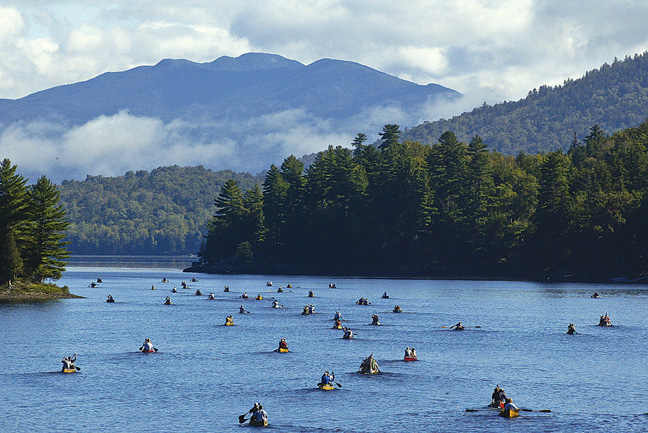
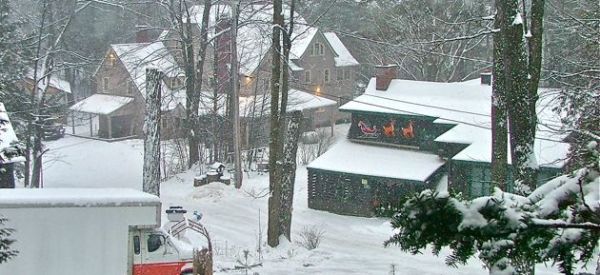
It’s the first week of leaf season, and the color seems to pop before my eyes, every hour a new clump of reds, golds, purples – yes, honestly, in the Adirondacks, purples happen – and browns. The weather is phenomenal, hitting the 80s by day, dipping into the 40s by night; this place should be teeming with tourists, but our town is out of the way for casual weekend travelers from the cities. The Canadians, who keep the place humming in the summer time are gone now; more people might show up over Columbus Day Weekend, but for now, the town is bustling with once familiar faces now older and strange. Two classes from the small local high school are celebrating their fiftieth and sixtieth year reunions, and there aren’t a lot of rooms in town. Besides the returning graduates, there are hearty canoeists in town for a big race on the Saranac River.

nb90miler-98511

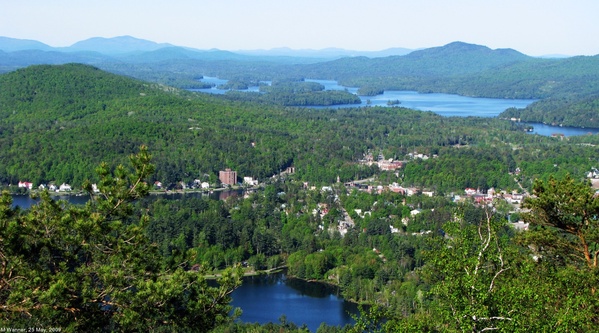
It’s a lucky break for the few local hoteliers and a bonus for some in Lake Placid as well. No rooms left at the few standing inns. A few of us got reservations in early and are staying at the little mom/pop place on the Lake in the middle of town. Well, not a lake, strictly speaking, but a dammed portion of the river, the gateway to 43 miles of open water, a system of rivers, lakes, locks and ponds protected by the State of New York, treasured by the locals. Except for July 4th weekend and possibly Labor Day weekend, there is never a crowd here.

Surprising as it seems to those of us who have explored the primeval forests, hiked the ancient switchbacks, swum in the sylvan pools, this is still an undeveloped sanctuary. Only climate change and abject poverty gnaw at the edges of perfection; acid rain used to dissolve the leaves off trees, poison the fish in the streams, melt the needles off the pines, but that’s under control now. The economy is less stable; there aren’t a lot of jobs here, and so it is that fracking proponents and amusements peddlers gain ever more momentum in their quest to invade the preserve.

A few of us have reserved early and have rooms in a long-standing mom/pop establishment. lakeflower It’s an old motel that should have been sold years ago. But since there are no plans to develop the town and entice investors, no buyers offer deliverance to the owners; they keep struggling along, falling behind on mortgage payments in the off-months and barely making it up in the tourist seasons.

Our motel has no staff. Marcy, the owner does her own cleaning, her own housekeeping, her own everything. Lacking an ice machine, she makes daily runs to a local store, where she buys bags of it that she doles out from her office. The beds are old style spring mattresses, worn and uncomfortable, stacked with pillows that are hard, unyielding. A musty odor lingers even when the windows are wide open; this building has weathered enough Adirondack winters and warded off enough Adirondack springtimes to have earned retirement. But still it goes on.

Marcy and her husband bought this place in the 1990’s, when they were young and full of plans to spruce the place up, make it profit. They would sculpt the beach area and bring in white sand, enlarge the pool and install a spa, build larger units, where visitors could stay for longer periods of time. But like any property subjected to the harshest of winters, this one needed constant repair; new construction, even cosmetic additions were given low priority. Survival was all they could sink their finances into. After her husband died, Marcy put the place on the market, but she said it would cost her money to sell it. So she held on.

And, like the town, like the preserve, like the sanctuary we all cherish, she continues to hold on, teetering on the edge of painful termination.

Adieu and Fare Thee Well

The reunion is over. All Ninety-two revelers – members of the Saranac Lake High School and St. Pius X Classes of 1965 and their companions – who gathered for a weekend of reminiscence and re-acquaintance, have said goodbye and have gone back to whatever they were doing before. But we are changed, strengthened by the experience.

20920060794_b9a5c09169_z

The Voices and the Laughter. Photo by Olivia Rauss

It was a funny scene to watch ourselves when we first arrived. There were no prompts, no pictures of our former selves dangling from our necks, so we had to look into one another’s eyes, watch for gestures, listen carefully for vocal patterns to identify who was who and where we fit together. But once we did, oh how tightly we cleaved!

20920110314_5f85465679_z

John Pedroni, Robert Waite and Irene Walker sidle back to 1965 in song. Photo by Olivia Rauss.

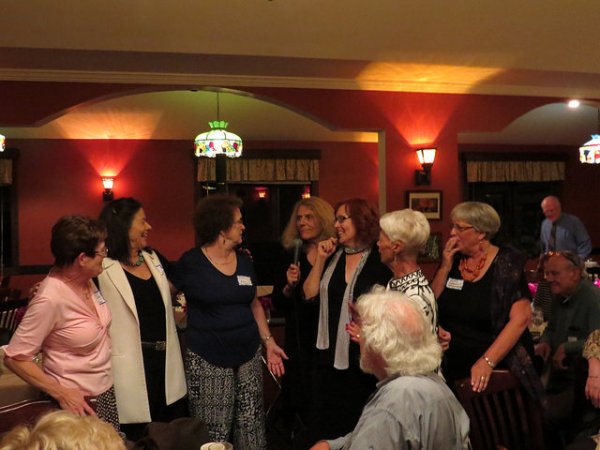
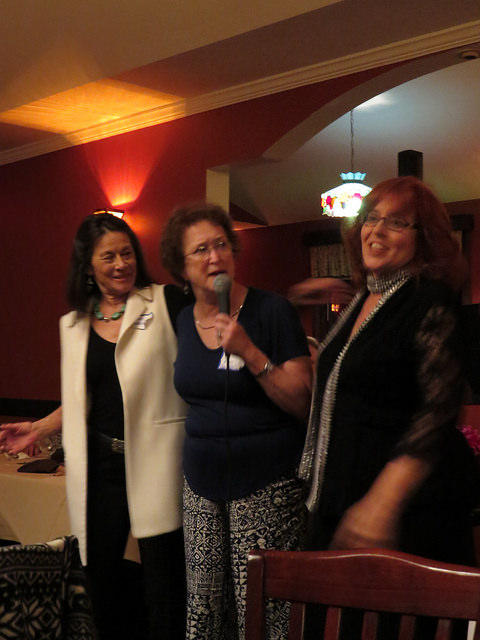
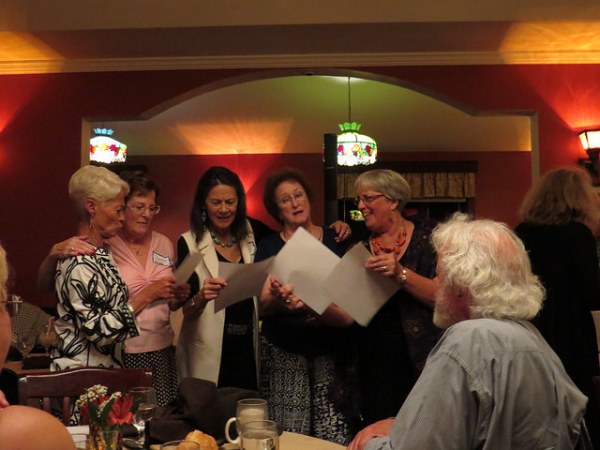
We are a remarkable group. Un-clique-ish, without isolationist tendencies, we bonded to one another for the three days we visited – Thursday night dinner in a restaurant that was nonexistent when we lived there, Friday night dancing at the Moose Hall, Saturday morning gathering at our high school no longer a high school for a tour and a video journey through our town, Saturday afternoon attendance at the homecoming football game, and Saturday night feasting and blending our voices with the karaoke in songs we sang as youngsters. It was glorious.

20921715893_bcf19ab231_z

St. Pius X and SLHS Cheerleaders. Photo by Olivia Rauss.

21542750525_32e0273057_z

Sharing a special remembrance of a gone but not forgotten classmate with the children he left behind. . . . Photo by Olivia Rauss

But it was just a reunion, nothing really extraordinary about that. Classes gather every year to do what we did in Saranac Lake last weekend. So why do we think we’re so special?

Every time we got quiet, someone would comment on the thing about us that is remarkable. Here we were, fifty years later, a single town of kids whose elders sought to keep us apart for whatever reasons they could conjure by dividing us into two high schools, and despite the fact that we didn’t grow up dancing with one another, playing football on one another’s teams, playing or singing music together, here we were in our dotage clinging to one another.

21534366922_8889517f25_m (1)

The Planning Committee. Photo by Olivia Rauss

Standing at the dais, co-emceeing the event, I looked around the room, and I could not see a single table segregated by school. Somehow, past the separation, past our years apart, we have become a family, and when we re-convene, when we come together to celebrate our past and lean in against our diminishing future, we do it as a single entity. We are a family of a sort.

I don’t know many schools whose members return to the kind of communion we share. Most people speak of having been with the people they were friends with in school, of being just as isolated from the rest as they felt as teenagers. But we hale and hearty children of Saranac Lake, at least those of us in the Class of ’65, are cut from a special cloth that binds us together with emotional Velcro.

20918713564_c09cb58a10_m

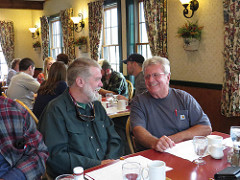
Old Friends, Final Breakfast of the Reunion. Photo by Olivia Rauss.

21357492960_0ee89e8abb_q

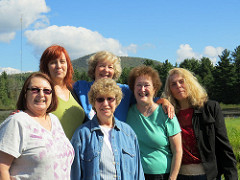
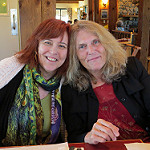
Sisters. Photo by Olivia Rauss.

What gratitude I have for being part of that little universe. What immeasurable joy I take in being one of them, despite the enormous feeling of disconnect I wrapped myself in as a teenager. I am so glad I lived long enough to shed that mantle and accept this new one, the cloak of my classmates’ love.

A Simple Thank You, Home Town

Impossible as it seems, it’s now been fifty and a half years since I graduated from Saranac Lake High School,

6f51c8fdd1c0f0966b8bbbab55dd572fin Saranac Lake, NY. . . fifty and a half years dominated by faraway places, varied experiences, multi-hued cultures. Returning for the reunion next weekend, with the prospect of revisiting people I saw nearly every day of my life from the time I turned 9 until shortly after my 17th birthday, I am flooded with nostalgia, and that nostalgia reminds me of something I have never shared with my hometown: My deep, warm gratitude.

My family – the Swetts – arrived in Saranac Lake, at the end of the third day of the new year in 1957, in a small caravan, in the dead of night, at the height of a blizzard.

My father drove a truck loaded with furniture and appliances, with my brother David and my sister Helen sitting next to him in the cab, while my mother, who was 8 ½ months pregnant, drove the family car, loaded with clothes and household items, leaving barely enough room for me on the passenger side of the front seat, where I was stationed with orders to hold onto my over-excited 15-month-old brother Alfred.

Actually, I hardly held him. I spent most of our eight-hour journey from Longmeadow, Massachusetts, grasping at him as he maintained perpetual motion, climbing me, attempting to sit on mom’s non-existent lap, rolling the windows down and wailing to be allowed out of the car. We drove slowly over the snowy country roads – the interstates were rude forerunners of what they are today – and he did not settle down until after we had stopped to eat at a diner in Rutledge, Vermont, when he fell asleep in my arms. For the last two hours of the trip, I was in increasing pain, terrified to move or to do anything more strenuous than lightly breathe, lest my nightmare be reawakened.

The falling snow became blinding just as we reached the village, and when we got to at the foot of the mile-long hill that would take us to our rented home atop Rockledge Road, we stopped to reconnoiter and emerged from the cars, stiff and sore and, immediately, most horribly cold.   Colder than any of us had ever been before.

Years later, my mother would regularly quip, “Yes, living in Saranac Lake, we have two seasons: winter and the 4th of July.” Which may have been hyperbole, but it rings true as I remember that moment.

Standing there where East Pine and Pine Streets meet, getting our first feel of our new home, all I could think was that we couldn’t live there. It was just too, too cold.

Truth is – and you can look this up – the temperatures officially reached 36o below zero that night, and WNBZ Radio reported the next morning that in our corner of the town, high on our hill overlooking Moody Pond in the shadow of venerable Mount Baker, it was actually as much as ten degrees colder than the official report.90387775

The relief of being outdoors after what seemed like endless hours’ sitting in a cramped, smelly vehicle, wore off in an instant. What lay ahead felt daunting. The hill was icy, and the snow was relentless; in order to assess the best way to navigate his way up the hill, Dad had to walk up the hill a ways to find a route in, and still he wasn’t sure what surrounded him. Both vehicles’ motors cranked noisily, struggling to stay alive, and I could feel my toes and fingers, lips and nose separating themselves from my body.

My father, holding my barefoot 3-year-old sister Helen in his arms, decided to look in the glove compartment for a flashlight and absent-mindedly put the little girl down in the snow. She shrieked, and I picked her up and put her back in the car, all the time fighting back tears of absolute terror.

Drained from the trip and weary of crying children, my mother looked at me and shook her head disparagingly. Reading my expression, she said, “It’ll be all right. You’ll learn to ski. You’ll wear winter clothing. We will be fine.” And with that she got back into the driver’s seat and waited for my father to lead the way to the end of our journey at the top of the driveway.

Sure enough, on the second day in our new house, because we were still out of school for winter vacation, we all took a break from the unpacking and returned to that long, steep road, this time with a pair of skis Mom had found in the basement. They were old style wooden skis with leather bindings, which required no special boots. “Today,” she had announced at breakfast. “You will have your first ski lesson.” The other kids were delighted to engage in a new sport, but I was more interested to know where she had learned such a thing. And I couldn’t help noticing that at the moment she made the announcement, she glowed with a youthful exuberance I hardly recognized.

“How do you know how to ski, Mommy?” I asked her.

“I skied a lot in my childhood. A lot.”

“In Vienna?” I asked incredulously.

“Not exactly,” she replied. “But not far away. In the Alps, a place very much like where we are now.

We took turns skiing down the hill, hiking back up, laughing yelling to one another across the white silence. At some point, a woman emerged from a house in the middle of the hill. She walked up to my mother, and they began to talk, and in a few minutes, they embraced and lapsed into German. “Children,” my mother called excitedly. “Come met our neighbor Mrs. Koop.”14-3143.1L

The Koops, who owned Temmings Jewelry, were from Switzerland; they spoke a German dialect I had a very hard time understanding, but my mother was clearly in her element. She had found a home. Which made the town feel homey to us as well. By the end of the day we had met most of the people on Rockledge Road; Bibbe Shapiro and I established a bond: we both loved theater.

The following month, in the building that now houses the administrative offices of North Country Community College, my mother gave birth to Sarah, the first of my three siblings born in Saranac Lake General Hospital. We watched the Winter Carnival fireworks from the hospital parking lot along with fellow townspeople, who were there either to visit hospitalized relatives and friends or to watch the spectacle from a distance. No one treated us as outsiders. We felt like locals.

School was a difficult adjustment, but in spring, I had a fight on the railroad tracks with Irene Walker, and that established me as an appropriate friend. The Whitson brothers let me cut through their path when I walked down to meet her to throw stones into Moody Pond, and through girl scouts, I met Suzy Hanks and Gail Gallagher. As members at the Methodist Church, we became part of the community. When John Pedroni soaked my blonde braids in black India ink, I wasn’t even angry because it was clear that what had transpired was more an act of initiation and welcome than anything else.

Clearly, as cold as the winter might be, the people of this little town were some of the warmest on earth.

We became well known in certain sectors of the community. Indeed, there was no missing us. Every Sunday, for example, with the consistency of a Swiss train, we arrived at the First United Methodist Church; but unlike that Swiss train, we were never on time. It was our habit to arrive ten to fifteen minutes after the minister made his welcoming address, just as the choir was putting away hymnals, the congregation rifling through prayer books looking for the Apostles Creed, and our entrance was grand. Eventually, there were nine of us, and we were never inconspicuous, marching down the aisle behind my parents like Biblical offspring – Carla, David, Helen, Alfred, Elizabeth and John.

Then, one snowy day in 1963, I was waiting for my mother to retrieve me from a singing lesson in Lake Clear when Marion Greibsch drove up instead. “Your mother’s been in a bit of an accident,” she told me kindly, and then she drove me home. That bit of an accident imprisoned my mother in a series of operations and casts for the next year and a half, and it was during that time that we truly understood how entirely we had been adopted as Saranac Lakers.

Marion must have made the first phone calls. Because even before the radio reported the news of the accident, food began to arrive at the door. One by one the people of Saranac Lake came by and left us casseroles, salads, breads, desserts; for the next four months we had more food than we knew what to do with. Every day someone called, every day someone stopped by. “We just want to know how your mom is today,” that someone would say cheerily. “And do you need anything?”

Of course, being 16, I simultaneously recognized the enormity of the charity being proffered and resented the fishbowl it placed me in. But looking back, I can now fully appreciate the care, the affection, even the love that prompted those gifts.

And there were so many gifts over the years. Gifts I have never acknowledged, gifts from so many people that to name any of them would be to insult the few I did not name.   Suffice it to say that I’ve been around a few blocks by now, and I find it absolutely mind boggling how very much I took away from Saranac Lake fifty plus years ago.

I received a high school education that was nonpareil; I learned the art of self reliance while being nurtured in a vibrant example of communal interdependence that taught me the importance of collaboration. I may not have been popular, but I always knew I was respected, and today, all these years later, several of my classmates still number among my most trusted friends. Though it was far from perfect – black clouds hover over even the most idyllic of retreats – mine was a charmed life, and I am only embarrassed that it has taken me this long to proclaim my appreciation.

So please let me take this moment and these columns of space to acknowledge the giving, gracious people of Saranac Lake. The doctors, teachers, classmates, neighbors, librarians, shopkeepers, parents, custodians, police people, administrators, clergy, service providers . . . the caring folk who peopled this village that raised me.

ce3adecc6429cf0c6769a679c30f0d56

And allow me to simply say thank you.

Sincerely,

Carla Swett Stockton

SLHS ‘65


At Best A Tepid Tempest in the Park (Reprinted by permission of Catch & Release, the Columbia Journal Online

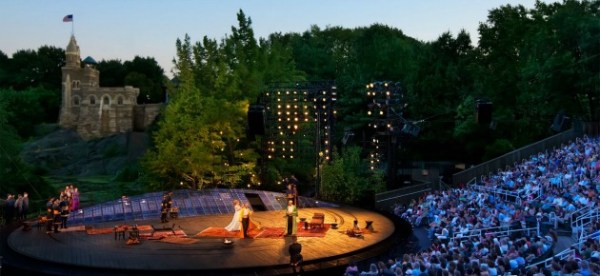
It is downright unpatriotic to be a New Yorker and walk out on a performance at Central Park’s Delacorte Theater in the middle of A Shakespeare in the Park production. But that’s just what I did. After I stood in the sun for two hours waiting to be handed two free tickets, I looked the city’s gift horse in the mouth by throwing my hands at mid-show and walking – no, running – away. It felt blasphemous. It felt treacherous. It felt good.

The air was cold, the seats were hard, the show stank, and after forty years of attending what Shakespeare in the Park I was lucky enough to get tickets for, I felt like I had earned the right to stalk away in an exasperated huff. Especially since the Public apparently feels like it has earned the right to present so unimpressive a production as this one.

The critics have been generous with the show.  While they have found some fault, overall, they are loathe to come down hard on it, and this perplexes me. Having spent much of my life studying theater and acting, directing student productions, reading copious amounts of criticism and history, taking a dramaturgy practicum at Columbia, I know that even if some people disagree with my assessment, I cannot possibly be alone. If any other production with such a high profile failed so miserably as this one, the critics would be screaming their displeasure at the city. But The Public Theater’s annual Delacorte starfest is a sacred institution, dependent on donations and sponsorships, and no one wants to be the little boy pointing brazenly at the emperor’s nudity.

Which is too bad. Because good criticism should make the program grow stronger; in a perfect world, sponsors and patrons would want to invest more money in the idea that making really good theater requires making some really terrible mistakes. That to suggest that something is not as good as it should be is to encourage it to reach its own potential.

Why, then,  does my feeling of treachery persist when I say that the production was flat, that it created no magic and no island, that it had no sorcerer of any kind performing miracles in a play that, at its best, is one miracle after another?

There was a time when I attended the shows at the Delacorte knowing that I would see great acting, thoughtful design, coherent directing. In this production of The Tempest, the directing is unfocused, and the actors get away with blunders that would not be tolerated in the remotest hinterland productions. Once upon a time, actors donated their time and in return found grateful fans, who followed their careers. This show featured an actor who was cast despite the fact that he is absolutely wrong for the part simply because he is a beloved New York icon.

Audiences come to the shows to see faces they recognize from elsewhere. The star-studded Shakespeare in the Park productions have turned into the kind of stuff tourists’ dreams are made on, just like the mini Chocolate theme park called the M & M experience that draws out-of-towners off the tour buses at midtown. So casting is not always as thoughtfully executed as it should be.

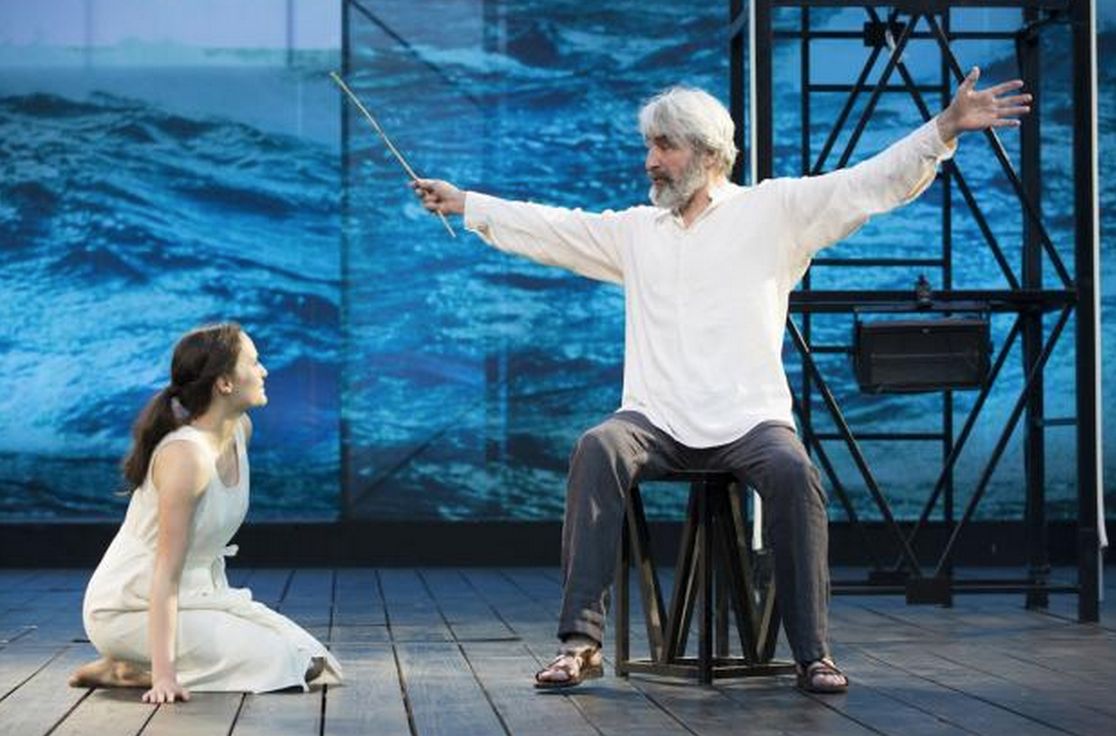
I knew better from the start.  I should have eschewed this production of The Tempest altogether.  I was aware of this beforehand and was reminded while waiting on the line at the designated 135th Street spot for ticket distribution when one of the Public Theater pages came out to tout the show. He announced with great pride that Prospero would be “played by Sam Waterston, whom you all know from his amazing work as Jack McCoy on Law and Order.” I groaned. I did not want to see Jack McCoy as Prospero.

Screen Shot 2015-06-28 at 2.25.39 PM

Sam Waterston, as Prospero, and Francesca Carpanini, as Miranda, in The Public Theater’s Shakespeare in the Park production of The Tempest. (photo ©Joan Marcus, NY Daily News)

Let me digress here and say that I admire Sam Waterston’s work enormously. In Grace and Frankie, where his conflicted, ambivalent Saul is the soul of the ensemble, he is the reason I watched every episode despite the fact that the other cast members failed to convince me they were who or what they purported to be. I was enthralled by his work in The Killing Fields and always wanted more from him when I watched Law and Order. But when I traveled to New Haven to see Stoppard’s Travesties, which featured Waterston, I was sorely disappointed. Waterston’s mumbly, hesitant speech patterns didn’t capture the rhythm of Stoppard’s writing. The play was uneven, and the speeches tended to be long and ponderous, even for Stoppard, and Waterston was not nailing them. Spoken with aplomb, Stoppard’s speeches, even at their wordiest, are melodious and lyrical, downright Shakespearean. Waterston’s delivery made them seem clunky, pretentious, pseudo-intellectual. So why did I even bother to get tickets for a Shakespeare play in which he would play a character with some of the longest, most ponderous speeches in the canon?

Two reasons. Because I could. And because I should. Who would turn down an opportunity see a free production of one of Shakespeare’s best plays, directed by Michael Greif, a Tony winner, one of Broadway’s best directors? Who would not want to witness a spectacle produced by a Broadway-caliber production team? Well, I was wrong in thinking I did.

Mediocrity is, apparently, the measure of excellence in a Delacorte show.

Screen Shot 2015-06-28 at 2.20.53 PM

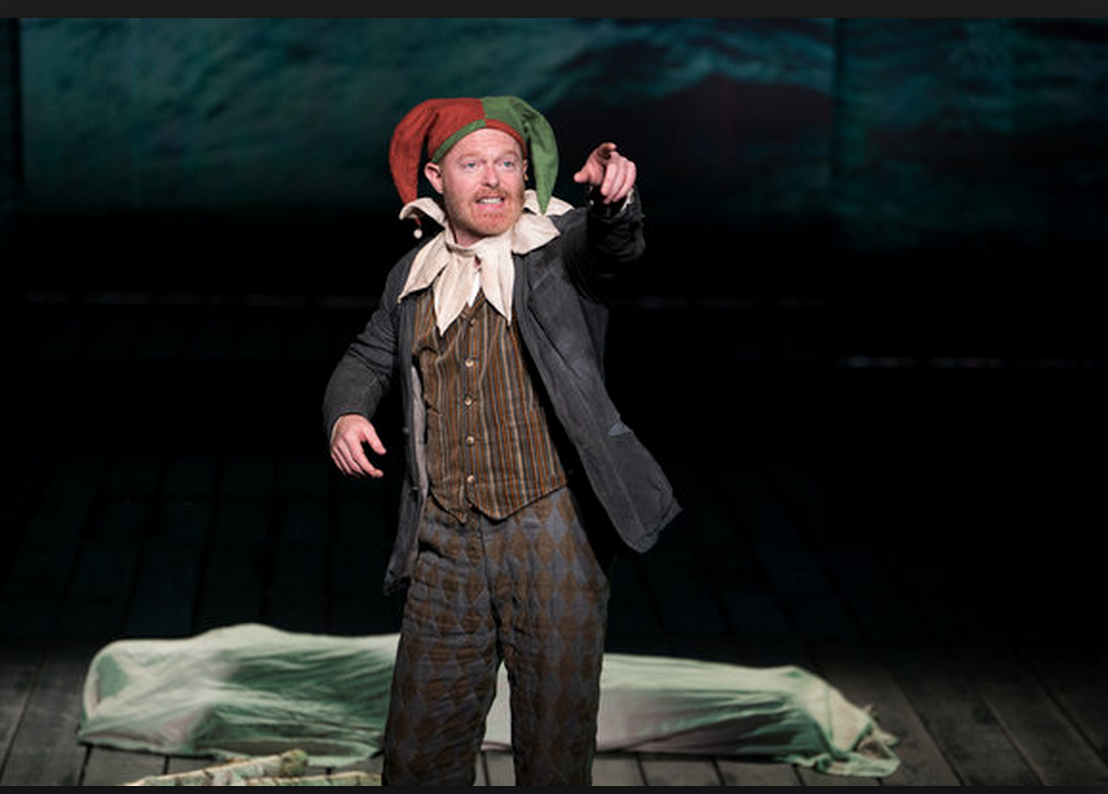
Jesse Tyler Ferguson as Trinculo in The Tempest, by William Shakespeare, now playing at the Delacorte Theater (photo © Sara Krulwich, NY Times)

The highlight of the evening at my Delacorte was Jesse Tyler Ferguson’s Trinculo scene opposite Danny Mastrogorgio as Stephano and Louis Cancelmi as Caliban. Ferguson was good. He played Trinculo exactly as he plays his character on Modern Family, vascillating between over-the-top-reactions to things and understated asides. Stephano was okay. At least he was almost understandable. But Caliban seemed confused by the character he was playing, could not choose which of several accents to rely on, had no inkling as to how his body should move, and it was nearly impossible to catch his words, which were not falling trippingly from his tongue. The scene is pure Commedia fun as written; there is little any production could do to ruin it, but if the words were more critical, even that scene would have been lost.

No one in the cast, with the exception of Cotter Smith in the part of Prospero’s brother Antonio, was able to speak the speech. Waterston spoke as though he had pebbles on his tongue, and half his mouth was sewn together. Ariel might have been articulating just fine, but since he was whispering much of the time, nothing was reaching my ears. Miranda shouted everything. There were no nuances of emotions from her, just ebullient shouting to accompany her juvenile physicality. She seemed more like an over-excited six-year-old than a young woman encountering sexual awakening, and watching her I was reminded of a classmate of my daughter’s in her performing arts magnet high school, who had been Annie on Broadway and played every part, even scenes of quiet contemplation, with the same musical comedy hugeness.  As a high school theater director, I held my neophyte teenage actors in our several productions of plays by the Bard to a far higher standard than any of these credentialed professionals seemed to reach for.

It is worthless to go on about the acting. It was just the tip of the iceberg. The opening scene, the tempest itself, was lovely. I am a great fan of theatrical minimalism, of letting the actors carry the “sell” of a set, and in the opening, it all worked well. But as soon as the initial storm died, so did the success of the staging, the appropriateness of the design, the creation of the world. There was nothing to make me believe that I was encountering characters cast adrift on a seemingly hostile, enchanted island; they were simply pretenders stomping through roles on a stagnant playground in the center of a stage at the Delacorte Theatre.

Given how lacking I found the show, I can’t help wondering why I am already planning to seek tickets to Cymbelline, a play that is rarely done well?   The answer is plain, really. Because I’m New Yorker. It’s my patriotic duty.