Swift River . . . Paddling the Rapids of Raging Adolescence

Essie Thomas' new novel is a perfect summer read

From the moment I dived into Swift River, I was swimming through memory, in sync with Essie Thomas’s captivating heroine Diamond Newberry.  Like Diamond, my 17-year-old self suffered from a sense of dislocation, and I recognized in her a familiar longing to know an origin story. Like me way back then, she found her hope in stories her family members, the ones willing to talk candidly about the past, could share with her.  Like Diamond, I ate my troubles away, wallowed in tuna casseroles and wingdings, but being white,        From the moment I dived into Swift River, I was swimming through memory, in sync with Essie Chambers’s captivating heroine Diamond Newberry.  Like Diamond, my 17-year-old self suffered from a sense of dislocation, and I recognized in her a familiar longing to know an origin story. Like me way back then, she found her hope in stories her family members, the ones willing to talk candidly about the past, could share with her.  Like Diamond, I ate my troubles away, wallowed in tuna casseroles and wingdings, but being white, what young me did not have in common with Diamond was color. 

My confusion and disassociation were just as real, but they were invisible, and I therefore did not suffer the same slings and arrows of outrageous racism that Diamond endures. Yet I easily relate to what she feels, and how she responds because as unique as Diamond is, she is a character who represents the distinctly American experience of growing up in an unkind, duplicitous society whose respect for diversity is superficial at best. 

Diamond is caught in a perfect family-and-society-fueled storm. Her father has disappeared, is perhaps dead, and her mother has become recklessly unbalanced.  Her marriage to Diamond’s father was disastrous, but she does not know how to live without him.  So she drinks.  She makes Diamond responsible for her but is, at the same time, immobilized by the way her community – the town that has been her family home for generations – treats her daughter.  She knew that nothing about their life together would be easy, but she never embraced his brittle fragility.

Already restless and morbidly obese, Diamond finds herself entirely untethered by her fatherlessness.  She wants to stop her mother’s hurt, but she is aware that her mother’s love is genuine but also neurotic and toxic. She longs for her father’s return, as he seems to be the only one who might have the knowledge to explain why the town’s Black population inexplicably left town in the dead of night some years before and what their exodus has to do with her.  He alone might justify his bitterness and the self-destructive recklessness that causes him to act out his angry bouts of frustration.  Diamond has no place to turn for answers until she receives a letter from her father’s cousin-sister, who lives in the Newberry family home in Georgia. 

Letters pass between the girl and her unseen auntie, and Diamond begins to assert her true self.  She secretly signs up for driving lessons and forges a friendship with a girl from her class, who is equally void of ballast, a girl who has learned to sublimate her pain in promiscuity.  Over the course of an illuminating summer, Diamond learns to drive, loses her virginity, and finds her roots.

At the heart of Swift River is the reminder that no matter what ethnicity, what race a teenager is blessed or cursed with, the compulsion to know who we are and where we come from is universal.  Diamond’s plight is overwhelming, but she finds a way to cope just as teenagers have always forced themselves to cope with circumstances they would never choose as the basis of their lives.

Like all the great coming-of-age stories, this one is written by an adult with a mature outlook, told through the eyes of a precocious seventeen-year-old who clearly has the benefit of Chambers’s wisdom.  For that reason, Swift River is a great read for teens and adults.  It is an illuminating journey over the racing rapids of adolescence, a passage that none of us avoids.       

Diamond is caught in a perfect family-and-society-fueled storm. Her father has disappeared, is perhaps dead, and her mother has become recklessly unbalanced.  Her marriage to Diamond’s father was disastrous, but she does not know how to live without him.  So she drinks.  She makes Diamond responsible for her but is, at the same time, immobilized by the way her community – the town that has been her family home for generations – treats her daughter.  She knew that nothing about their life together would be easy, but she never embraced his brittle fragility

Already restless and morbidly obese, Diamond finds herself entirely untethered by her fatherlessness.  She wants to stop her mother’s hurt, but she is aware that her mother’s love is genuine but also neurotic and toxic. She longs for her father’s return, as he seems to be only one who might have the knowledge to explain why the town’s Black population inexplicably left town in the dead of night some years before and what their exodus has to do with her.  He alone might justify his bitterness and the self-destructive recklessness that causes him to act out his angry bouts of frustration.  Diamond has no place to turn for answers until she receives a letter from her father’s cousin-sister, who lives in the Newberry family home in Georgia. 

Letters pass between the girl and her unseen auntie, and Diamond begins to assert her true self.  She secretly signs up for driving lessons and forges a friendship with a girl from her class, who is equally void of ballast, a girl who has learned to sublimate her pain in promiscuity.  Over the course of an illuminating summer, Diamond learns to drive, loses her virginity, and finds her roots.

At the heart of Swift River is the reminder that no matter what ethnicity, what race a teenager is blessed or cursed with, the compulsion to know who we are and where we come from is universal.  Diamond’s plight is overwhelming, but she finds a way to cope just as teenagers have always forced themselves to cope with circumstances they would never choose as the basis of their lives.

Like all the great coming-of-age stories, this one is written by an adult with a mature outlook, told through the eyes of a precocious seventeen-year-old who clearly has the benefit of Essie Chambers’s wisdom.  For that reason, Swift River offers an astute journey through the fraught passage from childhood to adulthood that none of us avoids.                                        


The Haircut   

I have quirky hair. It is thick and blonde, a gift from my father’s Dutch ancestry. But it’s also unruly and willful, often kinky and frizzy, the bequest of my mother’s Ashkenazi forebears. I like my hair. It’s singularly mine and uniquely beautiful. So says every beautician to whom I have entrusted its care. But it has traditionally been a pain to tame, a challenging for those who seek to cut and style it .

My aunt was a stylist with her own salon. A talented stylist who simply could not be bothered to do battle with my tresses, Aunt Ruth’s approach to cutting my hair was to ignore its idiosyncrasies and clip indiscriminately. I wanted long hair, but until I left home at 17, I had to abide by my mother’s edicts, and she mandated a semi-annual visit to her sister’s shop. Which is why, when I look at photos taken before my liberation, I wonder if Mike Judge saw me somewhere. I could easily have been the model for his Butt-head character.

Over the years, I have invested heavily in what appears to be the right haircut. I live in NYC, where a beauty parlor appointment can be more costly than a hospital visit. Every visit is an exercise in cautious paranoia. Will the operator figure out how to navigate the territory? Will I be a mop-head when they finish?

The stylists share my trepidation. They typically spend the bulk of my time allotment on fussing over where, how, why to layer and then trying to re-assign a part in a head of hair that listens to no one. After the cut, every artiste insists on straightening the hair, forcing it into flat lifelessness. Too often I have emerged from the salon with hair I would not wear to a Halloween party, for which I have paid the equivalent of a year’s salary. I was resigned. This was the way things were.

Until I was in Taiwan two years ago. My hair got long, I shedded profusely, and my hairphobic hostess was frantic. She could not stand the sight of hairs on the couch, the floor, the kitchen counter. I had to get it cut.

Quaking with fear, I chose a place close to the apartment with an American brand name. I had little faith in my choice, but I believed it was my only alternative. Branded or not, could a Taiwanese stylist understand the dangers lurking on my scalp? Would she be able to make my hair presentable?

In the salon, though neither of us spoke the other’s language, she easily grasped what length and shape I was hoping for. She spent no time at all assessing the hair but instead lavished me with a luxurious wash and scalp treatment, a neck and shoulder massage, and a delicious cup of jasmine tea. Then she went to work, studiously snipping a large chunk here, a bit there, another chunk, another bit, and in record time, she was patiently twisting the locks as she assaulted them with the blow-dryer, causing my natural curls to spring gratefully into line. When she was finished, my hair looked better than it has in my adult life. We bowed to one another, and I paid the bill in Chinese NT, an amount which, amazingly enough, amounted to less than a soy caramel macchiato at the local Starbucks. When I offered her a tip; she declined, smiling. Tipping is not the custom, and she was proud of her work.

On two more occasions I found myself in need of a haircut in Taiwan. For various reasons, I wound up in a different salon with a different operator each time. Invariably, I had the same experience: treatment that engendered languid comfort and a respectable haircut for little money.

This past summer, I found myself in Turkey rather than Taiwan. As before, I was there long enough that my hyperactive hair growth and insistent shedding necessitated a cut.

Had I not been schooled in Taiwan, I would have been beset by anxiety. Instead, I confidently walked to a very local spot, a tiny establishment with one chair and one sink. I had a moment of hesitation when I saw that the price of a haircut listed on the board was less than a straight-up cup of black coffee in any NYC diner. I ventured in nonetheless.

This time I was slightly more able to communicate. With roughly 25 words of Turkish at my command, I was able to explain what I was seeking. The receptionist nodded solemnly and motioned me into a chair in front of the single sink on the premises. She simultaneously made a phone call and briskly and brusquely washed my hair. As she threw a towel over my head, a squat, middle-aged man appeared in the entryway. He spat a cigarette from his mouth and smashed it beneath his shoe before walking over to us. He and the woman exchanged a few words – she translated my instructions into proper Turkish. He nodded, took the towel from my head, and went to work. He snipped about, parted and re-parted my locks, brushed the hair forward, cut some more, pushed it back, snipped again, flipped it to one side and then to the other. After about five minutes, he stopped cutting, affixed the diffuser to the blow dryer, puffed air at me for a few more minutes, and grunted that he was done. In the mirror that he held briefly behind my back, I caught a glimpse of the back of my head.

The hair looked great.

This time I paid in Turkish lire, and he accepted a tip. I had to fight the nagging sense that I had stolen the haircut.

Walking back to my apartment, I wondered what it was that I had worried about all these years. What was it that made the process so damned fraught and so incredibly expensive?

American values, of course. Nothing is worthwhile if we don’t pay dearly. No one is worth anything until s/he proves successful in monetary terms. “You get what you pay for, and you pay for what you get.” We measure people by the quality of what they acquire.

The ramifications are myriad.


Wishing for the Nightmare to End

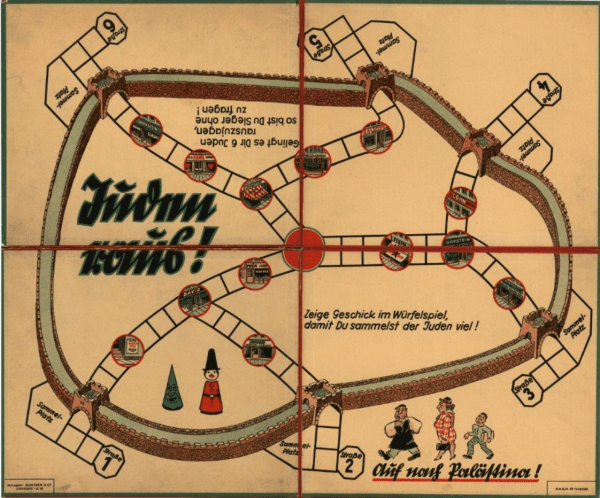
The trauma is passed to us in our DNA. It has been etched by myriad attempts to obliterate us, forged by centuries of Babylonians, Romans, Crusaders, Cossacks, Jihadists, ad infinitum. . . an endless list of haters. Wherever we go, wherever we settle, we are never free of it.

I felt it in the earliest fog of my dawning awareness. In the safety of postwar America, it resonated in sounds and furies I couldn’t understand.   The wailing, the anger, the despair that accompanied the opening of an envelope.  The reluctance to go to the door when a telegram arrived.  The startle and the groan when the telephone rang. I felt the pain, intuited the anguish, but I was a baby, and I didn’t have words.  The frenzy was terrifying. 

As I acquired language, words seeped into my consciousness and insinuated themselves into my vocabulary.  Nazis, camps, exile, death, torture, hiding, hate. . . .

The images swarmed into my nightmares.  Dark images I could not name usurped my dreams.  By the time I was 3, the nightmare was a cinematic horror that repeated itself over and over. My cousins and I hide in my grandmother’s attic, a house in Queens full of shadowy corners, where evil easily lurked.  And always – though I do not know how or where I ever heard them – the soundtrack comes from the whine of European sirens and the thump of jackboots on concrete. 

I inevitably wake just as a helmeted monster finds me and proclaims, “So. . . you thought you could escape us. But there is nowhere to hide, Jew. . . .”

I was eleven before the full impact of my family’s flight became clear.  When I asked my mother why she never talked to me about it, she said, “I lived.  It wasn’t so interesting.”  She had not suffered as the beloved relatives suffered in the camps or as the cousins did when they were ripped from their parents’ arms and sent on Kindertransports or the way others did who watched their parents murdered and had to find their orphaned way to Australia or South America or . . . .Mom had no words and no sympathy for her own trauma –  being cast into exile, leaving everything she valued in a world gone mad.  She could not have explained it to me.

When I was an adult, I recognized some of her coping techniques.  She married my father, an all-American boy, whose family had come to North America by choice in the 1600s, Dutch and English protestants, fleeing nothing. They came in search of a New Life that was richer than the rich one they left behind.  Dad was a towheaded blonde, whose sky-blue eyes glistened with tears when he heard his favorite hymns.  He was Safety.  Mom buried herself in his identity and denied her own so that her children would never have to fear the monsters who robbed her of so much. 

I did not share her assurance.  I grew ever more afraid of the knock on the door, the intrusion of the evil interloper intent on taking our joy, our lives.  But I trusted that thanks to Israel, we would never again be an endangered species.  If the Nazis returned, we would have a place to go. The uncles and aunts and cousins who were denied entrance to alternate countries or who were caught because they knew of no place to go might have been saved had there been an Israel.  We the people without a country had one whose birth was within a year of my own, and we would never be flagless orphans again.

People ask me, “Why do you need Israel? You are American!”  My mother’s older sister, whose wisdom I found nonpareil, loved to say that in America we were safe.  “Don’t worry!” She would laugh. “The US is too diverse a community to hate one people with the kind of vehemence that European hegemony empowered.  We will never be hated like that here.”

I have wanted to believe her.  I have wanted to be grateful for this country that nurtured me, a country I deeply love.  Knowing that the Plot Against America of the 1930s and 40s was thwarted, I wanted to trust the country I have always believed is mine. 

Yet, even now we are reminded that even here we are interlopers.

A synagogue in Pittsburgh is attacked. Neo-nazis march in droves shouting “Jews will not replace us.”  Undereducated youngsters with no sense of history celebrate the murder of Israeli children and blame us for wanting to save Israel. They scream for its extinction.  Modern Judenratners, betray us at every turn.  We are no safer here than we are in any other gentile-dominated country of the world. 

We require the presence of a resolute, strong Israel to safeguard our future.

Israel must survive.   Or we will not.

Am Yisroel Chai!

Summertime Daddy

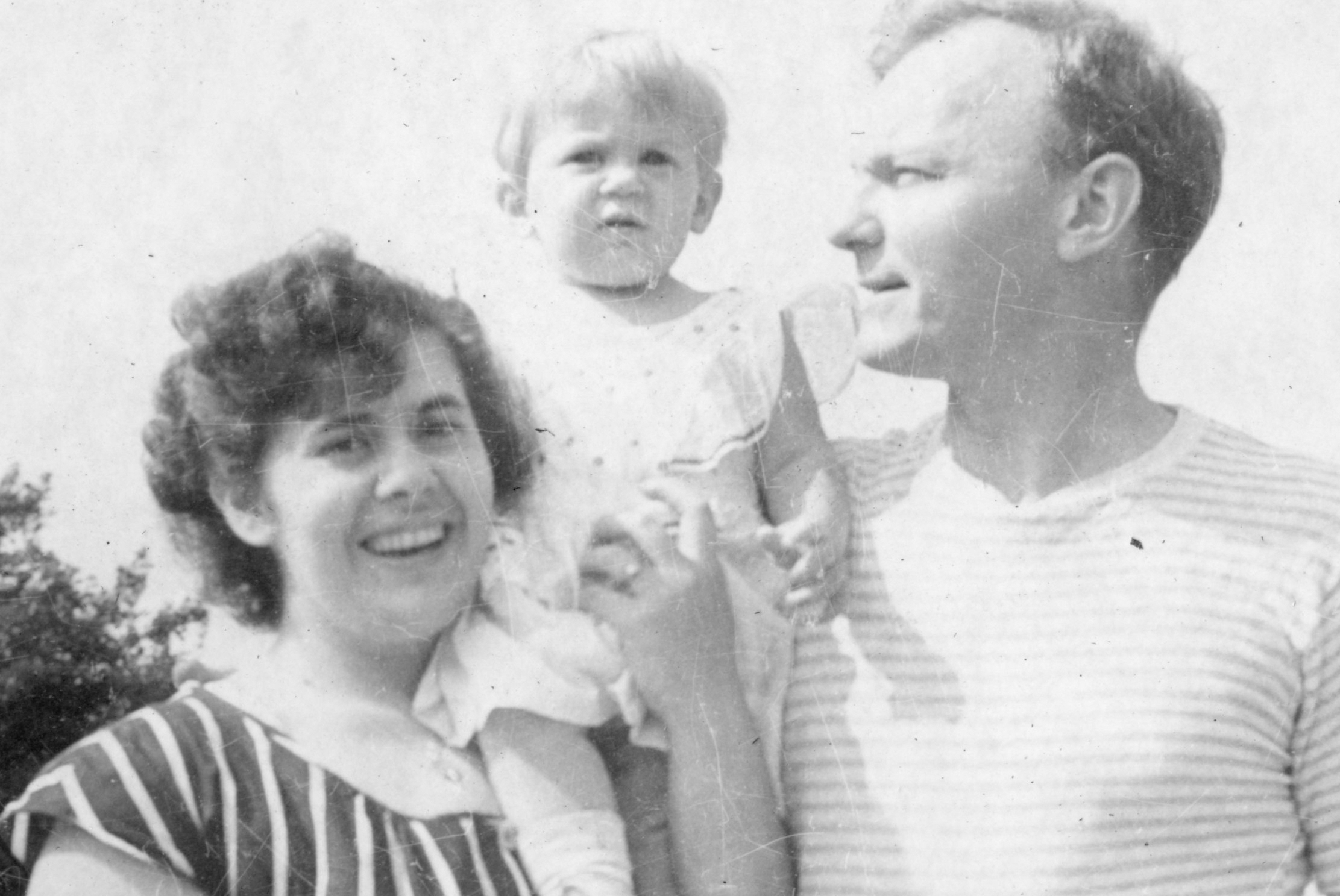
Summer is my season of Daddy.

Most of the time, he was a restless man, my father, with a permanent expression of perplexity on his face. Relaxation was beyond his ken.  He was in constant motion every waking minute of every day.  Stress seeped from his pores and put us all on edge. A milk spill could create a firestorm of screamed recriminations.  He never used bad language, and yet his anger was obscene.  

However, on rarified sun-gilded summer days, he was transformed, and I in turn was freed to be myself.  At the beach, we could love each other unconditionally.

I attributed his passion for sun and surf to his having been a summer baby. Born the end of July in 1911, in Cedar Rapids, Iowa, Father grew up as far from the ocean as an American boy could be. The year he was twelve, right after his father died, he stole the family car and drove it to New York, where his Uncle Milton owned a shipping company.  “Let me go to sea,” he pleaded. Uncle Milton summarily sent him home, which only fueled his desire.  

Whenever he could sate his thirst for proximity to the ocean, Daddy was a happy man.

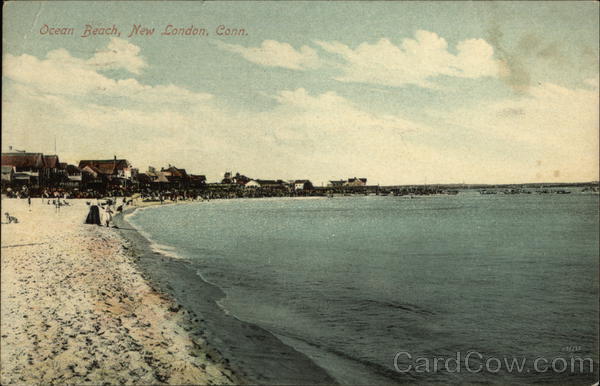
Every summer until I was four, we vacationed with my mother’s family in New London, CT.  Mom’s older sister Herma was married to Borislav, a Serbian painter of some renown, and he had a patron who loaned him a cottage on the beach, a glorious venue for a family holiday.

My memory of the house – undoubtedly flawed by time and distance —  is of a single-story expanse with multiple tall windows standing upright in every room. Their diaphanous, white curtains fluttered and danced in the omnipresent breezes.  No matter how hot the air was wherever we had been, the briny, vanilla-scented cool of the beach enveloped us when we entered. Daddy, however, had no interest in the house.

As soon as we arrived and parked our car, my staid, reticent, subdued father would emerge from behind the wheel of the car, shed his grumpy silence, and turn giddy. Suddenly he was playful, happy. He reminded me of those sea creatures we used to order from the bubble gum cards.  As soon as we added the salt sea air of the tantalizing water, Daddy would animate. He’d bound into the house, embrace each of the assembled relatives, and rush to any corner that afforded him enough privacy to change into his swim trunks. He could not wait to get into the ocean.

We children – the first three of eleven cousins-to-be – knew what was coming next. “I’m off to the water,” he’d announce. “Who’s with me?”

Cousin Peter, eight years older than I, remained aloof. He was too mature for such childish exuberance. Johnny, eight months younger than I, only went where his mother took him. He would stay behind.  I got to have Daddy all to myself.

Stripped down to my crisp white drawers, I would ask my mother to secure my towhead mop into tight braids, and I’d follow him into the gently undulating water. He walked slowly, watching my every move, coaching me to tiptoe carefully over rocks and shells, beckoning me to stop and marvel at the jelly fish and crabs that tickled my shins and scraped my toes.  Once, a crab mistook part of my foot for a tasty morsel and chomped down hard.  I screamed, more afraid than injured, and my father laughed.  “Too bad for that little guy. You’re way too big a prey for him.” 

In the afternoons, Daddy, who never rested at home, took a blanket down to the edge of the Sound. He would wrap himself up, put a hat on his head, and coo, “Nothing like the sound of the ocean to sing me to sleep.”

He would nap for what seemed like hours, while Peter, dressed in his cowboy chaps and holster,  pointed his toy pistol and chased Johnny and me all about the beach.  Our mothers would watch us, laughing and applauding, as though we were brilliant actors in a spellbinding film.

Nowhere else, at no other time were we as insouciant as we were then. Uncle Borislav would join us on our beach blanket when he took a break from his easel, and if there were no Yankee game on the radio, Uncle Fred would be there as well. Borislav performed magic tricks, and Fred told silly jokes. My father, cocooned nearby, smiled in his sleep.  We ate dinner on the patio and told silly jokes,  then slept with the windows open so the sea could sing us its lullaby.

 Daddy would wake me before dawn to watch the tide come in.  We would stroll along the waterline, giggling at the horseshoe crabs scuttling away, peering strenuously into the half-light for a glimpse of a ship or a dolphin. We would wade in and let the deepening water lap at our legs. 

Whenever the tide was lowest, he would invite me to a grand adventure.

“Come on,” he’d chortle. “Let’s walk to China.”

“No, not China,” I’d laugh. “Paris!”

“Sure!  But you have to hold my hand.  It’s a very long walk.”

We would splash in, the water level unchanged for what seemed like miles. When we were finally far enough out that I became buoyant, he’d hold me while I half walked, half swam among the sailboats lazing in the summer sunshine.

“Maybe we won’t get all the way to Paris today,” Daddy would sigh at last.  “Let’s come back tomorrow.”

So Long, Frank Gehry

When I was young, Reader’s Digest, a subscription to which my 9th Grade English teacher included in her yearly syllabus, ran a feature called “My Most Unforgettable Character.”  It was the monthly’s most popular feature, and I wrote a few character sketches and thought one day I would submit one to the magazine.  I never did.   Truth be told, I don’t think I ever really met my MOST unforgettable character until 2005, when I took a job as a guide on a New York City tour bus.

In that job, every day was a new adventure.  I was lucky.  Everyone I met was reasonably personable. Well, almost everyone. One time a pair of gang kids tried to hijack the bus I was on, but finding a police person was easy back in the days when crime was still against the law.  In a trice, the cops took the interlopers into custody, and our tour commenced without further incident.  The event stands out in memory because it was unique.  I came to hate the working conditions and the attitudes of the owners, my bosses, but the people I worked with, like the people I entertained, were, for the most part, people I enjoyed being around.  Some were, of course, more colorful than others, and none was as remarkable as Sarabeth.    

Sarahbeth was my favorite person in the bus world. She was saving up for gender reassignment – her birth name was Stanley — but divorce from a greedy wife, mental illness in a daughter whom neither Stanley nor Sarabeth would ever abandon, and frequent gender transgressions that led to Stanley’s being fired, which left Sarabeth with no money for the surgeries.

Instead,  Sarahbeth made powerful self-assertions by wearing, in all weather, Bermuda shorts fashioned in bright orange sweatshirt fabric, frowzy blouses and tops that plunged below the prominent and rapidly graying chest hairline, and neon-colored sneakers.  Her hair and mouth were a whirling forest of bright tangerine curls and a soft, pillowy hot pink triangle.

“I’m a lesbian,” Sarahbeth explained to me the first time she asked me out to dinner. I was flattered.  No one I had ever met was smarter or funnier than this person, both qualities I have always found irresistible in a man.  I had no interest in being romantically involved with a woman, even a woman who was, anatomically at least, still a man.  I didn’t want to hurt Sarahbeth’s feelings, and though I turned down the invitations to dinner, to movies, to theater, we often sat together as we waited between buses, and I never tired of listening to the stories she told. 

The personal stories were harrowing, beginning with a lower East Side childhood, and the professional stories were infuriating.  This person had tolerated more than anyone’s fair share of abuse by the system over the years, and if I had had more imagination or a better apartment, I would have invited her over for sleepovers. 

My touring repertoire grew astronomically, thanks to Sarabeth’s knowledge of the city.  Having studied architecture, she was conversant with the nuances of styles of the eclectic buildings of the city. As an astute political observer,  she understood underpinnings of Tammany, why Robert Moses was more tyrant than savior.  She explained to me why the Breslin-Mailer campaign to create the great city-state, a movement I enthusiastically worked for, was basically moronic.  Having studied labor law, leaned heavily on her when we had labor disputes. When the company abused us, it was Sarabeth who spoke most eloquently and with the most erudition. She knew the score.  She understood what we were entitled to and what was being kept from us with malicious, greedy fury.

There was no bathroom for our relief.  For a while we were allowed to use the rest rooms in the Hilton Garden Inn, which was less than a block from our post, and the management there even encouraged us to buy goods in their gift store and food mart by giving us a twenty percent discount. 

One day Sarabeth farted and sighed loudly in a stall in the women’s room at the Hilton, and a tourist seated next to her, the woman in the next stall, securely separated by a metal wall and a locked door, freaked out at the sound of a male voice sighing on the tail of a roaring fart. She complained to the Hilton management.  After that, all guides were banned from the place.  No more comfy lounge seats, no more cheap candy bars, no more toilet. 

I left the buses to edit a book for the friend of a friend. The book was set in our City, but the author knew little about NY and wrote locations that were amiss, and a protagonist, who was supposed to be from Iowa but was more accurately an Englishman in New York.  To do the work, I went to London for a few months, and when I returned, Sarabeth was gone. 

Consistently, Sarabeth had argued that the conditions atop the buses were unfit for guides.  We had no place to sit.  We were required at times to perform chores – like helping the elderly up the stairs or carrying baby paraphernalia or lugging luggage up the stairs – that put undue strain on all our muscle groups.  We stood for long periods of time, jostled mercilessly about.

Sarabeth’s back and health could not take it.  She suffered pneumonia and bronchitis and then was injured and re-injured until she finally had no choice but to undergo surgery.  Like many back surgery patients, Sarabeth did not survive. The company, which never appreciated what an asset Sarabeth was, was relieved. Tethered by Sarabeth’s knowledge of the law, they had felt forced to retain her. Further, her illnesses and back troubles cost them money by way of pay they were impelled to dole out and by insurance rate hikes her claims inflicted.   The blood suckers were free at last. 

We tour guides, who loved Sarabeth, lost a precious friend.  New York City lost a champion.