ME TOO

The “Me too” posts on social media have me feeling ill at ease. I recognize the courage of those speaking up. In the not so distant past, we were ashamed to admit aloud that we had been violated. As victims, we bore the blame and thus were silenced. This new openness is potentially promising. I want to believe that the phrase might become the refrain of a liberation anthem. But I remain skeptical.

Forgive me for this, my sisters, but “Me too” feels too pat. It seems like another in a series of earnest empty slogans. I fear we are too easily lulled into the hope that our words will ignite sudden revelation among those people – both male and female – who have long perpetuated the abusively misogynist old boys’ club that runs most of the institutions in this country. But I have a strong sense that once the system has slapped a few wrists, has made a great show of punishing a few Weinsteins, has vented astonishment, everything will simply revert to the way it was before. No consciousness will be permanently raised. No significant change will be affected.

Of course, I, too, have been assaulted, molested, discriminated against. So have my daughters and my sisters and my cousins and most of the women I love. Most of the women I know. Like them, I’ve passed up opportunities that were offered in the trade of self. I’ve been disrespected and denigrated, and I have been relegated to the status of chattel. Most recently, as an older woman, I have witnessed the same humiliation wearing a new mantle. Suddenly, my many talents and considerable intellect are deemed as unworthy as my body. Since I am no longer able to procreate, my ability to write, to think, to speak, to teach is no longer desirable. I see the hatred for my womanhood all around me. In the sneering faces of men who shove me aside on the subway or the angry stares shot at me when I raise my voice to dissent. I am blanketed in wrath and menace.

But I am a lucky one. I have never been beaten to within an inch of my life. Nor have I been raped in a way that left me consigned to a lifetime of PTSD. There are those who have. And my saying “Me too” implies that the ways in which I was trespassed against are equal to the more lethal ravishments suffered by my cohorts. In my mind, that homogenization of the brutality dilutes the urgency, belittles their misery. And belies the desperateness of the situation. Change needs to happen. Now. There is no excuse for the perpetuation of this hideous status quo.

Chanting “Me too,” we are a choir of outliers. We seek safety in the company of our peers, but who else is listening? Do the others – the guys in charge, the ones with the power to alter the circumstances – really hear? Our “Me too” seems to lack gravitas with them.In my mind is a pervasive image: We girls are gathered on one side of a great hall, the boys on the other. They are snickering.  They are pointing, saying, “There they go again, those girls. They think they’re making sense, but we know they only make whatever sense we say they make. Let’s wink at them, laugh, wave, nod, tell them they’re terrific. They’ll see we think they’re cute, and they’ll go back to doing their nails or whatever it is they were doing before this silly idea popped into their heads.”

I want more than a slogan, more than a chant, more than a refrain.  I want to see a true movement of women. One wherein women stop trying to undercut one another, stop vying for men’s attention, stop trying to trip their sisters as the sisters climb up the various ladders of achievement. I want a movement of women that offers true support to those who need the assistance of the sisterhood. A movement that empowers women and disempowers the male-dominated offices that disable us daily. A movement that stands up to the assaulters and the abusers and the disrespecters and makes it clear that we are not going to take it anymore. A women’s movement that is all-inclusive, that does not bar participation by ANY human being who identifies as a woman. Politics have no business in this movement. We need to form a circle and link arms and fend off the forces that would relegate us to a weaker sex, imprison us in our imposed inferiority.

Women need to see that there will continue to be “me too” generations till the end of time until and unless we women put a stop to it. By standing together, we could take over the system. We could do more than right the wrongs aimed at us. Our power could enact safer gun controls, create affordable universal health care,  reduce our collective carbon footprints, viably reform public education, etc. We could make life less terrifying for all.

With something like true unity, we could conceivably change the world.

That’s when I’ll pipe up with a “Me too.”


Trumped

Until I met James, I was comfortably ensconced in my bubble. A New Yorker, surrounded by like-minded denialists, I was comfortable in my belief that Trump supporters were no more than white walkers. Mythological beasts I must never acknowledge. Thanks goodness for James. I now know they really exist. I can face the demons down.

I met James online. Even though I know better – I am happily resigned to being single – I accepted an invitation for three days of free dating from an “elite” site. The site promised a higher caliber of prospects, no losers. What that meant, I came to understand, was that the median incomes were above 100K per year. How I got an invitation I’ll never know. If income is the scale by which my worth is measured, I have none.

But James found my profile and thought I was kinda cute. He said he liked my sense of humor. That should have tipped me off. My profile page was dead serious.

“I’m looking for a smart woman to share my life with,” he wrote. “And my experiences with online dating have been disastrous. But you seem different to me.”

Of course, I was hooked. Call me different, and I’ll follow you anywhere.

I have to admit that from his opening salvos, I could see the red flags bursting in air. “I like a woman who knows how to dress,” he bragged. I assured him that that was not I. He thought I was joking. I wasn’t.

But I liked that he was Irish. My undergraduate thesis was all about James Joyce, and I let my preconceived notions prevail. I expected to be refreshed by a wry sense of irony. Nope. No irony. But plenty of Rye. Yup. An in-tact stereotype. The man is a drinker. Big time. I could smell it over the telephone.

We spoke several times in the first two weeks. Despite the obvious obstacles – he lives in New Hampshire, I in NYC; he hates cities, and I dread NH – we dived in. He reached out to me just as I was preparing to spend a month with family in Thailand, and he had lived in Thailand for thirteen years with his second wife, now deceased. What couple could have more in common?
On the telephone, James spoke of many things. Things that he does. Things that he knows. I would have chimed in, but my contributions to the conversation were met with grunts or groans and unh-hunhs. I got it. I needed to wrap it up. I did. And I kept on listening. It felt quite natural. The men I have chosen to have relationships with have traditionally dismissed me this way. I even ignored the fact that he stopped me in mid-sentence with, “I don’t know anything about that, and it has no relevance to my life.” When I disclosed that I am vegan, he was silent for almost a second. Then he said,”I might learn how to grill vegetables. But green is not a color I like to ingest.”

Like most septuagenarian men I’ve encountered, James was worried he might come across as old. He made it a point of recounting his most recent farming exploits. He’d farrowed a pig. Split wood at a faster clip than his 40-year-old neighbor. “And I’ve got the blood pressure of an 18-year-old. Honestly. Whenever I have it taken, the nurse tells me she has to do it again. It’s too good to be true.” He also said often that he has a stellar memory. It was on his monologue loop.

Then he forgot everything I told him. But drinkers do forget. And it was clear when he paused seven or eight times in a half-hour conversation to “top off the whiskey,” that drinking was a sport he had perfected. He was a far better drinker than any man half his age.

Clearly, I have serious self-esteem issues. I still did not shut this down. When he told me he had had little exposure to “coloreds,” I almost did. But then he qualified his statement. He couldn’t say he was prejudiced, but he couldn’t trust ‘em neither. “Did you vote for Trump?” I asked warily.

He was sly. He knew this was a deal breaker. “No,” he lied. “I don’t dislike him, but I didn’t vote for him.”

Actually, it was more than self-esteem. I was in a fantasy. A fantasy where this man with plenty of money offered to be my partner, to help me pay my bills and allow me to give up my day jobs, to take some sort of retirement. I guess I was gold digging. What else could I have been hanging on for? It was clear I was not going to like this guy.

By the end of the second week of communication, we decided we needed to meet. We chose New Haven, a city I know well, one that’s not difficult for him to reach. He took two rooms – see, I might like him after all! – in a quasi-swank hotel downtown, and he made reservations for a posh dinner overlooking the Green. That afternoon, we met up with some old friends of mine. We hardly spoke to one another. He was huddled in a corner with my friends’ cousin, an IT guy who’s had some bad luck.

When they left us, the first thing James said was, “That guy is all right. He should have learned some kind of a trade though. It’s no good his wife has to take care of them. Only thing I don’t get is they’re Jewish, right? Why doesn’t he just take his money and buy himself a business?”

Looking out on Yale at dinner, he spouted, “You know this place is run by Communists and Jews, right? Don’t get me wrong. I don’t care. But they own an awful lot of this country. And control it.”

With his next breath, he told me that if I committed to him, he would buy me a car. “Just come up, and you can choose whatever model you want. That way you can come and go at your own whim. I’ve got a room where you can write. Maybe we can work out a way that you can do more writing and less teaching.”

How could I end it now?

I was grateful to the drinking. No blue pill. No expectations. Simple cuddling, which he demanded rather than encouraged. I was grateful for the simplicity of it and went to my own room, where I slept soundly in a delightfully comfortable bed.

Over breakfast, he admitted his lie. It began as a paean to Warren Buffet and Bill Gates. I had asked him who his heroes were.

“The three men I admire most,” he asserted, “Are Warren Buffet, that guy from Microsoft, and Donald Trump. Best president in decades.”

I gulped. “Funny. Buffet and Gates both abhor Trump,” I stammered.

“That’s a lie,” he said. “Fake news. Some moron wrote that.”

I wanted to stop him. But I couldn’t. Suddenly I saw the light. These people do not simply haunt the internet netherworld. They are flesh and blood.

He went on to explain why welfare was wrong, how money is a sign of competency and intelligence. “What do you think of the Gates Foundation?” I asked him.

“They do Microsoft research,” he replied.

“They fund startups and health care and . . . “

“There you go spouting fake news again.”

“No,” I shook my head. “I read primary sources too. I’ve actually read stuff published by the Gates –“

“He has a pack of propagandists working for him. They don’t have a clue who he is. He’s like me. A tradesman who’s made a lot of money. He dropped out of Harvard because he’s too smart for them.”

The fallacies had a personal resonance with James. He never dreamed of Harvard. Wanted nothing to do with college at all. His father, a second generation American, had established a successful crane business in New Hampshire. Dad wanted James to go to college, but James had other ideas. He joined the Navy to avoid the draft and Viet Nam, served two years, became a master electrician, then came home, where daddy gave him an ultimatum. No education, no inheritance. He went to a small local college and majored in pre-engineering. He graduated. Daddy died and left him the crane business, which James successfully sold to a large corporation for millions of dollars. He is not a self-made man. He did do well at his electrician’s trade. He still does some of that to prove he’s not old. But the money he has invested in things like Microsoft and Berkshire Hathaway came from the sale of Daddy’s business.

“I pulled myself up by my boot straps,” he told me. “I understand people like Bill Gates and Donald Trump.”

I already saw that I was enabling him. But he promised me a springtime trip to Iceland. How many 70-year-olds get a chance to entertain the thought of a sugar daddy? I could not let go. Not yet.

He called me every day. Proffered every kind of carrot imaginable. The best was a room of my own with a view of the White Mountains, where I could write. No more schlepping to the Bronx to teach Freshman Comp. No more summerschool writing classes. Pure soporific.

One day, out of the blue, he sent me a joke email. A tasteless anecdote about a divorcee who squeezes her husband’s balls for money. I wrote him telling him that as the recipient of a very raw divorce deal, I took umbrage at the joke. He never replied. I even let that slide. A room of my own!

Our next meeting was in Boston. He met me outside the hotel, and by the time I got to the room, I knew I was done. Almost. He was muttering a mile a minute already as he helped me with my suitcase.

“This is some cheap suitcase you got here. You could have bought something with revolving wheels, something I could drag more easily.”

“It was a gift from my son,” I said.

“No wonder. Didn’t you tell me he was Jewish?”

“What?”

“Your son. Remember? You said you celebrate their Sabbath with his family. I told you not to bring them to New Hampshire on Friday night because I can’t cook Kosher. And –“

“It’s my Sabbath,” I said softly. “And none of us is kosher.”

We had lunch in a restaurant he chose without consulting me. A less trafficked Little Italy establishment with no wait. They had nothing for a vegan. I didn’t even mention it, and he didn’t notice. He ordered veal parm. I had a lovely plate of lettuce. Romaine. He offered me a bite of the dead calf on his plate and asked me if I ‘d like a gelato. I said I would prefer an ice. He took me to a gelato place with no ices. “You should try this one,” he said, and bought two of what he was having. Before dinner he hovered as I checked my email. “Why are you getting alerts form youtube about John Oliver and Stephen Colbert? They’re morons.”

“Well, that’s interesting,” I answered. “I guess I’m a moron too. Because they think like I do.”

At dinner he got angry at me for ordering broccoli rabe, the only thing on the menu not meat or cheese. His ire was stoked by the fact that I asked them to cook it without the usual sausage. “Do you have to be so picky? You could just take the meat out and give it to me.”

Over dinner, his full Trump colors emerged.

“When you go to Thailand, you’ll fly first class, right?”

“Hell no,” I scoffed. “I’ll be in economy.”

“I would never stoop to flying economy. Ever. I worked hard. I deserve to fly first class, and that is all I will fly.”

“Good for you,” I said enthusiastically. “You should.”

“I know,” he said. “If you had worked hard, perhaps you could afford to travel first class as well. But a teacher, well, you were doomed when you chose that one. Hardly any work and no money.” I shoved a giant forkful of the rabe into my mouth.

Still, I couldn’t pull myself away. The next day he had booked us a whale watch, at my request. It was prepaid. No matter how I remember James, I will always be grateful for that whale watch. What a spectacle. We saw eight humpback whales rolling, lolling, cavorting in the wild. I was enchanted. He was disgusted by the numbers of passengers spewing their guts into garbage bins or over the side. The sea was rough. I loved every minute of it. Then over our last meal together, he inflicted the coup de grace.

“What did you do this morning when you went out so early?” He asked with an air of near honest interest.

“I was in the lobby.”

“Doing what?”

“Talking to the receptionist.”

“You shouldn’t mix with underlings. It gives them the impression they are as good as we are.”

“I was also reading the Times.”

“The New York Times?”

“Yes.”

He turned beet red.

“You read that junk? It’s poison. I once heard the President” – here he snapped to attention – “speak, then I read about it in the Times. The exact speech, they completely turned around. Lies all lies. I just heard him, and what they said he said was never said. Horse dump. Morons.”

I decided to turn silence into my own currency. He didn’t care. I had already ceased to matter to him. He rattled on until he took me to the bus station. There, he told me he was going to go explore the area and find himself a great pub. He could not wait to get away. He gave me a peck on the cheek, pivoted, and walked away.

He has not contacted me since. I wrote to him and said I thought it was silly for us not to say good bye. He likes to read wordy, meaningless novels, so I wrote him in a style I thought he might appreciate.

“Ours was an uncomplicated short story” I wrote. “It would be unsatisfactory to leave off before writing the resolution. That our friendship failed somehow (our core values just don’t jibe in any way) is no cause for resentment. During our time, we laughed, we were comforted by one another’s presence, and we envisioned a future. That that future was impossible for us is neither’s fault, and we have nothing to regret.”

He did not reply. I am fine with that. I got way more out of this encounter than I hoped. It was a great learning experience. For the first time since the upset of 11/9, I understand how The Carrot got elected. I can see now how we, who would never have wished it, helped make it so.

Nigel Bray’s Pride and Joy

Mr. Lucky’s subject and author Nigel Bray

Recently, a dear friend asked me to review Nigel Bray’s memoir Mr Lucky.  I admire my friend, value her sensibilities, and agreed to do so.  It’s not a book I would ever have chosen to critique.  But writing a book is a huge accomplishment that deserves to be acknowledged.  So here are my thoughts about Mr. Bray’s brave adventure.

The book is not a polished piece of literature.  Nor does it claim to be.  It’s a story.  Often harrowing. It’s the kind of true story we hear all too often.  It’s the story of growing up gay and seeking self-acceptance.  Yet another account of how society demoralizes and how important it is for each of us to become our own saviors.

Bray is a forthright narrator, which makes him immediately reliable.  His voice rings clearly without self-pity.  Bray has assembled the pieces of his life into a meandering memoir that entertains and at turns enlightens.  This is a man who chose apt role models and then evolved.  He is his own hero, a man whose life and book are achievements I applaud.

I will leave the final word to the Amazon tag, which says of the book:

I will leave you with what the Amazon tag says about the book:

This is the story of Mr. Lucky – a misnomer if there ever was one! Follow him from him being a spoilt brat, a nascent homo, a fledgling pooflet and drama queen, on his adventures through school and College, to living in London through the madness and the sadness of the crazy 80s, during which he finds the perfect opportunities to find himself – and discovers he was right all along! G.A.Y.! FANTABULOSA! Disaster follows disaster, japes go wrong, relationships fail (mostly because he’s a fool and doesn’t know his arse from his elbow), friends die and everything’s awful. So he returns home, to Cornwall: new life, new house, new job – but same old heap of trouble. You’d think he’d learn from past mistakes, but….. Skipping through the detritus of broken hearts, a terrible thing happens and his life changes forever and Three Tall Women, each their various ways, get him through. And then, finally, after the most awful thing imaginable, the Man in the Big Red Shoes appears and he finally walks out into the light. Mr. Lucky IS lucky, after all. We do like a happy ending…..


Green Curry for Christmas (reprinted from Medium.com)

I’m Christmas-ing in Thailand this year, and it’s a relief to be away from what Americans call holiday cheer. At the risk of being accused of crusading against Christmas, I find the holiday, as it has evolved in the US, to be gruesome and overbearing. The real celebration for me is being removed from the ubiquity of obnoxiously perseverating Christmas song in every public space, omnipresent guilt-mongering in the guise of advertising, oppressive overlays of faux cheer, and incessant arguing over how to greet one another.

No one has stopped me in the street to say, “Merry, er, happy, er . . .” Few even know that there’s a holiday going on out there. In Bangkok, except for the occasional paean to the Capitalist Christmas in the form of a display of goods for sale and a few saliently out-of-place reminders, there are few Christmas accouterments at all. It’s like Calvin Trillin’s observation that Christmas in Tibet would be a “place where folks cannot remember/That there is something special in December”(“Christmas in Qatar,” The New Yorker, 19 December,1994).

Absent is the apparent outpouring of hyperbolic Christmas spirit. Even though this is a cosmopolitan city, with strong ties to the West, a large Christian presence, and a decidedly multi-cultural persona, including a huge contingent of expatriated Americans, Germans, Belgians, Russians, et al, one is hard pressed to find reminders that joy has suddenly descended on an otherwise morose world.

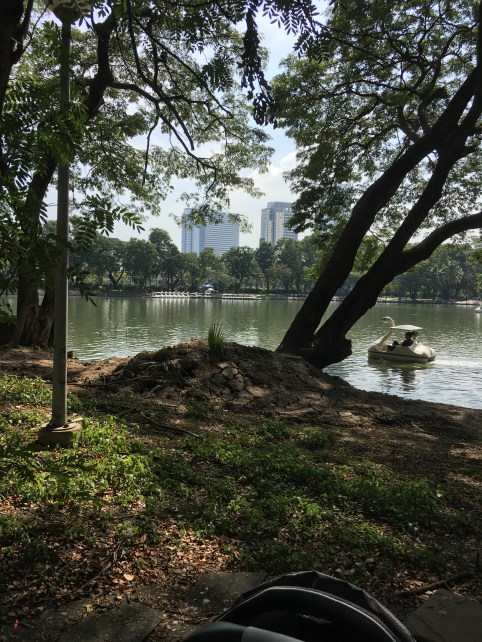
img_3169

Christmas Eve, Lumpini Park, and not a Santa Claus or Christmas elf in sight (Photo by Stockton)

Some might attribute the absence of Christmas to the fact that Bangkok is 2,000 miles closer to the equator than is New York City, and December is a very hot month. Every time I emerge from an air-conditioned space, I feel like Tom Hanks’ character in Volunteers, descending from his plane into this country. “My God,” he moans. “We must be about a mile from the sun!”

But having lived in the Arizona desert for many years and having spent a few holiday seasons in Florida, I know it’s not the climate that’s to blame. People dwelling in warm climes might pay some lip service to the fact that they can’t get into the Christmas spirit without snow, sultry wintry wind, and delectable fires burning in their family rooms’ fireplaces. But they’ve adapted. No matter what the climate, people who want to decorate for Christmas will find ever more elaborate ways to deck their cacti – or palm trees, boats or sand castles – with boughs of holly and whatever else they can think of to connote the season. In Thailand, however, the landscape is bereft of palm trees disguised as Tannenbaums, of neon MERRY CHRISTMAS signs twinkling out of store windows.

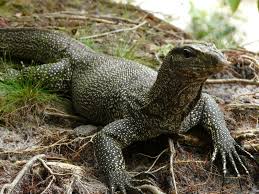
imgres-1

Amazing. Not a single Monitor Lizard wearing antlers! (Stock photo)

While there is no outpouring of zealotry for the trappings of Christmas, people here are eager to honor one another’s traditions. Among those people educated in the ways of The Other, there is a genuine attempt to honor the fact that some do celebrate a very important holiday on December 25.

In the lobby of my hotel the proprietors have chosen an mp3 loop to play endless celebrity covers of every Christmas song imaginable, and on the screen, a slide show of snow-covered New England and old England scenes that seem odd, out of context, dislocated. But the intent is sweet. Every staff member greets every western looking guest with a heart-felt “Merry Christmas.” But they don’t worry about offending me for not saying Happy Chanukah; they really are unaware that there is such a thing, and I would not expect it. I am touched that they wish me happy anything.

hideous-christmas-dec

Luckily, there are not a lot of Christmas displays in Bangkok, but they are not entirely absent. Photo by Stockton.

I doubt they’ll wish anyone a happy Kwanza, and certainly not because they are anti-Kwanza. There simply are no African-Americans staying here. Yet, I am sure that if there were or if a major Muslim holiday happened concurrently, they would be offering their best wishes with some customary acknowledgment, the equivalent of Merry Christmas. And when the time is right, they probably greet celebrants of Vesak or Diwali with appropriate greetings. There is no reluctance to call the day what it is, no fear of offending.

images

The Chinese Pavilion in Lumpini Park, Bangkok, like the other temples and memorials, are devoid of Christmas accoutrements.

On Christmas Eve, in that same lobby, I returned from an outing to find banana muffins laid out on a table in front of a sign scrawled in a childlike cursive that said, “Free. Merry Christmas.” I smiled at the desk clerk and bowed with my hands together to show my gratitude in the Thai way. She grinned back at me, bowing and likewise holding her hands together, saying, “Christmas cake. Very good.”

I asked the clerk if she celebrates Christmas. “Oh, no,” she said. “New Year only.”

I have never been a fan of the flap over what to say in the holiday season. It’s absurd, at least. Christmas is a specific day, and on that day to say Merry Christmas seems totally appropriate, especially in our country, which has designated Christmas a national holiday. To wish Happy Holidays on that day, seems as absurd as wishing someone a Merry Christmas the day after Thanksgiving, when many holidays approach.

We could take a lesson from my hosts here in Bangkok. If we embrace each day and call it what it is, if we honor our collectivity by understanding that Happy Holidays is all-inclusive, we show our respect for one another, for the individual attributes that make each of us a person. We acknowledge our differences while accentuating our common humanness.

What can be bad about that?

Kol Nidrei

theamom

To Thea

I feel you in the music of the clouds

When the rain keeps rhythm in my heart,

Or when my soul can’t breathe. You left me, sister,

Here under mother’s rueful gaze, her pain

A poison I no longer fear, now loathe.

Remember? You mocked me when I called you

Foe, your frailty my rival. I prayed

For illness, sought to suffer like you did

Knowing mother loved your infirmity

Resented my health, my robust, boy-like

Strength. I wanted all you had and were.

While mother wanted nothing more than you

And a son, the treasured son I cannot be.

You alone said, “Nonsense. You’ll be brilliant.

Just find a concerto of your own.”

Now you’re gone, and who will help me string my

Bow? Who will turn my pages, make me smile

Through Dvorak, Schumann, and the rest? No one.

My cello is buried here. My music was you.

charlottecello

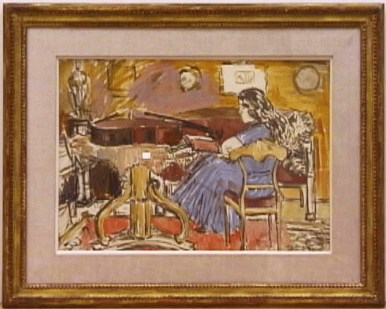
Charlotte With Cello, by Borislav Bogdanovich (http://www.bogdanovichcollection.com/biography/)