

Get Real: The Leslie-Lohman Museum Protects an Artistic Legacy

Amid the recent fanfare Howard Schultz’s adroit publicists have stirred up around Starbucks’ new “We Pay for College” policy, many former critics of the mega-corporation are now waxing downright sycophantic. Their mission statement – “To inspire and nurture the human spirit – one person, one cup, one neighborhood at a time” – has become a sign of genuine hope for a downtrodden nation. Youngsters can hope for a better future by signing on with Starbucks, a life without debt, a life where a college education is as simply acquired as working a few hours each week for the Starbuck benefactors then going home and logging on to Arizona State University’s online classroom. Raise a cup of Joe to the All Powerful Schultz.
But make no mistake, if you work for Starbucks, and if you don’t want to be ruined in the workplace, you must tread carefully. And if your manager doesn’t like you, even if your manager is incompetent and vindictive, you may be screwed even if you are careful. But one thing is clear: there are no mistakes that might not be punishable by banishment from Starbucks, and the Corporation is at liberty to deny you so much as a second chance. My beloved daughter Erin knows firsthand how easily a “partner” can be betrayed.
Erin took a job with the Astor Street Starbucks in 1997, when she was still a student at NYU. For four years, she worked for the Corporation, enjoying the work which allowed her to balance her efforts to attend auditions, to study her craft, and to feel useful in the workplace. She was a cheerleader for Starbucks, and her managers universally loved her.
As she moved about, Erin applied for and easily achieved transfers to other locations. She worked for a long time in the original Times Square store, which did not have bathrooms or seating but did have long lines and a high level of stress. She excelled as a barista there, and when she moved back to her family home upstate, the company gladly offered her a transfer to her hometown Starbucks.
Still attending auditions in The City, still attending classes at Second City and the like, Erin applied for a shift supervisor position, and the promotion was automatically granted. For over a year, she worked in that capacity, and she attracted a following of local regulars, who set their Starbucks visits by when she was on duty. She, her co-workers, her fellow shift supervisors, and her manager got along famously, and they all agreed that they had the best Starbucks team in the country. Andrew, the Store Manager, averred that they had, to his estimation, the best working team of any kind anywhere.
But Andrew completed his MBA and left Starbucks to take an administrative position in another company. The regional office rushed into hiring JoEllen, who had recently joined Starbucks from a national clothing chain, and she was vocal from the start about how much she disliked the coffee business. Her dissatisfaction with her new responsibilities were evident to everyone, but she made Erin her special project.
For reasons Erin was not clear about, JoEllen went out of her way to schedule Erin at exactly the times she requested that she not be put on. Erin loved to open, but she requested that two days a week, the mornings after her late night classes in New York, she be allowed to work later or to be off. JoEllen persisted in putting Erin on, and Erin went to work without complaint. But because Erin was very critical of everything Erin did, Erin was constantly terrified that she would make a mistake. Self-fulfilling prophesy.
One morning, after returning from New York in the wee hours, Erin failed to hear her alarm. When she awoke and realized she was late, she rushed to the store and opened ten minutes late. She was terrified of JoEllen’s rebuke, as the manager had been increasingly hostile and demeaning in recent days. She jumped the clock, changed the time, and she signed in on time.
JoEllen did discover the cover-up – a customer had complained that the store had never opened late, and she could not understand why it did so on this one day – and she summarily fired Erin. “You might have well as dipped your hand into the till and stolen money from the company,” she told Erin.
Erin acknowledged her error. She tearfully apologized, begged forgiveness, even got down on her knees in wailing supplication. “I was only trying to stay out of trouble,” she said later. “I never intended to steal from Starbucks.” But JoEllen was obdurate. The firing stood. She had stolen the equivalent of $.06 from the corporation.
Contrite and miserable for her theft, Erin appealed to her regional manager. The regional manager apologized to Erin, acknowledged the fact that Erin had had a perfect record for the five years she had worked for Starbucks, congratulated her on her accomplishments as a barista and a shift supervisor, but she told Erin that she was powerless to do anything to reverse the firing. “The company has a strict policy that Managers have control of their stores, and to that end, the company will uphold any managerial decision, especially a firing for cause. This is considered a theft.”
Five years of Erin’s work history became unusable. No one wants to hire a Starbucks reject, but no one will hire a woman with experience-empty years on her resume. Erin could not find a job. So she appealed to Corporate Headquarters.
By this time, JoEllen had been fired. In fact, she was fired just weeks after Erin was leg go. JoEllen was actually skimming her store’s intake. So, when Erin turned to the people at Corporate, she included that morsel of information in her letter.
Again, she received a glowing thank you for your service, but you are screwed. After all, you did steal from Starbucks. We cannot take you back.
The world has not spun evenly for Erin since that day. She cannot find a job, and she faces enormous, endlessly increasing student debt. She had to drop out of school entirely because she could no longer afford to be there, and not having the degree has hurt her as well.
“I was stupid,” she says now. “I never denied that. But I didn’t do anything malicious, and even an ex-convict can get a job with Starbucks when h/she gets out. I feel like a Jeanne Valjean! Shouldn’t there be some kind of statue of limitations on how long I have to suffer for this?”

Variations on a Surreal Scene of Violence
Show me the country, where the bombs had to fall
Show me the ruins of the buildings, once so tall
And I’ll show you a young land
With so many reasons why
And there but for fortune go you and I, you and I.
Phil Ochs

1. This is personal
I am a first generation American Jew. I am here by a fluke, by the accident of my mother’s survival, the miracle that she was not exterminated by the complacency, conciliation and paralysis that killed 6 million of her co-religionists and at least 5 million of her co-Europeans over a period of less than six years.
As the child of that happenstance, I owe a huge debt to my grandchildren. It is absolutely necessary that I not keep my mouth shut, that I not stand by and watch as Rome burns, that I not look the other way when society and government conspire to allow rampant murder to take over the country. It is time I look you in the eye and say aloud that if we do not find a way to stop mass murderers from infiltrating our schools and theaters and shopping centers and lives, each of us is complicit in the deaths and/or maiming of every victim.
All right. I’ve spoken. I’m probably preaching to the choir. Our voices join in outrage.
Now what?
Trouble is – and I’ll bet this is what happened to a lot of folks who might have wanted to change things in the 1920’s, 30’s and ‘40’s – I don’t know what we should DO. I have a perseverant Facebook friend who posts every few days that she may be only one voice, but she will keep saying how terrible it is that kids die in places like Newtown. But a voice, a post on FB, is not enough. What action can we take?
Well, to begin with, we might attempt to take down the gun lobby, get them to back off their insane stance that assault weaponry belongs in American homes, that armaments equal liberty. There is no question that the idiocy that prevails over our legislative bodies needs to be tempered with something like intelligence. It would be a good place to start, but we all know that even controlled guns, like controlled substances, can be lethal. The weaponry used in the Newtown slaughter was duly registered to the mother of the assassin. Further, in Canada where guns stand at the ready in every corner, there are no mass murders akin to ours.
Clearly, gun laws are not The Cure. Yes, we need stronger enforcement of more stringent laws, but the American black market is a cornucopia of easily obtained ill-gotten gains; gun laws won’t stop the killings. What else?
We need better health insurance and a medical community equipped to fully treat mental illness rather than stuffing sufferers with pills and telling them to call in the morning once every six months. We require a national societal outlook that accepts that mental disorders are as honorable as any other; no one hides diabetes in the family closet, but few are willing to talk openly about the schizophrenic who lives upstairs. That has to change.
We need more empowered and more effective training for law enforcers. When the Isla Vista murderer was reported to local police for his stash of weaponry and his menacing, disturbing videos, the police found him “polite” and “well-mannered” so they left him to his diabolical planning. That boy’s red flags were waving all over the Internet, all over his lifestyle, all over his face, and no one took him seriously because he was polite and well mannered? Who trained those investigators?
We need sensitivity to the vagaries of iconoclasm. Perhaps rather than labeling some of the perpetrators, if their communities had found a way to embrace them, they might have facitated ways to work out anxieties and anger. As a drama teacher, I often saw misfits find satisfying niches that turned their outsider statuses to a special kind of belonging, and I know that drama’s sister arts – music, individual sports, crafts, visual arts, etc. – are equally adept at “normalizing” weirdness.
We need mitigation of the violence we call entertainment and/or to understand why mad violence is so compelling to us all. A favorite character on the unremittingly brutal Game of Thrones is stabbed in the eyes, and everyone shudders but no one fails to tune in next time to see who’ll be the next prolific spewer of blood. Life on television and in video games is a bowl of splayed intestines, relentlessly devoid of sanctity. But while video games, television drama and even the news might inure our youngsters to the savagery around them, it is not the reason some carry AKAs into elementary schools and shoot five- and six-year-olds.
I could go on, but the point is clear: there is no one way to stem the tide. And even if every item on the list suddenly appeared in our communal midst, the ill might not be cured.
Because the one thing we need absolutely is a way for all of us who decry the violence to work together. We need organizations that send us out into the communities to preach and teach and listen and learn. We need to host meetings where kids and their parents and the disgruntled and the disenfranchised might come together for group support. We need to create a movement through which we are empowered to act.
A few groups do exist that claim to be fighting the madness, but when I try to get involved, they offer me no action; they simply ask for money. I have none. I can write, and I can speak, and I’m experienced in working with people; I want to put my skills to work making a difference. It should not matter that I am not solvent enough to contribute financially.
I am as baffled by it all as the next one. But other countries with problems far worse than ours, with cultures that have far less aversion to violence than ours, do not suborn the kind of terror we seem to be witnessing with increasing frequency here all over the country. I do not want my legacy to be my silence. I do not want my descendants to judge me complacent.
There must be something we can DO. Now.
What about we start with a mass protest meeting? We all join on Skype or Google or some common space online, and we have a huge symposium to brainstorm solutions. We sign a promise to sling no blame. We vow to listen to all suggestions, make no judgments, and we select volunteers to compile our ideas and to schedule follow-ups until we have plans of action, at which point we set about implementing them.
Anyone have another suggestion? It’s time. While we still have some.

2. Nobody is Safe
I’ve been thinking a lot about my friend May these days. May’s not her name, but everything else I write about her will be faithful to the person I knew.
May and I taught together in a fairly small English department in a mid-sized town in Connecticut. She was a veteran by the time I began teaching, though we were nearly the same age. She is one of those exceptional people called to teaching, and while I did not agree with her approaches, she was undeniably driven to spend her life in a classroom. She loved her work, loved her school, loved her students.
But more than that she loved her family. Her husband was a semi-retired business owner, and together they kept horses, which both enjoyed riding. They had a daughter whose disabilities made her dependent on them for life, but whom May adored with unfettered warmth. But the light of May’s life was her talented, intelligent son.
Because I had a son a few years younger than hers, and because my son was a very accomplished young man who attended our school, May never tired of sharing photos and mementos from her son’s glory days in high school, then college; and when I left my position as a teacher in the room down the hall from May’s, that son was about to be married to a girl May adored. May was beside herself with joy. Grandchildren were on her horizon, and she was thrilled.
I didn’t see May for a lot of years. I left that school, moved to another one and then left teaching altogether; I hardly thought about her. But when Newtown happened, I saw that one of the children murdered there had her last name. Unwilling to imagine the bottomless pain of being a parent of a Newtown parent, I dismissed the name as a coincidence until a week after, when someone I knew from that town wrote me to tell me that the child whose name I had noticed was indeed May’s grandson.
Connecticut is a small town, and May’s was not the only family I knew pummeled by the awful rubble. But having reached grand-motherhood myself, having spent so many hours hearing the golden son stories, the news of May’s loss struck me like a serrated knife slicing away the edges of my heart. I couldn’t even write to her. I hadn’t been in touch with her for over twenty years; it would have seemed to her disingenuous to write of sympathy, of love. I was dumbstruck.
There is no bottom to the kind of despair I envision in the wake of such a loss. And today, for the 75th time since that horrific day in Connecticut, another grandmother’s life has been strangled by a duly registered semiautomatic pistol aimed pointlessly at her child’s child.
It is time to stand up as a nation and say ENOUGH. We will take no more. We will make it stop. And we must do it now. We have no time to lose. We are all being watched through the sights of those guns aimed at our loved ones. Those guns must be hobbled.
Now.
 Reading Rachel Louise Snyder’s What We Have Lost is Nothing, I found my memory drifting back to 1971.
In those days, I was an undergraduate at Columbia University, and, like most of my fellow Columbians, I rarely ventured west of Amsterdam Avenue or north of 120th Street. The little corner of Harlem I called home was a pristine enclave protected by the strong arm of the University, but west or north of the school, the menace of the times gnawed at our safety. A law school professor was murdered on Morningside Park, dubbed in those days the most dangerous piece of real estate in America; gentrification had just begun to cross the great divide between privilege and old Harlem.
Then one day – the only time before or since — I was accosted smack dab in the middle of that island of solace. A kid from somewhere outside the fortress wandered in and tried to mug me right there on the College Walk. It was an early December evening, already dark. I entered the enclave through the main gate on Broadway at 116th street and walked past the guardhouse. As I stepped onto the campus, a burly kid jumped out of the shadows and grabbed at my oversized, book-filled bag. I was a pretty burly kid myself, so I tugged back. It didn’t occur to me to let him take it – everything I owned was in that bag, and I was a scholarship kid with no resources to back me up, so I wasn’t about to let anyone take my books and wallet. I won. The campus cops nabbed him as I ran up the steps into the protective light of Low Library.
At first I thought that all my would-be assailant got from me was my equilibrium, but of course I was wrong. Anyone who’s ever been held up in any way will tell you that in the aftermath, such a transgression is alarmingly unnerving; it weakens our whole belief system by forcing us to face the fact that we live among those who wish us ill, who would take from us all that we possess if they could, who do not respect our common humanity. What I had lost was nothing, but for a time, frightened and distrustful, what I lost was everything.
Snyder’s book, which examines the aftermath of what appears to be no more than a mere violation of property, takes place in the Oak Park section of Chicago, on Illios Lane, a quiet cul-de-sac, where the residents cling to a tenuous sense of security until one day, when most everyone is out tending to business or errands, a thief or a gang of thieves or some unseen hand invades each of the homes in that semicircular dead end and burglarizes every house, leaving no one with prized possessions unmolested.
The perpetrator gets away with the robbery, despite the fact that one member of the community actually saw the deed in-flagrante. “What we’ve lost is nothing,” Michael MacPherson, self-appointed spokesman for Illios Lane, proclaims cavalierly for the television cameras that amass at his front door to gather every salacious detail. He strikes a Zen posture that belies his underlying anger and dread, a posture that unravels as the novel progresses.
While it may be true that possessions are not arms and legs, that things are nothing but maya, mere tethers to the material world, MacPherson and his neighbors will have to come to grips with a renewed sense of vulnerability. Faced with the nagging awareness of dread and prejudice that lurks on the periphery of their liberal bents just as Austin Boulevard and the infamous Chicago Southside shadow the edges of their comfortable corner of suburbia, these characters are part of the phenomenon of gentrification backlash we are witnessing all over the country. The cozy illusion of well-being evaporates, and the snug delusion of sodality erodes in mistrust and misgiving until all hell breaks loose. At bottom, this is what they expected, that the “them” outside the gates will never peacefully co-exist but will forever infiltrate as thieves, as rapists, even as neighbors.
Rachel Louise Snyder is a reporter, a writer of nonfiction, and she tells her tale with the eye of an investigative journalist, sniffing out details that might go unseen without her prompts. She makes the neighborhood come to visual life, gives the characters, who comprise her cast of reluctant miscreants, physical attributes that are so specific, any reader could pick them out of a lineup. She lists the things they’ve lost in a way that suggests Tim O’Brien’s list of the things his buddies carried through the jungles of Viet Nam, illustrating how they reflect their owners’ sensibilities. Snyder describes the news coverage with the discerning eye of a post-career retrospective. In fact, if there is anything missing in this entertaining and thought-provoking work, it is development of the characters’ lives that intertwine and bisect one another’s in the aftermath of the robbery. But that is not her point. This is not a character-driven look at a hero’s arc as h/she discovers malevolence. It is a study in social psychology and group dynamics, a look at how good and evil coexist in each of us and how readily our upright morality acquiesces to our darker side.
Michael’s daughter, Mary Elizabeth MacPherson, is a petulant teenager who longs to be the next notch in the love-belt of notorious, popular bad-boy Caz, real name Chris, who nurtures his rep as assiduously as a mother cat nurtures her kitten. Mary actually manages to attract Caz by gaining fame for having seen the foot of one of the robbers and having lived to tell the tale. Ditching school to trip out on Ecstasy with Sophea, her Cambodian immigrant neighbor and current best friend, Mary was swimming in fuchsia-dominated rainbows under her father’s desk at the time of the break-in but was so anesthetized that she reacted far too slowly to i.d. the perpetrator or comprehend the circumstances. Mary’s father, an ineffectual exemplar of mediocrity, is the first to feel the slings and arrows of this outrageous turn of events. It is he who recognizes his powerlessness as a father, not only to keep his home from harm but worse, to save his daughter from self-destruction. He guesses the secret of her drug experimentation, and in his mind, she becomes both the catalyst and the victim of the robbery. He dons the mantle of blame.
Mary’s mother Susan, who has made it her life’s work to convince upwardly mobile – mostly white and Asian – buyers to invest in Oak Park district homes, can’t help but blame Michael as well. In the aftermath of the burglaries, her bosses decide that the high profile nature of the event has cast her in a negative light for their clients, and she is furloughed, leaving the family handicapped by a radically reduced income, for which she is increasingly resentful of her husband. “The burglaries weren’t his fault. Her being temporarily laid off wasn’t his fault. Yet somehow these two events linked to a husband she was eternally, darkly, deeply disappointed in.” Knowing that the real fault is in her having chosen Michael, Susan resents him all the more, and she loses all sense of belonging in what always seemed like a successful marriage.
The MacPhersons’ neighbors, meanwhile, suspect that Michael, who has been all too forthcoming and available to the press, has had some hand in perpetrating the awful intrusion on their safety. At the same time, Michael begins to question all his neighbors’ motives – Why do the Cambodians come to this country? What was the blind neighbor doing that kept him from harm? Why did the fake French chef down the street say he was in Paris when he was home all the time? – the neighbors are increasingly dubious about him. The Cambodians build a spirit house to ward off the malevolent shades that hover over them, embodied in their white devil neighbors. The Kowalskis use the moment to justify their immediate white flight. Etienne the Fake Frenchman imagines this was perpetrated against him to dissuade him from operating such a pretentious restaurant in such an insubstantial, ostensible haven. Even Susan begins to listen to the inner voice she has long consigned to silence that warns her it’s perilous to live so close to Austin Boulevard, that the omnipresent Southside looms large and dangerous, and her neighbors might be complicit in its quest to destroy Illios Lane.
Every resident of Illios Lane contributes to the culminating scene, one of extraordinary violence that erupts from the center of the stew simmering ever closer to a boil from the moment of the inciting incident. All impulses to protect one another, to work together to find a way to prevent another incursion from disrupting their lives are devoured by the fanned flames of wariness and doubt. Only Arthur, the story’s blind but omniscient observer, sees the madness for what it is, and even he, with his limited power to deflect it, can only cover Mary’s eyes so that she might be spared the sight of the worst manifestation of their mutual corruption.
But Rachel Louise Snyder does not spare her readers. We are stunned, asked to acknowledge more than we ever wanted to know about how good can be interred with the bones of any human being while our evil just goes on living. What We’ve Lost is Nothing is a cautionary tale that reminds us that even in the ivory tower of liberal good intentions, we are not impervious. We might turn Oak Park into Clybourne Park as we’ve turned much of Harlem into the tony Upper West Side, but we can never insulate ourselves from our own inner demons. And unless we exorcise those demons somehow, we will perpetually face the prospect that what we’ll lose is everything.

Author Rachel Louise Snyder is a writer, radio commentator, professor of creative writing at American University.
My most salient memory is of his knuckles.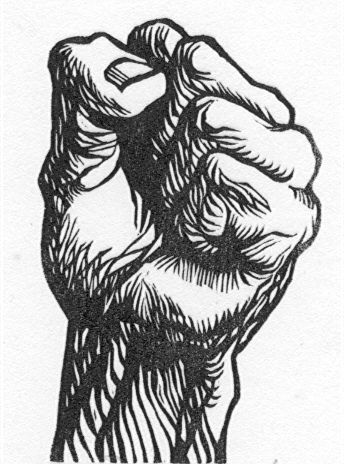
Suspended above my head, poised to strike me, they belied the generations of Yankee prosperity, the privilege of his youth. They were the joints of a laboring man, gnarled, swollen, yellowed with age, frostbite and continual paper cuts. The hands were enormous, muscular, striated with bulging veins. Ominous.
“Do you dare say that again?” he thundered.
Knowing full well that my words were a declaration of war, I replied, “I am never going to church again.”
His hand did not change position. It trembled, aching to complete its mission, but it remained in midair, creating a comical, cartoonish image of frustration.
I didn’t laugh.
“Daddy. . . ” My voice broke. How could I make him understand? I hoped he’d drop his arm to embrace me, to encourage my preteen independence. “I-I just don’t believe in it anymore. It stopped making sense.”
He dropped his arm and clenched his fist, pushing the veins to greater prominence, and bit down hard on his back jaw. His rain watery eyes clouded over. The concept was beyond his ken. Never in his fifty years, despite his self-imposed life of hardship, had he ever considered the absence of “sense” in his religion. How could this child, this female child, question his truth? He shook his head. The light from the rising sun streaming in through the picture window caught his baldness and cast a halo over him.
I gasped.
“This is not an issue to be discussed,” he barked. “You have no choice. I say you will get dressed, and you will come with us to church as you always have.”
“Why?”
“Because I said so. I tell you what to do, not vice-versa.”
“I should be allowed to choose. You cannot legislate belief, Daddy. I don’t believe.”
“Nonsense. Of course you believe. What is not to believe? The Lord our God is omnipotent, and He is Everywhere. He is love. God is Love. Someday you will see him, and all will be proven. You believe because it is true.”
I knew argument was pointless. Half a century before, his grandfather had whispered Dutch Reformed rhetoric into his ear at birth, and his infant brain had embraced the dogma.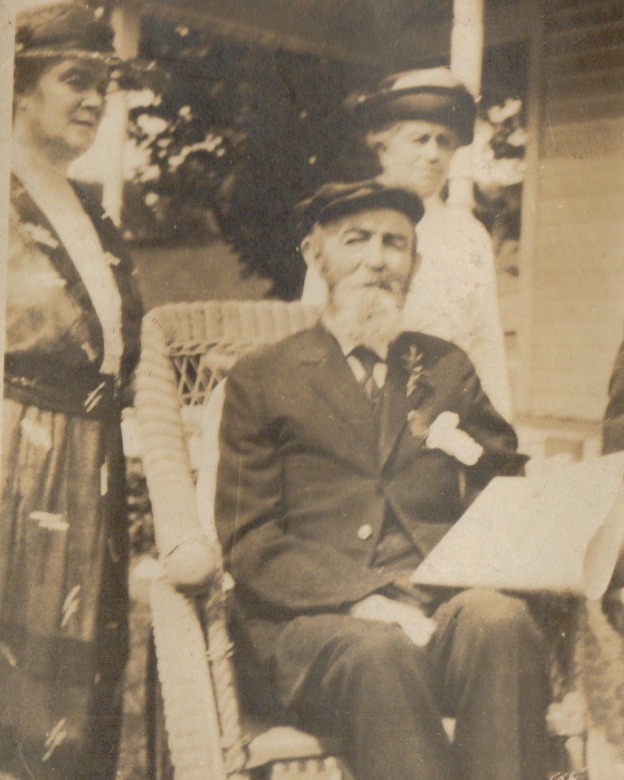
God had presented Himself to my father first in his twelfth year, making His presence known by robbing him of his father. Daddy knew he deserved this show of divine wrath because he had taken the Lord’s name in vain the day before.
Then again, at seventeen, when he had prayed that his eighteen-year-old wife be spared to care for the infant daughter he had bred out of wedlock, he had accepted unquestioningly God’s decision to take the young woman into Heaven along with the son she was attempting to bear him. Not long after, as a medical student in New York, he again trusted God’s wisdom in punishing him for performing an abortion on his partner’s girlfriend; he was dismissed from Columbia without appeal. He had willingly attached himself to the wheel of retribution and had paid for his sins ever after by refusing to allow himself to experience any joy.
His arm, still fisted and poised to strike, must have tired because he stretched and reached over his head, resting the hand on the bony top of his head, forming, with his huge mitt, a skullcap of sorts. So priestly did he look that I averted my eyes. I knew I should feel shame, but I hated his joyless God, and I wanted to prove to him that his was not the only righteousness.
“Daddy, I don’t understand why you care. Why does it matter to you if I go to church?”
“You will do as I say.”
“I will not.” I said it quietly, hoping that the hush in my voice would still the turmoil in his soul.
“How dare you defy me? Go get dressed. We leave in twenty minutes.”
The veins in his hands pulsed in rhythm with the pounding of my heart.
“No.” I whispered.
“What?” he screamed.
“I won’t,” I answered. I was calm now. Nothing would move me. I was not willing to carry his cross anymore, to seek the salvation he was so sure he had thrown away.
His whole body quaked now as he held himself back. I think he wanted to kill me. I was the incarnation of all his failures. His failure to fulfill his father’s dream of a medical career, his failure to appease his mother’s disappointment at his wrong-side-of-the-tracks, shotgun teenage marriage, his failure to be a real father to my half-sister, his failure to impose his fundamentalism on my mother. I saw my weapon then, and I grabbed for it. At any moment he might lunge at me, attempt to crush me with his hands. I had to defend myself.
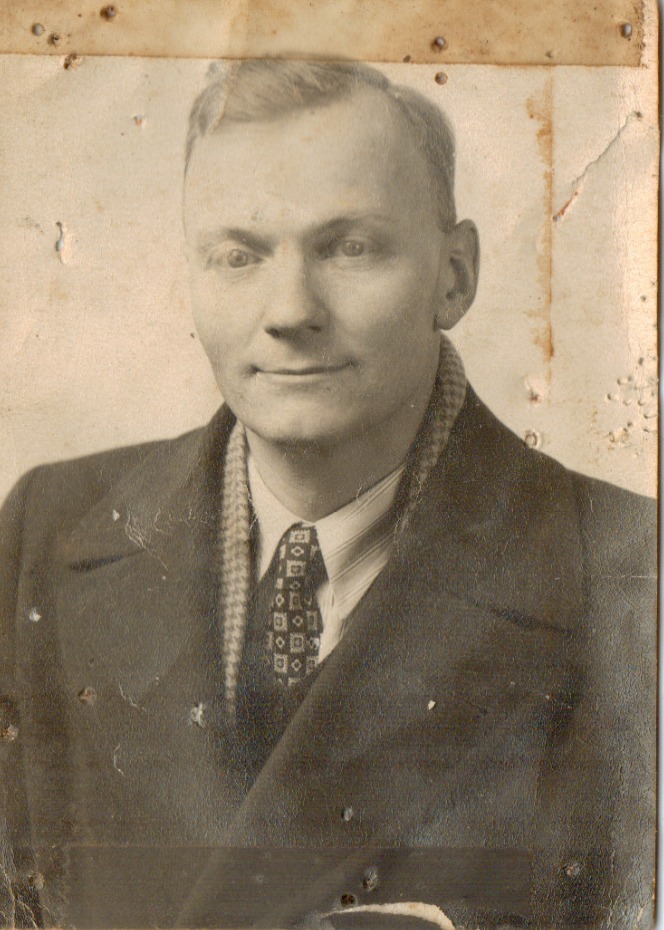 “Daddy, you know Mommy doesn’t believe in it. You can make her go to church, but you can’t make her believe what you believe.”
“Nonsense. Your mother shares my beliefs.”
“She does not.”
“Charlotte!” He screeched toward the kitchen where she was hiding behind breakfast preparation. “How dare you confuse this child?”
“Leave her out of this, Daddy. She didn’t do anything.”
“She is poisoning your mind with doubt.”
“No. Mommy would never contradict you, she’d never admit you’re wrong in front of me. These are my feelings, my thoughts, my doubts.”
His face was bluish as the veins in his temples struggled to carry the oxygen to his brain. I feared — and hoped — he’d drop dead right there, right then, a victim of his apoplectic obsession with a God I detested. He rubbed the back of his hand across his forehead, and the veins glistened with the moisture they collected.
“I just know my mother,” I continued. “And she could not possibly embrace your idiocy. She is, always has been, always will be a Jew.”
There. I had said it. I waited for him to fall, to convulse with pain and then to disintegrate into a crumbled heap. Surely this knowledge, my giving words to the unspeakable truth, should be as terrible and as swift as the sword of Christianity he held dangerously over my head.
We had never admitted to one another that our life in the church was a lie. That those late Sunday arrivals, our oversized family marching in to fill a pew at the center of the nave, were mere display. My mother, the beloved of his life these past sixteen years, the mother of his seven recent progeny, was a Jewess. Marrying this man in 1945 must have been a comfortable safety from her nightmare-ridden childhood, from the terrifying memory of the friends and family would could not, as she had, escape the cry of Juden Heraus. Her children were safe from the freight train, but she could not deny her self. She would accompany him to his church, sing songs of praise to his Jesus and sacrifice her children to his fanaticism, but she would not convert. No holy water would ever wash away the receded passion for her heritage.
I watched his hands as my words penetrated the wall of his illusions, and I was sure their invasive nature would strike him dead . . . or that his tense and throbbing hands would execute me. Either way, I expected justice would be served.
Instead, a great calm descended on him. The sun was higher now and bathed him in its full light. He unclenched his fists and closed his eyes in a moment of silent prayer Then he opened them, smiled beatifically and said simply, “Breakfast is probably waiting. You know how much your mother hates that. We should go eat.”
 carlastockton.me