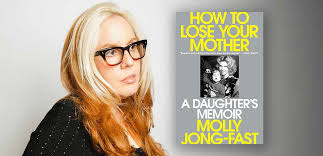
When Molly Jong Fast’s How to Lose Your Mother: A Daughter’s Memoir (Viking 2025), I resolved to avoid it. I mean, Erica Jong, author of my liberation, facilitator of my most humorous self-deprecation. I didn’t want to know the sad, selfish underbelly of my hero. Then, one day, I listened to an interview with the author, and I thought, “Well, if I can listen to this book in her voice, maybe I’ll learn something.” I did. I found the audio book narrated by the Jong-Fast herself, and, wow, am I glad I did.
Once I relented, I found myself feeling enormously grateful to Molly Jong-Fast for sharing her mother’s missteps, blunders, neglect, and abuse. It made me more aware of my own mistakes and offered me a sense of what my own children might have felt at times in their childhood.
Erica Jong was nothing like me. She was glamorous, well-connected, and a star with a severe drinking problem. I was and had nothing of the kind. But I am a writer, and I know now that too often in my children’s lifetime I felt I had relinquished my Self on their behalf, and I am sure I unwittingly hurt them in some of the ways this mother hurt this daughter. Erica Jong’s dementia and her singular life view prevent her from understanding what happened to her daughter, but with any luck, I still have some time. To make some repairs. Or at least to let my kids know I care. I am sorry.
At base, How to Lose Your Mother: A Daughter’s Memoir, is an everywoman story. When I wrote my memoir, I struggled with how to depict my mother, who suffered multiple traumas too few years before I was born to have sorted them out; she grew to be the mother everyone wished were theirs, but there was always a regret between us for what we could not have. I realized, as I wrote and forgave us both, that the complexities of the mother/daughter conundrum are much the same for even the happiest of pairs. Each mother, each daughter is a reflection of the other. As my mother’s face becomes more clearly the one I see in the mirror every day, I understand more deeply how normal we actually were.
I am grateful to Molly Jong-Fast for the mirror she held unto my nature in much the same way I remain grateful to Erica Jong for Isadora Zelda White Stollerman Wing . . . and later for Serenissima and the sensual dive into Jessica Shylock’s world. . . . as well as so many other pages of entertainment and enlightenment.
How to Lose Your Mother: A Daughter’s Memoir is a lovely — if oftentimes harrowing — read, a book any daughter is liable find herself and her mother in. A terrific experience.
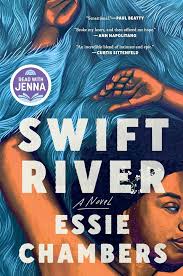
From the moment I dived into SwiftRiver, I was swimming through memory, in sync with Essie Thomas’s captivating heroine Diamond Newberry. Like Diamond, my 17-year-old self suffered from a sense of dislocation, and I recognized in her a familiar longing to know an origin story. Like me way back then, she found her hope in stories her family members, the ones willing to talk candidly about the past, could share with her. Like Diamond, I ate my troubles away, wallowed in tuna casseroles and wingdings, but being white, From the moment I dived into SwiftRiver, I was swimming through memory, in sync with Essie Chambers’s captivating heroine Diamond Newberry. Like Diamond, my 17-year-old self suffered from a sense of dislocation, and I recognized in her a familiar longing to know an origin story. Like me way back then, she found her hope in stories her family members, the ones willing to talk candidly about the past, could share with her. Like Diamond, I ate my troubles away, wallowed in tuna casseroles and wingdings, but being white, what young me did not have in common with Diamond was color.
My confusion and disassociation were just as real, but they were invisible, and I therefore did not suffer the same slings and arrows of outrageous racism that Diamond endures. Yet I easily relate to what she feels, and how she responds because as unique as Diamond is, she is a character who represents the distinctly American experience of growing up in an unkind, duplicitous society whose respect for diversity is superficial at best.
Diamond is caught in a perfect family-and-society-fueled storm. Her father has disappeared, is perhaps dead, and her mother has become recklessly unbalanced. Her marriage to Diamond’s father was disastrous, but she does not know how to live without him. So she drinks. She makes Diamond responsible for her but is, at the same time, immobilized by the way her community – the town that has been her family home for generations – treats her daughter. She knew that nothing about their life together would be easy, but she never embraced his brittle fragility.
Already restless and morbidly obese, Diamond finds herself entirely untethered by her fatherlessness. She wants to stop her mother’s hurt, but she is aware that her mother’s love is genuine but also neurotic and toxic. She longs for her father’s return, as he seems to be the only one who might have the knowledge to explain why the town’s Black population inexplicably left town in the dead of night some years before and what their exodus has to do with her. He alone might justify his bitterness and the self-destructive recklessness that causes him to act out his angry bouts of frustration. Diamond has no place to turn for answers until she receives a letter from her father’s cousin-sister, who lives in the Newberry family home in Georgia.
Letters pass between the girl and her unseen auntie, and Diamond begins to assert her true self. She secretly signs up for driving lessons and forges a friendship with a girl from her class, who is equally void of ballast, a girl who has learned to sublimate her pain in promiscuity. Over the course of an illuminating summer, Diamond learns to drive, loses her virginity, and finds her roots.
At the heart of Swift River is the reminder that no matter what ethnicity, what race a teenager is blessed or cursed with, the compulsion to know who we are and where we come from is universal. Diamond’s plight is overwhelming, but she finds a way to cope just as teenagers have always forced themselves to cope with circumstances they would never choose as the basis of their lives.
Like all the great coming-of-age stories, this one is written by an adult with a mature outlook, told through the eyes of a precocious seventeen-year-old who clearly has the benefit of Chambers’s wisdom. For that reason, Swift River is a great read for teens and adults. It is an illuminating journey over the racing rapids of adolescence, a passage that none of us avoids.
Diamond is caught in a perfect family-and-society-fueled storm. Her father has disappeared, is perhaps dead, and her mother has become recklessly unbalanced. Her marriage to Diamond’s father was disastrous, but she does not know how to live without him. So she drinks. She makes Diamond responsible for her but is, at the same time, immobilized by the way her community – the town that has been her family home for generations – treats her daughter. She knew that nothing about their life together would be easy, but she never embraced his brittle fragility
Already restless and morbidly obese, Diamond finds herself entirely untethered by her fatherlessness. She wants to stop her mother’s hurt, but she is aware that her mother’s love is genuine but also neurotic and toxic. She longs for her father’s return, as he seems to be only one who might have the knowledge to explain why the town’s Black population inexplicably left town in the dead of night some years before and what their exodus has to do with her. He alone might justify his bitterness and the self-destructive recklessness that causes him to act out his angry bouts of frustration. Diamond has no place to turn for answers until she receives a letter from her father’s cousin-sister, who lives in the Newberry family home in Georgia.
Letters pass between the girl and her unseen auntie, and Diamond begins to assert her true self. She secretly signs up for driving lessons and forges a friendship with a girl from her class, who is equally void of ballast, a girl who has learned to sublimate her pain in promiscuity. Over the course of an illuminating summer, Diamond learns to drive, loses her virginity, and finds her roots.
At the heart of Swift River is the reminder that no matter what ethnicity, what race a teenager is blessed or cursed with, the compulsion to know who we are and where we come from is universal. Diamond’s plight is overwhelming, but she finds a way to cope just as teenagers have always forced themselves to cope with circumstances they would never choose as the basis of their lives.
Like all the great coming-of-age stories, this one is written by an adult with a mature outlook, told through the eyes of a precocious seventeen-year-old who clearly has the benefit of Essie Chambers’s wisdom. For that reason, Swift River offers an astute journey through the fraught passage from childhood to adulthood that none of us avoids.


 carlastockton.me