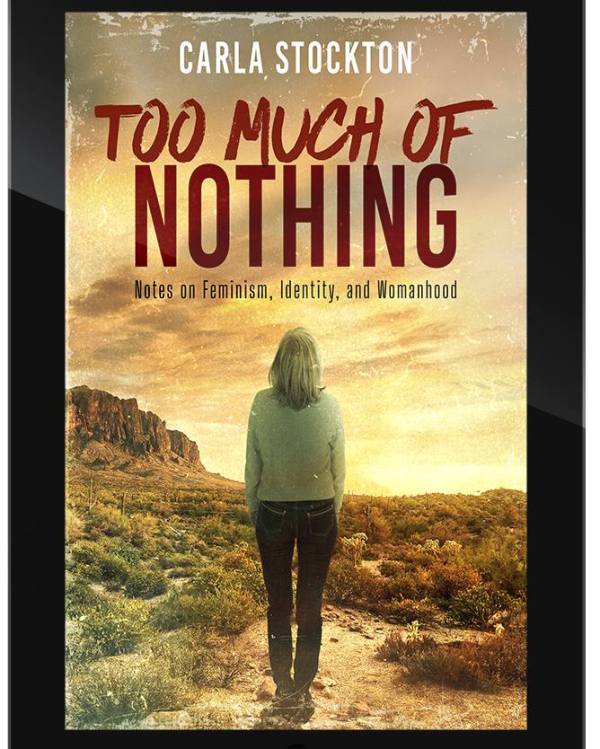
Hard to believe, I know. But here I am, age 77, and I have FINALLY achieved a solo publication. Writing was my avocation for so much of my life that it is hard to believe I have arrived to a place where it is my vocation!! I am not fond of promoting myself or touting my work, but having written the book, having put it out in the world, I am now in the business of being an author with a book to sell. I will be posting excerpts and insights here on my blog. So stay tuned!!
American adolescence is hard. At times brutal. Especially for girls. So many lessons need to be learned. So many Rubicons need crossing. It’s something most not-yet-women suffer through universally. Adolescence is at the root of Joni Iraci’s swiftly-moving novel Reinventing Jenna Rose.
Iraci’s novel drew me in and sucked me back to my own youth.
I was 18 when I became a self-sustaining New Yorker. I suppose I should have been frightened, but I had a grandmother who gave me a place to live, who trusted me to be on my own. I had all the freedom I could handle to seek myself out. That was a long time ago, and today, in the world of over-protected teens, it is hard to imagine a 15-year-old whose parents have left her to her own devices. Which is the case with Jenna Rose, the intrepid heroine of the circuitous story Iraci weaves.
At open, Jenna Rose’s Dad has disappeared, and Mom, self-consumed and bitter, is AWOL. Jenna Rose has been ordered to stay where she is, alone in her California house, with all the trappings of wealth but no comfort. She is the victim of benign neglect, a prisoner of meaningless abundance. Worst of all, the girl has no idea who she is or what her roots might possibly be. She desperately needs to throw caution to the wind, to take off, to liberate herself and find a life.
Enter a long-lost grandmother in New York City, the ghosted mother of Jenna Rose’s mom. Jenna Rose decides that the only way to liberate herself, to reconcile the many questions that muddy her past, to forge any kind of a future, she must find the old woman. Which is how she lands in New York, fabled source of self-identification, in the early days of the 21st Century.
The vagaries of adolescence are universally resonant, and Reinventing Jenna Rose reverberates with the elements that make Catcher in the Rye, The Goldfinch, and others timeless. Jenna Rose faces obstacles no less haunting than Holden Caulfield’s and no less daunting than Theo Decker’s. Yet her journey is entirely her own, unique picaresque adventure.
The presence of Jenna Rose’s grandmother and a quirkily empathetic neighbor her own age plus a devoted white German Shepherd bolster Jenna Rose’s quest for Self-Actualization. With some help from a friendly therapist and reinforcement from her new-found community, she faces and resolves long-buried personal trauma, travels to obscured corners of her own and her family’s pasts, plumbs the depths of her pain, and eventually emerges as a truly three-dimensional woman.
Groping through the multiple shadows cast in Reinventing Jenna Rose, I found myself once again grateful for my grandmother’s indulgences. Like Jenna Rose’s grandmother, mine never told me what to do or think or feel. She shared wisdom, and I was astute enough to take it. Most of it.
The grandmother’s wisdom gives the book another dimension. This is not just another young adult novel. This is a book is that that can be appreciated by people of all ages. Now that I am older than my grandmother was when I moved to New York, I see myself in the old woman, and I hope that some day my granddaughters will likewise avail themselves of my love and experience. I want them to appreciate the rich layers of pain, sorrow, joy and peace that make a well-crafted life, a life that might fit into a well-crafted novel like Reinventing Jenna Rose.
Until this summer, I believed that Small Business deserved my true allegiance.
I was raised to believe in American small business. My father often declared that America would be nothing without them. “We owe them our allegiance,” he would say.
In the days before my parents had so many children that we began to resemble the shoe-dwelling nursery rhyme family, my dad worked for medical suppliers, big businesses with deep pockets. They supported his travels and provided generous expense accounts. He could, in those days, afford the finer establishments along his various routes, but he chose instead to support the small business owners wherever we went. We stayed in family-operated motels in Maine, a cabin on the Navajo reservation in New Mexico, an aging couple’s dilapidated cottage in Far Rockaway. In those days, he made good money, but he felt stifled.
When he was nearly fifty, seeking to free himself from the shackles of the corporate bosses, Dad bought a small toy distribution company and became the middleman between toy manufacturers and the very small businesses that dotted the landscape of upstate New York. He traveled incessantly then, and he preferred to stay in boarding houses, to tolerate subpar accommodations rather than patronize the area’s successful hotels and motels. It was, he insisted, his responsibility to support his colleagues’ efforts to survive.
“I would rather pay too much for an everyday Joe’s honest efforts than support the corporations that want us all out of the way.”
I believed him. And I believed, too, in supporting small, independent business owners. Dad struggled mightily to maintain an income sufficient to support his family, and he was proud to be in control of his destiny, to own his share in his America.
In his memory, when I travel, I often choose small, local establishments over the mega-corp concerns that dominate the industry. For the most part, I have been happy with that choice. I have found moms and pops to be friendly, accommodating, and eager to meet my needs or to suggest alternatives. I have been proud to contribute to their longevity, to help ensure that America will always be a place where small businesses can thrive among the giants.
Unfortunately, that was then. Now I am disabused of my fervent devotion to the self-sustaining tourism businesses. After a few encounters with properties that were understaffed and badly maintained despite exorbitant prices; after being told that the bad conditions are the result of the fact that “no one wants to work,” which makes me even more skeptical about the high prices, I am done. The final blow happened this past month in a place I expected perfection, where instead I encountered not just disappointment and disenchantment but also fraud and chicanery. I have been cheated by the Sea View Motel in Ogunquit, ME.
I have family visiting from abroad for the summer, and we decided to take a long-overdue vacation in the beautiful northeast. We had a lovely stay in a small hybrid corporate-and-local establishment in the Adirondacks, about which I will write anon, and then we thought to spend two days in Maine, a state where I have endless memories of delightful family time spent in family-owned hotels that my father chose. We found the Sea View online and – much to our own chagrin – booked our room through Hotels.com.
In the photos online, the Seaview looks sumptuous. Large, clean rooms beckon, and the lovely blue water of a large pool sparkle from the electronic page. The comments – which I only later realized were from pre-Covid days – were positive, and the price was reasonable, commensurate with the other properties in the area.
When we arrived, we were immediately disappointed and had a bad feeling about the place. The structure was rundown, and the stairways looked steep. We asked the clerk if we could look at a room before we checked in. He gave us a key to a room on the top floor, and we went up.
The ascent was painful. Steep, rickety stairs are not inviting to a septuagenarian such as I and intimidating to one with hip problems as is my travel companion. But we persevered. As we crossed the deck of the second story, I tripped on one of the many loose floorboards and fell. I was unhurt, but I must admit that I was further frightened.
The minute we opened the door of the room, we knew we could not stay there. The furniture and accessories, including the bed and bedding, looked as though they had not been replaced since the ‘60s, and we were enveloped in a musty smell tinged by urine and bleach. The bathroom was not clean, and it was equipped with no safety elements. The bathtub was slick, and there was not one place for anyone to grab onto to prevent a fall. Around the bed were signs of looming critters. We hightailed it out of there without checking in.
We returned to the clerk, who was entirely without curiosity when we told him we were displeased. He offered us no alternative. I admit that we had just driven a great distance, and I was not in a particularly articulate state, but when I gathered my wits and tried to explain to him why we could not stay there, he was dismissive then downright rude. We left without checking in and went to a chain motel up the street.
In the chain motel, for the same price the Sea View demanded for its abominable accommodations, we got a clean, spacious room with brand-new beds – more comfortable than any I have ever slept in – with clean, new furnishings and a full breakfast.
We appealed to hotels.com for help. We had very naively believed that booking through a monster from overseas would protect us from the kind of treatment the Sea View was giving us. But Hotels.com abrogated responsibility, telling us that the manager had to approve a refund. They have no power over the establishment’s owners. They did, however, contact the manager, who lied to them by saying we had stayed there. Hotels.com, in the person of someone chatting to us from deep in South Asia, that we should reach out to the manager of the motel and instruct them to contact Hotels.com. I made several attempts by email and by phone to reach the motel management. No one ever responded.
For absolutely NOTHING, during high season when they most probably rebooked both nights, the motel charged the full fee of nearly $300 per night. If that is not theft, I don’t know what is.
Sea View has ruined my faith in small business. If I can go to a Hilton property and for less money than a run-down, unsafe, unsanitary room costs in a place like the Sea View, why would I waste my money trying to help a management that clearly has no interest in helping me? I would have gladly accepted their charging me for as much as one night for the trouble of making a reservation and having it canceled. But to charge another $300 for a night that was canceled well in advance is unacceptable.
How can small businesses hope to survive if they are not held to a higher standard of behavior? If they are free do defraud their customers, to ignore their needs, then they will have to endure bad reviews. Like this one.
I can’t help but think that the change in our national attitude toward theft and fraud bears at least part of the blame. In a country where thieves can brazenly walk out of CVS carrying hundreds of dollars without prosecution, in a country that seeks to elect a charlatan and a cheater to the highest office in the land, in a country where all bars of justice and morality have been lowered to the ground, anyone can scam others with impunity.
The Sea View Motel is not alone. They have simply joined a growing army of double-dealing swindlers who will gladly bilk the working stiffs among us out of what they claim as their share of what is rightfully ours.
I wonder if my father would be willing to stay in a Marriott today. He would have hated the owners of the Sea View. He would have called them duplicitous cowards. Which is what they are.
From the moment I dived into SwiftRiver, I was swimming through memory, in sync with Essie Thomas’s captivating heroine Diamond Newberry. Like Diamond, my 17-year-old self suffered from a sense of dislocation, and I recognized in her a familiar longing to know an origin story. Like me way back then, she found her hope in stories her family members, the ones willing to talk candidly about the past, could share with her. Like Diamond, I ate my troubles away, wallowed in tuna casseroles and wingdings, but being white, From the moment I dived into SwiftRiver, I was swimming through memory, in sync with Essie Chambers’s captivating heroine Diamond Newberry. Like Diamond, my 17-year-old self suffered from a sense of dislocation, and I recognized in her a familiar longing to know an origin story. Like me way back then, she found her hope in stories her family members, the ones willing to talk candidly about the past, could share with her. Like Diamond, I ate my troubles away, wallowed in tuna casseroles and wingdings, but being white, what young me did not have in common with Diamond was color.
My confusion and disassociation were just as real, but they were invisible, and I therefore did not suffer the same slings and arrows of outrageous racism that Diamond endures. Yet I easily relate to what she feels, and how she responds because as unique as Diamond is, she is a character who represents the distinctly American experience of growing up in an unkind, duplicitous society whose respect for diversity is superficial at best.
Diamond is caught in a perfect family-and-society-fueled storm. Her father has disappeared, is perhaps dead, and her mother has become recklessly unbalanced. Her marriage to Diamond’s father was disastrous, but she does not know how to live without him. So she drinks. She makes Diamond responsible for her but is, at the same time, immobilized by the way her community – the town that has been her family home for generations – treats her daughter. She knew that nothing about their life together would be easy, but she never embraced his brittle fragility.
Already restless and morbidly obese, Diamond finds herself entirely untethered by her fatherlessness. She wants to stop her mother’s hurt, but she is aware that her mother’s love is genuine but also neurotic and toxic. She longs for her father’s return, as he seems to be the only one who might have the knowledge to explain why the town’s Black population inexplicably left town in the dead of night some years before and what their exodus has to do with her. He alone might justify his bitterness and the self-destructive recklessness that causes him to act out his angry bouts of frustration. Diamond has no place to turn for answers until she receives a letter from her father’s cousin-sister, who lives in the Newberry family home in Georgia.
Letters pass between the girl and her unseen auntie, and Diamond begins to assert her true self. She secretly signs up for driving lessons and forges a friendship with a girl from her class, who is equally void of ballast, a girl who has learned to sublimate her pain in promiscuity. Over the course of an illuminating summer, Diamond learns to drive, loses her virginity, and finds her roots.
At the heart of Swift River is the reminder that no matter what ethnicity, what race a teenager is blessed or cursed with, the compulsion to know who we are and where we come from is universal. Diamond’s plight is overwhelming, but she finds a way to cope just as teenagers have always forced themselves to cope with circumstances they would never choose as the basis of their lives.
Like all the great coming-of-age stories, this one is written by an adult with a mature outlook, told through the eyes of a precocious seventeen-year-old who clearly has the benefit of Chambers’s wisdom. For that reason, Swift River is a great read for teens and adults. It is an illuminating journey over the racing rapids of adolescence, a passage that none of us avoids.
Diamond is caught in a perfect family-and-society-fueled storm. Her father has disappeared, is perhaps dead, and her mother has become recklessly unbalanced. Her marriage to Diamond’s father was disastrous, but she does not know how to live without him. So she drinks. She makes Diamond responsible for her but is, at the same time, immobilized by the way her community – the town that has been her family home for generations – treats her daughter. She knew that nothing about their life together would be easy, but she never embraced his brittle fragility
Already restless and morbidly obese, Diamond finds herself entirely untethered by her fatherlessness. She wants to stop her mother’s hurt, but she is aware that her mother’s love is genuine but also neurotic and toxic. She longs for her father’s return, as he seems to be only one who might have the knowledge to explain why the town’s Black population inexplicably left town in the dead of night some years before and what their exodus has to do with her. He alone might justify his bitterness and the self-destructive recklessness that causes him to act out his angry bouts of frustration. Diamond has no place to turn for answers until she receives a letter from her father’s cousin-sister, who lives in the Newberry family home in Georgia.
Letters pass between the girl and her unseen auntie, and Diamond begins to assert her true self. She secretly signs up for driving lessons and forges a friendship with a girl from her class, who is equally void of ballast, a girl who has learned to sublimate her pain in promiscuity. Over the course of an illuminating summer, Diamond learns to drive, loses her virginity, and finds her roots.
At the heart of Swift River is the reminder that no matter what ethnicity, what race a teenager is blessed or cursed with, the compulsion to know who we are and where we come from is universal. Diamond’s plight is overwhelming, but she finds a way to cope just as teenagers have always forced themselves to cope with circumstances they would never choose as the basis of their lives.
Like all the great coming-of-age stories, this one is written by an adult with a mature outlook, told through the eyes of a precocious seventeen-year-old who clearly has the benefit of Essie Chambers’s wisdom. For that reason, Swift River offers an astute journey through the fraught passage from childhood to adulthood that none of us avoids.
In November, I shall have been a mother for fifty years. I never envisioned the possibility that one day my children would be older than I was when both my parents were dead, that I would outlive my younger brother, and that I would be a grandmother older than my own was when this fifty-year-old, her fourth great-grandchild, was born. . . . The breadth of it all amazes me.
That my children survived my parenting is another source of amazement. Having grown up the too-often surrogate parent for my many siblings, I thought I would naturally take to it. I’d have perfect children because I’d be a perfect mom. Of course, I was wrong. Dead wrong. In so many ways. I was subject to so many ineptitudes.
But one thing I got right was entertainment.
We did not have a color television until the firstborn reached the age of 11. It just didn’t seem necessary. As a result, Saturday morning cartoons were easily abandoned in favor of playing outdoors. At night, no one ever begged to stay up for just one more show or sneaked back into the living room to steal a look at what mommy and daddy were watching. From the time they were tiniest tots, they wanted stories.
Stories were commonplace in our house even before the first of our blessed events. Stories were a tradition begun during their father‘s and my courtship. In our first conversation, we discussed Mahler’s Kindertotenlieder, based on Friedrich Rückert’s stories of dying and dead children. We often camped, and we read to one another under the stars . . . works as innocent as Alice in Wonderland as self-conscious as I’m OK You’re OK. One of my motivations to have children was the impetus to continue reading stories aloud, to sharing adventures vicarious and fabulous.
At first I sang the stories. I’d warble convoluted folksongs with sad or inspirational themes or I’d set the story of our day to some monotonal melody or stitch it into a familiar tune and add the story of a journey we had made. Then came the infinite rides we took with books.
We traveled with a bear of little brain on honey-seeking safaris, with elephants from the African savannah to Paris, in a car to the Eifel Tower, to a balloon over the ocean, the big, blue ocean, then on to a tropical island and back to Africa. We laughed at the silliness of an urban monkey whose curiosity continually got him into and out of trouble. We marveled at the D’Aulaire’s version of Greek mythology, tzikached at Aesop. The child who is now turning 50 had a penchant for maps and atlases so we read about faraway places and charted journeys they would take as adults. We soared through those books.
Even after all were more than competent readers on their own and were devouring books by themselves, we read as a family. Especially when we traveled.
Road trips were our vacations of choice, and we drove across the country listening to story cassettes, precursors of Audible recordings. Heroes travled with us. Robin Hood and Little John. A young Fox and a basset hound. Bambi. Under the stars in our campsites or as we wound down in a small motel room, we read aloud until the reader fell asleep.
A favorite author in the post-picture-book days was E.B. White. Charlotte’s Web came first, and we read it more than once. It became our favorite. When the first film version emerged, we saw it together and critiqued it harshly. We reread the book and saw the newer version, which we judged with the same rigor. We loved that book.
The other White books and the essays were lovely. But none ever had the pure cachet we afforded Charlotte’s Web. I hadn’t thought about that in a very long time. After all, a 50-year-old child has been a grown up far longer than they were a child. Reading to my babies resides among the cherished memories of a time long gone.
But time has been kind, and new book memories have settled in, thanks to grandchildren who have loved stories as much as their predecessors did. Two have already passed through our read-aloud nights and are firmly ensconced in teen sensibilities. But I still have one little person left with whom to share the stories.
He lives far away, but we Zoom almost every night. After a little talking, sometimes a game or two, I read him to sleep. In past months, we’ve coursed through 26 Junie B. Jones books, and twelve books about dogs and pirates and wizards. Most recently, I have wandered back with him to the pleasant joy of Charlotte’s Web.
The sheer beauty of the book moves me to tears every single night.
The narrative voice is soothing, even as White describes the prospect of his hero being reduced to bacon and lard, even as he takes us through a mountain of manure into a rat’s nest. Somehow, no matter how ugly the world is, this author finds the words to reassure us that there is reason to be calm, reason to hope that on the next page there will be something fun and joyful.
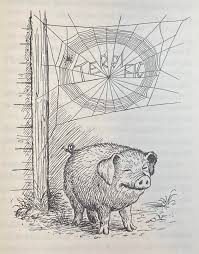
When the human child Fern’s mother asks her pediatrician if he understands the writing in Charlotte the Spider’s web, the doctor admits that he doesn’t. But, he continues, he doesn’t understand how a spider spins a web in the first place. “When the words appeared, everyone said it was a miracle. But nobody pointed out that the web itself is a miracle.”
The humblest of realities, a spider’s web. A miracle. What a lesson for children. And expressed in a prose that is smoothly American English at its best.
“Well, who taught a spider? A young spider knows how to spin a web without any instructions from anybody. Don’t you regard that as a miracle?” The doctor asks. The real miracle is the writing.
My children were young in the Arizona desert, and my grandson lives in a country with a Mediterranean climate. Yet all learned what to expect from a New England winter, what makes fall a season of amazement, why spring springs exuberantly from E.B. White.
“The autumn days grew shorter. . . . The maples and birches turned bright colors and the wind shook them so they dropped their leaves on the ground. Under the wild apple trees in the pasture, red little apples lay thick on the ground.”
No Netflix series, no Nickelodeon animals can bring the world to more vibrant life. Nothing on Youtube compares with the deep satisfaction even an 8-year-old derives from hearing about Charlotte’s affectionate, abiding friendship for a spring pig. And nothing – not even the most sensitive Disney films like Bambi or Soul will ever demonstrate more positively to a child that life includes death, that happiness includes grief, that joy bursts forth from the meanest of realities.
Prodigious marvels are all around us. Even in in a “warm delicious cellar, with garrulous geese, the changing of seasons, the heat of the sun, the passage of swallows, the nearness of rats, the sameness of sheep, the love of spiders, the smell of manure, the glory of everything.”
When I celebrate this fiftieth anniversary of parenting, I shall light a candle of gratitude to E.B. White and his Charlotte for teaching my progeny I’ll always be with them, and they never need to look far for the joys I’ll have left behind.








 carlastockton.me