My Personal Silver Linings Playbook

What was your favorite film this year, Carla?”

All over Facebook, my friends are pontificating about and citing personal nominations for this year’s best films. They’re not particularly judicious about it. “You should go back and see that film again,” one told me when I disagreed about a favorite film. “You clearly didn’t get it the first time.” Another, posting ebullient praise for a film that left me speechless with disappointment, concluded, “And if you don’t agree with me, you might as well unfriend me right now because I’m going to have to let you go because you are too unintelligent to be my friend!”

oscars_lead

So  I am here to respond in an equally patronizingly dismissive way, and I hereby declare myself a nominating committee of ONE.

My first action will be to remove most of the awards for anything or anyone involved with the making of Lincoln, with the exception of Tommy Lee Jones for his portrayal of Secretary Seward; I offer neither sycophantic praise for Anne Hathaway as Fantine nor demeaning slurs for Russell Crowe’s Javert in Les Mis; I’d prefer to extinct the film altogether. I would proclaim recognition for elements of Looper, a film I expected to hate but absolutely admired; and I’d add a few superlative categories for Skyfall, since its best elements don’t really fit in any of those that now exist.

In fact, in choosing the Best Film, I’d throw every 2012 movie off the list except for Argo and Silver Linings Playbook. These two pictures could duke it out for ALL the awards; they deserve to be nominated in every existing category and to have new ones invented so more of the work could be honored. These are two pictures that exist in a class by themselves in my personal playbook. But to answer the overwhelming question, “What was your favorite?” No hesitation: Silver Linings Playbook, my candidate for Best Film of 2012.

I am thoroughly prepared to be unfriended by the many zealots who preferred other films; but I was deeply moved by Silver Linings Playbook, and in the end, choosing a front-runner is a subjective, emotionally-driven pursuit.

In a year when there was enough real-life horror and violence to satisfy the most voracious blood lust, SLP offers none, and I admit I am swayed here by my gratitude. Even the fighting, replete with bloodied nose, was understated. This is a film that isn’t concerned with horrifying the audience; it’s there to entertain, and while it entertains, it teaches a bit as well. What a relief.

Never preachy, never sanctimonious, Silver Linings Playbook is that mirror unto nature perfectly positioned so that we behold the human condition. This is a well-told tale about characters who may seem, from time to time, to be strutting and fretting about their stage but who, in fact, are groping along in an earnest quest for happiness. They hurt each other along the way, and they lose themselves in self-centeredness, but these are characters who, despite all the baggage and the damage they’ve incurred from their various pasts, honestly live to love and be happy. They have learned to function in a dysfunctional world and have become, as a result, paragons of dysfunction. And yet they are at heart rational beings who learn what they already intuited, that the only panacea for any of our pain is commitment to one another.

There is no villain in Silver Linings Playbook. When people get hurt, when people violate one another, they do so out of an inability to live up to expectations — their own and others’ — and they fall prey to their own lack of patience. There is no conniving, no evil plotting; and the only weapons they wield are verbal affronts and over-zealous fists. Since there is no villain, there is no hero, not even an anti-hero.

Lawrence-Cooper

The protagonist in SLP is neither abundantly good nor adorably bad. He is Pat – Patty to his parents, with whom he lives — Solitano, Jr. (Bradley Cooper), released, at open, from institutionalization for beating up the man he caught naked in the shower with his beloved wife; he is bipolar, a creative thinker fighting his demons every minute of his every day and has no illusions about the effect of drugs and booze in his life. He would be very grateful if he could just remain sober and prove that he is sane and lovable enough to make his estranged wife return to him. Well, that’s what he thinks he wants for most of the film, and what makes the whole thing so very satisfying is the complexity and completeness of his arc, a very palatable arc. When Patty has his epiphany, it happens in a quiet, subtle moment that demonstrates Bradley Cooper’s real chops as an actor and David O. Russell’s ability to find them. Which is something Russell does really well — remember the acting in The Fighter? — for Anupam Kher, Jennifer Lawrence, Julia Stiles,Chris Tucker, Jackie Weaver, and the entire Linings cast.weaver-robert-deniro

But nothing he elicits from the other actors comes close to what he gets out of Robert DeNiro, who has, of late, seemed to be trying so hard to make acting a struggle to be way over the top that he’s been making my teeth ache. Here DeNiro is as natural and as believable as he was in Deerhunter. He’s superb in SLP, inhabiting the confused but steadfast Pat Sr., who wants to be paternal but isn’t exactly sure what’s needed from him, what’s expected, even what’s acceptable. He’s funny without reaching for the joke, and he’s poignant without manipulating us toward tears.Deniro

The Solitanos are a troubled family, who succumb to forces we rarely talk about anymore. This is a family that lives in our real world, which wants everyone to act alike, think alike, respond to stimuli in a prescribed manner, and where drugs are omnipresent, revered as magic potions that can erase every little aberration. Patty is constantly being reminded to take his meds, but he hates them, and he has become an inmate in his own private Cuckoo’s Nest, plagued mercilessly by unlikely, unwitting familial Big Nurses. He meets Tiffany, also afflicted with some mental health issues,  who, too, has chosen to eschew the soporific effects of her medications. In one brilliant exchange, the two run through a litany of the drugs they know and despise and the failure of each to be even marginally appeasing. No filmmaker since Gus Van Sant (Drugstore Cowboy) has been so lucid in examining the state of the true American drug war, in capturing how the magic pills that promise to make things perfect only succeed in shifting things out of focus.Russell 2
SLP strikes a deeply resonant chord because so many of us, afflicted with social ineptitudes, with anger issues, etc., understand too well the fine line between agitation and insanity, and it elucidates the many ways that parents are disempowered by their grown children while at the same time they are stripping those same kids of their ability to thrive.

In the end, the film is most affecting in that it affirms that the only drug that fixes anything or anyone is love.

That’s a lot to pack into a funny, well-acted, plaintive, beautifully orchestrated, carefully directed film. What an achievement.
The Silver Linings Featurette

Clash of the Titans

            You know why New Yorkers are so depressed?  (beat, beat) It’s because we have seen the light at the end of the tunnel,
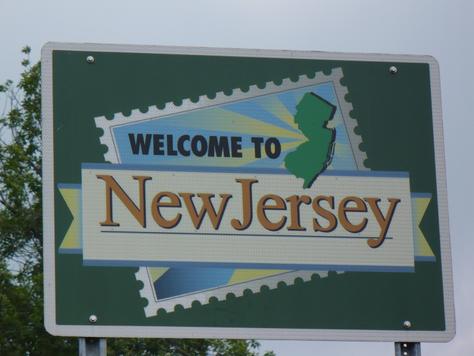
and (sigh) it is New Jersey. Ba-dum bum.

As an undergrad at Columbia, I worked as a receptionist in the School of Engineering.   I loved my job for two reasons: first, because I had a lot of time to do my own work while I kept watch on the front desk and fielded questions; and second, because I could listen bemusedly to the idle gossip of the students and professors who were constantly milling about the offices.

A favorite topics of discussion, and one that kept the entire entourage laughing, was the preponderance of New Jersey residents who commuted to Columbia for work and study.  Considered an inferior lot by the resident New Yorkers, they became the butt of a favorite euphism.  “No, s/he’s not dumb; s/he’s from New Jersey.”

New Yorkers and New Jerseyans have always rankled  one another.  And for good reason: we’re a lot alike.  Despite some historical divergences, we come from a nearly identical background.  The Dutch and the English — followed by at least a smattering from every other nautical country in the world  — settled in both places and created a multicultural community conceived in liberty and dedicated to the proposition that all merchants are created equal to the task of making money.  New York and New Jersey have beaches and farms and cities and quaint small towns, and their people are reputed to be abrasive, loud and insistent.

Since the 19th Century, people have chosen to live in New Jersey in order to work in New York or have chosen to work in New York because that is where the jobs are. New  Jerseyans have been subjugated to service of the big brother state as well as the city, and the citizens of NJ have had to pay two tax masters for their incomes, one in a state that offers no benefits for the money charged.  When I was young, the resentment toward my city was palpable; today it’s more subtle.

New Jersey and New York have a lot in common and a lot to compete over, and the states have had a tradition of rivalry that has, at times, been less than congenial.

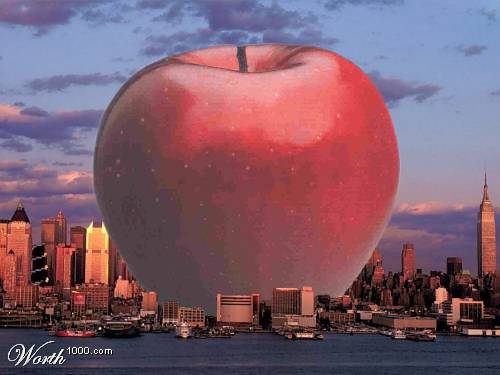
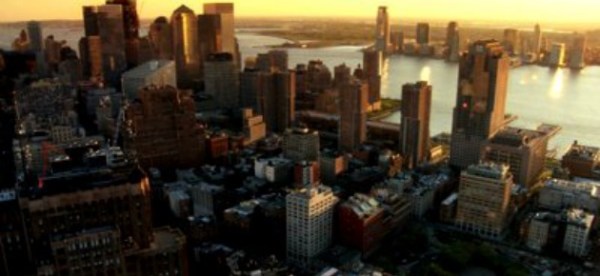
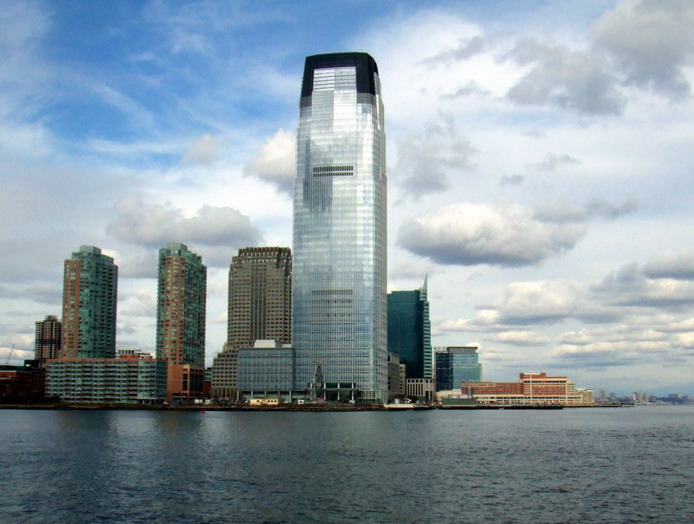
I often imagine what it might be like if one day the people of New Jersey felt that New York had dominated them long enough and signed a pact to obliterate the city and its environs, replacing it with Jersey City as the Big Apple.

It wouldn’t be a difficult task to target NYC for ill.  A few well-aimed scuds or rockets, and whole sections of the city would fall before any defensive measure might be taken.  The playgrounds in lower Manhattan would easily be destroyed, and the bodies of small children would make appropriate poster photos for use in the manipulation of public opinion. In no time at all, NY would return fire, and all too soon, the children of Secaucus and Newark would be lost in heaps of flames, and their photos, too, would adorn the banners of the righteously infuriated.

Whose side would the world take?  The people on both sides of the Hudson look alike, smell alike, sound alike — most people outside the area can’t tell the difference between a New Jersey and a New York accent.   To a Californian, residents of New York and New Jersey are roses that pretty much smell the same.

You can see where this is going, and I am sure you get the drift of my parable.  I apologize, but I can’t help it that there is an obvious, albeit overly simplistic, kinship between this scenario and Israeli-Palestinians conflict.

Both New York and New Jersey were populated by people who arrived from somewhere else with nowhere else to go.  They over-ran the locals and set up shop, creating a refuge for others in a land that had once been hostile but now offered succor.

Palestinians and Israelis are in the same place because they are unwanted anywhere else.  They live in a hostile environment that needs considerable adaptation before it provides sustenance, but both peoples have learned a way to get what they want from it.  Both peoples need to live in the land called Israel, and both peoples deserve to stay and call one another equal.

What they need from the worldwide community is assistance in finding a way to make peace, to find a way to live together without killing one another’s children.  Both sides have suffered greatly, both sides need to stop fearing the other. But instead of encouraging peace,  the world seems eager to cheerlead for a war. Television and the web casts encourage us to be spectators, to take our lunches to a hill and root for one side or the other while we watch them gouge one another.  And the attention does little more than to egg the violence on.  Facebook is covered in posts about the evil Jews — why is it still okay to openly hate Jews and women? — and the bloodied Palestinian children and  with retorts reminding the world about the so-called Holocaust (as though there haven’t been numerous holocausts in the past century and its successor) and the horrors wrought against the Jews.  Antisemitic diatribe, answered by indignant defenses, fuel the fires of dissension between the peoples, and the violence simply escalates.

Whenever I pass through the Columbia campus, I am reminded of how similar today’s students are to my classmates and me back in the olden days.  Much as we were during the Viet Nam War, students are out in varying numbers, marching with placards, chanting, demonstrating.  Only there’s a marked change in the sound and feel of the presentation today.  Most of the protesters on College Walk favor the violent overthrow of the Israeli government.
.

“Violence is justified,” chants one large group holding a poster bearing a Magen David (Star of David), an equal sign and a Nazi Swastika; “when the people are occupied.”  “How many babies will you allow Israel to kill?”  “How many babies will you allow Hamas to kill?” Someone answers from a shadow. The chanting gets louder, the peripheral voice is hushed.

I find myself nostalgic for the good old days of anti-war protesting on campus.  Whatever happened to “Give Peace a chance”?  Or “Stop the violence.”  “No war. Peace now.”

Where are the cheerleaders for peace?  Where is the outcry against the jihad to eradicate the Jewish people?  Where is the nonviolent pressure brought to bear toward an independent Palestinian state and the coexistence of two equally liberated, fully empowered peoples to live alongside one another . . . kinda like New Yorkers and their counterparts in New Jersey?

There’s enough vitriole out there.   No one wishes for war.  Ask a Palestinian mother what she wants, and she will reply the same way a Jewish mother will respond:”I want my children to be safe and to live in peace.”Shalom and Salaam are the same word.

Hey, neither New York nor New Jersey ever really needed to be the conqueror.

Rough Flight

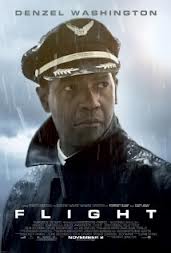
Most of the time during the excruciatingly long Flight, I was wishing it would finally end already. 

At first, during the distressing, taut crisis in the air, my anxiety was choking me.  Last month, flying back to the States from Thailand, I had five hours of violent turbulence, where food and silverware were flying off trays, flight crew members were sitting belted into their jump seats counting their worry beads, and elderly Asian people were defying the order to remain buckled by wandering up and down the aisles moaning.  On that flight, I reached a point where I couldn’t cope with the tension anymore, so I took a melatonin pill and passed out knowing that I’d either wake up to a restored calm or I wouldn’t wake up.  But watching Flight, I couldn’t take a pill, and it was clear that the tension was only just beginning.

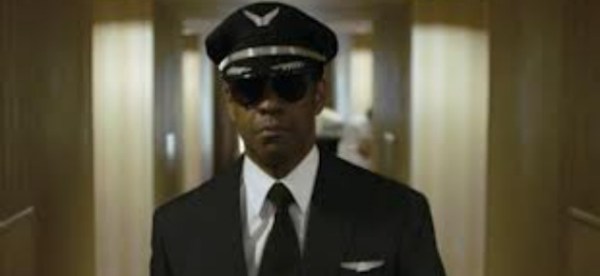
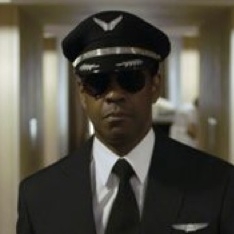
My inquietude came from what I disliked about the film more than from the drama unfolding on screen, however.  To begin with, as a tremulous flyer at best, I found watching Pilot William Whip Whitaker (Denzel Washington) consume vodka, beer and cocaine just before flying infuriating and terrifying.  His arrogant, self-satisfied, cocksure, un-empathetic demeanor repelled me.  As much as I love Washington’s work — and he played this part with absolute aplomb — I couldn’t find anything sympathetic about this character, and while I kept waiting for an arc and an epiphany that would make me care, I never quite forgave him for being so cavalier a jet pilot.


It got worse as the plot thickened.  Or rather as the flimsy rubber band of a plot stretched itself and with it my suspension of disbelief.  Whitaker boards the plane like a rock star, primed and ready for his performance.  He downs some black coffee with “lots of sugar, lots of sugar” and guzzles a few hits from the oxygen supply before he wrestles wantonly with bad weather on takeoff.  Then, just as they are easing into the 35 remaining minutes of the flight from Orlando to Atlanta, something goes terribly awry, culminating in the crash of the plane.

Okay, this is where it gets sticky.  And by sticky, I mean it sticks in my craw that I can’t figure out what the film was about.  We watched the fearless pilot order his copilot to push the limits of the elevator (the piece at the rear of an airplane that controls its pitch), instruct his flight crew captain to push some manual control levers, invert the plane so it could stabilize and then glide into a field, and we saw the plane crash.

There was never a moment where we thought Whitaker was blameless.  Yet it seems as though director Robert Zemekis wants us to find him innocent.  And of course, the movie is about the investigation to ascertain whether mechanical failure or human error cost the lives of the two flight attendants and four passengers who died and destroyed the plane.

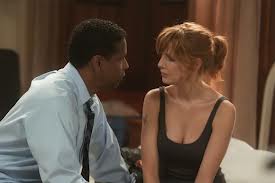
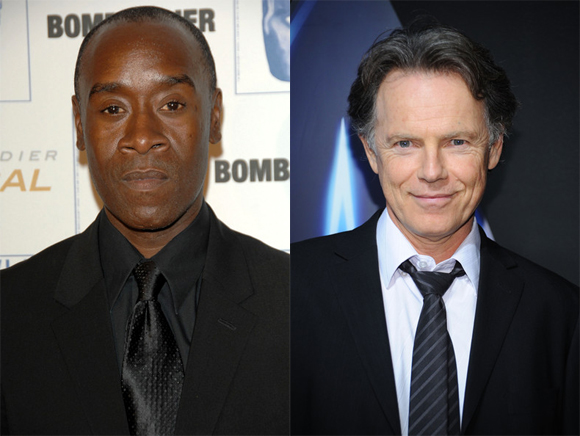
The movie lurches about long after the storm and the crash are over.  As depth of Whitaker’s alcoholism reveals itself, we get to see Washington deftly embody a truly self-destructive man.  Tamara Tunie, Kelly Reilly and Bruce Greenwood provide terrific foils, and Don Cheadle once again disappears into a role that’s clearly a lot more vivid than it was on the written page.  For added Oscar buzz, John Goodman once again steals the light from everyone else with his portrayal of Harling Mays, who could just as well have been named Walter Sobchak (Lebowski’s sidekick). But overall the film is very dissatisfying.

There is no real arc.  We see the alcoholism ebb and flow, but we don’t see for one minute any of its roots or the path of its destruction.  We know more about Nicole’s (Reilly) drug addiction than we do about Whitaker’s, and when he has his turnaround at the very end, there is no real motivation for it.  The epiphanal moment appears elusive of inducement — he has a brief moment where he cannot defame the memory of his heroic flight attendant/lover who has died saving a little boy’s life, but it’s not enough; his estranged son, his ex-wife, his friends, his career were all inconsequential, but a fleeting affair with a young woman makes him come to his senses?  Well, that’s just senseless.

Zemeckis has a great opportunity here.  He could explore the infrastructure of an industry that teeters on the brink of disaster but does nothing to seek out and clean up the source and substance of the kind of abuses this pilot flaunts.  We come to find out that everyone has known all along that Whitaker’s a lying drunk, and no one has done one blessed thing to get him to stop.  How can this be?  I want an investigation.

Alternatively, Zemeckis could explore the root of the disease Whitaker suffers.  But until the sudden turn-around at the end (oh, did I spoil this for you?  Sorry!), all we see is a man who loves being drunk, wallows in the oblivion he creates for himself but who never reveals how he got here.

In the end, though it should have been obvious from the beginning (as my friend pointed out, the damage to the elevator, which caused all the trouble, was clearly the result of Whitaker’s cowboy antics near the start of the film), the film allows that Whitaker really is guilty.  (Were we in denial right along with the whole aviation industry?) He deserves to go to jail.  And, “though it may sound strange coming from a guy in here (sweeps arms, indicating co-prisoners in an institutional meeting room), for the first time I’m free.” Hunh?

All of a sudden, as though Zemeckis realized 130 minutes into the edit that he needed an ending so he went back and shot one quickly, Whitaker admits he’s an alcoholic, becomes a devoted AA member, creates a stable relationship with Nicole and reconciles with his son Will, nicknamed Knuckles.

Flight ends with Knuckles visiting Whip in jail.  He must write his college essay, and he has chose to write about “The Most Interesting Man I Never Knew,” a.k.a., his father.  Will turns on his recording device, saying, “So, tell me Dad.  Who are you?”

Whitaker hugs the boy tearfully and answers,  “That’s a good question.”

You betcha.

Now playing http://www.imdb.com/title/tt1907668/

Shakespeare Slept Here . . . Didn’t He?

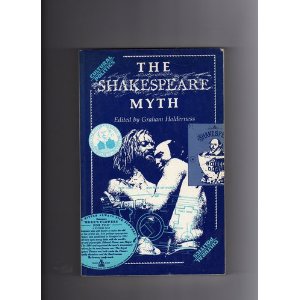
“The ‘Arden’ of the play is Ardennes of northern France, rather than a forest which once existed in Warwickshire, which may or may not have adjoined the cottage in which Anne Hathaway, who may or may not have married Shakespeare, may or may not have lived.  But bardolatry trades in certainty, not in the slippery elusiveness of documentary fact: the buildings have acted as objects of pilgrimages and shrines of worship for generations, and that in itself is an assurance of their value.”  Bardolatry: or The Cultural Materialist’s Guide to Stratford-upon-Avon, by Graham Holderness

The Daily Mail reported(http://bit.ly/UsDyPL)  last Thursday that “a tempest is brewing around the 16th Century thatched farmhouse” where Anne Hathaway was courted by her lover William Shakespeare,” that a developer has just received the go-ahead to build a housing development just 238 English Yards from the sacred home.  All around the world, the faithful watch in fear and trembling.  And with good reason.

In 1995, when I paid my first visit to Stratford-Upon-Avon, which was, remarkably, my first trip to the UK, I was definitely a believer.  I was a faithful bardolator, an adherent to the Shakespeare Myth.  I still am.  No matter how much evidence I see that Shakespeare wasn’t any of the things we believed him to be, I remain steadfast.  He is the one True Bard, the creator of the most significant Words in the English language.

Consequently, the first time I arrived in Stratford-upon-Avon, I experienced a moment of great disappointment.

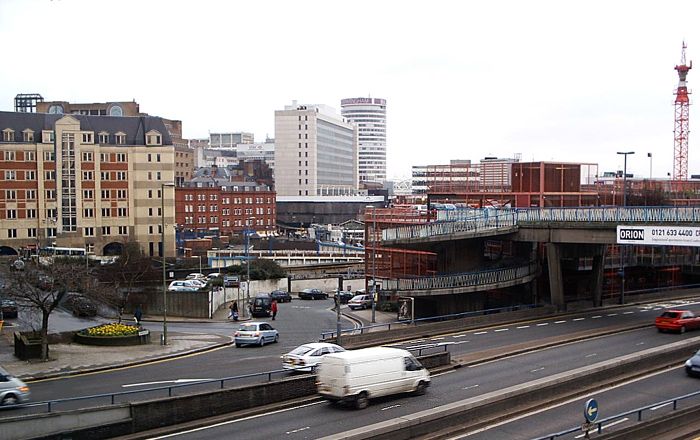
Birmingham

In all fairness, the letdown had begun in Birmingham, where my plane landed.  Bardolatry, especially for Americans is often accompanied by a hefty serving of Anglophilia, and walking across town to the train, I was fervently hoping for a Dickensian array of shops and homes. To my dismay, I’d found Birmingham surprisingly modern, clean, hip and prosperous.  Not what I’d expected at all.  Then, as my train lurched into Stratford-Upon-Avon, and my heart began to race with the excitement of being in Shakespeare’s hometown, a huge Safeway Supermarket came into view, and at that moment the conductor announced we’d arrived.  I was crestfallen.

I had earned a summer in Stratford-Upon-Avon, and I had expected to be whisked directly into the world of the Bard, to be swept into the late 16th Century, to immerse myself into that lyrical, romantic world that had engendered the richest poetry, the most fabulous drama in the English language, and here I was face-to-face with a 20th Century American icon, where hordes of cars (there was a petrol station there as well) and shopping carts conglomerated among bustling locals.  I shook my head and followed my directions from the train station into Albany Street, where I was to be billeted for the duration.

Albany Street

In Albany Street, I began to regain my equilibrium.  While I hadn’t found the Avon I had sought, I was, at least, surrounded by 19th C houses, a street straight from the pages of an illustrated Dickens, where the Old Curiosity Shoppe must surely stand.

Vicki, the woman who owned the house that was to be my home met me at the door with a great wave of excitement.  “I love these workshop summers!” She enthused. “I get to meet so many wonderful, interesting people who come here because I live in this magical place, and I get to make a profit from it too!”

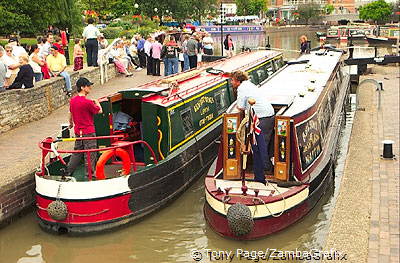
She had bought her house, a Victorian construction, the year before and had put considerable effort and money into restoring it.  It was a brilliant little house, and those of us lucky enough to live there got to know both Vicki and her charming 5-year-old Eve.  She was a single mother with two grown children as well as her little one, and all three of the adults had learned to fend for themselves with the aid of their fortuitous placement in the land of Shakespeare.  Vicki took in boarders, her older daughter cooked at an inn near the Royal Shakespeare, and her son lived on a river barge and drew pen and inks of Union Canal and River Avon scenes for the visiting school marms and aspiring actors who flocked to his floating studio. 

They were typical Stratford-upon-Avon-ites, this family, inextricably linked to the notion that there was a guy named William Shakespeare, who did write the comedies, tragedies, histories and sonnets that bear his name.

So, to create a large industrial, 800-home community replete with new schools, businesses, shops and a health center, will necessarily affect the cultural materialism that has supported the people of this town since the 18th Century, when entrepreneurial actor/producer/playwright David Garrick organized the first Stratford Jubilee in 1769.

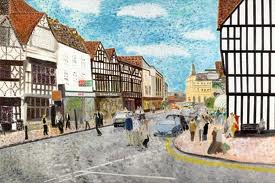
Artist Lydia Fine’s view of downtown Stratford

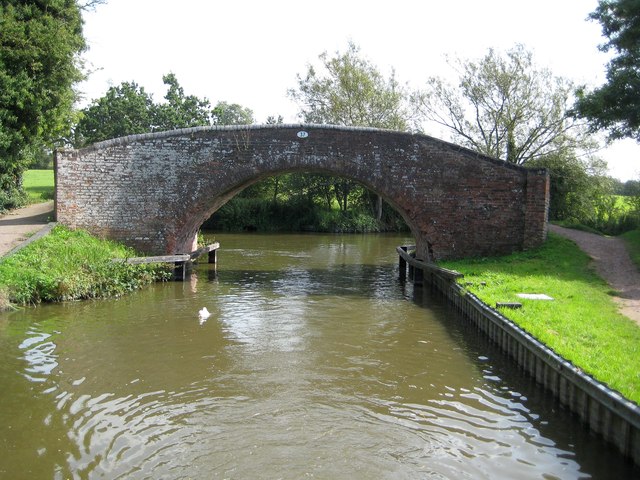
The towpath — also a cow path — along the Union Canal makes for miles and miles of picturesque walking

As soon as I was settled into my room at Vicki’s that first day, I wandered into the High Street, and I found myself breathless with wonder.  Slope-roofed, unevenly constructed Tudor homes, including the birthplace of John Harvard, lined the way, and on the Avon, as along the Union Canal, boats meandered lazily as though they were still mired in some magical, mystical long ago.  Over the course of that summer, I took classes in The Edward VI Grammar School, where Shakespeare learned his English, Latin, Greek, and numbers; I attended performances at every theater in the Royal Shakespeare enclave, and I drank my pints at the Dirty Duck.  I existed in the blissful fairy tale belief that I was living a life touched by my hero’s.  I was transformed, imbued with the healing power of my bardalotry, and because I was surrounded by the physical manifestations of the life he must have led, I could assure myself that the experience was authentic.

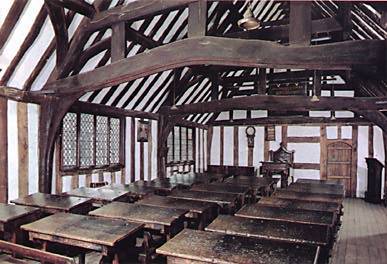
King Edward VI Grammary School actually has records of Shakespeare’s attendance here

Many of the lecturers who came to speak to us that summer were among the blasphemers, but, as James Joyce would have said, blasphemy is closer to faith than blind, indifferent adherence to a creed, and I embraced their suggestions that Shakespeare was at least a collaborator and at worst a plagiarist, working with or stealing from the likes of Thomas Middleton, Christopher Marlowe, Ben Jonson and others.  They only served to make my love grow stronger.

After all, here I was, among the houses and churches and shops and trees and bushes and flowers that were living proof that a man named Shakespeare, or something, lived her in this town, or hereabouts, and he wrote great works of everlasting glory that I could not read without weeping at the beauty of the words. Did any of the naysaying matter?  Not a twit.  So long as the physical accouterments of the place called Stratford-Upon-Avon bore witness to the achievement of the canon, the sun was in its heaven, and all’s right with the world.

Avaunt, black towers of middleclass evil.  Find another bit of land on which to establish the realm of your 21st Century business.  Leave quaint the streets of Stratford-Upon-Avon, and leave chaste the hearts of all bardolators.

Thailand Variations

Some random observations garnered during my nearly three weeks in Thailand . . . .


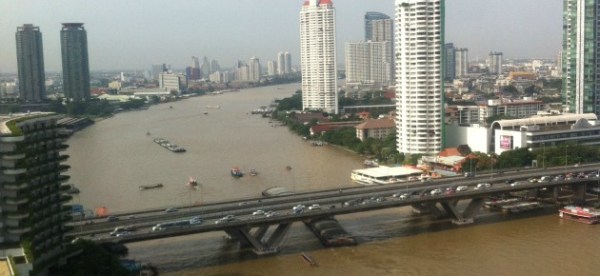
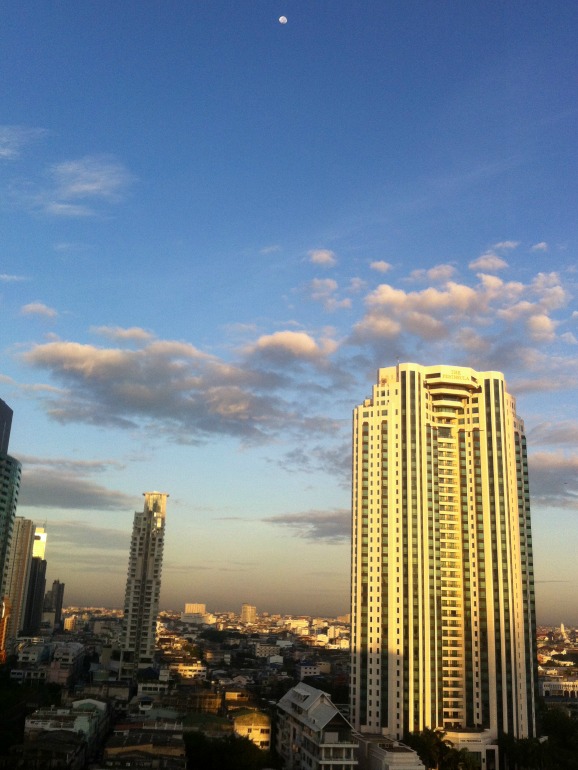
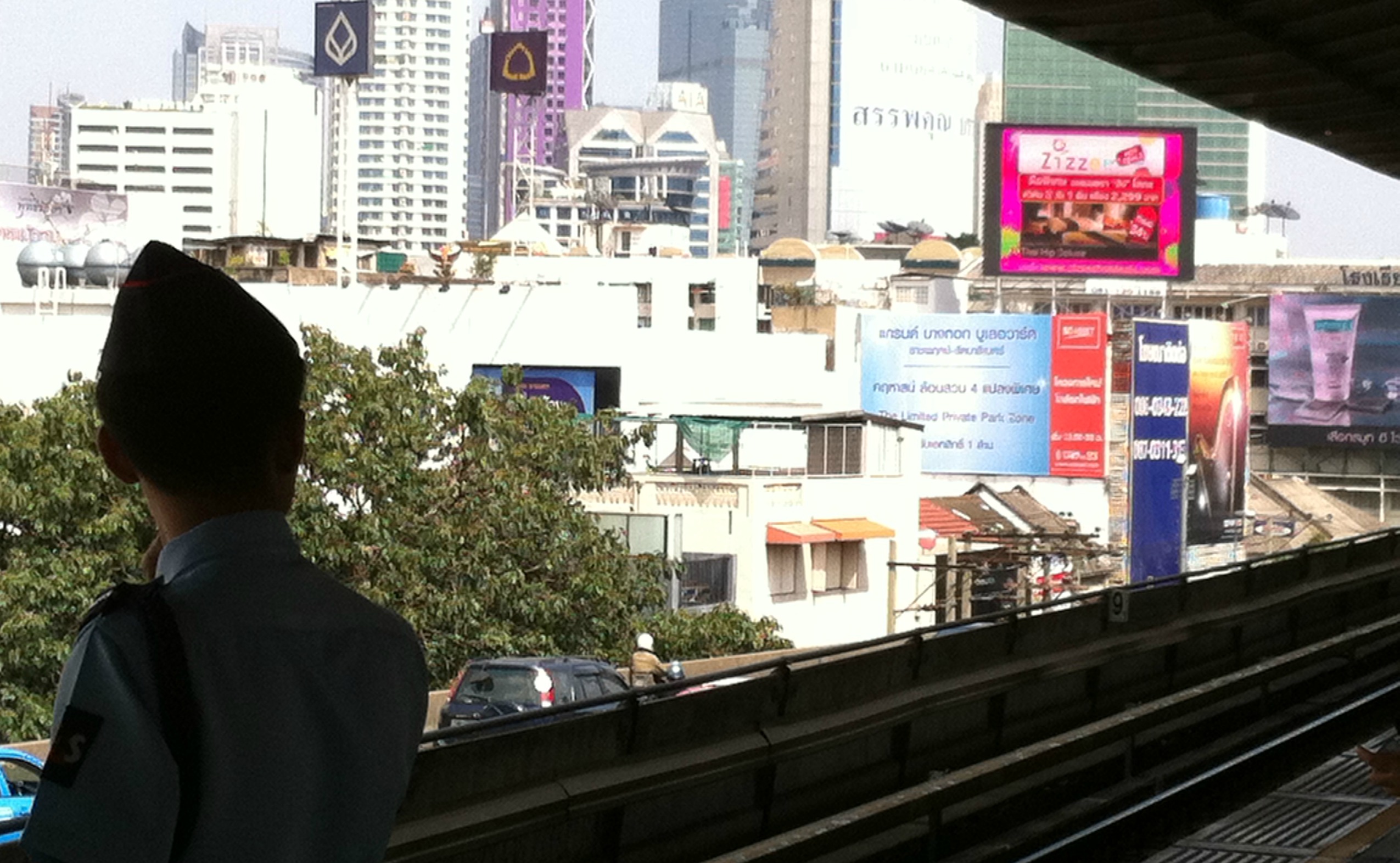
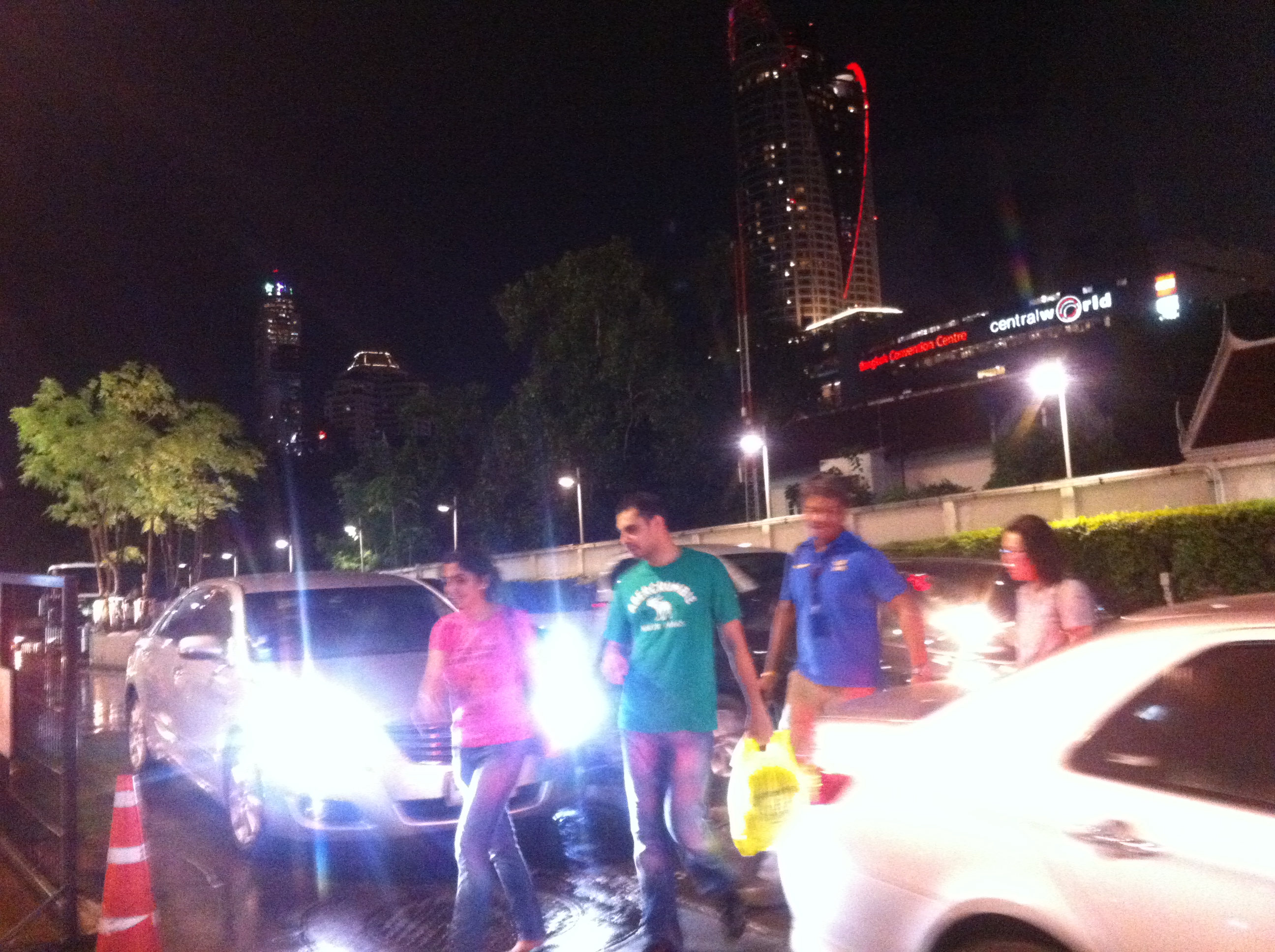
Westerners tend to have the image that Asia, especially a country like Thailand, is backward, inferior to the US in sophistication, in industry, in awareness.  But I certainly saw no sign of any lag.  In fact, in the city, there were far more solar panels, far more signs reminding people to conserve, far more toilets with low flush options than I ever see in this country.  Bangkok is a cosmopolitan, multi-cultural center, and it’s more like New York than it is different, a polyglot city with multihued textures of all kinds.

I must admit that I was, to begin with, quite wary.  Because I had just read 1493, I was constantly aware of what the author calls The Columbian Exchange, the signs of Cristobal Colon’s rearranging of our crops, diseases, homelands.  Thailand is a perfect little empirical test case of a country.  It is near enough to Manila, the eipcenter of the Colombian trade routes, and it is a reflection of all the travelers who have visited for whatever purpose, but it is also a country that has been a crossroads since before the intersection of east and west.

The Thai people, apparently, were the Nanchaoan, living in the mountains of Tibet where they had settled after a migration out of India, through southern China and the Hunan province, moving gradually into the great river valleys of mainland Southeast Asia and settling among the Khmer, Mon and Burman populations whom they encountered on the way. By the 12th century they had established several small states in Upper Burma (Shans), the Mekong valley (Laos) and the Chao Phraya valley (Thais).  Along the way to their becoming Thai, intermarriage, mingling of cultures, sharings of all kinds created a diverse population who established the country of Siam in 1929.In fact, the word Thai itself connotes a congregation of various peoples, so the introduction of western crops, habits, ideas, etc., was embraced enthusiastically, and its effects are evident everywhere.

American corn — maize — is a favorite treat.  Corn appears in all kinds of ways in the abundant street markets — it’s an ingredient in their coconut cakes, it’s available roasted on a stick, just like at the NYC street fairs, and it’s sold in bags, de-cobbed and bagged all by itself.  Sweet potatoes dominate any number of dishes, and they, too, are sold roasted or sweet at both city and rural markets.

In Bangkok, a cacaphony of languages can confuse any eavesdropper.  Dutch, Russian, English of all sorts, German, Spanish intersperse with local words, and everyone, even in backwater corners of the islands, speaks at least enough words of English to buy and sell the abundant array of international products.

The sophistication of the Thai society is evident in some surprising ways.  Sitting in the lobby of the Chatrium Hotel, a mainstream, 5-star luxury establishment on the river that is frequented by businesspeople from around the world, I noticed a transvestite putting on makeup.  No one stopped to stare or point, and no one among the hotel staff seemed the least bit uncomfortable.  Overall, gay life is open and out in Bangkok, as it is in Ko Samui; certainly wherever I went, men and women held hands with and openly embraced co-genderists, and they were, if not flamboyant, then entirely without embarrassment.  I learned that to be a lady boy can be a great honor.  In many cases, little boys are chosen to be raised as girly-boys so they will grow up to be truly feminine, comfortable in women’s garb.

Teeth cleaning, a medicinal art that was already popular in China as early as the 14th Century, is highly evolved in Thailand . . . and very inexpensive.  For less that $20, a reputable dentist will clean your teeth using the airflow method — it feels a bit like sandblasting — and follow that with the traditional ultrasonic and then polishing techniques of the west.  It can be jarring to see signs that offer “Laundry” and “Teeth Cleaning” services under one roof, but that’s more a matter of real estate than business partnerships.  Further, it is very easy to find a good endodontist who will do inexpensive root canal, and implants, crowns and dentures are priced way below American counterparts, and they are superior.

Medicine in general is fairly inexpensive and accessible.  Not surprisingly, Thai plastic surgeons have perfected sex change operations and offer them safely, relatively painlessly and incredibly affordably.  Because there is no stigma, the procedures have been part of the mainstream surgery menu for many years.

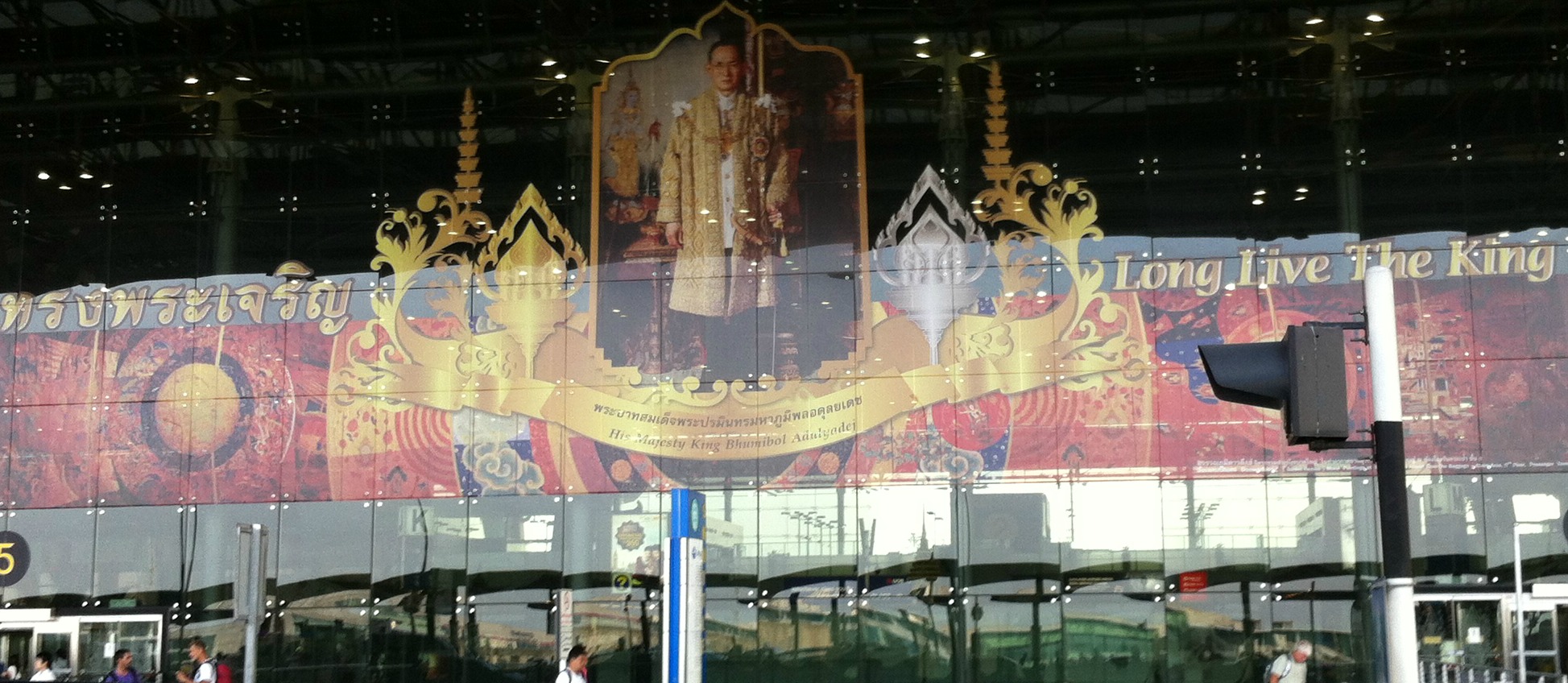
Though Thailand proclaims to be a parliamentary monarchy, the King, descended from the line only begun in 1929, is omnipresent.  At the airport, at the movies, on billboards on the streets, in public bathrooms and shopping malls . . .his image is pasted everywhere.  At the movies, before the start of a feature film, everyone stands and watches a very moving, highly propogandized film depicting the happy, fulfilled people of Thailand praising their king, whose image caps the short in a burst of extraordinarily emotional music.  

 One thing that deeply disappointed me, however, was the absence of true respect for the indigenous animals.  Though their pictures are everywhere, no elephants are to be seen except at tourist parks, where the elephants are used as mules to take visitors for looks at the natural landscape.  

The animals are misused, and they are incarcerated, and their wild counterparts seem to have vanished into the hills beyond anywhere I would have visited.  Monkeys, also depicted on posters and logos as though they are beloved by all the people, are seen mostly on chains — in parks or on trucks that carry them to the coconut trees they are trained to harvest.

.