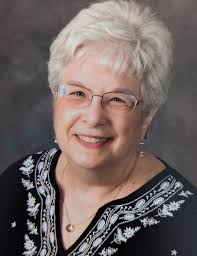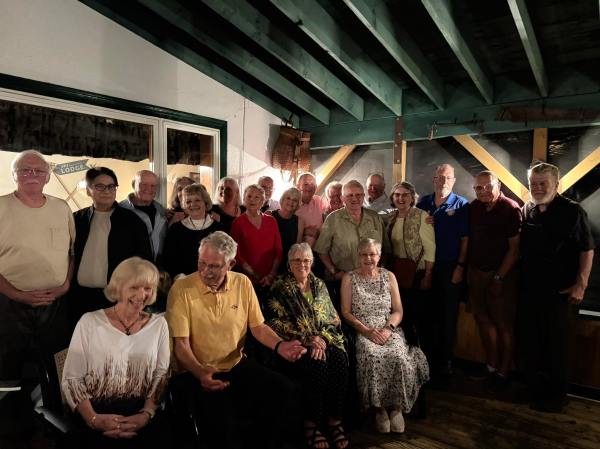
In Memoriam: Marilyn Joan Alkus Bonomi (1943-2025)

Walking in the almost cool, late August air today, I felt a premonition of Fall. Crisp air,  cornflower sky.  Finally. . .  October’s on its way. 

October has always been a special month.  My birthday, my youngest child’s birthday, the year’s first cold snap, darkening afternoons.  This time, however, the October snippet hit me with an image of Marilyn Joan Alkus Bonomi.

Mari and I met on an October Saturday in 1987 at my youngest’s birthday party, a party I hoped would help us get acquainted with our new neighbors.  We had just moved from Arizona to Connecticut, and none of us had been prepared for the culture shock we would encounter.  Fitting in was challenging, and a party seemed like an opportunity to make some friends, to show our new cohorts that while we might not have mastered the eastern way of dressing and speaking, we were just plain folks like everyone else.  Personally, too, I hoped that an adult or two would come to the party and stay, be a welcoming presence . . . or at least a fellow parent with familiar sensibilities.

Mari was the one.  She swept in, deposited her daughter in the midst of the other children, then sat down next to me and opened a conversation that drew me in, made me feel instantly connected.  It was a stream of consciousness into which we were able to immerse ourselves every time we were together for the next nearly forty years of our enduring friendship.

We had lots in common.  Her daughter and my youngest were the same age and had already begun to bond,  which meant that Mari and I were destined to see one another often. We were both English teachers with a deep connection to the theater; she was well established in Connecticut, and I was looking for a job.  We shared a nearly obsessive love of rhetoric and a penchant for lost souls. Though humanist Jews, we had both chosen husbands who were Jesuit-trained Catholic schoolboys.

 Over the course of that first year, her daughter and mine became besties and formed a union that included my older daughter; Mari and I were fused.

Because of Mari, I quickly found a job.  At the birthday party, she had been delighted to learn that I planned to substitute teach while I sought permanent employment.   “That is wonderful news,” she said.  “I teach at Amity, in Woodbridge, one of the best schools in the country. Can you tell I’m proud? Anyway, we never have enough good subs.  I’ll put your name in.”  

She did.  I spent much of that year subbing at Amity and loving it. 

One day, when we were lucky enough to have lunch together, she pointed to a lanky man leaning in among a group of students, listening intently and chatting with them.  “See that guy?” She asked.  “That’s Stu Elliot.  He’s one of our Assistant Principals.  A good man.  A great administrator. See how he interacts with the kids?  He is special, which just means we won’t have him for long.  He’ll have his own school any day now. Which is why I want you to meet him.  He will want to hire teachers of his own choice, and you would be a perfect addition to any team he takes on.”

We spent ten minutes talking to Stu, and I agreed.  He was remarkable.  A year later, he became my principal at the high school next door to my house.  I could not have been more fortunate, and my gratitude to Mari never diminished.

Our friendship ran deep.  Her child was at my house almost as often as mine was at hers. We celebrated holidays together and commiserated when we were both unhappy.  Our contact lapsed a bit as each of us traversed the hard road of divorce and redefinition, but we found one another again in time to have a few great years as senior citizen sisters. Though never enough time to fully share our appreciation for years of a deeper-than-blood kinship.

Since 1987, my life has been fuller in dozens of ways because of Marilyn Joan Alkus Bonomi.  Though she will live on in her daughter’s eyes, in her grandson’s laugh, in my heart, in my soul, in my very vivid memory, I shall miss her voice, her presence, the soft touch of her abiding love.  

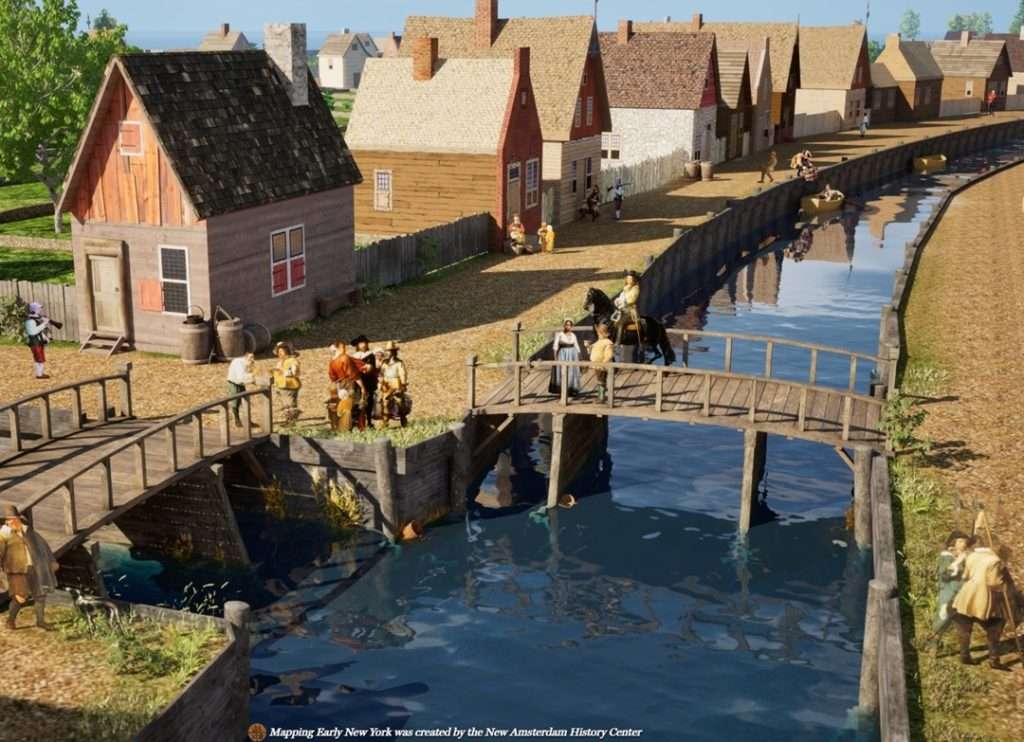
Lia and Izaak in New Amsterdam: A Writer’s Journey Begins

 Too Much of Nothing: Notes on Feminism, Identity, and Womanhood (Mountain Ash Press, October 2024) was not the book I expected my first solo book would be. I had spent two years compiling stories about my mother’s immigrant family, my father’s eccentric past. They comprised the MFA thesis that I planned to publish.  My readers disagreed.

“Make this your second book,” they said.  “What’s most interesting in this work is the story you tell with you as the central character.  Write about you first.  Then write them.”

I revamped, reassuring myself that my next book would be the tribute to my family I felt compelled to write.  Once I got past Book #1, I would return to the compendium of family stories, the histories of my displaced and troubled forebears, to honor their memory with my carefully chosen words.

Once Too Much of Nothing was launched,  I moved into the process of preparing the next book by focusing on my immigrant mother’s trauma and her family’s survival and planning for the research that would delve more deeply into Dad’s ancestry. I began preparing to depict the layered amalgam of culture and sorrow my parents’ union created.

The journey has been fascinating . . . .   Their background is rife with drama. The forces that drove mom’s clan out of Europe in 1939, coupled with the tales of my father’s Dutch family, provide a rich tapestry of escape, survival, and the power of love. Best of all for me as a true New Yorker, their stories converge in the Catskill mountains and coalesce into one truly American chronicle.

When I read Russell Shorto’s Taking Manhattan: The Extraordinary Events that Created New York and Shaped America, I realized again how important the story I plan to tell really is. 

I’ve been a Shorto fan since, as a New York sightseeing guide, I read his Island in the Middle of the World, his history of New York City, which argued that everything we identify as American comes from the cultural stew that simmered in New Amsterdam/New York.  That stew, according to Shorto, contained generous portions of the Dutch, English, and Jewish traditions that bubbled in my identity. Shorto’s newer book re-examines the history even more sharply, and he plumbs the depths of tropes that any child who attended Junior High in New York State was fed as the history of our state. 

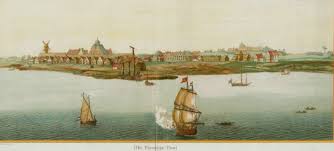
We all knew that the Dutch established a community here and called it New Netherland, that New Amsterdam, their city at the tip of the Manahatta Island, was its capital.  Then, in 1664, the English arrived on the banks of the Hudson River, seized New Netherland, and renamed it New York. Then, the Dutch slinked away to the corners of history. 

Not exactly the truth, Shorto proves.

According to documents that have only recently been translated, there is much more to the story that we did not know.  The Dutch West India Company, acting not as agents of the monarch but as agents of the world’s second international trade union (the first being the Dutch East India Company) stole New York – and what are now Delaware, New Jersey, much of western Massachusetts, and Rhode Island – from the natives and built a society that encouraged diversity.  They were not inherently more tolerant than the English or the Spanish, but they found that a multicultural world was conducive to profitable business. And business was what they were all about. They were willing to accept anyone and everyone from anywhere at all, so long as there was money to be made. What the Dutch West India Company did not do was to protect its people from the reprisals by the understandably angry natives, and they failed to create a workable government.

The British Civil War had just ended, reestablishing the English crown. King Charles II realized that his ravaged country needed to curry influence in the new world in order to replenish his coffers.  He put his brother James in charge of asserting their presence, and James sent emissary Richard Nichols to take possession of land that now constitutes most of the Northeastern United States seaboard.

After spending some time in the Massachusetts Bay Colony negotiating peace between royalists and Puritans, Nichols, well-educated and conversant with Dutch success, sailed down coast and up the Hudson River to negotiate with Peter Stuyvesant for a transfer of power.  No shots were fired; no animosity resulted. As soon as his signature was affixed to the document, Stuyvesant made a brief visit to his European homeland before returning to Manhattan and settling down on his large farm at the south end of the island. He died a very wealthy, satisfied New Yorker.  

Nichols knew that a system that worked needed no reworking, and the Dutch system worked.  He brought in military forces to protect the citizenry, to maintain loyalty to the King, and to uphold the law.  But the Dutch remained in positions of political and social prominence. The array of religions and nationalities that had thrived under the Dutch retained their status as well. 

In the story Shorto tells of my city, I see my mother and my father as central characters. My father’s paternal English roots English planted themselves in Massachusetts, Maine, New Hampshire in the 1620s when they fled the Church of England,  around the same time as his maternal folks were landing in New Netherland. Members of the Dutch Reformed Church, Dad’s second and third great-grandparents likely originated as Walloons, Calvinists who wandered away from the perils of Catholic Belgium and France into New Amsterdam by way of Holland.

 Likewise, my mother’s people had spent generations seeking a safe homeland.  Out of the Russian Pale of Settlement, into Poland/Ukraine, to Zagreb by way of Vienna, and eventually to Kingston, NY, once a Dutch enclave called Wiltwyck.

I will write about my parents.  But I will write about them as fictional characters in a time when unions like theirs were the stuff that fueled the sensibility that built the United States.

My parents’ fictional personae will inhabit 17th-century New Netherlands.  He as the son of parents who arrived in 1624, for the purpose of establishing a future in nieuwe wereld. She as the child of a Lisbon-born Jew, whose family, dispersed by the Inquisition, had found refuge in Dutch Recife, Brazil, until the same Inquisition sent them scrambling to New Amsterdam.

My protagonists are Lia and Izaak.  Neither’s story is unique, but each has a singular voice and a profoundly individual presence.  Theirs is a timeless story shared by millions, but their details are theirs alone.

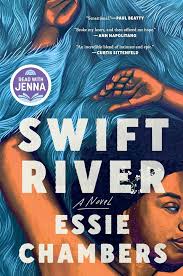
Swift River . . . Paddling the Rapids of Raging Adolescence

Essie Thomas' new novel is a perfect summer read

From the moment I dived into Swift River, I was swimming through memory, in sync with Essie Thomas’s captivating heroine Diamond Newberry.  Like Diamond, my 17-year-old self suffered from a sense of dislocation, and I recognized in her a familiar longing to know an origin story. Like me way back then, she found her hope in stories her family members, the ones willing to talk candidly about the past, could share with her.  Like Diamond, I ate my troubles away, wallowed in tuna casseroles and wingdings, but being white,        From the moment I dived into Swift River, I was swimming through memory, in sync with Essie Chambers’s captivating heroine Diamond Newberry.  Like Diamond, my 17-year-old self suffered from a sense of dislocation, and I recognized in her a familiar longing to know an origin story. Like me way back then, she found her hope in stories her family members, the ones willing to talk candidly about the past, could share with her.  Like Diamond, I ate my troubles away, wallowed in tuna casseroles and wingdings, but being white, what young me did not have in common with Diamond was color. 

My confusion and disassociation were just as real, but they were invisible, and I therefore did not suffer the same slings and arrows of outrageous racism that Diamond endures. Yet I easily relate to what she feels, and how she responds because as unique as Diamond is, she is a character who represents the distinctly American experience of growing up in an unkind, duplicitous society whose respect for diversity is superficial at best. 

Diamond is caught in a perfect family-and-society-fueled storm. Her father has disappeared, is perhaps dead, and her mother has become recklessly unbalanced.  Her marriage to Diamond’s father was disastrous, but she does not know how to live without him.  So she drinks.  She makes Diamond responsible for her but is, at the same time, immobilized by the way her community – the town that has been her family home for generations – treats her daughter.  She knew that nothing about their life together would be easy, but she never embraced his brittle fragility.

Already restless and morbidly obese, Diamond finds herself entirely untethered by her fatherlessness.  She wants to stop her mother’s hurt, but she is aware that her mother’s love is genuine but also neurotic and toxic. She longs for her father’s return, as he seems to be the only one who might have the knowledge to explain why the town’s Black population inexplicably left town in the dead of night some years before and what their exodus has to do with her.  He alone might justify his bitterness and the self-destructive recklessness that causes him to act out his angry bouts of frustration.  Diamond has no place to turn for answers until she receives a letter from her father’s cousin-sister, who lives in the Newberry family home in Georgia. 

Letters pass between the girl and her unseen auntie, and Diamond begins to assert her true self.  She secretly signs up for driving lessons and forges a friendship with a girl from her class, who is equally void of ballast, a girl who has learned to sublimate her pain in promiscuity.  Over the course of an illuminating summer, Diamond learns to drive, loses her virginity, and finds her roots.

At the heart of Swift River is the reminder that no matter what ethnicity, what race a teenager is blessed or cursed with, the compulsion to know who we are and where we come from is universal.  Diamond’s plight is overwhelming, but she finds a way to cope just as teenagers have always forced themselves to cope with circumstances they would never choose as the basis of their lives.

Like all the great coming-of-age stories, this one is written by an adult with a mature outlook, told through the eyes of a precocious seventeen-year-old who clearly has the benefit of Chambers’s wisdom.  For that reason, Swift River is a great read for teens and adults.  It is an illuminating journey over the racing rapids of adolescence, a passage that none of us avoids.       

Diamond is caught in a perfect family-and-society-fueled storm. Her father has disappeared, is perhaps dead, and her mother has become recklessly unbalanced.  Her marriage to Diamond’s father was disastrous, but she does not know how to live without him.  So she drinks.  She makes Diamond responsible for her but is, at the same time, immobilized by the way her community – the town that has been her family home for generations – treats her daughter.  She knew that nothing about their life together would be easy, but she never embraced his brittle fragility

Already restless and morbidly obese, Diamond finds herself entirely untethered by her fatherlessness.  She wants to stop her mother’s hurt, but she is aware that her mother’s love is genuine but also neurotic and toxic. She longs for her father’s return, as he seems to be only one who might have the knowledge to explain why the town’s Black population inexplicably left town in the dead of night some years before and what their exodus has to do with her.  He alone might justify his bitterness and the self-destructive recklessness that causes him to act out his angry bouts of frustration.  Diamond has no place to turn for answers until she receives a letter from her father’s cousin-sister, who lives in the Newberry family home in Georgia. 

Letters pass between the girl and her unseen auntie, and Diamond begins to assert her true self.  She secretly signs up for driving lessons and forges a friendship with a girl from her class, who is equally void of ballast, a girl who has learned to sublimate her pain in promiscuity.  Over the course of an illuminating summer, Diamond learns to drive, loses her virginity, and finds her roots.

At the heart of Swift River is the reminder that no matter what ethnicity, what race a teenager is blessed or cursed with, the compulsion to know who we are and where we come from is universal.  Diamond’s plight is overwhelming, but she finds a way to cope just as teenagers have always forced themselves to cope with circumstances they would never choose as the basis of their lives.

Like all the great coming-of-age stories, this one is written by an adult with a mature outlook, told through the eyes of a precocious seventeen-year-old who clearly has the benefit of Essie Chambers’s wisdom.  For that reason, Swift River offers an astute journey through the fraught passage from childhood to adulthood that none of us avoids.                                        


A Note from the Writing Teacher. . .

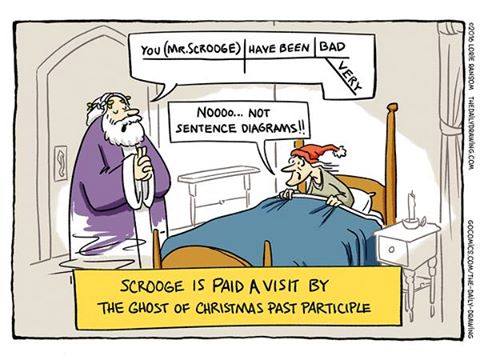
To my students, who are struggling with personal essays. . .

So, for me, the pleasure in writing comes from the careful choreography of words and phrases, the shaping of a dance that is the process of making a story. No piece is ever entirely free of ways to make it better, but through thoughtful revision, any writing can be rendered fit to perform.

I’ve been writing the same story for over two years. There have been many versions, some comprising around 3,000 words, one over 10,000. I struggle. How do I tell this story most effectively? How many substories– digressions — do I allow into the narrative? That’s the challenge. That’s the dance.

Is this dance a tango, a foxtrot? Could it be a three-act ballet?

Here’s the story. It’s about my mother. Specifically about my mother and her relationship to her cello. When she and her family were forced to leave Europe and leave behind everything and everyone they loved, she was told she could take only one thing with her. She chose, of all things, her cello. Imagine fleeing across Europe, being stopped at every border by guards who would kill you with little provocation, dragging a cumbersome cello. That cello must have symbolized the whole world she was abandoning. More than that. It contained her sister’s soul – her near-twin sister, her closest ally and dearest companion, who had died a few years earlier. That cello conveyed the music her own mother had lost the ability to sing.

I knew that instrument. I was an only child for nearly four years, and every night she would play as I lay awake wrestling my own fears trying to sleep. I had absorbed from her a sense of foreboding, a fear of dangers I could only intuit. Dangers I suspected she escaped but didn’t know how to name. She could not speak them. But in the dulcet voice of the cello, all her losses, all her pain, seemed to grow tolerable. I could hear her face relax, her smile broaden. All those memories of love and sorrow seemed to have found a place in her heart where she could love them without malice.

My father broke the cello. He didn’t mean to, but he ruined it. How does he fit into this tale? If I tell the whole tale, it becomes sadder.

Shall I write about the flight from Europe and the way the cello facilitated her adjustment to America? Do I write about the way the cello soothed our collective lives? Or do I write about my parents’ marriage and how the death of the cello killed it? That’s all contained within the scope of this project. Each iteration has more or less of every aspect. And then some.

Like the way I tried to emulate and heal that woman. How I wanted her to love me as much as she loved that cello. How much of that should I keep in . . . or edit out?

I wrestle with this the way you wrestle with perfecting your personal essays. You want to tell a story. But you are not sure which story will it be. How do you narrow it down?

A journal helps. You can make notes, write passages, tinker with time and place. Which story can you tell most openly, holding the least of your emotion back? Into which one do you feel most comfortable immersing yourself? Follow that one. . . even if it leads you into steps you never expected to learn. In the end, choose the story that chooses you. It will. At some point, while you’re searching for the right words, hoping for the best inspiration, it will tap you on the shoulder and ask you for your hand.

And that’s when the dance will begin in earnest.